Africa Distributed Control System (DCS) Market By Component (Hardware, Software, Services), By Architecture (Centralized Controller Systems, Hybrid / Distributed Hybrid Systems, Fully Redundant High-Availability Systems), By Application (Batch, Continuous Process), By Project Type (New Construction, Replacement, Upgrade/Expansion), and By End User (Oil & Gas, Chemicals & Refining, Energy & Power and Others) – Global Opportunity Analysis and Industry Forecast, 2025–2030.
Industry: Semiconductor & Electronics | Latest Edition: January 6, 2026 | No of Pages: 261 | No. of Tables: 181 | No. of Figures: 122 | Format: PDF | Report Code: SE952
Industry Outlook
The Africa Distributed Control System (DCS) Market size was valued at USD 1.18 billion in 2024 and is expected to reach USD 1.31 billion by the end of 2025. The industry is projected to grow, hitting USD 1.87 billion by 2030, with a CAGR of 7.35% between 2025 and 2030.
The DCS market in Africa is experiencing steady growth, driven by expanding industrial automation, infrastructure development, and rising demand for efficient energy management and process optimization solutions. Investments in energy, transport, and digital infrastructure are creating the foundation for deploying advanced DCS technologies, enabling real-time process control, improved operational efficiency, and automation across sectors such as energy, manufacturing, and water management.
Initiatives supporting digital public infrastructure, including secure data exchange, identification, and payment systems, are further fostering technological adoption and integration of sophisticated control systems. Together, these developments are accelerating the adoption of DCS solutions, enhancing interoperability, data-driven decision-making, and operational efficiency, positioning DCS technologies as a critical enabler of Africa’s industrial modernization, energy transformation, and sustainable economic growth.
What Are the Key Trends in the Africa Distributed Control System Market?
How is Africa's Energy Sector Influencing the Demand for DCS Solutions?
Africa's energy sector is undergoing a significant transformation, with electricity demand projected to increase more than fourfold by 2050 if governments meet their announced targets. This surge in demand necessitates the modernization of grid infrastructure, including the integration of distributed control systems (DCS). DCS solutions enable real-time monitoring and control of energy distribution, facilitating the efficient management of decentralized energy resources such as solar, wind, and battery storage systems.
For instance, in Nigeria, despite having 12 gigawatts of installed generation capacity, only 25% is available due to constraints in generation, transmission, and distribution. Implementing advanced DCS help optimize the existing infrastructure, reduce losses, and improve overall system reliability. Therefore, companies in the energy sector should prioritize investments in DCS technologies to enhance grid stability and accommodate the growing demand for electricity.
How is the Africa Distributed Control System Market Adapting to the Surge in Renewable Energy Integration?
Eskom, South Africa’s state-owned energy utility, is leading a significant shift in Africa’s energy landscape by implementing cleaner repowering and repurposing initiatives for coal-fired stations reaching end-of-life, while pursuing over 20 GW of cleaner energy sources beyond 2030, including solar, wind, small modular reactors, and long-duration energy storage. This shift drives rising demand for distributed control systems (DCS) across Africa, as these platforms are critical for managing grid stability, integrating variable renewable energy sources, and optimizing power distribution.
DCS enables real-time monitoring, predictive analytics, and automated responses to fluctuations in supply and demand, ensuring resilient and efficient operations. For companies operating in Africa distributed control system market, this trend highlights opportunities to develop advanced, scalable control solutions tailored to renewable integration, positioning themselves as strategic partners in the continent’s low-carbon energy transition while supporting utilities like Eskom in achieving operational efficiency and sustainability goals.
What Are the Key Market Drivers, Breakthroughs, and Investment Opportunities That Will Shape the Industry in the Next Decade?
The Africa distributed control system market growth is driven by increasing industrial automation, expanding infrastructure, and the rising demand for efficient energy management and process optimization solutions. Investments in energy, transport, and digital infrastructure are creating a strong foundation for deploying advanced DCS technologies, enabling real-time process control, improved operational efficiency, and automation across key industries such as energy, manufacturing, and water management.
Initiatives supporting digital transformation and regional integration are further fostering an environment conducive to the adoption of sophisticated control systems, enhancing interoperability and data-driven decision-making. At the same time, challenges such as outdated energy networks and inconsistent power supply are shaping the development of resilient and adaptable DCS solutions.
Africa’s rapid industrial digitalization is fueling the adoption of advanced automation across manufacturing, oil and gas, and chemical sectors, while emerging trends like renewable energy integration, predictive maintenance, and process digitalization are transforming operations. Collectively, these factors position DCS technologies as a critical enabler of operational efficiency, sustainability, and long-term industrial modernization across the continent.
Growth Drivers:
How is Infrastructure Development in Africa Facilitating the Growth of Distributed Control Systems?
Infrastructure development is a fundamental driver of the Africa distributed control system market demand, serving as a backbone for industrial modernization and energy sector advancement. According to the African Development Bank (AfDB), investments in infrastructure across the continent spanning energy, transport, and digital sectors are pivotal for enhancing productivity and supporting sustainable economic growth.
These developments create the necessary foundation for the deployment and optimal operation of DCS technologies, enabling real-time process control, efficient energy distribution, and automation across industries. As African nations continue to expand and modernize their infrastructure networks, the demand for advanced control systems is expected to increase, positioning the DCS market as a critical enabler of the continent’s industrial and energy transformation.
How is Africa’s Investment in Digital Public Infrastructure Driving the Growth of the Distributed Control System Market?
One of the most powerful catalysts driving the growth of Africa distributed control system market is the continent’s bold investment in digital public infrastructure (DPI). By establishing robust systems for identification, payments, and secure data exchange, African nations are building the essential backbone for widespread digital transformation. The Carnegie Endowment for International Peace highlights that DPI initiatives, such as the Digital Transformation Strategy for Africa (2020–2030) and the African Continental Free Trade Area (AfCFTA), are pivotal for enabling advanced technological adoption.
For the Africa distributed control system market trends, this surge in DPI investment establishes a fertile environment for deploying sophisticated control systems, enhancing interoperability, data-driven decision-making, and operational efficiency across energy, manufacturing, and water sectors, ultimately accelerating market expansion.
Growth Inhibitors:
How are Limited and Aging Energy Infrastructures Restricting the Growth of Africa’s Distributed Control System Market?
One of the most pressing challenges constraining the Africa distributed control system market expansion is the continent’s outdated and unreliable energy infrastructure. According to the African Development Bank (AfDB), nearly 600 million Africans lack access to consistent electricity, and frequent grid instability disrupts industrial and utility operations. Manufacturing automation, which depend on stable power and communication networks for real-time monitoring, automation, and process control, are directly affected by these limitations.
Addressing this issue requires strategic investments in grid modernization, energy storage solutions, and resilient transmission networks. For DCS providers, this challenge simultaneously presents an opportunity to innovate and deliver systems tailored for low-infrastructure or microgrid environments, ensuring reliable and efficient operations across Africa’s industrial and energy sectors.
How is Africa’s Industrial Digitalization Creating Growth Opportunities for the Distributed Control System Market?
One of the most promising growth opportunities for Africa distributed control system market stems from the continent’s rapid industrial digitalization. The African Development Bank’s Digital Transformation Action Plan (2024–2028) highlights the transformative potential of digital technologies in boosting industrial productivity and driving economic diversification across Africa.
This surge in digital adoption directly fuels the demand for advanced automation solutions, including DCS, which are critical for optimizing manufacturing processes, improving operational efficiency, and reducing costs. Key sectors such as manufacturing, oil and gas, and chemicals are increasingly implementing digital control systems to maintain global competitiveness, positioning the DCS market as a central pillar in Africa’s industrial modernization and technological evolution.
How Is the Africa Distributed Control System Market Report Segmented, and What Are the Key Insights from the Segmentation Analysis?
By Component Insights
How do Different Components Such as Hardware, Software, and Services Shape Distributed Control System Demand?
Based on component, the market is categorized into hardware, software and service.
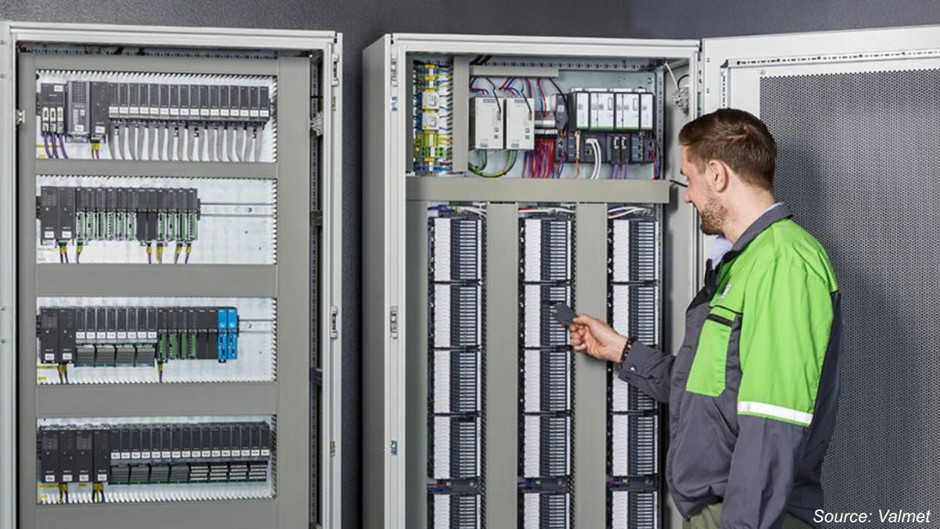
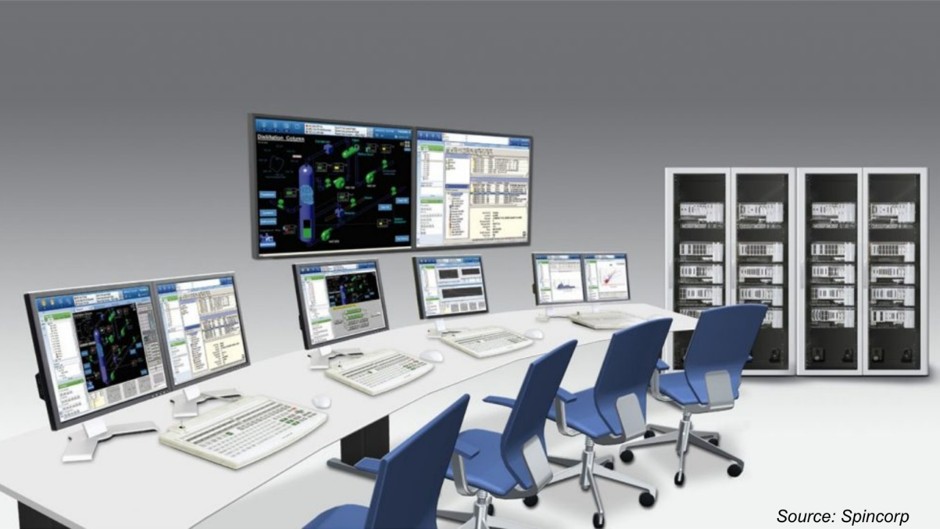
The hardware segment of the market encompasses all physical components essential for monitoring, controlling, and automating industrial and energy processes across the continent. Key elements include controllers, which execute control algorithms and manage system operations; input/output (I/O) modules, which interface with field devices to gather data and transmit control signals; operator workstations, which provide real-time system visualization and control capabilities; and networking hardware, which ensures seamless communication between distributed energy resources (DERs), central control systems, and other DCS components. Collectively, these hardware components form the foundation of DCS solutions in Africa, enabling reliable, efficient, and scalable operations to support the continent’s rapidly evolving industrial and energy infrastructure.

The chart represents the Africa distributed control system market share by Component
Hardware. It leads the industry with a 49.20% share, followed by Software at 18.33%, and Services at 32.48%, indicating strong demand for physical infrastructure alongside growing adoption of software solutions and related services in the market.
By Architecture Insights
How does Architecture Affect Distributed Control System Purchasing Power?
Based on architecture, the market is categorized into centralized controller systems, hybrid/distributed hybrid system.
The centralized controller systems segment of the market refers to architectures in which a single central controller oversees the monitoring and control of an entire process or network. In this configuration, all field devices, sensors, actuators, and input/output (I/O) modules communicate directly with the central controller, which executes control algorithms, collects real-time data, and issues operational commands. This setup simplifies system management, reduces complexity in smaller installations, and enables centralized supervision and streamlined decision-making. While highly effective for compact or less geographically dispersed operations, centralized controller systems depend on the continuous availability of the central controller, making reliability and system redundancy critical considerations for Africa’s industrial and energy applications.
By Application Insights
What Types of Applications are Most Sought After?
Based on application, the market is categorized into batch and continuous process.
The Batch segment of the market covers processes in which raw materials are produced or transformed in discrete, predefined quantities or “batches.” In these operations, process variables, sequencing, and timing are meticulously controlled to ensure product quality, consistency, and safety. DCS solutions for batch processes offer features such as recipe management, automated sequencing, real-time monitoring, and reporting, enabling operators to efficiently oversee complex production cycles. This segment is especially significant for African industries such as pharmaceuticals, food and beverages, and specialty chemicals, where precise control and traceability of individual production batches are essential for regulatory compliance, operational efficiency, and reducing material wastage.

The chart represents the Africa distributed control system market dynamics by application, with the Continuous Process segment dominating at 73.15%, reflecting strong demand for real-time, uninterrupted industrial operations, while the Batch Oriented segment accounts for 26.85%, serving processes that require discrete production cycles or smaller-scale manufacturing.
By Project Type Insights
How does Project Type Influence the Market?
Based on the project type, the market is categorised into new construction, replacement, upgrade/expansion.
The new construction segment of the market covers projects that involve installing DCS solutions in newly built industrial plants, energy facilities, or infrastructure. These projects provide the opportunity to integrate the latest hardware, software, and automation technologies from the outset, allowing for optimized system design, scalability, and operational efficiency. DCS solutions in new construction projects are typically customized to meet specific process requirements, regulatory standards, and anticipated future expansion. This segment is particularly important for Africa’s energy and industrial sectors, especially with the growth of renewable energy projects, smart grid initiatives, and large-scale industrial developments, where advanced control systems are essential for ensuring operational reliability, safety, and performance.
Regional Outlook
The Africa distributed control system market trends is geographically studied across South Africa, Nigeria, Ghana, Kenya, Morocco, Egypt and Other African Countries.
Africa distributed control system market in South Africa
South Africa leads the market, driven by its large industrial base and robust energy sector. With 10,370 MW of gas plants in development and electricity production of 229,309 GWh, automation in power generation is increasingly essential. The country also contributes USD 1,653.26 million in chemical exports and USD 601.71 million in pharmaceutical exports, underscoring the importance of distributed control systems in optimizing complex industrial operations efficiently.
Africa distributed control system market in the Nigeria
Nigeria is the fastest-growing DCS market in Africa, fueled by rapid industrialization and expansion in the energy sector. With 18,503 MW of gas plants under development and electricity production of 40,959 GWh, the country’s power and oil & gas industries require advanced process control. Nigeria also accounts for USD 6,409.93 million in chemical exports, while pharmaceutical exports are limited to USD 1.16 million, highlighting opportunities for DCS adoption across its industrial sectors.
Africa distributed control system market in Ghana
Ghana’s DCS market is gradually expanding, supported by mining, chemical, and energy sectors. Although the country currently has no gas plants in development, it produces 24,268 GWh of electricity. Ghana contributes USD 2,317.14 million in chemical exports and USD 14.80 million in pharmaceutical exports. Industries are increasingly adopting automation solutions to improve efficiency, reduce operational risks, and modernize processes, offering steady opportunities for DCS providers.
Africa distributed control system market in Kenya
Kenya’s DCS market is emerging, driven by energy, manufacturing, and water treatment sectors. With electricity production of 12,703 GWh and pharmaceutical exports of USD 175.22 million, automation is critical to supporting industrial growth. Kenya produces USD 2,775.97 million in chemical exports and currently has no gas plants in development, highlighting opportunities for DCS deployment in upcoming industrial and energy projects. International vendors are exploring partnerships to capitalize on Kenya’s expanding industrial landscape.
Africa distributed control system market in the Morocco
Morocco’s DCS market is developing steadily, supported by industrial modernization in energy, phosphate, and chemical sectors. With 4,697 MW of gas plants in development and electricity production of 43,711 GWh, industries are increasingly implementing automation solutions. Morocco contributes USD 6,591.38 million in chemical exports and USD 79.91 million in pharmaceutical exports, emphasizing the need for efficient control systems to enhance productivity, reduce downtime, and optimize complex industrial processes.
Africa distributed control system market in Egypt
Egypt is witnessing moderate growth in its DCS market, driven by the oil & gas, power, and chemical sectors. With 2,675 MW of gas plants under development and electricity production of 215,130 GWh, automation is essential for operational efficiency. The country contributes USD 12,646.64 million in chemical exports and USD 448.71 million in pharmaceutical exports, highlighting the vital role of distributed control systems in large-scale industrial operations.
Africa distributed control system market in Other African Countries
Other African countries, including Angola, Tanzania, Algeria, and others, collectively account for 21,829 MW of gas plants in development, 335,273 GWh of electricity production, USD 33,951.32 million in chemical exports, and USD 67.48 million in pharmaceutical exports. While DCS adoption is lower than in South Africa or Nigeria, growing industrial projects in energy, mining, and manufacturing are gradually driving demand, presenting strategic opportunities for regional and global DCS providers.
Competitive Landscape
What are the Top Companies in the Africa Distributed Control System Industry, and How are they Competing Against One Another?
The Africa distributed control system industry is led by major global and regional players, including ABB Ltd., Siemens AG, Honeywell International Inc., Emerson Electric Co., Rockwell Automation Inc., Schneider Electric, GE Vernova LLC, Valmet Oyj, Yokogawa Electric Corporation, Hitachi Ltd., Mitsubishi Electric Corporation, Toshiba Corporation, iOCO Limited, Worley Ltd., Azbil Corporation, and Ingeteam Corporation.
Competition in Africa is characterized by both well-established multinational companies and specialized automation solution providers. Key players leverage extensive service networks, integrated software-hardware offerings, and digital solutions to serve diverse sectors such as energy, oil & gas, chemicals, water treatment, and utilities. Emerging trends include the adoption of smart grid technologies, renewable energy integration, and advanced automation solutions, creating opportunities for digital entrants and innovative DCS providers focused on real-time monitoring, remote control, and predictive maintenance, which are driving operational efficiency and modernization across the continent.

Innovation and Adaptability Drive Africa Distributed Control System Market Success
In the DCS landscape, success increasingly depends on digital innovation, system adaptability, and sustainability-focused solutions. Schneider Electric is playing a pivotal role in advancing Africa's distributed control system market through the integration of cloud-based solutions and robust digital infrastructure.
Its EcoStruxure Automation Expert platform combines traditional industrial automation with modern technologies such as cloud connectivity and edge computing, creating a hybrid DCS model that enables real-time monitoring, predictive maintenance, and seamless IT/OT convergence. This approach allows African industries, including energy, manufacturing, and infrastructure, to optimize complex processes, improve system reliability, and enhance operational efficiency.
Further strengthening its impact on the continent, Schneider Electric partnered with IXAfrica to launch NBOX1, East Africa's largest hyper-cloud data center in Nairobi. Powered sustainably by Kenya’s grid, this facility supports AI-ready applications and ensures 99.999% uptime, providing a reliable foundation for cloud-connected DCS deployments. These initiatives highlight Schneider Electric’s strategic contribution to Africa’s industrial digitalization, fostering the growth and modernization of the DCS market across the region.
Market Players to Opt for Partnership & Acquisition Strategies to Expand their Presence
In the Africa distributed control system market, consolidation and strategic acquisitions are accelerating as companies aim to expand both geographic reach and digital capabilities. ABB is playing a pivotal role in advancing Africa's distributed control system market through strategic partnerships and the adoption of cutting-edge technologies.
In 2024, ABB expanded its collaboration with South African paper producer Neopak to upgrade Paper Machine 3 (PM3) at its mill, implementing the ABB Ability System 800xA DCS. This upgrade integrates advanced technologies such as Quality Control Systems (QCS) and variable speed drives, enabling real-time monitoring, predictive maintenance, and enhanced process control.
By optimizing operational efficiency, boosting productivity, and ensuring consistent product quality, ABB’s solutions support Neopak’s smart manufacturing objectives while demonstrating the company’s broader commitment to the digital transformation of African industries. These initiatives highlight ABB’s strategic approach to strengthening its footprint in the continent’s DCS market, addressing the growing demand for reliable, innovative, and scalable automation solutions across sectors such as manufacturing and energy.
Key Players
-
Siemens AG
-
Honeywell International Inc.
-
Emerson Electric Co.
-
Schneider Electric
-
GE Vernova LLC
-
Valmet Oyj
-
Yokogawa Electric Corporation
-
Hitachi Ltd.
-
Mitsubishi Electric Corporation
-
Toshiba Corporation
-
iOCO Limited
-
Worley Ltd.
-
Azbil Corporation
-
Ingeteam Corporation
What Are the Latest Key Industry Developments?
Companies like ABB, Siemens, Honeywell, Emerson, Rockwell Automation, Schneider Electric, GE Vernova, Valmet, Yokogawa, Hitachi, Mitsubishi Electric, Toshiba, iOCO, Worley, Azbil, and Ingeteam are actively driving the growth of the Africa distributed control system market by introducing advanced automation technologies, expanding regional operations, and forming strategic partnerships.
Through the launch of next-generation DCS platforms, AI-integrated controllers, and hybrid solutions, they are enhancing operational efficiency, reliability, and scalability across industries such as energy, chemicals, and manufacturing. By establishing innovation hubs, participating in regional trade fairs, and collaborating with local industrial players, these companies are facilitating knowledge transfer, workforce skill development, and digital transformation.
Collectively, their initiatives are accelerating the adoption of modern control systems, supporting infrastructure development, and fostering a more technologically sophisticated industrial landscape across the African continent.
What Are the Key Factors Influencing Investment Analysis & Opportunities in the Africa Distributed Control System Market?
The market is attracting growing investment as industries increasingly adopt automation across energy, manufacturing, and infrastructure sectors. The continent’s move toward renewable energy, smart grid modernization, and advanced industrial systems is driving strong demand for innovative control solutions. These systems enhance operational efficiency, reliability, and scalability, creating opportunities for technology providers to introduce next-generation DCS platforms that support Africa’s evolving industrial landscape.
Investment trends reveal a focus on infrastructure upgrades, digitalization initiatives, and technological advancements in DCS solutions. Regions with significant renewable energy projects and industrial development are emerging as key investment hotspots, offering attractive prospects for both domestic and international investors. Companies that form strategic partnerships with local stakeholders and deliver scalable, sustainable DCS solutions are well-positioned to benefit from Africa’s ongoing energy transition and broader industrial modernization.
Key Benefits for Stakeholders:
Next Move Strategy Consulting (NMSC) presents a comprehensive analysis of the Africa distributed control system market, covering historical trends from 2020 through 2024 and offering detailed forecasts through 2030. Our study examines the industry at global, regional, and country levels, providing quantitative projections and insights into key growth drivers, challenges, and investment opportunities across all major DCS segments.
Different stakeholders in the Africa distributed control system market stand to gain significantly from its growth. Investors benefit from the expanding demand for automation and digitalization across energy, manufacturing, and infrastructure sectors, which offers attractive returns through projects focused on renewable energy, smart grids, and industrial modernization.
Customers, including industrial operators and utility companies, gain enhanced operational efficiency, improved reliability, and greater scalability by adopting advanced DCS solutions, enabling optimized production, reduced downtime, and cost savings. Additionally, collaboration with technology providers allows both investors and customers to leverage innovation, training, and local expertise, creating a mutually beneficial ecosystem that supports sustainable industrial development across the continent.
Report Scope
|
Parameters |
Details |
|
Market Size in 2025 |
USD 1.31 billion |
|
Revenue Forecast in 2030 |
USD 1.87 billion |
|
Growth Rate |
CAGR of 7.35% from 2025 to 2030 |
|
Analysis Period |
2024–2030 |
|
Base Year Considered |
2024 |
|
Forecast Period |
2025–2030 |
|
Market Size Estimation |
Billion (USD) |
|
Growth Factors |
|
|
Companies Profiled |
16 |
|
Countries Covered |
6 |
|
Market Share |
Available for 10 companies |
|
Customization Scope |
Free customization (equivalent up to 80 analyst-working hours) after purchase. Addition or alteration to country, regional & segment scope. |
|
Pricing and Purchase Options |
Avail customized purchase options to meet your exact research needs. |
|
Approach |
In-depth primary and secondary research; proprietary databases; rigorous quality control and validation measures. |
|
Analytical Tools |
Porter's Five Forces, SWOT, value chain, and Harvey ball analysis to assess competitive intensity, stakeholder roles, and relative impact of key factors. |
Africa Distributed Control System Market Key Segments
By Component
-
Hardware
-
Controller
-
I/O Modules
-
Workstation
-
Networking Hardware
-
-
Software
-
Service
-
Integration and Implementation
-
Managed Services
-
Support and Consultation
-
By Architecture
-
Centralized Controller Systems
-
Hybrid / Distributed Hybrid Systems
-
Fully Redundant High-Availability Systems
By Application
-
Batch
-
Continuous Process
By Project Type
-
New Construction
-
Replacement
-
Upgrade/Expansion
By Plant Size
-
Small (Greater Than 5000 I/O)
-
Medium (5000 To 15000 I/O)
-
Large (Less Than 15000 I/O)
By End User
-
Oil and Gas
-
Upstream
-
Midstream
-
Downstream and Refineries
-
-
Chemicals and Refining
-
Energy and Power
-
Thermal Power Plants
-
Renewable And Battery Storage Plants
-
-
Pulp And Paper
-
Metals And Mining
-
Pharmaceutical And Biotech
-
Food And Beverages
-
Cement And Glass
-
Water And Wastewater
-
Others
By Country
-
South Africa
-
Nigeria
-
Ghana
-
Kenya
-
Morocco
-
Egypt
-
Other African Countries
Conclusion & Recommendations
Our report equips stakeholders, industry participants, investors, and consultants with actionable insights to leverage the dynamic growth of the Africa distributed control system (DCS) market. By integrating comprehensive, data-driven analysis with strategic perspectives and market frameworks, the report serves as a vital resource for understanding evolving industry trends, technological advancements, and competitive dynamics across the African continent.
It enables stakeholders to make informed decisions, identify growth opportunities, and effectively navigate the challenges and opportunities within Africa’s distributed control system market, supporting investment strategies, operational planning, and long-term market engagement.


About the Author
 Bidhudhyoti Nag
— Bidhudhyoti Nag is a skilled market researcher known for delivering structured insights that support strategic decision-making. With strong analytical capabilities and a keen understanding of evolving market dynamics, he contributes to opportunity assessment, trend tracking, and insight-driven content development. He is passionate about translating research into clear narratives that inform business thinking and thought leadership. Outside of work, he enjoys sports, traveling, and exploring diverse cultures that broaden his global perspective.
Bidhudhyoti Nag
— Bidhudhyoti Nag is a skilled market researcher known for delivering structured insights that support strategic decision-making. With strong analytical capabilities and a keen understanding of evolving market dynamics, he contributes to opportunity assessment, trend tracking, and insight-driven content development. He is passionate about translating research into clear narratives that inform business thinking and thought leadership. Outside of work, he enjoys sports, traveling, and exploring diverse cultures that broaden his global perspective.
About the Reviewer
 Supradip Baul
— Supradip Baul is an accomplished business consultant and strategist with over a decade of rich experience in market intelligence, strategy, technology, and business transformation. His work has included rigorous qualitative and quantitative analysis across multiple industries, helping clients shape investment decisions and long-term roadmaps. Earlier in his career, he was associated with Gartner, where he contributed to industry-leading reports and market share analyses. He has worked with leading global companies and holds an MBA with a dual specialization in Marketing and Finance.
Supradip Baul
— Supradip Baul is an accomplished business consultant and strategist with over a decade of rich experience in market intelligence, strategy, technology, and business transformation. His work has included rigorous qualitative and quantitative analysis across multiple industries, helping clients shape investment decisions and long-term roadmaps. Earlier in his career, he was associated with Gartner, where he contributed to industry-leading reports and market share analyses. He has worked with leading global companies and holds an MBA with a dual specialization in Marketing and Finance.
At Next Move Strategy Consulting, we understand that insightful market research is the cornerstone of successful business decisions. That's why we employ a robust and multifaceted approach, combining various methodologies to deliver the most accurate and actionable data for our clients.

Research Landscape
We navigate the world of research with two primary approaches:
Qualitative Approach
Our qualitative research methodologies involve immersive techniques such as in-depth interviews, focus groups, and observational studies. By engaging directly with individuals and stakeholders, we uncover valuable insights that quantitative data alone may overlook.

Quantitative Research
In tandem with qualitative methodologies, NMSC leverages the power of Quantitative Research to provide a robust foundation of numerical insights. Through systematic data collection and analysis, we quantify patterns, preferences, and market trends, offering a comprehensive view of the business landscape.
Our quantitative research approach employs diverse tools, including surveys, experiments, and statistical modelling. These methodologies enable us to gather data from a large and representative sample, ensuring the statistical significance of our findings. By employing structured questionnaires and standardized data collection methods, we guarantee the reliability and validity of the information we present to our clients.
Quantitative research is particularly effective in measuring the prevalence of trends, assessing market size, and gauging the impact of various factors on consumer behavior. The numerical precision attained through this approach equips our clients with actionable insights, facilitating data-driven decision-making and strategy formulation.


Our Specialized Toolbox for Industry-Specific Market Research
We deploy a specialized arsenal of techniques tailored to meet your unique requirements. Here's a glimpse into our comprehensive toolbox:

Information Procurement
The stage entails acquiring market data or relevant information through various sources and methodologies.


Market Research Approach
We utilize both top-down and bottom-up approaches in market research analysis to achieve a comprehensive understanding of the market dynamics, leveraging the broad perspective of industry trends and macroeconomic factors alongside detailed insights from specific segments and individual companies.

Porters Five Forces Analysis
We conduct Porter's Five Forces analysis to evaluate the competitive landscape of an industry, providing us with insights into factors that affect profitability and strategic positioning.

SWOT Analysis

Forecasting
We utilize a forecasting model to predict future consumption by considering parameters like population, economics, regulations, market competition, drivers, constraints, technology, and pricing. We also employ statistical techniques such as multilinear regression, exponential smoothing, moving average, ARIMA, and Monte Carlo simulations for accurate predictions. In econometric forecasting, we analyzed short-term and long-term event impacts, attributing values based on regulatory frameworks, economic factors, and market events.





 Speak to Our Analyst