Digital Pathology Market Size, Share, Growth & Forecast by Product (Hardware: Scanners, Storage Systems, Workstations; Software: Image Management, Image Analysis, AI, Workflow; Services: Implementation, Consulting, Maintenance, Managed Services), Deployment Mode, Function (Primary Diagnostics, Research, Education, QA), Technology (WSI, AI-Assisted Pathology, Telepathology, Cloud-Native Platforms), End User, Revenue Stream, and Distribution Channel — Global Analysis 2026–2035
Industry: Healthcare | Latest Edition: October 13, 2026 | No of Pages: 805 | No. of Tables: 1089 | No. of Figures: 1081 | Format: PDF | Report Code: HC78
What Is the Digital Pathology Market Size?
The global Digital Pathology Market was valued at USD 1.12 billion in 2025 and is expected to reach USD 1.34 billion in 2026. Driven by accelerating adoption of whole slide imaging, rapid integration of artificial intelligence in diagnostic workflows, and expanding telepathology infrastructure across emerging economies, the market is projected to reach USD 6.84 billion by 2035, advancing at a CAGR of 19.8% from 2026 to 2035. Key growth catalysts include surging demand for remote and teleconsultation-based diagnostics, rising cancer incidence globally, workforce shortages among pathologists, growing pharmaceutical research reliance on digital tissue analysis, and regulatory approvals of AI-powered diagnostic tools across the United States, Europe, and Asia Pacific.
|
Parameters |
Details |
|
Market Size in 2025 |
USD 1.12 Billion |
|
Market Size in 2026 |
USD 1.34 Billion |
|
Revenue Forecast in 2035 |
USD 6.84 Billion |
|
Growth Rate |
CAGR of 19.8% from 2026 to 2035 |
|
Analysis Period |
2025–2035 |
|
Base Year Considered |
2025 |
|
Forecast Period |
2026–2035 |
|
Market Size Estimation |
Billion USD |
|
Companies Profiled |
20 |
|
Countries Covered |
33 |
|
Market Share |
Top 10 |
Digital Pathology Market Overview
What Is the Digital Pathology Market?
The Digital Pathology Market encompasses the hardware, software, and services that enable the digitization, management, analysis, and sharing of pathological tissue specimens and associated data. At its core, digital pathology replaces conventional glass slide microscopy with high-resolution whole slide imaging systems, integrating image management platforms, artificial intelligence-driven analysis tools, and cloud-native telepathology infrastructure. The market serves a broad stakeholder ecosystem including hospital laboratories, commercial diagnostic reference laboratories, pharmaceutical companies, academic research institutions, veterinary diagnostics, and government health laboratories worldwide.
How Has the Digital Pathology Market Evolved?
The Digital Pathology Market has progressed through three distinct transformation phases. The initial phase involved the deployment of first-generation brightfield whole slide scanners for tissue archiving and academic research workflows. The second phase introduced pathology-specific image management platforms including PACS integrations and laboratory information system connectivity. NMSC's analysis indicates that the current phase is defined by AI-native diagnostic platforms, enabling automated cancer detection and grading, quantitative biomarker analysis, multiplexed imaging, and real-time teleconsultation capabilities across cloud-connected multi-site laboratory networks.
How Do Regulations Influence the Digital Pathology Market?
Regulatory frameworks represent a critical structural force shaping the Digital Pathology Market. In the United States, the U.S. Food and Drug Administration has authorized multiple AI-powered digital pathology tools under the De Novo and 510(k) pathways, including approvals for prostate cancer detection algorithms. The European In Vitro Diagnostics Regulation (IVDR) mandates rigorous clinical evidence requirements for software intended for diagnostic use, compelling vendors to invest in clinical validation studies. Based on NMSC's research, we found that regulatory clarity is accelerating enterprise procurement of AI diagnostic tools across the United States, Germany, and Japan.
How Is Technology Adoption Expanding Across the Digital Pathology Market?
Technology adoption in the Digital Pathology Market is accelerating as laboratory networks invest in end-to-end digitization programs supported by cloud-native deployment architectures. Fluorescence and multimodal scanning technologies are expanding beyond research laboratories into routine clinical settings. Our findings suggest that the integration of AI software with existing laboratory information systems and electronic health records is reducing workflow friction and enabling real-time case routing, triage automation, and quality assurance management. Simultaneously, compact scanner formats are lowering the capital investment threshold for community hospitals and smaller diagnostic laboratories entering the digital pathology ecosystem.
|
Key Takeaways |
|
The Software segment held the largest revenue share in the Digital Pathology Market at USD 0.46 billion in 2025, driven by strong adoption of AI diagnostic software and image management platforms across hospital and commercial laboratory networks globally. |
|
AI Software is the fastest-growing product sub-segment, projected to advance at a CAGR of 25.2% from 2026 to 2035, driven by FDA-cleared cancer detection algorithms, biomarker quantification tools, and clinical decision support platforms. |
|
On-Premise deployment held the largest share at USD 0.56 billion in 2025, as hospitals and reference laboratories prefer localized data control for sensitive patient diagnostic data under existing IT governance frameworks. |
|
Cloud-Deployed or Web-Based deployment is the fastest growing at a CAGR of 23.1% from 2026 to 2035, enabling multi-site laboratory connectivity, remote pathologist access, and scalable AI inference without capital infrastructure investment. |
|
Primary Diagnostics held the largest functional share at USD 0.48 billion in 2025, as routine reporting, second opinion teleconsultation, and intraoperative consultation digitization represent the largest addressable demand pool in the Digital Pathology Market. |
|
Research and Drug Discovery is the fastest-growing functional segment at a CAGR of 20.8% from 2026 to 2035, fueled by pharmaceutical company investments in translational research, biomarker discovery, and clinical trials digital tissue analysis infrastructure. |
|
Whole Slide Imaging held the dominant technology share at USD 0.52 billion in 2025, as WSI platforms constitute the foundational hardware layer enabling all downstream digital pathology analytical and management workflows. |
|
AI-Assisted Pathology is the fastest-growing technology segment at a CAGR of 24.0% from 2026 to 2035, driven by regulatory clearances, mounting pathologist workload pressure, and proven clinical utility across oncology and chronic disease diagnostics. |
|
Hospital Laboratories accounted for the largest end-user share at USD 0.45 billion in 2025, representing the primary site of clinical diagnostic workflows across both public and private healthcare systems globally. |
|
Pharmaceutical and CROs constitute the fastest-growing end-user segment at a CAGR of 20.7% from 2026 to 2035, as clinical trials increasingly require quantitative tissue biomarker analysis and AI-powered histopathology assessment. |
|
Software License Sales represented the largest revenue stream at USD 0.36 billion in 2025, supported by growing subscription model adoption and the transition from perpetual licensing toward SaaS-based platform delivery. |
|
Recurring Revenue including SaaS, maintenance contracts, and managed platform services is the fastest-growing stream at a CAGR of 22.4% from 2026 to 2035, reflecting the market's structural shift toward consumption-based and platform-as-a-service commercialization. |
|
Direct Sales remained the leading distribution channel at USD 0.52 billion in 2025, as enterprise laboratory procurement, multi-site hospital contracting, and pharmaceutical integrations demand customized implementation and dedicated account management. |
|
System Integrator Sales is the fastest-growing channel at a CAGR of 21.5% from 2026 to 2035, as large hospital networks and government procurement programs increasingly engage system integrators for end-to-end digital pathology laboratory transformation engagements. |
|
North America held the largest regional share at USD 0.47 billion in 2025, projected to reach USD 2.78 billion by 2035 at a CAGR of 19.3%, anchored by the highest FDA-cleared AI diagnostic tool density and the most advanced enterprise laboratory digitization programs globally. |
|
Asia Pacific is the fastest-growing major region in the Digital Pathology Market at a CAGR of 22.6%, propelled by China's hospital modernization programs, India's expanding diagnostics sector, and Japan's advanced precision oncology infrastructure. |
|
The United States is the single largest national market, accounting for over 75% of North American revenue in 2025, underpinned by the world's highest concentration of digital pathology vendors, AI diagnostic approvals, and enterprise laboratory networks. |
|
India is the fastest-growing national market in Asia Pacific within the Digital Pathology Market at a CAGR of 26.8%, driven by national health mission digitization programs, private hospital group expansion, and growing pharmaceutical outsourcing activity. |
Key Emerging Trends in the Digital Pathology Market
How Is Artificial Intelligence Integration Transforming the Digital Pathology Market?
AI integration is the most consequential trend reshaping the Digital Pathology Market, enabling pathologists to process substantially higher case volumes with augmented diagnostic precision. From our research, we found that FDA-cleared AI algorithms from companies such as PathAI and Paige AI now provide automated prostate and breast cancer detection with clinically validated sensitivity and specificity metrics. AI-based triage tools autonomously prioritize urgent cases, reducing turnaround times for oncology workflows by a measurable margin. Pharmaceutical companies are deploying AI tissue analysis platforms to accelerate companion diagnostic development and biomarker qualification programs across late-stage clinical trials globally.
How Is Cloud-Native Pathology Infrastructure Reshaping the Digital Pathology Market?
Cloud-native pathology platforms are fundamentally altering the infrastructure economics of the Digital Pathology Market, enabling multi-site laboratory networks to consolidate diagnostic capacity across geographies without proportional capital investment in on-premise server infrastructure. Through NMSC's assessment, we found that cloud-deployed image management platforms support federated access by pathologists across multiple hospital sites and time zones, directly enabling remote teleconsultation and second-opinion services. Major pathology PACS vendors including Sectra and Philips are expanding their cloud-native service offerings, while emerging players are building pathology-specific cloud platforms with built-in AI inference and collaborative annotation capabilities.
What Role Is Multiplexed Imaging Playing in the Evolution of the Digital Pathology Market?
Multiplexed imaging technologies, which enable simultaneous visualization of multiple biomarkers within a single tissue section, are transitioning from specialized research applications into routine pharmaceutical and translational medicine workflows within the Digital Pathology Market. Based on our market evaluation, we noticed that spatial biology platforms supporting multiplexed fluorescence and mass spectrometry-based tissue imaging are generating significant demand from oncology research programs focused on tumor microenvironment characterization, immunotherapy response prediction, and companion diagnostic development. These capabilities are driving premium hardware and software investment cycles across pharmaceutical companies and academic cancer research centers.
How Is the Shortage of Pathologists Accelerating Digital Pathology Market Adoption?
The global shortage of trained pathologists is functioning as a powerful structural demand driver within the Digital Pathology Market, compelling healthcare systems to accelerate telepathology deployments and AI-assisted diagnostic tool integration. Our assessment indicates that the World Health Organization has documented significant pathologist workforce deficits across low- and middle-income countries, creating immediate demand for scalable remote diagnostic infrastructure. In high-income markets including the United States, United Kingdom, and Australia, aging pathologist workforces combined with rising cancer incidence are creating unsustainable case volume growth that AI triage and digital workflow automation tools are uniquely positioned to address.
Ecosystem Analysis of the Digital Pathology Market
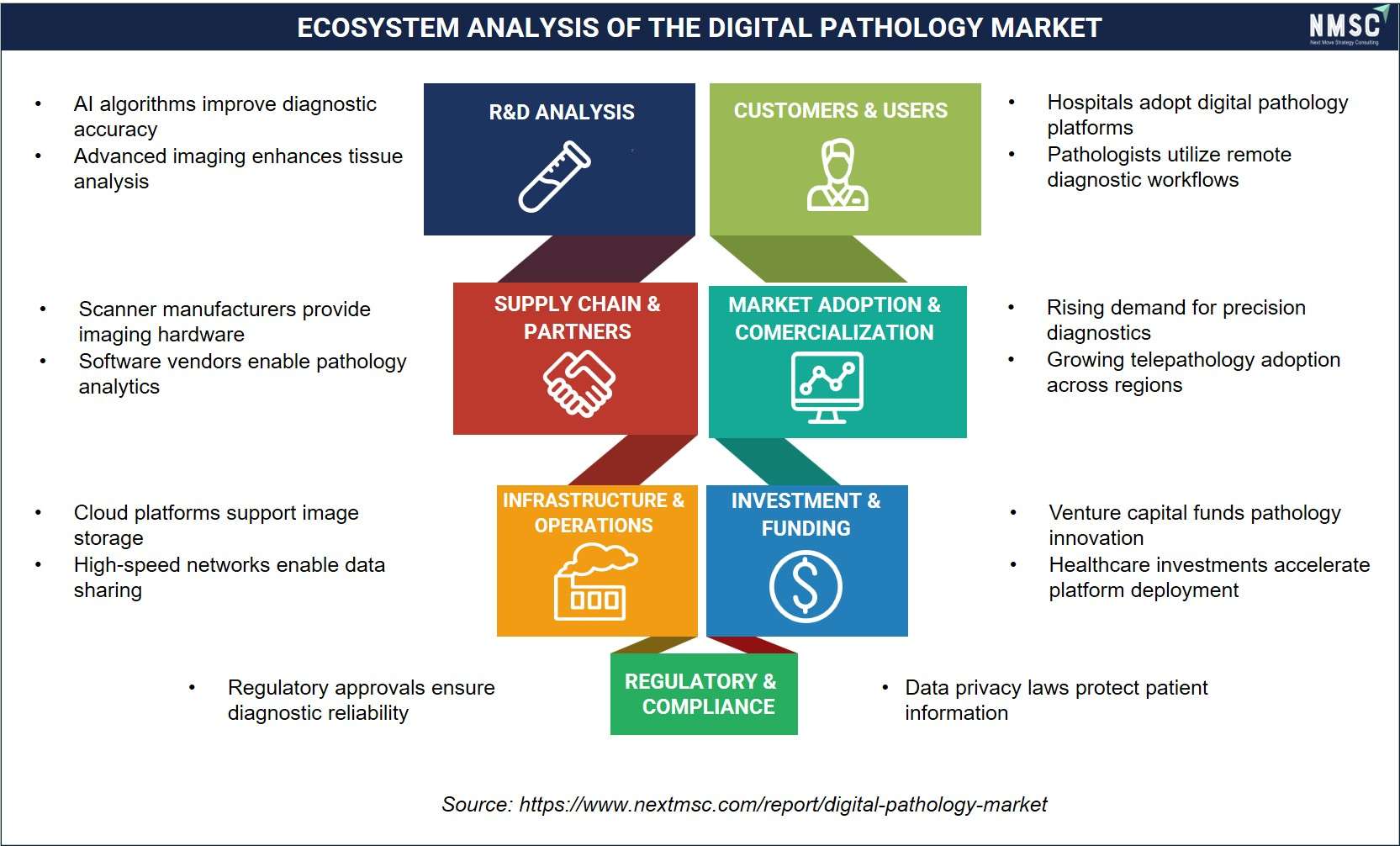
The Digital Pathology Market ecosystem is built on the interaction of research institutions, technology developers, healthcare providers, diagnostic laboratories, regulatory bodies, investors, and commercial partners. Innovation is driven by advancements in digital imaging, artificial intelligence, and computational pathology, while adoption is supported by healthcare organizations seeking improved diagnostic accuracy and workflow efficiency. Strategic investments, infrastructure development, regulatory approvals, and collaborations among technology vendors, laboratories, and pharmaceutical companies collectively shape market growth and accelerate the transition toward AI-enabled pathology solutions.
What Are the Key Market Drivers, Breakthroughs, and Investment Opportunities that Will Shape the Digital Pathology Market in the Next Decade?
|
Drivers / Trends / Restraints |
(+/-) % Impact on CAGR Forecast |
Geographic Relevance |
Impact Timeline |
|
AI Diagnostic Software Adoption |
+3.2% |
Global (led by North America, Europe) |
2025–2030 |
|
Rising Cancer Incidence Globally |
+2.4% |
Global (all regions) |
2025–2035 |
|
Pathologist Workforce Shortages |
+2.1% |
North America, Europe, APAC, MEA |
2025–2035 |
|
Pharma R&D Digital Tissue Analysis |
+1.8% |
North America, Europe |
2025–2030 |
|
Cloud-Native Platform Expansion |
+1.6% |
North America, APAC, Europe |
2026–2035 |
|
Telepathology Infrastructure Build-Out |
+1.4% |
APAC, MEA, Latin America |
2026–2035 |
|
Regulatory Clearance of AI Tools (FDA, CE-IVDR) |
+1.2% |
North America, Europe |
2025–2030 |
|
High Initial Capital Expenditure for WSI Systems |
-1.4% |
SMBs and LMIC settings globally |
2025–2029 |
|
Data Privacy and Patient Data Governance Constraints |
-0.9% |
Europe, North America, APAC |
Ongoing |
|
Workflow Integration Complexity with Legacy LIS/EHR |
-0.7% |
All regions |
2025–2028 |
|
Spatial Biology and Multiplexed Imaging |
+1.9% |
North America, Europe |
2026–2035 |
|
Veterinary Pathology Digitization |
+0.8% |
North America, Europe, APAC |
2027–2035 |
What Are the Growth Drivers of the Digital Pathology Market?
How Is the Global Rise in Cancer Incidence Driving the Digital Pathology Market?
Cancer incidence represents the most durable structural demand driver for the Digital Pathology Market, directly expanding the volume of tissue specimens requiring pathological analysis. According to the World Health Organization, global cancer cases are projected to rise to approximately 35 million new cases annually by 2050, up from an estimated 20 million in 2022, intensifying diagnostic workload across all healthcare systems. Digital pathology platforms that automate slide scanning, AI-assisted triage, and remote reporting workflows are uniquely positioned to address this demand surge. The growing need for companion diagnostics in precision oncology is further amplifying pharmaceutical adoption of quantitative tissue analysis platforms.
How Are Pathologist Workforce Shortages Accelerating Digital Pathology Market Demand?
Trained pathologist shortages across both developed and developing health systems are compelling rapid investment in digital pathology workflow automation and telepathology infrastructure. Based on NMSC's research, we found that the Association of American Medical Colleges has documented projected physician specialty shortfalls across pathology that will intensify through 2036 absent corrective workforce expansion. In the United Kingdom, NHS pathology networks have formally adopted digital pathology as a strategic workforce efficiency solution. AI-assisted triage tools that automatically prioritize malignant cases and flag low-probability benign findings are enabling existing pathologist workforces to manage materially higher annual case volumes without proportional headcount growth.
How Is Pharmaceutical R&D Investment Expanding the Digital Pathology Market Scope?
Pharmaceutical and contract research organizations represent a rapidly expanding end-user segment within the Digital Pathology Market, investing in digital tissue analysis infrastructure to support companion diagnostic development, translational research, clinical trial histopathology, and biomarker qualification programs. Our analysis shows that the U.S. National Institutes of Health research funding for cancer biology, which exceeded USD 7.4 billion in fiscal year 2024, routinely funds digital tissue analysis infrastructure across academic medical centers and CRO partners. Pharmaceutical companies are additionally embedding AI tissue analysis capabilities within their own research organizations to accelerate target identification and therapeutic efficacy assessment across early-phase oncology trials.
What Are the Growth Inhibitors of the Digital Pathology Market?
How Does High Capital Expenditure for Whole Slide Imaging Systems Constrain Digital Pathology Market Adoption?
The capital cost of deploying enterprise-grade whole slide imaging infrastructure represents the most significant near-term adoption barrier within the Digital Pathology Market, particularly for community hospitals, rural healthcare facilities, and laboratories operating in low- and middle-income country settings. High-throughput brightfield scanners from vendors such as Hamamatsu and Philips carry substantial per-unit acquisition costs, and end-to-end laboratory digitization programs including servers, networking, storage, and validated image management platforms represent significant total investment commitments. Through our market assessment, we observed that government health systems and smaller private laboratories frequently require multi-year capital planning cycles before committing to full digital pathology transformation programs.
How Do Data Governance and Integration Complexity Inhibit Digital Pathology Market Growth?
Patient data privacy obligations and legacy laboratory information system integration complexity present structural constraints on the pace of Digital Pathology Market expansion across regulated healthcare markets. In Europe, the General Data Protection Regulation requires strict controls over patient-identifiable pathology images, compelling vendors to implement granular access management, data residency controls, and audit trail capabilities that increase platform complexity and implementation costs. Our findings suggest that integration of digital pathology platforms with existing laboratory information systems, electronic health record environments, and hospital PACS infrastructure frequently extends deployment timelines and adds unanticipated professional services costs that dampen near-term market adoption velocity.
What Are the Growth Opportunities in the Digital Pathology Market?
How Does AI-Powered Diagnostic Software Create a High-Growth Opportunity in the Digital Pathology Market?
AI-powered diagnostic software represents the highest-growth commercial opportunity within the Digital Pathology Market, with FDA-cleared and CE-marked applications beginning to transition from early adopter to mainstream laboratory deployment across oncology, dermatology, and nephrology subspecialties. Based on our market evaluation, we noticed that the FDA's Digital Health Center of Excellence has published guidance frameworks for AI/ML-based software as a medical device that are streamlining regulatory review pathways for next-generation diagnostic algorithms. Companies including PathAI, Paige AI, and Ibex Medical Analytics are commercializing cancer detection, grading, and biomarker quantification tools with proven clinical utility, creating durable recurring software revenue streams within pathology laboratory networks.
How Is Telepathology Expansion Across Emerging Markets Creating a Structural Opportunity in the Digital Pathology Market?
Telepathology represents a structurally significant growth opportunity in underserved markets where trained pathologist availability is severely constrained. Our assessment indicates that sub-Saharan Africa, South Asia, and Southeast Asia face acute pathologist shortages that make remote digital diagnostic services not merely commercially attractive but medically essential. The Africa CDC has identified digital pathology among infrastructure investment priorities for strengthening cancer diagnostic capacity across member states. Compact, cost-optimized whole slide imaging systems from vendors including Grundium and PreciPoint are enabling community laboratory digitization at accessible price points, creating a pathway for market entry and recurring software revenue across previously inaccessible healthcare market segments.
How Does the Growth of Precision Medicine and Companion Diagnostics Expand the Digital Pathology Market?
Precision medicine and companion diagnostic development are generating a multi-billion-dollar opportunity within the Digital Pathology Market as pharmaceutical companies and regulatory agencies increasingly require quantitative, reproducible tissue biomarker analysis in oncology drug development programs. Based on NMSC's research, we found that the U.S. FDA has approved over 40 companion diagnostic tests linked to specific oncology therapies, the majority of which require standardized histopathological assessment and immunohistochemistry quantification. Digital pathology platforms with validated AI-powered biomarker quantification capabilities are positioned to capture growing per-assay fee-for-service and software license revenue as precision oncology programs expand across pharmaceutical development and clinical care settings worldwide.
Regulatory Framework Impacting the Digital Pathology Market
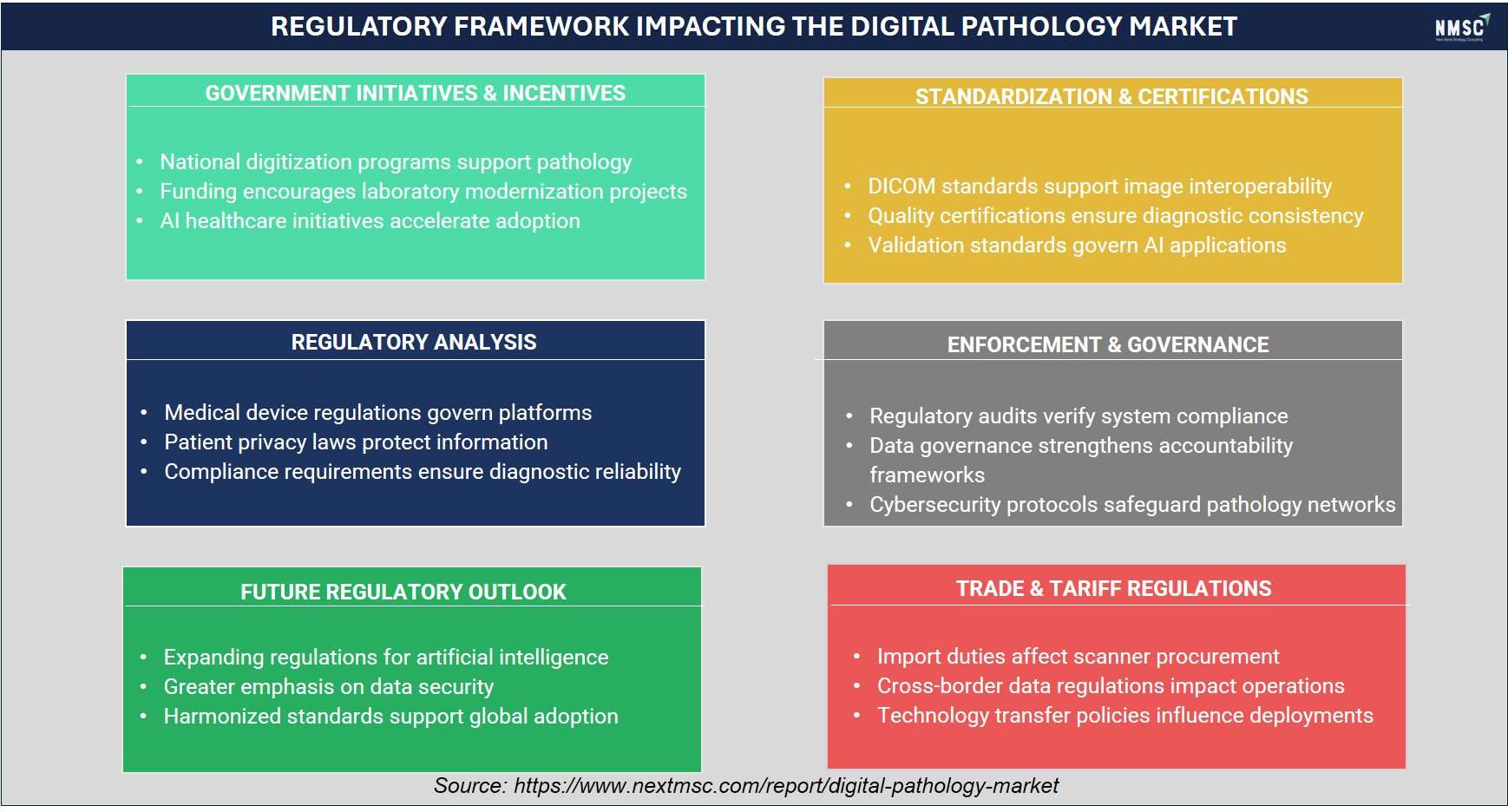
The regulatory framework governing the Digital Pathology Market plays a critical role in ensuring diagnostic accuracy, patient safety, data security, and interoperability. Market growth is influenced by medical device regulations, AI governance policies, privacy laws, and digital health initiatives that support pathology digitization. Standardization efforts, including imaging and data exchange protocols, facilitate seamless integration across healthcare systems. As AI-powered pathology solutions gain wider adoption, regulators are increasingly focusing on algorithm validation, cybersecurity, and data governance requirements, creating a structured environment that supports innovation while maintaining clinical reliability and compliance.
How Is the Digital Pathology Market Segmented in This Report, and What Are the Key Insights from the Segmentation Analysis?
How Does the Product Segmentation Reveal the Revenue Architecture of the Digital Pathology Market?
|
Product Segment |
2025 (USD Bn) |
2035 (USD Bn) |
CAGR (%) |
|
Hardware |
0.38 |
1.89 |
17.4% |
|
Software |
0.46 |
3.12 |
21.1% |
|
Services |
0.28 |
1.83 |
20.6% |
From our research, we found that the Digital Pathology Market is structurally segmented into Hardware, Software, and Services, each representing a distinct layer of the laboratory digitization value chain. The Software segment dominates revenue at USD 0.46 billion in 2025, driven by strong enterprise adoption of AI diagnostic tools, image management platforms, and workflow automation software delivering recurring license and SaaS subscription revenue. Hardware including brightfield, fluorescence, multimodal, and compact whole slide scanners, storage systems, and diagnostic workstations constitutes the foundational infrastructure investment, with compact scanner formats gaining traction in price-sensitive emerging market deployments. Services encompassing implementation, consulting, maintenance, and managed services are the fastest-growing product category, reflecting increasing customer demand for turnkey digital laboratory transformation programs with ongoing managed support.
How Do Hardware Sub-Segments Reflect the Infrastructure Demand Dynamics of the Digital Pathology Market?
|
Hardware Sub-Segment |
2025 (USD Mn) |
2035 (USD Mn) |
CAGR (%) |
|
Scanners (Brightfield, Fluorescence, Multimodal, Compact) |
198 |
952 |
17.0% |
|
Storage Systems (On-Premise, Cloud, Servers) |
98 |
518 |
18.1% |
|
Workstations and Display Systems |
72 |
374 |
17.9% |
|
Other Hardware |
12 |
46 |
14.4% |
Through our market assessment, we observed that the Hardware segment of the Digital Pathology Market is composed of Scanners, Storage Systems, Workstations and Display Systems, and Other Hardware, with scanner systems representing the largest hardware sub-segment at USD 198 million in 2025. Brightfield scanners remain the volume leader for routine histopathology applications, while fluorescence and multimodal scanners are gaining adoption in pharmaceutical research and spatial biology programs. Compact scanner formats from vendors including Grundium Oy are expanding addressable hardware markets in remote diagnostic and emerging economy settings. Storage systems including cloud and on-premise digital pathology archives are expanding rapidly as whole slide image file sizes and case archive volumes grow, requiring scalable storage infrastructure with high-availability access.
How Do Software Sub-Segments Drive the Highest Value Creation in the Digital Pathology Market?
|
Software Sub-Segment |
2025 (USD Mn) |
2035 (USD Mn) |
CAGR (%) |
|
Image Management Software |
124 |
742 |
19.6% |
|
Image Analysis Software |
108 |
698 |
20.5% |
|
AI Software |
96 |
896 |
25.2% |
|
Workflow and Lab Management Software |
86 |
596 |
21.3% |
|
Other Software |
46 |
188 |
15.1% |
In our observation, the Software segment is the highest-value and fastest-growing product category in the Digital Pathology Market, encompassing Image Management Software, Image Analysis Software, AI Software, Workflow and Lab Management Software, and Other Software. Image Management Software, including Vendor Neutral Archives, Pathology PACS, and LIS integration solutions, constitutes the largest software sub-segment, forming the data layer that enables all downstream analytical and collaborative workflows. AI Software is the fastest-growing sub-segment, advancing at a CAGR of 25.2% from 2026 to 2035, driven by regulatory approvals of cancer detection algorithms and the commercialization of prognostic modeling and clinical decision support tools. Workflow and Lab Management Software is also witnessing strong adoption as laboratories invest in case management, quality assurance automation, and digital reporting systems to improve operational efficiency and comply with laboratory accreditation requirements.
How Does Deployment Mode Shape Revenue Distribution Across the Digital Pathology Market?
|
Deployment Mode |
2025 (USD Bn) |
2035 (USD Bn) |
CAGR (%) |
|
On-Premise |
0.56 |
2.52 |
16.2% |
|
Web-Based or Cloud-Deployed |
0.36 |
2.88 |
23.1% |
|
Hybrid Deployments |
0.20 |
1.44 |
21.9% |
Our analysis shows that the Digital Pathology Market is segmented by deployment into On-Premise, Web-Based or Cloud-Deployed, and Hybrid Deployments. On-Premise deployment currently dominates at USD 0.56 billion in 2025, reflecting established hospital IT governance preferences for localized control over sensitive patient diagnostic image data and lower dependency on internet connectivity for time-critical diagnostic workflows. Cloud-Deployed or Web-Based deployment is the fastest-growing mode at a CAGR of 23.1% from 2026 to 2035, driven by multi-site laboratory network consolidation, remote pathologist access requirements, and the growing availability of healthcare-grade cloud infrastructure compliant with HIPAA, GDPR, and ISO 27001 standards. Hybrid deployments are gaining traction among large hospital systems that seek to balance on-premise diagnostic performance with cloud-based AI inference and collaborative consultation capabilities.
How Do Functional Use Cases Define the Demand Structure of the Digital Pathology Market?
|
Function |
2025 (USD Mn) |
2035 (USD Mn) |
CAGR (%) |
|
Primary Diagnostics |
480 |
2,938 |
19.8% |
|
Research and Drug Discovery |
284 |
1,886 |
20.8% |
|
Academic Research |
142 |
882 |
19.9% |
|
Education and Training |
78 |
456 |
19.3% |
|
Quality Assurance and Lab Standardization |
86 |
538 |
20.1% |
|
Veterinary Pathology |
50 |
340 |
21.1% |
Based on our market evaluation, we noticed that the Digital Pathology Market is segmented by function into Primary Diagnostics, Research and Drug Discovery, Academic Research, Education and Training, Quality Assurance and Laboratory Standardization, and Veterinary Pathology. Primary Diagnostics holds the dominant functional share at USD 480 million in 2025, encompassing routine reporting, intraoperative consultation, and second opinion teleconsultation workflows that constitute the largest addressable diagnostic workload in pathology departments globally. Research and Drug Discovery is the fastest-growing functional segment at a CAGR of 20.8%, as pharmaceutical companies and translational research programs invest in digital tissue analysis infrastructure for biomarker discovery, clinical trial support, and companion diagnostic qualification. Veterinary Pathology is an emerging functional segment gaining commercial momentum as large veterinary laboratory networks initiate digital pathology transformation programs.
How Does Technology Segmentation Reflect the Innovation Dynamics of the Digital Pathology Market?
|
Technology |
2025 (USD Mn) |
2035 (USD Mn) |
CAGR (%) |
|
Whole Slide Imaging |
520 |
2,736 |
18.1% |
|
Live Microscopy |
98 |
498 |
17.7% |
|
Digital Image Processing Technology |
142 |
842 |
19.5% |
|
AI-Assisted Pathology |
148 |
1,284 |
24.0% |
|
Cloud-Native Pathology Platforms |
118 |
924 |
22.8% |
|
Telepathology Technology |
94 |
556 |
19.5% |
Through NMSC's assessment, we found that the Digital Pathology Market is segmented by technology into Whole Slide Imaging, Live Microscopy, Digital Image Processing Technology, AI-Assisted Pathology, Cloud-Native Pathology Platforms, and Telepathology Technology. Whole Slide Imaging holds the dominant technology share at USD 520 million in 2025, constituting the primary hardware and imaging protocol layer that enables all downstream digital diagnostic and analytical workflows. AI-Assisted Pathology is the fastest-growing technology segment at a CAGR of 24.0% from 2026 to 2035, as clinically validated cancer detection, grading, and biomarker quantification algorithms achieve mainstream laboratory deployment across oncology-focused hospital and commercial laboratory networks. Cloud-Native Pathology Platforms are also expanding rapidly, reflecting growing enterprise preference for scalable, subscription-based delivery of image management and AI inference services without capital infrastructure commitments.
How Do End User Profiles Determine Market Penetration Strategies in the Digital Pathology Market?
|
End User |
2025 (USD Mn) |
2035 (USD Mn) |
CAGR (%) |
|
Hospital Laboratories (Public, Private) |
450 |
2,598 |
19.2% |
|
Commercial Diagnostic Reference Laboratories |
218 |
1,274 |
19.3% |
|
Pharmaceutical and CROs |
172 |
1,148 |
20.7% |
|
Academic and Research Institutions |
148 |
882 |
19.4% |
|
Veterinary Diagnostic Laboratories |
54 |
368 |
21.2% |
|
Government and Public Health Laboratories |
50 |
308 |
19.8% |
|
Other End Users |
28 |
162 |
19.2% |
Based on NMSC's research, we found that the Digital Pathology Market is segmented across Hospital Laboratories, Commercial Diagnostic Reference Laboratories, Pharmaceutical and CROs, Academic and Research Institutions, Veterinary Diagnostic Laboratories, Government and Public Health Laboratories, and Other End Users. Hospital Laboratories represent the largest end-user category at USD 450 million in 2025, driven by large-scale multi-site digitization programs within integrated health systems and cancer center networks. Pharmaceutical and CROs constitute the fastest-growing end-user segment at a CAGR of 20.7%, as the industry increasingly invests in digital histopathology infrastructure for companion diagnostic development, translational research, and regulatory submission-ready tissue analysis programs. Academic and Research Institutions represent a foundational demand segment, as university medical centers and cancer research programs drive technology innovation and early adoption of next-generation imaging and AI analysis capabilities.
How Do Revenue Streams Reflect the Commercial Maturity of the Digital Pathology Market?
|
Revenue Stream |
2025 (USD Mn) |
2035 (USD Mn) |
CAGR (%) |
|
Direct Capital Equipment Sales |
382 |
1,896 |
17.4% |
|
Software License Sales (Perpetual, Subscription) |
358 |
2,148 |
19.6% |
|
Recurring Revenue (SaaS, Maintenance, Managed) |
192 |
1,434 |
22.4% |
|
Consumables Revenue |
68 |
374 |
18.6% |
|
Fee for Service Revenue |
72 |
612 |
23.8% |
|
Consulting Revenue |
48 |
276 |
19.2% |
Our analysis indicates that the Digital Pathology Market is structured across six primary revenue streams: Direct Capital Equipment Sales, Software License Sales, Recurring Revenue, Consumables Revenue, Fee for Service Revenue, and Consulting Revenue. Software License Sales currently represent the most strategic revenue category alongside direct capital equipment sales, reflecting the growing enterprise investment in image management, image analysis, AI diagnostic, and workflow automation platforms. Recurring Revenue encompassing SaaS subscriptions, maintenance contracts, and managed platform services is the fastest-growing revenue stream, advancing at a CAGR of 22.4%, as vendors successfully transition customers from one-time capital purchases toward usage-based and platform subscription commercial models. Fee for Service Revenue from scanning, analysis, and data hosting is the second fastest-growing stream at a CAGR of 23.8%, driven by reference laboratory networks offering digital pathology services to community hospitals and clinics lacking in-house WSI infrastructure.
How Do Distribution Channels Shape Commercial Access and Market Reach in the Digital Pathology Market?
|
Distribution Channel |
2025 (USD Mn) |
2035 (USD Mn) |
CAGR (%) |
|
Direct Sales |
520 |
2,942 |
18.9% |
|
Distributor and Channel Partner Sales |
248 |
1,478 |
19.5% |
|
System Integrator Sales |
164 |
1,162 |
21.5% |
|
Enterprise Procurement Contracts |
142 |
784 |
18.6% |
|
Group Purchasing Organizations |
62 |
314 |
17.7% |
|
Online Procurement Platforms |
24 |
160 |
20.9% |
Our findings suggest that the Digital Pathology Market is distributed through Direct Sales, Distributor and Channel Partner Sales, System Integrator Sales, Enterprise Procurement Contracts, Group Purchasing Organizations, and Online Procurement Platforms. Direct Sales dominates at USD 520 million in 2025, reflecting the highly technical and customized nature of digital pathology laboratory implementations that require dedicated clinical application specialists and account management resources. System Integrator Sales is the fastest-growing channel at a CAGR of 21.5%, as large-scale hospital digital transformation programs increasingly engage healthcare IT system integrators for end-to-end laboratory digitization engagements spanning hardware, software, LIS integration, validation, and staff training. Group Purchasing Organizations serve an important role in North America, enabling community hospital networks to access preferred vendor pricing while standardizing digital pathology platform selection across member facilities.
Regional Outlook
Geographic Performance Snapshot
|
Region |
2025 (USD Bn) |
2035 (USD Bn) |
CAGR (%) |
Key Driver |
|
North America |
0.47 |
2.78 |
19.3% |
AI regulatory clearances, enterprise lab digitization |
|
Europe |
0.28 |
1.64 |
19.4% |
IVDR compliance, national digital health programs |
|
Asia Pacific |
0.24 |
1.68 |
21.4% |
Hospital modernization, pharma CRO expansion |
|
Latin America |
0.07 |
0.46 |
20.7% |
Public health lab digitization, pharma outsourcing |
|
Middle East & Africa |
0.06 |
0.28 |
16.6% |
Health system infrastructure investments |
North America Digital Pathology Market
North America represents the global epicenter of the Digital Pathology Market, accounting for USD 0.47 billion in 2025 and forecast to reach USD 2.78 billion by 2035 at a CAGR of 19.3%. The region benefits from the highest density of FDA-cleared AI diagnostic pathology tools, mature hospital laboratory digitization programs, and a robust venture capital ecosystem supporting pathology AI startups. Regulatory leadership by the FDA's Digital Health Center of Excellence is establishing global best practices for AI-based pathology software validation, driving enterprise procurement confidence. The region is further supported by the world's largest pharmaceutical R&D ecosystem, generating sustained demand for quantitative tissue analysis and companion diagnostic platforms.
U.S. Digital Pathology Market
Based on our engagements with health system procurement stakeholders, the United States is the single largest national market in the Digital Pathology Market, representing over 75% of North American revenue in 2025. The country benefits from the highest concentration of AI pathology software vendors, FDA-authorized diagnostic algorithms, and leading academic cancer research centers that pioneer technology adoption. The National Cancer Institute's investment in digital pathology infrastructure across its NCI-designated cancer centers is driving enterprise-scale digitization programs. The College of American Pathologists' digital pathology accreditation guidelines are standardizing platform validation and quality assurance requirements across commercial and academic laboratory networks.
Canada Digital Pathology Market
Through our analysis, Canada represents approximately 15% of North American Digital Pathology Market revenue. Canadian public health systems, including Ontario Health and BC Cancer Agency, have invested in provincial digital pathology networks enabling centralized scan-and-interpret workflows. Health Canada's regulatory framework for AI-based medical devices is increasingly aligned with FDA guidance, creating a favorable approval environment for cross-border AI diagnostic commercialization. Academic research centers at institutions including the University Health Network and McGill University are among the most active digital pathology research programs in North America, generating early technology adoption and knowledge transfer to provincial health systems.
Mexico Digital Pathology Market
From our assessment, Mexico is the fastest-growing market within North America in the Digital Pathology Market, driven by private hospital group expansion, growing cancer diagnostic demand, and increasing pharmaceutical clinical trial activity. The Mexican government's Instituto Mexicano del Seguro Social public hospital modernization programs are beginning to incorporate digital pathology infrastructure investments. Pharmaceutical companies conducting clinical trials in Mexico are requiring digital tissue analysis capabilities from local CRO partners, driving commercial laboratory digitization. Regulatory alignment with FDA and European standards under COFEPRIS is facilitating market entry for international digital pathology vendors.
Europe Digital Pathology Market
Europe is the second-largest region in the Digital Pathology Market, contributing USD 0.28 billion in 2025 and forecast to reach USD 1.64 billion by 2035 at a CAGR of 19.4%. The European In Vitro Diagnostics Regulation is a major structural force compelling digital pathology software vendor to demonstrate clinical evidence for diagnostic applications, elevating clinical validation investment and creating a regulatory credentialing advantage for compliant platforms. National digital health strategies across the United Kingdom, Germany, France, and the Nordic countries are allocating substantial government investment to laboratory digitization infrastructure. European academic pathology centers have been instrumental in pioneering whole slide imaging adoption in routine diagnostics.
Germany Digital Pathology Market
According to our evaluation, Germany is the largest individual country market in Continental Europe for the Digital Pathology Market. Germany's world-class oncology and pathology research ecosystem, including institutions such as the German Cancer Research Center in Heidelberg, drives early technology adoption and clinical validation programs. German private laboratory networks and university hospital centers are investing in AI-powered tissue analysis platforms for oncology routine diagnostics. The Federal Ministry of Health's Hospital Future Act, which allocated EUR 3 billion for hospital digitization, includes pathology laboratory modernization programs. Germany's strict data governance requirements under the BDSG and state hospital data protection regulations shape platform architecture requirements for vendors.
UK Digital Pathology Market
Based on our engagements, the United Kingdom holds a leading position in the European Digital Pathology Market, driven by National Health Service national digital pathology programs. NHS England's Pathology Networks program has established hub-and-spoke digital diagnostic configurations across regional pathology networks, creating demand for whole slide imaging infrastructure, PACS integration, and AI-assisted reporting tools. The NHSX AI Lab has co-funded multiple digital pathology AI validation studies. The MHRA's regulatory approval framework for AI-based diagnostic software is aligned with international standards, supporting commercial deployment of FDA-authorized AI pathology tools within NHS procurement frameworks.
France Digital Pathology Market
Through our analysis, France represents a significant and growing market within the European Digital Pathology Market. The French National Cancer Institute, under its Plan Cancer strategy, has invested in digital pathology infrastructure for clinical research and multicenter trial histopathology. France's university hospital system is among the most active in Europe for AI pathology research publications and clinical validation studies. The national health data platform, the Health Data Hub, is providing structured access to digitized pathology archives for AI development programs under GDPR-compliant data governance frameworks, attracting international pharmaceutical and technology partners.
Italy Digital Pathology Market
From our assessment, Italy is an actively growing market within the European Digital Pathology Market, driven by increasing investment in oncology diagnostic capacity across integrated hospital networks. The National Recovery and Resilience Plan under the EU's NextGenerationEU program allocates funding for Italian healthcare digitization, including laboratory modernization. Italian academic pathology departments at institutions such as the University of Milan and the Istituto Europeo di Oncologia are early adopters of quantitative tissue analysis and spatial biology platforms. Garante, Italy's data protection authority, enforces stringent GDPR compliance requirements that shape vendor platform architecture and data hosting strategy.
Spain Digital Pathology Market
Based on our evaluation, Spain demonstrates growing momentum in the Digital Pathology Market, driven by cancer diagnostic demand within its universal public healthcare system. The Spanish Society of Pathological Anatomy has actively promoted digital pathology adoption standards across hospital pathology departments. Spain's leading oncology research centers, including the Spanish National Cancer Research Centre, are investing in AI tissue analysis capabilities for translational medicine programs. The EU-funded Digital Health Europe initiative supports Spanish health technology adoption programs, and the government's National Digital Health Plan is prioritizing laboratory digitization infrastructure across regional health networks.
Nordic Countries Digital Pathology Market
Through our market assessment, we observed that the Nordic countries including Sweden, Denmark, Finland, and Norway represent among the most digitally advanced pathology markets globally within the European Digital Pathology Market. Sweden's national pathology digitization program has achieved high whole slide imaging adoption rates across university hospital networks. The Danish Pathology Register provides a nationally standardized digital pathology data infrastructure that supports research and quality assurance programs. Finland and Norway have invested in regional digital pathology hub networks, enabling centralized diagnostic services for geographically dispersed hospital sites and remote community healthcare facilities.
Rest of Europe Digital Pathology Market
Our assessment indicates that the Rest of Europe Digital Pathology Market, encompassing the Netherlands, Belgium, Switzerland, Austria, Poland, and other European nations, represents a collectively significant and growing demand pool. The Netherlands benefits from a mature digital health ecosystem with Philips as a leading domestic digital pathology vendor. Switzerland's pharmaceutical concentration drives strong corporate demand for digital tissue analysis platforms. Eastern European countries including Poland and Czech Republic are emerging markets with growing interest in digital pathology as healthcare IT modernization programs advance with EU structural funding support.
Asia Pacific Digital Pathology Market
Asia Pacific is the fastest-growing major region in the Digital Pathology Market at a CAGR of 21.4% from 2026 to 2035, advancing from USD 0.24 billion in 2025 to USD 1.68 billion by 2035. The region's growth is anchored by China's hospital modernization programs, Japan's advanced precision oncology infrastructure, India's rapidly expanding private diagnostics sector, South Korea's AI healthcare investment, and Australia's national digital health strategy. Rising cancer incidence, pathologist workforce shortages across the region, and expanding pharmaceutical CRO activity are generating sustained digital pathology demand across all major Asia Pacific markets.
China Digital Pathology Market
Based on our engagements, China represents the largest single market in Asia Pacific for the Digital Pathology Market, driven by a national Healthy China 2030 initiative that prioritizes cancer screening, early detection, and diagnostic capacity expansion. The National Health Commission has incorporated digital pathology into hospital grading and accreditation standards for Tier-3 hospital networks. Domestic AI pathology companies are receiving substantial government and venture capital support, developing algorithms trained on Chinese patient datasets for local regulatory approval. International digital pathology vendors including Roche and Philips are expanding China-specific product portfolios and distribution partnerships to capture this high-growth opportunity.
Japan Digital Pathology Market
Through our analysis, Japan holds a technology leadership position in the Asia Pacific Digital Pathology Market, anchored by the global headquarters of Hamamatsu Photonics, a leading whole slide scanner manufacturer. Japan's Pharmaceuticals and Medical Devices Agency has established regulatory pathways for AI-based in vitro diagnostic software, enabling commercialization of domestic and international AI pathology tools. Japanese pharmaceutical companies, including major oncology drug developers, are investing in digital tissue analysis platforms for their global clinical trial programs. Japan's precision oncology national initiatives are generating demand for companion diagnostic and biomarker quantification capabilities within university hospital and cancer research center networks.
India Digital Pathology Market
From our assessment, India is the fastest-growing national market in Asia Pacific within the Digital Pathology Market at a CAGR of 26.8% from 2026 to 2035. India's expanding private hospital groups, including Apollo Hospitals and Fortis, are investing in digital pathology infrastructure as part of broader laboratory modernization programs. India's position as the world's largest pharmaceutical CRO hub generates substantial demand for digital tissue analysis services in support of global clinical trials. The National Health Authority's Ayushman Bharat Digital Mission is driving public hospital laboratory digitization investments. India's Central Drugs Standard Control Organisation is developing regulatory frameworks for AI-based diagnostic software that will further stimulate commercial platform adoption.
South Korea Digital Pathology Market
According to our evaluation, South Korea represents a strategically important Digital Pathology Market, supported by the country's advanced healthcare IT ecosystem and government investment in AI-based medical technology. The Ministry of Health and Welfare has designated AI diagnostics as a national healthcare priority under the Digital New Deal investment program. Korean academic pathology programs and biotech companies are developing AI tissue analysis tools for domestic and international markets. Samsung Medical Center and Severance Hospital are among the leading academic centers pioneering AI pathology clinical validation and integration programs in the country.
Australia Digital Pathology Market
Based on our engagements, Australia is a mature and growing Digital Pathology Market, driven by investment in national digital health infrastructure under the Australian Digital Health Agency strategy. Australian pathology networks, which are highly consolidated among a small number of national reference laboratory groups, are investing in enterprise digital pathology platforms for multi-site workflow standardization and AI-assisted reporting. The Therapeutic Goods Administration has established frameworks for evaluating AI-based diagnostic software as medical devices. Australia's research funding through the National Health and Medical Research Council supports academic digital pathology AI programs at leading universities.
Southeast Asia Digital Pathology Market
Through NMSC's assessment, we found that Southeast Asia represents an emerging but structurally significant market for the Digital Pathology Market, with Singapore, Thailand, Malaysia, and Vietnam at the forefront of healthcare digitization investment. Singapore's Ministry of Health has invested in digital pathology infrastructure for national laboratory quality programs, and Singapore-based research institutions are active in AI pathology development. Thailand and Malaysia are advancing digital pathology adoption through public hospital modernization programs supported by their respective health ministries. Compact and cost-optimized scanner platforms are enabling market entry in smaller Southeast Asian healthcare markets.
Rest of APAC Digital Pathology Market
Our findings suggest that the Rest of APAC Digital Pathology Market, encompassing Indonesia, Philippines, Vietnam, and other Asia Pacific nations, represents a collectively growing early-stage demand segment. Indonesia's expanding private hospital sector and government universal health coverage expansion are creating demand for clinical diagnostic infrastructure including digital pathology. The Philippines is investing in public hospital laboratory capacity under national health modernization programs. Compact telepathology solutions are particularly relevant across island-nation healthcare systems where geographic dispersal constrains centralized diagnostic services.
Latin America Digital Pathology Market
Latin America is a growing region in the Digital Pathology Market, contributing USD 0.07 billion in 2025 and projected to reach USD 0.46 billion by 2035 at a CAGR of 20.7%. Brazil and Argentina represent the largest markets within the region, anchored by significant private hospital investment and growing pharmaceutical clinical trial activity. Rising cancer incidence rates across the region, combined with limited pathologist availability in rural and underserved settings, are driving demand for telepathology infrastructure and AI-assisted diagnostic tools. International digital pathology vendors are establishing regional distribution partnerships to access Latin American hospital and laboratory procurement programs.
Brazil Digital Pathology Market
Based on our engagements, Brazil represents the largest Digital Pathology Market in Latin America, driven by the world's fourth-largest private hospital sector and the government's public hospital SUS digitization programs. The Brazilian National Cancer Institute is investing in digital pathology infrastructure for its national oncology network. Pharmaceutical companies conducting clinical trials in Brazil are requiring digital tissue analysis capabilities from Brazilian CRO partners. Brazil's National Health Surveillance Agency is developing regulatory frameworks for AI-based diagnostic software that will further stimulate commercial investment in digital pathology platforms across the healthcare system.
Argentina Digital Pathology Market
Through our analysis, Argentina represents the second-largest Digital Pathology Market in Latin America. Argentina's university hospital network and cancer research institutions are among the most advanced technology adopters in the region. The National Ministry of Health has initiated hospital digitization programs that include laboratory modernization components. Argentina's pharmaceutical and biotechnology research ecosystem is driving academic and corporate demand for digital tissue analysis capabilities. Economic volatility has historically constrained capital expenditure decisions, making SaaS-based digital pathology subscription models particularly attractive to Argentine laboratory buyers.
Chile Digital Pathology Market
From our assessment, Chile is an emerging market within the Latin America Digital Pathology Market, supported by the country's relatively advanced healthcare infrastructure and proactive digital health investment strategy. Chilean public and private hospital networks are beginning to explore digital pathology as part of broader laboratory modernization programs. The government's National Health Strategy prioritizes early cancer detection, creating demand for scalable diagnostic infrastructure. Chilean academic pathology programs and cancer research centers are engaged in early digital pathology adoption and AI clinical validation programs.
Colombia Digital Pathology Market
According to our evaluation, Colombia is an emerging Digital Pathology Market driven by growing private healthcare investment, cancer diagnostic demand, and expanding pharmaceutical sector activity. Colombia's private hospital groups are beginning to evaluate digital pathology platforms for multi-site diagnostic workflow standardization. The National Institute of Health of Colombia is investing in public laboratory infrastructure modernization. Colombia's status as a growing destination for pharmaceutical clinical trials is driving CRO demand for digital tissue analysis capabilities in support of international drug development programs.
Rest of Latin America Digital Pathology Market
Our assessment indicates that the Rest of Latin America Digital Pathology Market, encompassing Peru, Ecuador, Uruguay, and other regional nations, represents an early-stage but growing demand segment. Telepathology solutions enabling remote diagnostic access to specialist pathology expertise are particularly relevant across countries with limited urban-rural diagnostic infrastructure. International NGO and philanthropic programs supporting cancer diagnostic capacity building in underserved Latin American settings are contributing to initial digital pathology adoption across the region.
Middle East and Africa Digital Pathology Market
The Middle East and Africa represent a nascent but strategically significant emerging segment of the Digital Pathology Market, contributing USD 0.06 billion in 2025 and projected to reach USD 0.28 billion by 2035 at a CAGR of 16.6%. Gulf Cooperation Council countries are investing in healthcare technology infrastructure as part of national vision programs, while South Africa serves as the primary technology hub for sub-Saharan Africa. Severe pathologist shortages across sub-Saharan Africa, where the WHO has documented critical diagnostic capacity gaps, position telepathology and AI-assisted diagnostic tools as medically critical rather than purely commercial investments in this market segment.
Saudi Arabia Digital Pathology Market
Based on our engagements, Saudi Arabia is the leading Digital Pathology Market in the Middle East, driven by Vision 2030 healthcare transformation programs and King Faisal Specialist Hospital and Research Centre investments in advanced diagnostic technology. The Saudi Ministry of Health is investing in hospital laboratory digitization as part of national health sector transformation. Saudi Arabia's rapidly expanding pharmaceutical research and clinical trial ecosystem is generating demand for digital tissue analysis capabilities. The Saudi Food and Drug Authority is developing regulatory frameworks for AI-based medical devices aligned with international standards.
UAE Digital Pathology Market
Through our analysis, the UAE represents the second-largest Digital Pathology Market in the GCC, supported by Dubai Health Authority and Abu Dhabi Health Services Company investments in world-class hospital infrastructure. The UAE's strategic positioning as a regional healthcare hub is attracting international digital pathology technology vendors. Dubai's Healthcare City free zone provides an enabling environment for medical technology companies to establish regional headquarters and commercial operations. The UAE's proactive AI and digital health regulatory framework, administered by the Ministry of Health and Prevention, is facilitating rapid commercial deployment of digital diagnostic technologies.
Egypt Digital Pathology Market
From our assessment, Egypt is the largest Digital Pathology Market in North Africa, driven by the government's Universal Health Insurance expansion program and Cairo University hospital network modernization initiatives. Egypt's growing pharmaceutical sector and expanding clinical trial activity are generating demand for digital tissue analysis capabilities. Pathologist workforce constraints relative to the large national patient population create demand for telepathology and AI-assisted diagnostic tools that can extend specialist diagnostic capacity to rural governorates and underserved communities.
Israel Digital Pathology Market
According to our evaluation, Israel represents a highly advanced Digital Pathology Market relative to its size, supported by a world-class medical technology innovation ecosystem. Israeli companies including Ibex Medical Analytics are recognized global leaders in AI-powered pathology software, with FDA-cleared cancer detection algorithms deployed across international laboratory networks. Israel's leading academic medical centers at Sheba Medical Center and Hadassah Medical Center are active digital pathology AI clinical validation and research programs. The Israel Innovation Authority provides funding support for domestic AI diagnostic technology development.
Turkey Digital Pathology Market
Based on our engagements, Turkey is an emerging Digital Pathology Market within the MEA region, driven by healthcare infrastructure investment under the government's health transformation programs. Turkish university hospitals are beginning to invest in digital pathology infrastructure for oncology diagnostic workflows. Turkish pharmaceutical manufacturers and CROs are increasingly requiring digital tissue analysis capabilities to support international clinical trial partnerships. The Turkish Medicines and Medical Devices Agency is developing medical device software regulatory frameworks aligned with EU standards.
Nigeria Digital Pathology Market
Through our analysis, Nigeria represents the largest potential Digital Pathology Market in sub-Saharan Africa by population served, though current market penetration remains at an early stage due to infrastructure constraints and limited capital availability. International health development programs including those coordinated by the Africa Centres for Disease Control and Prevention identify digital pathology as a priority technology for strengthening cancer diagnostic capacity. Compact and low-power scanner formats and cloud-based diagnostic platforms are the most relevant technology solutions for the Nigerian healthcare context.
South Africa Digital Pathology Market
From our assessment, South Africa is the most mature Digital Pathology Market in sub-Saharan Africa, driven by a relatively advanced private healthcare sector and academic medical centers at the University of Cape Town and University of the Witwatersrand. The National Health Laboratory Service, which provides pathology services to public sector healthcare facilities, is evaluating digital pathology investments for laboratory efficiency improvement. South Africa's growing pharmaceutical clinical trial sector is driving CRO demand for digital tissue analysis capabilities aligned with ICH and FDA Good Clinical Practice standards.
Rest of MEA Digital Pathology Market
Our findings suggest that the Rest of MEA Digital Pathology Market, encompassing Kuwait, Qatar, Bahrain, Oman, Kenya, Ethiopia, and other regional nations, represents an early-stage demand segment with growing potential. GCC countries beyond Saudi Arabia and UAE are investing in hospital infrastructure modernization as part of national healthcare development plans. Kenya's emerging private hospital sector and research institutes are beginning to explore digital pathology solutions. International development funding from organizations supporting health system capacity building across sub-Saharan Africa is a critical demand enabler for initial digital pathology investments.
Competitive Landscape
Competitive Dynamics and M&A Landscape
|
Key Takeaways |
Details |
|
Market Structure |
The Digital Pathology Market features competition among established diagnostics companies, digital pathology platform providers, AI pathology specialists, and imaging technology vendors. Key participants include Roche Diagnostics, Leica Biosystems, Philips Healthcare, Paige, PathAI, Proscia, and Hamamatsu Photonics, competing across whole-slide imaging, pathology workflow software, AI-powered diagnostics, and cloud-based pathology platforms. |
|
Innovation Focus |
Innovation in the Digital Pathology Market is centered on AI-assisted diagnosis, computational pathology, cloud-native pathology platforms, biomarker discovery, and precision oncology applications. Vendors are increasingly investing in foundation AI models, predictive pathology algorithms, workflow automation, real-time image analytics, and integration with laboratory information systems (LIS) and electronic health records (EHRs). The growing adoption of AI for cancer detection, treatment selection, and clinical trial patient stratification remains a key competitive differentiator. |
|
M&A Activity |
Strategic acquisitions and partnerships are reshaping the Digital Pathology Market as companies seek to strengthen AI capabilities and expand precision medicine offerings. Notable developments include Roche's acquisition of PathAI in 2026, Tempus' acquisition of Paige in 2025, and ongoing collaborations between digital pathology providers and pharmaceutical companies for companion diagnostic development. Market participants are actively pursuing acquisitions of AI pathology startups, digital biomarker developers, and computational pathology software firms to accelerate innovation and enhance end-to-end pathology ecosystems. |
Which Kind of Companies Dominate the Digital Pathology Market?
Three primary categories of companies dominate the Digital Pathology Market. First, established pathology imaging and diagnostics leaders such as Leica Biosystems, Philips Healthcare, and Roche Diagnostics leverage extensive installed laboratory bases, regulatory expertise, and integrated pathology workflows to maintain strong market positions. Second, digital pathology software and AI specialists including Paige, Proscia, PathAI, and Aiforia focus on AI-powered image analysis, workflow automation, and decision-support solutions. Finally, healthcare IT and cloud technology providers such as Microsoft, Google Cloud, and Amazon Web Services support large-scale image storage, interoperability, and enterprise-grade digital pathology deployments across healthcare networks.
AI-Driven Diagnostics and Integrated Digital Workflows Drive Market Success in the Digital Pathology Market
Innovation across the Digital Pathology Market is centered on AI-assisted cancer detection, computational pathology, whole-slide image management, and cloud-enabled collaborative diagnostics. Vendors that combine high-resolution scanning technologies with clinically validated AI algorithms are achieving stronger adoption among hospitals, reference laboratories, and academic medical centers. Seamless integration with laboratory information systems (LIS), electronic health records (EHR), and telepathology platforms is emerging as a key competitive differentiator. Companies investing in explainable AI, multimodal diagnostics, and workflow automation are improving diagnostic efficiency while supporting precision medicine and personalized treatment initiatives.
Market Players to Opt for Merger and Acquisition Strategies to Expand Their Presence in the Digital Pathology Market
Mergers and acquisitions are reshaping the competitive landscape of the Digital Pathology Market as companies seek to strengthen AI capabilities, expand diagnostic portfolios, and accelerate global market penetration. Leading imaging and diagnostics companies are actively acquiring AI pathology startups to enhance computational pathology offerings and secure proprietary algorithm assets. Strategic acquisitions are also focused on expanding cloud-based pathology platforms, strengthening digital workflow capabilities, and increasing access to specialized pathology datasets for AI model development. Additionally, partnerships and acquisitions aimed at improving interoperability, regulatory compliance, and regional distribution networks are expected to remain key growth strategies throughout the forecast period.
Who Are the Key Market Players in the Digital Pathology Market?
-
PathAI Inc.
-
Roche Diagnostics International Ltd.
-
Koninklijke Philips N.V
-
Hamamatsu Photonics K.K
-
Sectra AB, Proscia Inc.
-
Indica Labs Inc.
-
3DHISTECH Ltd.
-
Visiopharm A/S
-
Ibex Medical Analytics Ltd.
-
Aiforia Technologies Plc
-
Grundium Oy
-
Huron Technologies International Inc.
-
PreciPoint GmbH
-
Mikroscan Technologies Inc.
-
OptraSCAN Inc.
-
Corista LLC
-
Inspirata Inc.
-
Paige AI Inc.
-
Glencoe Software Inc.
What Are the Latest Developments in the Digital Pathology Industry?
|
Date |
Event |
|
Feb 2026 |
Labcorp expanded its collaboration with PathAI to deploy the FDA-cleared AISight Dx digital pathology platform across its pathology network, supporting AI-enabled workflows nationwide. |
|
Sept 2025 |
Labcorp announced a collaboration with Roche to expand digital pathology capabilities and AI integration across pathology services. |
Expert Insights

“We've always believed that the future of cancer care and precision medicine lies in harnessing the full potential of AI to redefine what's possible in digital pathology and transform how cancer is detected, understood, and treated.”
- Razik Yousfi, CEO & CTO, Paige
This statement was made by Razik Yousfi during the announcement of Tempus’ acquisition of Paige in August 2025. The comment highlighted the growing role of artificial intelligence in advancing digital pathology and enabling more precise cancer diagnosis and treatment strategies.
Market Interpretation:
The statement underscores the increasing importance of AI-powered digital pathology in the evolution of precision medicine. As healthcare providers and life sciences organizations seek more accurate and data-driven approaches to cancer diagnosis, digital pathology is moving beyond simple slide digitization toward advanced AI-enabled analysis, biomarker discovery, and predictive diagnostics. The growing integration of AI into pathology workflows is expected to improve diagnostic accuracy, accelerate clinical decision-making, and support personalized treatment planning. This trend is driving investments in digital pathology platforms and reinforcing their role as a critical component of next-generation oncology diagnostics.
What Are the Investment Opportunities in the Digital Pathology Market?
Capital Inflows and Venture Activity
The Digital Pathology Market continues to attract strong investor interest as pathology workflows increasingly transition toward digitization and AI-enabled diagnostics. Venture capital and private equity firms are actively funding companies developing digital pathology software, AI-based image analysis tools, and cloud-enabled pathology platforms. We observed that firms such as PathAI, Paige, and Proscia have secured substantial funding from investors seeking exposure to precision medicine and AI-driven healthcare technologies. Growing regulatory approvals for AI-assisted diagnostic tools and increasing adoption of digital pathology in clinical settings are further strengthening investor confidence in the sector’s long-term growth potential.
Infrastructure Investment
Infrastructure investment is emerging as a critical growth enabler within the Digital Pathology Market. Healthcare providers, laboratory networks, and academic medical centers are investing heavily in whole-slide imaging scanners, cloud storage environments, and enterprise pathology management systems. Moreover, we found that multi-site healthcare systems are increasingly allocating capital toward laboratory digitization initiatives to support remote collaboration, workflow optimization, and centralized pathology operations. These investments create significant opportunities for technology vendors, healthcare IT integrators, and cloud infrastructure providers supporting large-scale pathology modernization programs.
ESG and Healthcare Accessibility
Environmental, Social, and Governance (ESG) considerations are becoming increasingly relevant to investment decisions within the Digital Pathology Market. Digital pathology solutions reduce reliance on physical slide transportation, improve laboratory efficiency, and enable remote pathology consultations, supporting more sustainable healthcare operations. We further analyzed that telepathology and AI-assisted diagnostic platforms can expand access to specialist pathology expertise in underserved and rural regions, aligning with broader healthcare equity objectives. As a result, impact investors, healthcare-focused ESG funds, and development finance institutions are increasingly evaluating digital pathology as a technology capable of improving diagnostic accessibility while delivering measurable social benefits.
Digital Transformation Enablement
Digital pathology serves as a foundational component of healthcare digital transformation initiatives, making it an attractive area for long-term investment. Hospitals, diagnostic laboratories, and research institutions are integrating digital pathology with electronic health records, laboratory information systems, and AI-driven clinical decision-support platforms. We observed that pharmaceutical companies are also investing in digital tissue analysis technologies to support biomarker discovery, companion diagnostics, and precision oncology programs. The growing integration of pathology data into broader healthcare analytics ecosystems is expected to generate sustained demand for software platforms, cloud services, and AI-enabled diagnostic applications.
Private Equity and Strategic M&A Activity
Private equity firms and strategic healthcare technology companies are increasingly pursuing acquisition opportunities across the Digital Pathology Market. Market participants are targeting pathology software developers, AI algorithm providers, digital imaging companies, and specialized laboratory service providers to strengthen their diagnostic capabilities and expand market presence. We assessed that continued consolidation is likely as established diagnostics companies seek to acquire advanced AI technologies, while healthcare IT vendors pursue complementary pathology workflow solutions. Investors should closely monitor acquisition activity involving AI-powered pathology platforms, digital biomarker companies, and precision diagnostics providers, as these segments are expected to remain key areas of strategic investment through the forecast period.
Key Benefits for Stakeholders
For Healthcare Systems and Hospitals
Healthcare systems and hospitals benefit from enhanced diagnostic efficiency through digital workflow integration, centralized case management, and remote pathology collaboration. Digital pathology platforms enable faster turnaround times, improved access to specialist expertise, and streamlined multi-site operations. These capabilities support better patient outcomes, optimize resource utilization, and facilitate the transition toward data-driven and precision-focused healthcare delivery models.
For Pathologists
Pathologists gain access to AI-assisted diagnostic tools that support case prioritization, quantitative image analysis, and workflow automation. Digital pathology enables remote reporting, collaborative consultations, and improved access to archived cases, helping reduce administrative burden and improve diagnostic consistency. These technologies contribute to increased productivity, enhanced diagnostic confidence, and long-term workforce sustainability.
For Pharmaceutical Companies and CROs
Pharmaceutical companies and contract research organizations (CROs) benefit from scalable digital tissue analysis capabilities that accelerate biomarker discovery, companion diagnostic development, and clinical trial evaluation. Digital pathology supports standardized image assessment, reproducible data generation, and AI-driven insights, enabling more efficient drug development programs and facilitating precision medicine initiatives.
For Academic and Research Institutions
Academic researchers gain access to digitized pathology datasets, AI-assisted annotation tools, and collaborative research environments that support large-scale pathology studies. Digital pathology facilitates data sharing across institutions, enhances reproducibility, and enables advanced computational analysis, accelerating scientific discovery in oncology, rare diseases, and translational medicine research.
For Government and Public Health Agencies
Government organizations and public health agencies benefit from improved diagnostic accessibility through telepathology and digital health infrastructure. Digital pathology supports population-level disease surveillance, cancer screening programs, and pathology workforce expansion in underserved regions. These capabilities strengthen healthcare system resilience and contribute to broader public health objectives.
For Investors and Financial Analysts
Investors and financial analysts gain exposure to a rapidly expanding healthcare technology segment driven by AI adoption, precision medicine, and laboratory digitization trends. The Digital Pathology Market offers attractive opportunities across imaging hardware, pathology software, cloud platforms, and AI diagnostics. Regulatory approvals, recurring software revenues, and increasing healthcare digitization create favorable long-term growth and investment prospects.
For Laboratory Managers
Laboratory managers benefit from automated quality control processes, digital case tracking, workflow standardization, and performance monitoring capabilities. Digital pathology platforms improve operational efficiency, support accreditation compliance, reduce manual errors, and enable better workload distribution across pathology teams. These advantages help laboratories manage growing diagnostic volumes while maintaining high-quality standards.
Key Market Segments
By Product
-
Hardware
-
Scanners
-
Brightfield
-
Fluorescence
-
Multimodal
-
Compact
-
-
Storage Systems
-
On-Premise
-
Cloud
-
Servers and Networking
-
-
Workstations and Display Systems
-
Diagnostic Workstations
-
Medical Grade Monitors
-
Mobile Review Systems
-
-
Other Hardware
-
-
Software
-
Image Management Software
-
VNA
-
Pathology PACS
-
LIS Integration
-
-
Image Analysis Software
-
Quantitative
-
Morphometric
-
Multiplexing
-
Tissue Segmentation
-
Cell Phenotyping
-
Other
-
-
AI Software
-
Diagnostic Triage
-
Cancer Detection and Grading
-
Biomarker Quantification
-
Prognostic Modeling
-
Clinical Decision Support
-
-
Workflow and Lab Management Software
-
Case Management
-
Orchestration
-
QA Management
-
Reporting
-
-
Other Software
-
-
Services
-
Implementation and Integration
-
Consulting and Training
-
Maintenance and Support
-
Managed Services
-
Other Services
-
By Deployment Mode
-
On-Premise
-
Web-Based or Cloud Deployed
-
Hybrid Deployments
By Function
-
Primary Diagnostics
-
Routine Reporting
-
Intraoperative Consultation
-
Second Opinion and Teleconsultation
-
-
Research and Drug Discovery
-
Pharmaceutical Research
-
Translational Research
-
Biomarker Discovery
-
Clinical Trials Support
-
-
Academic Research
-
Education and Training
-
Quality Assurance and Laboratory Standardization
-
Veterinary Pathology
By Technology
-
Whole Slide Imaging
-
Live Microscopy
-
Digital Image Processing Technology
-
Artificial Intelligence-Assisted Pathology
-
Cloud-Native Pathology Platforms
-
Telepathology Technology
By End User
-
Hospital Laboratories
-
Public
-
Private
-
-
Commercial Diagnostic Reference Laboratories
-
Pharmaceutical and CROs
-
Academic and Research Institutions
-
Veterinary Diagnostic Laboratories
-
Government and Public Health Laboratories
-
Other End Users
By Revenue Stream
-
Direct Capital Equipment Sales
-
Scanners
-
Storage
-
Workstations
-
-
Software License Sales
-
Perpetual
-
Subscription
-
-
Recurring Revenue
-
SaaS
-
Maintenance Contracts
-
Managed Platform
-
-
Consumables Revenue
-
Fee for Service Revenue
-
Consulting Revenue
By Distribution Channel
-
Direct Sales
-
Distributor and Channel Partner Sales
-
System Integrator Sales
-
Enterprise Procurement Contracts
-
Group Purchasing Organizations
-
Online Procurement Platforms
By Region
-
North America: U.S., Canada, and Mexico.
-
Europe: UK, Germany, France, Italy, Spain, Sweden, Denmark, Finland, the Netherlands, and the rest of Europe.
-
Asia Pacific: China, India, Japan, South Korea, Taiwan, Indonesia, Vietnam, Australia, Philippines, Malaysia and the rest of APAC.
-
Middle East & Africa (MEA): Saudi Arabia, UAE, Egypt, Israel, Turkey, Nigeria, South Africa, and the rest of MEA.
-
Latin America: Brazil, Argentina, Chile, Colombia, and the rest of LATAM.
Conclusion and Recommendations
Long-Term Outlook
The Digital Pathology Market is entering the most consequential growth decade in its history, driven by converging forces of AI diagnostic maturation, cloud-native platform adoption, global laboratory digitization mandates, and rising cancer diagnostic demand. The market is forecast to grow from USD 1.34 billion in 2026 to USD 6.84 billion by 2035 at a CAGR of 19.8%. Our further analysis indicates that this growth reflects both the structural expansion of pathology case volumes driven by aging population dynamics and cancer incidence trends, and the increasing willingness of healthcare systems to invest in digital diagnostic transformation rather than simply expanding traditional laboratory capacity.
Strategic Positioning Recommendations
Platform vendors should prioritize AI algorithm clinical validation and regulatory clearance investment as the primary source of competitive differentiation, as FDA-cleared and CE-IVDR compliant tools command materially stronger enterprise procurement consideration across regulated healthcare markets. Cloud-native delivery capabilities, including multi-tenant SaaS platforms with built-in AI inference, are non-negotiable for vendors targeting next-generation hospital laboratory digitization programs. NMSC's assessment indicates that vendors that successfully combine whole slide imaging hardware, AI diagnostic software, and managed service capabilities within an integrated commercial offering will capture premium enterprise account economics and superior land-and-expand revenue characteristics within the Digital Pathology Market.
Investment Attractiveness
The Digital Pathology Market represents a structurally attractive long-term investment environment, characterized by durable secular demand from healthcare system digitization, recurring subscription and SaaS revenue models, regulatory clearance barriers creating defensible competitive positioning, and expanding pharmaceutical research demand supplementing clinical diagnostic revenue streams. Our assessment indicates that the highest-conviction investment themes include AI Software at a CAGR of 25.2%, Cloud-Native Platform deployment at 23.1% CAGR, Pharmaceutical and CRO end-user adoption at 20.7% CAGR, and Fee for Service Revenue at 23.8% CAGR. Investors should monitor consolidation opportunities in image analysis software and AI diagnostic algorithm companies as the market transitions toward integrated platform competition.
Market Shifts and Key Risks
The most significant market shift underway is the migration from hardware-centric scanner procurement programs toward AI software platform purchasing, reflecting the growing recognition that diagnostic value is increasingly created through algorithm intelligence rather than scanning resolution alone. This shift benefits AI-native companies and cloud platform vendors at the expense of hardware-only scanner manufacturers. Key risks include regulatory complexity under CE-IVDR extending European commercialization timelines for AI diagnostic software, macroeconomic pressure on hospital capital expenditure budgets constraining scanner procurement cycles, cybersecurity and patient data privacy incidents that could dampen enterprise cloud adoption, and open-source image analysis platforms reducing willingness-to-pay for commercial software licensing in academic and research segments.
Growth Pathways
Organizations seeking to maximize value creation within the Digital Pathology Market should pursue a three-horizon strategy. In the near term from 2025 to 2027, prioritize whole slide imaging infrastructure deployment and image management platform implementation to establish the foundational digitization layer required for all subsequent AI and analytics value creation. In the mid-term from 2027 to 2031, invest in AI diagnostic software integration, regulatory clearance expansion across oncology subspecialties, and cloud-native platform migration to capture the AI-driven value creation wave within this sector. In the long term from 2031 to 2035, position for spatial biology integration, federated diagnostic network development, and emerging market telepathology expansion as the addressable market for digital pathology extends from high-income to middle-income country healthcare systems globally.
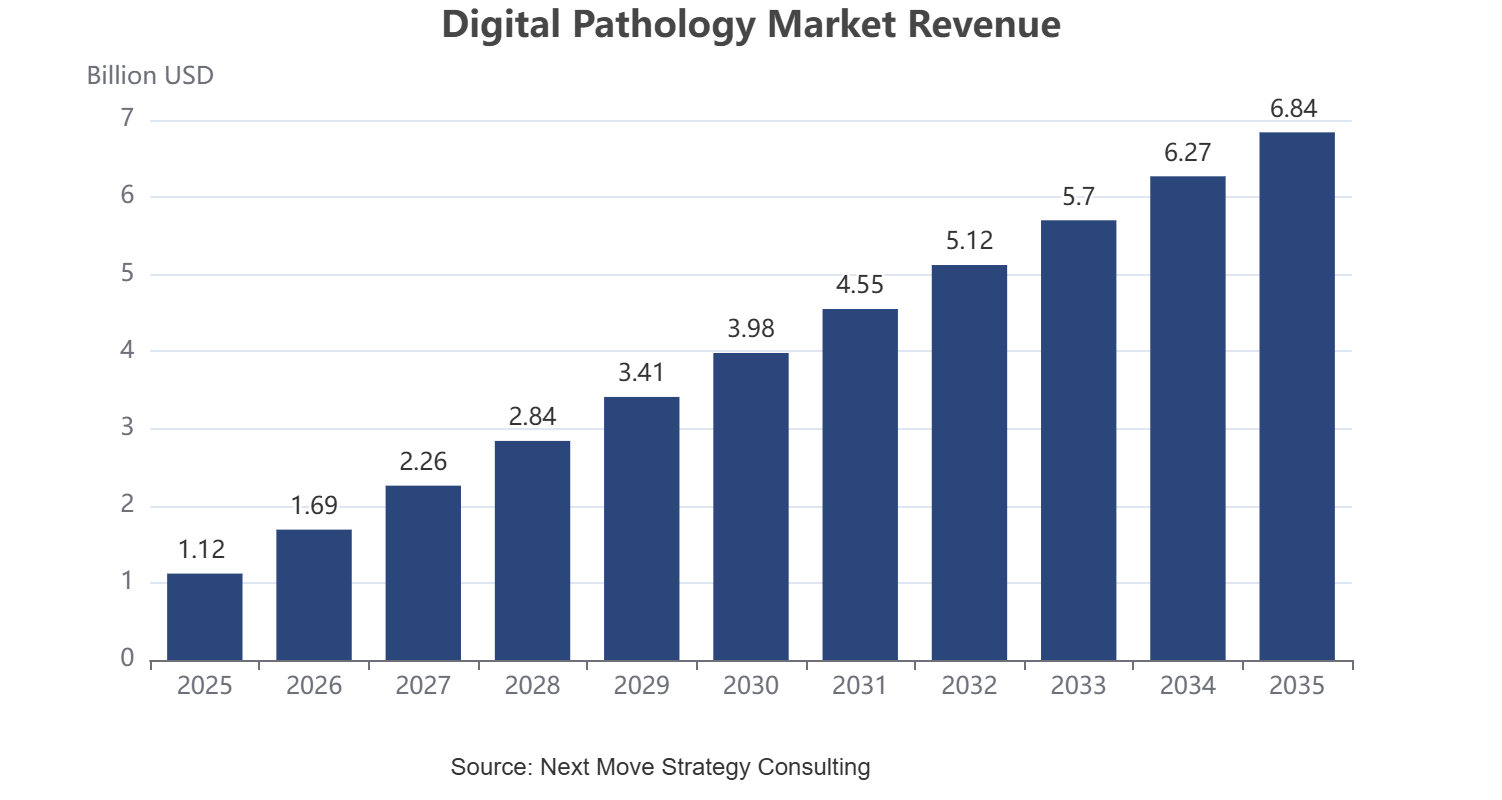
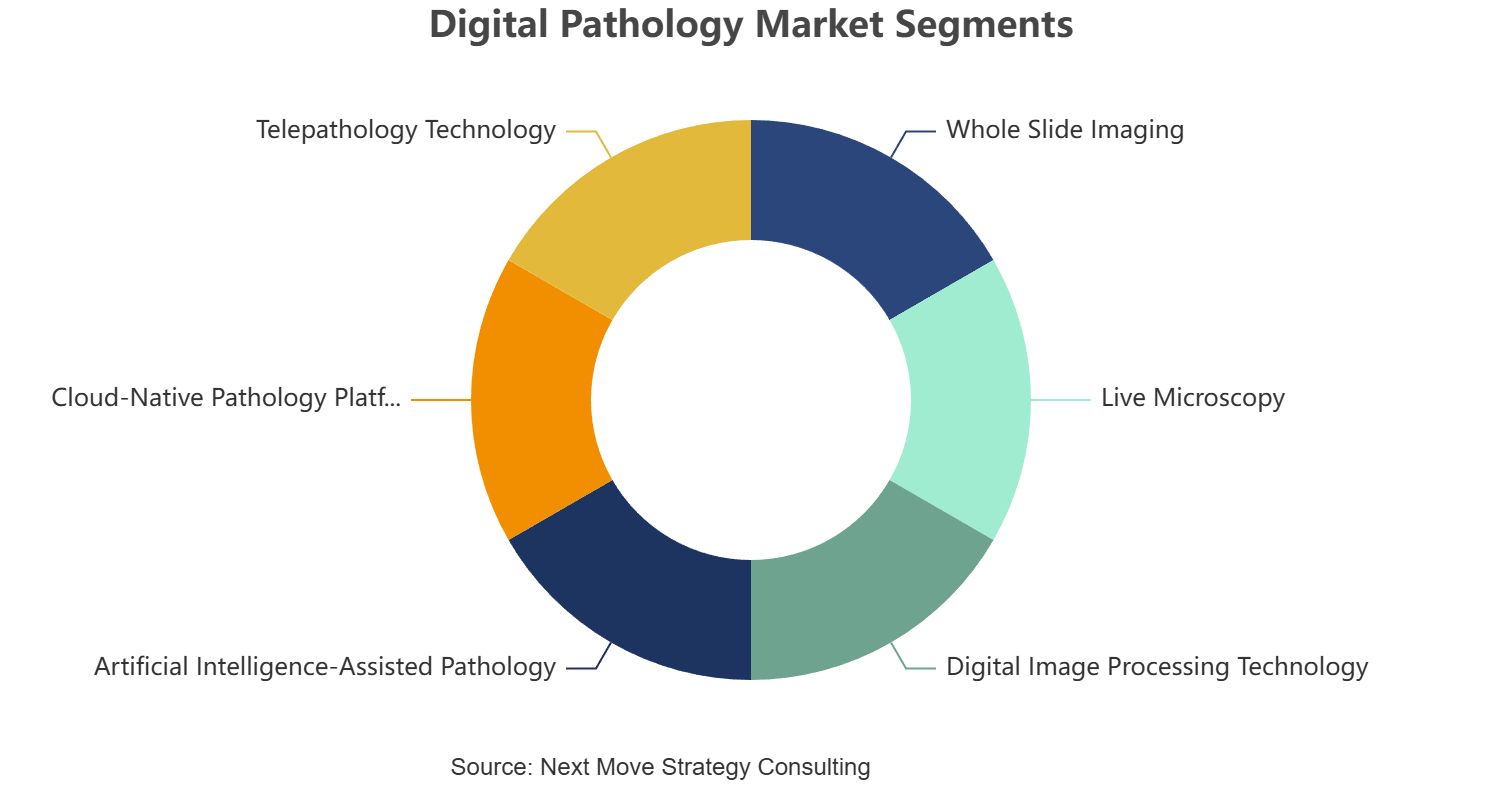
About the Author
 Tushmi Dutta
— Tushmi Dutta is a focused researcher specializing in detailed analysis and insight-driven research across diverse business landscapes. She supports strategic initiatives through structured data interpretation, thorough validation, and clear communication of findings that aid informed decision-making. With a strong interest in writing, she enjoys presenting research insights in an engaging and accessible manner. Beyond work, she enjoys traveling, reading, painting, and continuously learning new skills that contribute to her creative and professional growth.
Tushmi Dutta
— Tushmi Dutta is a focused researcher specializing in detailed analysis and insight-driven research across diverse business landscapes. She supports strategic initiatives through structured data interpretation, thorough validation, and clear communication of findings that aid informed decision-making. With a strong interest in writing, she enjoys presenting research insights in an engaging and accessible manner. Beyond work, she enjoys traveling, reading, painting, and continuously learning new skills that contribute to her creative and professional growth.
About the Reviewer
 Supradip Baul
— Supradip Baul is an accomplished business consultant and strategist with over a decade of rich experience in market intelligence, strategy, technology, and business transformation. His work has included rigorous qualitative and quantitative analysis across multiple industries, helping clients shape investment decisions and long-term roadmaps. Earlier in his career, he was associated with Gartner, where he contributed to industry-leading reports and market share analyses. He has worked with leading global companies and holds an MBA with a dual specialization in Marketing and Finance.
Supradip Baul
— Supradip Baul is an accomplished business consultant and strategist with over a decade of rich experience in market intelligence, strategy, technology, and business transformation. His work has included rigorous qualitative and quantitative analysis across multiple industries, helping clients shape investment decisions and long-term roadmaps. Earlier in his career, he was associated with Gartner, where he contributed to industry-leading reports and market share analyses. He has worked with leading global companies and holds an MBA with a dual specialization in Marketing and Finance.
At Next Move Strategy Consulting, we understand that insightful market research is the cornerstone of successful business decisions. That's why we employ a robust and multifaceted approach, combining various methodologies to deliver the most accurate and actionable data for our clients.

Research Landscape
We navigate the world of research with two primary approaches:
Qualitative Approach
Our qualitative research methodologies involve immersive techniques such as in-depth interviews, focus groups, and observational studies. By engaging directly with individuals and stakeholders, we uncover valuable insights that quantitative data alone may overlook.

Quantitative Research
In tandem with qualitative methodologies, NMSC leverages the power of Quantitative Research to provide a robust foundation of numerical insights. Through systematic data collection and analysis, we quantify patterns, preferences, and market trends, offering a comprehensive view of the business landscape.
Our quantitative research approach employs diverse tools, including surveys, experiments, and statistical modelling. These methodologies enable us to gather data from a large and representative sample, ensuring the statistical significance of our findings. By employing structured questionnaires and standardized data collection methods, we guarantee the reliability and validity of the information we present to our clients.
Quantitative research is particularly effective in measuring the prevalence of trends, assessing market size, and gauging the impact of various factors on consumer behavior. The numerical precision attained through this approach equips our clients with actionable insights, facilitating data-driven decision-making and strategy formulation.


Our Specialized Toolbox for Industry-Specific Market Research
We deploy a specialized arsenal of techniques tailored to meet your unique requirements. Here's a glimpse into our comprehensive toolbox:

Information Procurement
The stage entails acquiring market data or relevant information through various sources and methodologies.


Market Research Approach
We utilize both top-down and bottom-up approaches in market research analysis to achieve a comprehensive understanding of the market dynamics, leveraging the broad perspective of industry trends and macroeconomic factors alongside detailed insights from specific segments and individual companies.

Porters Five Forces Analysis
We conduct Porter's Five Forces analysis to evaluate the competitive landscape of an industry, providing us with insights into factors that affect profitability and strategic positioning.

SWOT Analysis

Forecasting
We utilize a forecasting model to predict future consumption by considering parameters like population, economics, regulations, market competition, drivers, constraints, technology, and pricing. We also employ statistical techniques such as multilinear regression, exponential smoothing, moving average, ARIMA, and Monte Carlo simulations for accurate predictions. In econometric forecasting, we analyzed short-term and long-term event impacts, attributing values based on regulatory frameworks, economic factors, and market events.





 Speak to Our Analyst