Urinary Incontinence Devices Market By Product Category {Absorbent Products (Disposable Absorbents, Reusable Absorbents), External Collection Devices , Internal Catheters (Intermittent, Indwelling), and Other Devices}, By Sex (Male, Female, Unisex), By Incontinence Type (Stress, Urge, and Others), By Distribution Channel {Direct Sales, Indirect Sales (Distributors, GPOs, and Others)}, and By End User (Hospitals, Ambulatory Surgical Centers, and Others) – Global Analysis & Forecast, 2025–2035
Industry: Healthcare | Publishing Date: June 6, 2026 | Last Updated: June 6, 2026 | No of Pages: N/A | No. of Tables: N/A | No. of Figures: N/A | Format: PDF | Report Code: HC405
Industry Outlook
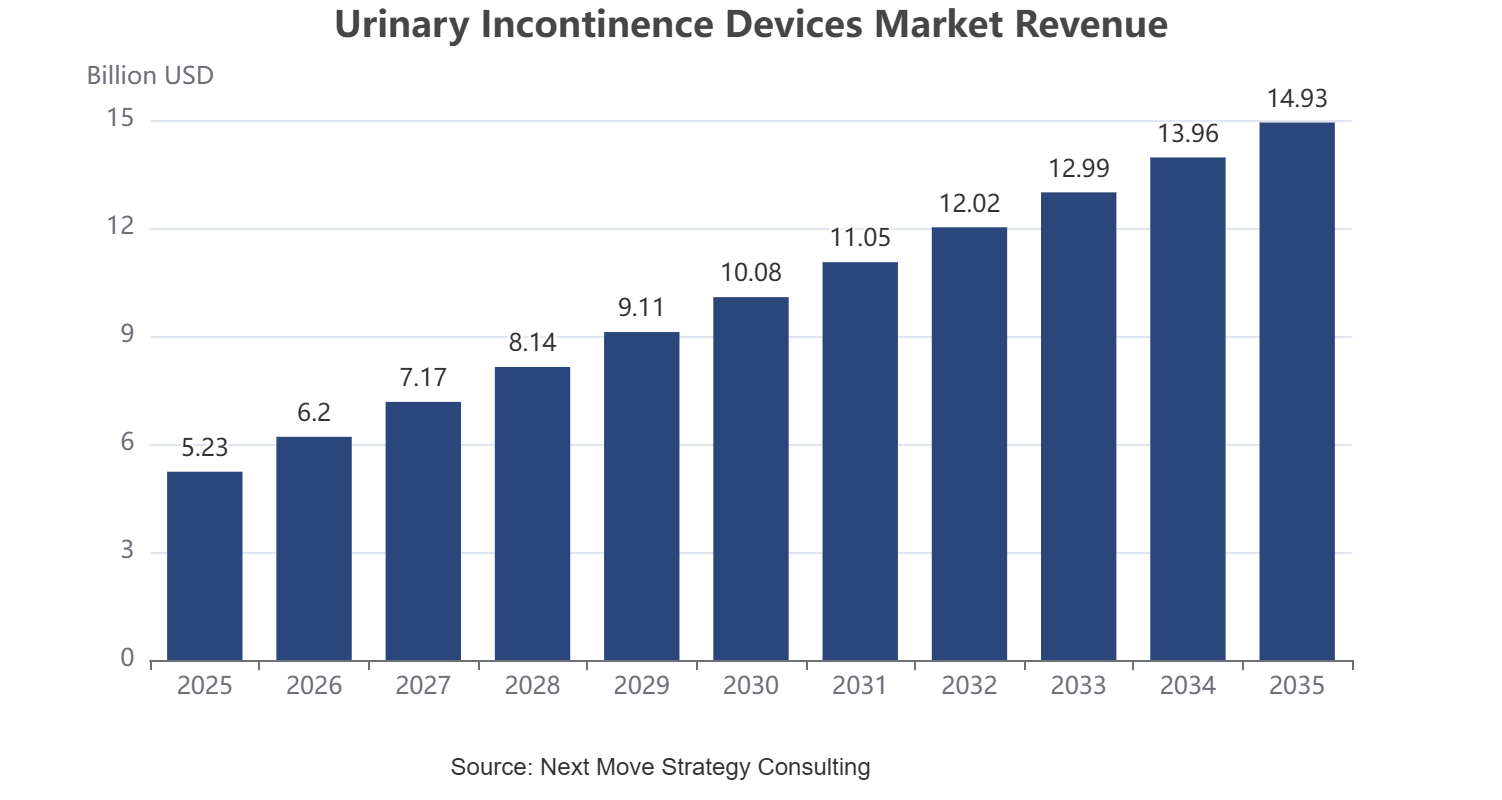
The global Urinary Incontinence Devices Market size was valued at USD 5.23 billion in 2025 and is expected to be valued at USD 5.81 billion by the end of 2026. The industry is projected to grow, hitting USD 14.93 billion by 2035, with a CAGR of 11.05% between 2026 and 2035.
Urinary Incontinence Devices Market Size & Forecast
|
Parameters |
Details |
|
Market Size in 2026 |
USD 5.81 Billion |
|
Revenue Forecast in 2035 |
USD 14.93 Billion |
|
Growth Rate |
CAGR of 11.05% from 2026 to 2035 |
|
Analysis Period |
2025–2035 |
|
Base Year Considered |
2025 |
|
Forecast Period |
2026–2035 |
|
Market Size Estimation |
Billion (USD) |
|
Companies Profiled |
20 |
|
Countries Covered |
33 |
|
Market Share |
Available for 10 companies |
Based on NMSC’s primary research, we observed that the global urinary incontinence devices market demonstrates steady growth, driven by the expanding ageing population, increasing prevalence of chronic conditions such as bladder dysfunction and neurological disorders, and rising awareness of continence care. As a result, devices including catheters, urine collection systems, vaginal slings, and artificial urinary sphincters are witnessing growing adoption to manage urinary leakage, improve patient comfort, and reduce complications. In addition, our field insights and interactions with healthcare providers indicate that demand is closely linked to long-term care needs, post-surgical recovery pathways, and the expansion of home healthcare services. Consequently, disposable products continue to dominate due to hygiene and ease of use, while advanced implantable and minimally invasive solutions gain strong clinical acceptance.
Furthermore, based on our evaluation of digital healthcare systems across key regions, we found that market adoption is shaped by demographic trends, reimbursement structures, and access to continence care products. In particular, North America demonstrates strong adoption supported by established reimbursement frameworks and high awareness levels. Similarly, Europe maintains steady demand driven by its ageing population and well-developed healthcare infrastructure. Meanwhile, Asia-Pacific is emerging as a high-growth region, supported by expanding healthcare access, improving diagnosis rates, and a rapidly increasing elderly population in countries such as Japan, China, and India. At the competitive level, leading players such as Coloplast, Boston Scientific, Medtronic, and Becton, Dickinson and Company continue to focus on product innovation, patient-centric design, and expansion into home-based care solutions. Moreover, advancements in minimally invasive implants and infection-resistant catheter technologies reflect continuous innovation, while increasing emphasis on comfort, discretion, and long-term usability strengthens patient adherence and overall market confidence.
What Are the Key Trends in the Urinary Incontinence Devices Industry?
How Is the Evolution of Neuromodulation Technologies Transforming Incontinence Treatment Approaches?
NMSC’s analysis indicates that the evolution of neuromodulation technologies is transforming incontinence treatment by complementing traditional surgical and pharmacological approaches with minimally invasive solutions. There is a growing preference for tibial and sacral nerve stimulation therapies due to their ability to deliver sustained symptom control with lower procedural complexity. From our evaluation of clinical adoption trends, we found that these therapies improve patient compliance, reduce recovery timelines, and expand treatment eligibility for patients unsuitable for surgery. Furthermore, advancements in compact, programmable devices enable more precise and personalized therapy delivery. Consequently, neuromodulation is emerging as a scalable and clinically effective pathway for long-term incontinence management.
How Is the Integration of Smart Biometric Sensors Enhancing Personalized Incontinence Management?
Through our evaluation, we found that the integration of smart biometric sensors with connected health ecosystems is enhancing the personalization of urinary incontinence management. During our interactions with healthcare providers and digital health developers, we observed increasing interest in sensor-enabled devices capable of monitoring bladder activity, leakage patterns, and patient behaviour in near real time. In addition, integration with mobile applications and remote monitoring platforms enables continuous data tracking and improved clinical visibility. This data-driven approach allows clinicians to design more tailored treatment plans and refine interventions based on patient-specific patterns. As digital health integration expands, this trend supports a gradual shift toward proactive and personalized incontinence care.
How Is the Shift Toward Homecare-Centric and Discreet Solutions Redefining Patient Adoption Patterns?
From our market analysis, we observed that the shift toward homecare-centric and discreet incontinence management solutions is redefining patient adoption patterns across both developed and emerging markets. Our interactions with caregivers and product distributors indicate a strong preference for solutions that support privacy, ease of use, and independence in daily life. In parallel, patients are increasingly adopting self-managed options, including advanced absorbent products, , and non-invasive therapeutic tools designed for use outside clinical environments. This trend aligns with the broader expansion of home-based healthcare and reduced reliance on hospital visits. Consequently, improved accessibility and patient-centric design are accelerating adoption across diverse care settings.
Ecosystem Analysis of the Urinary Incontinence Devices Market
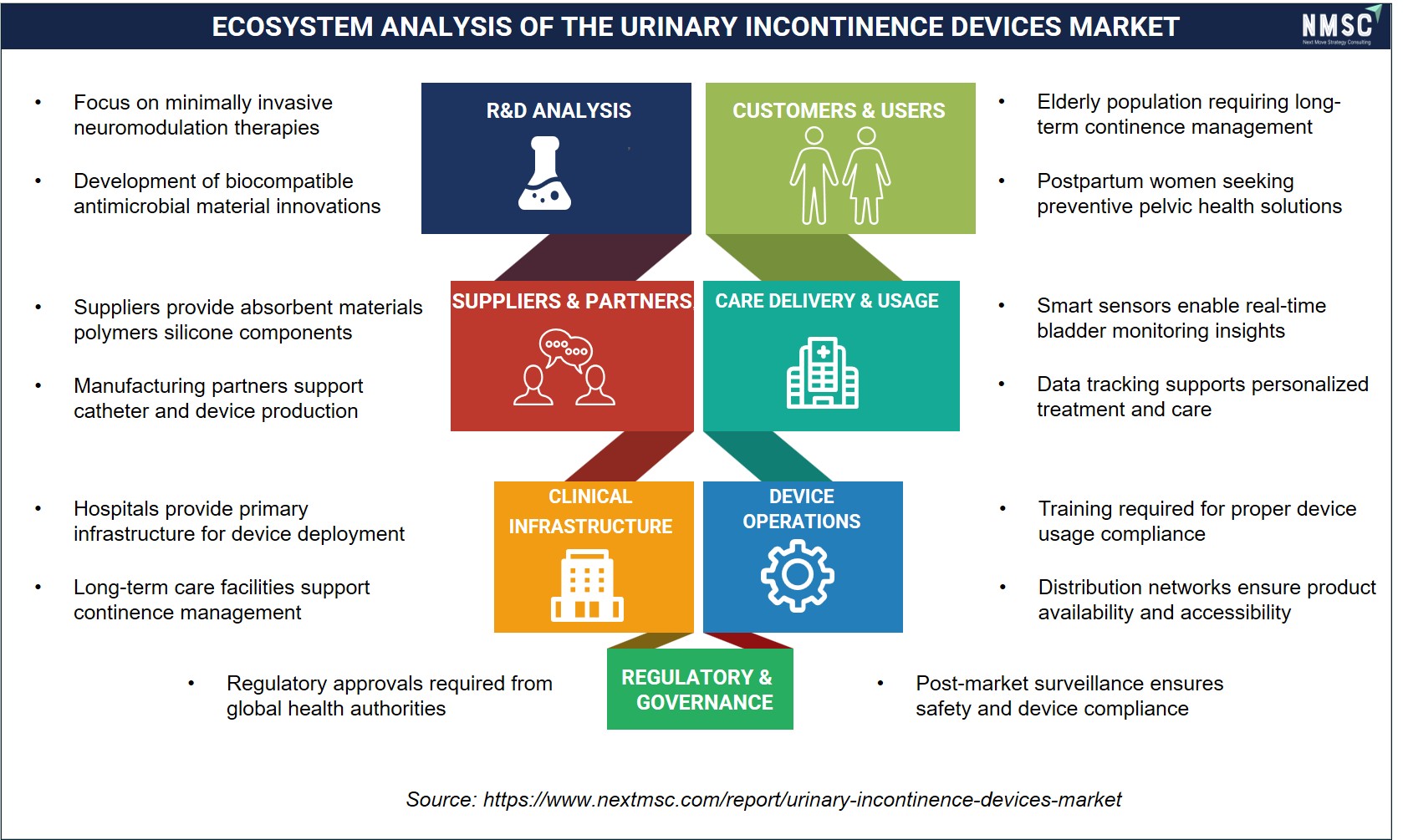
From our market assessment, we found that the ecosystem is increasingly evolving toward patient-centric and homecare-driven models, supported by continuous R&D advancements and material innovation. Moreover, collaboration among suppliers, manufacturers, and healthcare providers is strengthening product development and accessibility. In parallel, the integration of smart monitoring technologies and data-driven care solutions is enhancing treatment personalization. Meanwhile, clinical infrastructure and regulatory frameworks continue to ensure safety, reliability, and compliance, thereby supporting sustainable growth and improved patient outcomes across the urinary incontinence devices market.
What Are the Key Market Drivers, Breakthroughs, and Investment Opportunities That Will Shape the Urinary Incontinence Devices Industry in the Next Decade?
Growth Catalyst & Risk Assessment Matrix
|
Drivers / Trends / Restraints |
(+/–) % Impact On CAGR Forecast |
Geographic Relevance |
Impact Timeline |
|
Rapid expansion of ageing population and rising urinary incontinence prevalence |
+1.5% |
North America, Europe (Germany, Italy), Asia-Pacific (Japan, China) |
Long term (5–10 years) |
|
Increasing awareness of post-childbirth pelvic health and preventive care adoption |
+1.2% |
North America, Europe, Asia-Pacific (India, China) |
Medium term (3–6 years) |
|
Advancements in minimally invasive neuromodulation and therapeutic technologies |
+1.3% |
North America, Europe, Asia-Pacific |
Medium to long term (3–7 years) |
|
Growing demand for homecare-based and discreet incontinence management solutions |
+1.1% |
North America, Europe, Asia-Pacific |
Medium term (2–5 years) |
|
High-cost burden of advanced implantable and electronic therapeutic devices |
–1.2% |
North America, Europe, Asia-Pacific (price-sensitive markets) |
Short to medium term (1–4 years) |
Based on our comprehensive evaluation of market dynamics, we observed that the urinary incontinence devices market is experiencing steady growth, driven primarily by the rising prevalence of urinary disorders, increasing ageing population, and growing awareness of pelvic health and preventive care. Moreover, demand for incontinence management solutions is strengthening as healthcare systems increasingly focus on long-term care, patient comfort, and improved quality of life. From our analysis, we found that advancements in minimally invasive therapies, neuromodulation technologies, and improved material innovation are enhancing treatment effectiveness while reducing procedural burden. In parallel, the growing shift toward home-based care and discreet management solutions is expanding adoption across both elderly and younger patient groups. However, high costs associated with advanced implantable devices and procedural complexities continue to limit adoption, particularly in price-sensitive markets. At the same time, increasing innovation in non-invasive devices, sustainable products, and patient-centric solutions is creating new growth opportunities by improving accessibility, affordability, and long-term usability across diverse care settings.
Growth Drivers:
How Is the Growing Geriatric Population Driving Demand for Incontinence Management Solutions?
NMSC’s assessment indicates that the rapid expansion of the global geriatric population is acting as a primary and structurally sustained demand driver for urinary incontinence devices. Ageing is inherently associated with declining bladder control, increasing prevalence of neurological disorders, and reduced mobility, all of which elevate the incidence of urinary dysfunction. From our interactions with healthcare providers and caregivers, we identified a consistent rise in demand for long-term management solutions that support independence, dignity, and daily comfort among elderly patients. According to the World Health Organization 2025 ageing fact sheet, the global population aged 60 years and above is projected to increase from 1 billion in 2020 to 1.4 billion by 2030 and 2.1 billion by 2050, with population ageing accelerating across all regions. As a result, healthcare systems are integrating continence care into broader geriatric pathways, reinforcing sustained and volume-driven demand across both disposable and device-based solutions.
How Is Increasing Post-Childbirth Pelvic Health Awareness Driving Preventive Incontinence Care Adoption?
From our market evaluation, we found that rising awareness around post-childbirth pelvic health is reshaping incontinence care by driving earlier diagnosis and preventive intervention. Pelvic floor dysfunction is increasingly recognized as a long-term condition rather than a temporary postnatal issue, prompting a shift toward structured postpartum care. Through our interactions with clinicians and women’s health specialists, we observed growing adoption of pelvic floor assessments and rehabilitation programs as part of routine maternal care. In January 2025 NIH indicates that pelvic floor dysfunction affects almost 50% of women within a decade of giving birth. Urinary incontinence (UI) is the most frequent symptom, with a prevalence of up to 17.1% in the general female population. Consequently, increasing clinical recognition and early-stage intervention are expanding demand for non-invasive therapeutic solutions, positioning preventive pelvic care as a key contributor to urinary incontinence market growth.
Growth Inhibitor:
How Is the High Cost of Advanced Therapeutic Devices Restricting Market Adoption?
Based on our analysis, we identified that the high cost of advanced electronic and implantable incontinence devices is limiting their widespread adoption, particularly in cost-sensitive healthcare environments. The financial burden extends beyond device pricing to include surgical procedures, clinical consultations, and long-term maintenance costs. In addition, from our interactions with healthcare providers and procurement teams, we identified that affordability remains a key consideration in treatment selection, leading to preference for conservative or non-invasive alternatives. According to PubMed Central (PMC) in January 2026, surgeries for urological implants incur hospital costs significantly higher than primary cases, with severe complications like infections costing up to approx. USD 25,000 per event. As a result, cost sensitivity creates disparities in adoption across regions, constraining the scalability of high-end therapeutic solutions despite their clinical effectiveness.
Growth Opportunity:
How Is the Shift Toward Sustainable Incontinence Products Creating New Urinary Incontinence Devices Market Opportunities?
Based on our analysis, we found that increasing environmental awareness is driving demand for eco-friendly and biodegradable incontinence products, creating new opportunities for market expansion. From our evaluation, we observed that conventional disposable products contribute significantly to long-term waste accumulation, which is prompting both regulatory attention and consumer concern. Accordingly, manufacturers are focusing on sustainable material innovation, including plant-based fibers and reduced plastic compositions. As of February 2026, NHS England requires all suppliers to provide a board-approved Carbon Reduction Plan (CRP) for contracts over USD 6.75 million, with a mandatory 10% scoring weight applied to net zero and social value in every procurement tender As a result, sustainability-driven innovation is enabling product differentiation while aligning with regulatory requirements and shifting consumer expectations.
Supply Chain Structure of the Urinary Incontinence Devices Market
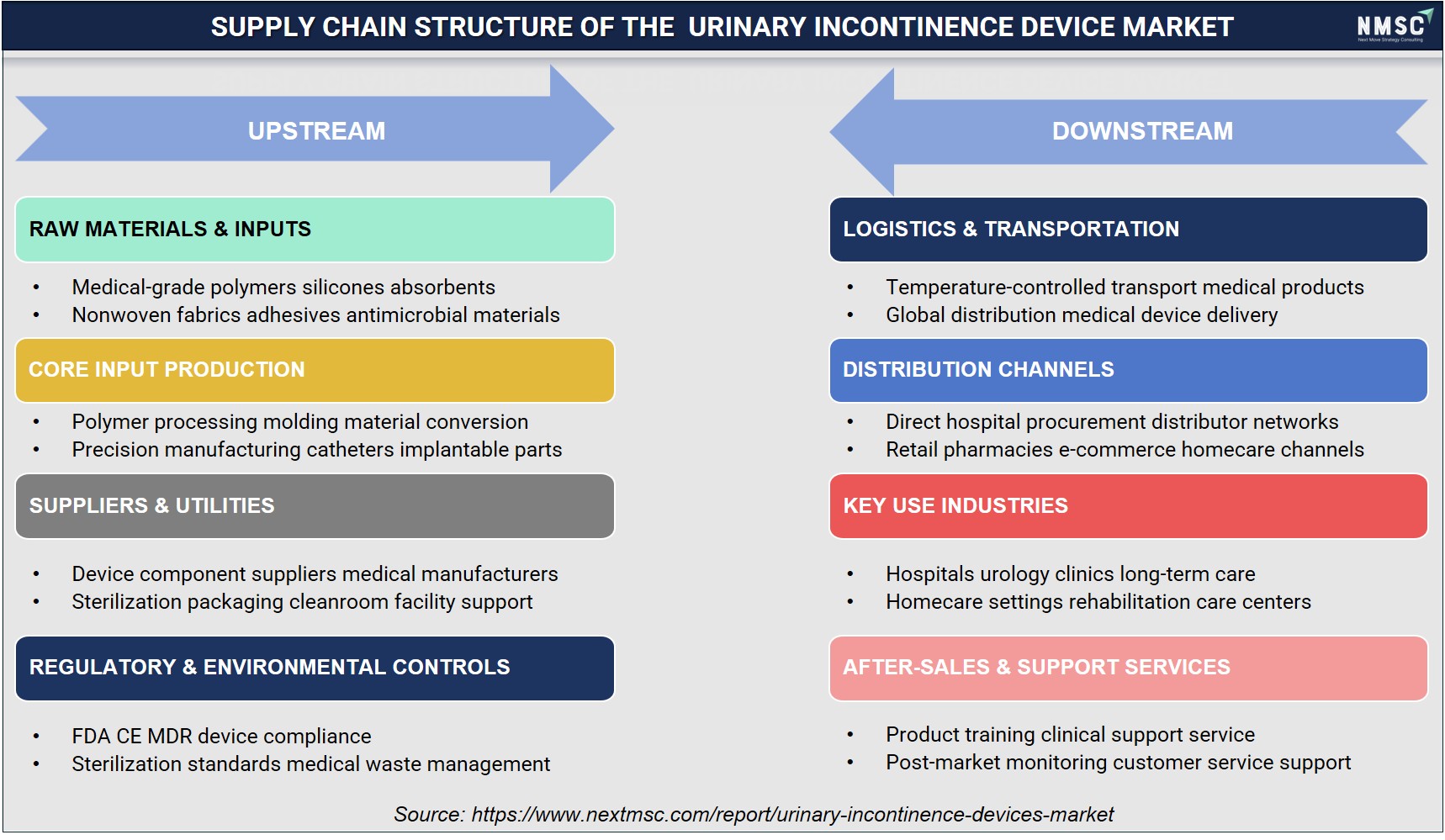
Our evaluation indicates that the supply chain is characterized by a well-integrated upstream and downstream ecosystem, where specialized raw materials, precision manufacturing, and stringent regulatory compliance ensure product quality and safety. Furthermore, efficient logistics, diversified distribution channels, and expanding homecare delivery models support market accessibility. At the same time, hospitals, clinics, and long-term care facilities remain key demand centres. Additionally, post-market monitoring and support services play a critical role in ensuring device performance, compliance, and long-term patient satisfaction across global markets.
How Is the Urinary Incontinence Devices Market Segmented in This Report, And What Are the Key Insights from the Segmentation Analysis?
Market Highlights & Strategic Insights – Urinary Incontinence Devices Market:
|
Segments |
Key Takeaways |
|
Product Category |
Absorbent products dominate due to ease of use and strong demand in home care, with disposable variants leading on convenience and hygiene. Internal catheters remain essential in clinical and long-term care, while neuromodulation and implantable devices are gaining traction as advanced treatment options. |
|
External Collection Devices |
External catheters, especially male variants, are widely used due to their non-invasive nature and lower infection risk. Urine collection bags see steady demand, with leg bags supporting mobility and bedside bags used in stationary care. |
|
Internal Catheters |
Intermittent catheters are preferred for lower infection risk and patient comfort, with coated types gaining traction. Indwelling catheters remain critical in long-term and acute care, with Foley catheters widely used for continuous drainage. |
|
Neuromodulation and Implant Devices |
Sacral neuromodulation is gaining adoption for long-term management, while tibial stimulation supports non-surgical treatment. Sling systems and artificial urinary sphincters remain key for severe stress incontinence cases. |
|
Sex |
Female segment leads due to higher prevalence of stress and mixed incontinence. Male demand is driven by post-surgical cases, while unisex products support broader incontinence management. |
|
Incontinence Type |
Stress incontinence drives demand for both absorbent and surgical solutions. Urge and mixed types are increasingly managed through neuromodulation, while functional and overflow cases support long-term care usage. |
|
Distribution Channel |
Indirect sales dominate through distributors and procurement networks. Online channels are expanding with rising home care demand, while direct sales remain relevant for institutional buyers. |
|
End User |
Hospitals and long-term care facilities are key demand centers. Home care is expanding with aging populations, while ambulatory centers and clinics are adopting minimally invasive treatment solutions. |
By Product Category Insights
Which Product Categories Drive the Urinary Incontinence Devices Market Demand?
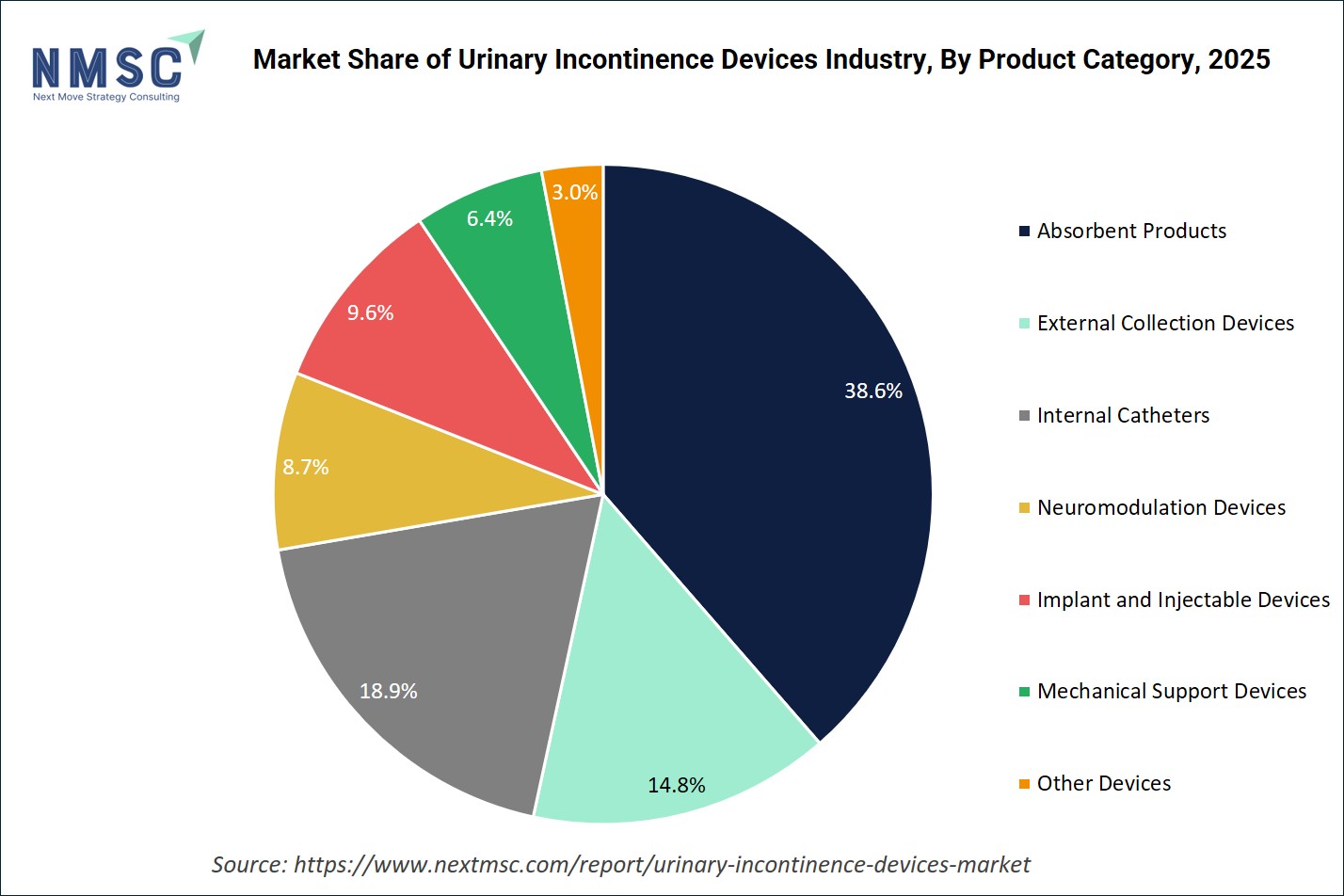
Based on our analysis of the urinary incontinence devices market, we observed that the market is segmented into absorbent products, external collection devices, internal catheters, neuromodulation devices, implant and injectable devices, mechanical support devices, and other devices.
From our evaluation of product adoption patterns, we found that absorbent products dominate demand, primarily driven by their ease of use and widespread adoption in home care settings. In particular, disposable absorbents continue to lead due to convenience and hygiene benefits. Meanwhile, internal catheters remain critical in clinical and long-term care environments, especially for severe incontinence management. In addition, neuromodulation and implantable devices are gaining traction as patients increasingly seek long-term and minimally invasive treatment options. Overall, the market is gradually shifting from purely management-based solutions toward more therapeutic and outcome-driven interventions.
By Incontinence Type Insights
Which Incontinence Types Are Driving Treatment and Device Adoption?
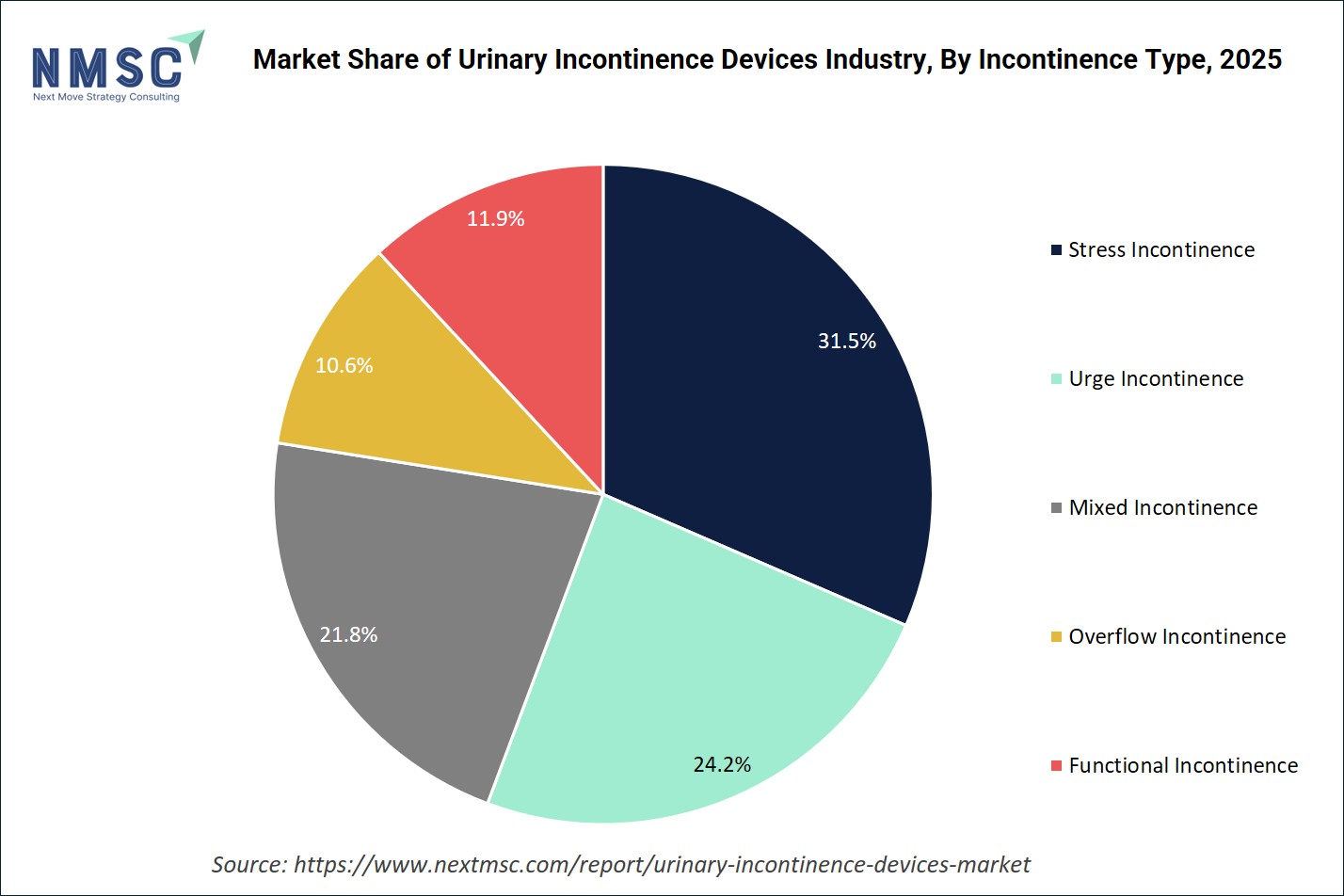
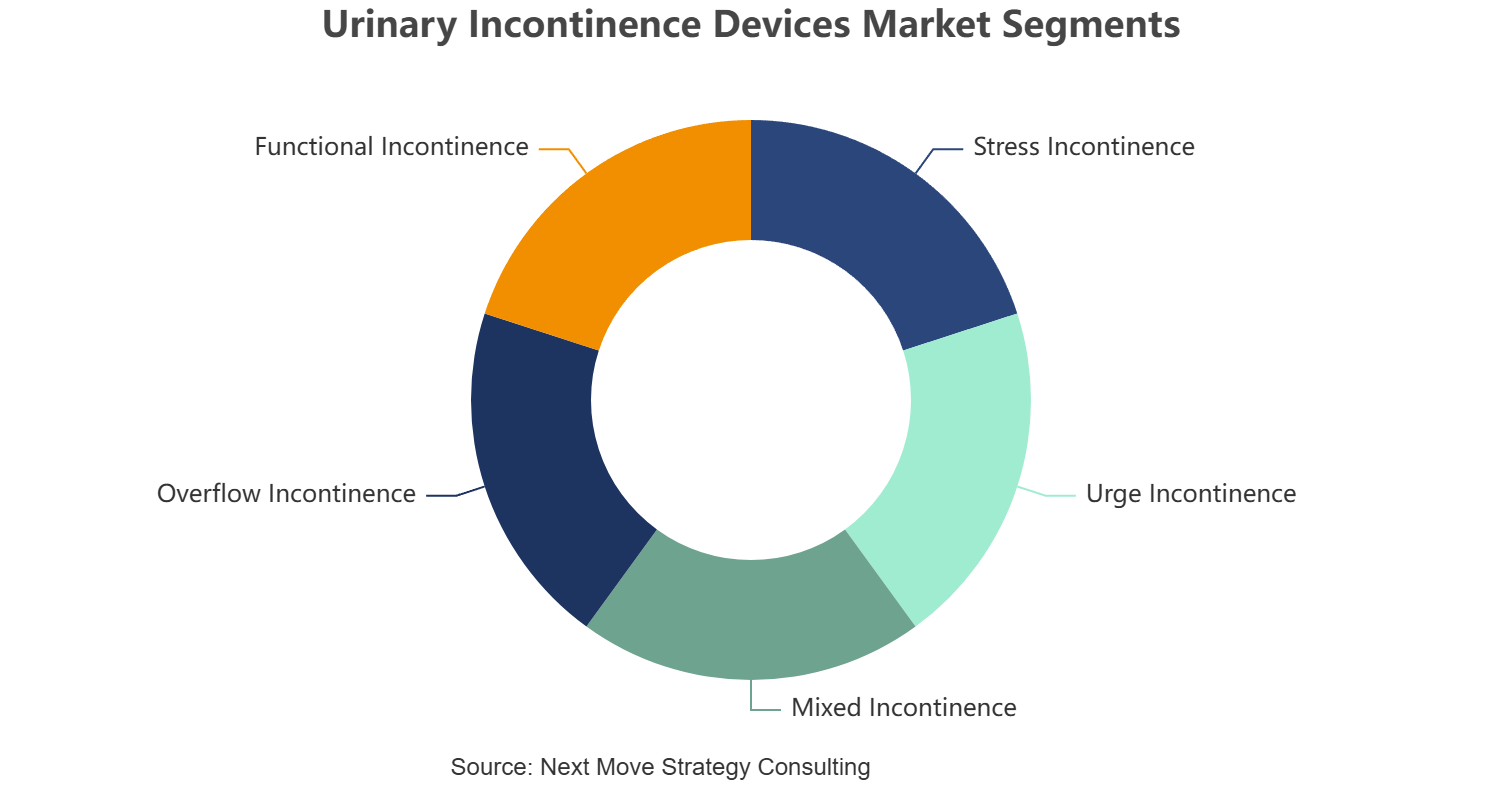
Based on our analysis of patient conditions, we observed that the urinary incontinence devices market is segmented into stress incontinence, urge incontinence, mixed incontinence, overflow incontinence, and functional incontinence.
From our assessment of treatment pathways, we found that stress incontinence drives significant demand, particularly for absorbent products and surgical interventions such as sling systems. At the same time, urge and mixed incontinence are increasingly being managed through advanced approaches, including neuromodulation and behavioural therapies. Additionally, overflow and functional incontinence remain prevalent among elderly and mobility-impaired populations, supporting sustained demand for long-term care solutions. Therefore, treatment approaches are becoming more condition-specific, with increasing alignment between device type and underlying clinical need.
By End User Insights
How Do End Users Influence Demand in the Urinary Incontinence Devices Market?
Based on our analysis of healthcare settings, we observed that the market is segmented into hospitals, ambulatory surgical centers, long term care facilities, home care settings, clinics and offices, and other settings.
From our evaluation of usage patterns, we found that hospitals and long-term care facilities remain the primary demand centers, driven by high patient volumes and continuous care requirements. Meanwhile, home care settings are expanding rapidly as aging populations and patient preference shift toward at-home management. Furthermore, ambulatory surgical centers and clinics are increasingly adopting minimally invasive treatment solutions, particularly for outpatient procedures. Thus, care delivery is gradually decentralizing, with growing emphasis on home-based management alongside institutional care.
Regional Outlook:
Geographic Performance Snapshot:
|
Regions |
Key Takeaways |
|
North America |
North America represents a leading urinary incontinence devices market, supported by advanced healthcare infrastructure, high diagnosis rates, and well-established reimbursement frameworks. Strong demand is driven by ageing population, post-surgical care, and long-term management of chronic conditions. Widespread adoption across hospitals, long-term care facilities, and home healthcare settings sustains consistent product utilization. |
|
Europe |
Europe represents a well-established urinary incontinence devices market, driven by strict regulatory standards, universal healthcare systems, and a rapidly ageing population. Demand is anchored in long-term care and chronic condition management, with strong preference for clinically validated and quality-certified products. Standardized procurement and reimbursement systems support consistent adoption across institutional and homecare settings. |
|
Asia-Pacific |
Asia-Pacific represents the fastest-growing urinary incontinence devices market, supported by expanding healthcare infrastructure, rising awareness, and increasing elderly population across key countries such as China, India, Japan, and South Korea. Demand is increasing across hospitals and homecare environments, with disposable products leading adoption due to affordability and accessibility. |
|
Latin America |
Latin America represents a developing urinary incontinence devices market, supported by improving healthcare access and growing urban populations. Demand is concentrated in countries with stronger healthcare systems, where hospitals and private providers drive adoption. Cost sensitivity and distribution reach influence product utilization, with disposable continence products accounting for the majority of usage. |
|
Middle East & Africa |
The Middle East & Africa represents an emerging urinary incontinence devices market, shaped by varying healthcare infrastructure and economic conditions. The Middle East demonstrates higher adoption supported by advanced medical facilities, while Africa reflects early-stage demand concentrated in urban healthcare centers. Access to care, affordability, and awareness continue to influence market development across the region. |
The urinary incontinence devices market is geographically studied across North America, Europe, Asia Pacific, Latin America and Middle East & Africa and each region is further studied across countries.
Urinary Incontinence Devices Market in North America
North America represents a mature and clinically structured urinary incontinence devices market, supported by advanced healthcare infrastructure, high diagnosis rates, and well-defined reimbursement pathways. From our regional assessment, we observed that demand is consistently driven by ageing demographics, post-surgical care requirements, and long-term management of chronic urological conditions. As a result, the region demonstrates strong utilization of both disposable continence products and clinically prescribed devices across hospitals, long-term care facilities, and home healthcare settings. Furthermore, from our engagements with healthcare providers and procurement bodies, we observed that infection control standards, patient comfort, and product reliability directly influence device selection and purchasing decisions. In addition, reimbursement-backed access and organized distribution networks ensure continuous product availability across patient groups. Consequently, the expansion of home healthcare strengthens demand for easy-to-use and discreet devices, reinforcing stable consumption patterns and long-term market sustainability across the region.
Urinary Incontinence Devices Market in the United States
Based on our primary research and direct engagements with healthcare providers and distributors, we observed that the United States demonstrates the most structured and high-value demand within North America. The market is driven by clearly defined clinical pathways for urinary incontinence management, particularly across post-surgical care, geriatric populations, and patients with neurological conditions. As a result, intermittent catheters, external collection systems, and implantable devices form the core of clinical usage. Moreover, our analysis indicates that established reimbursement frameworks and insurance coverage ensure consistent access to prescribed devices, particularly in long-term and home-based care settings. In addition, integrated distribution systems, including medical suppliers and pharmacy networks, support uninterrupted product availability. At the same time, healthcare providers prioritize infection prevention, ease of use, and patient dignity, which directly shapes prescribing behaviour. Consequently, the ongoing shift toward home healthcare strengthens demand for discreet, user-friendly solutions, positioning the market as highly organized, protocol-driven, and sustained by clinical validation and reimbursement alignment.
Urinary Incontinence Devices Market in Canada
Canada demonstrates a structured and publicly supported urinary incontinence devices market, shaped by universal healthcare access and strong emphasis on long-term care management. From our evaluation, we observed that demand is primarily driven by ageing population needs and institutional care environments, including nursing homes and assisted living facilities. As a result, the market reflects consistent utilization of clinically approved continence products across both facility-based and home care settings. Furthermore, from our engagements with healthcare providers and procurement authorities, we observed that product selection is guided by reliability, patient comfort, and compliance with standardized care protocols. In addition, centralized procurement systems and provincial healthcare programs play a critical role in supplier selection and cost management. Compared to the United States, Canada reflects a more system-driven adoption model, where institutional frameworks and reimbursement structures shape market dynamics. In turn, this environment ensures stable demand, controlled pricing, and sustained utilization across the continuum of care.
Urinary Incontinence Devices Market in Europe
The urinary incontinence devices market in Europe demonstrates a regulation-intensive and demographically driven structure, supported by universal healthcare systems and a rapidly ageing population. From our regional evaluation, we observed that demand is firmly anchored in long-term care management, post-operative recovery, and chronic condition treatment pathways. As a result, both disposable continence products and clinically prescribed devices witness consistent utilization across institutional and home care environments. Beyond this, from our engagements with healthcare providers and regulatory authorities, we observed that strict compliance requirements, quality certifications, and patient safety standards directly influence product adoption. In addition, reimbursement coverage across major European economies ensures accessibility and continuity of care. Adoption patterns vary across regions, with Western Europe emphasizing premium and patient-centric solutions, while Southern Europe prioritizes cost-effective products. Consequently, these dynamics strengthen standardization, reinforce clinical trust, and sustain long-term demand across the region.
Urinary Incontinence Devices Market in the United Kingdom
NMSC’s research indicates that the United Kingdom demonstrates a centrally managed and reimbursement-supported urinary incontinence devices market, shaped by standardized care pathways under the public healthcare system. From our assessment, we observed that demand is primarily driven by ageing demographics and increasing prevalence of chronic urological conditions. As a result, continence products are widely utilized across hospitals, community care, and home-based settings. Moreover, from our engagements with healthcare providers and procurement bodies, we observed that product selection is influenced by cost efficiency, clinical effectiveness, and supplier reliability. In addition, centralized procurement frameworks ensure controlled pricing and consistent supply across regions. At the same time, growing emphasis on patient dignity and home healthcare strengthens demand for discreet and easy-to-use devices. This positions the market as a structured and system-driven model, where standardized protocols and reimbursement alignment sustain long-term utilization.
Urinary Incontinence Devices Market in Germany
Germany demonstrates a highly structured and quality-focused urinary incontinence devices market, supported by strong healthcare infrastructure and stringent clinical standards. From our research, we observed that demand is consistently driven by a large elderly population and well-established long-term care systems. As a result, both disposable products and advanced continence devices maintain steady utilization across hospitals and home care environments. Furthermore, our engagements with healthcare providers and distributors indicate that product selection is guided by reliability, patient comfort, and compliance with strict regulatory requirements. In addition, reimbursement mechanisms ensure broad access to clinically approved devices, reinforcing consistent usage patterns. At the same time, healthcare systems emphasize efficiency and outcome-based care, which strengthens demand for high-quality solutions. Consequently, Germany reflects a stable and compliance-driven market with strong preference for premium, clinically validated products.
Urinary Incontinence Devices Market in France
France demonstrates a steadily evolving urinary incontinence devices market, supported by public healthcare coverage and increasing focus on elderly care management. From our evaluation, we observed that demand is driven by rising ageing population and expanding long-term care requirements. As a result, continence products witness consistent adoption across hospitals, rehabilitation centers, and home care settings. Moreover, from our engagements with healthcare providers and procurement authorities, we observed that product selection emphasizes patient comfort, safety standards, and cost efficiency. In addition, regulatory oversight and reimbursement frameworks ensure accessibility to essential continence care products. At the same time, increasing awareness and diagnosis rates strengthen early adoption and continuous usage. Consequently, the market demonstrates stable growth, supported by structured healthcare delivery and consistent demand across care environments.
Urinary Incontinence Devices Market in Italy
The urinary incontinence devices market in Italy demonstrates a demand-driven structure, shaped by ageing demographics and evolving healthcare infrastructure. From our assessment, we observed that demand is primarily concentrated in hospital care and long-term care facilities, with increasing adoption in home healthcare settings. As a result, disposable continence products and basic therapeutic devices dominate product usage. Alongside, through our interactions with healthcare providers and distributors, we found that affordability, accessibility, and ease of use are key factors influencing product selection. In addition, government healthcare support and regional procurement systems ensure availability of essential products across patient groups. At the same time, fragmented healthcare delivery increases reliance on flexible and cost-effective solutions. Consequently, the market reflects a balanced mix of institutional demand and expanding home care usage, supporting steady adoption across regions.
Urinary Incontinence Devices Market in Spain
From our primary research and engagements with healthcare providers and distributors, we observed that Spain demonstrates an expanding urinary incontinence devices market, driven by ageing population and increasing healthcare demand. The market reflects growing utilization of continence products across hospitals, elderly care facilities, and home care environments. As a result, disposable devices form the majority of product usage, supported by ease of access and routine care requirements. In addition, cost sensitivity and public healthcare coverage influence purchasing decisions, with emphasis on standardized and affordable solutions. At the same time, improving awareness and diagnosis rates strengthen product adoption across patient groups. Furthermore, distribution networks and healthcare accessibility support consistent supply across urban and semi-urban regions. Consequently, Spain reflects a developing yet stable market, where affordability, accessibility, and demographic trends sustain long-term demand.
Urinary Incontinence Devices Market in the Nordics
The Nordic region demonstrates an advanced and quality-driven urinary incontinence devices market, supported by strong public healthcare systems, high ageing population, and well-established long-term care infrastructure. From our regional assessment, we observed that demand is consistently driven by elderly care requirements and chronic condition management across institutional and home-based settings. As a result, continence products are widely utilized in nursing homes, assisted living facilities, and community care programs. Beyond this, from our engagements with healthcare providers and procurement authorities, we observed that product selection prioritizes patient comfort, safety standards, and environmental considerations. In addition, centralized healthcare systems ensure uniform access and standardized product usage across countries. At the same time, high awareness levels and structured care delivery strengthen adherence to prescribed solutions. Consequently, the region reflects a stable and high-compliance market, where quality-focused procurement and organized care frameworks sustain long-term demand.
Urinary Incontinence Devices Market in Asia-Pacific
From our primary research and engagements with healthcare providers and distributors, we observed that Asia-Pacific demonstrates a high-growth and volume-driven urinary incontinence devices market, supported by expanding healthcare infrastructure, rising awareness, and rapidly ageing populations. Demand increases across both institutional and home care settings, particularly in key countries such as China, Japan, and India. As a result, disposable continence products dominate usage, while advanced devices gain traction in developed healthcare systems. Moreover, improving diagnosis rates and government healthcare initiatives strengthen product accessibility across urban and semi-urban regions. In addition, distribution expansion and private healthcare growth support broader market penetration. At the same time, cost sensitivity and infrastructure variability influence adoption patterns across countries. Consequently, manufacturers focusing on localized production, affordability, and distribution partnerships strengthen market positioning and support sustained regional expansion.
Urinary Incontinence Devices Market in China
The urinary incontinence devices market in China demonstrates a scale-driven and rapidly expanding structure, supported by a large ageing population and improving healthcare access. From our market assessment, we observed that demand is increasing across hospitals, elderly care facilities, and home healthcare environments. As a result, disposable continence products account for the majority of usage, driven by affordability and high patient volumes. Furthermore, from our engagements with healthcare providers and distributors, we observed that expanding healthcare infrastructure and government-backed healthcare initiatives improve diagnosis and treatment rates. In addition, domestic manufacturing capabilities strengthen product availability and cost competitiveness. At the same time, urbanization and rising healthcare awareness accelerate adoption across major cities. Consequently, China reflects a high-volume and rapidly evolving market, where scale, accessibility, and cost efficiency drive sustained growth.
Urinary Incontinence Devices Market in Japan
Japan demonstrates a mature and high-penetration urinary incontinence devices market, supported by one of the world’s largest ageing populations and highly structured healthcare systems. From our evaluation, we observed that demand is strongly concentrated in long-term care facilities, hospitals, and home care settings. As a result, advanced disposable products and high-quality continence solutions dominate product usage. Moreover, Insights from healthcare providers and distributors highlight that product selection emphasizes reliability, comfort, and ease of use to support long-term patient care. In addition, strong reimbursement frameworks and established care protocols ensure consistent access and utilization. At the same time, high awareness and structured elderly care systems reinforce continuous demand. Consequently, Japan represents a premium and stability-driven market, where quality standards and long-term care requirements sustain consistent product adoption.
Urinary Incontinence Devices Market in India
India represents a rapidly expanding urinary incontinence devices market, shaped by improving healthcare access, rising awareness, and a growing elderly population. Based on our market interactions, we observed that demand is increasing across hospitals, clinics, and home care environments, particularly in urban centers. Early adoption is concentrated in basic continence management products such as catheters and urine collection systems, reflecting current affordability and accessibility dynamics. In parallel, from our engagements with healthcare providers and distributors, we observed that cost sensitivity, product availability, and patient education directly influence purchasing behavior. Government healthcare initiatives and expansion of private healthcare facilities further strengthen diagnosis and treatment rates. Meanwhile, increasing focus on home-based care supports demand for easy-to-use and discreet solutions. Taken together, these factors establish India as a high-growth market, where affordability, distribution reach, and awareness expansion drive sustained adoption.
Urinary Incontinence Devices Market in South Korea
South Korea demonstrates a technology-oriented and efficiency-driven urinary incontinence devices market, supported by advanced healthcare systems and high awareness levels. From our market assessment, we observed that demand is consistently supported by ageing demographics and structured clinical care pathways across hospitals and specialized care facilities. Product utilization spans both disposable continence products and advanced therapeutic devices. Alongside this, interactions with healthcare providers and distributors reveal that product selection reflects strong preference for reliability, hygiene, and user convenience. Digital healthcare integration and organized care delivery further streamline patient management and product usage. At the same time, urban population density and well-developed medical infrastructure support consistent access to continence care solutions. As a result, South Korea reflects a stable and innovation-aligned market, where efficiency, quality standards, and structured healthcare systems sustain long-term demand.
Urinary Incontinence Devices Market in Taiwan
Taiwan presents a structured and accessibility-driven urinary incontinence devices market, supported by universal healthcare coverage and strong medical infrastructure. From our regional evaluation, we observed that demand is primarily driven by ageing population needs and increasing prevalence of chronic conditions requiring long-term care. Continence products are widely utilized across hospitals, community care programs, and home healthcare settings. Building on this, from our engagements with healthcare providers and procurement authorities, we observed that product selection emphasizes quality, reliability, and ease of use within standardized treatment frameworks. Centralized healthcare systems ensure consistent access to approved devices across patient groups. At the same time, high healthcare awareness and organized service delivery reinforce adherence to prescribed solutions. In effect, Taiwan demonstrates a stable and well-regulated market, where structured access and consistent care practices maintain steady product utilization.
Urinary Incontinence Devices Market in Indonesia
Indonesia exhibits an emerging and progressively developing urinary incontinence devices market, influenced by expanding healthcare infrastructure and rising urban population. From our market assessment, we observed that demand is concentrated in major metropolitan areas, where hospitals and private healthcare providers drive initial adoption. Basic continence products dominate usage, reflecting current affordability levels and healthcare access. At the same time, from our engagements with healthcare providers and distributors, we observed that awareness, distribution reach, and cost considerations play a central role in product uptake. Healthcare infrastructure development and increasing private sector participation gradually improve access to continence care solutions. Furthermore, urbanization and demographic shifts contribute to rising demand across patient groups. Overall, Indonesia reflects a developing market trajectory, where improving access, affordability, and healthcare expansion support gradual and sustained adoption.
Urinary Incontinence Devices Market in Australia
From our primary research and engagements with healthcare providers and distributors, we observed that Australia demonstrates a stable and well-structured urinary incontinence devices market, supported by advanced healthcare infrastructure and strong focus on long-term care. Demand is consistently driven by ageing population and increasing prevalence of chronic conditions requiring continence management. As a result, both disposable continence products and clinically prescribed devices are widely utilized across hospitals, aged care facilities, and home care settings. In addition, established reimbursement frameworks and government-supported healthcare programs ensure access to essential continence products across patient groups. At the same time, healthcare systems emphasize patient comfort, hygiene standards, and ease of use, which directly shapes product selection. Furthermore, organized distribution networks support uninterrupted product availability across urban and regional areas. Consequently, Australia reflects a mature and stability-driven market, where structured care delivery and consistent demand sustain long-term utilization.
Urinary Incontinence Devices Market in Latin America
Latin America demonstrates a developing and regionally diverse urinary incontinence devices market, influenced by expanding healthcare access and growing urban populations. From our regional assessment, we observed that demand is primarily concentrated in countries with stronger healthcare infrastructure, where hospitals and private care providers drive product adoption. As a result, disposable continence products dominate usage, supported by affordability and routine care requirements. In parallel, from our engagements with healthcare providers and distributors, we observed that cost sensitivity, distribution reach, and awareness levels significantly influence purchasing patterns. Public healthcare systems and private sector expansion gradually improve access to continence care solutions. Meanwhile, demographic shifts and rising incidence of chronic conditions strengthen demand across patient groups. Consequently, the region reflects a gradual growth trajectory, where improving healthcare access and affordability support sustained market development.
Urinary Incontinence Devices Market in the Middle East & Africa
From our primary research and engagements with healthcare providers and distributors, we observed that the Middle East & Africa demonstrates a regionally segmented urinary incontinence devices market, shaped by varying healthcare infrastructure and economic conditions. The Middle East reflects higher adoption supported by advanced healthcare facilities and increasing investment in medical services. In contrast, Africa demonstrates early-stage adoption, with demand concentrated in urban healthcare centers. Furthermore, product utilization is primarily driven by basic continence care requirements, with disposable products accounting for the majority of usage. In addition, access to healthcare services, affordability, and awareness levels influence adoption patterns across countries. At the same time, ongoing healthcare investments and private sector participation gradually improve market accessibility. Consequently, the region presents a dual-structure market, where advanced healthcare systems in the Middle East and developing infrastructure in Africa shape distinct demand patterns and long-term growth potential.
SWOT Analysis of the Urinary Incontinence Devices Market
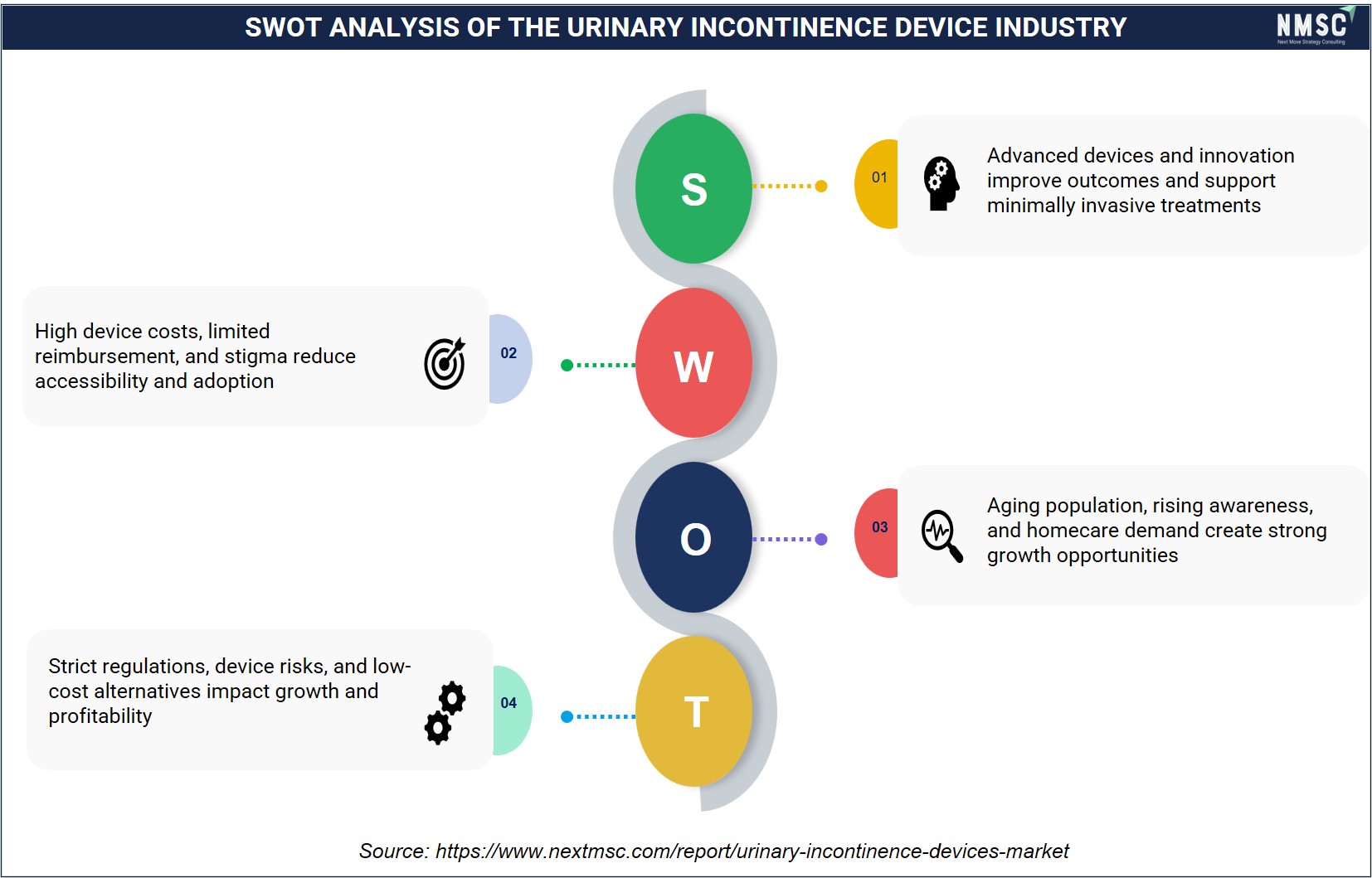
Our assessment indicates that the urinary incontinence devices market demonstrates strong innovation-led strengths, particularly through minimally invasive therapies and advanced product development. However, high device costs, limited reimbursement frameworks, and persistent social stigma continue to restrict accessibility. At the same time, the rapidly aging population, growing awareness, and increasing preference for home-based care are creating significant growth opportunities. Nevertheless, stringent regulatory requirements, device-related risks, and competition from low-cost alternatives continue to challenge sustained market expansion and profitability.
Competitive Landscape
Competitive Dynamics & M&A Landscape:
|
Key Takeaways |
|
The urinary incontinence devices market is characterized by the presence of large multinational medical device companies alongside specialized continence care and hygiene product manufacturers. Leading players such as Medtronic, Boston Scientific, Becton, Dickinson and Company, Coloplast, and B. Braun leverage strong clinical expertise, global distribution networks, and diversified product portfolios to maintain market leadership. In parallel, continence-focused and hygiene product companies such as Essity, Ontex, Hollister Incorporated, Attindas Hygiene Partners, and Paul Hartmann strengthen competition through patient-centric product design, absorbent technology innovation, and strong presence in home care segments. |
|
From our assessment of competitive strategies, we found companies increasingly prioritize product innovation in minimally invasive devices, infection-resistant catheter technologies, and user-friendly continence solutions designed for long-term care. In addition, expansion into home healthcare channels, direct-to-consumer platforms, and digital health integration continues to shape market positioning and patient engagement strategies. |
|
Furthermore, strategic collaborations, geographic expansion, and portfolio diversification are strengthening competitive intensity across the market. Companies are focusing on enhancing distribution efficiency, improving access across institutional and home care settings, and aligning product development with evolving patient needs. These developments collectively reinforce market competitiveness while supporting sustained demand across both clinical and consumer-driven segments. |
Which Companies Dominate the Urinary Incontinence Devices Industry and How Do They Compete?
Based on our market analysis, we observed that the urinary incontinence devices market is led by a combination of large multinational medical device companies and specialized continence care providers. Companies such as Medtronic, Boston Scientific, Becton, Dickinson and Company, Coloplast, and B. Braun maintain strong positions through advanced clinical portfolios, global distribution networks, and established relationships with healthcare systems. These players are widely adopted across hospital and surgical settings, particularly for implantable devices, catheters, and advanced continence therapies. In parallel, continence-focused and hygiene companies, including Essity, Ontex, Hollister Incorporated, Attindas Hygiene Partners, and Paul Hartmann, strengthen competition within disposable and homecare segments. These companies focus on high-volume product categories, leveraging brand trust, patient-centric design, and extensive retail and healthcare distribution networks.
Market Dominated by Urinary Incontinence Devices Giants and Specialists
From our evaluation, we identified that the competitive landscape is further shaped by specialized players such as Teleflex, Cook Medical, Caldera Medical, UroMems, and Promedon. These companies gain traction by focusing on targeted solutions, including slings, artificial urinary sphincters, and minimally invasive therapeutic devices. In addition, they differentiate through focused product innovation, clinician engagement, and selective geographic expansion. For instance, companies like UroMems are advancing next-generation implantable technologies, while others emphasize procedural efficiency and improved patient outcomes. As a result, large multinationals provide scale and distribution strength, whereas specialized firms drive innovation and address unmet clinical needs.
Innovation and Adaptability Drive Market Success
Innovation remains a key determinant of competitive positioning in the urinary incontinence devices market. Based on our market assessment, we observed that leading companies are focusing on infection-resistant catheters, minimally invasive implants, and user-friendly devices designed for long-term care. Furthermore, advancements in materials, ergonomics, and discreet product design enhance patient comfort and adherence. From our interactions with healthcare providers and distributors, we identified that companies investing in ease of use, reduced complication rates, and improved clinical outcomes achieve stronger adoption across both institutional and homecare settings. These developments reflect strong clinical expertise and sustained investment in patient-centered innovation.
Market Players to Opt for Merger & Acquisition Strategies to Expand Their Presence
In our primary research, we noticed that strategic expansion, partnerships, and portfolio diversification play a key role in shaping competition. Companies are strengthening their presence in emerging markets, enhancing distribution networks, and improving access to continence care solutions. In addition, partnerships with healthcare providers support broader product reach and more efficient service delivery, while integrated care approaches combining devices with support services reinforce market positioning. Notably, recent acquisitions highlight a focus on expanding therapeutic capabilities. For instance, in April 2026, Boston Scientific acquired Valencia Technologies to expand its urology portfolio, incorporating the eCoin system for treating urge urinary incontinence. This move strengthens its position in implantable neuromodulation and broadens treatment offerings. Consequently, these strategies enhance product portfolios, improve clinical value, and support sustained growth across both clinical and home-based care settings.
List of Key Urinary Incontinence Devices Companies
-
Coloplast A/S
-
Becton, Dickinson and Company
-
Teleflex Incorporated
-
Promedon Group S.A.
-
Wellspect HealthCare
-
Amsino International, Inc.
-
Manfred Sauer GmbH
-
Zephyr Surgical Implants
-
SRS Medical Systems, Inc.
-
B. Braun SE
-
UroMems SAS
-
Essity AB
-
Hollister incorporated
-
Caldera Medical, Inc.
-
Cook Medical LLC
-
Ontex Group NV
-
Paul Hartmann AG
-
Attindas Hygiene Partners
What Are the Latest Key Industry Developments?
-
April 2026 – Becton, Dickinson and Company (BD) announced positive clinical findings from a home-use study of the PureWick Urine Collection System, reporting that 70% of women experienced improved sleep and comfort while managing nighttime incontinence.
-
February 2026 – Essity AB completed the acquisition of Edgewell Personal Care’s feminine care business, integrating brands like Carefree and Stayfree to bolster its market-leading position in leakproof and incontinence apparel in North America.
-
September 2025 – Medtronic secured FDA approval for the Altaviva implantable tibial neuromodulation (iTNM) device, a minimally invasive solution for patients living with urge urinary incontinence.
Expert Insights
 “With women suffering from higher rates of SUI and currently no effective solutions available to them, we are ecstatic to be the first to demonstrate the feasibility of our breakthrough technology now in a total of 12 women and men.”
- Hamid Lamraoui, chief executive officer and co-founder, UroMems
Statement made following clinical feasibility study results of UroMems’ smart implant technology for stress urinary incontinence (SUI).
Market Interpretation
The statement highlights a significant unmet need in stress urinary incontinence (SUI), particularly among women, and reflects the shift toward effective, long-term therapeutic solutions beyond basic management products. It also underscores the emergence of next-generation implantable technologies that improve bladder control and patient quality of life. As a result, demand is increasingly moving toward outcome-driven and minimally invasive treatments, creating strong opportunities for companies focused on clinical innovation and advanced therapeutic devices.
What Are the Key Factors Influencing Investment Analysis & Opportunities in the Urinary Incontinence Devices Market?
Investment activity in the urinary incontinence devices market is increasingly shaped by a shift toward patient-centric, homecare-driven, and product-service integrated models, rather than standalone device sales. Based on our evaluation of funding trends, M&A activity, and strategic partnerships, we observed that investors favour companies with recurring revenue streams derived from disposable products, subscription-based supply models, and long-term care contracts. Vendors demonstrating strong distribution networks, brand reliability, and consistent product usage cycles attract higher investor confidence and premium valuations.
In addition, investment concentration is increasingly directed toward minimally invasive therapeutic devices, advanced absorbent technologies, and home-based continence management solutions, particularly those improving patient comfort, ease of use, and long-term adherence. Strategic investments outweigh purely financial funding, as medical device companies, healthcare providers, and private equity firms seek to expand product portfolios, geographic reach, and care delivery capabilities. As a result, the most attractive opportunities emerge in companies combining product innovation, scalable manufacturing, and strong channel partnerships, with the ability to support long-term demand across institutional and homecare settings.
Key Benefits for Stakeholders:
Next Move Strategy Consulting (NMSC) presents a comprehensive analysis of the Urinary Incontinence Devices market, covering historical developments from 2020 to 2025 and providing forward-looking forecasts through 2035. Our study evaluates the urinary incontinence devices market at global, regional, and country levels, delivering quantitative outlooks alongside qualitative insights into key growth drivers, adoption barriers, technology advancements, and investment trends across major product segments.
From market observation, the urinary incontinence devices industry delivers measurable value across a diverse ecosystem. Investors benefit from recurring revenue streams driven by high-frequency consumption of disposable products such as catheters, urine collection systems, and absorbent solutions, alongside steady demand for therapeutic devices. Healthcare providers and care facilities achieve improved patient monitoring, reduced complications, and enhanced quality of life through effective continence care solutions. In addition, distributors and home healthcare providers benefit from consistent product demand and expanding home-based care models, while manufacturers gain from scalable production, product innovation, and strong brand positioning. By aligning product innovation with patient comfort, clinical effectiveness, and accessibility, the market supports sustained value creation while ensuring long-term demand across institutional and homecare settings.
|
Parameters |
Details |
|
Customization Scope |
Free customization (equivalent to up to 80 analyst-working hours) after purchase. Addition or alteration to country, regional & segment scope. |
|
Pricing and Purchase Options |
Avail customized purchase options to meet your exact research needs. |
|
Approach |
In-depth primary and secondary research; proprietary databases; rigorous quality control and validation measures. |
|
Analytical Tools |
Porter's Five Forces, SWOT, value chain, and Harvey ball analysis to assess competitive intensity, stakeholder roles, and relative impact of key factors. |
Urinary Incontinence Devices Market Key Segments
By Product Category
-
Absorbent Products
-
Disposable Absorbents
-
Adult Diapers
-
Protective Underwear
-
Pads and Liners
-
-
Reusable Absorbents
-
Washable Underwear
-
Reusable Pads
-
-
-
External Collection Devices
-
External Catheters
-
Male External Catheters
-
Female External Collection Systems
-
-
Urine Collection Bags
-
Leg Bags
-
Bedside Bags
-
-
-
Internal Catheters
-
Intermittent Catheters
-
Coated
-
Uncoated
-
-
Indwelling Catheters
-
Foley Catheters
-
Suprapubic Catheters
-
-
-
Neuromodulation Devices
-
Sacral Neuromodulation Systems
-
Tibial Nerve Stimulation Devices
-
Surface Electrical Stimulation Units
-
-
Implant and Injectable Devices
-
Sling Systems
-
Retropubic Slings
-
Transobturator Slings
-
Single Incision Slings
-
-
Artificial Urinary Sphincters
-
Urethral Bulking Agents
-
-
Mechanical Support Devices
-
Vaginal Devices
-
Urethral Devices
-
External Compression Devices
-
-
Other Devices
By Sex
-
Male
-
Female
-
Unisex
By Incontinence Type
-
Stress Incontinence
-
Urge Incontinence
-
Mixed Incontinence
-
Overflow Incontinence
-
Functional Incontinence
By Distribution Channel
-
Direct Sales
-
Indirect Sales
-
Wholesale Distributors
-
Specialty Urology Distributors
-
Group Purchasing Organizations (GPOs)
-
Retail Chain Buying Groups
-
Online Supply Aggregators
-
By End User
-
Hospitals
-
Ambulatory Surgical Centers
-
Long Term Care Facilities
-
Home Care Settings
-
Clinics and Offices
-
Other Settings
Geographical Breakdown
-
North America: U.S., Canada, and Mexico.
-
Europe: UK, Germany, France, Italy, Spain, Sweden, Denmark, Finland, the Netherlands, and the Rest of Europe.
-
Asia Pacific: China, India, Japan, South Korea, Taiwan, Indonesia, Vietnam, Australia, Philippines, Malaysia and the rest of APAC.
-
Middle East & Africa (MEA): Saudi Arabia, UAE, Egypt, Israel, Turkey, Nigeria, South Africa, and the rest of MEA.
-
Latin America: Brazil, Argentina, Chile, Colombia, and the rest of LATAM.
Conclusion & Recommendations
This report provides stakeholders, service providers, investors, and consultants with actionable insights to capitalise on the structural transformation underway in the urinary incontinence devices market. By combining rigorous data-driven analysis with proven strategic frameworks, NMSC’s Urinary Incontinence Devices Market Report serves as a critical decision-support resource for navigating an increasingly patient-centric and demand-driven healthcare landscape. The urinary incontinence devices market is positioned for sustained expansion, supported by a rising ageing population, increasing prevalence of chronic conditions, and growing demand for long-term continence management solutions. Key strategic insights highlight the increasing importance of product innovation, patient comfort, and homecare-oriented solutions, as these factors directly influence adoption and long-term usage. In addition, minimally invasive therapeutic devices, advanced absorbent technologies, and discreet product designs are strengthening clinical outcomes and improving patient adherence. Vendors prioritising quality, reliability, and strong distribution networks consistently achieve higher customer retention and recurring revenue growth.
For executives and investors, capturing value requires focusing on high-growth segments such as home healthcare, long-term care facilities, and minimally invasive treatment solutions, while continuing investments in product development, cost optimization, and geographic expansion. Expanding presence across high-growth regions, particularly Asia-Pacific and emerging healthcare markets, unlocks new demand opportunities. At the same time, scalability, affordability, and measurable patient outcomes enhance vendor credibility and accelerate adoption, thereby creating durable value across the global urinary incontinence devices market.
About the Author
 Saista Faiyaz
— Saista Faiyaz is Research Associate at Next Move Strategy Consulting, where she has covered consumer markets and healthcare technologies for 3 years. Her work includes primary interview review, secondary-source validation, market sizing, and structured analysis of company and industry data. She supports research by comparing evidence across sources, organizing findings into market narratives, and documenting assumptions used in analysis. Her scope includes cross-market benchmarking, and reports.
Saista Faiyaz
— Saista Faiyaz is Research Associate at Next Move Strategy Consulting, where she has covered consumer markets and healthcare technologies for 3 years. Her work includes primary interview review, secondary-source validation, market sizing, and structured analysis of company and industry data. She supports research by comparing evidence across sources, organizing findings into market narratives, and documenting assumptions used in analysis. Her scope includes cross-market benchmarking, and reports.
About the Reviewer
 Supradip Baul
— Supradip Baul is an accomplished business consultant and strategist with over a decade of rich experience in market intelligence, strategy, technology, and business transformation. His work has included rigorous qualitative and quantitative analysis across multiple industries, helping clients shape investment decisions and long-term roadmaps. Earlier in his career, he was associated with Gartner, where he contributed to industry-leading reports and market share analyses. He has worked with leading global companies and holds an MBA with a dual specialization in Marketing and Finance.
Supradip Baul
— Supradip Baul is an accomplished business consultant and strategist with over a decade of rich experience in market intelligence, strategy, technology, and business transformation. His work has included rigorous qualitative and quantitative analysis across multiple industries, helping clients shape investment decisions and long-term roadmaps. Earlier in his career, he was associated with Gartner, where he contributed to industry-leading reports and market share analyses. He has worked with leading global companies and holds an MBA with a dual specialization in Marketing and Finance.
At Next Move Strategy Consulting, we understand that insightful market research is the cornerstone of successful business decisions. That's why we employ a robust and multifaceted approach, combining various methodologies to deliver the most accurate and actionable data for our clients.

Research Landscape
We navigate the world of research with two primary approaches:
Qualitative Approach
Our qualitative research methodologies involve immersive techniques such as in-depth interviews, focus groups, and observational studies. By engaging directly with individuals and stakeholders, we uncover valuable insights that quantitative data alone may overlook.

Quantitative Research
In tandem with qualitative methodologies, NMSC leverages the power of Quantitative Research to provide a robust foundation of numerical insights. Through systematic data collection and analysis, we quantify patterns, preferences, and market trends, offering a comprehensive view of the business landscape.
Our quantitative research approach employs diverse tools, including surveys, experiments, and statistical modelling. These methodologies enable us to gather data from a large and representative sample, ensuring the statistical significance of our findings. By employing structured questionnaires and standardized data collection methods, we guarantee the reliability and validity of the information we present to our clients.
Quantitative research is particularly effective in measuring the prevalence of trends, assessing market size, and gauging the impact of various factors on consumer behavior. The numerical precision attained through this approach equips our clients with actionable insights, facilitating data-driven decision-making and strategy formulation.


Our Specialized Toolbox for Industry-Specific Market Research
We deploy a specialized arsenal of techniques tailored to meet your unique requirements. Here's a glimpse into our comprehensive toolbox:

Information Procurement
The stage entails acquiring market data or relevant information through various sources and methodologies.


Market Research Approach
We utilize both top-down and bottom-up approaches in market research analysis to achieve a comprehensive understanding of the market dynamics, leveraging the broad perspective of industry trends and macroeconomic factors alongside detailed insights from specific segments and individual companies.

Porters Five Forces Analysis
We conduct Porter's Five Forces analysis to evaluate the competitive landscape of an industry, providing us with insights into factors that affect profitability and strategic positioning.

SWOT Analysis

Forecasting
We utilize a forecasting model to predict future consumption by considering parameters like population, economics, regulations, market competition, drivers, constraints, technology, and pricing. We also employ statistical techniques such as multilinear regression, exponential smoothing, moving average, ARIMA, and Monte Carlo simulations for accurate predictions. In econometric forecasting, we analyzed short-term and long-term event impacts, attributing values based on regulatory frameworks, economic factors, and market events.





 Speak to Our Analyst