3D Printing Metals: Space Innovation, Inspection Tech & Material Breakthroughs
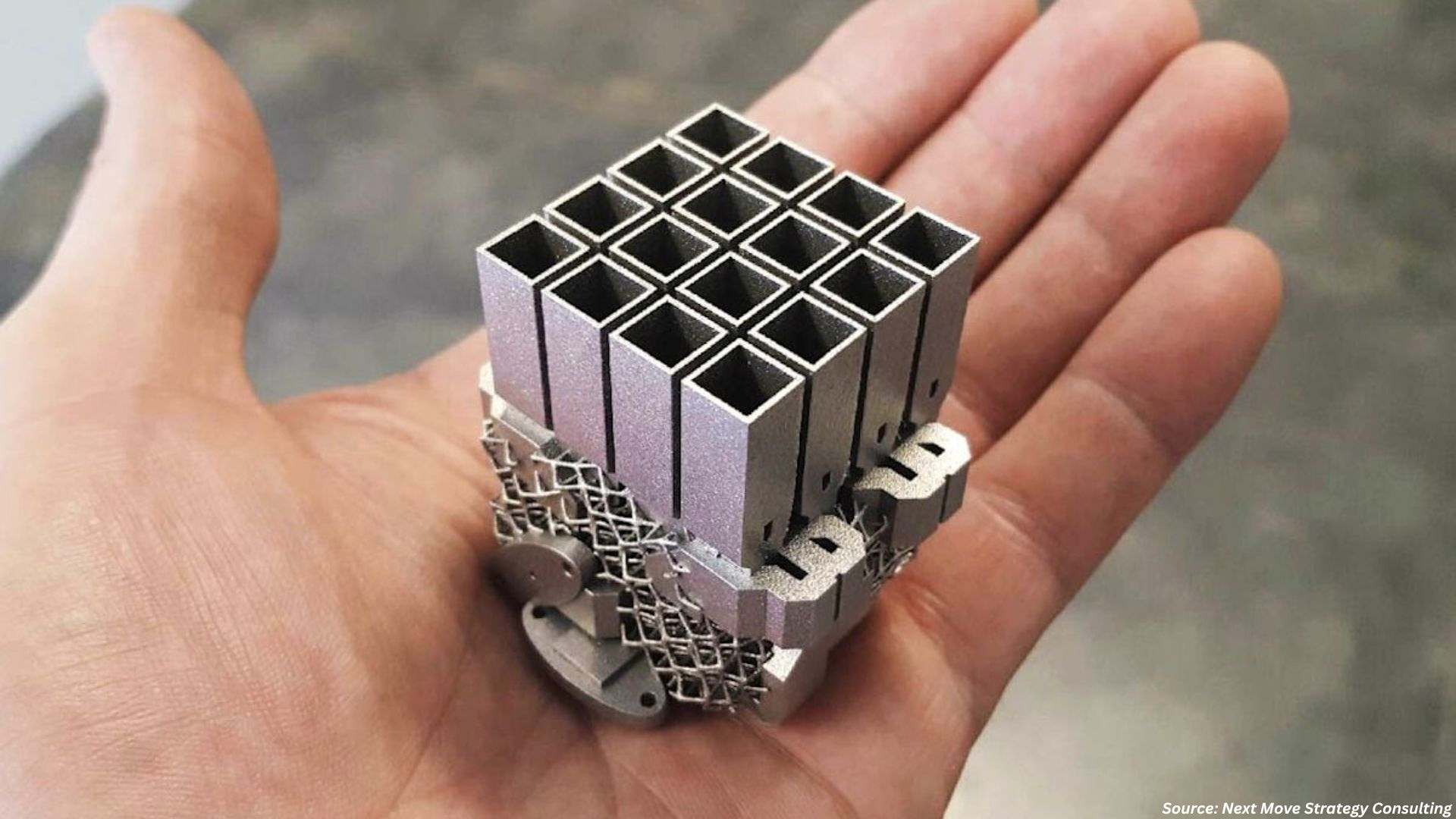
The landscape of 3D printing metals is rapidly evolving in 2026, moving beyond prototyping into critical applications such as space manufacturing, infrastructure safety, and advanced material science. Recent developments highlight how innovation is shifting toward real-world deployment, reliability, and scalability.
3D Printing Metals in Space: Manufacturing Beyond Earth
One of the most groundbreaking developments comes from China’s successful testing of metal 3D printing in space, marking a major leap toward autonomous off-Earth manufacturing.
According to the report, China conducted experiments to validate metal additive manufacturing in microgravity conditions. The goal is to enable in-orbit production of components, reducing reliance on Earth-based supply chains and lowering mission costs. This advancement supports long-term ambitions such as space stations, lunar bases, and deep-space missions.
Key Highlights:
-
Metal printing was tested under microgravity conditions
-
Focus on producing structural components in orbit
-
Reduces payload weight and launch costs significantly
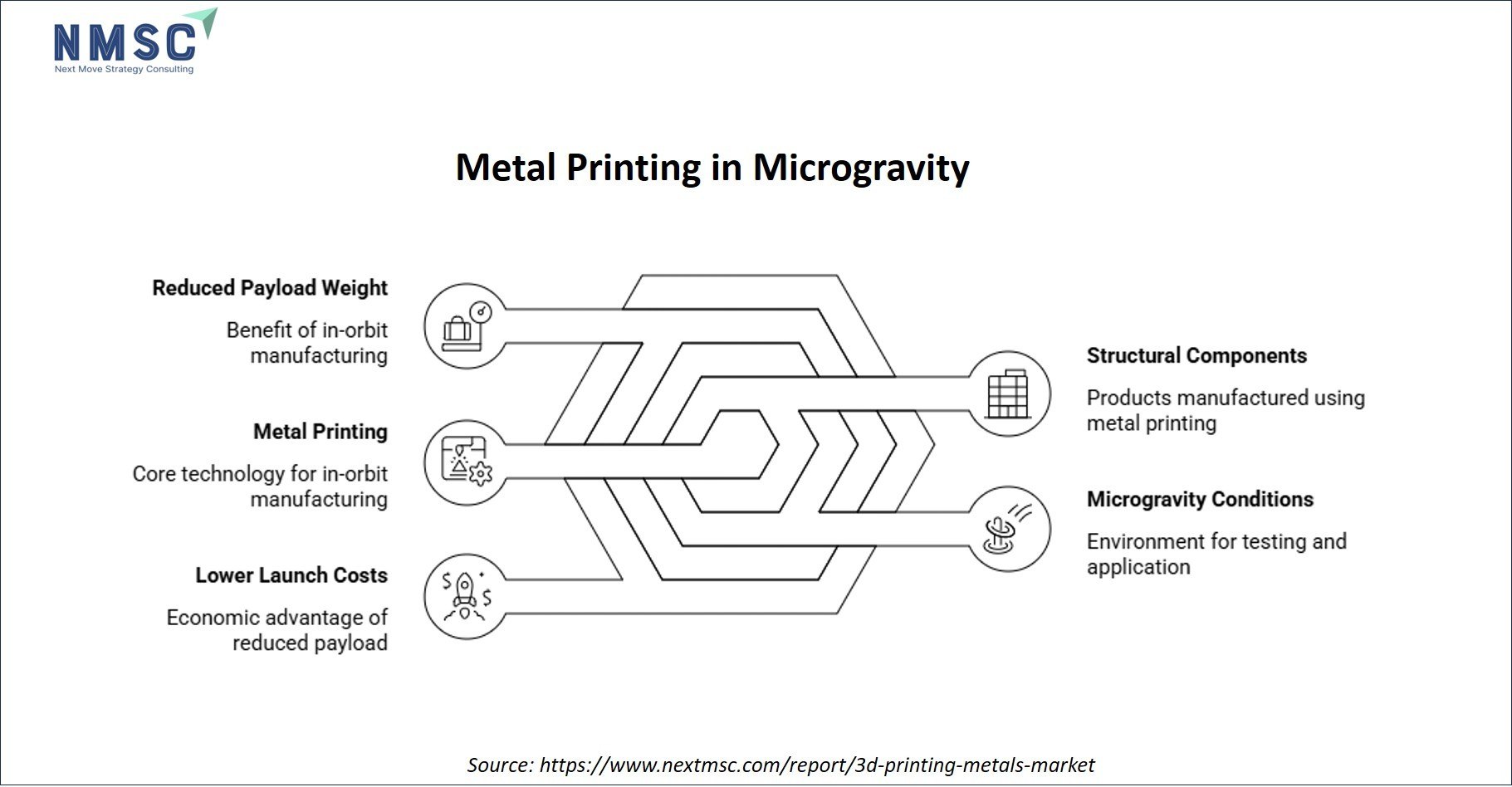
The transition of 3D printing metals into space applications signals a strategic shift from convenience-driven innovation to mission-critical manufacturing. According to Next Move Strategy Consulting, it indicates that additive manufacturing is becoming essential infrastructure for future aerospace ecosystems rather than an experimental technology.
Advancing Inspection: Ensuring Reliability of 3D Printed Metals
As adoption increases, ensuring the structural integrity of 3D printed metal components has become a priority. A new initiative backed by a $5 million FENDER program is addressing this challenge through advanced electromagnetic inspection technologies.
The program focuses on developing tools to detect flaws and inconsistencies in additively manufactured metals, particularly for critical infrastructure applications such as energy, transportation, and defense systems.
Key Developments:
-
Investment of $5 million in inspection technology
-
Use of electromagnetic techniques for defect detection
-
Targeting safety in critical infrastructure and industrial systems
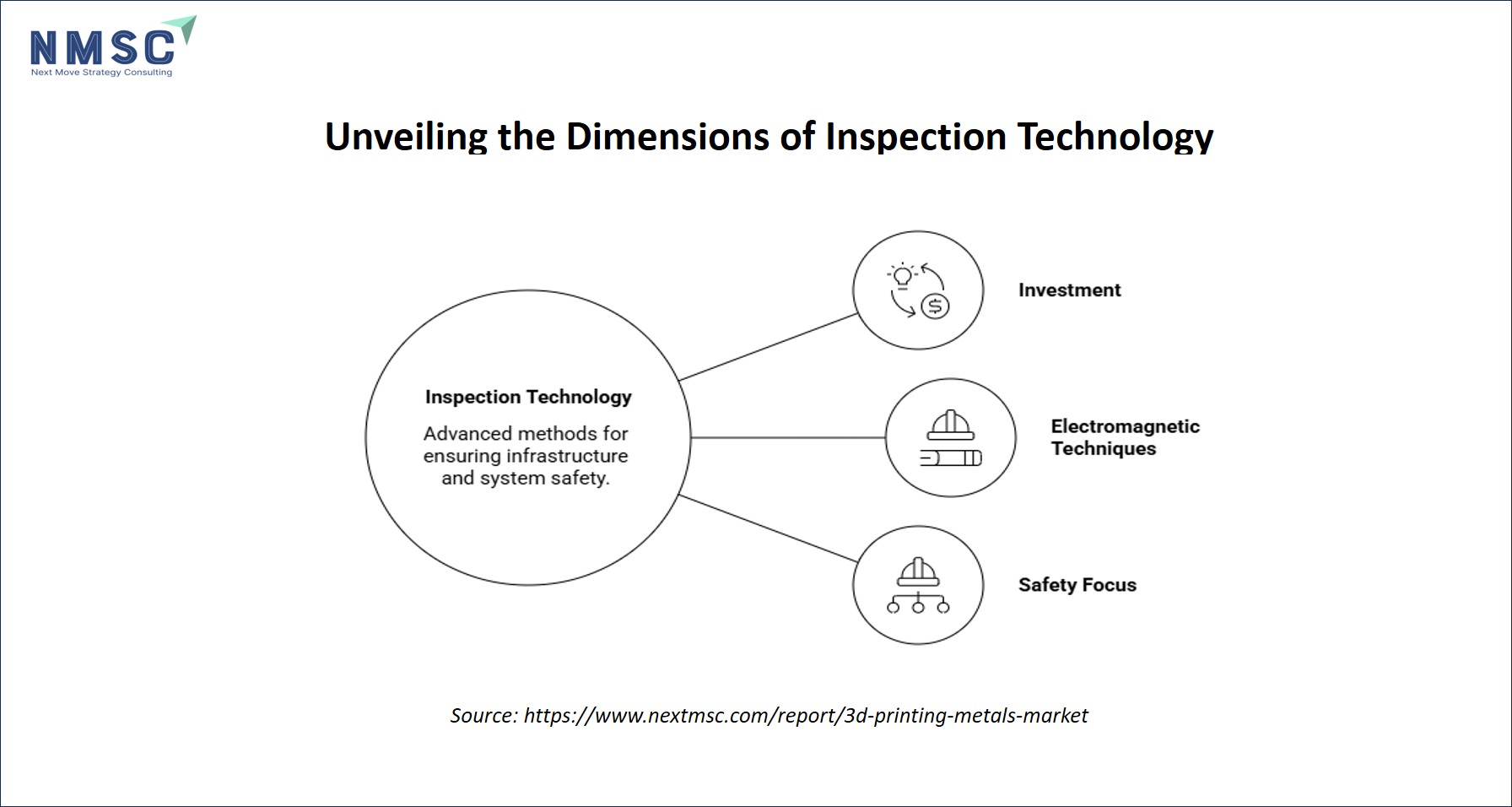
Insights from Next Move Strategy Consulting indicate that reliability remains a key barrier to widespread adoption of 3D printing metals. The emergence of dedicated inspection technologies suggests that the industry is entering a maturity phase where quality assurance and certification will define competitive advantage.
Material Innovation: Reinventing Metal 3D Printing
Researchers at Nanyang Technological University (NTU) have introduced a new approach that could reinvent metal 3D printing, focusing on improved material performance and process efficiency.
The innovation addresses long-standing challenges such as material waste, energy consumption, and structural limitations. The new method enhances precision and enables better control over the microstructure of printed metals, resulting in stronger and more reliable components.
Key Highlights:
-
Improved material efficiency and reduced waste
-
Enhanced mechanical strength of printed parts
-
Greater control over microstructural properties
Our observations at Next Move Strategy Consulting indicate that the material innovation is redefining the value proposition of 3D printing metals. Instead of competing with traditional manufacturing on flexibility alone, additive manufacturing is now advancing toward superior performance, which could unlock new industrial applications.
Key Trends in 3D Printing Metals (2026)
|
Trend Area |
Key Development |
Industry Impact |
|
Space Manufacturing |
In-orbit metal printing |
Reduced logistics and costs |
|
Inspection Technology |
Electromagnetic defect detection |
Improved reliability and safety |
|
Material Innovation |
Enhanced microstructure control |
Stronger and efficient components |
According to Next Move Strategy Consulting: Industry Impact
The recent advancements collectively indicate a structural transformation in the 3D printing metals market:
-
From prototyping to production: The shift toward space and infrastructure applications demonstrates real-world scalability.
-
Rise of quality-driven ecosystems: Inspection technologies are becoming essential to enable regulatory compliance and trust.
-
Material differentiation as a growth driver: Innovations in material science are positioning additive manufacturing as a superior alternative in high-performance industries.
These developments suggest that the industry is moving toward integrated ecosystems, where manufacturing, inspection, and material science evolve together to drive adoption.
Next Steps: What Businesses Should Do
1. Invest in reliability technologies: Adopt inspection and validation tools to ensure product quality and compliance.
2. Explore high-value applications: Focus on sectors such as aerospace, defense, and infrastructure where additive manufacturing delivers maximum impact.
3. Monitor material innovations: Stay updated on advancements that improve strength, efficiency, and sustainability.
4. Evaluate long-term scalability: Assess how 3D printing metals can integrate into future production strategies, including decentralized or remote manufacturing.
Conclusion
The evolution of 3D printing metals in 2026 reflects a deeper transition from innovation to industrial transformation. With breakthroughs in space manufacturing, inspection systems, and material science, the technology is becoming a cornerstone of next-generation production systems.
As these trends converge, businesses that align early with reliability, performance, and scalability will be better positioned to capture long-term value.
About the Author
 Sanyukta Deb
— Sanyukta Deb is Digital Marketing Team Lead at Next Move Strategy Consulting, where she has led content strategy and technical SEO for the firm's B2B market research publications for over 2 years. Her editorial process translates NextMSC's primary and secondary research — spanning technology, industrial, and consumer sectors — into commercial narratives, backed by search-intent, keyword, and competitive analysis. She brings 5 years of overall experience in digital marketing and content strategy.
Sanyukta Deb
— Sanyukta Deb is Digital Marketing Team Lead at Next Move Strategy Consulting, where she has led content strategy and technical SEO for the firm's B2B market research publications for over 2 years. Her editorial process translates NextMSC's primary and secondary research — spanning technology, industrial, and consumer sectors — into commercial narratives, backed by search-intent, keyword, and competitive analysis. She brings 5 years of overall experience in digital marketing and content strategy.
About the Reviewer
 Debashree Dey
— Debashree Dey is Assistant Manager at Next Move Strategy Consulting, where she supports cross-vertical market content and communications across diverse industries for 6 years. Her professional background includes senior content writing, communications, and published manuscript authorship, with experience developing audience-focused business narratives and maintaining clear, consistent messaging. Her role supports research-led content development and editorial quality across NextMSC publications.
Debashree Dey
— Debashree Dey is Assistant Manager at Next Move Strategy Consulting, where she supports cross-vertical market content and communications across diverse industries for 6 years. Her professional background includes senior content writing, communications, and published manuscript authorship, with experience developing audience-focused business narratives and maintaining clear, consistent messaging. Her role supports research-led content development and editorial quality across NextMSC publications.


















Add Comment