How Is Advanced 3D Printing Transforming Industries?

The Additive Manufacturing (AM) Market is entering a transformative phase as manufacturing industries increasingly prioritise flexibility, speed, and operational efficiency to strengthen their competitive positioning. Advanced 3D printing technologies are gaining widespread adoption across automotive, aerospace, defence, mining, and energy sectors to address production bottlenecks, reduce lead times, and improve supply chain resilience.
Recent developments from Meltio and discussions at Additive Manufacturing Strategies 2026 highlight how the Additive Manufacturing (AM) is rapidly evolving from experimental use cases toward full-scale industrial implementation. Companies are increasingly leveraging these technologies to reduce production time, manufacture lightweight components, enhance repair capabilities, and maintain consistent production quality across critical industrial applications.
Why Is Additive Manufacturing Becoming a Strategic Industrial Tool?
Industrial manufacturers are increasingly investing in additive manufacturing because it enables on-demand production and faster component repair. Unlike conventional manufacturing methods that often require extensive tooling and long lead times, additive manufacturing provides greater production flexibility and shorter turnaround periods.
According to Manufactur3D Magazine, Meltio’s wire-laser Directed Energy Deposition (DED) technology supports materials such as copper, aluminium, stainless steel, titanium, and nickel alloys. This material versatility allows manufacturers to produce complex metal parts while maintaining repeatable industrial quality.
The technology is particularly valuable for industries that require rapid repairs or replacement of critical components. By enabling localised production, additive manufacturing also helps companies reduce dependency on global supply chains, which have become increasingly vulnerable to delays and disruptions in recent years.
How Is Advanced 3D Printing Reshaping the Automotive Industry?
The automotive industry is one of the strongest adopters of industrial additive manufacturing technologies. Manufacturers are using these systems to produce high-performance parts capable of withstanding extreme temperatures and demanding operating conditions.
One notable example highlighted by Manufactur3D involved DMZ’s 3D-printed exhaust header developed using Meltio technology. The component reportedly maintained its initial condition after 10,000 km while reducing assembly time from eight hours to one hour. This demonstrates how additive manufacturing can simplify production processes while maintaining component durability.
ERM also used the Meltio M600 to manufacture a dual-material turbo intake manifold capable of withstanding temperatures above 800°C. According to the source, the company achieved a 70% reduction in manufacturing costs and production time compared to conventional methods.
Additional industrial implementations further demonstrate the growing adoption of additive manufacturing in automotive production. Iveco integrated the Meltio Robot Cell solution into its manufacturing operations to improve design flexibility and reduce lead times. Hirudi also developed a stub axle that achieved 62% weight reduction while improving delivery speed by 33%.
Industrial Adoption Trends in the Additive Manufacturing (AM) Market
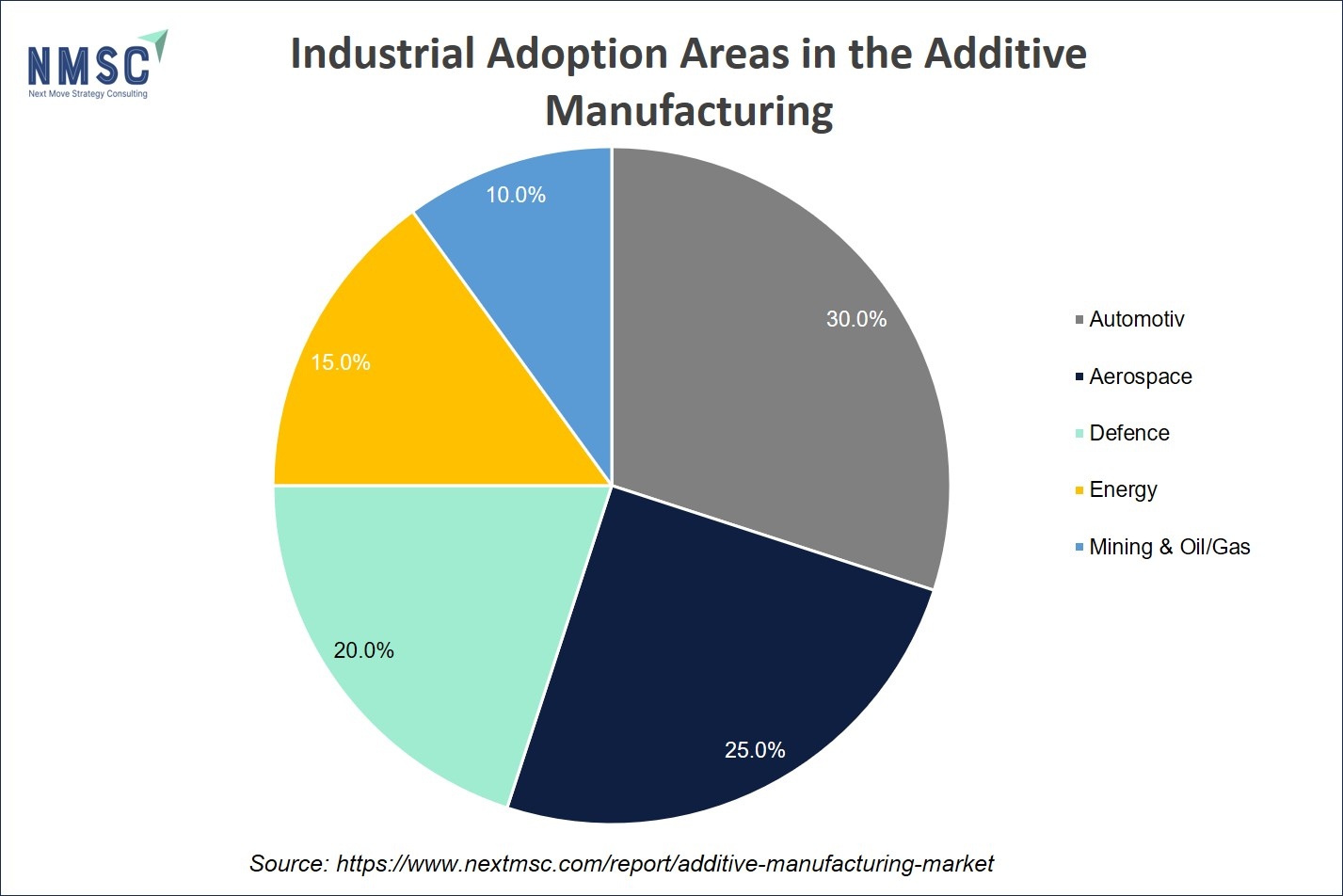
The pie chart highlights the major industries driving the adoption of additive manufacturing technologies across global industrial sectors. The automotive sector accounts for the largest share at 30%, reflecting the growing use of additive manufacturing for lightweight components, faster prototyping, and cost-efficient production processes.
Aerospace follows with 25%, driven by the demand for high-performance and complex components that require precision manufacturing and weight reduction. The defence sector represents 20% of adoption, as governments and military organisations increasingly utilise additive manufacturing for rapid part replacement, equipment repair, and supply chain resilience.
The energy industry contributes 15%, where companies are leveraging additive manufacturing to improve operational efficiency and produce complex industrial components for energy infrastructure. Mining and oil & gas account for 10%, supported by the need for on-demand spare parts, reduced downtime, and simplified maintenance operations.
Overall, the chart demonstrates how additive manufacturing is becoming increasingly important across industries seeking improved flexibility, faster production cycles, and stronger operational efficiency.
How Does a 3D Printing System Work?
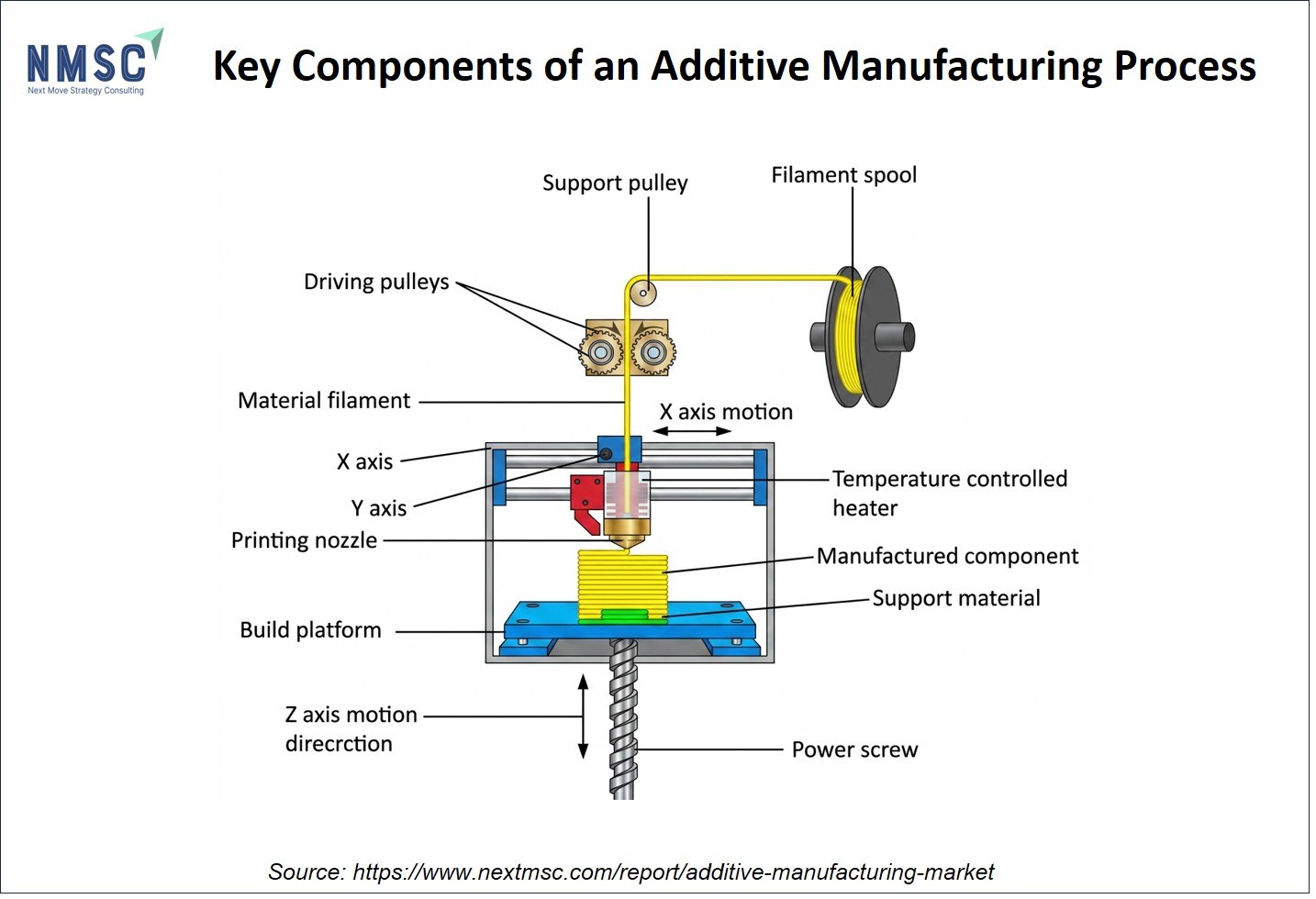
This image illustrates the working mechanism of an additive manufacturing or 3D printing system. The process begins with the filament spool, which feeds material through support and driving pulleys into the temperature-controlled heater. The material filament is heated and melted before being deposited layer by layer through the printing nozzle onto the build platform.
The diagram also highlights the movement of the printer along the X, Y, and Z axes, which enables precise shaping of the manufactured component. Support material is added where necessary to maintain structural stability during printing. This layered manufacturing process allows industries to create complex components with high precision, reduced material waste, and faster production cycles.
What Is Driving Adoption in Defence and Aerospace?
Defence and aerospace organisations are adopting additive manufacturing to improve operational readiness and address challenges related to obsolete or difficult-to-source components.
According to Manufactur3D, Meltio’s technology enabled the reproduction of an eductor naval part for the USS Arleigh Burke in less than 58 hours despite its complex requirements. This capability demonstrates the value of additive manufacturing in mission-critical environments where equipment downtime can create significant operational risks.
The technology has also supported the production of previously irreplaceable components and improved repair processes for high-performance industrial systems. A closed impeller manufactured using Meltio Engine Integration replaced a cast bronze component with a stainless steel 316L version that offered improved wear resistance and durability in corrosive environments.
The growing reliance on additive manufacturing within defence sectors in the United States, Spain, France, and Korea further reflects the increasing confidence in these technologies for industrial and military applications.
How Does Photopolymer-Based 3D Printing Work?
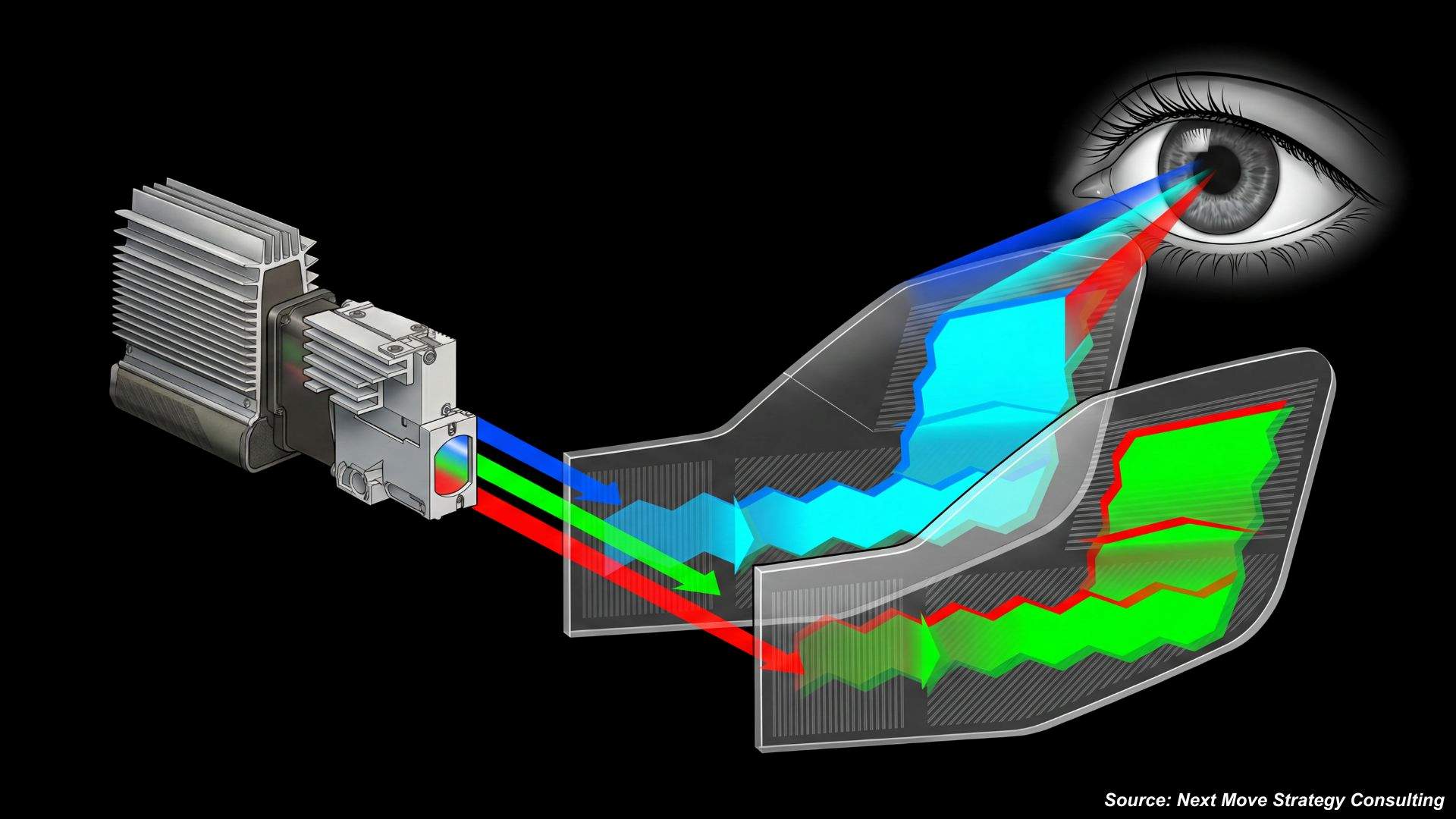
This image demonstrates the working process of a photopolymer-based additive manufacturing system, where liquid resin materials are transformed into solid components using ultraviolet (UV) light. The process begins as photopolymer material and dissolvable support material are supplied through separate nozzles onto the build platform.
The UV light instantly cures and hardens the deposited material layer by layer to form the final object. Support structures are simultaneously printed using dissolvable material to maintain stability for complex geometries during production. Once the printing process is complete, the support material can be removed easily, leaving behind the finished component with high precision and smooth surface quality.
This technology is widely used in industries requiring detailed prototypes, medical models, and high-accuracy industrial components.

Major Trends Shaping the Present
The event, organised by 3DPrint.com and AM Research, is expected to bring together industry leaders, OEMs, investors, service providers, and government stakeholders to discuss market trends and production strategies. The conference agenda includes keynote presentations, market intelligence briefings, case studies, and discussions on supply chain integration and return on investment.
A major theme emerging from these discussions is the transition from prototype-focused applications toward full-scale industrial deployment. Companies are increasingly prioritising technologies that deliver measurable efficiency improvements and long-term operational value.
Industries including aerospace, healthcare, automotive, defence, and energy are expected to remain key growth areas for industrial additive manufacturing adoption.
How Are Energy and Mining Industries Benefiting?
Energy, mining, and oil and gas industries are using additive manufacturing to reduce operational downtime and improve manufacturing efficiency for complex industrial components.
Czech research company Roez s.r.o. successfully produced a turbine case in a single print using Meltio technology. According to the company, the system enabled the production of complex internal structures that would traditionally require expensive and time-consuming manufacturing processes.
Industrial operators are increasingly recognising the value of on-demand manufacturing because it helps minimise equipment downtime while improving spare-part availability. These capabilities are especially important in industries where delayed repairs can significantly impact productivity and operational continuity.
Additive manufacturing is helping industrial operators simplify production processes and improve equipment reliability.
-
Single-print production is simplifying complex manufacturing.
-
Faster repair capabilities are reducing downtime.
-
Industrial companies are improving operational continuity.
Recognition and Future Industry Outlook
The increasing industrial adoption of additive manufacturing is also being reflected through industry recognition. Meltio’s M600 received the “Enterprise 3D Printer of the Year (Metals)” award at the 3D Printing Awards 2024, highlighting the growing importance of industrial metal printing technologies.
The company continues to expand its product portfolio through systems such as the Meltio Engine Blue and robotic arm integration kits that transform existing CNC machines into hybrid manufacturing centres. Companies in France, Mexico, and Japan have already adopted these systems to improve production flexibility and accelerate development cycles.
As industries continue to focus on efficiency, localisation, and supply chain resilience, additive manufacturing is expected to become increasingly integrated into mainstream industrial production strategies.
Leading Companies Strengthening Their Presence in the Additive Manufacturing Industry
The additive manufacturing industry consists of several major companies, including HP Inc., Renishaw plc, Tumaker, EOS GmbH, BCN3D Technologies, S.L., UltiMaker B.V., Formlabs, Markforged, Inc., Desktop Metal, Inc., and Stratasys Ltd.. These companies are actively focusing on strategies such as partnerships, technological advancements, and new product launches to strengthen their market position and expand their industrial capabilities.

Next Steps for Industrial Manufacturers
Manufacturers evaluating additive manufacturing technologies should begin by identifying components that experience high production costs or long procurement delays. Organisations can also explore hybrid manufacturing systems that combine conventional machining with additive capabilities to improve operational flexibility.
Investing in workforce training and industrial process qualification will also become increasingly important as adoption expands. Companies that focus on measurable operational outcomes and scalable deployment strategies are likely to achieve the strongest long-term benefits.
-
Identify high-cost or frequently delayed components suitable for additive manufacturing.
-
Evaluate hybrid manufacturing systems that combine CNC machining with metal 3D printing.
-
Invest in workforce training to improve additive manufacturing expertise and operational efficiency.
-
Prioritise applications that offer measurable ROI through reduced lead times and production costs.
-
Strengthen supply chain resilience by adopting on-demand localised manufacturing capabilities.
Conclusion
Advanced additive manufacturing is rapidly transforming industrial production across automotive, aerospace, defence, mining, and energy sectors. Companies are increasingly using these technologies to improve efficiency, reduce manufacturing costs, strengthen supply chain resilience, and accelerate component production.
Discussions at AMS 2026 further highlight how the industry is evolving toward scalable industrial implementation rather than limited experimental use cases. As manufacturers continue prioritising operational agility and production efficiency, additive manufacturing is expected to play a much larger role in the future of global industrial ecosystems.
About the Author
 Sanyukta Deb
— Sanyukta Deb is Digital Marketing Team Lead at Next Move Strategy Consulting, where she has led content strategy and technical SEO for the firm's B2B market research publications for over 2 years. Her editorial process translates NextMSC's primary and secondary research — spanning technology, industrial, and consumer sectors — into commercial narratives, backed by search-intent, keyword, and competitive analysis. She brings 5 years of overall experience in digital marketing and content strategy.
Sanyukta Deb
— Sanyukta Deb is Digital Marketing Team Lead at Next Move Strategy Consulting, where she has led content strategy and technical SEO for the firm's B2B market research publications for over 2 years. Her editorial process translates NextMSC's primary and secondary research — spanning technology, industrial, and consumer sectors — into commercial narratives, backed by search-intent, keyword, and competitive analysis. She brings 5 years of overall experience in digital marketing and content strategy.
About the Reviewer
 Debashree Dey
— Debashree Dey is Assistant Manager at Next Move Strategy Consulting, where she supports cross-vertical market content and communications across diverse industries for 6 years. Her professional background includes senior content writing, communications, and published manuscript authorship, with experience developing audience-focused business narratives and maintaining clear, consistent messaging. Her role supports research-led content development and editorial quality across NextMSC publications.
Debashree Dey
— Debashree Dey is Assistant Manager at Next Move Strategy Consulting, where she supports cross-vertical market content and communications across diverse industries for 6 years. Her professional background includes senior content writing, communications, and published manuscript authorship, with experience developing audience-focused business narratives and maintaining clear, consistent messaging. Her role supports research-led content development and editorial quality across NextMSC publications.

















Add Comment