5G from Space — The Next Connectivity Frontier
What is 5G from Space and Why Does It Matter?
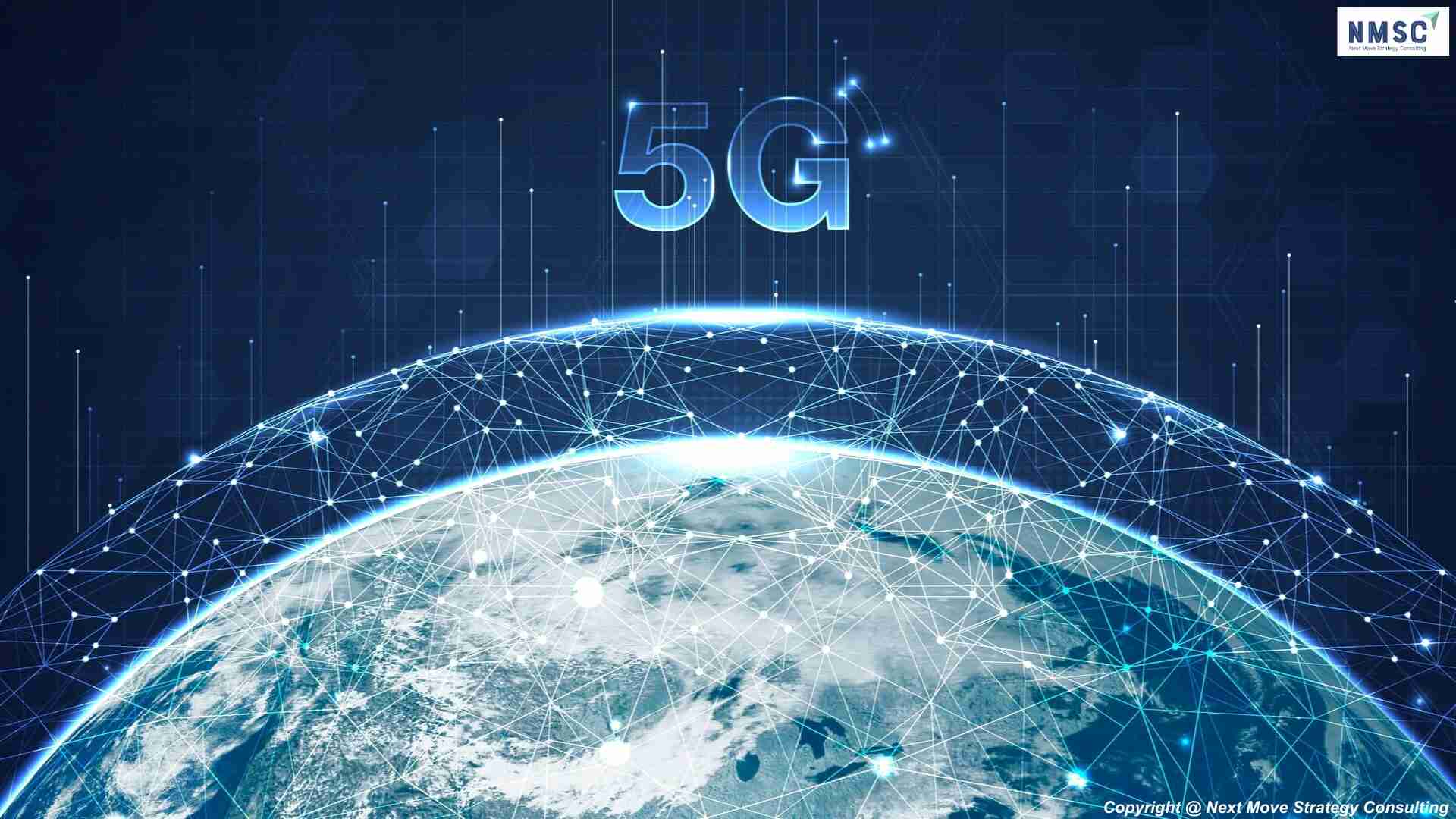
The concept of 5G from Space refers to delivering fifth-generation mobile connectivity directly from satellites to standard devices on Earth. Unlike traditional terrestrial networks that rely on towers and fiber infrastructure, this model leverages low Earth orbit (LEO) satellites to extend coverage globally, including remote and underserved regions.
In 2025, this concept is transitioning from experimental trials to early commercial deployments. Companies are increasingly focusing on direct-to-device connectivity, enabling smartphones to connect to satellites without requiring specialized hardware.
According to a report, AST SpaceMobile’s BlueBird 7 satellite launch marked a critical shift toward commercial operations, signaling that space-based mobile broadband is moving beyond testing phases into real-world implementation
According to Next Move Strategy Consulting analysis, the transition from experimental deployments to commercial readiness highlights a structural shift in the telecommunications ecosystem. Space-based 5G is no longer a futuristic concept; it is becoming an infrastructure layer that complements terrestrial networks.
How Does 5G from Space Work?
Satellite-to-Device Communication Explained
Space-based 5G systems rely on satellites equipped with advanced antennas capable of communicating directly with standard mobile devices. These satellites operate in low Earth orbit to reduce latency and improve signal strength.
Key components include:
-
LEO satellites for lower latency compared to traditional geostationary satellites
-
Phased array antennas to dynamically direct signals
-
Spectrum compatibility with existing mobile networks
The BlueBird satellites are specifically designed to enable direct broadband connectivity to smartphones, eliminating the need for intermediary ground infrastructure.
NMSC’s suggests, direct-to-device architecture reduces dependency on physical infrastructure. This creates a scalable and cost-efficient model for expanding connectivity, especially in geographically challenging regions.
Real-World Developments Driving 5G from Space in 2025
AST SpaceMobile’s Commercial Pivot
AST SpaceMobile’s launch of the BlueBird 7 satellite represents a major milestone. The company confirmed that this launch marks a pivot toward commercial operations, indicating readiness to deliver satellite-based cellular broadband services globally.
Smartphones Enter Space Connectivity Use Cases
In a parallel development, Apple’s upcoming iPhone 17 Pro Max has reportedly been approved by NASA for use in the Artemis II mission. Astronauts will utilize the device for communication and operational support in space environments.
This highlights how consumer-grade devices are increasingly capable of operating in advanced communication ecosystems, including space-linked networks.
Key Developments at a Glance
|
Development |
Impact on 5G from Space |
|
BlueBird 7 satellite launch |
Transition to commercial deployment |
|
Direct-to-device technology |
Eliminates need for specialized hardware |
|
Smartphone integration in space missions |
Expands real-world usability |
Our observations at NMSC indicates these developments reflect a convergence between satellite infrastructure and consumer electronics. The ecosystem is evolving toward seamless interoperability between space-based and terrestrial communication systems.
Why 5G from Space is a Game-Changer
Key Benefits Driving Adoption
-
Global Coverage: Enables connectivity in remote, rural, and maritime regions
-
Disaster Resilience: Maintains communication when terrestrial networks fail
-
Infrastructure Efficiency: Reduces reliance on towers and fiber deployment
-
Device Compatibility: Works with standard smartphones
The shift toward direct connectivity ensures that users do not need specialized satellite phones, significantly lowering barriers to adoption.
Our Insights indicates the ability to deliver connectivity without infrastructure-heavy deployment models fundamentally alters cost structures and accessibility. This is particularly significant for emerging economies and disaster-prone regions.
Challenges That Still Need to Be Addressed
Despite its promise, 5G from space faces several challenges:
-
Spectrum coordination with terrestrial networks
-
Signal interference risks
-
Regulatory approvals across countries
-
High initial satellite deployment costs

While AST SpaceMobile’s progress demonstrates feasibility, large-scale implementation will require coordinated global efforts.
We have analyzed regulatory harmonization and spectrum management will be critical bottlenecks. The success of space-based 5G will depend as much on policy frameworks as on technological innovation.
Key Players of the Industry
Various market players operating in the 5G from space market Lockheed Martin, SpaceX, Boeing, Sateliot, Omnispace, Rohde and Schwarz, Qualcomm Technologies Inc., Terran Orbital, OneWeb, Lynk Global Inc., and others. These market players are opting various strategies such as product launches and collaboration to maintain their dominance in the 5G from space market.
For instance, in April 2023, Space X launched The GroundBreaker, world’s first 5G satellite. The satellite weighs around 22 pounds and designed to establish communication with land-based cell tower. The aim of this constellation is to address 5G data network deficiencies on a global Scale and eradicate the network connectivity issue which in turn helped the market to gain mass popularity.

Next Move Strategy Consulting: Industry Impact
According to Next Move Strategy Consulting, the emergence of 5G from Space is expected to redefine the telecommunications value chain by:
-
Introducing satellite operators as core telecom players
-
Enabling hybrid network models combining terrestrial and space-based infrastructure
-
Accelerating digital inclusion globally
-
Creating new opportunities in defense, maritime, and aviation sectors
This transformation is likely to influence investment patterns, partnerships, and competitive dynamics across the telecom ecosystem.
What Comes Next for 5G from Space?
Next Steps
-
Monitor commercial rollouts: Track how companies scale from pilot to global services
-
Understand regulatory trends: Watch spectrum and licensing developments worldwide
-
Evaluate device compatibility: Assess how smartphone manufacturers integrate satellite connectivity
-
Explore enterprise use cases: Focus on industries such as logistics, defense, and remote operations
-
Follow partnerships: Observe collaborations between telecom operators and satellite firms

Conclusion
5G from space is rapidly evolving from concept to reality in 2025. With milestones such as AST SpaceMobile’s commercial pivot and the integration of smartphones into space missions, the technology is entering a transformative phase.
As connectivity becomes a fundamental global necessity, space-based 5G has the potential to bridge digital divides, enhance resilience, and unlock new economic opportunities.
Our observation suggests the long-term success of 5G from space will depend on ecosystem collaboration, regulatory alignment, and scalable deployment strategies. However, its trajectory clearly signals a new era in global connectivity.
About the Author
 Sanyukta Deb
— Sanyukta Deb is Digital Marketing Team Lead at Next Move Strategy Consulting, where she has led content strategy and technical SEO for the firm's B2B market research publications for over 2 years. Her editorial process translates NextMSC's primary and secondary research — spanning technology, industrial, and consumer sectors — into commercial narratives, backed by search-intent, keyword, and competitive analysis. She brings 5 years of overall experience in digital marketing and content strategy.
Sanyukta Deb
— Sanyukta Deb is Digital Marketing Team Lead at Next Move Strategy Consulting, where she has led content strategy and technical SEO for the firm's B2B market research publications for over 2 years. Her editorial process translates NextMSC's primary and secondary research — spanning technology, industrial, and consumer sectors — into commercial narratives, backed by search-intent, keyword, and competitive analysis. She brings 5 years of overall experience in digital marketing and content strategy.
About the Reviewer
 Debashree Dey
— Debashree Dey is Assistant Manager at Next Move Strategy Consulting, where she supports cross-vertical market content and communications across diverse industries for 6 years. Her professional background includes senior content writing, communications, and published manuscript authorship, with experience developing audience-focused business narratives and maintaining clear, consistent messaging. Her role supports research-led content development and editorial quality across NextMSC publications.
Debashree Dey
— Debashree Dey is Assistant Manager at Next Move Strategy Consulting, where she supports cross-vertical market content and communications across diverse industries for 6 years. Her professional background includes senior content writing, communications, and published manuscript authorship, with experience developing audience-focused business narratives and maintaining clear, consistent messaging. Her role supports research-led content development and editorial quality across NextMSC publications.

















Add Comment