Ag Biologicals Market Surges as M&A and Regulation Reshape Growth | NextMSC
Introduction
The global agricultural biological market is undergoing a structural transformation — one that is reshaping how the world's farmers protect crops, manage soil health, and reduce dependence on synthetic chemical inputs. Driven by tightening pesticide regulations across major agricultural economies, a historic wave of corporate consolidation, and measurable shifts in grower purchasing behavior, the sector has moved well beyond its early-adopter phase.
According to Next Move Strategy Consulting's Agricultural Biological Market report, the global agricultural biological market was valued at USD 19.52 billion in 2025 and is projected to reach USD 38.92 billion by 2030, growing at a CAGR of 14.8% from 2025 to 2030. This rate of expansion is several times faster than the conventional synthetic pesticide market, which continues to grow but only in the low single digits — a divergence that is now visibly redirecting capital, M&A activity, and regulatory attention toward biological solutions at an accelerating pace.
For More Information: Download FREE Sample on Agricultural Biological Market Report
Big Ag's Consolidation Bet: Why the Industry Is Buying Biology Rather Than Building It
The 2026 M&A Wave Redefines the Competitive Landscape
The most consequential signal of the agricultural biological market's maturation in 2026 is not a product launch or a regulatory ruling — it is the pace at which established agrochemical majors are acquiring biological platforms rather than developing them organically. According to iGrow Intelligence's analysis published in August 2026, at least seven biologically focused companies changed hands or were carved out in the first eight months of 2026 alone — a pace of consolidation the category has not previously seen.
The most strategically significant of these transactions was BASF Agricultural Solutions' completed acquisition of AgBiTech on March 31, 2026. AgBiTech, founded in Australia in 2000, is a global leader in baculovirus-based biological insect control, with manufacturing facilities in the United States, Australia, and Brazil, and a particularly strong commercial footprint in Brazil — one of the world's most dynamic markets for biological crop protection.
"The biologicals market continues to expand at a strong pace. Acquiring AgBiTech strengthens our position in this attractive segment and complements our existing portfolio with proven biological technologies," said Livio Tedeschi, President of BASF Agricultural Solutions, in the company's official press release dated April 1, 2026. "I am confident that, together, we will accelerate meaningful progress for our customers and for agriculture by further expanding biological solutions across global markets."
Adriano Vilas-Boas, CEO of AgBiTech, added: "Joining BASF marks an important milestone for AgBiTech's mission to make biological insect control accessible to farmers worldwide. BASF's global reach, strong R&D ecosystem and deep agricultural expertise will help accelerate the impact of our technologies."
The BASF-AgBiTech deal is not an isolated event. The same iGrow Intelligence report documents that Suterra absorbed Vestaron's biological product lines and R&D pipeline; DVC Partners took a majority stake in Spain's Kimitec, one of Europe's largest biostimulant and biocontrol platforms; AgroPlantae acquired Kemin's eight-product botanical portfolio; and Indigo Agriculture spun its biologicals business into a standalone company, ENAI, in August 2026. The common logic across all these transactions: biological products carry double-digit growth rates while conventional chemistry does not, and acquiring a platform with completed EPA or EU regulatory registrations is faster and cheaper than building microbial discovery from scratch.
Bayer's strategic posture reinforces this directional shift. The company is publicly targeting €1.5 billion in biologicals revenue by 2035 — a more than sevenfold increase from its approximately €200 million base in 2022 — according to reporting by CropLife Magazine. In July 2025, Bayer also began integrating nitrogen-fixing microbes directly into corn, wheat, and rice varieties, targeting a measurable reduction in synthetic nitrogen fertilizer dependency at the field level.
Meanwhile, Syngenta in June 2025 acquired Novartis' Strains and Natural Products Collection to bolster its portfolio of natural compounds and genetic strains, and UPL in May 2025 entered an exclusive agreement with Elemental Enzymes, a North American biotechnology company, to expand its biological offerings in Brazil.
NMSC Strategic Perspective: What the Consolidation Wave Signals for Market Structure
From NMSC's primary research and analysis, the 2026 consolidation wave reflects a structural inflection point rather than a cyclical uptick. The agricultural biological market is transitioning from a fragmented landscape dominated by specialized independents to one increasingly organized around a small number of integrated platforms with global distribution, regulatory depth, and manufacturing scale. This consolidation is compressing the window for independent biologicals companies to achieve standalone commercial viability — and simultaneously raising the acquisition premium for any remaining platform with a completed regulatory dossier and proven field efficacy. NMSC segments the agricultural biological market into biocontrols, biostimulants, biofertilizers, and other products, with biocontrols further split into bioinsecticides, biofungicides, bionematicides, and bioherbicides. Between 2025 and 2030, the biocontrol segment is expected to draw intense M&A interest. Because regulatory hurdles are so high, corporate acquirers are willing to pay a premium for fully registered, de-risked assets.
Section Summary:
The 2026 M&A wave in agricultural biologicals is not speculative — it is a documented, deal-by-deal reallocation of capital from synthetic chemistry toward biological platforms with proven registrations and commercial traction.
-
BASF completed the acquisition of AgBiTech on March 31, 2026, gaining baculovirus-based insect control technology and a manufacturing presence across three continents.
-
iGrow Intelligence logged at least seven biological company acquisitions or carve-outs in the first eight months of 2026, alongside a funding rebound surpassing USD 500 million.
-
Bayer is targeting a sevenfold increase in biologicals revenue to €1.5 billion by 2035, signaling a multi-year commitment that extends well beyond opportunistic deal-making.
-
NMSC's analysis identifies the biocontrol segment as the primary beneficiary of this consolidation, given its high regulatory barriers and the premium acquirers place on de-risked, registered assets.
Industry Impact Analysis
Regulatory Realignment Is Simultaneously Accelerating Demand and Introducing Uncertainty
The regulatory environment governing agricultural biologicals shifted materially in 2026 across three major jurisdictions — the United States, the European Union, and India — each in ways that carry distinct implications for market participants.
United States: On May 15, 2026, the U.S. Department of Agriculture (USDA) published a Request for Information (RFI) in the Federal Register, seeking public input on the future regulation of genetically engineered organisms under the Plant Protection Act. The RFI followed a December 2024 federal court ruling that vacated USDA's 2020 SECURE rule — a modernized, risk-based framework — and reverted oversight to the earlier, more prescriptive 7 C.F.R. Part 340 regime. The RFI explicitly acknowledged the absence of a harmonized regulatory pathway for microbial and biotechnology-derived agricultural products, and USDA specifically requested comment on whether modified organisms could be regulated under 7 C.F.R. Part 330, which governs conventional plant pests and biological organisms more broadly. Comments were due June 15, 2026.
Concurrently, the pending U.S. Farm Bill includes a provision that would establish a federal statutory definition of "plant biostimulant" and clarify that qualifying products are not regulated as plant regulators under the Federal Insecticide, Fungicide, and Rodenticide Act (FIFRA) — a clarification that would remove a significant commercialization barrier for a broad class of biological inputs.
European Union: The EU's Farm to Fork Strategy established a political target to achieve a 50% reduction in chemical pesticide use and risk by 2030 relative to a 2015–2017 baseline average, though this overarching vision remains non-legally binding. While the European Commission's 2026 Omnibus I Directive adjusted the scope and timelines of certain corporate sustainability disclosure obligations (specifically under the CSRD and CSDDD), it has no jurisdiction over agricultural chemical caps, and the binding framework meant to enforce pesticide reductions—the Sustainable Use of Pesticides Regulation (SUR)—was formally withdrawn. Consequently, the Farm to Fork framework does not mandate a market for biological product manufacturers through top-down statutory bans; instead, market demand for agricultural biologicals across European sectors is primarily driven from the bottom up by supermarket-driven supply chain residue limits, shifting consumer preferences, and evolving maximum residue level (MRL) restrictions on imports.
India: A proposed Agricultural Biologicals (Regulation, Quality Assurance and Farmer Protection) Bill, 2026 is under policy consideration in India, according to research published on SSRN. The bill proposes a dedicated regulatory framework for biological agricultural inputs — a significant development for a country where the absence of a harmonized biologicals-specific regulatory pathway has historically slowed commercial adoption despite strong agronomic demand.
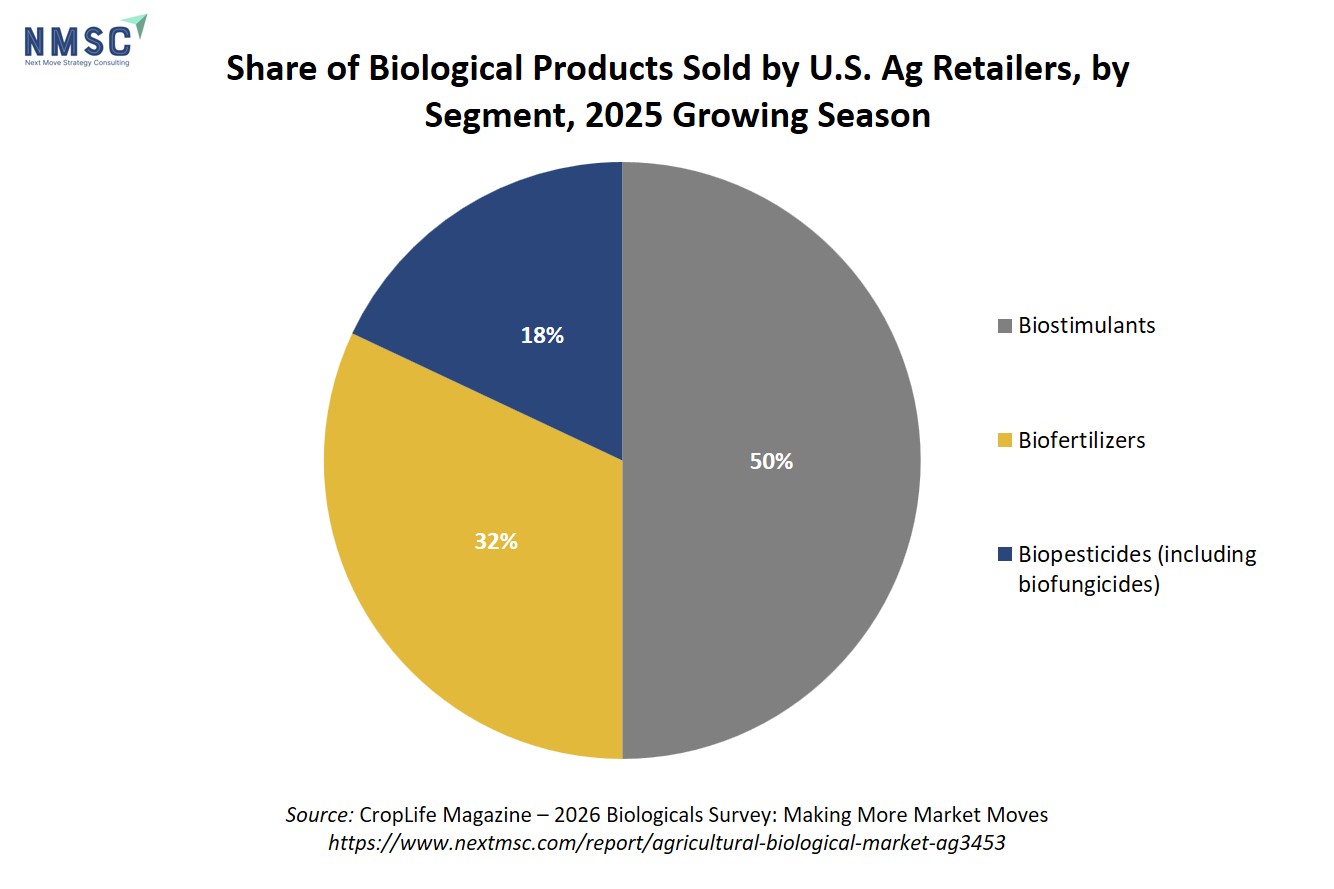
Grower Adoption Dynamics: The CropLife Magazine 2026 Biologicals Survey, published March 18, 2026, provides granular evidence of how these regulatory and commercial forces are translating into actual purchasing behavior. According to the survey, 80% of U.S. ag retailers plan to increase the number of biological products they offer to grower-customers in the coming year. Biostimulants account for 50% of all biological products sold, biofertilizers for 32%, and biopesticides for 18%. Critically, 98% of grower-customers currently use biologicals as a supplement alongside conventional products rather than as standalone replacements — a usage pattern that limits near-term displacement of synthetic inputs but also means biologicals are being layered into existing farm management systems without requiring growers to abandon proven chemistry.
The North American market's organic farming sector provides additional structural support. According to the Organic Farming Research Foundation, U.S. organic agriculture accounted for over 6% of total food sales and 15% of all produce sales in 2025 — a consumer-driven demand signal that directly incentivizes farmers to adopt biopesticides, biofertilizers, and biostimulants as the primary crop protection and nutrition tools within certified organic systems.
Section Summary:
Regulatory developments across the U.S., EU, and India are simultaneously creating demand certainty for biological products and introducing short-term commercialization complexity for developers navigating overlapping jurisdictional frameworks.
-
The USDA's May 2026 RFI signals a potential shift toward a more risk-proportionate regulatory framework for microbial and biological agricultural products, but the reversion to the pre-2020 regime creates near-term uncertainty for developers with products in the registration pipeline.
-
The EU Farm to Fork Strategy's 50% pesticide reduction target by 2030 functions as a structural demand mandate for biological alternatives across European agricultural markets.
-
India's proposed Agricultural Biologicals Bill, 2026 could unlock a large, underserved market by providing the first dedicated regulatory pathway for biological inputs in one of the world's largest agricultural economies.
-
U.S. ag retailers' 80% intention to expand biological product offerings, combined with the Farm Bill's proposed biostimulant definition, points to a near-term acceleration in commercial availability and grower access.
Pros and Cons of Recent Market Developments
|
Development |
Pros |
Cons |
|
BASF's acquisition of AgBiTech (March 2026) |
Accelerates global scaling of baculovirus-based insect control; integrates proven biological technology into BASF's €9.6B agricultural solutions portfolio; strengthens Brazil market presence |
Reduces the number of independent biological innovators available for partnership or licensing; may concentrate pricing power in fewer hands |
|
USDA RFI on biotechnology regulation (May 2026) |
Signals USDA's intent to develop a more risk-proportionate, evidence-based framework for microbial and biological products; Farm Bill biostimulant definition could remove FIFRA regulatory barriers |
Reversion to pre-2020 regulatory regime creates near-term uncertainty; absence of a harmonized pathway delays commercialization for developers with products in the pipeline |
|
EU Farm to Fork 50% pesticide reduction target |
Creates a structural, policy-mandated demand floor for biological alternatives across 27 EU member states; incentivizes long-term R&D investment in biopesticides and biostimulants |
Compliance timelines and national implementation variability create uneven market conditions; some member states face agronomic challenges in meeting reduction targets without yield penalties |
|
India's proposed Agricultural Biologicals Bill, 2026 |
First dedicated regulatory framework for biological inputs in a major emerging agricultural economy; could unlock significant commercial adoption in a market with strong agronomic demand |
Bill is still in proposal stage; implementation timelines and enforcement capacity remain uncertain |
|
2026 M&A consolidation wave (7+ deals in 8 months) |
Brings manufacturing scale, global distribution, and regulatory expertise to biological platforms; accelerates grower access and product availability |
Narrows the exit landscape for early-stage biological startups to trade sales only; raises acquisition premiums for remaining independent platforms |
|
Biostimulants' 50% market share among U.S. ag retailers |
Demonstrates mainstream commercial acceptance; biostimulants' compatibility with conventional inputs supports broad adoption without requiring growers to change existing practices |
98% supplemental-use rate means biologicals are not yet displacing synthetic inputs at scale; trust issues cited by 39% of ag retailers remain a structural adoption barrier |
Key Data & Statistics
Key Corporate Developments in Agricultural Biologicals (2025–2026)
|
Company |
Development |
Date |
Strategic Significance |
|
BASF Agricultural Solutions |
Completed acquisition of AgBiTech (baculovirus-based insect control); manufacturing in USA, Australia, Brazil |
March 31, 2026 |
Expands BASF's biological insect control portfolio; accelerates scaling in Brazil |
|
Bayer Crop Science |
Targeting €1.5 billion in biologicals revenue by 2035 (from ~€200M base in 2022); integrating nitrogen-fixing microbes into corn, wheat, rice |
2025–2026 |
Sevenfold revenue target signals long-term structural commitment to biologicals |
|
Syngenta |
Acquired Novartis' Strains and Natural Products Collection to expand natural compounds and genetic strains portfolio |
June 2025 |
Strengthens proprietary biological discovery pipeline |
|
UPL |
Exclusive agreement with Elemental Enzymes (North American biotech) to expand biological offerings in Brazil |
May 2025 |
Targets Brazil's high-growth biologicals market through specialized enzyme technology |
|
Syngenta Biologicals & Provivi |
Partnership to develop pheromone-based pest management solutions using biodegradable materials |
September 2024 |
Advances semiochemical biocontrol with enhanced environmental sustainability profile |
Future Outlook & Forecast
From Supplemental Input to Integrated System: The Next Phase of Agricultural Biologicals
NMSC's proprietary research and analysis projects the global agricultural biological market will reach USD 38.92 billion by 2030, doubling from its 2025 base of USD 19.52 billion at a 14.8% CAGR. This trajectory is underpinned by four converging forces that NMSC's model identifies as structurally durable rather than cyclically dependent.
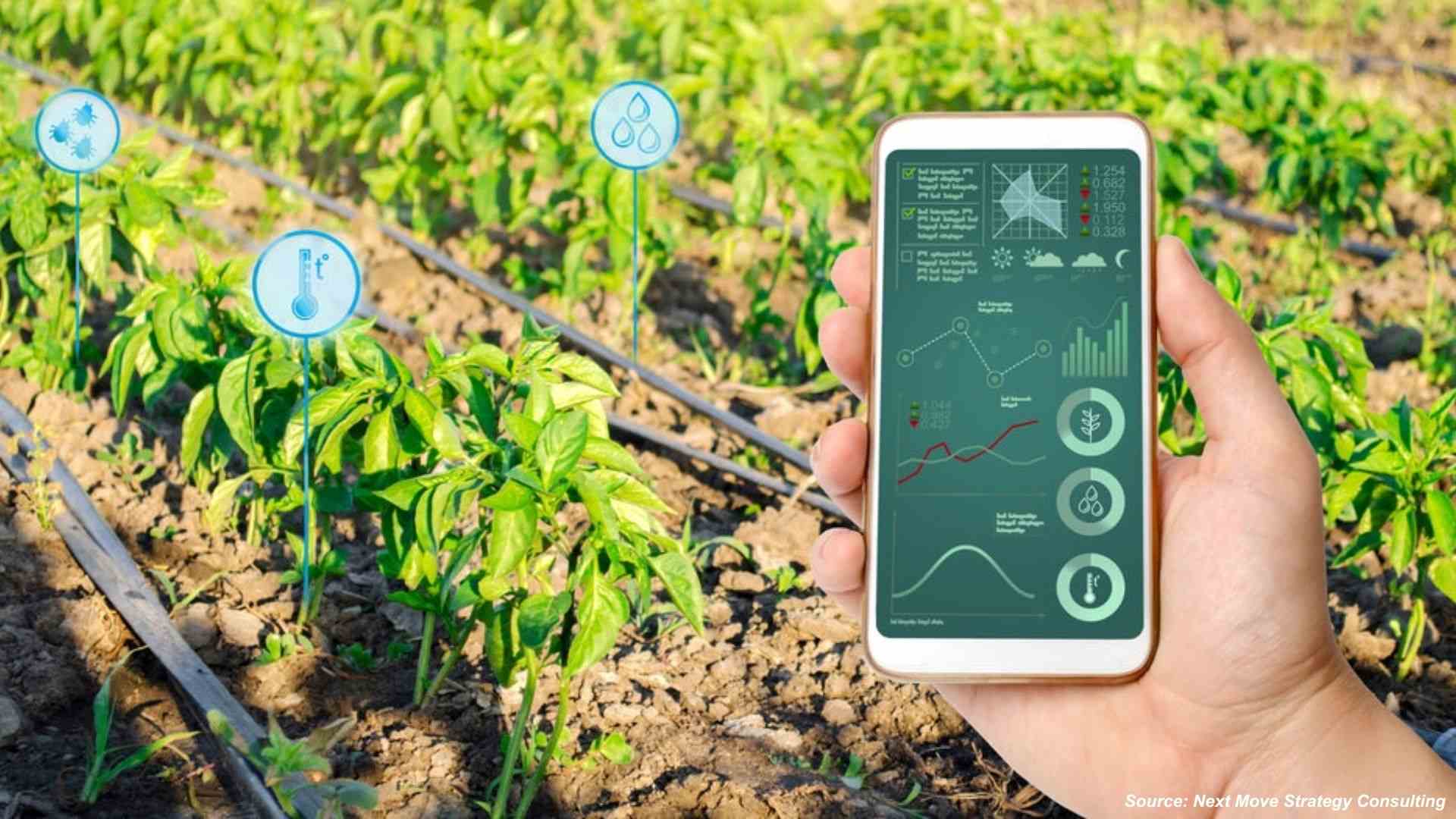
Precision Agriculture Integration: The convergence of biological inputs with IoT-enabled sensors, drone-based application systems, and AI-driven crop management platforms is resolving one of the category's most persistent commercial limitations — application variability. When biopesticides and biostimulants are applied through precision delivery systems that account for soil microbiome conditions, crop growth stage, and localized pest pressure, their efficacy becomes measurably more consistent. This removes a core objection that 39% of U.S. ag retailers currently cite as the primary barrier to broader grower adoption.
Regulatory Tailwinds Across Major Markets: The EU's Farm to Fork 50% pesticide reduction mandate, the U.S. Farm Bill's proposed biostimulant definition, and India's proposed Agricultural Biologicals Bill collectively represent a regulatory architecture that is being constructed around biological inputs rather than against them. As these frameworks mature, the commercialization pathway for new biological products will shorten — reducing the time-to-market advantage that conventional chemistry has historically held.
Segment-Level Growth Differentiation: NMSC's segmentation analysis identifies biostimulants as the current volume leader — confirmed by the CropLife 2026 survey's finding that 50% of all biological products sold by U.S. ag retailers fall into this category — but biocontrol products (biopesticides, biofungicides, bionematicides) are positioned for the fastest proportional growth as regulatory pressure on synthetic pesticides intensifies and as M&A activity brings better-funded development pipelines to market. The seed treatment application segment is also gaining traction as a delivery format, given its ability to deliver biological actives directly to the rhizosphere at planting — the point of maximum biological efficacy for nitrogen-fixing and phosphate-solubilizing microbes.
Regional Expansion Beyond Established Markets: While North America and Europe currently anchor the market, Asia-Pacific — particularly India, China, and Southeast Asia — represents the most significant incremental growth opportunity over the forecast period. Rising consumer demand for chemical-residue-free produce, expanding government subsidy programs for sustainable agriculture, and the potential passage of India's dedicated biologicals regulatory framework are collectively lowering the adoption barriers that have historically kept biological penetration rates low in these markets, according to NMSC's regional analysis.
Section Summary:
The agricultural biological market's path to USD 38.92 billion by 2030 is supported by structural demand drivers that are regulatory, technological, and demographic in nature — not dependent on any single product category or geography.
-
NMSC's proprietary forecast projects a 14.8% CAGR from 2025 to 2030, with the market doubling in absolute value over the five-year period.
-
Precision agriculture integration is the most actionable near-term lever for improving biological product efficacy and resolving the trust and consistency concerns that currently limit grower adoption.
-
Biocontrol products are positioned for the fastest proportional growth within the biologicals category as synthetic pesticide regulations tighten across the EU, U.S., and emerging markets.
-
Asia-Pacific, anchored by India and China, represents the largest untapped regional opportunity, with regulatory reform and government support programs beginning to lower structural adoption barriers.
Next Steps for Stakeholders
For C-Level Executives at Agrochemical and Agricultural Input Companies:
The 2026 M&A data is unambiguous: the window for acquiring de-risked biological platforms at reasonable valuations is narrowing as the remaining independent companies with completed regulatory dossiers become fewer. Executives should prioritize portfolio gap analysis against the five core biological segments — bioinsecticides, biofungicides, bionematicides, biostimulants, and biofertilizers — and identify which segments lack proprietary assets or strategic partnerships. The BASF-AgBiTech transaction demonstrates that baculovirus-based biocontrol in high-value row crop markets (particularly Brazil) commands strategic premium; similar logic applies to microbial biostimulants with demonstrated seed treatment efficacy.
For Institutional Investors and Private Equity:
The iGrow Intelligence analysis confirms that 2026 has become the exit window for private equity owners who backed biological companies through the lean years. The premium in this market sits on assets with completed regulatory registrations and manufacturing at scale — not early-stage discovery. Investors evaluating entry points should focus on platforms with EPA or EU-registered products, established distribution relationships with major ag retailers, and demonstrated field trial data across multiple crop systems. The funding rebound past USD 500 million in 2026 signals that institutional capital has returned to the category after a period of caution.
For Biological Product Developers and Startups:
The CropLife 2026 survey's finding that 98% of grower-customers use biologicals as a supplement rather than a standalone replacement is not a ceiling — it is a commercial entry point. Developers should position new products explicitly within integrated pest management and crop nutrition programs rather than as synthetic replacements, and invest in field trial data that demonstrates additive yield or input-cost benefits when biologicals are stacked with conventional products. Trust, cited by 39% of ag retailers as the primary adoption barrier, is resolved through replicated, independently verified trial data — not marketing claims.
For Policymakers and Regulatory Bodies:
The USDA's May 2026 RFI represents a genuine opportunity to design a regulatory framework that is proportionate to the actual risk profile of microbial and biological agricultural products — which is fundamentally different from the risk profile of synthetic chemical pesticides. Stakeholders should engage the comment process with specific, data-supported proposals for harmonized review timelines, clear jurisdictional boundaries between USDA and EPA oversight, and a statutory definition of "plant biostimulant" that provides commercial certainty for a product class that does not fit neatly within existing pesticide or biotechnology paradigms.
Conclusion
The agricultural biological market in 2026 is not a market in transition — it is a market that has already transitioned. The evidence is concrete: seven biological company acquisitions in eight months, BASF integrating baculovirus technology into its global crop protection portfolio, Bayer committing to a sevenfold increase in biologicals revenue by 2035, and 80% of U.S. ag retailers planning to expand their biological product offerings. The regulatory architecture across the EU, U.S., and India is being rebuilt around biological inputs, not around the synthetic chemistry that preceded them.
According to Next Move Strategy Consulting's Agricultural Biological Market analysis, the market will reach USD 38.92 billion by 2030 at a 14.8% CAGR — a forecast grounded in the structural demand drivers that are now visible across every major agricultural economy. For executives, investors, and policymakers, the strategic question is no longer whether agricultural biologicals will scale. It is whether their organizations are positioned to capture value from a market that is scaling faster than the conventional crop protection industry has seen in a generation.
About the Author
 Sanyukta Deb
— Sanyukta Deb is Digital Marketing Team Lead at Next Move Strategy Consulting, where she has led content strategy and technical SEO for the firm's B2B market research publications for over 2 years. Her editorial process translates NextMSC's primary and secondary research — spanning technology, industrial, and consumer sectors — into commercial narratives, backed by search-intent, keyword, and competitive analysis. She brings 5 years of overall experience in digital marketing and content strategy.
Sanyukta Deb
— Sanyukta Deb is Digital Marketing Team Lead at Next Move Strategy Consulting, where she has led content strategy and technical SEO for the firm's B2B market research publications for over 2 years. Her editorial process translates NextMSC's primary and secondary research — spanning technology, industrial, and consumer sectors — into commercial narratives, backed by search-intent, keyword, and competitive analysis. She brings 5 years of overall experience in digital marketing and content strategy.
About the Reviewer
 Debashree Dey
— Debashree Dey is Assistant Manager at Next Move Strategy Consulting, where she supports cross-vertical market content and communications across diverse industries for 6 years. Her professional background includes senior content writing, communications, and published manuscript authorship, with experience developing audience-focused business narratives and maintaining clear, consistent messaging. Her role supports research-led content development and editorial quality across NextMSC publications.
Debashree Dey
— Debashree Dey is Assistant Manager at Next Move Strategy Consulting, where she supports cross-vertical market content and communications across diverse industries for 6 years. Her professional background includes senior content writing, communications, and published manuscript authorship, with experience developing audience-focused business narratives and maintaining clear, consistent messaging. Her role supports research-led content development and editorial quality across NextMSC publications.















Add Comment