Smart Irrigation Systems Market Outlook & Forecasts for 2026
Introduction
In January 2026, the United Nations University Institute for Water, Environment and Health issued a landmark declaration that reframed the global conversation on water: the world has moved beyond a water crisis and into a state of "global water bankruptcy." More than half the world's large lakes have declined since the early 1990s, approximately 35% of natural wetlands have been lost since 1970, and around 4 billion people experience severe water scarcity for at least one month each year — with drought impacts costing an estimated USD 307 billion annually.
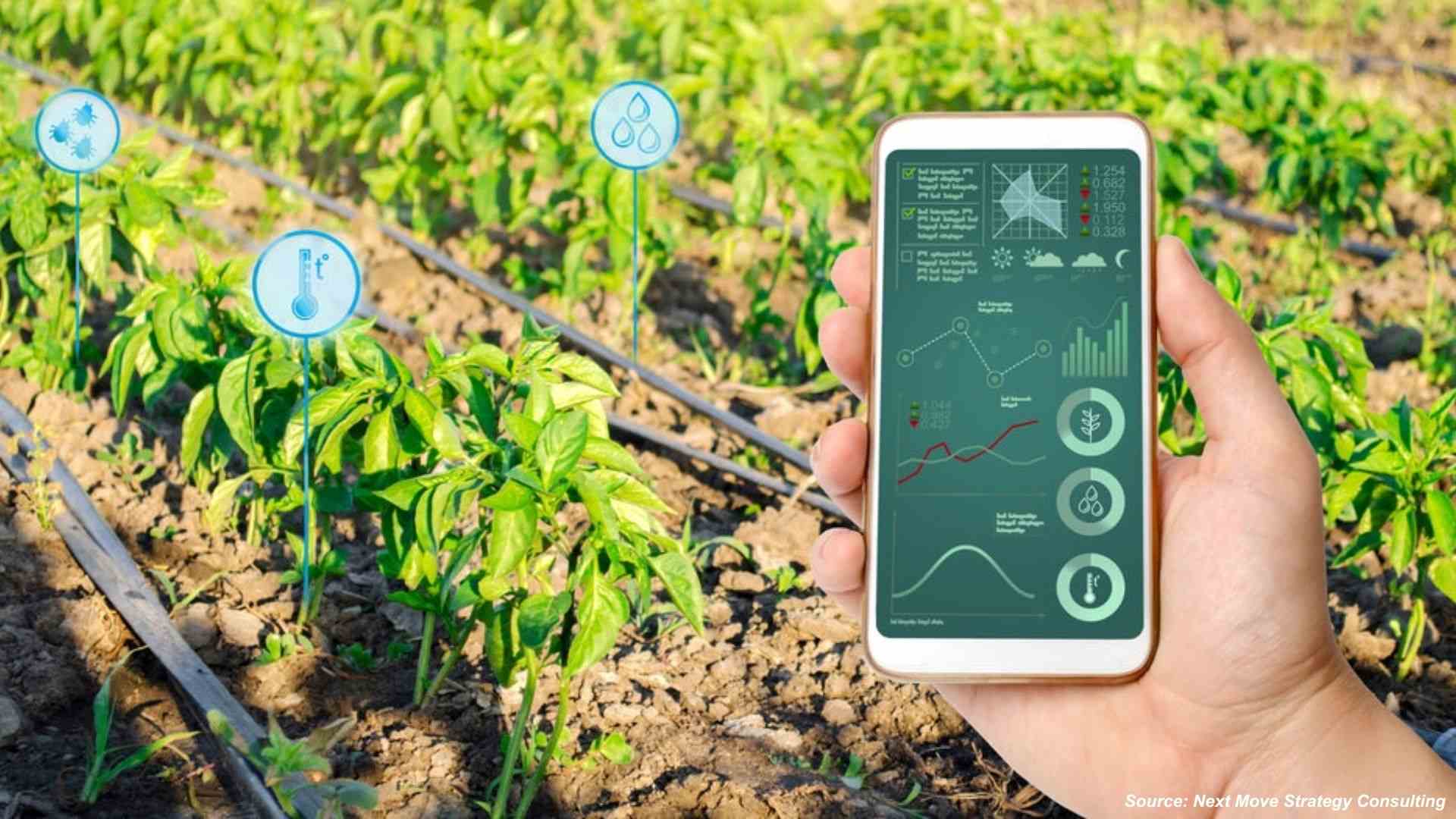
Against this backdrop, the Smart Irrigation Systems Market has emerged as one of the most strategically critical sectors in global agriculture and water management. As governments, agribusinesses, and municipal authorities race to modernize water infrastructure, precision irrigation technology — powered by IoT connectivity, AI-driven analytics, and cloud-based control platforms — is rapidly transitioning from an operational advantage to an existential necessity. According to Next Move Strategy Consulting, the global smart irrigation systems market was valued at USD 2.41 billion in 2025 and is forecast to reach USD 5.96 billion by 2035, expanding at a CAGR of 9.5% from 2026 to 2035.
This report examines the forces reshaping the smart irrigation systems market — from landmark institutional warnings and landmark M&A activity to regulatory mandates and AI-enabled innovation — and provides actionable intelligence for C-level executives, institutional investors, and strategic decision-makers.
For More Information: Download FREE Sample on Smart Irrigation Systems Market Report
From Water Crisis to Water Bankruptcy: The Structural Forces Reshaping Smart Irrigation
The Institutional Wake-Up Call That Changed the Market Narrative
The UN's January 2026 declaration of "global water bankruptcy" was not merely rhetorical. It represented a fundamental shift in how policymakers, investors, and agribusinesses must approach water resource management. The report introduced water bankruptcy as a condition defined by both insolvency — withdrawing water beyond renewable inflows — and irreversibility — damage to natural water capital that makes restoration infeasible.
Two months later, in March 2026, the World Bank amplified this urgency with its landmark report, Nourish and Flourish: Water Solutions to Feed 10 Billion People on a Livable Planet, which found that smarter water use across the global food system could generate 245 million long-term jobs and sustainably feed a global population of 10 billion. The report estimated that expanding and modernizing irrigation systems globally would require an additional USD 24–70 billion per year through 2050 — a figure that underscores the scale of investment opportunity in precision water management infrastructure.
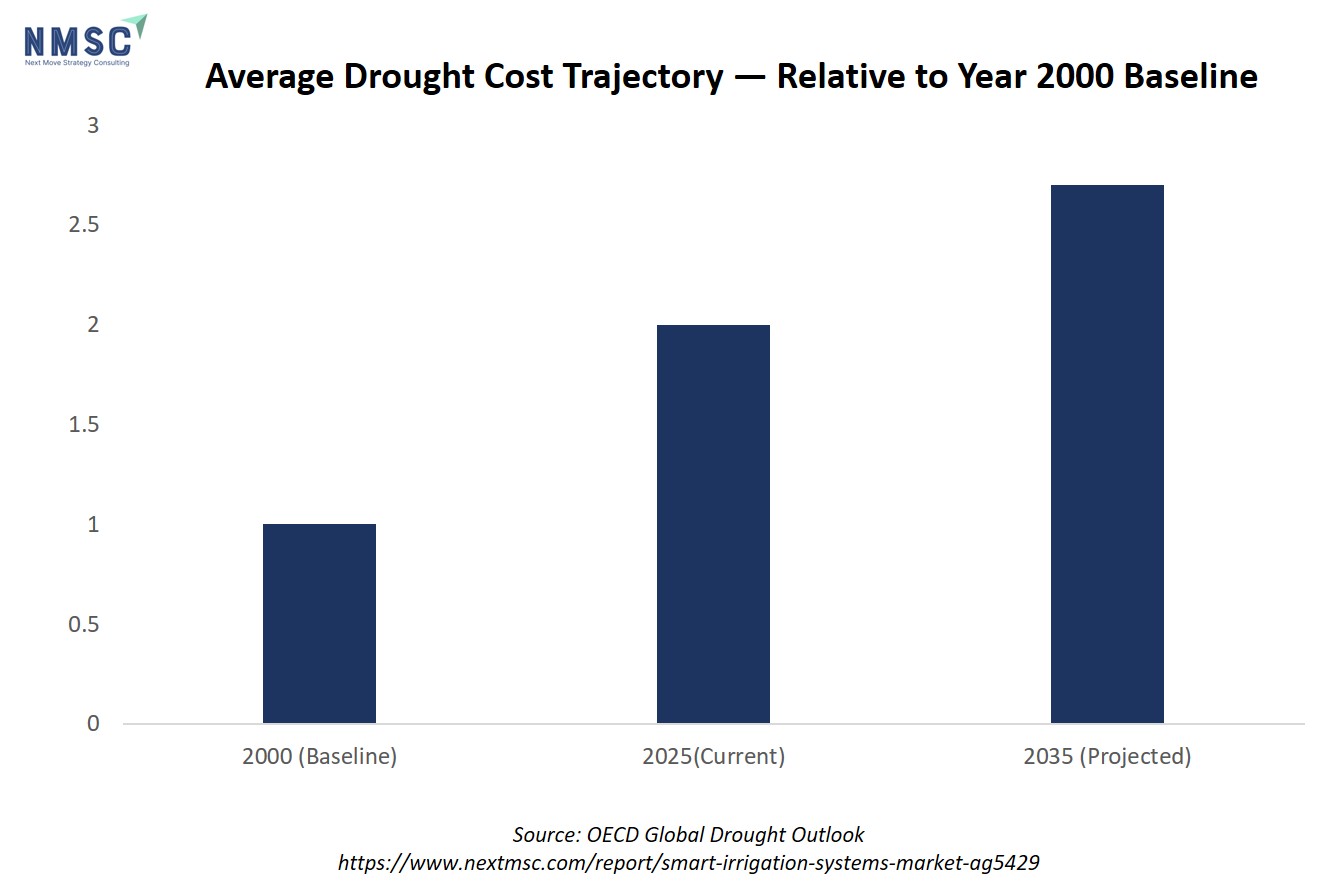
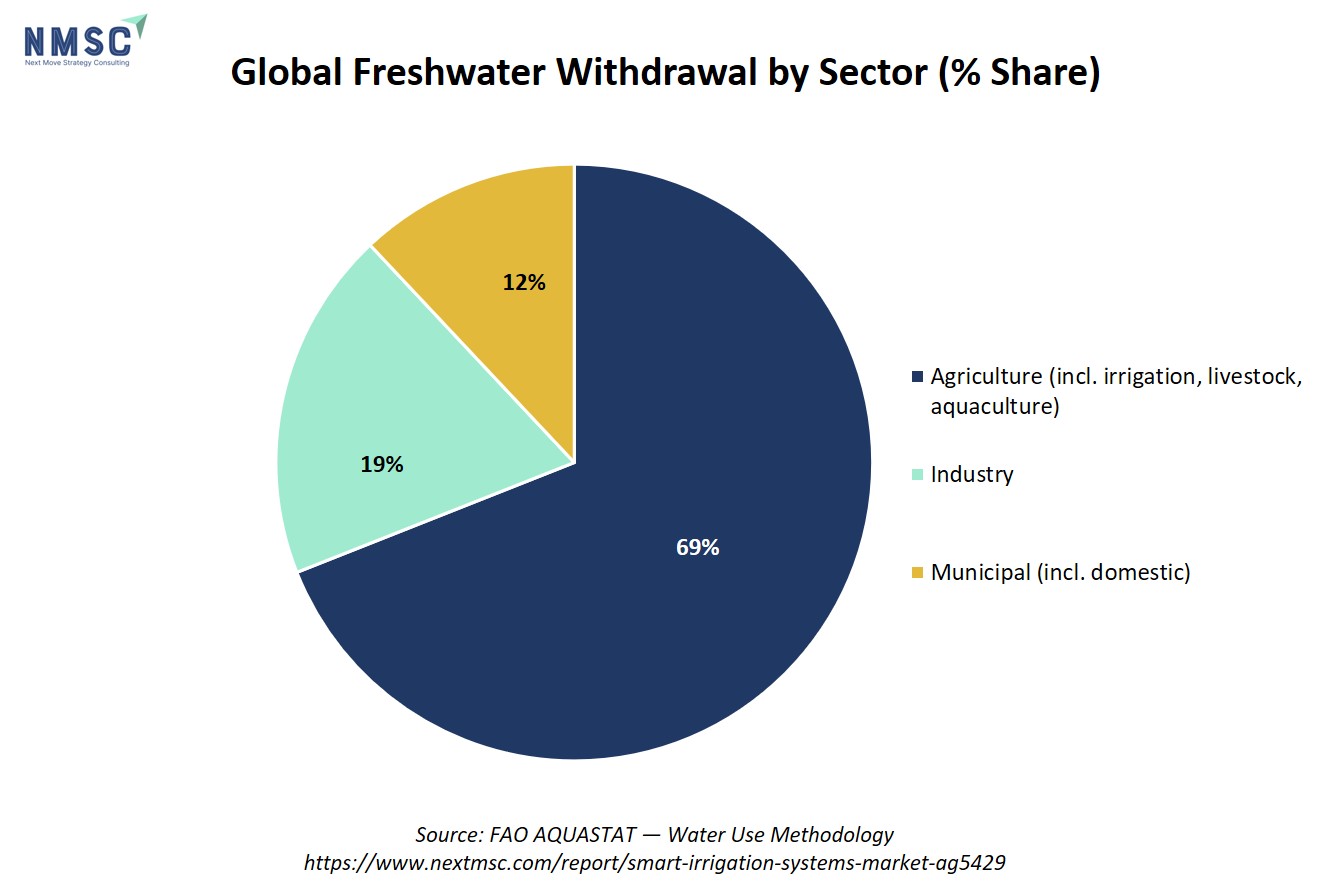
Compounding this, FAO's 2025 AQUASTAT Water Data Snapshot, released in January 2026, confirmed that renewable freshwater availability per person has fallen by 7% over the past decade, while agriculture accounts for approximately 72% of global freshwater withdrawals. The OECD's Global Drought Outlook (June 2025) further documented that the economic cost of drought episodes has been increasing at an annual rate exceeding 3% and potentially as high as 7.5%, with drought episodes now estimated to be four times longer in duration than they were in 2000.
These converging institutional signals have fundamentally altered the investment calculus for smart irrigation systems. What was once a discretionary efficiency upgrade is now a mandated response to systemic water insolvency.
The Rain Bird–Rachio Acquisition: A Market-Defining Consolidation
The most consequential industry development of the past 12 months was Rain Bird Corporation's acquisition of Rachio, Inc. in October 2025 — a transaction that exemplifies the structural shift underway across the smart irrigation systems market. Rachio, a leader in cloud-connected smart irrigation controllers and AI-driven water management technology for homeowners, became a wholly owned subsidiary of Rain Bird while continuing under CEO and co-founder Chris Klein.
This acquisition signals a decisive industry-wide movement: established hardware manufacturers are no longer content to compete on distribution scale alone. They are acquiring connected software specialists to combine hardware reach with cloud-based control platforms — a strategy that positions integrated vendors to capture premium subscription revenue as water utility rebate programs and conservation mandates intensify through 2035.
AI-Enabled Irrigation: The Technology Reshaping Competitive Positioning
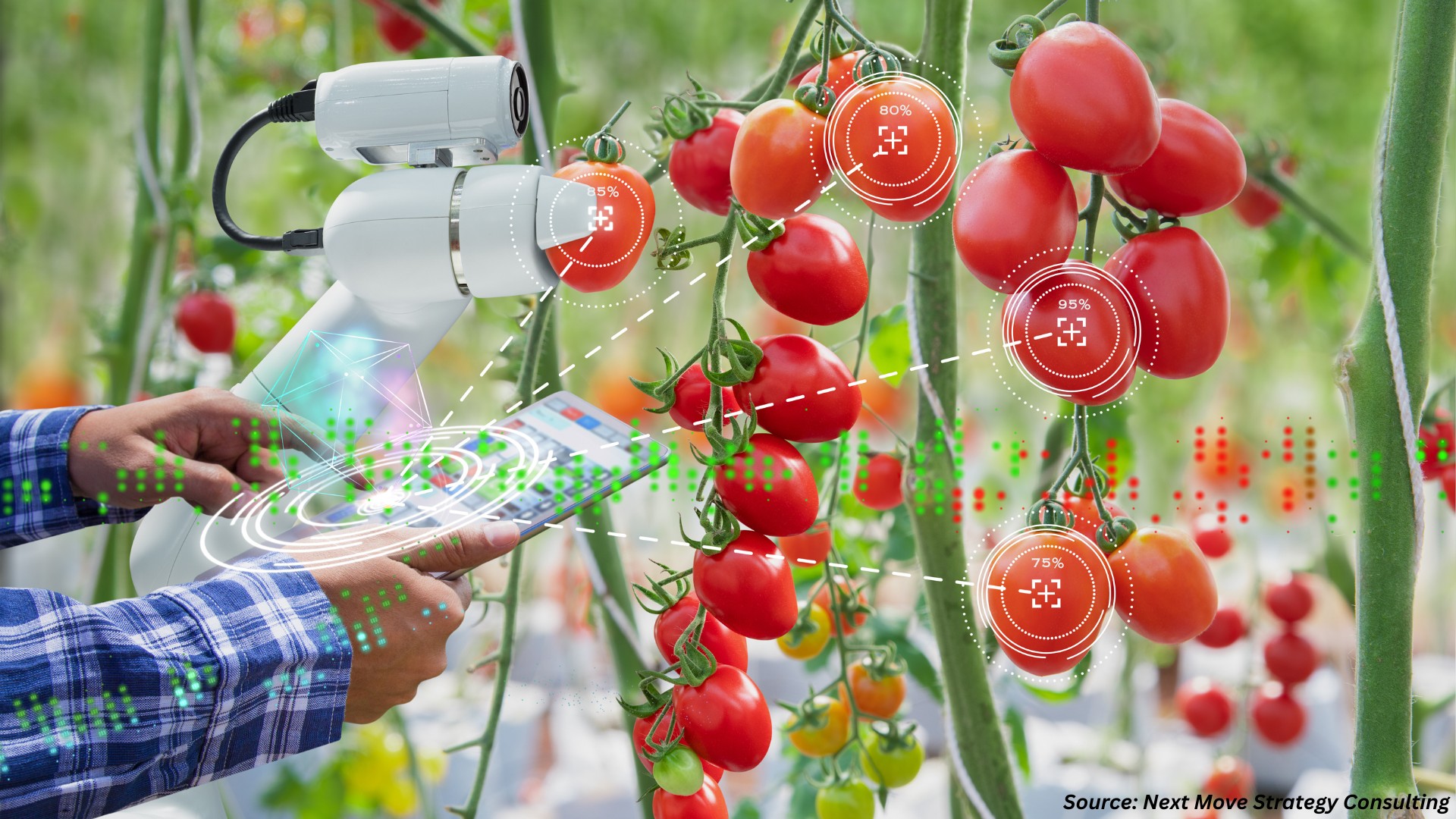
Artificial intelligence is rapidly becoming the defining differentiator in the smart irrigation systems market. Farmers and landscape managers are increasingly adopting AI-powered advisory platforms that integrate weather forecasts, soil data, and crop information to optimize irrigation scheduling before soil moisture deficits occur — rather than reacting to sensor readings alone. Research published in Springer's peer-reviewed journals confirms that IoT-based smart irrigation systems have enhanced crop productivity by 25%, while machine learning-based predictive irrigation systems are increasingly replacing reactive sensor-only scheduling approaches.
The broader digital agriculture ecosystem is expanding rapidly to support this shift. The global AI, IoT, and blockchain market in modern agriculture is projected to expand from USD 24.30 billion in 2025 to USD 154.54 billion by 2035, reflecting the scale of technology investment flowing into precision farming infrastructure.
NMSC Strategic Perspective: Structural Shifts Defining the 2026–2035 Forecast Period
According to Next Move Strategy Consulting's analysis, four structural trends are reshaping product development, adoption timelines, and competitive positioning across the smart irrigation systems market through 2035:
-
Hardware-Software Consolidation: Irrigation equipment manufacturers are increasingly acquiring connected software specialists to combine established hardware distribution with cloud-based control platforms. This shift favors vendors with integrated hardware-software portfolios over standalone point-solution providers as water utility rebate programs and conservation mandates intensify.
-
AI-Enabled Predictive Irrigation Adoption: Machine learning models are maturing to the point where they can reliably forecast crop and landscape water needs before deficits occur. This is driving adoption beyond early technology adopters into mainstream agricultural and commercial landscape segments.
-
Water Utility Rebate Program Expansion: Municipal water utilities — including Denver Water, Aurora Water, and the Southern Nevada Water Authority — are offering rebate programs tied to qualifying smart controllers with weather-adjusting capability, reducing effective purchase costs and elevating demand for certified connected controllers.
-
Enterprise-Scale Network Deployment: Large farms and municipal authorities are moving beyond single-zone controllers toward centrally managed irrigation networks capable of managing hundreds of zones across dispersed properties — creating a new, high-value enterprise segment.
Section Summary: The smart irrigation systems market is being propelled by a convergence of institutional urgency, landmark M&A activity, and AI-driven technology maturation. The UN's water bankruptcy declaration, the World Bank's irrigation investment imperative, and the Rain Bird–Rachio consolidation collectively signal that the market has entered a structurally accelerated growth phase.
Key Takeaways:
-
The UN declared a state of "global water bankruptcy" in January 2026, fundamentally elevating the strategic priority of precision water management.
-
The World Bank estimates that modernizing global irrigation requires USD 24–70 billion per year through 2050, representing a massive addressable investment opportunity.
-
Rain Bird Corporation's October 2025 acquisition of Rachio, Inc. marks the beginning of a hardware-software consolidation wave that will reshape competitive dynamics through 2035.
-
AI-Enabled Irrigation is the fastest-growing technology segment, expanding at a 14.8% CAGR from 2026 to 2035, per NMSC analysis.
Industry Impact Analysis
Regulatory Mandates Accelerating Adoption Across Key Markets
Government policy is increasingly functioning as a direct demand driver for smart irrigation systems. In the United States, California's Model Water Efficient Landscape Ordinance mandates water-efficient system installation across residential and commercial properties, while the USDA's EQIP WaterSMART Initiative has activated 11 new and 26 ongoing priority funding areas for conservation-focused irrigation projects in FY 2026. California's Department of Water Resources has also allocated dedicated funding for smart irrigation adoption as part of the state's broader water conservation strategy.
Bluefield Research forecasts that U.S. irrigation spending will average USD 13.5 billion annually over the next five years, reflecting the scale of public and private capital being directed toward water-efficient agricultural infrastructure.
In Asia-Pacific, government irrigation modernization schemes in China and India are compressing adoption timelines for soil moisture-based and AI-enabled irrigation systems. India's micro-irrigation subsidy programs are a key structural driver, contributing to the country's position as the fastest-growing national market in the NMSC forecast, with a projected CAGR of 13.8% from 2026 to 2035.
In the Middle East and Africa, Saudi Arabia's Vision 2030-linked food security programs and the UAE's national food security strategy are directing state-linked farming operations toward precision irrigation investment, with Saudi Arabia's market projected to grow at an 11.8% CAGR through 2035.
The Drought-Agriculture Nexus: Quantifying the Economic Imperative
The OECD's Global Drought Outlook (June 2025) provides the most comprehensive quantification to date of the economic cost of inaction on water management. In dryland areas of the United States, drought conditions have reduced corn and soy production by 2.2–2.6% compared to normal years, with losses potentially increasing to 6.9–10.2% under significantly worsened drought conditions. Critically, the OECD analysis confirms that in areas where irrigation systems are widely available, the negative effects of droughts on agricultural production are substantially smaller — providing direct empirical validation for smart irrigation investment.
The precision agriculture market — the broader ecosystem within which smart irrigation operates — is projected to grow from USD 9.50 billion in 2025 to USD 17.29 billion by 2031, reflecting the scale of institutional and private capital being directed toward data-driven agricultural efficiency.
AgTech Investment Landscape: Navigating Capital Constraints
Despite the structural tailwinds, the broader AgTech investment environment presents a nuanced picture. AgTech venture funding dropped to USD 1.6 billion across 137 deals in Q1 2025, representing a nearly 25% decline in deal activity — a trend that reflects investor selectivity rather than sector-wide disillusionment. Within this environment, smart irrigation companies demonstrating credible connected software capability and utility rebate program certification are attracting disproportionate capital attention, as investors increasingly view cloud-based platform ownership as a proxy for long-term customer retention and recurring subscription revenue.
Section Summary: The smart irrigation systems market is experiencing a convergence of regulatory mandates, quantified drought-related economic losses, and selective but strategically focused capital deployment. Government programs across North America, Asia-Pacific, and the Middle East are functioning as direct demand catalysts, while institutional research from the OECD provides empirical validation for the ROI of precision irrigation investment.
Key Takeaways:
-
U.S. irrigation spending is forecast to average USD 13.5 billion annually over the next five years, per Bluefield Research.
-
OECD analysis confirms that irrigation systems substantially reduce the negative agricultural impact of drought conditions — providing direct economic justification for smart irrigation adoption.
-
India is the fastest-growing national market at a 13.8% CAGR (2026–2035), driven by government micro-irrigation subsidy programs.
-
AgTech VC funding declined 25% in Q1 2025, but smart irrigation companies with integrated hardware-software platforms are attracting disproportionate investor attention.
Pros and Cons of Recent Market Developments
|
Recent Development |
Pros |
Cons |
|
Rain Bird's Acquisition of Rachio (Oct 2025) |
Combines hardware distribution scale with AI-driven connected software; accelerates integrated product availability for residential and commercial customers |
Risk of platform fragmentation during integration; smaller specialized vendors may face competitive displacement |
|
UN "Water Bankruptcy" Declaration (Jan 2026) |
Elevates political and institutional urgency for smart irrigation investment; accelerates government funding and regulatory mandates |
Creates short-term market anxiety; may divert capital toward emergency response rather than long-term infrastructure |
|
World Bank Irrigation Investment Report (Mar 2026) |
Validates USD 24–70B/year investment need; mobilizes multilateral financing for irrigation modernization in developing markets |
Investment timelines are long-term (through 2050); near-term capital deployment may be slower than market expectations |
|
AI-Enabled Predictive Irrigation Adoption |
Reduces water waste proactively; improves crop yields; enables premium subscription revenue for software vendors |
High upfront system costs; requires reliable rural connectivity infrastructure that remains limited in key growth markets |
|
Water Utility Rebate Program Expansion |
Reduces effective purchase cost for end users; drives certified controller adoption; creates recurring demand cycles |
Fragmented certification standards across utilities create compliance complexity for manufacturers |
|
OECD Global Drought Outlook (Jun 2025) |
Provides empirical economic justification for irrigation investment; informs policy design and capital allocation |
Escalating drought severity may outpace adoption timelines in the most vulnerable agricultural regions |
|
AgTech VC Funding Decline (Q1 2025) |
Encourages capital discipline; favors established players with proven revenue models |
Constrains early-stage innovation funding; may slow development of next-generation irrigation analytics platforms |
Global Water Crisis — Key Institutional Data Points (2025–2026)
|
Indicator |
Data Point |
Source |
Year |
|
Global per capita freshwater availability decline |
-7% over the past decade |
FAO AQUASTAT |
2025 |
|
Agriculture's share of global freshwater withdrawals |
~72% |
FAO AQUASTAT |
2025 |
|
People experiencing severe water scarcity (≥1 month/year) |
~4 billion |
UN University |
Jan 2026 |
|
Annual global drought impact cost |
USD 307 billion |
UN University |
Jan 2026 |
|
Annual increase in drought episode economic cost |
3%–7.5% |
OECD Global Drought Outlook |
Jun 2025 |
|
Increase in drought episode duration since 2000 |
~4x longer |
OECD Global Drought Outlook |
Jun 2025 |
|
Additional annual investment needed for irrigation expansion |
USD 24–70 billion/year through 2050 |
World Bank |
Mar 2026 |
|
Potential jobs from smarter water use in food systems |
245 million |
World Bank |
Mar 2026 |
|
U.S. annual irrigation spending forecast |
USD 13.5 billion/year (next 5 years) |
Bluefield Research |
2025 |
|
Precision Agriculture Market (2025) |
USD 9.50 billion |
GlobeNewswire |
Mar 2026 |
Future Outlook & Forecast
NMSC Market Forecast: USD 5.96 Billion by 2035
According to Next Move Strategy Consulting, the global smart irrigation systems market is projected to expand from USD 2.64 billion in 2026 to USD 5.96 billion by 2035, at a CAGR of 9.5%, representing an absolute dollar opportunity of USD 3.32 billion between 2026 and 2035.
The growth trajectory is broad-based across every segmentation axis, with three primary pathways driving above-market expansion:
-
AI-Enabled Irrigation Software: The fastest-growing technology segment at a 14.8% CAGR, AI-enabled predictive irrigation is expected to grow from USD 0.29 billion in 2025 to USD 1.10 billion by 2035 — a near-fourfold increase driven by machine learning model maturation and the shift from reactive to predictive water management.
-
Public Landscape Applications: The fastest-growing application segment at a 12.5% CAGR, reflecting municipal water conservation mandates driving smart controller adoption across parks, roadside landscaping, and public gardens. This segment is expected to grow from USD 0.22 billion in 2025 to USD 0.69 billion by 2035.
-
Asia-Pacific Regional Expansion: The fastest-growing region at an 11.3% CAGR, propelled by government irrigation modernization schemes in China and India, expanding water scarcity concerns, and accelerating micro-irrigation subsidy programs targeting smallholder and commercial farms.
Three Growth Opportunities Defining the 2026–2035 Horizon
-
Hardware-Software Bundled Platforms: Vendors that combine established controller and valve manufacturing with cloud-based analytics stand to capture premium subscription revenue as customers increasingly prefer single-vendor solutions. The Rain Bird–Rachio model is the template for this value creation pathway.
-
Municipal Enterprise Network Contracts: Municipal authorities managing dispersed park and roadside landscape irrigation represent an underpenetrated opportunity for enterprise-grade centralized control systems. Vendors that develop scalable municipal irrigation network platforms can secure multi-year public sector contracts with recurring subscription and support revenue.
-
Water Utility Rebate Certification: Residential controller makers pursuing broader utility rebate program certification can reduce effective purchase costs for homeowners, differentiating with cost-conscious consumers pursuing conservation incentives and expanding addressable demand across water-stressed municipalities.
Key Risks to Monitor
High upfront hardware and installation costs for enterprise systems remain the primary restraint, particularly for small farms and municipal authorities with constrained capital budgets. Limited rural connectivity constraining cloud-based platform adoption in Asia-Pacific and Middle East & Africa markets, and fragmented certification standards across water utility rebate programs in North America, represent secondary risk factors that stakeholders must actively manage.
Section Summary: The smart irrigation systems market presents a compelling long-term investment case, anchored by a USD 3.32 billion absolute dollar opportunity through 2035, above-average growth in AI-Enabled Irrigation and Asia-Pacific, and structural demand drivers that are intensifying rather than moderating. The convergence of institutional water crisis declarations, government irrigation modernization programs, and AI-driven technology maturation positions the market for sustained, broad-based expansion.
Key Takeaways:
-
The global smart irrigation systems market is forecast to reach USD 5.96 billion by 2035, growing at a 9.5% CAGR from 2026, per NMSC.
-
AI-Enabled Irrigation is the fastest-growing technology segment at 14.8% CAGR — nearly double the overall market growth rate.
-
Asia-Pacific will be the fastest-growing region at 11.3% CAGR, with India leading all countries at 13.8% CAGR.
-
The market presents a USD 3.32 billion absolute dollar opportunity between 2026 and 2035, with investment attractiveness highest for integrated hardware-software vendors.
Next Steps for Stakeholders
For C-Level Executives and Product Leaders:
-
Prioritize connected software capability as a core strategic asset. The Rain Bird–Rachio acquisition demonstrates that hardware distribution scale alone is insufficient for long-term competitive positioning. Executives should evaluate M&A targets and internal R&D investment through the lens of cloud-based platform ownership and AI-enabled predictive irrigation capability.
-
Pursue water utility rebate program certification across multiple regional utility programs. Early movers that validate compliance with diverse rebate criteria will differentiate with cost-conscious residential and commercial customers and expand addressable demand in water-stressed municipalities.
-
Develop enterprise-grade municipal irrigation network platforms as a distinct product line. The public landscape segment's 12.5% CAGR signals a structural shift in municipal procurement toward centrally managed irrigation infrastructure — a high-value, recurring-revenue opportunity that requires dedicated platform investment.
For Institutional Investors and Financial Analysts:
-
Allocate capital toward integrated hardware-software vendors with demonstrated connected platform capability and utility rebate program compliance. These companies are best positioned to capture above-market growth in AI-Enabled Irrigation and Public Landscape categories through 2035.
-
Monitor Asia-Pacific and Middle East & Africa market developments closely. India's 13.8% CAGR and Saudi Arabia's 11.8% CAGR represent the highest-growth national markets in the NMSC forecast, driven by government programs that provide structural demand visibility.
-
Assess ESG alignment as a core investment criterion. Water conservation performance and drought resilience are increasingly treated as governance indicators by institutional investors, and smart irrigation companies enabling verified water use reduction are attracting premium ESG-aligned capital.
For Government and Regulatory Bodies:
-
Harmonize water utility rebate certification standards across jurisdictions to reduce compliance complexity for manufacturers and accelerate residential and commercial smart controller adoption.
-
Redirect a portion of the USD 490 billion in annual agricultural subsidies — as recommended by the World Bank — toward irrigation modernization and precision water management infrastructure, leveraging blended finance and public-private partnerships to crowd in private capital.
-
Expand rural connectivity infrastructure in Asia-Pacific and Middle East & Africa markets to remove the primary technical barrier to cloud-based smart irrigation platform adoption in high-growth agricultural regions.
Conclusion
The smart irrigation systems market stands at a structural inflection point. The UN's declaration of global water bankruptcy, the World Bank's quantification of a USD 24–70 billion annual irrigation investment need, and the OECD's documentation of escalating drought costs have collectively transformed smart irrigation from an efficiency tool into a geopolitical and economic imperative. Against this backdrop, the market's projected expansion from USD 2.64 billion in 2026 to USD 5.96 billion by 2035 — at a 9.5% CAGR per Next Move Strategy Consulting — reflects not speculative optimism but structural necessity.
The Rain Bird–Rachio acquisition has set the competitive template: integrated hardware-software platforms, AI-enabled predictive irrigation, and utility rebate program certification will define market leadership through 2035. For investors, executives, and policymakers, the strategic imperative is clear — the window for early positioning in this market is open, but it will not remain so indefinitely as consolidation accelerates and regulatory mandates intensify.
About the Author
 Sanyukta Deb
— Sanyukta Deb is Digital Marketing Team Lead at Next Move Strategy Consulting, where she has led content strategy and technical SEO for the firm's B2B market research publications for over 2 years. Her editorial process translates NextMSC's primary and secondary research — spanning technology, industrial, and consumer sectors — into commercial narratives, backed by search-intent, keyword, and competitive analysis. She brings 5 years of overall experience in digital marketing and content strategy.
Sanyukta Deb
— Sanyukta Deb is Digital Marketing Team Lead at Next Move Strategy Consulting, where she has led content strategy and technical SEO for the firm's B2B market research publications for over 2 years. Her editorial process translates NextMSC's primary and secondary research — spanning technology, industrial, and consumer sectors — into commercial narratives, backed by search-intent, keyword, and competitive analysis. She brings 5 years of overall experience in digital marketing and content strategy.
About the Reviewer
 Debashree Dey
— Debashree Dey is Assistant Manager at Next Move Strategy Consulting, where she supports cross-vertical market content and communications across diverse industries for 6 years. Her professional background includes senior content writing, communications, and published manuscript authorship, with experience developing audience-focused business narratives and maintaining clear, consistent messaging. Her role supports research-led content development and editorial quality across NextMSC publications.
Debashree Dey
— Debashree Dey is Assistant Manager at Next Move Strategy Consulting, where she supports cross-vertical market content and communications across diverse industries for 6 years. Her professional background includes senior content writing, communications, and published manuscript authorship, with experience developing audience-focused business narratives and maintaining clear, consistent messaging. Her role supports research-led content development and editorial quality across NextMSC publications.

















Add Comment