AI Is Turning the Robot Preventive Maintenance Market Into a Forecasting Problem

The global Robot Preventive Maintenance market was valued at USD 7.59 billion in 2025 and is projected to reach USD 23.36 billion by 2035, expanding at a 10.69% CAGR from 2026 to 2035 as manufacturers shift from calendar-based servicing toward sensor-led diagnostics, AI forecasting, and software-managed robot health. The core change is not simply more maintenance; it is a move from maintaining machines after a schedule to continuously interpreting how a robot is behaving. Across industrial, collaborative, and mobile fleets, digital tools are making torque, vibration, temperature, usage, and fault history more actionable, while service providers increasingly connect those signals to maintenance planning.
For an In-depth Analysis of the Robot Preventive Maintenance market, Try a FREE Sample.
Our analysis of the Robot Preventive Maintenance market indicates that artificial intelligence is changing maintenance economics by converting streams of operational data into failure-risk signals. Traditional preventive maintenance works from fixed intervals, but AI and machine learning can identify abnormal behavior in motors, gearboxes, joints, drives, and other subsystems and help maintenance teams intervene before a production stop. The NextMSC market report identifies Predictive Maintenance as the fastest-growing maintenance type, rising at a 13.70% CAGR from 2026 to 2035, compared with 9.96% for Scheduled Maintenance, underscoring where technology-driven value is concentrating.
The segment outlook makes that shift visible:
Robot Preventive Maintenance Market by Maintenance Type, 2025–2035 (USD Billion)
|
Maintenance Type |
2025 |
2035 |
CAGR (2026–2035) |
|
Scheduled Maintenance |
4.49 Billion |
12.95 Billion |
9.96% |
|
Condition Based Maintenance |
2.02 Billion |
6.03 Billion |
10.41% |
|
Predictive Maintenance |
1.09 Billion |
4.39 Billion |
13.70% |
|
Total |
7.59 Billion |
23.36 Billion |
10.69% |
The table shows why the market opportunity is moving beyond labor-intensive service visits. Predictive maintenance remains smaller than scheduled programs today, but its faster growth points toward recurring analytics, remote diagnostics, and software-linked service models.
ABB provided a concrete 2025 example when ABB Motion Ventures invested in UptimeAI to combine machine learning, expert systems, and industry knowledge for asset-health management, with the initial focus on heavy industries in India. The announced collaboration is designed to improve failure prediction, health forecasting, and maintenance optimization across motors, drives, and related assets. ABB’s broader robotics portfolio also uses AI and data analysis to support predictive maintenance and robot availability. ABB and UptimeAI announcement This matters because robot maintenance is increasingly becoming part of a wider asset-performance architecture rather than a standalone robotics service.
Siemens pushed the same direction from the software side in March 2025 by extending its Industrial Copilot with generative-AI capabilities for Senseye Predictive Maintenance, covering activities from repair and prevention through prediction and optimization. The offering is intended to help industrial users interact with maintenance data more naturally while scaling predictive workflows. Siemens Industrial Copilot Announcement The commercial implication is clear: the value of maintenance software increasingly lies in prioritizing the next action, not merely collecting another dashboard.
Key takeaway: Predictive analytics is becoming the highest-growth layer of the service stack because it converts robot health data into decisions. Providers that can connect failure prediction with maintenance scheduling, spare-parts planning, and service workflows are better positioned for recurring revenue than vendors offering inspection alone.
IoT Sensors Are Modernizing the Robot Preventive Maintenance Market
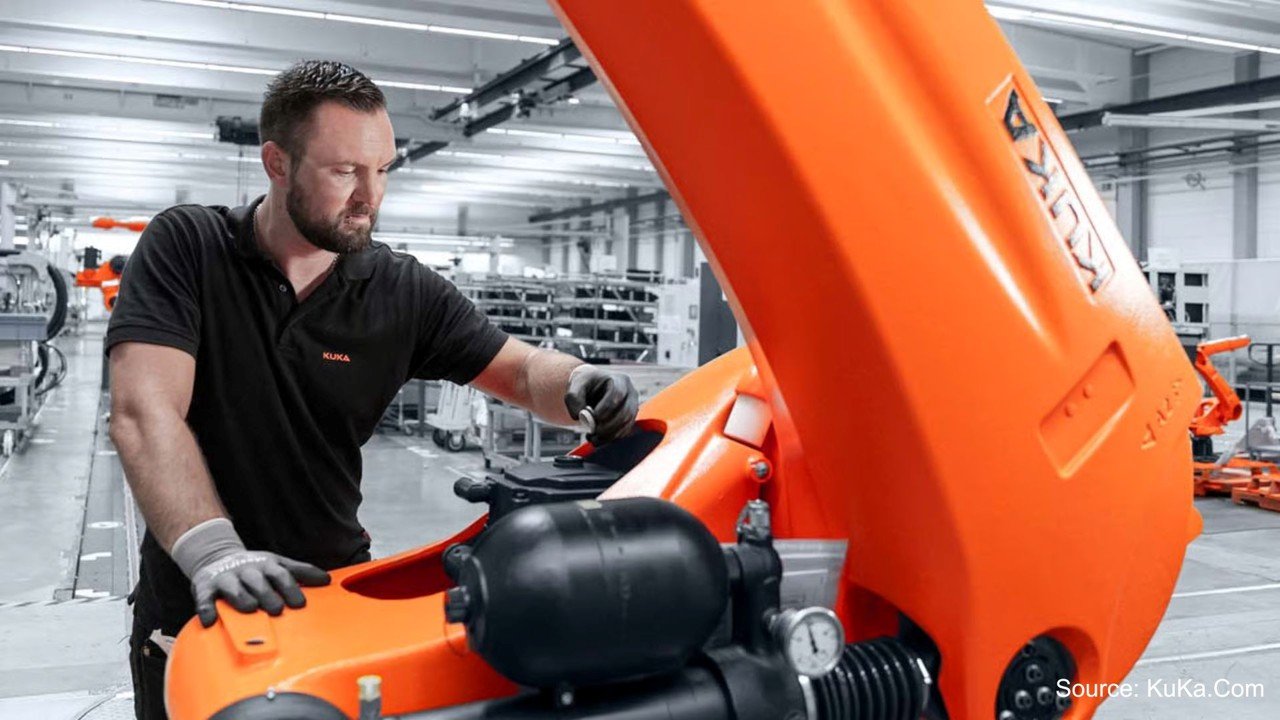
For example, condition-based maintenance depends on a steady stream of operational evidence. Vibration, temperature, torque, current, acceleration, acoustic signatures, and utilization patterns can reveal changes that periodic inspections may miss. The report explicitly identifies sensor-based condition monitoring as a structural market trend and notes that OEMs are increasingly bundling sensors with analytics and service contracts. This supports a broader shift toward maintenance models built around actual asset condition instead of elapsed operating hours.
OMRON has been extending its smart-manufacturing architecture in this direction. In March 2025, the company announced that its Sysmac Studio automation software would collaborate with NVIDIA Omniverse to advance digital-twin manufacturing solutions, linking automation data and simulation more closely. In September 2025, OMRON also announced its Sysmac-Edge DX1 Data Flow Controller, designed to collect, analyze, and visualize manufacturing-site data from sensors, controllers, and other automation devices. OMRON digital-twin announcement OMRON edge-data announcement Together, these moves show how the sensor layer is evolving into an edge-to-model pipeline rather than a collection of isolated device readings.
The benefit for owners in the Robot Preventive Maintenance market is operational visibility. A maintenance engineer can move from “the robot needs service” to a more specific question: which axis, component, or operating condition is changing, how quickly is it changing, and what intervention is justified? That level of context can reduce unnecessary part replacement while making high-risk faults easier to prioritize.
“Now using the latest technology, enabled and enhanced by generative AI as well as vision and mobility systems, we are expanding our offering to customers.”
— Sami Atiya, President, Robotics & Discrete Automation, ABB, February 2025.
The statement captures a key market direction: sensing and intelligence are increasingly embedded in the robot technology stack itself.
Digital Twins Are Rewriting the Robot Preventive Maintenance Market
Digital twins add a second layer of intelligence to the Robot Preventive Maintenance market by creating a virtual representation of robot behavior that can be evaluated against live or historical operating data. Instead of waiting for a reducer, joint, or drive to show a clear fault, engineering teams can compare actual behavior with expected operating patterns and test maintenance scenarios before they affect production. The NextMSC report identifies digital twin simulation as a key emerging trend and links it to remaining-useful-life forecasting.
OMRON’s March 2025 collaboration with NVIDIA Omniverse is particularly relevant because it connects industrial automation software with a simulation environment designed for virtual manufacturing models. OMRON–NVIDIA digital-twin announcement In maintenance terms, the significance is the ability to make the virtual layer more useful to real production decisions, including testing changes before deployment.
KUKA is reinforcing the same architecture from the robot side. In June 2025, KUKA introduced the KMR iisy CR, an autonomous mobile manipulator for semiconductor and cleanroom applications, with AI-based KUKA.AMR Fleet software for centralized management and real-time monitoring of heterogeneous AMR fleets. KUKA KMR iisy CR announcement As mobile fleets expand, fleet-level visibility becomes increasingly important because maintenance decisions must account for batteries, utilization, software, and component condition across multiple units rather than one robot at a time.
Cloud Analytics Is Scaling the Robot Preventive Maintenance Market
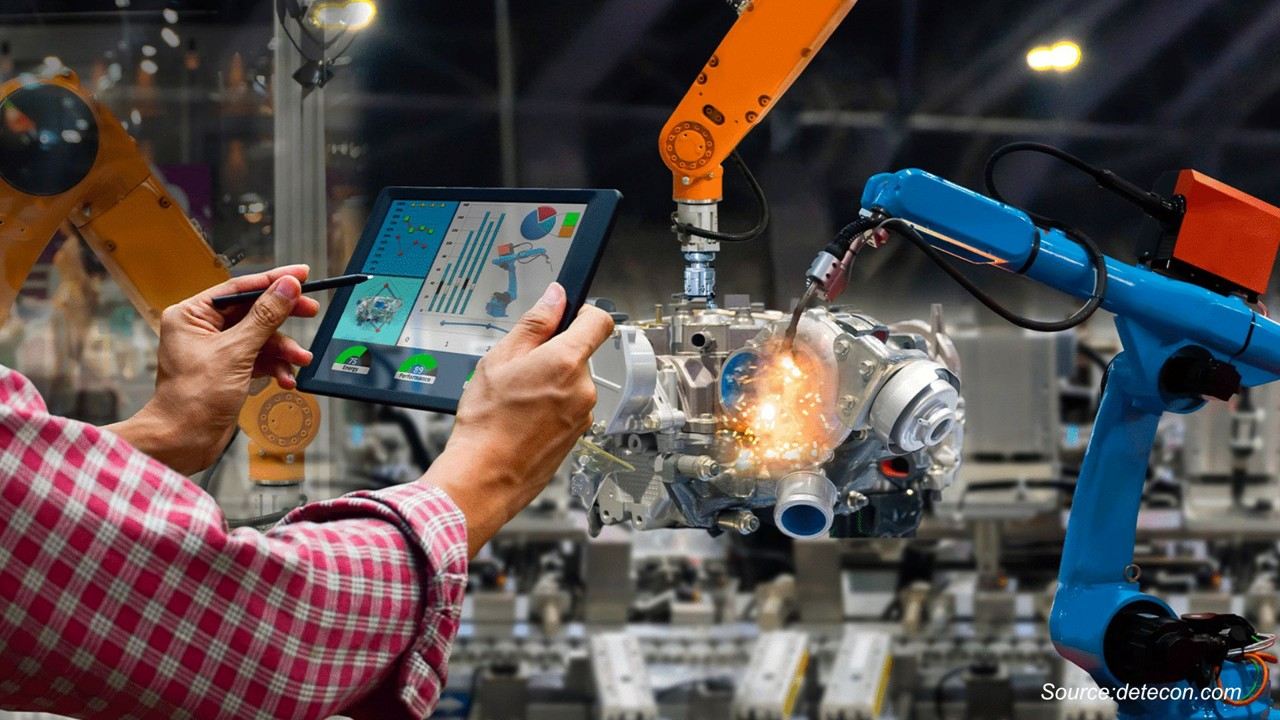
Cloud and edge computing are making the Robot Preventive Maintenance market more scalable across plants, service territories, and mixed fleets. A cloud layer can consolidate health scores, alarms, maintenance histories, parts information, and work orders, while edge processing can preserve fast local responses when latency or connectivity matters. This architecture helps organizations manage robot health without requiring every site to maintain a deep bench of specialist analysts.
Siemens describes Senseye as a scalable predictive-maintenance approach that combines industrial AI, domain expertise, and scalable technology. Its cloud-based Senseye application can work with existing historians, IoT platforms, databases, and sensors, enabling predictive maintenance across multiple assets and sites. In 2025, Siemens reported that BlueScope had avoided approximately 2,000 hours of unplanned downtime across various manufacturing facilities over three years using Senseye predictive-maintenance technology. The example demonstrates how cloud-based analytics can support predictive maintenance at scale across multiple plants rather than remaining limited to individual engineering projects.
FANUC offers another perspective on software-enabled lifecycle value. At PaintExpo 2026, the company showcased a new painting robot design with fewer components and battery-free encoders intended to reduce maintenance costs, alongside its broader service proposition. FANUC PaintExpo 2026 announcement This reflects an important complement to predictive analytics: the best maintenance strategy is partly about predicting failure and partly about designing machines so routine servicing is easier, faster, and less resource-intensive.
Explore the Full Report on Robot Preventive Maintenance report page
Taken together, these technologies point to a structural change in the Robot Preventive Maintenance market. AI supplies prediction, IoT supplies the continuous signal, digital twins add simulation, and cloud or edge platforms turn those capabilities into repeatable workflows across fleets and sites. The market’s 10.69% CAGR through 2035 therefore reflects more than a larger installed base; it also reflects a gradual migration toward data-driven maintenance contracts, condition monitoring, predictive software, and fleet-level service models. As mobile robots and collaborative systems expand alongside established industrial robots, the Robot Preventive Maintenance market is becoming a digital operating discipline tied to availability, lifecycle cost, and production resilience.
About the Author
 Sanyukta Deb
— Sanyukta Deb is Digital Marketing Team Lead at Next Move Strategy Consulting, where she has led content strategy and technical SEO for the firm's B2B market research publications for over 2 years. Her editorial process translates NextMSC's primary and secondary research — spanning technology, industrial, and consumer sectors — into commercial narratives, backed by search-intent, keyword, and competitive analysis. She brings 5 years of overall experience in digital marketing and content strategy.
Sanyukta Deb
— Sanyukta Deb is Digital Marketing Team Lead at Next Move Strategy Consulting, where she has led content strategy and technical SEO for the firm's B2B market research publications for over 2 years. Her editorial process translates NextMSC's primary and secondary research — spanning technology, industrial, and consumer sectors — into commercial narratives, backed by search-intent, keyword, and competitive analysis. She brings 5 years of overall experience in digital marketing and content strategy.
About the Reviewer
 Debashree Dey
— Debashree Dey is Assistant Manager at Next Move Strategy Consulting, where she supports cross-vertical market content and communications across diverse industries for 6 years. Her professional background includes senior content writing, communications, and published manuscript authorship, with experience developing audience-focused business narratives and maintaining clear, consistent messaging. Her role supports research-led content development and editorial quality across NextMSC publications.
Debashree Dey
— Debashree Dey is Assistant Manager at Next Move Strategy Consulting, where she supports cross-vertical market content and communications across diverse industries for 6 years. Her professional background includes senior content writing, communications, and published manuscript authorship, with experience developing audience-focused business narratives and maintaining clear, consistent messaging. Her role supports research-led content development and editorial quality across NextMSC publications.
















Add Comment