Robot Preventive Maintenance Market Transformation
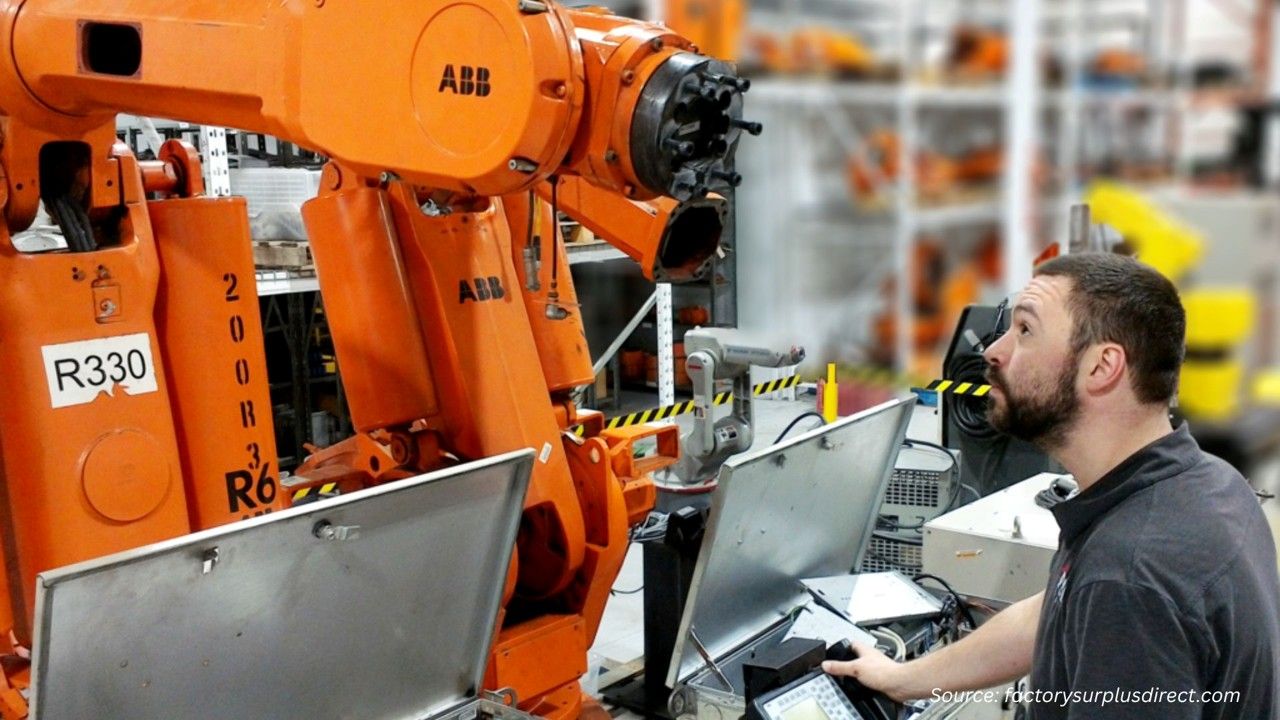
We observed the Robot Preventive Maintenance Market moving from calendar-based servicing toward connected, data-driven maintenance models that combine sensors, remote diagnostics, artificial intelligence, and software analytics. The market was valued at USD 7.59 billion in 2025 and is estimated at USD 9.36 billion in 2026, before reaching USD 23.36 billion by 2035 at a 10.69% CAGR. The transformation is being driven by larger robot installed bases, higher downtime costs, technician shortages, and growing reliance on industrial, collaborative, and mobile robots. Scheduled maintenance remains the largest category, but predictive maintenance is expanding fastest as manufacturers seek earlier failure detection and more precise intervention windows.
Our analysis indicates that the competitive model is also changing. Maintenance providers are increasingly combining physical servicing with condition monitoring, cloud connectivity, digital twins, remote support, and analytics licenses. Asia-Pacific accounted for approximately 62% of 2025 market revenue, while industrial robots represented about 60% of demand, underscoring the importance of high-density manufacturing economies. Regulatory expectations around robot safety, cybersecurity, and documented maintenance further encourage structured service programs. Based on our assessment, the next phase will favor vendors that can connect robot hardware, maintenance intelligence, and lifecycle services rather than treating preventive maintenance as a periodic field-service activity.
Want Insights on the Robot Preventive Maintenance market? Access a FREE Sample Instantly
Key takeaway: The market is shifting from maintenance as a scheduled cost to maintenance as a continuous intelligence layer. Vendors that combine proprietary robot data, predictive analytics, remote diagnostics, and flexible service models can capture more recurring value as manufacturers prioritize uptime and lifecycle efficiency.
The maintenance-type split provides a clear view of this transition:
Robot Preventive Maintenance Market by Maintenance Type, 2025–2035 (USD Billion)
|
Maintenance Type |
2025 |
2035 |
CAGR (2026–2035) |
|
Scheduled Maintenance |
4.49 Billion |
12.95 Billion |
9.96% |
|
Condition Based Maintenance |
2.02 Billion |
6.03 Billion |
10.41% |
|
Predictive Maintenance |
1.09 Billion |
4.39 Billion |
13.70% |
|
Total |
7.59 Billion |
23.36 Billion |
10.69% |
Scheduled maintenance remains the revenue anchor, but predictive maintenance is expanding significantly faster. That difference indicates that competitive advantage is increasingly shifting toward analytics, failure forecasting, remaining-life modelling, and digital twin capabilities.
ABB Ltd.
ABB Ltd., headquartered in Zurich, Switzerland, is a global technology company focused on electrification, automation, motion, and robotics. Its robotics business spans industrial robots, collaborative robots, autonomous mobile robotics, software, and automation solutions. The Robot Preventive Maintenance Market directly influences ABB's value proposition because increasingly intelligent robots require maintenance systems capable of interpreting operational data and supporting uptime across complex production environments.
In September 2025, ABB Robotics launched OmniCore EyeMotion, a hardware-agnostic vision system that allows OmniCore-powered robots to use third-party cameras or sensors to recognize surroundings and adapt in real time. ABB positioned the release as part of its Autonomous Versatile Robotics strategy. For the Robot Preventive Maintenance Market, the significance extends beyond robot capability: more autonomous machines generate richer operational data, increasing the potential for condition monitoring, remote diagnostics, and software-enabled maintenance workflows. Sources: ABB News Center, “ABB Robotics launches OmniCore EyeMotion for vision-powered autonomy,” September 23, 2025.
Based on our evaluation, ABB's strategic position is increasingly tied to the convergence of robotics, AI, sensing, and software. As maintenance evolves toward continuous condition visibility, ABB's integrated robotics ecosystem gives it an opportunity to embed service intelligence deeper into robot operating environments. Its competitive position should therefore depend not only on robot deployments but also on how effectively operational data becomes actionable for maintenance teams.
FANUC Corporation
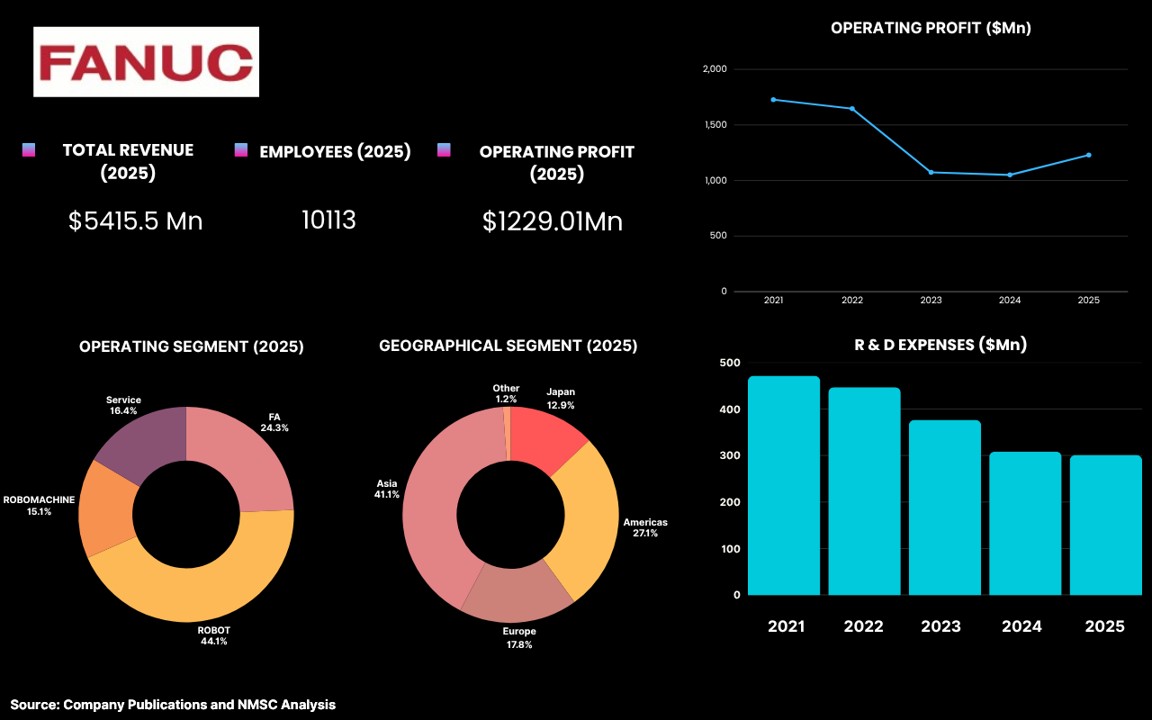
FANUC Corporation is headquartered at its main campus in Oshino, Yamanashi Prefecture, Japan, and specializes in industrial automation, CNC systems, robotics, and factory automation. Its large installed base of industrial robots makes the Robot Preventive Maintenance Market strategically important because maintenance efficiency directly affects production uptime, service requirements, and total cost of ownership across manufacturing operations.
In December 2025, FANUC introduced the redesigned R-2000/E series, with battery-less encoders and no requirement for periodic grease or cable changes. The company also incorporated support for remote maintenance, while mass production was scheduled to begin in March 2026. The development directly addresses maintenance labor shortages by removing several recurring service tasks and illustrates how robot design itself is becoming part of preventive-maintenance strategy.
Our analysis indicates that FANUC is positioned to compete through lifecycle-oriented robot engineering rather than relying exclusively on external maintenance services. Designing components and systems that require fewer routine interventions can reduce service intensity while preserving equipment availability. That approach is particularly relevant as manufacturers seek to operate larger robot fleets with limited skilled maintenance personnel and increasingly evaluate robots on lifecycle economics instead of acquisition cost alone.
“We stand at a pivotal moment in the evolution of AI and industrial robotics. Over the past decade, we’ve given robots eyes through 3D AI vision.” — Marc Segura, President, ABB Robotics; ABB News Center, September 2025.
KUKA AG
KUKA AG, headquartered in Augsburg, Germany, is an automation group focused on robotics, industrial automation, intralogistics, digital solutions, and systems engineering. Its robotics portfolio serves automotive, electronics, healthcare, logistics, metals, plastics, food, and other industries. The Robot Preventive Maintenance Market is important to KUKA because customers increasingly require maintenance contracts, remote service, performance analysis, software diagnostics, and lifecycle support alongside robot hardware.
In April 2025, KUKA launched iiQKA.OS2, a scalable operating system incorporating a virtual robot controller, web-based workflows, engineering capabilities, and simulation. KUKA also described the system as AI-capable, cyber-resilient, and prepared for ISO 10218:2025. The platform's virtualized environment can support testing and identification of issues before physical production, linking software engineering with maintenance risk reduction. Sources: KUKA official press release, “iiQKA.OS2 operating system: Virtual robot controller for production of the future,” April 16, 2025.
Based on our assessment, KUKA is positioning maintenance within a broader digital production architecture. Its service offering already spans preventive maintenance, performance checks, remote service, spare parts, and system optimization, while iiQKA.OS2 strengthens the software layer around those activities. This creates a strategic path toward more predictive and simulation-led lifecycle management as manufacturers increasingly seek to identify maintenance requirements before production performance is affected.
Rockwell Automation INC
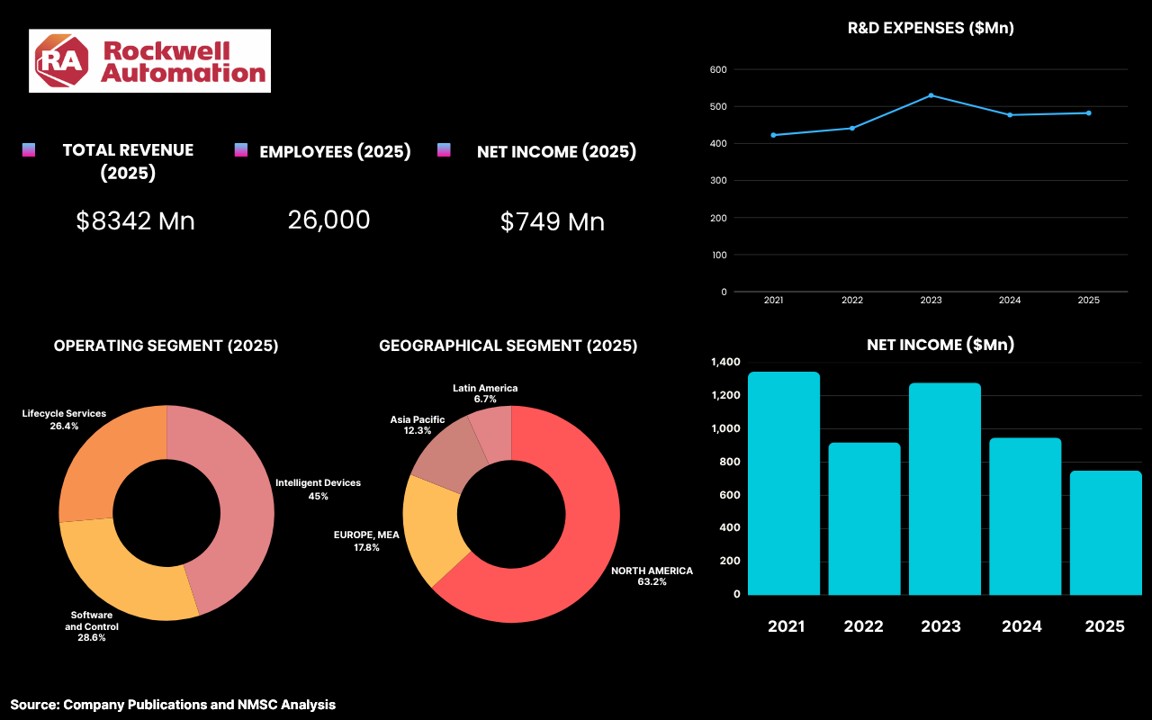
Rockwell Automation INC, headquartered in Milwaukee, Wisconsin, specializes in industrial automation and digital transformation, with capabilities spanning control systems, software, industrial networks, data, and analytics. Within the Robot Preventive Maintenance Market, Rockwell's relevance is strongest where robot assets connect to broader plant automation and digital infrastructure. Its position allows maintenance intelligence to extend beyond individual robot components into wider machine and production-system performance.
In 2026, Rockwell's FactoryTalk Analytics GuardianAI platform provided continuous condition-based monitoring, anomaly detection, and early warnings of asset failures using existing variable-frequency-drive data. Rockwell also positions FactoryTalk Remote Access as a way to provide secure remote machine support without requiring technicians to travel to the equipment. Together, these capabilities illustrate the market's shift toward software-led diagnostics and remote intervention, particularly where connected factory architectures already exist. Sources: Rockwell Automation, “FactoryTalk Analytics GuardianAI” and “Machine Lifecycle Optimization” official product resources.
Our evaluation places Rockwell in a differentiated position because its maintenance strategy can operate across the broader industrial automation environment rather than being limited to a single robot brand. This supports vendor-agnostic approaches in factories where robots, drives, controls, and software must work together. As manufacturers move toward subscription software, remote support, and analytics-based maintenance, Rockwell can compete around the plant-wide data layer that connects maintenance decisions with production operations.
Siemens AG
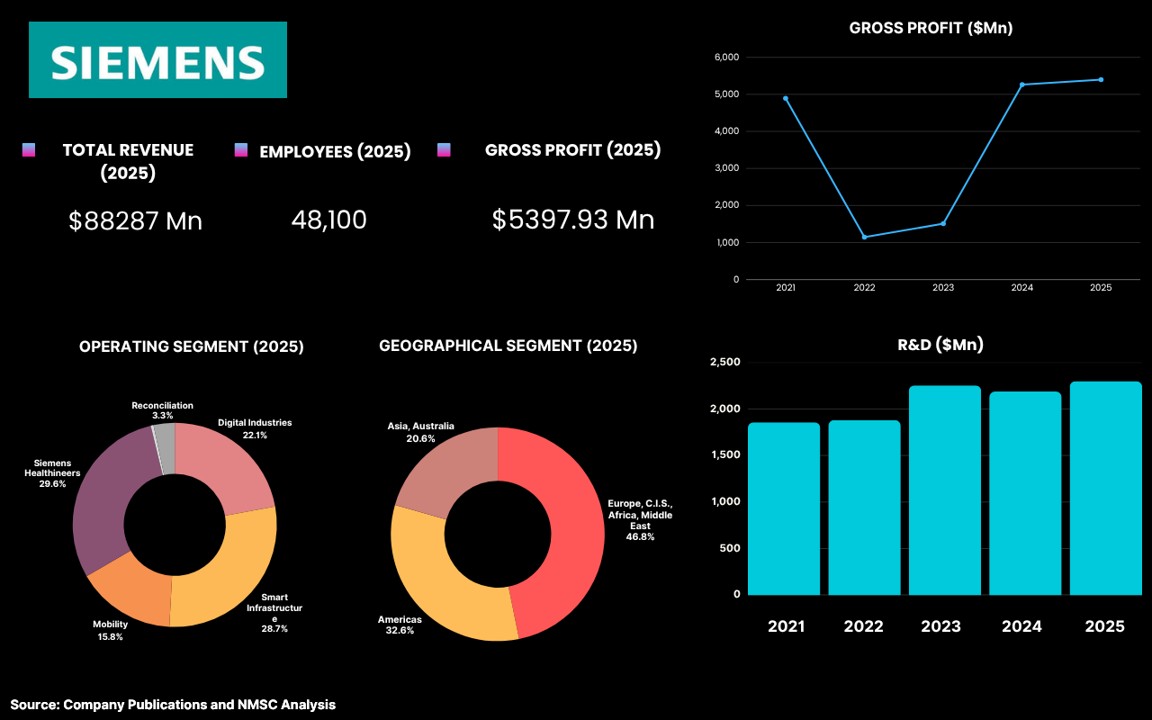
Siemens AG, headquartered in Berlin and Munich, Germany, is a global technology company with major businesses across industrial automation, digital industries, infrastructure, mobility, and electrification. Its role in the Robot Preventive Maintenance Market is linked to the convergence of industrial software, automation systems, connected assets, predictive analytics, and lifecycle services.
In November 2025, Siemens introduced Circular Repair Services for automation products, with Advanced and Premium repair levels designed to restore performance, apply preventive measures and software updates, replace components where appropriate, and extend equipment life. The development connects preventive maintenance with lifecycle optimization and circularity, creating a service model that can support manufacturers seeking better availability and more predictable lifecycle costs. Sources: Siemens official press release, “Transitioning to a circular economy with Circular Repair Services by Siemens,” November 20, 2025.
Based on our assessment, Siemens is positioned around a broader lifecycle-management model in which predictive maintenance, software, repair, and asset longevity increasingly interact. The company's competitive opportunity is not limited to robot-specific servicing; it extends into the industrial infrastructure around robotic production. This gives Siemens strategic relevance as customers seek integrated maintenance programs that combine digital diagnostics, repair, software updates, and longer asset lifecycles.
Market Summary
Our analysis indicates that the Robot Preventive Maintenance Market is being supported by the continued expansion of industrial robot installations and the increasing operational cost of unplanned downtime. Scheduled maintenance remains the largest maintenance strategy, while industrial robots account for the largest robot-type segment. Demand is concentrated across automotive, electronics and semiconductor manufacturing, metals and machinery, food and beverage, healthcare, and logistics and warehousing.
The competitive landscape is increasingly defined by the convergence of robot hardware, maintenance software, sensors, remote connectivity, and analytics. OEM service providers held the largest provider category at USD 2.60 billion in 2025, while software vendors represent the fastest-growing provider group at a 14.28% CAGR through 2035. This indicates that competitive differentiation is gradually moving from technician coverage and spare-parts availability toward data interoperability, predictive analytics, digital twins, and recurring software-enabled service models.
Looking ahead, the strongest growth opportunities are likely to emerge from predictive maintenance software, mobile robot fleet analytics, retrofit sensor kits, and service-network expansion across Asia-Pacific. The region held approximately 62% of global revenue in 2025 and is projected to grow at 11.78% through 2035. At the same time, high retrofit costs and skilled technician shortages remain structural constraints. Based on our evaluation, the long-term direction is clear: preventive maintenance is evolving into an integrated lifecycle intelligence layer that connects robot health, production continuity, and software-led decision-making.
About the Author
 Liza Phukan
— Liza Phukan is Research Associate at Next Move Strategy Consulting, where she has covered emerging industries and market research across sectors for 3.5 years. Her work includes analyzing industry developments, validating market data, and developing structured business content from research findings. She uses secondary research and data-validation practices to turn complex market information into clear decision-useful market analysis for business audiences and support report development and B2B.
Liza Phukan
— Liza Phukan is Research Associate at Next Move Strategy Consulting, where she has covered emerging industries and market research across sectors for 3.5 years. Her work includes analyzing industry developments, validating market data, and developing structured business content from research findings. She uses secondary research and data-validation practices to turn complex market information into clear decision-useful market analysis for business audiences and support report development and B2B.
About the Reviewer
 Supradip Baul
— Supradip Baul is an accomplished business consultant and strategist with over a decade of rich experience in market intelligence, strategy, technology, and business transformation. His work has included rigorous qualitative and quantitative analysis across multiple industries, helping clients shape investment decisions and long-term roadmaps. Earlier in his career, he was associated with Gartner, where he contributed to industry-leading reports and market share analyses. He has worked with leading global companies and holds an MBA with a dual specialization in Marketing and Finance.
Supradip Baul
— Supradip Baul is an accomplished business consultant and strategist with over a decade of rich experience in market intelligence, strategy, technology, and business transformation. His work has included rigorous qualitative and quantitative analysis across multiple industries, helping clients shape investment decisions and long-term roadmaps. Earlier in his career, he was associated with Gartner, where he contributed to industry-leading reports and market share analyses. He has worked with leading global companies and holds an MBA with a dual specialization in Marketing and Finance.
















Add Comment