Beyond the Loading Dock: The Equipment That Keeps Goods Moving
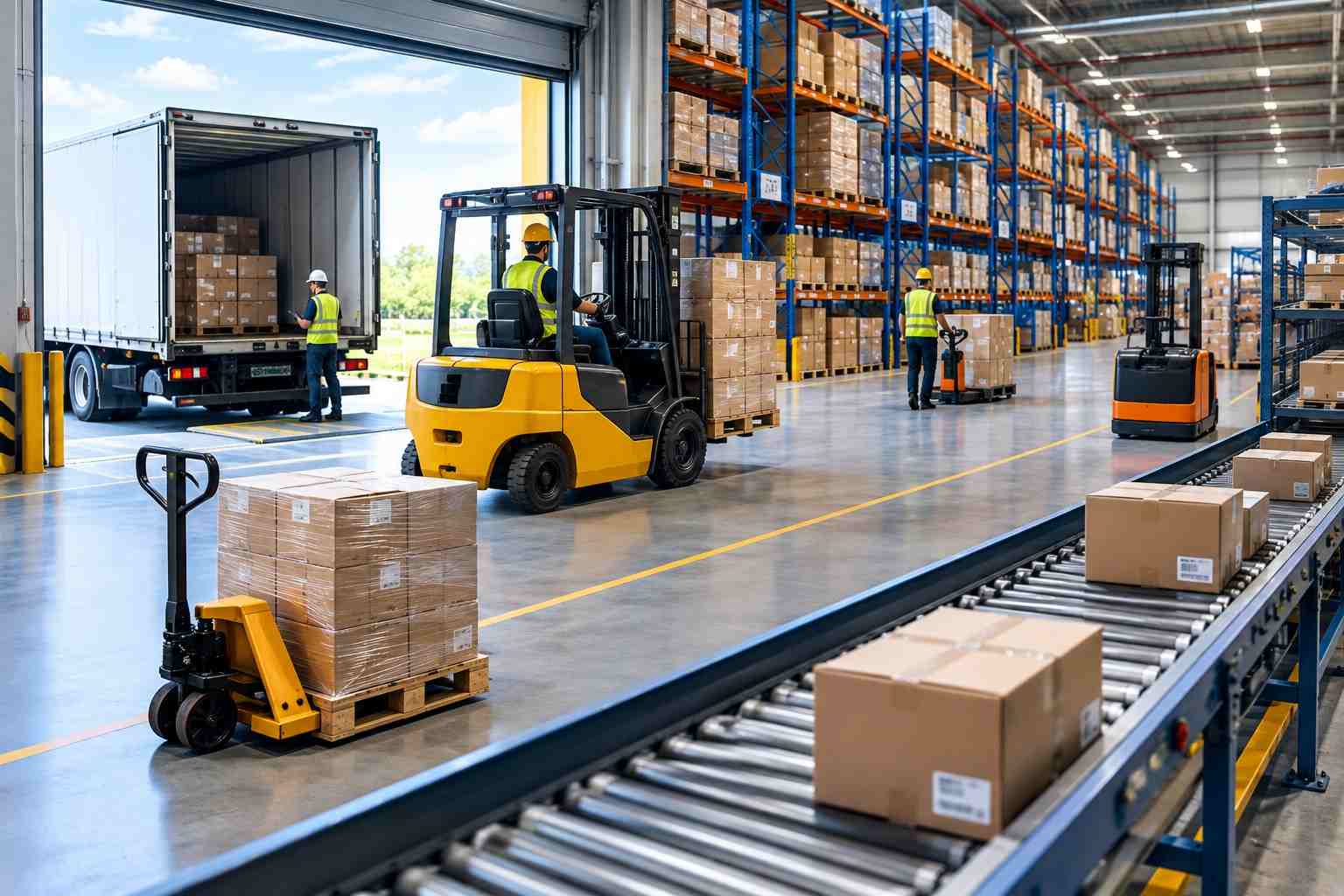
Transportation depends on more than vehicles traveling between destinations. Every shipment must be lifted, sorted, staged, and loaded before a truck can depart. Forklifts, pallet jacks, conveyors, and access platforms support different parts of that process, without attracting attention until something fails. A missed loading window can affect drivers, warehouse crews, and customers long after the problem is resolved. Understanding how equipment selection, maintenance, and safe operation connect to shipping performance helps businesses build a steadier flow of goods.
The Journey Starts Before the Truck Moves
Freight movement begins with receiving and preparation. Workers check incoming products, move pallets into storage, retrieve orders, and arrange them for loading. Each handoff depends on equipment suited to the task and enough space for people to work safely.
A forklift might transfer a heavy pallet to a staging lane, while a pallet jack handles shorter movements along the warehouse floor. Conveyors can reduce repetitive handling for suitable packages. Access platforms serve a different purpose: allowing trained workers to reach elevated equipment for maintenance and inspections.
When these roles are confused, delays and hazards become more likely. Efficient transportation starts with choosing the right tool for each movement, not expecting one machine to do everything.
Why Equipment Uptime Shapes Delivery Reliability
A disabled machine can disrupt an entire shift. If a forklift fails during loading, freight may accumulate at the dock, and drivers may miss appointments. If an access lift cannot be used for an urgent overhead repair, a facility may have to postpone work that keeps operations running.
Planned maintenance reduces avoidable failures. That means checking operating hours, recording unusual noises, and replacing worn components according to manufacturer guidance, not waiting for an emergency.
For teams maintaining JLG boom lifts or scissor lifts, identifying compatible replacement components is important for minimizing downtime and keeping equipment operational. You can click here to learn more about JLG lift parts, including batteries, filters, wheels, and electrical components used in equipment maintenance and repairs. Choosing the right replacement parts and ensuring compatibility with specific equipment models can help extend machinery life and prevent unnecessary operational disruptions.
Safety Is Part of a Dependable Schedule
Safety precautions are sometimes mistaken for obstacles to speed. In practice, one collision or dropped load can stop work far longer than a proper inspection. Equipment should operate within rated capacity, with clear pedestrian routes and trained operators.
The OSHA guide to forklift pre-operation inspections explains that industrial trucks should be examined before service and unsafe vehicles removed from use. Operators should look for leaks, damaged forks, tire problems, and defective controls, then report concerns promptly.
Good procedures protect both people and shipping schedules. They also make problems visible early enough for supervisors to arrange repairs or alternate equipment instead of improvising around a dangerous machine.
Match Machines to Actual Workloads
Equipment decisions should begin with load weights, aisle widths, turning space, rack heights, and expected daily use. A machine that performs well in an open yard may be unsuitable for a crowded warehouse. The power source also matters where charging time, ventilation, or operating conditions create constraints.
Think beyond purchase price. Service access, replacement parts, operator training, and future capacity all affect total ownership costs. Oversized equipment can waste space, while undersized equipment may slow operations or encourage unsafe shortcuts.
An assessment of normal workloads and peak periods helps managers select machinery that supports predictable loading rather than introducing new bottlenecks.
Make Preventive Maintenance a Routine
Maintenance works best when it follows a documented schedule. Daily operator checks identify immediate defects; qualified technicians can handle servicing, inspections, and repairs at appropriate intervals. Records reveal recurring failures and help teams plan equipment availability.
OSHA's vehicle maintenance guidance outlines important requirements for powered industrial trucks, including safe servicing practices and maintenance responsibilities. These rules concern forklifts and similar trucks; other equipment categories may have separate standards.
Parts planning matters as well. Keeping approved, frequently needed components available may shorten downtime, provided storage and purchasing decisions reflect real failure patterns. The goal is not to stock everything. It is to prevent predictable maintenance needs from becoming urgent disruptions.
Coordinate Equipment With Warehouse Timing
A warehouse can own reliable machines and still miss shipping deadlines if loading activity is poorly coordinated. Dock appointments, labor availability, staging areas, and carrier schedules must align with equipment capacity.
Consider what happens when several trucks arrive together. Even functioning forklifts cannot prevent congestion if pallets are scattered or aisles are blocked. Clear staging plans and communication between dispatch and warehouse teams help distribute workloads more evenly.
Monitor the reasons shipments leave late. Was a machine unavailable, or were goods not ready? The distinction helps managers fix the actual constraint rather than blaming equipment for every delay.
Use Technology Without Neglecting the Basics
Fleet monitoring tools can report operating hours, maintenance alerts, battery condition, and equipment utilization. Warehouse software may improve task sequencing and help supervisors position resources where demand is highest.
These systems are useful only when information leads to action. A dashboard cannot repair a hydraulic fault, and automated alerts cannot replace trained inspection. Employees still need clear procedures for reporting defects, isolating unsafe machines, and requesting service.
Start with a few measures that matter: unplanned downtime, repeat repairs, loading delays, and equipment availability during busy periods. Use the findings to improve decisions rather than collecting data nobody reviews.
Build Resilience Into Everyday Operations
Transportation reliability grows from ordinary decisions repeated consistently. Match equipment to work, inspect it properly, maintain it on schedule, and coordinate loading with carrier arrivals. Prepare alternatives for critical machinery so one failure does not halt the entire operation.
Ask operators where delays begin. Their observations often reveal awkward layouts, recurring faults, or unrealistic workloads that reports miss. Combine that experience with maintenance records and dispatch data to prioritize improvements.
Material handling equipment rarely receives credit when deliveries arrive on time. Yet its reliability underpins nearly every departure. Keeping machines safe, available, and appropriate for their tasks gives the wider transportation network a stronger foundation.
About the Author
 Sanyukta Deb
— Sanyukta Deb is Digital Marketing Team Lead at Next Move Strategy Consulting, where she has led content strategy and technical SEO for the firm's B2B market research publications for over 2 years. Her editorial process translates NextMSC's primary and secondary research — spanning technology, industrial, and consumer sectors — into commercial narratives, backed by search-intent, keyword, and competitive analysis. She brings 5 years of overall experience in digital marketing and content strategy.
About the Reviewer
 Debashree Dey
— Debashree Dey is Assistant Manager at Next Move Strategy Consulting, where she supports cross-vertical market content and communications across diverse industries for 6 years. Her professional background includes senior content writing, communications, and published manuscript authorship, with experience developing audience-focused business narratives and maintaining clear, consistent messaging. Her role supports research-led content development and editorial quality across NextMSC publications.
















Add Comment