U.S. Housing Reform Gives Modular Construction a New Growth Path | NextMSC
Introduction
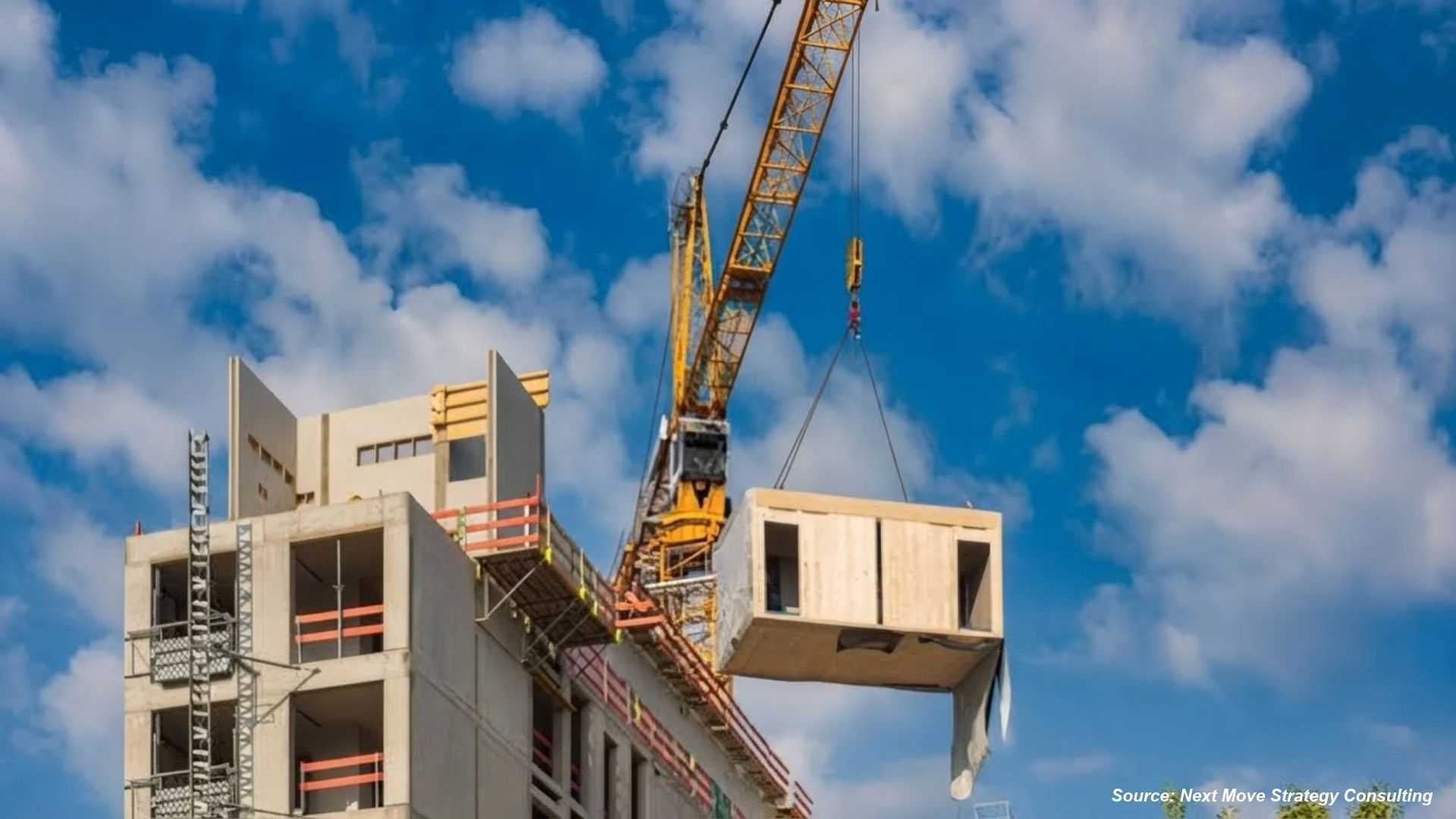
The global construction industry is undergoing a structural transformation — one driven not by incremental improvement, but by a fundamental rethinking of where and how buildings are made. Factory-built, off-site construction is no longer a niche workaround for constrained budgets or remote sites; it is rapidly becoming the preferred delivery method for developers, governments, and institutional investors confronting simultaneous pressures of labor scarcity, housing deficits, and tightening carbon regulations.
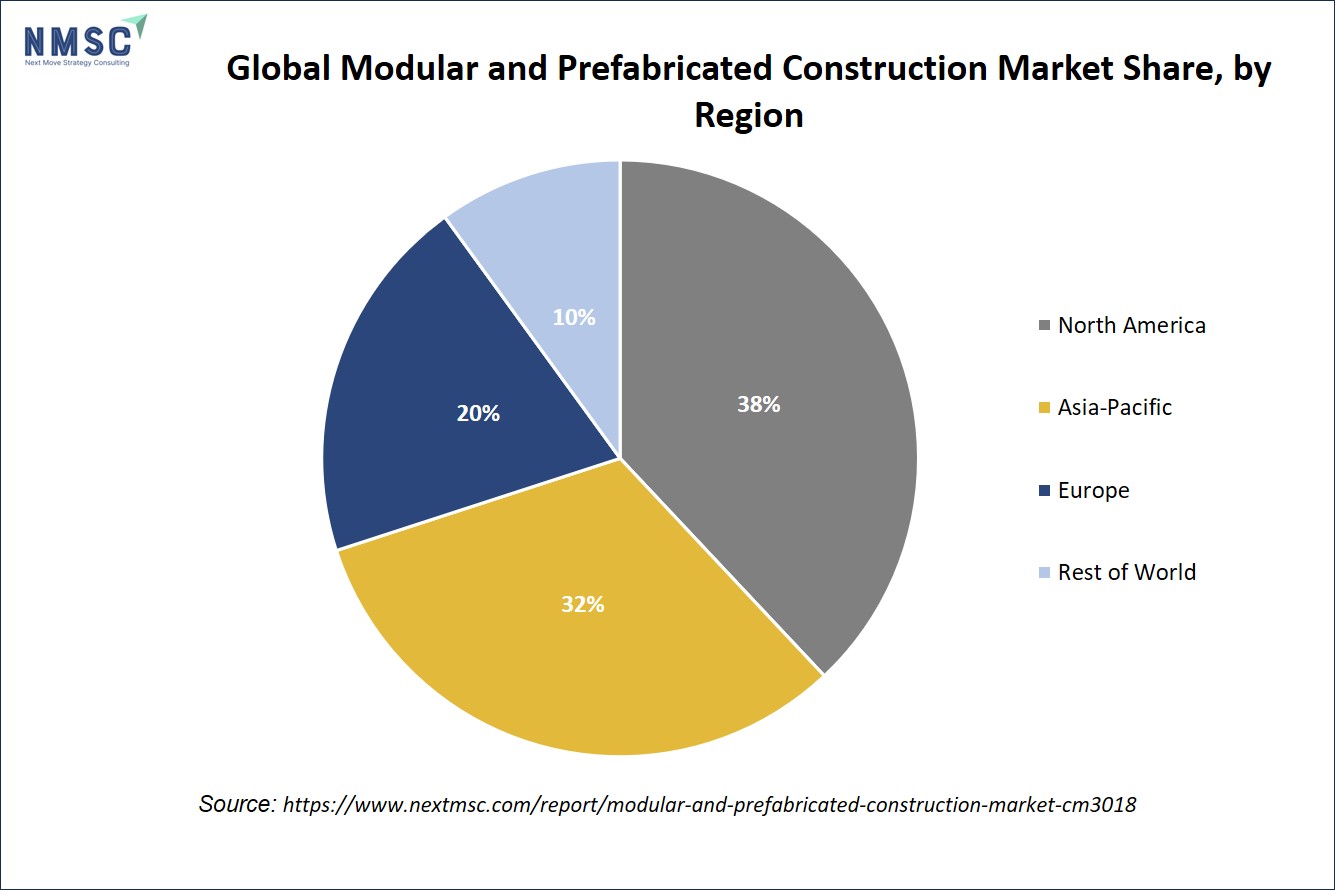
According to Next Move Strategy Consulting's Modular and Prefabricated Construction Market report, the global modular and prefabricated construction market was valued at USD 330.88 billion in 2024 and is projected to reach USD 472.21 billion by 2030, growing at a CAGR of 6.1% from 2025 to 2030. This trajectory is underpinned by accelerating urbanization, expanding industrial output, and a wave of legislative action — most notably the enactment of the 21st Century ROAD to Housing Act in the United States — that is systematically dismantling the financing and regulatory barriers that have historically constrained modular adoption.
For More Information: Download FREE Sample on Modular and Prefabricated Construction Market Report
The Legislative Inflection Point: How the 21st Century ROAD to Housing Act Reshapes the Modular Market
A Landmark Law Removes the Financing Ceiling on Modular Housing
On July 11, 2026, the United States enacted the 21st Century ROAD to Housing Act (P.L. 119-101) — the most significant federal housing legislation passed by Congress in three decades. The bipartisan legislation, which combines the Senate's ROAD to Housing Act (S. 2651) and the House's Housing for the 21st Century Act (H.R. 6644), contains 60 individual provisions spanning 12 titles — several of which directly expand the addressable market for modular and prefabricated construction.
Three provisions carry particular weight for the modular and prefabricated construction market:
Section 301 (Housing Supply Expansion Act) changes the federal definition of "manufactured housing" to include modular and prefabricated units not built on a permanent chassis, and requires the U.S. Department of Housing and Urban Development (HUD) to establish federal construction and safety standards for these units. Section 301 primarily modifies the federal manufactured-housing definition and related HUD standards. Section 302, separately, directs HUD to review barriers to FHA construction financing for modular homes and consider an alternative draw schedule.
Section 302 (Modular Housing Production Act) requires FHA to evaluate barriers to FHA lending for modular housing and allows HUD to modify the financing draw schedule to encourage modular housing construction. The draw schedule reform is particularly significant: under existing FHA construction loan structures, modular developers face cash-flow mismatches because factory production requires large upfront capital commitments before any on-site work begins — a structural mismatch that has historically made FHA financing impractical for modular projects.
Section 210 (Revitalizing Empty Structures into Desirable Environments Act) establishes a USD 100 million competitive grant program for eligible entities to convert vacant and abandoned buildings into attainable housing, with priority given to communities experiencing economic distress. Modular construction's speed advantage — factory production can reduce project timelines by 20% to 50%, according to the Modular Building Institute's 2026 U.S. Permanent Modular Construction Industry Report — positions it as the delivery method of choice for grant recipients under time and cost pressure.
The legislative momentum extends beyond the federal level. As of May 2026, approximately 40 U.S. jurisdictions have adopted preapproved building plan programs — a policy tool that directly reduces preconstruction approval timelines and lowers soft costs for modular developers by 1% to 2% per project, according to a May 2026 report by The Pew Charitable Trusts. In Seattle, the adoption of preapproved ADU plans reduced average permitting times from 160 days to 54 days — a 66% reduction that directly compresses the pre-revenue period for modular developers.
NMSC Strategic Perspective: Why Legislative Reform Is the Market's Most Durable Growth Catalyst
NextMSC primary research and analysis identifies the 21st Century ROAD to Housing Act as the single most structurally significant near-term catalyst for the modular and prefabricated construction market — not because it mandates modular adoption, but because it removes the financing architecture that has historically made modular construction commercially unviable for the largest segment of the U.S. housing market.
Prior to this legislation, modular developers seeking FHA-backed construction financing faced draw schedules calibrated for site-built construction, where costs are incurred progressively as work advances on-site. Factory-built construction inverts this cost curve: the majority of expenditure occurs during off-site manufacturing, before any on-site assembly begins. The result was a structural financing gap that forced modular developers to rely on more expensive private capital or forgo FHA programs entirely — effectively pricing modular out of the affordable housing segment where demand is most acute.
The Act's Section 302 directly addresses this mechanism. By directing HUD to develop an alternative draw schedule for modular and manufactured home developers, the legislation aligns federal financing instruments with the actual cost structure of factory-built construction. When implemented, this change will make FHA-backed modular projects financially viable for a developer cohort that currently cannot access this capital — expanding the addressable market for modular construction into the affordable and workforce housing segments at scale.
Section Summary
The enactment of the 21st Century ROAD to Housing Act in July 2026 represents a structural shift in the regulatory and financing environment for modular and prefabricated construction in the United States. By redefining manufactured housing to include modular units, reforming FHA draw schedules, and establishing a USD 100 million grant program for attainable housing, the legislation directly expands the addressable market for factory-built construction.
Key Takeaways:
-
The 21st Century ROAD to Housing Act (P.L. 119-101), enacted July 11, 2026, is the most significant U.S. federal housing legislation in three decades, with multiple provisions directly targeting modular construction barriers.
-
Section 302 mandates FHA review of financing barriers for modular housing and enables alternative draw schedules — resolving the structural cash-flow mismatch that has historically excluded modular developers from FHA programs.
-
Section 301 expands the federal definition of manufactured housing to include modular and prefabricated units, opening conventional mortgage pathways to a previously excluded category of factory-built homes.
-
Approximately 40 U.S. jurisdictions now operate preapproved building plan programs, with documented permitting time reductions of up to 66% — directly compressing the pre-revenue period for modular developers.
Industry Impact Analysis
Housing Deficits, Urban Growth, and the Structural Case for Off-Site Construction
The demand-side case for modular and prefabricated construction is anchored in two converging demographic realities. First, the World Bank reports that 56% of the world's population currently lives in cities, and by 2050, nearly 7 in 10 people will reside in urban areas — a shift that will require the construction of hundreds of millions of new housing units within compressed timeframes. Second, the U.S. faces a structural housing deficit of approximately 4.03 million units, according to Realtor.com's analysis of housing supply data — a gap that conventional site-built construction, constrained by skilled labor shortages and extended permitting timelines, cannot close at the required pace.
The Modular Building Institute's 2026 U.S. Permanent Modular Construction Industry Report documents that the U.S. permanent modular market reached USD 20.5 billion in 2025, representing approximately 5.1% of construction activity in key segments, and is projected to grow at a 6.5% CAGR through 2030. Multifamily residential remains the industry's largest market, driven by housing affordability challenges, urban migration, and skilled labor shortages.
The Canadian market mirrors this trajectory. The Modular Building Institute's 2026 Canadian Permanent Modular Construction Industry Report shows that modular construction now represents approximately 5.5% of the overall Canadian construction market and is projected to outpace traditional construction growth by a full percentage point. The multifamily residential segment leads with a projected growth rate of 7.3%, driven by housing affordability pressures and urban migration in major metropolitan areas. The Build Canada Homes initiative and efforts to harmonize codes through CSA frameworks are identified as major policy tailwinds.
The Productivity and Carbon Dividend of Factory-Built Construction
The World Economic Forum, in an analysis published by Yoon Hong Huh, Chief Executive Officer of GS E&C Corp, and Yeongmin You, Senior Vice President of GS E&C Corp, documents that the construction industry is responsible for creating roughly one-third of the world's total waste and producing nearly 40% of the world's total carbon dioxide emissions, citing European Commission data. Modular construction directly addresses both dimensions.
According to McKinsey & Company's analysis cited in the WEF article, volumetric modular construction can shorten a project timeline by up to 50% by significantly decreasing the amount of work required on-site, and offers potential for up to 20% total cost savings through productivity improvements. A case study of the Camp Hill project — a 550-unit steel modular residential development in Birmingham, United Kingdom, developed by Elements Europe, a subsidiary of GS E&C — demonstrated approximately 3,700 fewer deliveries (56% fewer vehicle movements overall) compared to a traditional construction project of equivalent scale, and a 35% reduction in embodied carbon throughout the project life cycle.
These efficiency gains are being replicated at the project level in the United States. At the National Housing Supply Summit held in Washington, D.C., on March 18, 2026, Steve Glenn, founder of Plant Prefab, reported that his company's hybrid panelized-and-modular approach — which digitally models all architectural, structural, mechanical, electrical, and plumbing systems — resulted in only three change orders not initiated by a client during the past year. Lance Manlove, director of innovation at Schell Brothers, reported that incorporating manufactured elements into the firm's designs reduced the average build time for a new home from 110 days to 85 days. Jenna Louie, head of strategy and policy at Villa Homes, estimated that her organization's factory-built approach achieves a 25% cost savings compared with stick-built homes.
Asia-Pacific: Infrastructure Investment Amplifies Modular Demand
In Asia-Pacific, the modular and prefabricated construction market is supported by a distinct growth mechanism: large-scale infrastructure investment that creates sustained demand for efficient, scalable building solutions. According to Morgan Stanley's 2025 analysis, India's infrastructure investment is projected to increase steadily from 5.3% of GDP in 2024 to 6.5% of GDP by 2029. At this scale of capital deployment, off-site and pre-assembled construction methods are not merely a cost-efficiency option — they are operationally necessary to meet project delivery timelines across geographically dispersed infrastructure programs.
Key regional players including Sekisui House, Ltd., Larsen and Toubro Limited, and Elta Fans Limited are actively expanding their modular and prefabricated offerings. In August 2023, Elta Fans launched a prefabricated solutions service specifically designed to address demand for offsite manufacturing, enhancing efficiency and reducing project timelines with customized, high-quality outcomes.
Section Summary
The modular and prefabricated construction market's growth is driven by a convergence of structural housing deficits, urbanization-driven demand, documented productivity advantages over site-built methods, and accelerating infrastructure investment in high-growth economies.
Key Takeaways:
-
The U.S. faces a structural housing deficit of approximately 4.03 million units — a gap that modular construction's 20%-50% timeline compression directly addresses.
-
The U.S. permanent modular market reached USD 20.5 billion in 2025, representing 5.1% of construction activity in key segments, with a projected 6.5% CAGR through 2030, per the Modular Building Institute's 2026 report.
-
Factory-built construction can reduce embodied carbon by up to 35% and vehicle movements by 56% on large residential projects, per GS E&C's Camp Hill case study published by the World Economic Forum.
-
India's infrastructure investment is projected to rise from 5.3% to 6.5% of GDP by 2029 (Morgan Stanley, 2025), sustaining demand for scalable off-site construction solutions across Asia-Pacific.
Key Data & Statistics
Documented Modular Construction Performance Metrics — Selected Projects and Programs
|
Project / Program |
Location |
Key Metric |
Outcome |
|
Camp Hill Residential Development |
Birmingham, UK |
Embodied carbon reduction |
35% reduction (915 kgCO₂e/m²) |
|
Camp Hill Residential Development |
Birmingham, UK |
Vehicle movements reduction |
56% fewer (3,700 fewer deliveries) |
|
Schell Brothers (modular integration) |
Delaware, USA |
Average home build time |
Reduced from 110 days to 85 days |
|
Villa Homes (factory-built) |
California, USA |
Cost savings vs. stick-built |
25% cost reduction |
|
CSH LA Modular Portfolio (12 projects) |
Los Angeles, USA |
Construction timeline |
~16 months vs. 18–24 months typical |
|
CSH LA Modular Portfolio |
Los Angeles, USA |
Predevelopment phase |
~22 months vs. 36+ months typical |
|
Seattle ADU Preapproved Plans |
Seattle, USA |
Permitting timeline |
Reduced from 160 days to 54 days |
|
U.S. Permanent Modular Market |
United States |
Market size (2025) |
USD 20.5 billion (5.1% of key segments) |
|
Canadian Modular Market |
Canada |
Market share of construction |
5.5% of overall Canadian construction |
Future Outlook & Forecast
From Niche Delivery Method to Mainstream Infrastructure Solution
NextMSC primary research and analysis projects the global modular and prefabricated construction market to reach USD 472.21 billion by 2030, growing at a CAGR of 6.1% from 2025 to 2030. This trajectory reflects a market that is transitioning from a supplementary construction method to a primary delivery mechanism across residential, commercial, healthcare, and education segments.
Several structural forces will shape this transition over the forecast period.
Renewable Energy Integration as a Design Standard: The incorporation of solar panels and energy-efficient HVAC systems into modular designs is emerging as a significant opportunity, attracting eco-conscious buyers and enabling developers to meet increasingly stringent ESG requirements. As regulatory frameworks in Europe, North America, and Asia-Pacific tighten carbon performance standards for new buildings, modular construction's inherent advantage in controlled factory environments — where material waste, energy consumption, and quality control are more precisely managed than on open construction sites — will become a competitive differentiator rather than a marketing claim.
The "Space-as-a-Service" Shift in Relocatable Buildings: The Modular Building Institute's 2026 North American Relocatable Buildings Report identifies a structural shift in the relocatable buildings segment from a traditional rental business model toward a broader "space-as-a-service" model. Education, healthcare, disaster response, and workforce housing are becoming increasingly important growth areas beyond the traditional construction and education anchor markets. This model shift expands recurring revenue streams for modular manufacturers and reduces the cyclicality that has historically contributed to manufacturer instability.
Data Centers as an Emerging High-Value Segment: The Modular Building Institute's 2026 U.S. report identifies office and data centers as a rapidly emerging opportunity for modular solutions that prioritize speed, quality, and predictable delivery. The hyperscale data center construction cycle — where speed-to-capacity directly translates to revenue — aligns precisely with modular construction's core value proposition.
Industrialization as a Systemic Growth Driver: According to the United Nations Industrial Development Organization (UNIDO), manufacturing and mining together with other industrial sectors achieved 2.3% growth worldwide in 2023. This industrial expansion generates sustained demand for off-site construction methods that can deliver factory facilities, logistics infrastructure, and workforce housing at the pace industrial project timelines require.
Circularity as a Long-Term Value Driver: The World Economic Forum analysis by GS E&C Corp identifies the ability to dismantle and reuse modules — rather than demolish permanent structures — as a commercially viable future opportunity as modular construction scales. While circular construction methodologies remain largely at the conceptual stage, the recyclability of steel and other modular building materials positions the sector favorably as embodied carbon regulations tighten globally.
Section Summary
The modular and prefabricated construction market's forecast growth to USD 472.21 billion by 2030 is supported by converging forces: legislative reform expanding financing access, documented productivity advantages over site-built methods, emerging high-value segments in data centers and healthcare, and the long-term commercial viability of circular construction practices.
Key Takeaways:
-
NMSC projects the global modular and prefabricated construction market to reach USD 472.21 billion by 2030 at a 6.1% CAGR, driven by urbanization, industrialization, and technological advancement.
-
The relocatable buildings segment is transitioning from a rental model to a "space-as-a-service" model, expanding recurring revenue streams and reducing manufacturer cyclicality.
-
Data centers and office facilities represent a rapidly emerging high-value segment for modular solutions, where speed-to-capacity directly translates to revenue for operators.
-
Renewable energy integration into modular designs — solar panels, energy-efficient HVAC systems — is transitioning from a differentiator to a baseline expectation as ESG regulations tighten across major markets.
Next Steps for Stakeholders
For C-Level Executives in Construction and Real Estate Development:
The enactment of the 21st Century ROAD to Housing Act creates a defined window of competitive advantage for developers who move early to align their modular project pipelines with the new FHA draw schedule framework. Executives should engage directly with HUD's rulemaking process — which must be initiated within 120 days of the Secretary's report under Section 302 — to ensure that alternative draw schedules reflect the actual cost structure of factory-built construction. Waiting for final rules before repositioning project pipelines will cede first-mover advantage to competitors who have already structured their financing relationships accordingly.
For Institutional Investors and Private Equity:
The modular and prefabricated construction market's 6.1% CAGR through 2030, combined with the structural housing deficit in North America and the policy tailwinds from the ROAD to Housing Act, creates a compelling risk-adjusted investment thesis. However, the Corporation for Supportive Housing's five-year Los Angeles portfolio analysis — which documented manufacturer instability as a systemic risk, with one major California manufacturer undergoing structural transition mid-project — underscores the importance of due diligence on manufacturer financial health, production capacity, and pipeline stability before committing capital. Investors should prioritize manufacturers with diversified order books and demonstrated multi-project delivery track records over those dependent on single large contracts.
For Modular Manufacturers and Technology Providers:
The Modular Building Institute's 2026 reports identify financing gaps, inconsistent project pipelines, and design coordination issues as the primary barriers to wider adoption — not product quality or cost competitiveness. Manufacturers should invest in integrated digital modeling capabilities (architectural, structural, MEP systems) that reduce change orders and improve coordination with on-site teams. Plant Prefab's documented record of only three non-client-initiated change orders in a full year of production demonstrates the commercial value of this investment.
For Government and Policy Stakeholders:
The Pew Charitable Trusts' May 2026 analysis demonstrates that preapproved building plan programs — when paired with complementary zoning reforms — can reduce permitting timelines by up to 80% and lower developer costs by USD 5,000 to USD 10,000 per unit. Jurisdictions that have not yet adopted preapproved plan programs should prioritize their implementation as a low-cost, high-impact complement to the federal ROAD to Housing Act framework — particularly for modular infill housing on vacant urban lots where site accessibility and permitting complexity have historically constrained factory-built adoption.
Conclusion
The modular and prefabricated construction market is at a structural inflection point. The combination of the 21st Century ROAD to Housing Act's financing reforms, documented productivity advantages that compress timelines by up to 50% and reduce embodied carbon by up to 35%, and a global urbanization trajectory that will require the construction of hundreds of millions of new housing units by 2050 creates a market environment where factory-built construction is no longer competing on the margins of the industry — it is becoming the industry's primary response to its most intractable challenges.
NextMSC primary research and analysis projects the global modular and prefabricated construction market to grow from USD 330.88 billion in 2024 to USD 472.21 billion by 2030 at a 6.1% CAGR. The market's trajectory will be shaped by how effectively the industry resolves its remaining structural constraints — manufacturer financial stability, financing draw schedule alignment, and permitting consistency — rather than by any shortage of underlying demand. Stakeholders who address these operational barriers systematically, rather than project by project, will be best positioned to capture the market's growth over the forecast period.
About the Author
 Sanyukta Deb
— Sanyukta Deb is Digital Marketing Team Lead at Next Move Strategy Consulting, where she has led content strategy and technical SEO for the firm's B2B market research publications for over 2 years. Her editorial process translates NextMSC's primary and secondary research — spanning technology, industrial, and consumer sectors — into commercial narratives, backed by search-intent, keyword, and competitive analysis. She brings 5 years of overall experience in digital marketing and content strategy.
Sanyukta Deb
— Sanyukta Deb is Digital Marketing Team Lead at Next Move Strategy Consulting, where she has led content strategy and technical SEO for the firm's B2B market research publications for over 2 years. Her editorial process translates NextMSC's primary and secondary research — spanning technology, industrial, and consumer sectors — into commercial narratives, backed by search-intent, keyword, and competitive analysis. She brings 5 years of overall experience in digital marketing and content strategy.
About the Reviewer
 Debashree Dey
— Debashree Dey is Assistant Manager at Next Move Strategy Consulting, where she supports cross-vertical market content and communications across diverse industries for 6 years. Her professional background includes senior content writing, communications, and published manuscript authorship, with experience developing audience-focused business narratives and maintaining clear, consistent messaging. Her role supports research-led content development and editorial quality across NextMSC publications.
Debashree Dey
— Debashree Dey is Assistant Manager at Next Move Strategy Consulting, where she supports cross-vertical market content and communications across diverse industries for 6 years. Her professional background includes senior content writing, communications, and published manuscript authorship, with experience developing audience-focused business narratives and maintaining clear, consistent messaging. Her role supports research-led content development and editorial quality across NextMSC publications.

















Add Comment