Biodegradable Sensors Market Statistics, Trends & Forecasts for 2026
Introduction
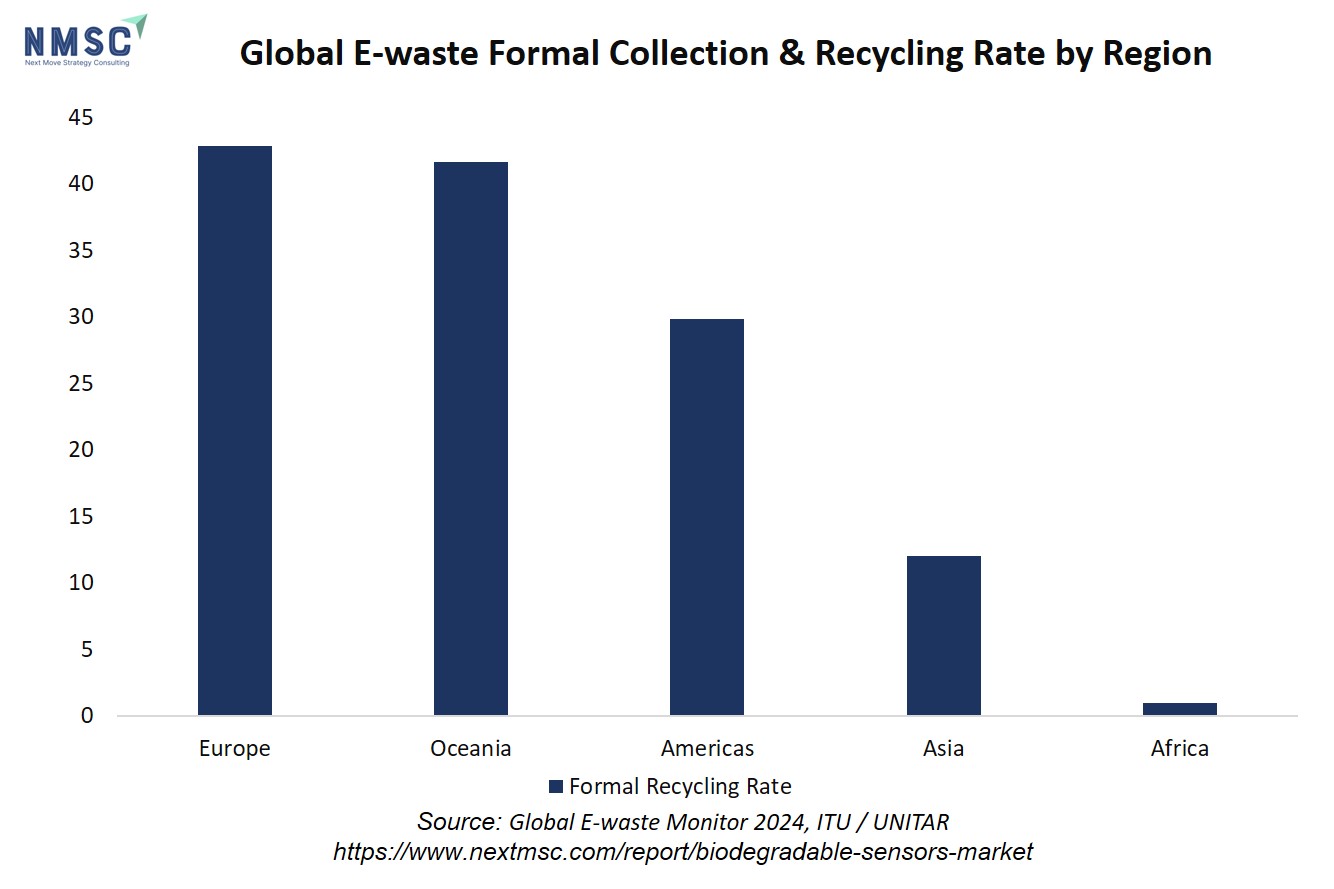
The global electronics industry is confronting an existential sustainability challenge. According to the European Environment Bureau, 24 out of 27 EU member states currently fail to meet the bloc's 65% collection target for waste electrical and electronic equipment (WEEE), underscoring the scale of the e-waste crisis that conventional sensor technologies contribute to. Against this backdrop, Biodegradable Sensors Market have emerged as one of the most consequential innovations in sustainable electronics — devices engineered to perform their sensing function and then decompose harmlessly into the environment, leaving no persistent residue.
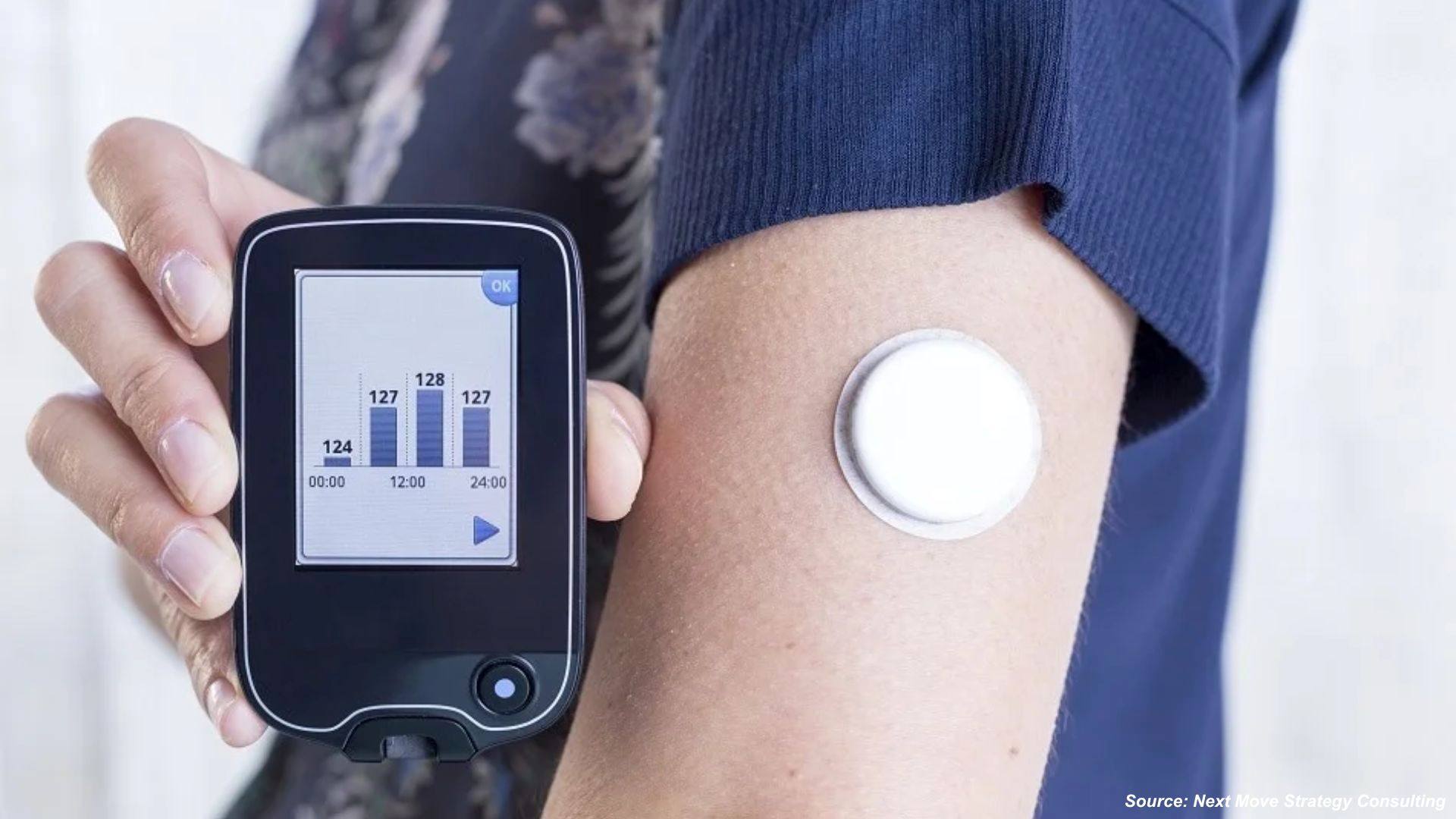
From precision agriculture fields in Brazil to post-surgical implants in clinical settings, biodegradable sensors are transitioning from laboratory curiosity to commercially viable technology. Their applications span healthcare monitoring, soil nutrient analysis, pesticide detection, environmental surveillance, and food logistics — all while addressing the mounting regulatory and environmental pressure to eliminate single-use electronic waste. This article examines the forces driving this market, the breakthrough developments reshaping it in 2026, and the strategic implications for investors and industry leaders.
For More Information: Download FREE Sample on Biodegradable Sensors Market Report
Breakthrough Innovations Driving the Biodegradable Sensors Market in 2026
Plant-Wearable Sensors: A Landmark Agricultural Breakthrough
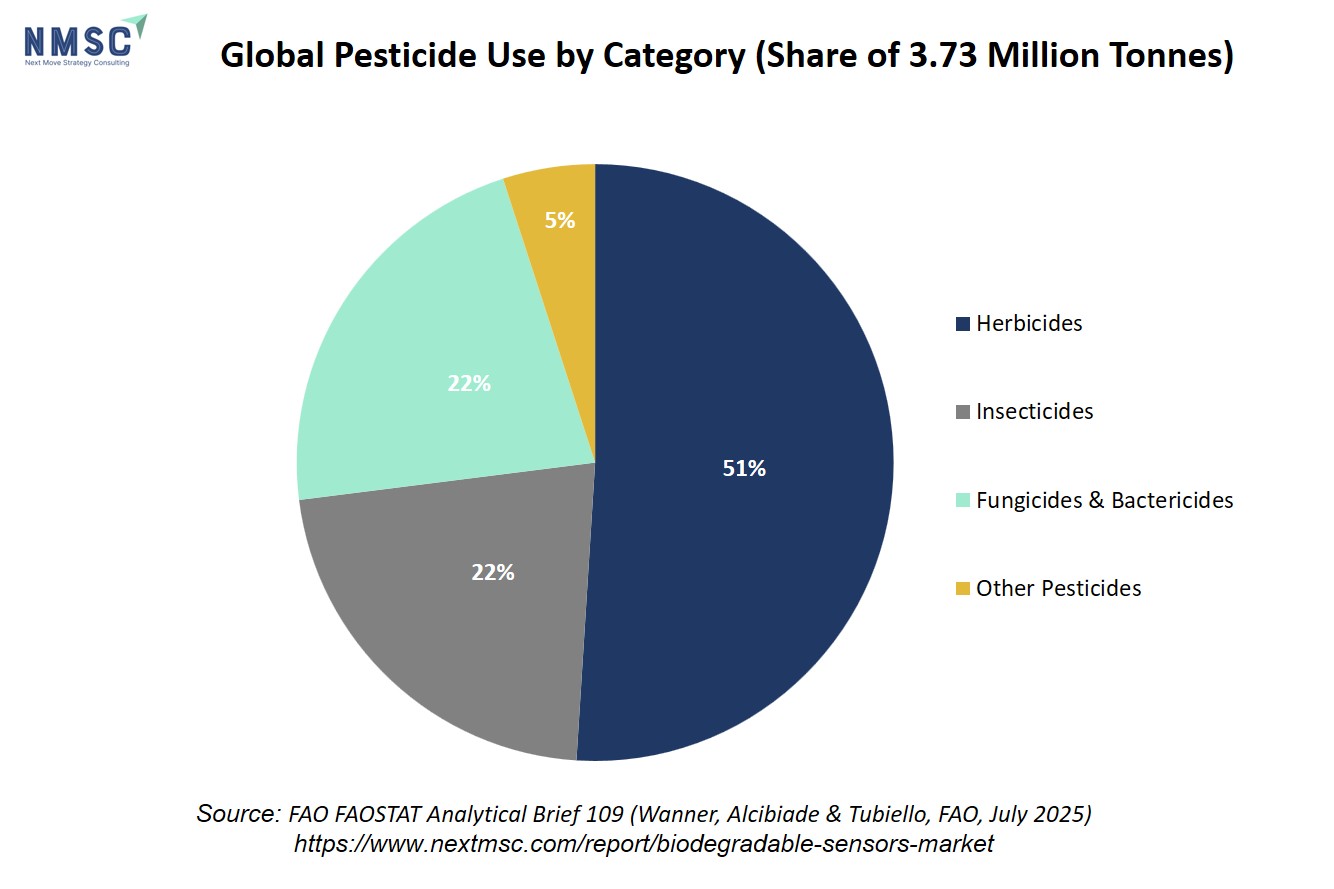
In May 2026, researchers at the São Carlos Institute of Physics at the University of São Paulo (IFSC-USP), Brazil, published a landmark study in Biosensors and Bioelectronics: X demonstrating biodegradable wearable sensors that can be attached directly to plant surfaces to detect three classes of pesticides — diquat, carbendazim, and diphenylamine — in just three minutes and twenty-eight seconds. The sensors are screen-printed onto transparent cellulose acetate bioplastics using carbon ink, with each unit costing approximately USD 0.077.
This development is globally significant for several reasons. First, it demonstrates that biodegradable sensors can match the analytical performance of conventional petrochemical-based devices. Second, the platform integrates with a wireless portable potentiostat, enabling real-time analysis displayed on a smartphone via Bluetooth — a critical feature for scalable precision agriculture deployment. Third, the cellulose acetate substrate is derived from agricultural waste streams, closing the circular economy loop. The World Economic Forum had already identified wearable sensor engineering as one of the top ten emerging technologies of 2023 for its potential to improve plant health and agricultural productivity.
Wireless Biodegradable Sensors for Ecological Monitoring
A comprehensive review published in Advanced Science (collected January 2026) by researchers from Delft University of Technology, Imperial College London, and CNRS France established that wireless biodegradable sensors represent a transformative leap in ecological and environmental sensing. These devices can collect data across agriculture, climate research, forestry, water management, and biodiversity protection, and undergo controlled degradation after use — minimizing electronic waste in sensitive ecosystems where device retrieval is impractical.
Life cycle assessment (LCA) studies cited in the review demonstrate that printed biodegradable humidity tags reduce cradle-to-gate global warming potential by approximately 39% — from 42 to 25.7 g CO₂e per tag — compared to standard devices, while nondegradable sensors generate approximately 613 g CO₂e per unit, over 20 times higher.
Biodegradable Printed Electronics: Scaling Sustainable Manufacturing
A 2026 review in Advanced Nanocomposites provided a comprehensive synthesis of biodegradable printed electronics, covering inkjet printing, screen printing, gravure printing, direct writing, and 3D printing as fabrication methods for sustainable sensors. Applications span healthcare, environmental monitoring, human-machine interfaces, and soft robotics — signaling that the technology has matured beyond single-domain use cases.
Healthcare: Bioresorbable Implantable Sensors
A review published in the Asia-Pacific Journal of Chemical Engineering (August 2025) highlighted the escalating clinical demand for bioresorbable implantable sensors that dissolve harmlessly in biofluids at programmable rates, eliminating the need for secondary surgical extraction and reducing infection risk. Key sensor designs reviewed include pressure, strain, electrochemical, optical, and temperature sensing, with in vivo applications in intracranial, cardiovascular, and general health monitoring.
NMSC Strategic Perspective: Convergence of Sustainability and Performance
From Next Move Strategy Consulting's analytical standpoint, the biodegradable sensors market is at an inflection point driven by three converging forces: regulatory pressure from expanding e-waste legislation, material science breakthroughs enabling performance parity with conventional sensors, and the growing institutional demand for sustainable supply chains. The emergence of cellulose-based substrates, biodegradable metals (magnesium, zinc, iron), and biopolymers such as PLA and PHA as functional sensor materials has resolved the historical trade-off between biodegradability and sensing accuracy. The integration of wireless communication protocols — including Bluetooth, LoRa, and chipless RFID backscattering — into fully or partially biodegradable platforms is enabling autonomous, battery-free operation in remote environments, a capability that was commercially unavailable just three years ago.
Section Summary: The biodegradable sensors market is being propelled by a wave of globally impactful innovations in 2025–2026, spanning plant-wearable pesticide detection, wireless ecological monitoring, printed electronics, and bioresorbable medical implants.
Key Takeaways:
-
Brazilian researchers demonstrated plant-attached biodegradable sensors detecting pesticides in under 4 minutes at a unit cost of USD 0.077
-
LCA studies confirm biodegradable sensors generate up to 96% lower CO₂e per unit than nondegradable alternatives
-
Bioresorbable implantable sensors are eliminating the need for secondary surgical removal in clinical settings
-
Wireless, chipless biodegradable sensor platforms are enabling autonomous ecological monitoring in remote ecosystems
Industry Impact Analysis
Regulatory Tailwinds: E-Waste Legislation Accelerating Adoption
The regulatory environment for electronic waste is tightening globally, creating a structural demand driver for biodegradable sensor technologies. The EU's Waste Electrical and Electronic Equipment (WEEE) Directive mandates a 65% collection rate, yet 24 of 27 member states currently fail to meet this target. EU Regulation 2025/40 on packaging and packaging waste enters into force on August 12, 2026, further tightening material accountability requirements across the electronics value chain. Extended Producer Responsibility (EPR) laws are expanding across multiple jurisdictions in 2025, requiring manufacturers to take financial responsibility for end-of-life management of their electronic products.
These regulatory developments create a compelling commercial case for biodegradable sensors in single-use and short-deployment applications — particularly in agriculture, food logistics, and environmental monitoring — where the cost and complexity of device retrieval and recycling are prohibitive.
Healthcare Sector: Eliminating Surgical Risk Through Transient Electronics
The healthcare sector represents one of the highest-value application domains for biodegradable sensors. Conventional implantable sensors present significant clinical risks: they can serve as a nidus for infection, trigger immune-mediated inflammatory responses, and require a second surgical procedure for removal — adding cost, patient distress, and injury risk. Bioresorbable sensors dissolve at programmable rates into biologically benign end products, fundamentally eliminating these risks. Applications in intracranial pressure monitoring, cardiovascular sensing, and wound management are advancing rapidly, with materials including polylactic acid (PLA), polyhydroxyalkanoates (PHA), silk fibroin, and biodegradable metals such as magnesium and zinc demonstrating clinical viability.
Agriculture: Precision Farming at Scale
The agricultural sector is experiencing a paradigm shift toward precision farming, and biodegradable sensors are central to this transformation. Sensor networks of 50–200 nodes per hectare are deployed for 2–4 month crop cycles, making retrieval of conventional sensors economically and logistically impractical. Biodegradable soil sensors measuring moisture, pH, nutrient levels, and temperature can be deployed at scale and left to decompose naturally, reducing both operational costs and environmental footprint. In Asia Pacific, where agriculture contributed 16.47% of China's GDP in 2020 with total added value of USD 2,553 billion, the demand for cost-effective, scalable agricultural monitoring solutions is particularly acute.
Environmental Monitoring: Biodiversity and Climate Applications
Biodegradable sensors are enabling a new generation of environmental monitoring deployments in ecologically sensitive areas where conventional electronics cannot be retrieved without causing habitat disruption. Applications include soil moisture and pH monitoring in forests, water quality tracking in wetlands, landslide detection, and biodiversity assessment. The ability to deploy sensors via aerial drones and allow them to decompose in situ is particularly valuable for remote or protected ecosystems.
Section Summary: Biodegradable sensors are generating measurable impact across healthcare, agriculture, and environmental monitoring, driven by regulatory mandates, clinical demand for transient implants, and the economics of precision farming at scale.
Key Takeaways:
-
EU WEEE non-compliance by 24 of 27 member states creates structural regulatory pressure favoring biodegradable alternatives
-
Bioresorbable implantable sensors eliminate secondary surgical procedures, reducing clinical risk and healthcare costs
-
Agricultural sensor networks of 50–200 nodes per hectare make biodegradable, non-retrievable sensors the economically rational choice
-
Drone-deployable biodegradable sensors are enabling ecological monitoring in previously inaccessible environments
Biodegradable Sensors Market — Key Performance Metrics by Sensor Type
|
Sensor Type |
Application |
Sensing Mechanism |
CO₂e per Unit |
Operational Stability |
|
Fully Biodegradable (Moisture/Humidity/Temperature) |
Agriculture, Environmental |
Resistive / Capacitive |
25–40 g (≈93–96% lower than nondegradable) |
±5–15% drift after 1–3 weeks |
|
Fully Biodegradable (pH/Chemical) |
Soil monitoring, Water quality |
Electrochemical |
25–40 g |
±10–20% drift after 1–2 weeks |
|
Partially Biodegradable (Moisture/Temperature) |
Precision farming, Marine |
Resistive / Microstrip resonator |
50–200 g (≈60–80% lower than nondegradable) |
±2–10% drift; oxidation-related decay |
|
Partially Biodegradable (Light/UV) |
Environmental monitoring |
Optical (Photodetector) |
50–200 g |
Stable ≈10 days; delamination after weeks |
|
Nondegradable (Reference) |
Industrial, Long-term monitoring |
CMOS / ISFET / Resistive |
≈613 g |
<±1% drift over >5 years |
Biodegradable Sensors — Powering Strategies and Performance Benchmarks
|
Powering Strategy |
Mechanism |
Key Performance Metrics |
Best Application |
|
Batteries (Biodegradable) |
Redox reactions between electrodes and electrolytes |
Specific capacity ≈50 mAh g⁻¹ at 3V; Power density up to 102 mW cm⁻² |
Low-power IoT sensors, short-term implants |
|
RF Energy Harvesting |
Electromagnetic induction |
Wireless powering up to 1.54 km; Through-soil transfer: 20 mW at 15 cm depth |
Remote ecological monitoring, chipless RFID |
|
Supercapacitors |
Electric double-layer charge storage |
Capacitance: 25.6 F g⁻¹; Energy density >127.8 mF cm⁻² |
Burst-power applications, agricultural sensors |
|
Photovoltaics (Degradable) |
Photovoltaic effect |
Power output ≈122 µW at 1 sun exposure (Voc 4.84 V) |
Outdoor environmental monitoring |
|
Triboelectric Nanogenerators (TENGs) |
Triboelectric effect + electrostatic induction |
Output voltage: 3.2 kV; Hybrid TENG-supercapacitor: 5.5 mWh cm⁻² |
Wind/motion-powered agricultural sensors |
Future Outlook & Forecast
NMSC Market Forecast: Explosive Growth Trajectory
According to Next Move Strategy Consulting's proprietary research, the global biodegradable sensors market was valued at USD 90.12 million in 2021 and is projected to reach USD 2,053.5 million by 2030, representing a compound annual growth rate (CAGR) of 41.8% over the 2022–2030 forecast period. This trajectory positions biodegradable sensors as one of the fastest-growing segments within the broader sustainable electronics landscape.
Asia Pacific currently holds the largest market share, driven by the region's extensive agricultural industry, rising incidence of chronic diseases, and growing demand for low-cost medical devices. North America is expected to demonstrate steady growth, supported by advanced healthcare infrastructure, significant research investment, and stringent environmental regulations.
Technology Roadmap: Key Developments to Watch
Materials Innovation: The next generation of biodegradable sensors will leverage advanced biopolymer composites, doped natural polymers for enhanced conductivity, and 2D nanostructured coatings to improve electrochemical activity. Research into cellulose-graphene biocomposites and silk-chitosan hybrid materials is expected to yield sensors with performance characteristics approaching conventional silicon-based devices.
Manufacturing Scale-Up: Roll-to-roll (R2R) printing is emerging as the key manufacturing technology for large-scale biodegradable sensor production, offering high-throughput, continuous fabrication with consistent electrical performance. This transition from laboratory-scale to industrial manufacturing is expected to drive significant cost reductions over the 2026–2030 period.
Regulatory Standardization: The European Committee for Standardization (CEN) and the Joint Research Center (JRC) of the European Commission are expected to establish biodegradability-specific metrics for electronic devices, enabling meaningful performance comparisons and facilitating regulatory compliance.
AI Integration: Artificial intelligence-driven process optimization for electrospinning and laser-assisted fabrication is expected to improve reproducibility, precision, and scalability across different substrates and sensor designs.
Section Summary: The biodegradable sensors market is on a high-growth trajectory, with NMSC projecting a 41.8% CAGR through 2030, supported by material science advances, manufacturing scale-up, regulatory standardization, and AI-driven fabrication optimization.
Key Takeaways:
-
Asia Pacific leads market share; North America demonstrates steady growth driven by healthcare and environmental applications
-
Roll-to-roll printing is the critical manufacturing technology for industrial-scale biodegradable sensor production
-
Regulatory standardization by CEN and JRC will accelerate market adoption by enabling performance benchmarking
Next Steps for Stakeholders
For C-Level Executives and Corporate Strategy Teams:
-
Conduct a portfolio audit to identify single-use sensor applications within your operations — particularly in agriculture, food logistics, and environmental monitoring — where biodegradable alternatives can reduce regulatory liability and operational costs associated with device retrieval and disposal.
-
Engage with materials suppliers specializing in biopolymers (PLA, PHA, cellulose derivatives) and biodegradable metals (magnesium, zinc) to assess supply chain readiness for transitioning sensor product lines. Early supplier relationships will be critical as demand scales.
-
Monitor EU WEEE and EPR regulatory developments closely. EU Regulation 2025/40 enters into force in August 2026, and EPR frameworks are expanding across North America and Asia Pacific. Organizations that proactively align product design with these requirements will avoid compliance costs and gain competitive advantage.
-
Invest in R&D partnerships with academic institutions and research centers advancing biodegradable printed electronics and wireless transient sensor platforms. The technology is transitioning from proof-of-concept to commercial readiness, and early-mover partnerships will yield intellectual property advantages.
For Institutional Investors:
-
Prioritize companies with demonstrated manufacturing scalability — specifically those with roll-to-roll printing capabilities or partnerships with established printed electronics manufacturers. The ability to produce biodegradable sensors at industrial volumes is the primary barrier to market penetration.
-
Evaluate the healthcare segment as the highest near-term value opportunity, given the clinical demand for bioresorbable implantable sensors and the premium pricing that medical-grade devices command relative to agricultural or environmental applications.
-
Assess regulatory risk exposure in portfolio companies that manufacture conventional single-use sensors. Tightening WEEE and EPR regulations represent a structural headwind for non-biodegradable sensor manufacturers, particularly in European markets.
-
Track the NMSC forecast trajectory — the projected growth from USD 90.12 million to USD 2,053.5 million by 2030 implies a market that will more than double in size every two years. Early-stage investments in platform technologies (materials, fabrication, wireless integration) carry the highest return potential.
Conclusion
The biodegradable sensors market is no longer a niche sustainability initiative — it is a strategically significant technology sector at the intersection of environmental regulation, materials science, and digital transformation. The convergence of breakthrough innovations in 2025–2026, from plant-wearable pesticide detectors costing less than USD 0.10 per unit to wireless bioresorbable implants that dissolve harmlessly in the human body, demonstrates that biodegradable sensors have achieved functional parity with conventional electronics across a growing range of applications.
With a projected CAGR of 41.8% through 2030 and a market value expected to exceed USD 2 billion, the commercial opportunity is substantial. The regulatory environment — driven by EU WEEE non-compliance, expanding EPR frameworks, and the entry into force of EU Regulation 2025/40 — is creating structural demand that will accelerate adoption across healthcare, agriculture, and environmental monitoring. Organizations that position themselves at the forefront of this transition, through strategic R&D investment, supply chain development, and regulatory alignment, will be best placed to capture the value this market will generate over the coming decade.
About the Author
 Sanyukta Deb
— Sanyukta Deb is Digital Marketing Team Lead at Next Move Strategy Consulting, where she has led content strategy and technical SEO for the firm's B2B market research publications for over 2 years. Her editorial process translates NextMSC's primary and secondary research — spanning technology, industrial, and consumer sectors — into commercial narratives, backed by search-intent, keyword, and competitive analysis. She brings 5 years of overall experience in digital marketing and content strategy.
Sanyukta Deb
— Sanyukta Deb is Digital Marketing Team Lead at Next Move Strategy Consulting, where she has led content strategy and technical SEO for the firm's B2B market research publications for over 2 years. Her editorial process translates NextMSC's primary and secondary research — spanning technology, industrial, and consumer sectors — into commercial narratives, backed by search-intent, keyword, and competitive analysis. She brings 5 years of overall experience in digital marketing and content strategy.
About the Reviewer
 Debashree Dey
— Debashree Dey is Assistant Manager at Next Move Strategy Consulting, where she supports cross-vertical market content and communications across diverse industries for 6 years. Her professional background includes senior content writing, communications, and published manuscript authorship, with experience developing audience-focused business narratives and maintaining clear, consistent messaging. Her role supports research-led content development and editorial quality across NextMSC publications.
Debashree Dey
— Debashree Dey is Assistant Manager at Next Move Strategy Consulting, where she supports cross-vertical market content and communications across diverse industries for 6 years. Her professional background includes senior content writing, communications, and published manuscript authorship, with experience developing audience-focused business narratives and maintaining clear, consistent messaging. Her role supports research-led content development and editorial quality across NextMSC publications.
















Add Comment