Custom .NET Development Companies: A Comparison of Capabilities and Services
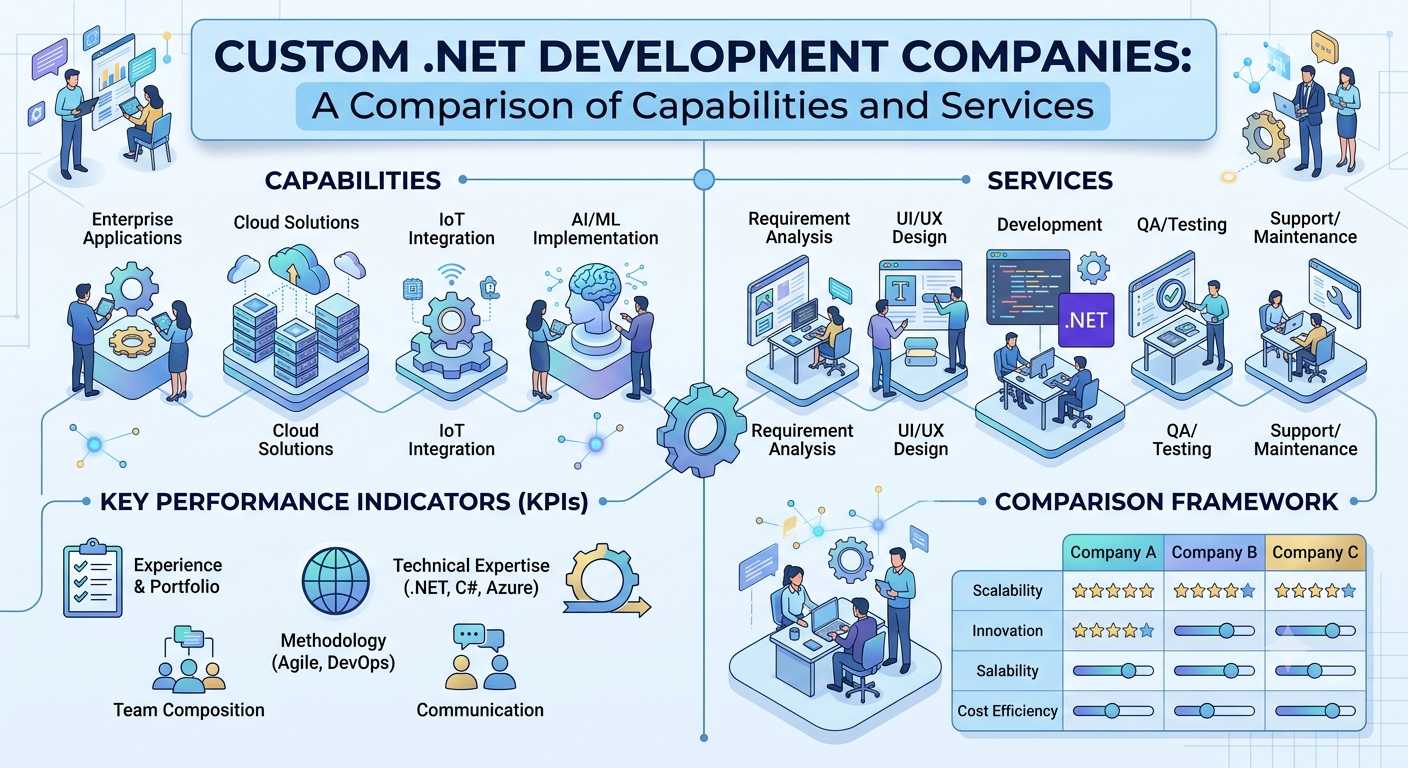
.NET is a software development platform from Microsoft used to build web applications, APIs, enterprise systems, cloud services, desktop applications, and other software products. Organizations may work with external development companies when they need additional engineering capacity, specialized expertise, or support for application development and modernization.
The capabilities of custom .NET development companies vary considerably. Some focus primarily on software engineering, while others combine .NET development with cloud computing, data, artificial intelligence, cybersecurity, or broader technology consulting. The appropriate provider therefore depends on the technical requirements, existing systems, project scope, and delivery model involved.
This article examines five companies that publicly document .NET-related software development capabilities: Techstack, SoftServe, Intellias, Brights, and ScienceSoft. The companies are presented for comparison rather than ranked according to a single performance measure.
How the Companies Were Selected
The companies considered in this comparison were identified through publicly available information about .NET development, software engineering, application modernization, cloud services, and related technologies.
The comparison considers several factors, including:
-
Documented .NET and Microsoft technology experience
-
Application development and modernization capabilities
-
Cloud and systems-integration experience
-
Industry coverage
-
Software engineering and quality-assurance capabilities
-
Availability of ongoing maintenance and support
-
Publicly documented delivery models
Company-reported information can change over time. Details such as employee numbers, certifications, office locations, and client examples should therefore be independently verified when they are relevant to a procurement decision.
Companies Providing Custom .NET Development Services
Techstack
Techstack is a custom .NET development company, provides software development services involving .NET, C#, ASP.NET, APIs, application modernization, cloud technologies, and quality assurance. Its publicly available technical information covers both .NET Framework and modern .NET development environments.
The company’s services also include application development and modernization for software products and business applications. Techstack reports offices in Poland and other locations serving international customers.
Organizations assessing a .NET development provider can examine the company’s documented technology capabilities, project examples, development methodology, security practices, and current certifications as part of their own evaluation.
SoftServe
SoftServe is a technology consulting and software engineering company founded in Ukraine. Its services extend across software development, cloud computing, data, artificial intelligence, application modernization, and digital transformation.
The company works with enterprise organizations across industries such as financial services, healthcare, energy, manufacturing, and technology. Its software engineering activities include development and modernization of business applications and digital platforms.
SoftServe also announced that Gartner recognized it as a Challenger in the 2024 Magic Quadrant for Custom Software Development Services, Worldwide. Such external assessments can provide additional information about a technology provider, although organizations should consider the methodology and scope of any third-party evaluation.
Intellias
Intellias is a software engineering and technology consulting company with operations in multiple regions. Its publicly documented capabilities include software development, application modernization, cloud services, data engineering, and digital consulting.
The company reports experience across automotive, transportation, financial services, healthcare, retail, and technology. Its work can involve enterprise applications and software platforms that require integration with existing systems and cloud infrastructure.
For organizations assessing .NET development providers, Intellias represents a broader product-engineering model in which application development can form part of a larger technology engagement.
Brights
Brights is a software development company with offices in Warsaw and Kyiv. Its published technology information includes C#, ASP.NET Core, frontend development, databases, and cloud technologies.
The company publishes information about software development projects in areas such as financial technology, insurance, business applications, and cloud-based systems. Its development services cover application design, implementation, testing, and ongoing engineering activities.
Certification information and other corporate credentials can change over time, so organizations considering Brights should verify the current certification status, scope, and validity directly.
ScienceSoft
ScienceSoft provides software development and IT consulting services covering .NET, ASP.NET, application integration, modernization, testing, and support.
Its published .NET capabilities include software architecture, application development, integration with external systems, modernization of existing applications, quality assurance, and application maintenance. The company also reports experience across industries including healthcare, financial services, manufacturing, retail, and professional services.
Its service portfolio illustrates how .NET development can be combined with broader software engineering and IT consulting activities.
Common Services Offered by .NET Development Companies
The scope of services differs between providers, but several capabilities are common across the market.
Custom Application Development
Development companies can design and build applications around specific business processes rather than relying entirely on standardized software. These applications may include internal business systems, customer-facing platforms, enterprise applications, and industry-specific software.
ASP.NET Core Development
ASP.NET Core is Microsoft’s cross-platform framework for developing web applications and services. Development teams use it to create web applications, APIs, backend services, and other server-side software.
Legacy Application Modernization
Many organizations continue to operate applications built with older versions of .NET Framework. Modernization projects can involve updating application architecture, replacing outdated dependencies, migrating workloads to current .NET versions, and improving deployment or testing processes.
Modernization does not necessarily require replacing an entire application at once. Depending on the system, organizations may use phased migration or incremental modernization approaches.
Cloud Development and Migration
.NET applications can be deployed in cloud environments such as Microsoft Azure and Amazon Web Services. Cloud-related work can include application migration, containerization, infrastructure configuration, scalability improvements, monitoring, and deployment automation.
API Development and Integration
Enterprise applications frequently need to exchange information with other systems. .NET development teams can create APIs and integration services that connect applications with databases, ERP systems, CRM platforms, payment services, identity systems, and third-party applications.
Testing and Maintenance
Software development engagements may include automated testing, performance testing, security testing, application monitoring, bug resolution, version upgrades, and other maintenance activities.
Custom Development and Staff Augmentation
Organizations generally encounter two different external development models: project-based custom development and staff augmentation.
In a custom development engagement, the external provider typically takes responsibility for a defined application, product, or technical scope. The provider may contribute architecture, development, testing, project management, and deployment capabilities.
Staff augmentation works differently. Developers or other technical specialists join an organization’s existing engineering team and generally work under its established management, architecture, and development processes.
Neither model is universally appropriate. Project-based development can provide external ownership of a defined deliverable, while staff augmentation can increase engineering capacity without transferring product ownership to an external provider.
Factors to Consider When Selecting a .NET Development Provider
Organizations evaluating development companies should first identify the technical environment involved. A new ASP.NET Core application may require different expertise from a modernization project involving older .NET Framework applications.
Relevant technical considerations include:
-
Experience with the required .NET version and development environment
-
Familiarity with the organization’s existing architecture
-
Database and API integration experience
-
Cloud and deployment requirements
-
Testing and quality-assurance processes
-
Security and access-control requirements
-
Documentation and knowledge-transfer practices
-
Post-launch maintenance and support
Organizations in regulated industries may also need to evaluate security certifications, data-handling procedures, access controls, audit processes, and contractual requirements.
Vendor selection should also establish who will perform the work. The proposed roles of architects, developers, testers, project managers, and other specialists should be clear before an engagement begins.
Conclusion
Custom .NET development companies serve different roles within the software development market. Some concentrate on application engineering, while others combine .NET capabilities with cloud, data, artificial intelligence, modernization, or broader technology consulting services.
Techstack, SoftServe, Intellias, Brights, and ScienceSoft illustrate several approaches to .NET-related software development. Their capabilities, operating models, and areas of industry experience differ, making direct comparison based only on company size or service lists insufficient.
Organizations considering external .NET development should assess technical expertise, modernization experience, security requirements, delivery responsibilities, team composition, integration capabilities, and ongoing support. A project-specific evaluation provides a more reliable basis for selecting a development partner than a generic ranking of providers.
About the Author
 Sanyukta Deb
— Sanyukta Deb is Digital Marketing Team Lead at Next Move Strategy Consulting, where she has led content strategy and technical SEO for the firm's B2B market research publications for over 2 years. Her editorial process translates NextMSC's primary and secondary research — spanning technology, industrial, and consumer sectors — into commercial narratives, backed by search-intent, keyword, and competitive analysis. She brings 5 years of overall experience in digital marketing and content strategy.
Sanyukta Deb
— Sanyukta Deb is Digital Marketing Team Lead at Next Move Strategy Consulting, where she has led content strategy and technical SEO for the firm's B2B market research publications for over 2 years. Her editorial process translates NextMSC's primary and secondary research — spanning technology, industrial, and consumer sectors — into commercial narratives, backed by search-intent, keyword, and competitive analysis. She brings 5 years of overall experience in digital marketing and content strategy.
About the Reviewer
 Debashree Dey
— Debashree Dey is Assistant Manager at Next Move Strategy Consulting, where she supports cross-vertical market content and communications across diverse industries for 6 years. Her professional background includes senior content writing, communications, and published manuscript authorship, with experience developing audience-focused business narratives and maintaining clear, consistent messaging. Her role supports research-led content development and editorial quality across NextMSC publications.
Debashree Dey
— Debashree Dey is Assistant Manager at Next Move Strategy Consulting, where she supports cross-vertical market content and communications across diverse industries for 6 years. Her professional background includes senior content writing, communications, and published manuscript authorship, with experience developing audience-focused business narratives and maintaining clear, consistent messaging. Her role supports research-led content development and editorial quality across NextMSC publications.


















Add Comment