Edge AI Market: Market Transformation & Key Players

Inside the Edge AI Market's Next Strategic Transformation
Market Transformation in the Edge AI Market
The Edge AI Market was valued at USD 28.64 billion in 2025. It is projected to reach USD 261.37 billion by 2035, at a 23.9% CAGR from 2026 to 2035. Its central shift is from cloud-dependent processing toward local intelligence on devices, gateways, and edge servers. We observed that buyers increasingly prioritize immediate decisions without transferring every image, voice stream, or machine signal to remote data centres. This transformation is changing semiconductor architectures and product development strategies.
Chipmakers are combining CPUs, GPUs, NPUs, image processors, memory and connectivity within increasingly integrated platforms. These architectures support generative AI, computer vision and multimodal processing under demanding power constraints. Meanwhile, end users expect responsive AI assistants, intelligent connected products and dependable industrial automation. Data privacy, sovereignty requirements, and network resilience strengthen the case for local inference. However, deployments still require secure software updates and effective device management.
Our analysis indicates that competitive value is migrating beyond processing hardware. Software compatibility, model optimization, and deployment infrastructure are becoming equally important. Manufacturing, healthcare, automotive, and retail applications are expanding the demand for localized intelligence. NVIDIA, Samsung, Huawei, Qualcomm, and MediaTek demonstrate five distinct approaches to this transition. Their recent investments and product developments illustrate how the industry is moving toward integrated, efficient, and application-specific AI computing.
Want Insights on the Edge AI Market? Access a FREE Sample Instantly
Key takeaway: Competitive advantage is moving beyond peak computing performance. Buyers increasingly need efficient inference, secure data handling, developer-ready software, and manageable device fleets. Providers combining these capabilities with application-specific reference designs are better positioned to translate AI experimentation into repeatable deployments across industrial, consumer, and infrastructure environments.
The regional distribution provides additional context for this transformation. Asia-Pacific represents the largest regional market in the 2025 assessment.
Regional Revenue Split, 2025 to 2035 (USD Billion)
|
Region |
2025 Revenue (USD Billion) |
|
North America |
6.99690 |
|
Europe |
4.15458 |
|
Asia-Pacific |
15.66277 |
|
Middle East and Africa |
1.06216 |
|
Latin America |
0.76706 |
|
Total |
28.64347 |
The five regional values reconcile exactly with the published global 2025 market revenue. Asia-Pacific accounts for the largest regional contribution, reflecting its substantial position in the overall market.
NVIDIA Corporation
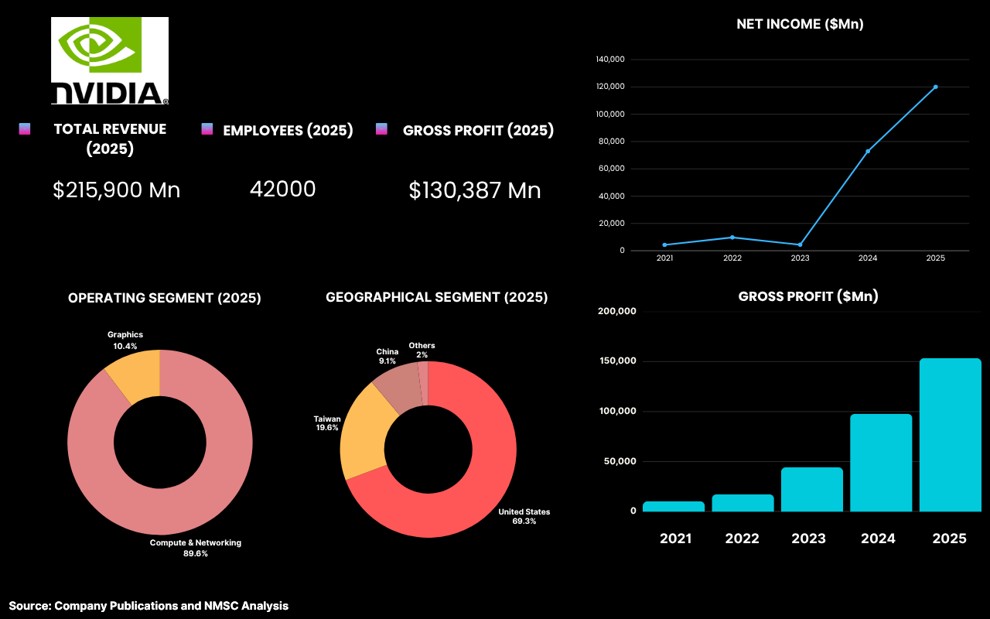
NVIDIA Corporation, headquartered in Santa Clara, California, specializes in accelerated computing, graphics processing units and AI computing platforms. Its operations span data centres, gaming, automotive computing, professional visualization and robotics. The company combines hardware capabilities with development frameworks and computing software. The Edge AI Market extends NVIDIA's technology proposition beyond centralized computing into localized inference. Robotics, intelligent cameras and autonomous systems increasingly require processing capabilities close to their data sources. This creates opportunities for NVIDIA's integrated computing architecture and developer ecosystem.
On August 25, 2025, NVIDIA announced the general availability of its Jetson AGX Thor developer kit and production modules. Powered by the Blackwell architecture, the platform delivers up to 2,070 FP4 teraflops of AI computing. NVIDIA reports 7.5 times higher AI computing performance and 3.5 times greater energy efficiency than its predecessor, Jetson Orin. The development targets physical AI applications across manufacturing, logistics, healthcare, agriculture and retail. It strengthens NVIDIA's position in real-time robotics and localized generative AI processing.
Based on our evaluation, NVIDIA's strategic position depends on maintaining leadership across processing hardware, software and developer adoption. Its competitive advantage comes from connecting high-performance processors with established AI development environments. The company can extend this ecosystem into industrial robotics, autonomous machines and intelligent infrastructure. However, broader commercialization will depend on deployment costs, system integration and power efficiency. NVIDIA's ability to support scalable edge inference will influence its long-term competitive position. Its opportunity increasingly involves supplying complete computing platforms rather than individual semiconductor components.
Samsung Electronics Co., Ltd.
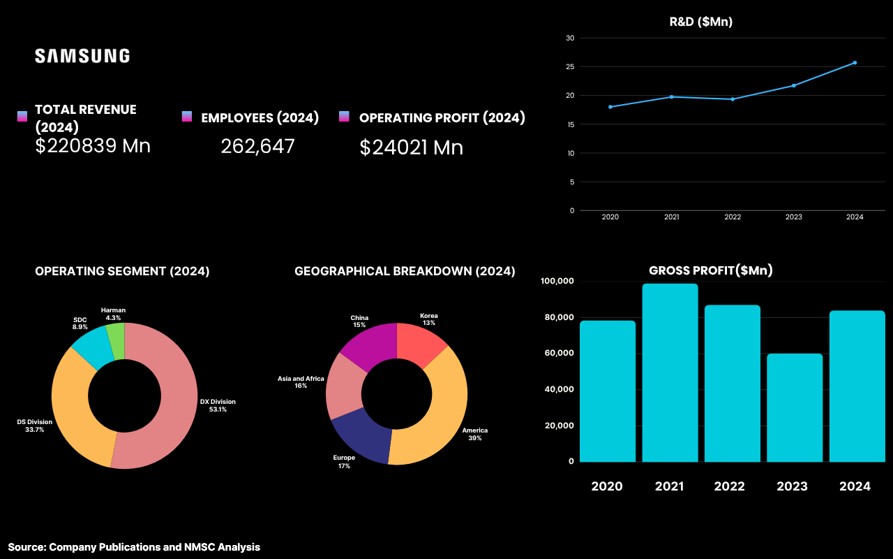
Samsung Electronics Co., Ltd., headquartered in Suwon, South Korea, operates across semiconductor manufacturing, memory technology, mobile devices, and consumer electronics. Its businesses include system-on-chip development, advanced memory, displays, and connected devices. The company combines semiconductor engineering with large-scale electronics manufacturing. The Edge AI Market creates strategic opportunities through demand for intelligent mobile processors and connected consumer devices. Samsung can integrate processing, memory, and security capabilities within compact hardware architectures. Its South Korean technology base also supports continued semiconductor research and advanced manufacturing development.
On December 18, 2025, Samsung introduced its Exynos 2600 mobile processor, based on a 2nm gate-all-around manufacturing process. The processor integrates CPU, GPU, and neural processing capabilities within a compact system-on-chip architecture. Samsung reports a 113% improvement in generative AI performance compared with its predecessor. Its architecture also improves the execution of on-device AI applications while reducing processing latency and power consumption. This development strengthens Samsung's capabilities in locally executed AI experiences. It also demonstrates how advanced semiconductor manufacturing supports increasingly sophisticated mobile intelligence.
Our assessment indicates that Samsung possesses a differentiated position through its combination of semiconductor manufacturing and consumer electronics capabilities. Its integrated business structure creates opportunities to optimize hardware and software together. Future competitiveness will depend on sustained improvements in energy efficiency, AI processing, and device security. Samsung also needs to maintain developer compatibility across its processing platforms. Its long-term opportunity lies in extending localized intelligence across smartphones, wearables, and connected electronics. This approach can strengthen its participation in consumer-focused edge computing.
Huawei Technologies Co., Ltd.
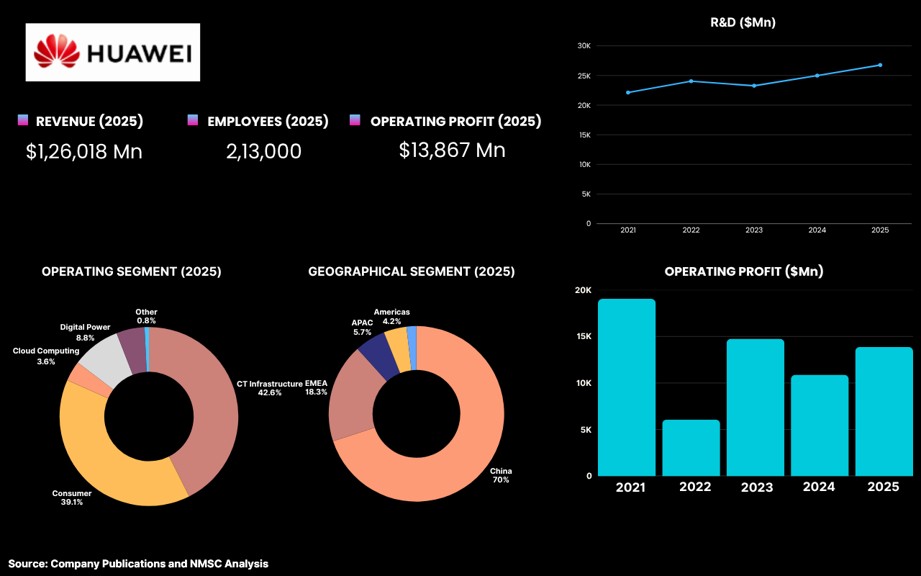
Huawei Technologies Co., Ltd., headquartered in Shenzhen, Guangdong, China, specializes in telecommunications infrastructure, enterprise computing, cloud services, and intelligent hardware. Its technology portfolio includes networking equipment, AI computing systems, semiconductor platforms, and industrial digital solutions. The company has an established presence across China's technology and telecommunications ecosystem. The Edge AI Market creates opportunities for Huawei through distributed computing and localized AI processing. Its combination of networking infrastructure and computing hardware supports deployments requiring low-latency inference. Regional technology development also influences its product and supply chain strategy.
On September 18, 2025, Huawei introduced its next-generation Atlas 350 AI accelerator card at HUAWEI CONNECT 2025. The card uses the Ascend 950PR chip and supports flexible computing configurations. Huawei reported double the vector computing capability and improved memory access compared with previous models. The company highlighted its applications in recommendation inference and lower-latency AI workloads. Huawei's 2025 annual reporting also identifies its Ascend portfolio as supporting edge computing environments. This development strengthens its AI hardware portfolio and broadens opportunities in localized inference infrastructure.
Based on our assessment, Huawei's strategic position reflects its focus on integrated computing infrastructure and regional technology development. Its capabilities across networking, processors, and enterprise systems provide opportunities for coordinated deployments. The company can address applications requiring localized processing, dependable connectivity, and customized infrastructure. However, international expansion faces ecosystem compatibility and semiconductor supply considerations. Continued investment in hardware development and software availability will influence its market reach. Its longer-term opportunity lies in connecting edge intelligence with broader enterprise computing environments.
Qualcomm Incorporated
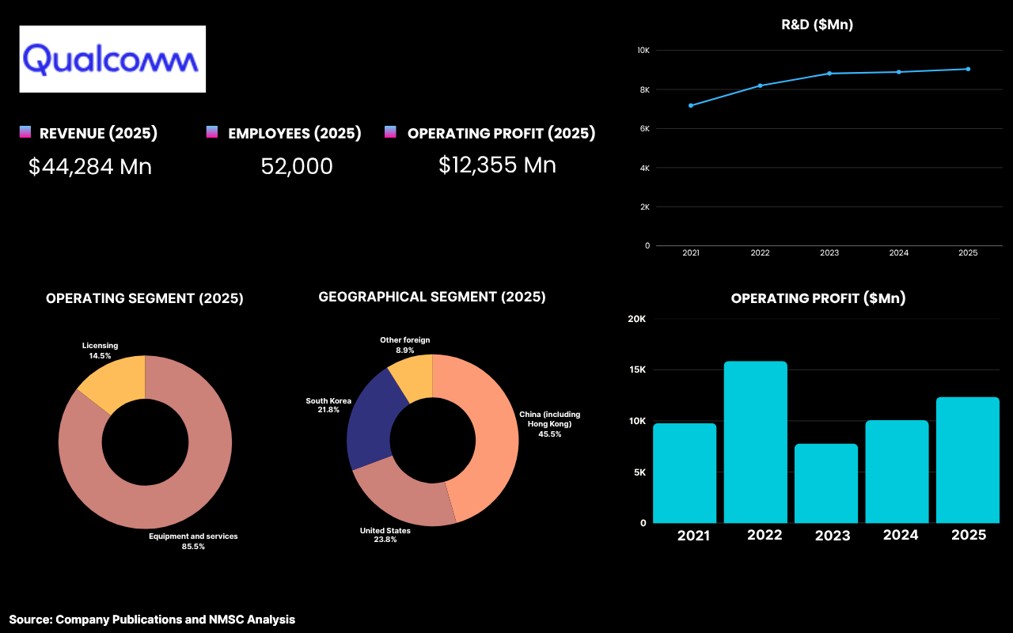
Qualcomm Incorporated, headquartered in San Diego, California, specializes in wireless communications, semiconductor design, and intelligent computing platforms. Its operations include mobile processors, connectivity technologies, automotive solutions, and Internet of Things platforms. The company combines processing capabilities with cellular, wireless, and low-power computing technologies. The Edge AI Market aligns closely with Qualcomm's emphasis on intelligent connected devices. Its semiconductor architecture supports localized AI processing across smartphones, automotive systems, industrial equipment, and consumer electronics. This positioning connects edge inference with the company's established connectivity expertise.
On September 1, 2026, Qualcomm introduced its Dragonwing Q-2390 and IQ-2390 processors. These platforms extend its intelligent computing portfolio across commercial, consumer and industrial applications. The Q-2390 targets connected products, enterprise edge devices and smart home equipment. Meanwhile, the IQ-2390 integrates AI acceleration, machine vision and real-time processing for industrial automation. Both platforms combine computing, connectivity and security capabilities. This development expands Qualcomm's addressable applications and supports broader adoption of localized inference.
Our analysis indicates that Qualcomm's competitive position benefits from its established communications expertise and expanding industrial computing portfolio. Connectivity remains important when edge devices operate across distributed networks. The company's opportunity extends beyond mobile hardware into intelligent industrial infrastructure and connected equipment. Future performance will depend on balancing processing capability, affordability, and long-term hardware support. Developer accessibility and compatibility with existing industrial systems will also influence adoption. Qualcomm's diversified platform strategy provides opportunities across multiple device categories as localized AI becomes increasingly integrated into connected products.
MediaTek Inc.
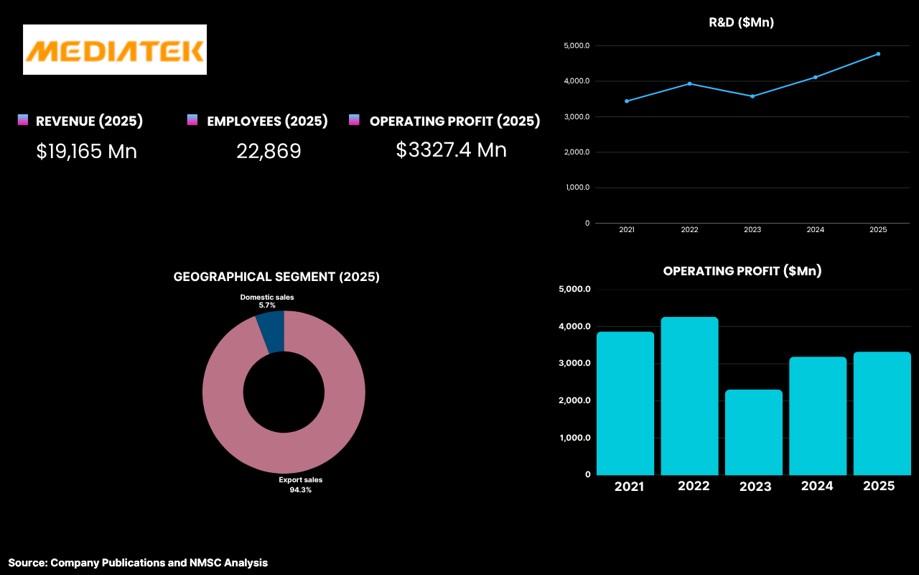
MediaTek Inc., headquartered in Hsinchu, Taiwan, is a fabless semiconductor company specializing in integrated chipsets and connected computing platforms. Its portfolio spans mobile processors, wireless connectivity, smart devices, automotive technologies, and Internet of Things solutions. The company focuses on combining processing performance with power efficiency across different device categories. The Edge AI Market creates opportunities through increasing demand for integrated inference capabilities in embedded systems. MediaTek's semiconductor designs address manufacturers seeking compact, cost-effective processing solutions. Its Taiwan-based development ecosystem also connects it with the wider Asian semiconductor supply chain.
On March 10, 2026, MediaTek unveiled its Genio Pro, Genio 420 and Genio 360 platforms at Embedded World 2026. Genio Pro targets advanced robotics, commercial drones, machine vision, and other embedded applications. It supports more than 50 TOPS of system-level generative AI acceleration. Genio 420 and Genio 360 extend efficient AI processing into smart home, retail, and industrial devices. These launches demonstrate MediaTek's expansion beyond mobile processors into specialized edge computing hardware. The development also strengthens its competitiveness among manufacturers seeking scalable AI-enabled embedded platforms.
Based on our evaluation, MediaTek's strategy emphasizes accessibility, integration, and power-efficient semiconductor design. Its broad chipset portfolio allows manufacturers to select processing platforms suited to different performance requirements. The company's long-term opportunity lies in expanding its presence across industrial IoT, robotics, and intelligent consumer devices. Continued improvements in neural processing, software compatibility, and manufacturing efficiency will remain important. MediaTek's ability to deliver scalable platforms at competitive costs could strengthen its market position. Its expansion into embedded generative AI also broadens its potential customer base.
Explore the Full Edge AI Market Report
Market Summary
The Edge AI Market is developing around the increasing distribution of artificial intelligence capabilities across connected devices and computing infrastructure. Demand originates from organizations seeking faster decisions, lower data transmission requirements, and greater control over sensitive information. Manufacturing applications include machine vision, predictive maintenance, and automated inspection. Automotive and transportation systems require localized perception and real-time processing. Consumer electronics, healthcare, retail and telecommunications also present opportunities. Our analysis indicates that deployment requirements increasingly depend on processing efficiency, connectivity, and the ability to operate reliably under different network conditions.
The competitive landscape is evolving through greater collaboration between semiconductor manufacturers, software developers, hardware integrators and device manufacturers. Companies are differentiating themselves through heterogeneous processing architectures, optimized neural processing units, and developer support. Integrated platforms can simplify implementation while reducing compatibility challenges. Localization is also becoming strategically important as governments and enterprises prioritize regional technology ecosystems and data control. Sustainability considerations are encouraging manufacturers to improve performance per watt and extend product lifecycles. Meanwhile, security, thermal management and software maintenance remain essential factors influencing purchasing decisions.
Based on NMSC's assessment, future growth opportunities will extend beyond conventional inference applications. Multimodal AI, compact language models, autonomous robotics and intelligent sensing could broaden deployment possibilities. Hybrid computing architectures will connect local processing with centralized resources where greater computational capacity remains necessary. However, manufacturers must address hardware costs, semiconductor availability, cybersecurity vulnerabilities, and interoperability challenges. Model optimization and continuous device management will also influence commercial scalability. The industry's longer-term direction points toward application-specific computing platforms that combine hardware, software, and connectivity. Companies delivering reliable intelligence within practical power and cost limits are likely to establish stronger competitive positions.
“AI is creating a fundamental shift in how connected devices are designed and deployed, but many product categories still face barriers around cost, complexity, and integration.”
Jeff Arnold, VP & GM, Auto Telematics & Industrial & Embedded IoT Consumer and Connectivity, Qualcomm Technologies, Inc.
About the Author
 Mayurima Roy
— Mayurima Roy is Research Analyst at Next Move Strategy Consulting, where she has spent 4 years working across the firm's full industry coverage rather than a single fixed vertical. Her work centers on structured research, ongoing trend tracking, competitive assessment, and insight-led content development, translating complex market data into clear, decision-ready narratives that support informed client decision-making across diverse global industries, market sectors, and world regions every day.
About the Reviewer
 Supradip Baul
— Supradip Baul is an accomplished business consultant and strategist with over a decade of rich experience in market intelligence, strategy, technology, and business transformation. His work has included rigorous qualitative and quantitative analysis across multiple industries, helping clients shape investment decisions and long-term roadmaps. Earlier in his career, he was associated with Gartner, where he contributed to industry-leading reports and market share analyses. He has worked with leading global companies and holds an MBA with a dual specialization in Marketing and Finance.

















Add Comment