From Nanotechnology to Climate-Resilient Crops: Is Innovation Redefining the Future of the Seed Nanopriming Market?

The Seed Nanopriming Market is undergoing a significant transformation, driven by advances that extend well beyond conventional seed treatment methods. By integrating nanotechnology with pre-sowing priming techniques, the market is evolving toward a more precise, efficient, and sustainable agricultural input ecosystem. Seed nanopriming is no longer limited to improving basic germination rates; it now supports enhanced nutrient uptake, stress tolerance, and crop uniformity, aligning with modern farming practices and food security goals. This shift marks a new phase in which seed nanopriming is viewed not merely as a yield-enhancing technique, but as a strategic, climate-resilient, and future-ready solution that improves productivity, resource efficiency, and sustainable agricultural outcomes.
Rising investments in advanced agricultural technologies, increasing demand for sustainable and resource-efficient farming practices, and the growing adoption of precision agriculture are driving strong demand for seed nanopriming solutions. As nanotechnology-enabled inputs and smart crop management systems become more accessible, companies and research institutions are innovating to deliver high-performance, crop-specific formulations. These innovations range from nutrient- and micronutrient-based nanoparticle treatments to stress-tolerance enhancers and controlled-release priming agents that improve germination, early vigor, nutrient use efficiency, and overall crop productivity while supporting climate-resilient and sustainable agriculture.
How Precision Agriculture and Advanced Technologies Are Transforming the Global Seed Nanopriming Market?
The expansion of modern agriculture, coupled with the growing need for higher productivity on limited arable land, is reshaping the adoption of advanced seed enhancement technologies worldwide. As farming systems intensify and climate variability increases, there is a rising demand for efficient, resilient, and performance-oriented seed treatments. Seed nanopriming is gaining prominence as it supports faster and more uniform germination, improved seedling vigour, and enhanced tolerance to abiotic stresses such as drought and salinity, critical factors in both commercial and smallholder farming systems.
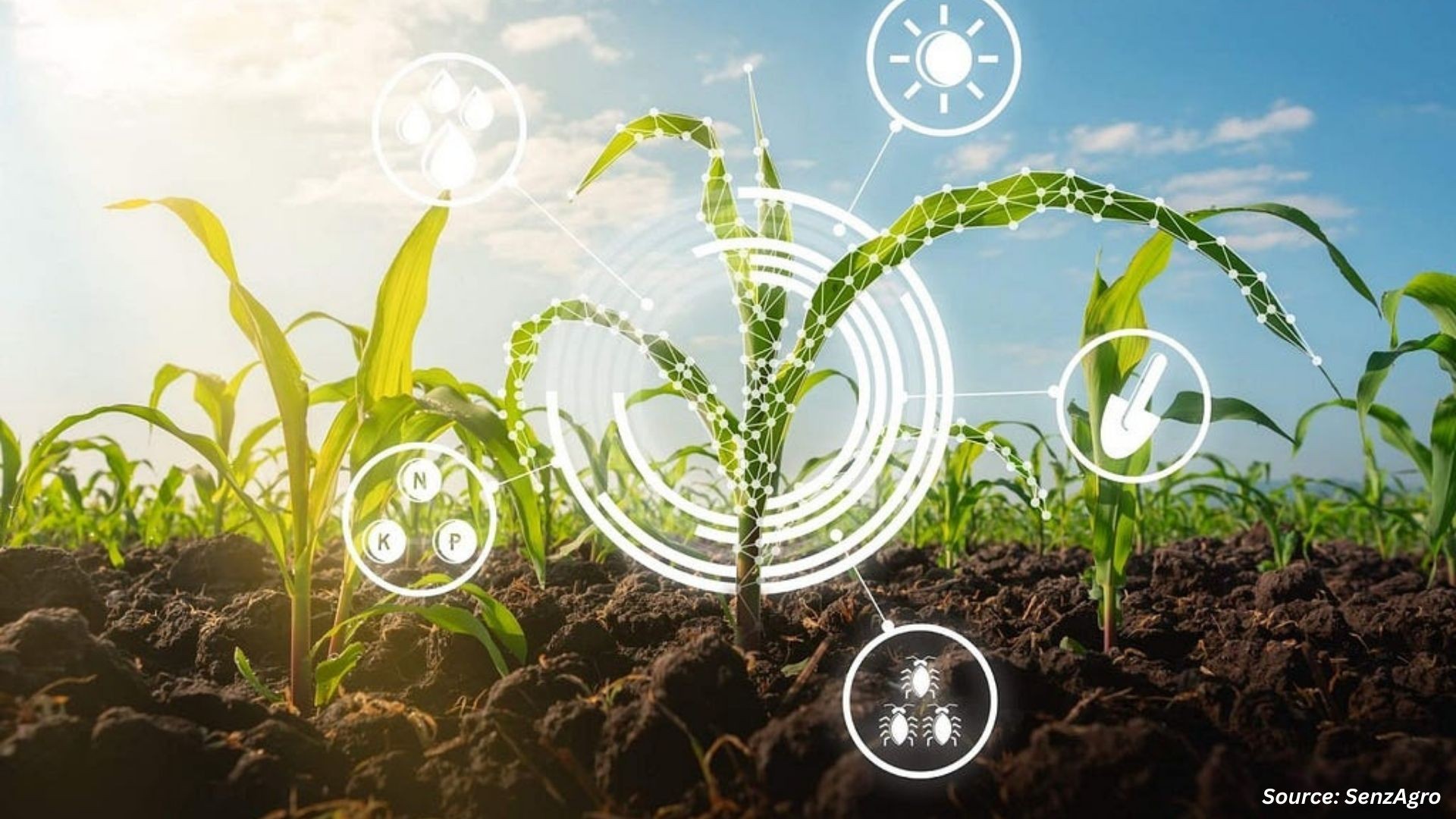
At the same time, the integration of digital agriculture platforms, data-driven crop management tools, and precision farming practices is transforming how seed technologies are developed, applied, and scaled. Agribusinesses and research institutions increasingly rely on advanced formulations, controlled nanoparticle delivery, and crop-specific priming solutions to optimize early-stage plant development. This convergence of agricultural intensification, technological innovation, and sustainability goals is redefining the global seed nanopriming market, positioning it as a key driver of future-ready, climate-resilient, and resource-efficient agriculture.

How Climate Resilience, Advanced Seed Treatments, and Sustainable Inputs Are Transforming the Seed Nanopriming Market?
The seed nanopriming market is evolving rapidly as agriculture responds to climate stress, productivity challenges, and sustainability goals through next-generation seed treatment innovations:
-
Climate-Resilient Crop Establishment: Seed nanopriming enhances seed tolerance to drought, salinity, heat, and oxidative stress during early growth stages. By strengthening seed metabolism and stress-response mechanisms, Seed nanopriming supports stable crop establishment under increasingly unpredictable environmental conditions.
-
Advanced Seed Treatment Technologies: Innovations in nanoparticle formulations and controlled-release priming agents are improving the efficiency and consistency of seed treatments. These technologies enable uniform coating, better seed absorption, and prolonged bioavailability of nutrients and growth enhancers.
-
Sustainable Input Optimization: Nanopriming helps reduce dependence on conventional agrochemicals by improving nutrient uptake efficiency and early plant vigor. This leads to lower input losses, reduced environmental footprint, and improved long-term soil health.
Together, these factors are reshaping the seed nanopriming market, positioning it as a key solution for climate-smart, efficient, and sustainable agricultural systems.
How Food Security Priorities, Yield Stability, and Next-Generation Seed Technologies Are Advancing the Seed Nanopriming Market?
The seed nanopriming market is increasingly shaped by global food security concerns, the need for stable yields, and innovation in early-stage crop technologies:
-
Supporting Food Security and Crop Reliability: As population growth and supply-chain pressures intensify, farmers are prioritizing technologies that ensure reliable crop establishment. Seed nanopriming improves germination success and early plant vigor, helping reduce crop losses and enhance yield stability across diverse agro-climatic regions.
-
Enhancing Stress Tolerance at Early Growth Stages: Nanopriming activates key physiological and biochemical pathways in seeds, enabling crops to better withstand nutrient deficiencies, moisture stress, and soil variability during the most vulnerable growth phases.
-
Advancement of Next-Generation Seed Technologies: Continuous R&D in nanoparticle synthesis, bio-compatible materials, and seed-treatment processes is expanding the functional capabilities of nanopriming. These innovations are improving treatment efficiency, safety, and consistency, supporting broader commercial adoption.
Together, these factors are driving the evolution of the seed nanopriming market toward resilient, yield-secure, and future-ready agricultural systems.

How Regulatory Progress, Commercialization Pathways, and Industry Collaboration Are Shaping the Seed Nanopriming Market?
The seed nanopriming market is advancing as regulatory clarity improves and commercialization strategies mature across global agricultural systems. Governments and regulatory bodies are increasingly evaluating nano-enabled agricultural inputs, creating clearer guidelines for safety, efficacy, and environmental impact. This progress is enabling seed companies and agritech firms to move beyond pilot studies toward large-scale market deployment. Seed nanopriming is also benefiting from stronger collaboration between research institutions, seed producers, and agrochemical companies, accelerating product validation and farmer adoption. At the same time, growing awareness and demonstration trials are building confidence among growers, positioning seed nanopriming as a commercially viable, science-backed solution for improving crop establishment and productivity.
About the Author
 Tushmi Dutta
— Tushmi Dutta is a focused researcher specializing in detailed analysis and insight-driven research across diverse business landscapes. She supports strategic initiatives through structured data interpretation, thorough validation, and clear communication of findings that aid informed decision-making. With a strong interest in writing, she enjoys presenting research insights in an engaging and accessible manner. Beyond work, she enjoys traveling, reading, painting, and continuously learning new skills that contribute to her creative and professional growth.
Tushmi Dutta
— Tushmi Dutta is a focused researcher specializing in detailed analysis and insight-driven research across diverse business landscapes. She supports strategic initiatives through structured data interpretation, thorough validation, and clear communication of findings that aid informed decision-making. With a strong interest in writing, she enjoys presenting research insights in an engaging and accessible manner. Beyond work, she enjoys traveling, reading, painting, and continuously learning new skills that contribute to her creative and professional growth.
About the Reviewer
 Supradip Baul
— Supradip Baul is an accomplished business consultant and strategist with over a decade of rich experience in market intelligence, strategy, technology, and business transformation. His work has included rigorous qualitative and quantitative analysis across multiple industries, helping clients shape investment decisions and long-term roadmaps. Earlier in his career, he was associated with Gartner, where he contributed to industry-leading reports and market share analyses. He has worked with leading global companies and holds an MBA with a dual specialization in Marketing and Finance.
Supradip Baul
— Supradip Baul is an accomplished business consultant and strategist with over a decade of rich experience in market intelligence, strategy, technology, and business transformation. His work has included rigorous qualitative and quantitative analysis across multiple industries, helping clients shape investment decisions and long-term roadmaps. Earlier in his career, he was associated with Gartner, where he contributed to industry-leading reports and market share analyses. He has worked with leading global companies and holds an MBA with a dual specialization in Marketing and Finance.
















Add Comment