From Reactive to Predictive: How Digitalisation Is Revolutionising Air Compressor Efficiency and Uptime
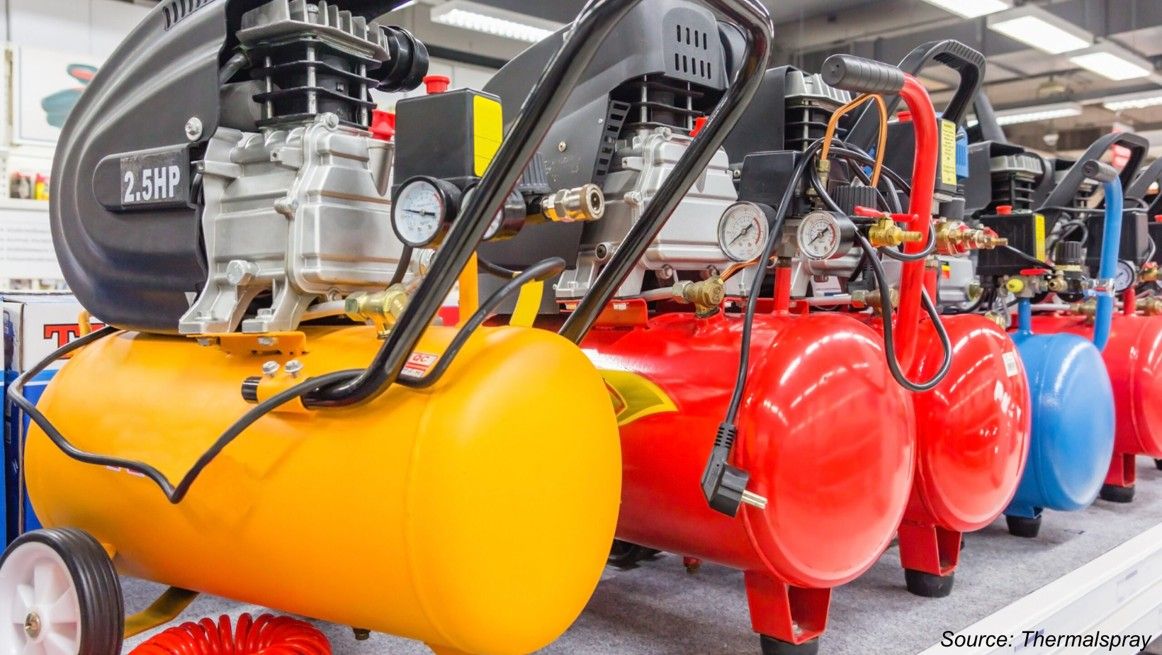
Air compressors are essential machines that produce and regulate compressed air for use across manufacturing, construction, process industries, food and beverage, pharmaceuticals, and several other sectors worldwide. Modern compressed-air ecosystems extend beyond the core compressor to include dryers, filters, receivers, controllers, and digital monitoring systems that collectively influence energy efficiency, reliability, and output quality. Their versatility, powering pneumatic tools, automation actuators, material handling systems, and process utilities, makes compressed air a foundational industrial resource.
According to Next Move Strategy Consulting, the Air Compressor Market size was valued at USD 27.56 billion in 2024 and is expected to be valued at USD 29.29 billion by the end of 2025. The industry is projected to grow, hitting USD 36.28 billion by 2030, with a CAGR of 4.38% between 2025 and 2030. In terms of volume, the market recorded 2003 million units in 2024, with forecasts indicating growth to 2203 million units by 2025 and further to 3049 million units by 2030, reflecting a CAGR of 6.75% over the same period.
Want Insights on the Air Compressor Market? Access a FREE Sample Instantly
Technology adoption and digitalisation are not abstract themes; they are immediate demand drivers. Falling sensor costs, ubiquitous industrial networking, and improvements in edge and cloud computing make it feasible to instrument fleets of compressors at scale. Variable speed drives (VSDs) and smarter control logic now routinely cut energy use by matching output to actual demand, while online condition monitoring and predictive analytics reduce unplanned stops and extend component life.
Regulators and incentive programs that target industrial energy efficiency further accelerate retrofit and replacement cycles, creating a two-pronged market tailwind for both new advanced units and aftermarket digitalisation services. In short, technology reduces the total cost of ownership and creates commercial models, subscriptions, outcome guarantees, and performance contracts that increase vendor stickiness and investor appeal.
How Digitalisation Is Revolutionising Air Compressor Efficiency and Uptime
Digitalisation delivers clear value to the compressor industry by turning traditionally loud, mechanically driven machines into smarter, more predictable assets. Today’s compressors are equipped with sensors that track vibration, temperature, oil quality, airflow and pressure. This data is processed in real time at the machine level to remove noise and activate protective measures when needed, while the same information is sent to cloud platforms for performance trends, fault detection and fleet comparison.
This approach enables faster identification of issues, more accurate predictions of component life and fewer unnecessary alerts. As a result, plants experience fewer emergency breakdowns and less secondary damage because faults are detected early. ELGi’s STABILISOR technology is a strong example of this advancement, using intelligent controls and system optimisation to stabilise airflow, minimise load/unload cycles and reduce energy use in fluctuating operating conditions.
At the system level, digital platforms enable centralised visibility and optimisation across multi-compressor installations and multiple sites. Smart monitoring dashboards highlight leak rates, inappropriate setpoints, and inefficient standby behaviour. They also enable demand-side orchestration, so compressors operate in the most efficient sequence and pressure band. This is critical because many facilities unknowingly oversize compressors or run machines partially loaded, which dramatically increases specific energy use. The U.S. DOE’s compressed air resources and tools, such as AIRMaster+ illustrate how measurement and control deliver significant kWh savings when combined with technology upgrades and leak mitigation programs.
Business model innovation follows the technology, where OEMs and independent service providers are packaging connectivity, analytics and maintenance into subscription services and performance contracts. This servitization aligns incentives, such as suppliers being rewarded for keeping equipment efficient and available, while customers shift capex into predictable opex with measurable KPIs. Leading vendors increasingly offer verification packages that quantify energy savings and uptime improvements, making financing and rebate justification easier for plant managers. The commercial outcome is higher aftermarket lifetime revenue per unit and deeper customer relationships that spread across replacement cycles and spare parts provisioning.

Company Developments and Recent Regional Moves that Accelerate the Market Growth
Recent company developments show how market leaders are executing on the digital and efficiency narrative. Atlas Copco strengthened its Asia-Pacific footprint and product depth with the acquisition of Kyungwon Machinery Industry in 2025, broadening its oil-injected and oil-free screw compressor portfolio and localising supply for food, semiconductor and automotive customers in Korea.
Similarly, ELGi’s launch of STABILISOR in early 2025 underscores a competitive move to offer system-level stabilization technology that reduces energy and wear in variable demand sites.
Kaeser has also invested in regional capacity and service expansion in the U.S. with a substantial Fredericksburg, Virginia, facility expansion announced in 2025, signalling a focus on engineered systems and faster aftermarket response.
AERZEN has also expanded capability through acquisition activity in 2025 to cover higher-pressure industrial applications, showing how consolidation is building broader capability sets. These moves illustrate that manufacturers are investing both in product innovation and in the service and geographic capabilities needed to deliver integrated digital solutions.
Technology Is Accelerating New Demand for Compressors as Green Hydrogen and Industrial Electrification Gain Momentum
Technology also intersects with adjacent macro trends to amplify market demand. The growing focus on green hydrogen, for example, creates large new demand for compression and gas handling systems in electrolysis and storage projects. Siemens Energy’s recent work on large-scale electrolyser projects demonstrates how compression expertise is relevant in decarbonisation infrastructure. Electrolysers and hydrogen handling require carefully engineered compression systems and control logic, and as green hydrogen projects scale they represent a sizeable, specialised load for compressor OEMs and EPCs.
At the same time, industrial electrification and ambitious energy-efficiency programs across developed markets increase the share of electric-driven, VSD-equipped compressors versus engine-driven options, which further strengthens demand for digitally fluent product lines that support lifecycle services.
Deploying digital strategies is not frictionless. Common barriers include legacy fleet heterogeneity, the need for rigorous baseline measurement to build credible ROI cases, cybersecurity and data governance issues, and a shortage of personnel skilled in reliability engineering and data science at the plant level. Practical rollouts therefore begin with targeted pilots on critical compressors, deploy edge analytics to avoid bandwidth penalties, and align service level agreements to ensure timely parts and trained technicians. Successful programs blend OEM platforms with skilled local service partners and clear cybersecurity architectures to ensure both reliability gains and data safety. These pragmatic steps reduce adoption risk and accelerate the path from pilot to portfolio.

Strategic Takeaways for Executives and Investors
Executives and investors should prioritise solutions that pair strong energy performance with advanced digital capabilities, as the combined benefit of reduced energy use and lower downtime delivers faster, more compelling returns than traditional hardware upgrades. Partnerships or targeted acquisitions that expand service coverage, compressed-air treatment expertise, and software-driven capabilities can further strengthen competitive positioning.
Vendor selection should extend beyond mechanical specifications to include digital platform maturity, data governance practices, and documented proof of efficiency and uptime gains. Markets with robust energy-efficiency mandates and growing industrial activity, particularly North America, Europe, and Asia-Pacific, will continue to offer the strongest investment potential for digitalised compressor ecosystems. Additionally, guidance and tools from the U.S. Department of Energy can help stakeholders evaluate project opportunities and navigate available incentive or rebate programs for retrofit initiatives.
Outlook for the Air Compressor Market Over the Next Few Years
In conclusion, the air compressor market’s future is being written at the intersection of mechanical engineering and digital intelligence. Digitalisation, through sensors, VSDs, edge/cloud analytics and new commercial models, is converting compressors into optimisable, monetizable assets. Companies that combine robust mechanical platforms, convincing energy savings proof points, and scalable digital services capture the largest share of growth as global industrial demand expands and regulatory emphasis on efficiency tightens. For executives and investors, the pragmatic path is to pilot aggressively, measure comprehensively, and scale selectively with partners who can deliver both hardware and the digital services that turn uptime and efficiency into measurable business outcomes.
About the Author
 Mayurima Roy
— Mayurima Roy is Research Analyst at Next Move Strategy Consulting, where she has spent 4 years working across the firm's full industry coverage rather than a single fixed vertical. Her work centers on structured research, ongoing trend tracking, competitive assessment, and insight-led content development, translating complex market data into clear, decision-ready narratives that support informed client decision-making across diverse global industries, market sectors, and world regions every day.
Mayurima Roy
— Mayurima Roy is Research Analyst at Next Move Strategy Consulting, where she has spent 4 years working across the firm's full industry coverage rather than a single fixed vertical. Her work centers on structured research, ongoing trend tracking, competitive assessment, and insight-led content development, translating complex market data into clear, decision-ready narratives that support informed client decision-making across diverse global industries, market sectors, and world regions every day.
About the Reviewer
 Supradip Baul
— Supradip Baul is an accomplished business consultant and strategist with over a decade of rich experience in market intelligence, strategy, technology, and business transformation. His work has included rigorous qualitative and quantitative analysis across multiple industries, helping clients shape investment decisions and long-term roadmaps. Earlier in his career, he was associated with Gartner, where he contributed to industry-leading reports and market share analyses. He has worked with leading global companies and holds an MBA with a dual specialization in Marketing and Finance.
Supradip Baul
— Supradip Baul is an accomplished business consultant and strategist with over a decade of rich experience in market intelligence, strategy, technology, and business transformation. His work has included rigorous qualitative and quantitative analysis across multiple industries, helping clients shape investment decisions and long-term roadmaps. Earlier in his career, he was associated with Gartner, where he contributed to industry-leading reports and market share analyses. He has worked with leading global companies and holds an MBA with a dual specialization in Marketing and Finance.
















Add Comment