Healthcare IT Market Statistics, Trends & Forecasts for 2026

Introduction
The healthcare IT market has entered a decisive phase in 2026, shaped simultaneously by record-breaking cybersecurity failures, an accelerating regulatory push for interoperability, and a visible cooling of the traditional electronic health records (EHR) replacement cycle in favor of agentic and ambient artificial intelligence. For hospital administrators, health plan executives, and institutional investors, these three forces are no longer separate storylines — they are converging into a single strategic question: how does a healthcare organization modernize its technology stack fast enough to remain compliant, secure, and competitive?
This convergence is precisely why the healthcare IT market has become one of the most closely watched segments of the broader digital health economy. From ambient clinical documentation tools quietly replacing legacy EHR workflows to a proposed federal rule that would force payers to expose prior authorization data through standardized APIs, the pace of structural change across hospital information systems, cloud infrastructure, and healthcare cybersecurity solutions is intensifying. This article examines the real developments driving that change, what they mean for stakeholders across the healthcare IT ecosystem, and where the market is headed through the next decade.
For More Information – Download FREE Sample on Healthcare IT Market Report
The EHR Market Cools as AI Takes Center Stage
A defining industry event of mid-2026 has been the visible slowdown of the traditional EHR replacement market, even as healthcare organizations pour resources into AI-native tools layered on top of existing systems. Large health systems are largely in a holding pattern on core EHR switches, while smaller and mid-sized providers continue migrating toward cloud-native platforms, with much of the innovation energy shifting toward ambient listening and agentic AI applications that sit on top of, rather than replace, incumbent electronic health records.
This shift is not merely anecdotal. Two of the industry's largest technology vendors have made significant, near-term moves that validate the trend. In February 2026, Oracle Corporation expanded its Clinical AI Agent into the United Kingdom and Canada after reporting that the tool had already saved physicians in the United States more than 200,000 hours of documentation time since its 2025 launch. The following month, Amazon Web Services introduced Amazon Connect Health, a purpose-built agentic AI solution designed to automate high-volume administrative tasks such as appointment scheduling, clinical documentation, and medical coding — signaling that hyperscale cloud providers now view ambient and agentic AI, not EHR replacement, as the next major battleground in healthcare IT.
NMSC's Strategic Perspective on the AI-Driven Market Shift
From NMSC's vantage point, this transition marks a structural change in how healthcare IT budgets are being allocated. Rather than competing purely on core clinical system replacement, vendors are increasingly differentiating through modular, API-first AI layers that can be deployed without disrupting existing EHR infrastructure — reducing switching costs and accelerating time-to-value for providers. This aligns with a broader movement toward platform-centric and service-led business models across the healthcare IT value chain, where investors increasingly favor companies generating recurring revenue through cloud platforms, data analytics, and subscription-based services rather than one-time licensing deals. NMSC's analysis further indicates that ambient clinical intelligence is evolving into a foundational layer for scalable clinical workforce models, reducing documentation burden and clinician burnout while reinforcing the broader shift toward outcome-based, interoperable care delivery.
Section Summary: The healthcare IT industry is undergoing a meaningful pivot away from wholesale EHR replacement and toward AI-native augmentation layers built on existing infrastructure, led by major moves from Oracle and Amazon Web Services in early 2026.
-
Oracle's Clinical AI Agent has saved US physicians over 200,000 documentation hours since its 2025 debut and expanded into the UK and Canada in February 2026.
-
Amazon Connect Health, launched in March 2026, targets appointment scheduling, documentation, and medical coding automation.
-
Vendors are prioritizing modular, API-first AI deployment over disruptive core-system replacement.
-
Investment activity increasingly favors platform-centric, recurring-revenue healthcare IT business models.
Industry Impact Analysis
Two regulatory and security developments are reshaping the operating environment for every healthcare IT stakeholder in 2026. First, on April 10, 2026, the Centers for Medicare & Medicaid Services (CMS) released the 2026 CMS Interoperability Standards and Prior Authorization for Drugs proposed rule (CMS-0062-P), which extends existing prior authorization API requirements to cover prescription and medical-benefit drugs, mandates adoption of updated HL7 FHIR implementation guides, and requires impacted payers to report interoperability API usage metrics directly to CMS. Compliance dates beginning October 1, 2027 will require Medicare Advantage organizations, state Medicaid and CHIP programs, and Qualified Health Plan issuers to overhaul their prior authorization infrastructure, creating a substantial near-term procurement cycle for interoperability and API management vendors.
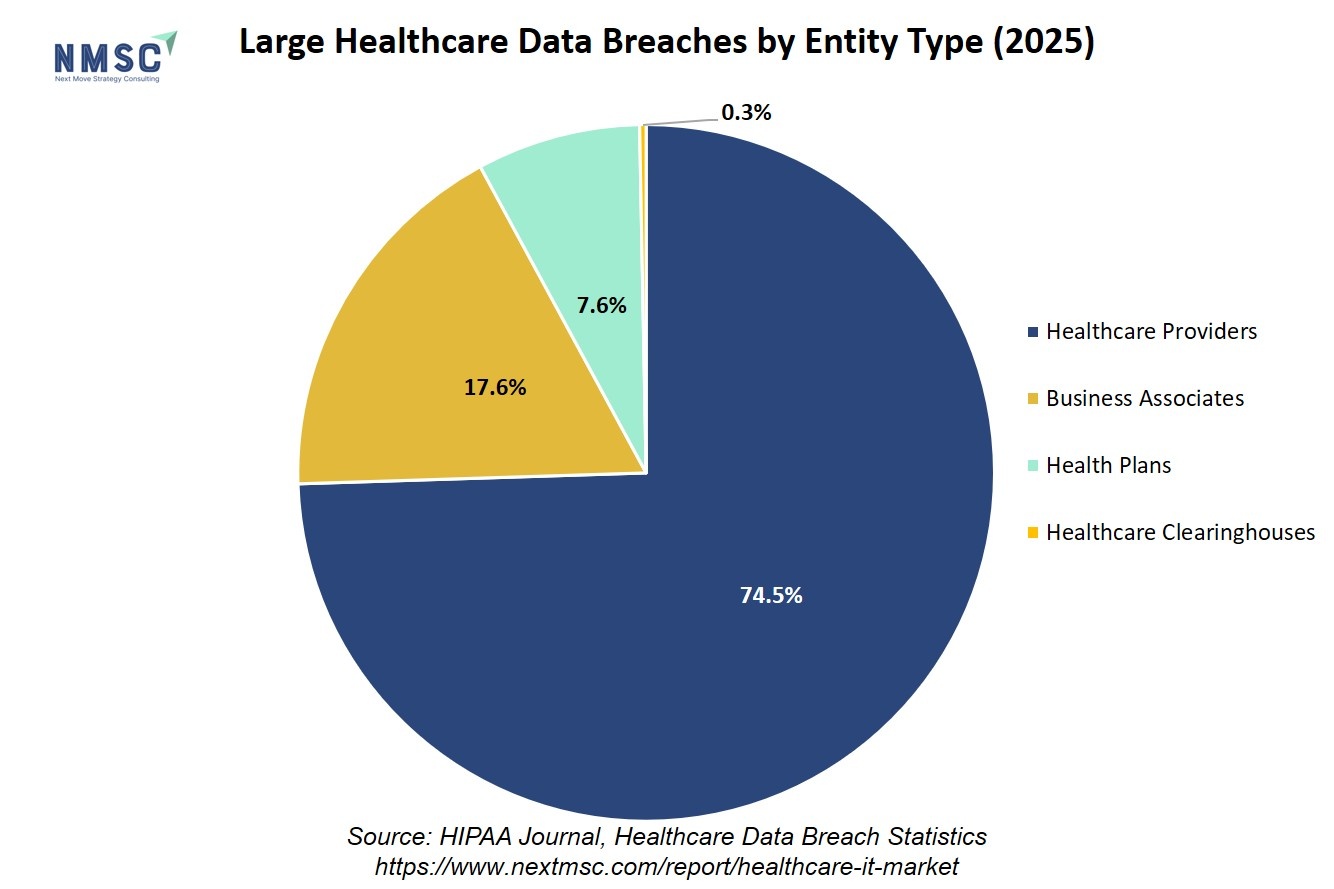
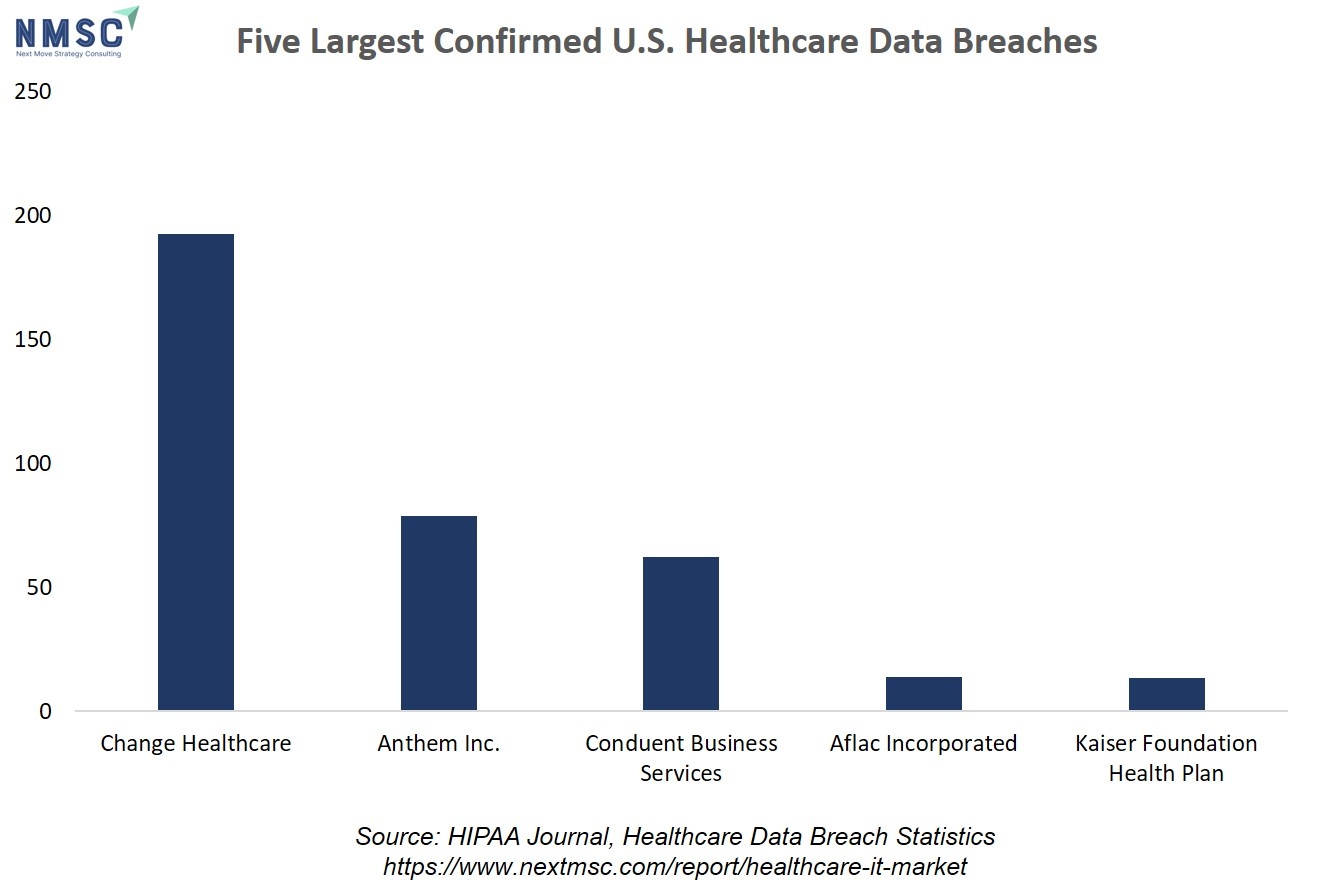
Second, healthcare cybersecurity has become an unavoidable line item in every technology budget. According to the HIPAA Journal, 772 large healthcare data breaches affecting 500 or more individuals were reported to the HHS Office for Civil Rights in 2025 — a new annual record — and hacking or other IT incidents accounted for more than 80% of large healthcare data breaches reported that year. The Conduent Business Services breach, reported in 2025, affected more than 62.2 million individuals and now ranks as the third-largest healthcare data breach on record, trailing only the 192.7 million-record Change Healthcare ransomware attack of 2024. Notably, from January through April 2026, 252 large breaches were reported — 9.5% fewer than the same period in 2025 — though the HIPAA Journal attributes part of this decline to a reporting backlog at OCR following the 43-day federal government shutdown in late 2025, rather than a genuine improvement in security posture.
At the policy level, the OECD's March 2026 report, Scaling Artificial Intelligence in Health, found that only 18% of OECD member countries have adopted a national AI strategy or action plan specific to healthcare, while a further 32% are actively working toward one — underscoring that global governance frameworks for AI in health IT remain in early stages even as commercial deployment accelerates. The same report notes that 71% of OECD countries have already adopted a defined national interoperability strategy for health data, reflecting stronger multilateral alignment on data exchange standards than on AI-specific governance.
Section Summary: Regulatory momentum around interoperability and prior authorization is accelerating in parallel with a worsening cybersecurity threat landscape, forcing healthcare IT buyers to simultaneously invest in compliance-driven interoperability upgrades and hardened security architectures.
-
CMS's 2026 proposed rule extends electronic prior authorization mandates to drugs, with compliance required by October 1, 2027.
-
2025 set a record with 772 large healthcare data breaches; hacking/IT incidents caused over 80% of them.
-
The Change Healthcare (192.7 million records) and Conduent (62.2 million records) breaches rank as the two largest healthcare data breaches on record after Anthem.
-
Only 18% of OECD countries have a dedicated national AI-in-health strategy, versus 71% with an established health data interoperability strategy.
Pros and Cons of Recent Market Developments
|
Pros |
Cons |
|
Ambient and agentic AI tools (Oracle Clinical AI Agent, Amazon Connect Health) are measurably reducing clinician documentation burden without requiring disruptive core-system replacement. |
Rising cybersecurity compliance costs disproportionately burden small and mid-sized healthcare providers with limited technical resources. |
|
CMS's 2026 proposed rule standardizes FHIR-based prior authorization data exchange, improving transparency and reducing administrative friction between payers and providers. |
Hacking and IT incidents now account for over 80% of large healthcare data breaches, exposing systemic vulnerabilities in vendor and business-associate supply chains. |
|
Cloud-native and subscription-based deployment models are lowering entry barriers for smaller healthcare organizations. |
Global AI governance remains immature, with only 18% of OECD countries having a dedicated national AI-in-health strategy. |
|
Strong national interoperability strategies (71% of OECD countries) are improving cross-institutional data exchange and care coordination. |
Compliance deadlines tied to the CMS 2026 rule (October 2027) create a compressed implementation timeline for payers and IT vendors alike. |
Key Data & Statistics
|
OECD AI-in-Health Policy Readiness Pillar |
Countries with Established Framework |
Countries in Progress |
|
National interoperability strategy for health data |
71% |
21% |
|
National cloud-based resource strategy for health |
66% |
8% |
|
National digital security strategy for health |
63% |
11% |
|
National AI strategy or action plan specific to health |
18% |
32% |
|
Established national oversight body for AI in health |
18% |
18% |
Future Outlook & Forecast
Looking ahead, the healthcare IT market is positioned for sustained, double-digit expansion as regulatory mandates, cybersecurity imperatives, and AI adoption reinforce one another rather than compete for budget priority. According to NMSC, the global healthcare IT market was valued at USD 591.49 billion in 2025 and is expected to reach USD 687.67 billion by the end of 2026, before expanding to USD 2,668.39 billion by 2035, reflecting a compound annual growth rate (CAGR) of 16.26% between 2026 and 2035. This growth trajectory is underpinned by the same forces outlined above: rising patient data volumes, mandatory digital patient record frameworks, expanding value-based care models, and accelerating adoption of cloud computing, AI-driven analytics, and interoperability tooling across hospitals, payers, and life sciences organizations.
The CMS 2026 proposed rule's October 2027 compliance deadline is likely to trigger a concentrated procurement cycle among Medicare Advantage organizations, Medicaid managed care plans, and health plan issuers as they race to implement FHIR-based prior authorization APIs. Simultaneously, the widening gap between the 71% of OECD countries with formal interoperability strategies and the mere 18% with dedicated AI-in-health governance frameworks suggests that regulatory catch-up on AI oversight will become a defining policy theme through the remainder of the decade. For healthcare IT vendors, this signals sustained near-term demand not only for cloud-native EHR and analytics platforms, but increasingly for governance, auditability, and compliance-monitoring tools built specifically for AI-enabled clinical and administrative systems.
Section Summary: The healthcare IT market's long-term growth is being reinforced, not threatened, by regulatory and security pressure, with NMSC projecting the market to grow from USD 687.67 billion in 2026.
-
CMS's October 2027 compliance deadline will drive a concentrated interoperability procurement cycle among payers.
-
The gap between interoperability readiness (71%) and AI governance readiness (18%) across OECD countries points to a coming wave of AI-specific regulation.
-
Vendors offering compliance, auditability, and cybersecurity tooling for AI-enabled systems are positioned to capture disproportionate demand.
Next Steps for Stakeholders
For C-level executives and institutional investors evaluating positions in the healthcare IT market, three actions merit immediate attention. First, healthcare provider organizations and payers should begin architecture planning now for the CMS 2026 prior authorization rule's FHIR-based API requirements, rather than waiting for the rule's finalization, given the compressed October 2027 compliance window. Second, investors should prioritize vendors demonstrating recurring, platform-based revenue models with proven interoperability and cybersecurity credentials, as these characteristics are increasingly correlated with premium valuations and durable customer retention. Third, technology buyers — particularly small and mid-sized providers with constrained cybersecurity budgets — should treat vendor supply-chain due diligence as a board-level priority, given that business associates and hacking incidents continue to drive the majority of large-scale healthcare data breaches.
Conclusion
The healthcare IT market in 2026 sits at the intersection of unprecedented AI-driven innovation and unprecedented regulatory and security pressure. The cooling of the traditional EHR replacement cycle, the CMS 2026 interoperability and prior authorization rule, record-setting data breach statistics, and the OECD's findings on uneven global AI governance are not isolated developments — they are shaping a single, more demanding operating environment for every stakeholder in the healthcare IT ecosystem. Organizations that treat compliance, interoperability, and cybersecurity as strategic investments rather than cost centers will be best positioned to capture value as the healthcare IT market advances toward NMSC's projected USD 2,668.39 billion valuation by 2035.
About the Author
 Sanyukta Deb
— Sanyukta Deb is Digital Marketing Team Lead at Next Move Strategy Consulting, where she has led content strategy and technical SEO for the firm's B2B market research publications for over 2 years. Her editorial process translates NextMSC's primary and secondary research — spanning technology, industrial, and consumer sectors — into commercial narratives, backed by search-intent, keyword, and competitive analysis. She brings 5 years of overall experience in digital marketing and content strategy.
Sanyukta Deb
— Sanyukta Deb is Digital Marketing Team Lead at Next Move Strategy Consulting, where she has led content strategy and technical SEO for the firm's B2B market research publications for over 2 years. Her editorial process translates NextMSC's primary and secondary research — spanning technology, industrial, and consumer sectors — into commercial narratives, backed by search-intent, keyword, and competitive analysis. She brings 5 years of overall experience in digital marketing and content strategy.
About the Reviewer
 Debashree Dey
— Debashree Dey is Assistant Manager at Next Move Strategy Consulting, where she supports cross-vertical market content and communications across diverse industries for 6 years. Her professional background includes senior content writing, communications, and published manuscript authorship, with experience developing audience-focused business narratives and maintaining clear, consistent messaging. Her role supports research-led content development and editorial quality across NextMSC publications.
Debashree Dey
— Debashree Dey is Assistant Manager at Next Move Strategy Consulting, where she supports cross-vertical market content and communications across diverse industries for 6 years. Her professional background includes senior content writing, communications, and published manuscript authorship, with experience developing audience-focused business narratives and maintaining clear, consistent messaging. Her role supports research-led content development and editorial quality across NextMSC publications.

















Add Comment