Hospital Capacity Gaps: Market Analysis of Provider Solutions & Competitive Advantages
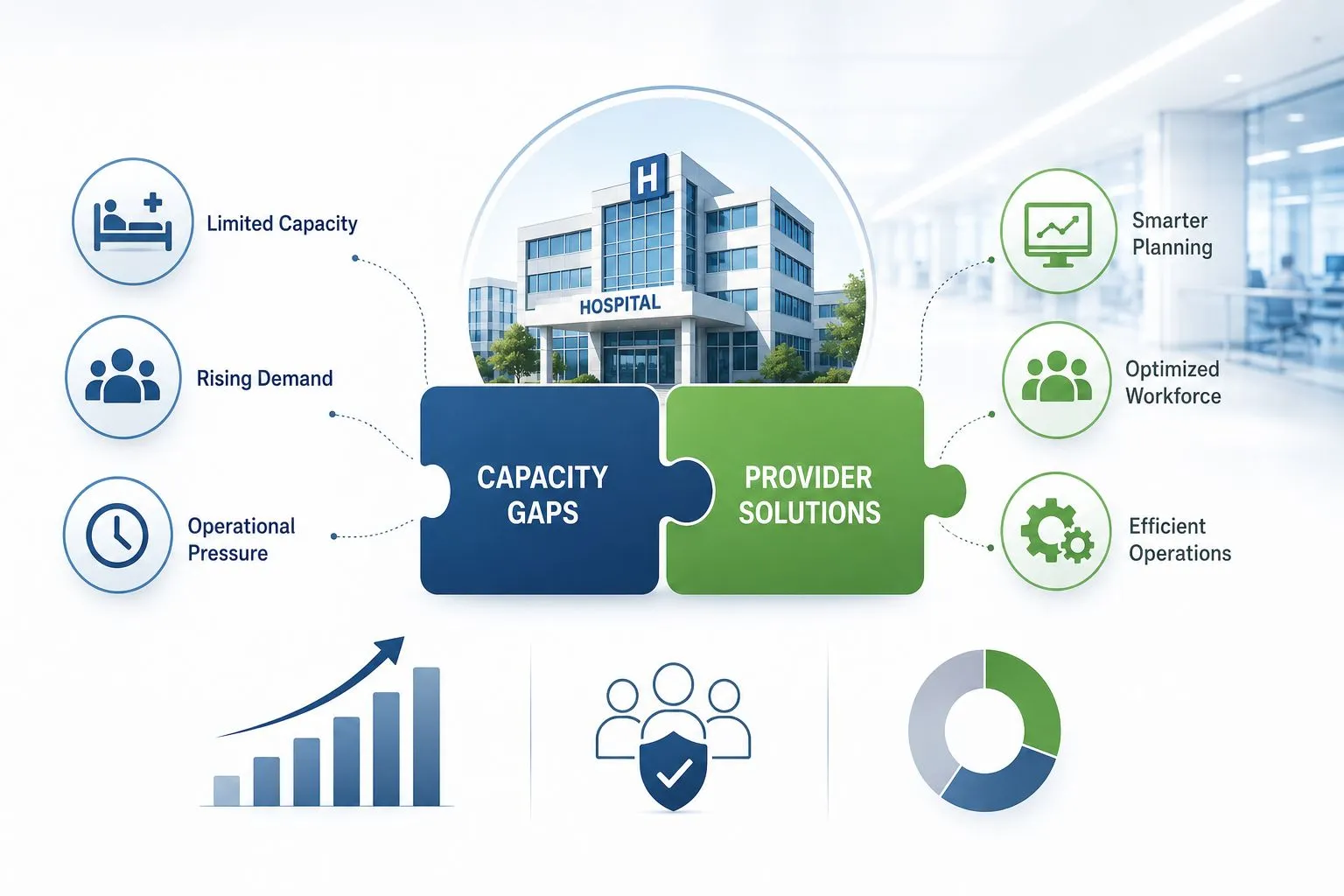
Hospitals rarely run out of beds because they lack buildings. They run out of beds because patients who no longer need to be there haven't been discharged, staff schedules don't match patient volume, or nobody in the building has a real-time view of which of the 40 things that need to happen next actually matter. That operational puzzle is what the patient throughput and capacity management market exists to solve, and it has become one of the more consequential corners of health IT: not because it's new, but because the tools for solving it finally work at scale.
This piece lays out what the market actually looks like today: its size and structure, why bed and staffing constraints are measurably different across countries and hospital types, which of the sector's named technology and services companies have made real moves in the past year, and where the persistent bottleneck workforce, not square footage still sits.
Understanding the Patient Throughput and Capacity Management Market
Next Move Strategy Consulting valued the global patient throughput and capacity management market at USD 1.26 trillion in 2024, projecting it will reach USD 1.69 trillion by 2030 a compound annual growth rate of 4.9% across the 2025–2030 forecast window. That figure spans far more than dedicated bed-management software; it captures the full range of workflow, staffing, and coordination spending hospitals make to keep patients moving safely through a system. The market's own segmentation, summarized below, reflects that breadth.
Patient Throughput and Capacity Management Market Segmentation
|
Segment category |
Key sub-segments |
|
Product type |
Workflow Management · Asset Management · Bed Management · Quality Patient Care · Real-Time Locating Systems (RTLS) · Event-Driven Solutions |
|
Solution type |
Standalone · Integrated |
|
Delivery mode |
On-Premise · Cloud-Based |
|
Application |
Bed Management · Nursing & Staff Scheduling · Patient Flow Tracking · Care Coordination Tools · Others |
NMSC's analysis identifies rising healthcare demand an aging population and greater chronic-disease prevalence as the primary growth driver, alongside financial pressure on health systems to extract more throughput from existing beds rather than build new ones. The clearest restraint working against that growth is the same one hospitals have wrestled with since the pandemic: limited beds and limited staff, a constraint that technology can ease but not eliminate on its own.
Section summary: this is a trillion-dollar-scale market built on operational software, not new construction.
-
NMSC forecasts growth from $1.26T (2024) to $1.69T (2030) at a 4.9% CAGR.
-
Segmentation spans workflow, asset, bed, and event-driven solutions, delivered on-premise or via the cloud.
-
Bed and staffing scarcity remain the clearest brake on how fast hospitals can adopt new capacity tools.
Why Hospitals Are Running Out of Room
The pressure is measurable, and it varies far more by country than most operators assume. According to OECD health statistics, the average OECD hospital reported a curative (acute) care bed occupancy rate of 72% in 2023, but that average obscures wide swings: Ireland and Canada both ran above the commonly cited 85% safe-capacity threshold, a level above which the risk of bed shortages and hospital-acquired infection rises sharply.
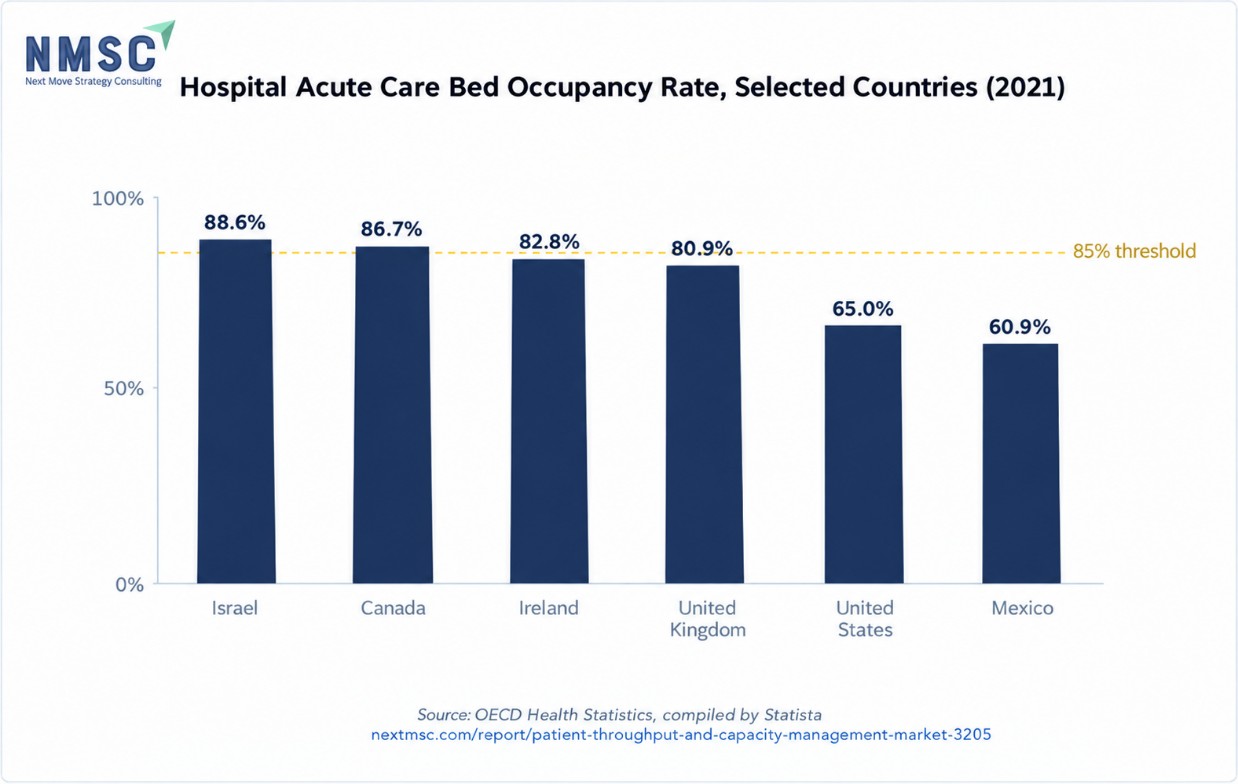
Israel and Canada sit at the top of that comparison, with the United States and Mexico running well below the safe-capacity line a gap that reflects bed supply as much as demand, since the OECD separately reports that the U.S. maintains far fewer hospital beds per 1,000 population than high-bed-density systems like Korea and Japan. The practical takeaway for operators is that occupancy alone doesn't tell the whole story: a system can be short on capacity even at a seemingly comfortable average, if beds are unevenly distributed across units, shifts, or specialties.
Technology Is Doing the Heavy Lifting
Command centers and AI-driven bed-management platforms have moved from pilot projects to standard infrastructure at large health systems. Epic Systems now wins roughly 43.7% of new acute-care hospital EHR contracts, up from 42.3% a year earlier, according to KLAS Research data reported by Becker's Hospital Review in July 2026 and Epic's own Grand Central and Capacity Management Dashboards modules are increasingly bundled into that footprint. Johns Hopkins Medicine's enterprise-wide rollout of Epic's Capacity Management Dashboards in late 2025, replacing an older GE-based command-center display, is one of the clearest examples: the switch gave every Johns Hopkins hospital a single real-time view of patient flow at no additional Epic licensing cost, saving the health system roughly $500,000 a year in legacy software and hardware expenses.
GE HealthCare, for its part, is still expanding: the company opened its first Southern Hemisphere Command Center location across three Melbourne hospitals in 2026, extending a platform now used in close to 500 hospitals worldwide. Underneath both platforms sits a broader shift toward real-time location tracking the same RTLS in Healthcare technology segment named directly in NMSC's own market breakdown which is why RTLS specialists CenTrak (a Halma plc company) and Securitas Healthcare remain fixtures on the list of key players even though their day-to-day announcements are more about interoperability certifications than headline-grabbing launches. CenTrak earned Epic Toolbox designation and completed Rauland's Vendor Integration Partner validation in March 2026, both aimed at making its location data plug directly into the platforms hospitals already run.
Industry Leader Moves
Thirteen distinct companies were named as key players in this space (two entries in the original brief were duplicates and have been merged below). Their recent activity varies sharply in scale and relevance from platform-defining acquisitions to routine investor updates and the coverage below is weighted accordingly.
The platform players are consolidating around fewer, bigger moves
LeanTaaS, the company most singularly focused on this exact market, acquired Aidin a care-transition platform serving more than 200 hospitals across roughly 20 health systems on September 1, 2026, extending its iQueue platform from managing patients inside the hospital to coordinating their discharge into post-acute care. Care Logistics, a Jackson Healthcare company, continued rolling out its CareEdge digital platform alongside its long-standing operational-consulting model; the company reports outcomes including an average of 79 additional beds' worth of capacity unlocked per engagement, though that figure is vendor-reported rather than independently audited. McKesson Corporation's most significant 2026 move an agreement to acquire oncology-focused Precision Medicine Group for approximately $2.25 billion, announced August 25, 2026 sits mostly outside this market's core throughput technology, reflecting McKesson's broader diversification into specialty and oncology services rather than a capacity-management-specific bet.
Data and interoperability, not new hardware, defined the RTLS and EHR players
Veradigm launched its Health Network Architecture in May 2026, giving independent physician practices a single real-time view of clinical, financial, and operational performance the kind of capability that large health systems have had for years and that Veradigm is now extending downmarket. HealthStream posted record second-quarter 2026 results (revenue of $83.7 million, up 12.5% year over year, and adjusted EBITDA of $20.6 million, up 16.9%), a reminder that workforce competency and training software is itself part of the capacity equation: a hospital can't safely flex staff across units without confidence in who's qualified to work where. NXGN Management operating as NextGen Healthcare picked up industry recognition for AI-driven work and partnered with the National Association of Community Health Centers in the first half of 2026, continuing its focus on ambulatory rather than inpatient capacity.
Two named players had no verifiable recent activity
Navvis & Company and Infinitt Healthcare were both named as key players in this market, but no globally reported, independently verifiable development from either company met this article's six-month evidentiary bar. That gap is stated plainly rather than papered over with generic company description, consistent with the rule that a missing data point should be disclosed, not filled in.
Patient Throughput and Capacity Management Industry Leader Moves, 2026
|
Company |
Recent move |
Date |
Scale / value |
|
Epic Systems Corporation |
Expanded acute-care EHR footprint; Johns Hopkins went live system-wide with Epic Capacity Management Dashboards |
Jul 2026 (KLAS data); Oct/Nov 2025 (Johns Hopkins) |
43.7% of new hospital EHR contracts, up from 42.3% |
|
GE HealthCare |
Opened first Southern Hemisphere Command Center at three Melbourne hospitals |
~Jul 2026 |
Close to 500 hospitals globally use Command Center |
|
LeanTaaS |
Acquired Aidin, a post-acute care transition platform |
Sep 1, 2026 |
200+ hospitals, ~20 health systems added |
|
Care Logistics (a Jackson Healthcare company) |
Continued CareEdge platform rollout paired with command-center consulting |
Ongoing, 2026 |
Vendor-reported: avg. +79 beds of added capacity |
|
McKesson Corporation |
Agreed to acquire Precision Medicine Group (oncology/clinical research) |
Aug 25, 2026 |
~$2.25B; not primarily a throughput-tech deal |
|
CenTrak, Inc. (a Halma plc company) |
Received Epic Toolbox designation and Rauland VIP interoperability validation |
Mar 24, 2026 |
Not disclosed |
|
Securitas Healthcare LLC |
Continued RTLS/asset-tracking portfolio operation (AeroScout/Stanley Healthcare heritage) |
Ongoing, 2026 |
Not disclosed |
|
Veradigm LLC |
Launched Veradigm Health Network Architecture for independent practices |
May 6, 2026 |
Early-adopter rollout; scale not disclosed |
|
HealthStream, Inc. |
Reported Q2 2026 results: record quarterly revenue and adjusted EBITDA |
Aug 3, 2026 |
Revenue $83.7M (+12.5% YoY); EBITDA $20.6M (+16.9%) |
|
Halma plc |
Parent company of CenTrak; continued portfolio-wide healthcare-safety infrastructure investment |
Ongoing, 2026 |
Not disclosed at subsidiary level |
|
NXGN Management, LLC (NextGen Healthcare) |
Received Stevie Award for AI-driven success; partnered with NACHC on digital innovation |
Apr–May 2026 |
Not disclosed |
|
Navvis & Company, LLC |
No globally-reported material development identified in the period |
|
Not disclosed |
|
Infinitt Healthcare Co., Ltd. |
No globally-reported material development identified in the period |
|
Not disclosed |
Industry impact: the market is converging on interoperability rather than standalone hardware.
-
Large EHR platforms (Epic, Veradigm, NextGen) are absorbing capacity-management features directly rather than leaving them to standalone vendors.
-
RTLS specialists (CenTrak, Securitas Healthcare) are competing on certification and integration depth, not new tracking hardware.
-
The most capacity-specific vendors (LeanTaaS, Care Logistics) are expanding the definition of throughput to include what happens after discharge, not just inside the hospital.
Staffing Remains the Real Constraint
Every technology in this market ultimately runs into the same wall: a dashboard cannot staff a unit. The World Health Organization's most recent estimate, presented to its Executive Board in December 2024 and reaffirmed in WHO communications as recently as May 2026, put the global health workforce shortage at 14.7 million workers in 2023, projected to fall to 11.1 million by 2030 an upward revision from the 10.2 million WHO had projected as recently as 2022, driven by slowing progress in specific regions.
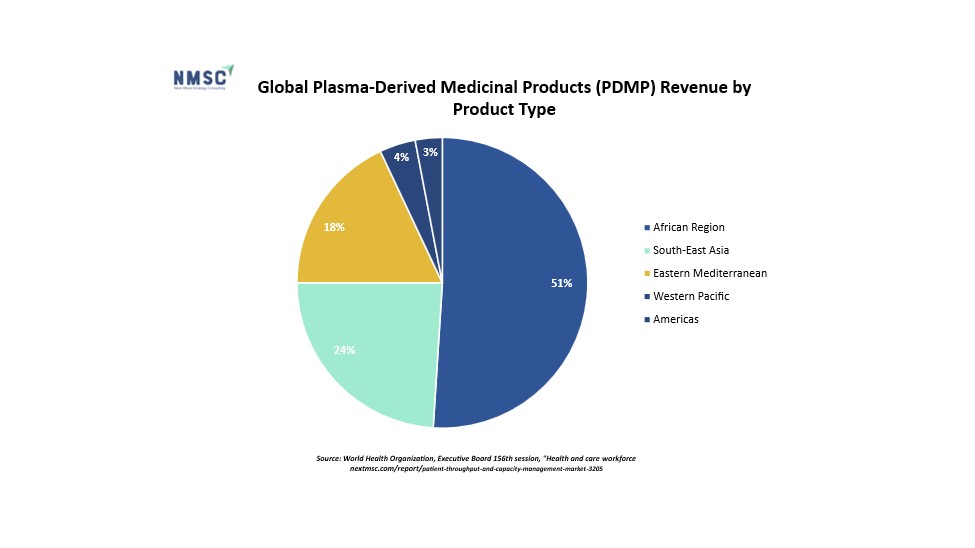
More than half of that projected 2030 shortage 51% will fall on the WHO African Region alone, with another 24% concentrated in South-East Asia and 18% in the Eastern Mediterranean Region; the Region of the Americas and Europe together account for well under 5%. For health systems in lower-shortage regions, the constraint shows up less as an absolute worker deficit and more as scheduling rigidity which is exactly the gap that contingent and per-diem staffing platforms like Nursa's facility-side marketplace are built to close, by letting hospitals fill open nursing shifts on short notice rather than leaving beds staffed below plan.
Market Challenges: Data Silos Still Slow Everything Down
NMSC's own analysis names data silos and a lack of interoperability between systems as a persistent challenge, even as individual platforms improve. That's consistent with what's happening on the ground: Veradigm's Health Network Architecture and CenTrak's Epic Toolbox certification are both, in effect, admissions that a hospital's various systems EHR, RTLS, staffing, and scheduling still don't talk to each other well enough by default. The broader push toward health information exchange standards is the industry's structural answer to that problem, even though progress remains uneven across health systems of different sizes.
Market Opportunities and Future Outlook
NMSC's analysis points to integrated, end-to-end capacity platforms as the clearest opportunity: real-time bed visibility, predictive demand analytics, and automated bottleneck alerts combined into one system rather than stitched together from separate tools. That's precisely the direction Epic's Capacity Management Dashboards, GE HealthCare's Command Center, and LeanTaaS's expanded iQueue-plus-Aidin platform are all moving which suggests the next phase of competition in this market will be fought less over who has the best individual feature and more over who can absorb the most of a hospital's operational data into a single, coherent view. The same logic extends to healthcare predictive analytics, which underpins nearly every demand-forecasting claim made by the vendors profiled above, and to imaging-adjacent capacity tools relevant to companies like Infinitt Healthcare as medical imaging volumes continue to strain scheduling systems in their own right.
Future outlook: integration, not invention, will decide the next round of winners.
-
Command-center and dashboard platforms are converging with core EHR systems rather than remaining separate products.
-
Workforce and scheduling tools are increasingly treated as capacity infrastructure, not a separate HR concern.
-
Vendors that can demonstrate independently verifiable outcomes not just vendor-reported figures will have a real differentiation advantage as buyers grow more skeptical of unaudited claims.
Conclusion
The patient throughput and capacity management market is ultimately a bet that most hospitals are already sitting on more usable capacity than their occupancy numbers suggest if the data, the staffing, and the software are finally pointed in the same direction. The health systems making the fastest progress right now, from Johns Hopkins to the Melbourne hospitals now running GE HealthCare's Command Center, aren't the ones with the newest buildings. They're the ones that stopped treating patient flow as an afterthought and started managing it with the same rigor they apply to clinical care itself.
|
Get the full market picture Full market sizing, forecast data, and segment-level detail for the patient throughput and capacity management market are available in NMSC's complete syndicated report. |
About the Author
 Sanyukta Deb
— Sanyukta Deb is Digital Marketing Team Lead at Next Move Strategy Consulting, where she has led content strategy and technical SEO for the firm's B2B market research publications for over 2 years. Her editorial process translates NextMSC's primary and secondary research — spanning technology, industrial, and consumer sectors — into commercial narratives, backed by search-intent, keyword, and competitive analysis. She brings 5 years of overall experience in digital marketing and content strategy.
Sanyukta Deb
— Sanyukta Deb is Digital Marketing Team Lead at Next Move Strategy Consulting, where she has led content strategy and technical SEO for the firm's B2B market research publications for over 2 years. Her editorial process translates NextMSC's primary and secondary research — spanning technology, industrial, and consumer sectors — into commercial narratives, backed by search-intent, keyword, and competitive analysis. She brings 5 years of overall experience in digital marketing and content strategy.
About the Reviewer
 Debashree Dey
— Debashree Dey is Assistant Manager at Next Move Strategy Consulting, where she supports cross-vertical market content and communications across diverse industries for 6 years. Her professional background includes senior content writing, communications, and published manuscript authorship, with experience developing audience-focused business narratives and maintaining clear, consistent messaging. Her role supports research-led content development and editorial quality across NextMSC publications.
Debashree Dey
— Debashree Dey is Assistant Manager at Next Move Strategy Consulting, where she supports cross-vertical market content and communications across diverse industries for 6 years. Her professional background includes senior content writing, communications, and published manuscript authorship, with experience developing audience-focused business narratives and maintaining clear, consistent messaging. Her role supports research-led content development and editorial quality across NextMSC publications.


















Add Comment