How AI Is Reshaping the Prefabricated Data Center Market
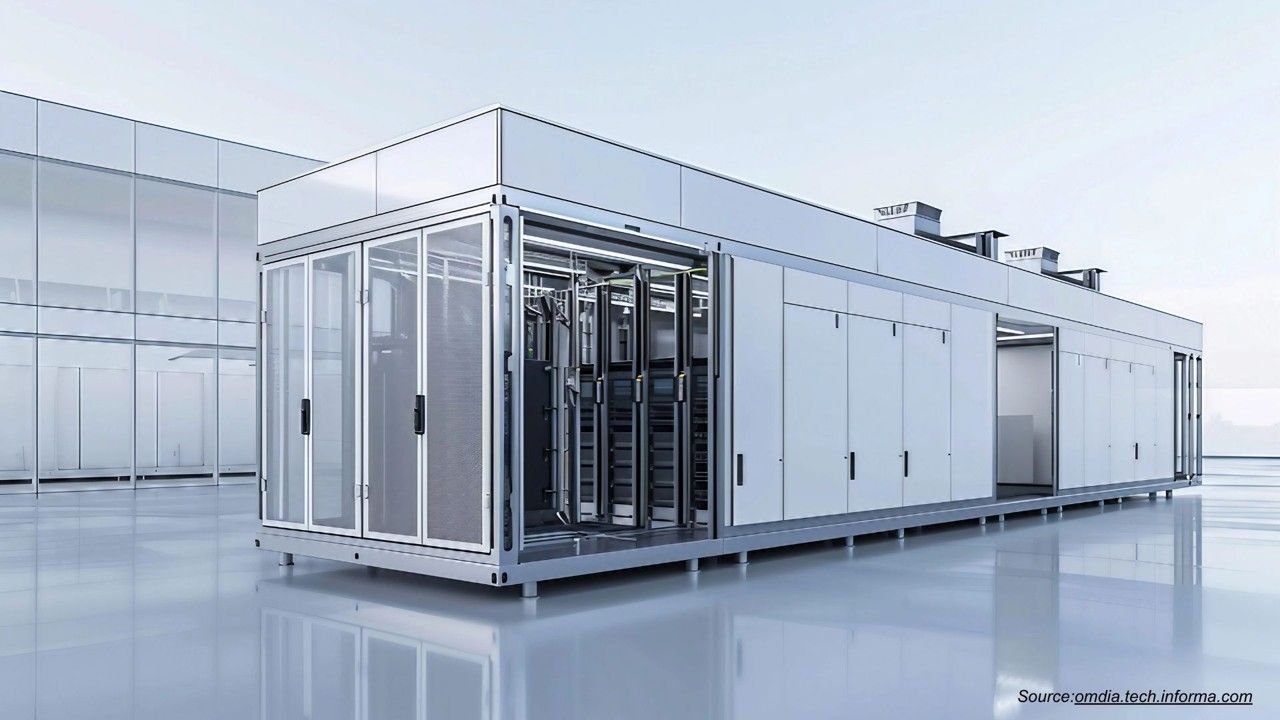
The global Prefabricated Data Center Market was valued at USD 17.80 billion in 2025 and is projected to reach USD 52.45 billion by 2035, growing at a CAGR of 10.34% from 2026 to 2035. AI-ready power, factory-integrated cooling, digital engineering, and scalable modular design are changing how operators add capacity.
Prefabricated data centers use factory-engineered and tested IT, power, cooling, and ancillary modules that can be deployed as containerized or uncontainerized systems. For cloud service providers and colocation operators, the attraction is not simply a faster build: standardized modules can be manufactured while site preparation and utility work progress in parallel. This article examines four technology shifts that are redefining module specifications, commissioning, and deployment strategy.
For an In-depth Analysis of the Prefabricated Data Center Market, Try a FREE Sample.
How AI Rack Density Is Driving Megawatt-Scale Power Modules
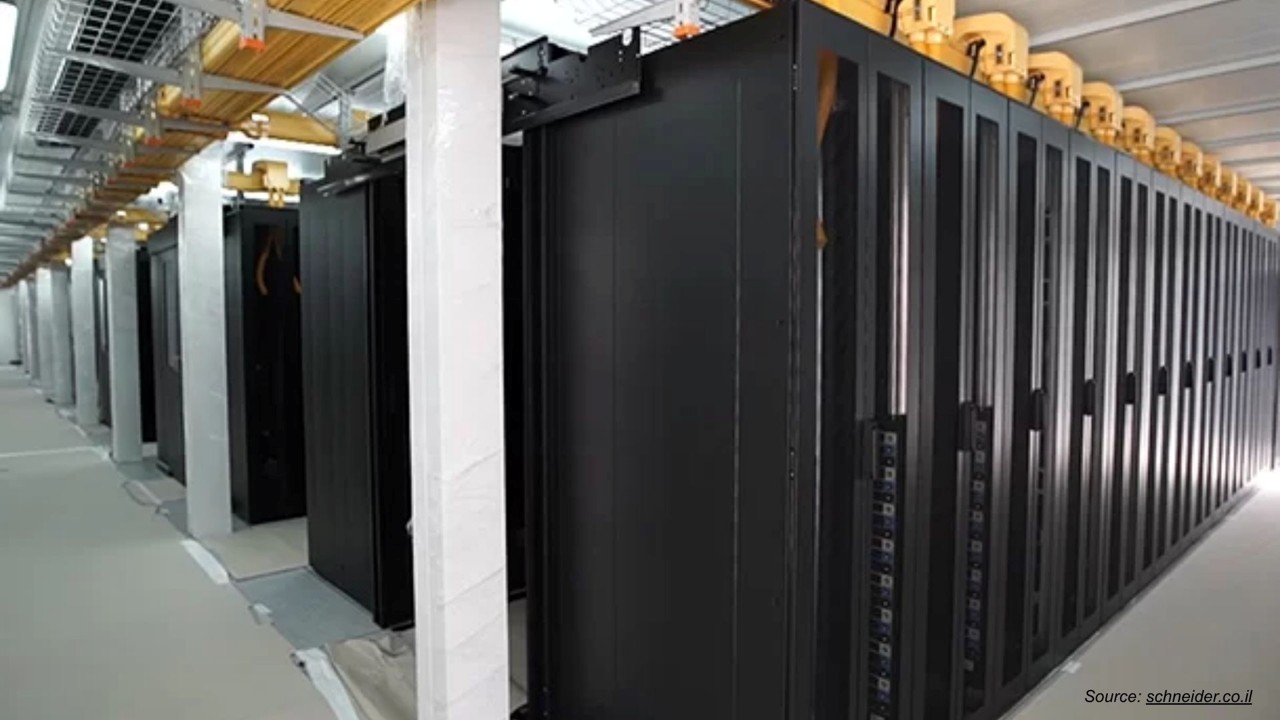
AI training and inference workloads are raising the electrical requirements of data centers. High-performance processors and dense GPU clusters increase rack power needs, requiring close coordination between power distribution, redundancy, thermal management, and the physical arrangement of IT equipment. A prefabricated power module can package several of these elements into a standardized unit that is tested before shipment.
On 16 September 2026, Schneider Electric introduced prefabricated Power Modules and Power Skids in 2 MW, 2.25 MW, and 2.5 MW configurations. Its official announcement says the solutions use standardized reference designs developed with NVIDIA to support its GB300 NVL72 platform, including integrated power management and liquid-cooling controls. Schneider Electric stated that deployment timelines could be as little as six months.
This launch reflects a shift toward repeatable, factory-engineered power infrastructure rather than designing every electrical system from scratch. Standardization can improve procurement predictability, reduce on-site integration work, and make expansion easier to plan. For hyperscale and neocloud operators, the commercial value comes from aligning module delivery with construction milestones and the date when utility power becomes available.
However, a factory-ready module does not remove every project bottleneck. Switchgear and transformer availability, permitting, grid interconnection, and site readiness still affect when a completed facility can be energized. Buyers therefore need to assess module capacity and delivery commitments alongside the full power-on schedule.
Key takeaway: AI readiness is becoming a systems-integration challenge, not simply a compute specification. Buyers should compare power capacity, UPS and switchgear architecture, cooling compatibility, and commissioning plans as one package; rapid factory delivery has limited value if grid energization or site readiness remains unresolved.
Why Liquid Cooling Is Becoming a Factory-Integration Priority
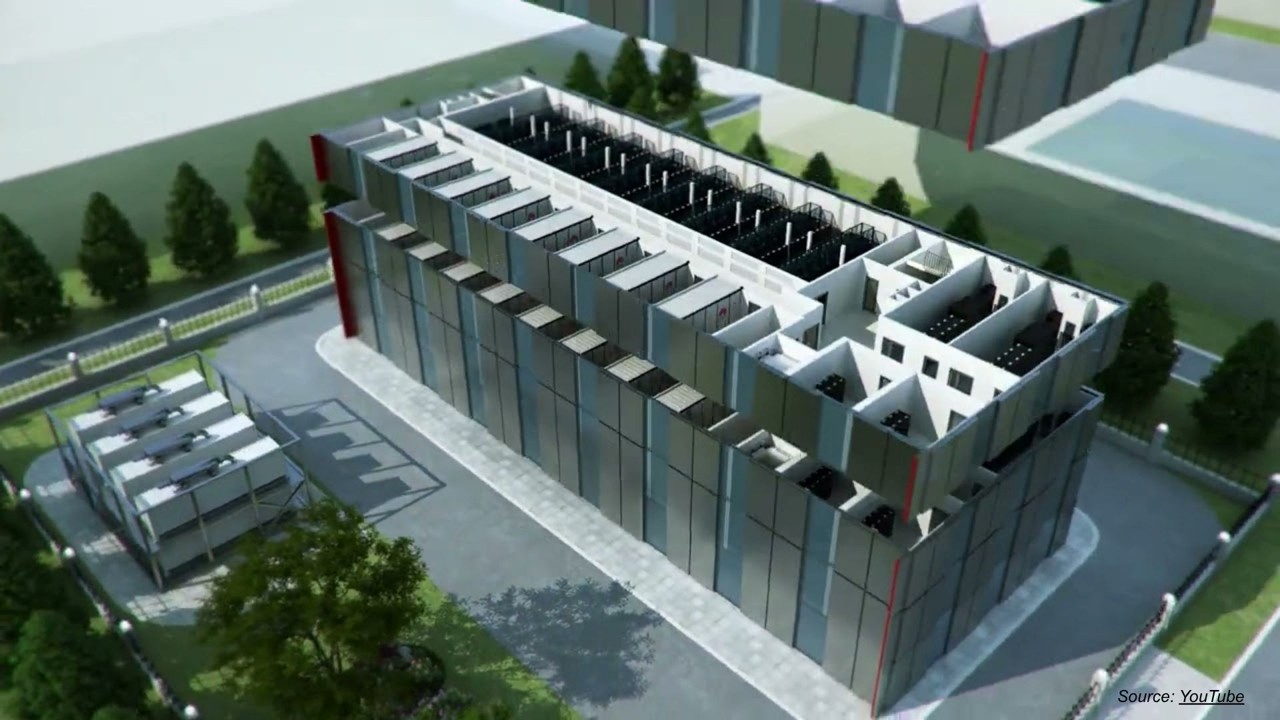
Higher rack densities are making thermal design a more important part of prefabricated infrastructure. Air-only cooling remains relevant across many installations, but direct liquid cooling and hybrid architectures are attracting attention as AI workloads intensify. Integrating coolant distribution units, manifolds, piping interfaces, and monitoring within factory-built modules can help suppliers test compatibility before equipment reaches the customer site.
Eaton completed its acquisition of Boyd Thermal on 12 March 2026, adding liquid-cooling capabilities to its data center power portfolio. In its acquisition announcement, Eaton described the transaction as a step toward an integrated grid-to-chip offering. The strategic direction is clear: power and thermal systems are increasingly being planned as connected infrastructure rather than separate equipment purchases.
NMSC’s product-type estimates show how this transition fits into the market’s revenue mix:
Product Type, 2025–2035 (USD Billion)
|
Product Type |
2025 Revenue (USD Bn) |
CAGR (2026–2035) |
|
IT Modules |
6.58 |
10.54% |
|
Power Modules |
5.08 |
9.58% |
|
Cooling Modules |
3.65 |
11.94% |
|
Other Modules |
2.49 |
8.62% |
|
Total |
17.8 |
10.34% |
IT Modules are the largest product category in the 2025 estimates, while Cooling Modules have the fastest projected growth among the listed product types. This suggests that established IT infrastructure will remain an important revenue base, but thermal management is gaining strategic importance as operators accommodate higher-density computing. The segment growth rates are forecasts rather than guaranteed outcomes, and actual demand will depend on deployment mix and project economics.
Consolidation also points to greater integration across power and cooling. On 1 October 2026, nVent announced completion of its acquisition of Maverick Power, adding engineered power distribution and integrated modular solutions to its data center offerings. The company announcement distributed by GlobeNewswire describes the deal as broadening its system-level power architectures and services. Together with Eaton’s Boyd Thermal acquisition, the development illustrates how suppliers are building wider portfolios around the physical requirements of AI infrastructure.
“Boyd Thermal’s expertise in liquid cooling will enable us to continue to meet soaring AI-driven demand. We’ll deliver integrated solutions from grid to chip…”
- Paulo Ruiz, CEO, Eaton Corporation plc, Eaton announcement, 12 March 2026.
For buyers, liquid cooling requires more than selecting a cooling module. Procurement teams should check rack-level heat loads, coolant distribution, redundancy, maintenance access, fluid compatibility, and the supplier’s commissioning process. Hybrid designs may offer a practical transition route where operators need to combine liquid-cooled AI racks with existing air-cooled infrastructure.
How Digital Twins Are Improving Design, Testing, and Commissioning
Digital engineering helps module manufacturers identify design conflicts before fabrication and gives operators a clearer view of how power, cooling, and IT components are expected to work together. Building information modelling (BIM), simulation, equipment monitoring, and digital commissioning records can be used to validate spatial arrangements, review operating scenarios, and document the configuration delivered to the site.
Huawei’s FusionDC1000C prefabricated modular data center documentation describes pre-integrated and pre-tested modules, including IT, power, battery, and cooling functions. Huawei also presents its data center infrastructure management and AI-assisted management tools as part of the lifecycle approach. The example shows how digital supervision can complement factory-based assembly: the equipment is packaged physically, while its configuration and operating status can be managed through a coordinated information layer.
These tools are most useful when the information remains consistent from design through operation. A digital model that is disconnected from the installed equipment will have limited value; a traceable set of drawings, configuration records, and commissioning results can support maintenance teams and make later capacity changes easier to evaluate. The aim is to reduce avoidable site rework and improve visibility, not to assume that simulation can eliminate all commissioning risks.
Regulatory attention to measured performance is also increasing. On 21 September 2026, the European Commission outlined a proposed common rating scheme for data centers and opened consultation on minimum performance standards. Its announcement on the EU rating system says the proposed scheme would cover individual facilities above 500 kW and improve transparency around resource use. The proposal is not the same as a finalized minimum-performance rule, but the direction reinforces the value of reliable operational data.
For manufacturers, digital commissioning can therefore become part of the product offer rather than an internal engineering step. Suppliers that provide documented testing, clear configuration records, and useful monitoring interfaces can help customers evaluate performance at handover and manage modules over their operating life.
Inline CTA Band
Band Title: Inside the Prefabricated Data Center Market Report
Band Subline: Product-type segmentation, cooling technologies, competitive analysis, 38-country coverage, and forecasts for 2026–2035.
Band Button: “Explore the Full Report”
Why Edge AI Is Accelerating Modular Manufacturing and Deployment
Not every workload belongs in a large centralized campus. Telecommunications operators, industrial sites, governments, and distributed enterprises may need computing capacity near the point where data is produced. Containerized systems and other prefabricated modules can serve these settings where a conventional data hall is unavailable, a remote site has limited installation resources, or capacity must be added in stages.
Vertiv launched OneCore globally on 5 August 2025. Its official announcement describes a factory-assembled solution that integrates power, thermal, and IT infrastructure for high-density data centers of 5 MW and above. The platform is aimed at a range of environments, including enterprise, colocation, sovereign, and neocloud facilities. By combining several infrastructure elements within one delivery model, the approach is designed to reduce on-site coordination and simplify project execution.
Manufacturing capacity is also becoming a competitive factor. In May 2026, Armada announced a USD 230 million Series B funding round and a framework agreement with Johnson Controls to support modular data center production at a planned Arizona factory. Its announcement described a facility of up to 400,000 square feet intended to support high-density AI infrastructure. In August 2026, Armada also introduced its 10 MW Orion Galleon modular data center, extending its product range for distributed AI deployments.
These moves connect product design with the ability to manufacture repeatable modules at scale. Regional production may help suppliers respond to demand and reduce dependence on long-distance equipment shipments, although the actual benefit will depend on supplier availability, logistics, factory utilization, and local content requirements. Vendors also need to balance standardization with the customization required for different climates, electrical systems, security needs, and site layouts.
For end users, modular deployment can support staged capacity growth and bring compute closer to distributed workloads. Yet the choice between prefabricated and conventional construction still depends on site conditions, scale, delivery requirements, and lifecycle cost. Modular solutions are most compelling when factory integration and repeatability outweigh the costs of transport and adaptation.
Taken together, AI-ready power systems, integrated liquid cooling, digital engineering, and scalable manufacturing are changing how data center capacity is planned and delivered. NMSC projects the market to grow from USD 17.80 billion in 2025 to USD 52.45 billion by 2035, at a 10.34% CAGR from 2026 to 2035. The outlook depends not only on technology adoption but also on grid availability, component supply, and the ability to align equipment delivery with commissioning. Suppliers that combine repeatable designs with service support and customers’ operational requirements will be better placed to compete as modular infrastructure scales.
About the Author
 Liza Phukan
— Liza Phukan is Research Associate at Next Move Strategy Consulting, where she has covered emerging industries and market research across sectors for 3.5 years. Her work includes analyzing industry developments, validating market data, and developing structured business content from research findings. She uses secondary research and data-validation practices to turn complex market information into clear decision-useful market analysis for business audiences and support report development and B2B.
About the Reviewer
 Supradip Baul
— Supradip Baul is an accomplished business consultant and strategist with over a decade of rich experience in market intelligence, strategy, technology, and business transformation. His work has included rigorous qualitative and quantitative analysis across multiple industries, helping clients shape investment decisions and long-term roadmaps. Earlier in his career, he was associated with Gartner, where he contributed to industry-leading reports and market share analyses. He has worked with leading global companies and holds an MBA with a dual specialization in Marketing and Finance.
















Add Comment