Data Center Infrastructure Market: 5 Trends Reshaping the Next Generation of Data Centers
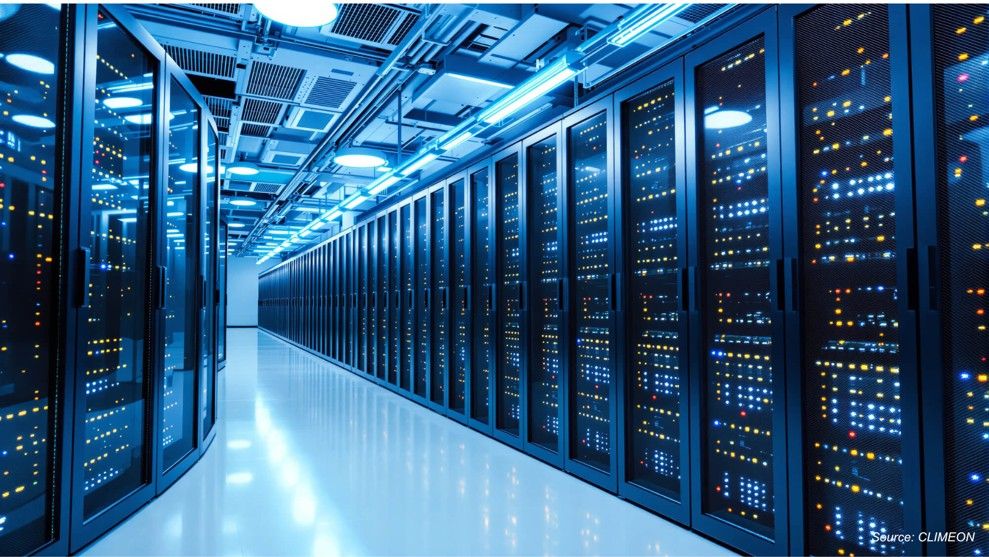
The global Data Center Infrastructure Market is entering a period of accelerated expansion as artificial intelligence, cloud computing, high-performance computing, and data-intensive digital applications increase the infrastructure requirements of modern data centers. The market was valued at USD 269.86 billion in 2025 and is projected to reach USD 795.17 billion by 2035, expanding at a CAGR of 10.3% from 2026 to 2035. The market is expected to reach USD 328.11 billion in 2026, reflecting continued investment in computing, power, cooling, networking, and supporting infrastructure.
In This Article
-
AI workloads are pushing data centers toward higher-density infrastructure architectures
-
Liquid cooling is becoming a critical infrastructure layer for high-density computing
-
Cloud data centers are emerging as the fastest-growing deployment environment
-
Tier IV facilities are gaining importance as reliability requirements increase
-
Software and services are becoming integral to infrastructure management and deployment
For an In-depth Analysis of the Egypt Data Center Colocation Market - Try a FREE Sample
AI Workloads Are Pushing Data Centers Toward Higher-Density Infrastructure Architectures
The Data Center Infrastructure Market is increasingly being shaped by the physical requirements of artificial intelligence and other high-performance computing workloads. As computing density rises, data center operators are redesigning infrastructure around higher rack power, advanced thermal management, optimized power distribution, and integrated facility architectures.
Recent industry developments illustrate the scale of this transition. In July 2026, Schneider Electric and AMD introduced a validated reference design for AMD's Helios rack-scale platform supporting 246 kW AI racks and modular AI clusters with up to 10.4 MW of IT load. The design combines AMD computing with Schneider Electric's power, cooling, and digital infrastructure technologies, highlighting the movement toward integrated infrastructure architectures for AI deployment.
Dell Technologies also introduced the PowerEdge XE8812 in June 2026 as part of its Dell AI Factory with NVIDIA. The platform uses NVIDIA Vera Rubin NVL4 architecture and supports up to 144 GPUs per rack in the PowerRack 9100, illustrating the continued increase in compute density across AI and HPC infrastructure.
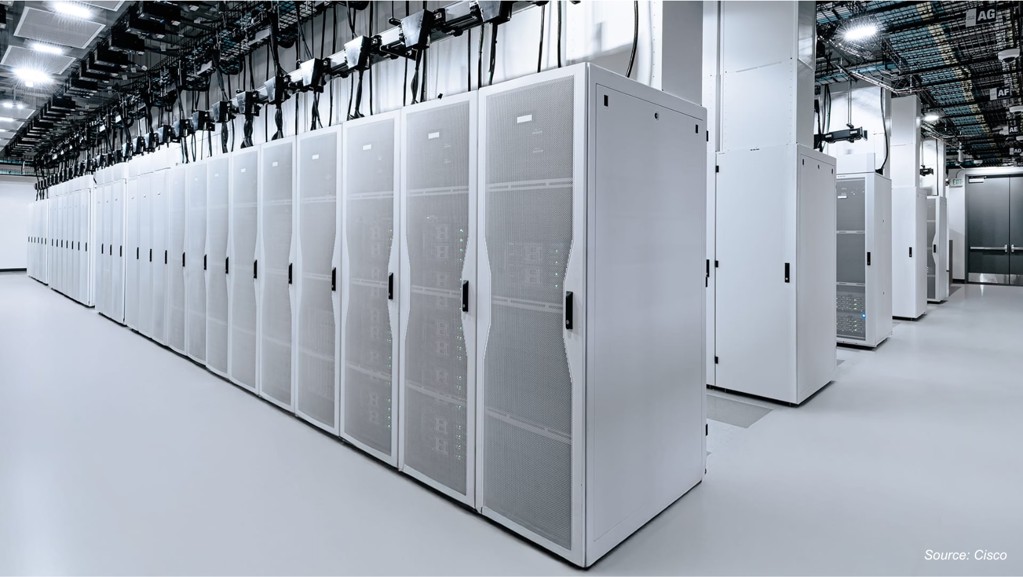
These developments are shifting infrastructure planning from individual component selection toward coordinated system design. Power delivery, rack architecture, cooling, networking, monitoring, and physical space are increasingly evaluated together because performance constraints in one infrastructure layer can affect the efficiency of the entire computing environment.
For data center developers and operators, this transition is also changing deployment priorities. Higher-density racks require greater electrical capacity, more advanced thermal management, and infrastructure configurations that support future expansion without extensive redesign. As AI workloads continue to influence facility planning, infrastructure providers are increasingly competing on their ability to deliver scalable, high-density environments rather than isolated hardware products.
Liquid Cooling Is Becoming a Critical Infrastructure Layer for High-Density Computing
The growth of AI and HPC workloads is increasing the importance of thermal management across data center infrastructure. Traditional air-cooling architectures continue to serve a broad installed base, but higher rack densities are creating stronger demand for liquid-based thermal management technologies. This shift is reflected in recent product and deployment activity. In July 2026, Supermicro expanded its Data Center Building Block Solutions portfolio with ten rear-door heat exchanger models supporting cooling capacities from 10 kW to 120 kW. The company positioned the systems for high-density AI and HPC environments and designed them to provide liquid-cooling options for both new and existing data centers.
The significance of this development extends beyond new facilities. Retrofit compatibility is becoming important as operators seek to introduce higher-density computing into existing data centers without replacing entire infrastructure systems. Rear-door heat exchangers and other hybrid cooling approaches provide a pathway for increasing thermal capacity while maintaining portions of an existing facility architecture.
Vertiv's July 2026 deployment for the Naval Postgraduate School provides another example. The company deployed integrated power, liquid cooling, rack infrastructure, and installation services to support the site's NVIDIA DGX GB300 system. Vertiv described the installation as a high-density, liquid-cooled AI environment involving power protection and distribution, AI infrastructure racks, liquid-cooling technologies, fluid management, and commissioning support.
The increasing relevance of liquid cooling is also closely connected to the broader market shift toward integrated infrastructure. Cooling is no longer treated simply as a facility-support function when high-density compute is involved. Thermal architecture directly influences rack deployment, power utilization, system reliability, and the ability to scale computing capacity. As a result, cooling technologies are becoming a central area of infrastructure differentiation. Providers are expanding their portfolios across rear-door heat exchangers, direct liquid cooling, coolant distribution systems, thermal management software, and integrated power-and-cooling designs to address the requirements of increasingly dense AI environments.
Cloud Data Centers Are Emerging as the Fastest-Growing Deployment Environment
The expansion of cloud computing continues to reshape the Data Center Infrastructure Market as organizations rely on external infrastructure providers for scalable compute, storage, networking, and AI capacity. Among the major data center types, cloud data centers are projected to record the fastest growth through 2035.
The cloud data center segment was valued at USD 84.90 billion in 2025 and is projected to reach USD 317.09 billion by 2035, representing a 12.96% CAGR from 2026 to 2035. This compares with 9.92% for colocation data centers and 7.98% for enterprise data centers. The widening gap in growth rates reflects the increasing infrastructure requirements of large-scale cloud and AI workloads. Cloud operators are building capacity around highly standardized, scalable architectures that support large computing clusters and rapidly expanding customer demand.
A June 2026 development involving Vultr, HPE, and NVIDIA demonstrates this direction. Vultr selected HPE and NVIDIA for large-scale AI data center deployments using NVIDIA GB300 NVL72 systems, NVIDIA Spectrum-X networking, liquid cooling, and HPE deployment services. The initiative also includes 400GbE and 800GbE networking to support large-scale AI clusters, model training, inference, and private-cloud workloads.
The increasing scale of cloud infrastructure is also changing procurement patterns across the data center ecosystem. Instead of purchasing isolated components, operators increasingly seek infrastructure architectures that can be replicated across multiple facilities and expanded as workload requirements increase.
This creates opportunities for suppliers across power systems, thermal infrastructure, servers, networking, racks, monitoring software, and deployment services. It also increases the importance of compatibility between infrastructure layers because cloud facilities depend on standardized configurations that can be deployed consistently across large numbers of sites.
Enterprise data centers remain strategically important, particularly for organizations with regulatory, security, latency, or control requirements. However, the higher projected growth rate of cloud data centers indicates that large-scale third-party infrastructure and cloud-based capacity are becoming increasingly important contributors to overall market expansion.
Inline CTA Band
Band Title:
Inside the Data Center Infrastructure Market Report
Band Subline:
2025–2035 market sizing, offering, data center type and tier segmentation, company analysis, and global market forecasts.
Band Button:
Explore the Full Report → https://www.nextmsc.com/report/data-center-infrastructure-market-4541
Tier IV Facilities Are Gaining Importance as Reliability Requirements Increase
Reliability and resilience remain fundamental requirements within data center infrastructure, particularly as organizations increasingly depend on always-on digital services and AI-enabled applications. This is strengthening demand for higher-tier facility architectures capable of supporting rigorous availability and fault-tolerance requirements.
The growth profile demonstrates that infrastructure investment is increasingly concentrated in facilities designed for more demanding availability requirements. Tier III remains a substantial segment, valued at USD 111.28 billion in 2025, but Tier IV's substantially faster projected growth indicates increasing investment in facilities with the highest level of infrastructure redundancy and fault tolerance.
This shift is particularly relevant to cloud operators, hyperscalers, financial institutions, telecommunications providers, and organizations running mission-critical workloads. Infrastructure interruptions can affect business operations, digital services, customer-facing applications, and AI processing environments, increasing the importance of resilient facility design. Higher-tier facilities also require more sophisticated infrastructure coordination. Electrical redundancy, backup power, cooling architecture, monitoring, physical infrastructure, and maintenance processes must operate within a tightly integrated reliability framework.
The rise of high-density AI further reinforces this requirement. As individual racks and computing clusters consume more power and generate greater thermal loads, infrastructure failures within a high-density environment can have a larger operational impact. Operators are therefore placing greater emphasis on infrastructure architectures that combine capacity expansion with reliability and maintainability.
As Tier IV facilities expand faster than lower-tier categories, the competitive landscape is also shifting toward providers capable of delivering highly integrated infrastructure solutions designed around uptime, redundancy, thermal performance, and long-term scalability.
Software and Services Are Becoming Integral to Infrastructure Management and Deployment
The Data Center Infrastructure Market is no longer defined solely by physical hardware. As infrastructure becomes more complex, software and services are increasingly important for deployment, monitoring, optimization, commissioning, maintenance, and lifecycle management. The faster growth of software reflects the increasing importance of visibility and control across increasingly complex infrastructure environments. Monitoring, automation, capacity management, thermal optimization, predictive maintenance, infrastructure orchestration, and operational analytics are becoming important components of modern data center management.
Recent company developments reinforce this shift toward integrated services. Vertiv's deployment for the Naval Postgraduate School combined physical infrastructure with engineering, installation, testing, commissioning, and deployment support, demonstrating how services increasingly form part of the infrastructure solution rather than functioning as a separate post-sale activity. HPE's involvement in Vultr's AI infrastructure expansion also demonstrates this integrated model, combining AI factory architecture with compute, networking, liquid cooling, specialized deployment expertise, and lifecycle support for large-scale environments.
The services layer is becoming particularly important as infrastructure deployments become more specialized. High-density AI environments require coordinated planning across power, cooling, rack architecture, networking, deployment sequencing, and commissioning. This increases demand for engineering and integration capabilities that connect individual infrastructure components into functioning operational environments.
The competitive structure is therefore evolving toward broader solution portfolios. Hardware providers are expanding into software and services, while infrastructure specialists are increasing their emphasis on integrated deployment capabilities. This convergence is creating a market in which customers increasingly evaluate the complete lifecycle of infrastructure, from design and installation through monitoring, maintenance, optimization, and expansion.
The Road Ahead for Data Center Infrastructure
The Data Center Infrastructure Market is evolving from a collection of individual facility components into an integrated technology ecosystem designed to support increasingly dense, scalable, and mission-critical computing environments. The market is projected to expand from USD 269.86 billion in 2025 to USD 795.17 billion by 2035 at a 10.3% CAGR.
Five structural changes are shaping this expansion. First, AI and high-performance computing are increasing rack density and raising the requirements for power, cooling, networking, and physical infrastructure. Second, liquid cooling is expanding as operators respond to higher thermal loads and the need to support dense computing environments. Third, cloud data centers are recording the fastest growth among the major data center types, with a projected 12.96% CAGR through 2035.
Fourth, Tier IV facilities are expanding at the fastest rate within the tier structure, with a projected 14.5% CAGR, reflecting the increasing importance of resilient infrastructure architectures. Fifth, software and services are gaining importance alongside hardware as operators seek greater infrastructure visibility, automation, deployment support, and lifecycle optimization.
Recent developments from Schneider Electric, AMD, Vertiv, Supermicro, HPE, Vultr, and Dell Technologies demonstrate how the market is responding to these changes through higher-density rack architectures, integrated power and cooling systems, liquid-cooling technologies, AI-ready infrastructure, advanced networking, and deployment services.
The competitive landscape is therefore moving toward integrated infrastructure solutions in which power, cooling, computing, networking, software, and services are increasingly designed and deployed as interconnected systems. This shift is expected to remain a defining characteristic of the global Data Center Infrastructure Market through 2035.
About the Author
 Mayurima Roy
— Mayurima Roy is Research Analyst at Next Move Strategy Consulting, where she has spent 4 years working across the firm's full industry coverage rather than a single fixed vertical. Her work centers on structured research, ongoing trend tracking, competitive assessment, and insight-led content development, translating complex market data into clear, decision-ready narratives that support informed client decision-making across diverse global industries, market sectors, and world regions every day.
Mayurima Roy
— Mayurima Roy is Research Analyst at Next Move Strategy Consulting, where she has spent 4 years working across the firm's full industry coverage rather than a single fixed vertical. Her work centers on structured research, ongoing trend tracking, competitive assessment, and insight-led content development, translating complex market data into clear, decision-ready narratives that support informed client decision-making across diverse global industries, market sectors, and world regions every day.
About the Reviewer
 Supradip Baul
— Supradip Baul is an accomplished business consultant and strategist with over a decade of rich experience in market intelligence, strategy, technology, and business transformation. His work has included rigorous qualitative and quantitative analysis across multiple industries, helping clients shape investment decisions and long-term roadmaps. Earlier in his career, he was associated with Gartner, where he contributed to industry-leading reports and market share analyses. He has worked with leading global companies and holds an MBA with a dual specialization in Marketing and Finance.
Supradip Baul
— Supradip Baul is an accomplished business consultant and strategist with over a decade of rich experience in market intelligence, strategy, technology, and business transformation. His work has included rigorous qualitative and quantitative analysis across multiple industries, helping clients shape investment decisions and long-term roadmaps. Earlier in his career, he was associated with Gartner, where he contributed to industry-leading reports and market share analyses. He has worked with leading global companies and holds an MBA with a dual specialization in Marketing and Finance.
















Add Comment