What Is Augmented Reality (AR) Cloud and Why Is It Becoming a Strategic Technology in 2026?
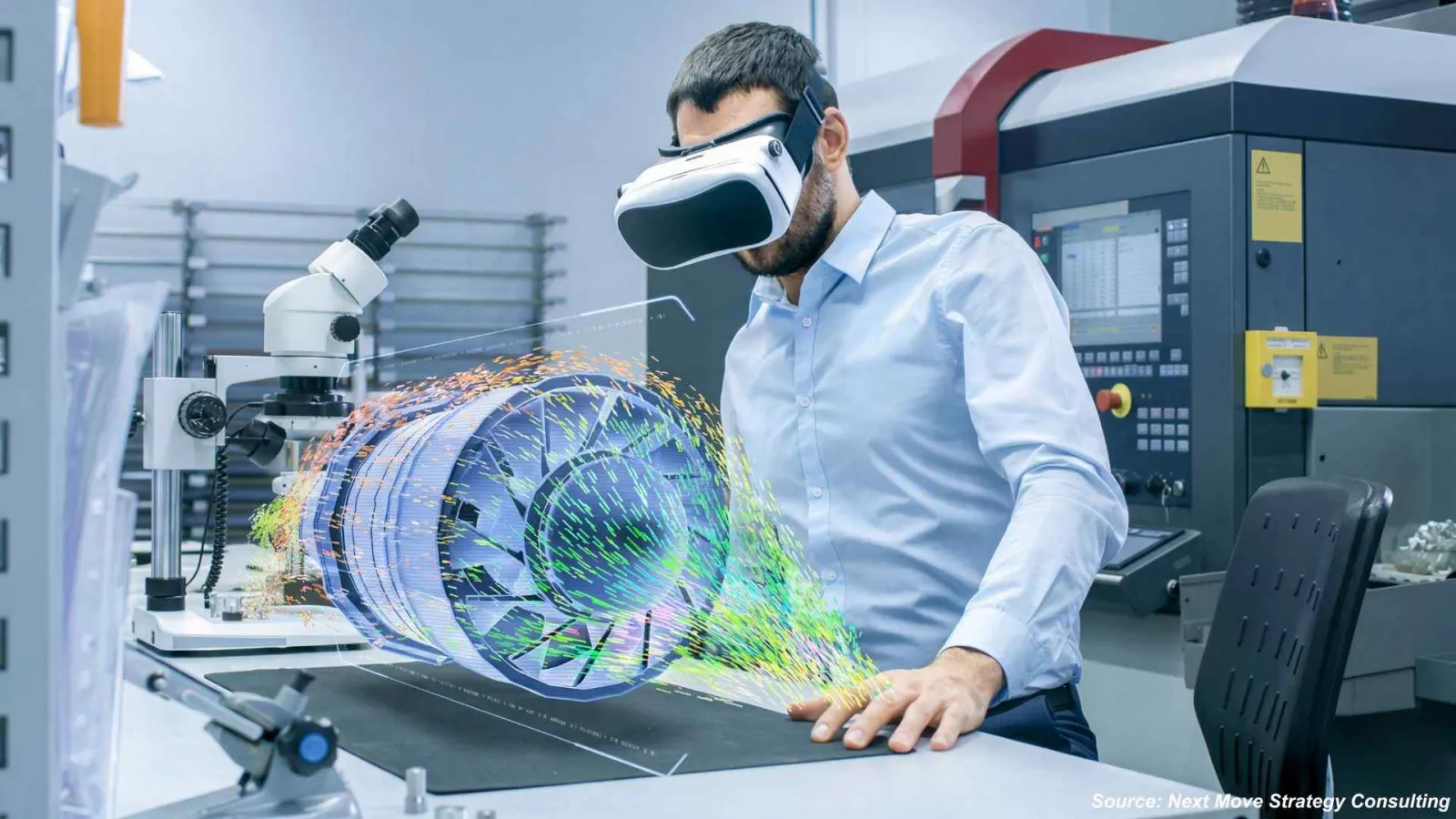
Augmented Reality (AR) Cloud Market is emerging as one of the most significant technologies shaping immersive digital experiences. As organizations continue to blend physical and digital environments, AR Cloud is creating new opportunities for industries that require visualization, remote interaction, training, and spatial computing capabilities.
Recent developments from Cirrus Aircraft and WiMi Hologram Cloud highlight how AR-powered ecosystems are evolving beyond consumer entertainment into enterprise applications. From immersive aviation experiences delivered through Apple Vision Pro to advanced computing architectures that may support future cloud-based digital environments, the technology landscape is entering a new phase of innovation.
For investors, corporate strategists, and business leaders, understanding the direction of AR Cloud is becoming increasingly important as organizations explore scalable digital experiences, training environments, and next-generation computing infrastructure.
How Is Augmented Reality (AR) Cloud Transforming Immersive Experiences?
One of the clearest examples of AR Cloud adoption comes from Cirrus Aircraft's launch of the Let's Go Fly! application for Apple Vision Pro.
The application allows users to experience a virtual flight inside a Cirrus SR22T aircraft through 180-degree video and spatial audio. Users can also interact with full-scale digital models of aircraft through Apple's mixed-reality environment.
This development demonstrates a key principle of AR Cloud: creating persistent digital experiences that overlay and enhance physical reality.
According to Cirrus, the objective is to introduce more people to aviation by making flight experiences accessible from home. The technology combines immersive visualization, digital assets, and spatial interaction to reduce traditional barriers to engagement.

How Is Augmented Reality (AR) Cloud Influencing Training and Workforce Development?
Aviation organizations are increasingly exploring immersive technologies for education and operational readiness. Unlike traditional training methods that often require costly physical equipment, immersive AR environments allow users to practice workflows, interact with systems, and understand procedures remotely.
CAE's approach focuses on:
-
Guided procedural training
-
Virtual cockpit interaction
-
Gesture-based controls
-
Remote familiarization with aircraft systems
The technology enables pilots to build operational familiarity before entering expensive full-flight simulators.
For organizations, this represents a potential shift toward more scalable and accessible workforce training models.

Key Takeaways
-
Remote learning environments improve accessibility.
-
Training costs may be optimized.
-
Workforce readiness can improve through simulation.
-
Immersive learning supports procedural retention.
How Could Advanced Computing Architectures Support the Future of Augmented Reality (AR) Cloud?
The long-term evolution of AR Cloud depends heavily on computing infrastructure capable of handling large-scale digital environments.
WiMi Hologram Cloud recently proposed a fault-tolerant quantum computing technology based on multi-hypercube codes.
WiMi states that the architecture could support large-scale multitasking environments through resource allocation mechanisms and logical isolation capabilities. The company also suggests that future quantum computing centers may operate similarly to modern data centers, enabling large-scale concurrent task execution.
Although the technology remains at the theoretical modeling and simulation stage, it illustrates how future computing platforms could eventually support increasingly complex AR Cloud environments.
Leading Companies Driving Innovation in the Fuel Cell Market
The fuel cell market features several prominent players, including Ballard Power Systems Inc., Hyster-Yale Materials Handling, Inc., Bloom Energy Corporation, Plug Power Inc., Toshiba Corporation, Clear Edge Power, Inc., SFC Energy AG, The Meditor Group, Ceramic Fuel Cells Limited, and Ceres Power Holdings PLC. These companies are actively pursuing growth strategies such as product innovations, new product launches, and technological advancements to strengthen their market position and maintain a competitive edge in the evolving fuel cell industry.

Industry Impact Analysis
The convergence of immersive visualization and advanced computing infrastructure creates several implications for business decision-makers.
For enterprises, AR Cloud technologies may improve customer engagement, workforce training, and digital collaboration capabilities.
For investors, developments from companies such as Cirrus and WiMi demonstrate increasing innovation activity across both application and infrastructure layers.
However, adoption challenges remain. Hardware costs, implementation complexity, and infrastructure requirements continue to influence deployment decisions.
Organizations evaluating AR Cloud opportunities should monitor both software innovation and supporting computing technologies.
What Could the Future Outlook for Augmented Reality (AR) Cloud Look Like?
Current developments suggest three emerging directions.
First, immersive enterprise experiences are likely to expand beyond aviation into broader industrial applications.
Second, spatial computing devices such as Apple Vision Pro are enabling more realistic digital interactions between users and virtual assets.
Third, research into advanced computing architectures, including fault-tolerant quantum systems, highlights the industry's focus on future scalability.
While adoption rates and commercialization timelines remain uncertain, the underlying innovation momentum continues to strengthen.
Next Steps
Business leaders evaluating AR Cloud opportunities should consider:
-
Identifying training and visualization use cases.
-
Assessing spatial computing readiness.
-
Monitoring infrastructure developments supporting immersive environments.
-
Evaluating long-term scalability requirements.
-
Tracking innovation across both application and computing layers.
Conclusion
Augmented Reality (AR) Cloud is evolving into a strategic technology that extends far beyond visualization. Recent developments from Cirrus Aircraft demonstrate how immersive experiences can make specialized environments more accessible, while WiMi's research highlights the importance of future computing architectures capable of supporting increasingly complex digital ecosystems.
For executives, investors, and decision-makers, the opportunity lies not only in current applications but also in understanding how the broader technology stack may evolve. As immersive experiences become more sophisticated and infrastructure capabilities improve, AR Cloud is positioned to remain an important area of innovation and strategic investment.
About the Author
 Tania Dey
— Tania Dey is a content writer specializing in transformation-led, insight-driven storytelling. She develops research-backed, high-impact content aligned with evolving business priorities, digital behavior, and audience expectations. Her work helps organizations sharpen value propositions, strengthen visibility, and communicate strategic intent with clarity and precision. Grounded in data-informed storytelling, she brings a strong focus on relevance, consistency, and measurable digital impact across platforms.
Tania Dey
— Tania Dey is a content writer specializing in transformation-led, insight-driven storytelling. She develops research-backed, high-impact content aligned with evolving business priorities, digital behavior, and audience expectations. Her work helps organizations sharpen value propositions, strengthen visibility, and communicate strategic intent with clarity and precision. Grounded in data-informed storytelling, she brings a strong focus on relevance, consistency, and measurable digital impact across platforms.
About the Reviewer
 Sanyukta Deb
— Sanyukta Deb is Digital Marketing Team Lead at Next Move Strategy Consulting, where she has led content strategy and technical SEO for the firm's B2B market research publications for over 2 years. Her editorial process translates NextMSC's primary and secondary research — spanning technology, industrial, and consumer sectors — into commercial narratives, backed by search-intent, keyword, and competitive analysis. She brings 5 years of overall experience in digital marketing and content strategy.
Sanyukta Deb
— Sanyukta Deb is Digital Marketing Team Lead at Next Move Strategy Consulting, where she has led content strategy and technical SEO for the firm's B2B market research publications for over 2 years. Her editorial process translates NextMSC's primary and secondary research — spanning technology, industrial, and consumer sectors — into commercial narratives, backed by search-intent, keyword, and competitive analysis. She brings 5 years of overall experience in digital marketing and content strategy.


















Add Comment