How Are AI and Light-Based Advances Transforming Cancer Care?
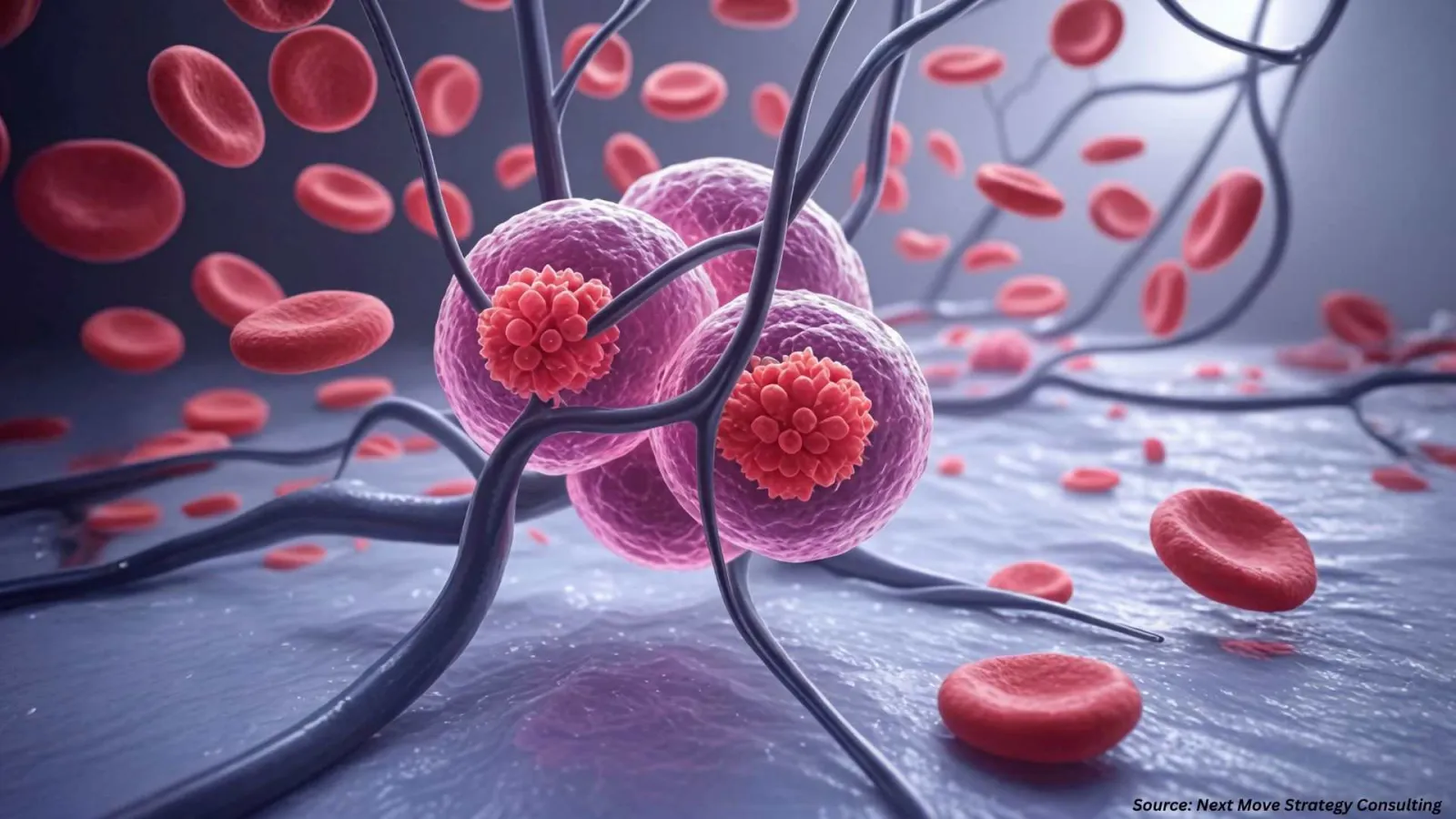
Cancer Therapeutics Market is undergoing a meaningful shift, driven by the need to move beyond one-size-fits-all treatments. Traditional approaches such as chemotherapy have been effective in many cases, but they often come with limitations, including drug resistance and variability in patient response. Recent scientific developments suggest that the future lies in combining advanced technologies with biological insights to create more precise and personalized therapies.
Two recent breakthroughs one in artificial intelligence enabled global research and another in light-activated treatment for ovarian cancer illustrate how innovation is reshaping the therapeutic landscape.
How Is AI Transforming Personalised Cancer Therapeutics?
Artificial intelligence is emerging as a powerful tool in cancer therapeutics, particularly in enabling personalized treatment decisions. A global collaboration of scientists has demonstrated how AI can analyze complex biological data while maintaining strict data privacy.
The study examined protein profiles from 7,525 cancer samples, contributed by 30 research groups across six countries. Instead of pooling sensitive patient data into a single database, researchers used a method called federated deep learning. This approach allows AI models to be trained locally at each institution, sharing only insights rather than raw data.
This innovation addresses a long-standing barrier in cancer research: the difficulty of combining datasets due to privacy regulations and technical inconsistencies. By enabling secure collaboration, researchers can now build more accurate diagnostic tools and better match treatments to individual patients.

From Patient Cells to Cancer Destruction: CAR T Therapy Explained
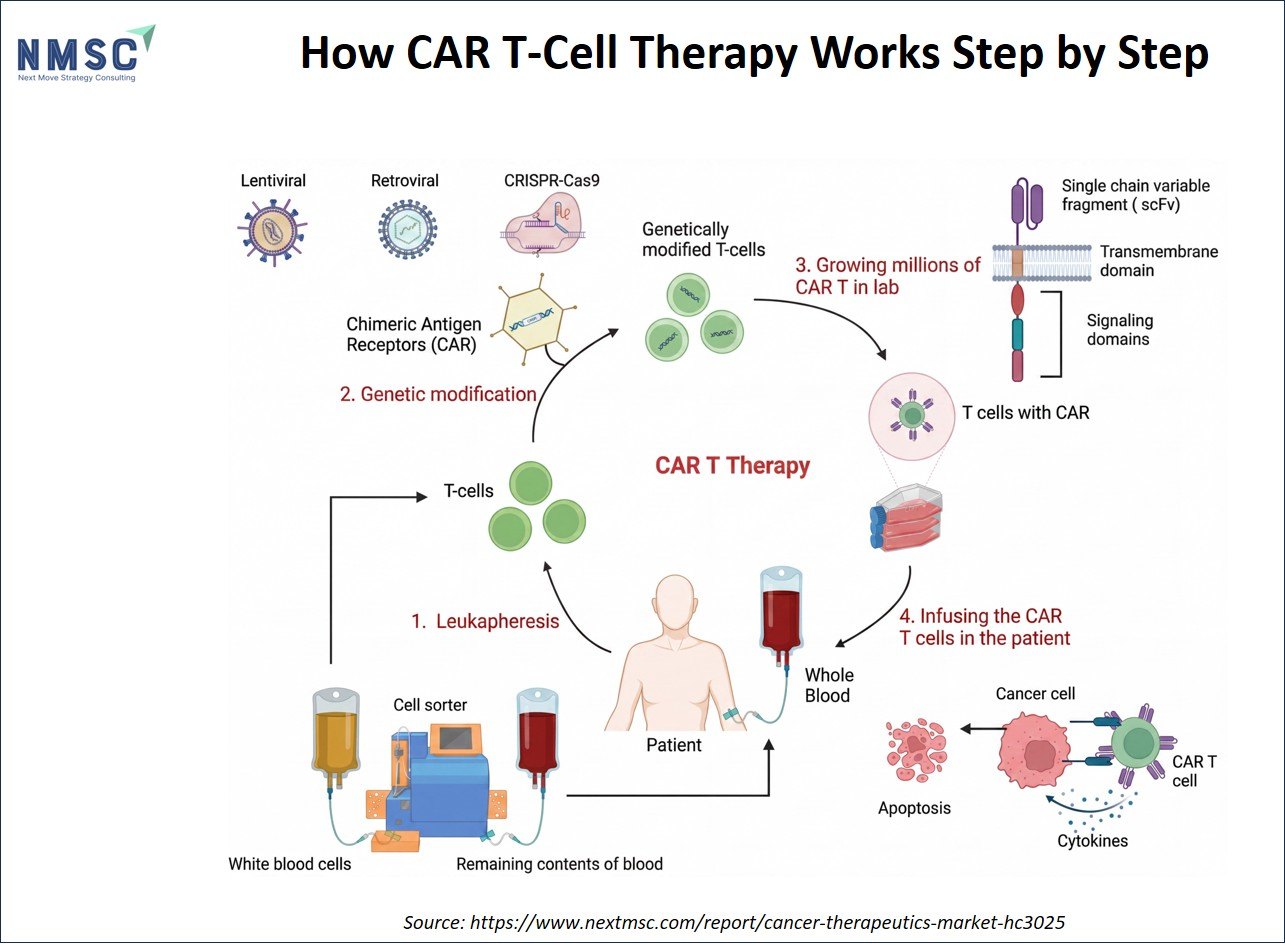
The image illustrates the complete process of CAR T-cell therapy, an advanced form of cancer therapeutics that uses a patient’s own immune cells to fight cancer more effectively.
It begins with leukapheresis, where white blood cells, specifically T-cells, are extracted from the patient’s blood. The remaining blood components are returned to the body, ensuring minimal disruption to the patient.
Next comes the genetic modification stage. In the laboratory, these T-cells are engineered using technologies such as lentiviral or retroviral vectors, or gene-editing tools like CRISPR-Cas9. This process introduces Chimeric Antigen Receptors (CARs) onto the surface of T-cells. These receptors are designed to recognize specific proteins found on cancer cells.
Once modified, the CAR T-cells are multiplied in large numbers in the lab. This expansion phase ensures that there are enough engineered cells to effectively target cancer when reintroduced into the patient.
The final step is infusion back into the patient. These enhanced T-cells circulate in the bloodstream, identify cancer cells, and bind to them using the engineered receptors. Upon binding, they release cytokines and trigger apoptosis, which is the programmed death of cancer cells.
The diagram also highlights the structure of the CAR itself, including components like the single-chain variable fragment (scFv), transmembrane domain, and signaling domains, all of which work together to activate the T-cells against cancer.
Can Light-Based Therapy Improve Chemotherapy Outcomes?
In parallel with AI advancements, researchers are exploring how physical interventions such as light can enhance the effectiveness of existing cancer treatments. A recent study on ovarian cancer highlights the potential of photoimmunotherapy.
Scientists identified two proteins that consistently appear on drug-resistant ovarian cancer cells. By targeting these proteins with photo-sensitive antibodies and exposing them to controlled light, the cancer cells become more susceptible to chemotherapy. The light exposure introduces subtle damage to the cells, effectively weakening their resistance.
This approach is particularly important because ovarian cancer is often diagnosed at advanced stages and can be difficult to treat due to resistance to standard therapies. The ability to make resistant cells responsive again represents a meaningful step forward.
Cancer Therapeutics: Key Innovation Snapshot
|
Innovation Area |
Core Approach |
Key Impact |
|
AI-Driven Analysis |
Federated learning across global datasets |
Enables secure, personalized treatment decisions |
|
Light-Based Therapy |
Photoimmunotherapy using antibodies and light |
Makes resistant cancer cells responsive to treatment |
|
Precision Medicine |
Protein and biomarker targeting |
Delivers patient-specific therapies |
|
Combination Treatment |
Integration of multiple therapies |
Improves effectiveness and reduces resistance |
|
Industry Strategies |
Product launches and acquisitions |
Drives innovation and market competitiveness |
Comparing Traditional T-Cell Response vs CAR T-Cell Effectiveness
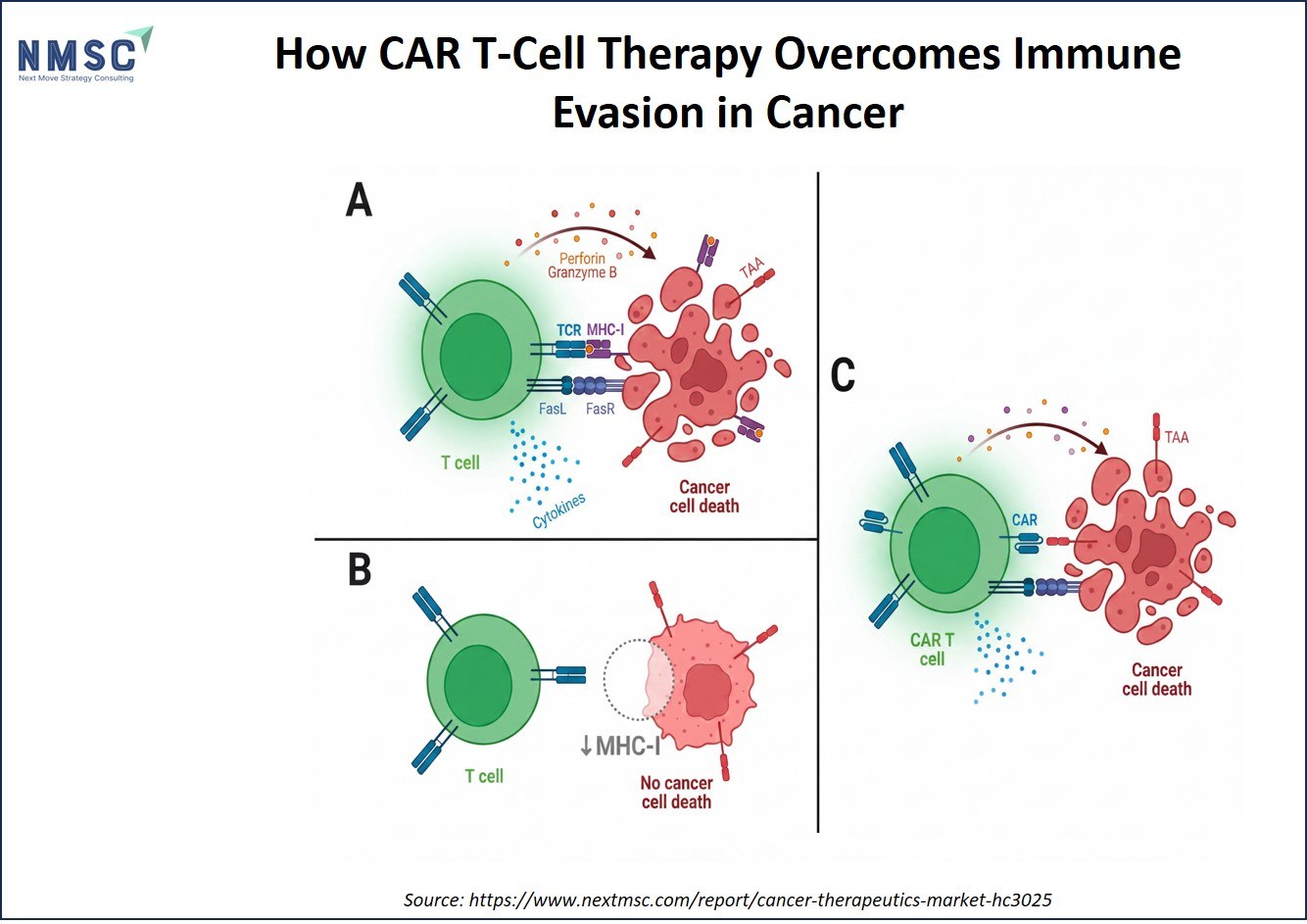
The image illustrates a comparison between normal T-cell activity and CAR T-cell therapy in targeting cancer cells. In the first scenario (A), a natural T-cell successfully recognizes a cancer cell through the interaction between its T-cell receptor (TCR) and the MHC-I molecule on the tumor, leading to the release of cytotoxic substances like perforin and granzyme that cause cancer cell death. In the second scenario (B), the cancer cell evades the immune system by reducing MHC-I expression, preventing the T-cell from recognizing it and resulting in no cell death. In contrast, the third scenario (C) shows how CAR T-cells overcome this limitation by using engineered receptors to directly bind to tumor-associated antigens (TAA) on cancer cells without relying on MHC-I, enabling effective targeting and destruction of the cancer cells.
How Is Precision Medicine Reshaping Cancer Treatment Strategies?
Precision medicine is becoming central to modern cancer therapeutics. One of the key challenges in oncology is that cancer cells are not uniform; they vary significantly between patients and even within a single tumor. This heterogeneity makes it difficult to design universal treatments.
The ovarian cancer study addressed this challenge by identifying consistent protein markers across patient samples. Researchers found that although tumors vary, each patient had at least one marker that could target all cancer cells within their tumor. This discovery opens the door to more reliable and individualized treatment strategies.
Precision medicine also aligns closely with AI-driven insights. While AI identifies patterns across large datasets, targeted therapies act on those insights at the individual level. Together, they create a more cohesive and effective treatment model.
Cancer Therapeutics Innovation Share Analysis
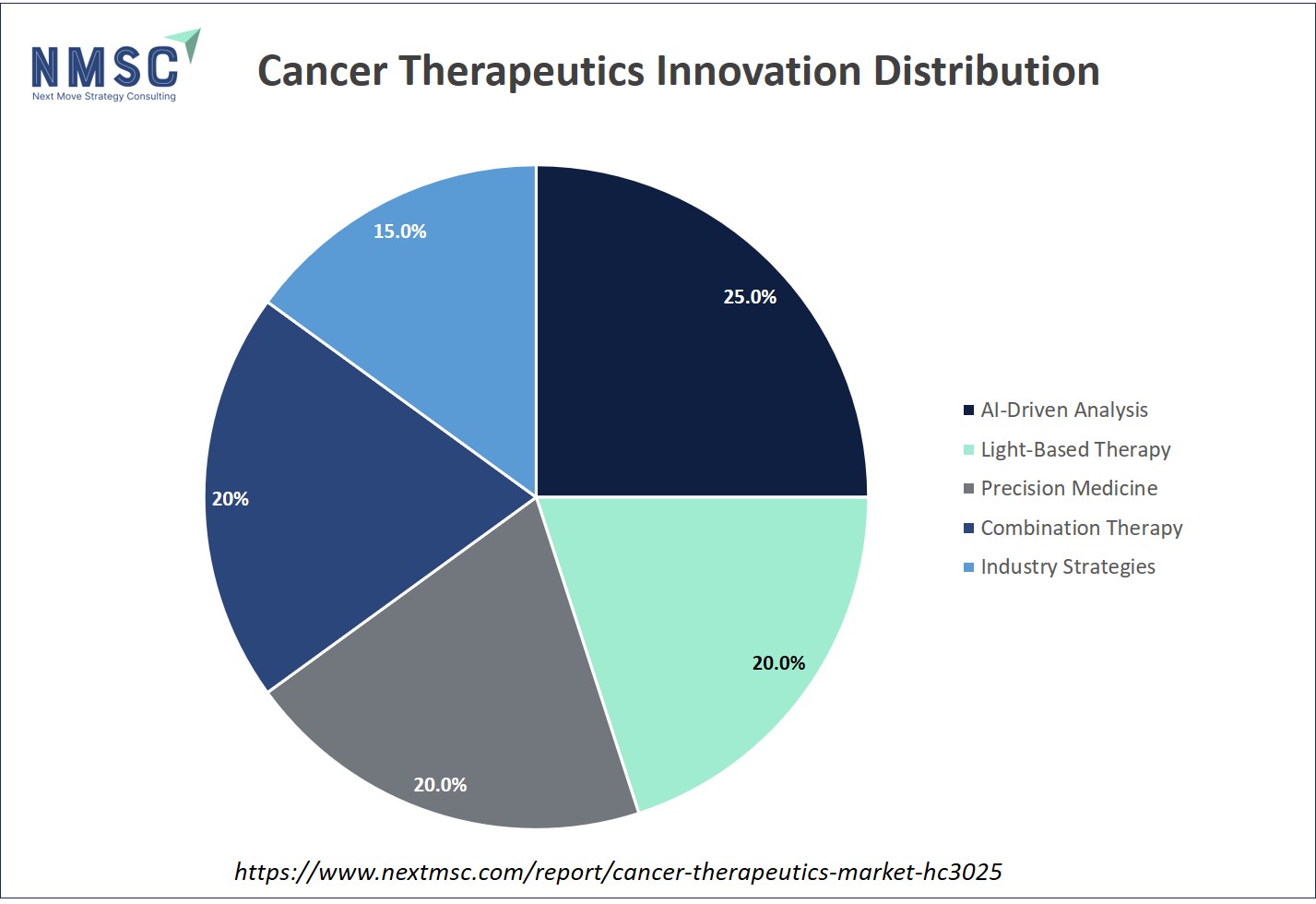
The pie chart presents a balanced distribution of innovation areas shaping cancer therapeutics, with each segment contributing a specific percentage to the overall landscape. AI-driven analysis holds the largest share at 25%, indicating its growing importance in enabling data-driven and personalized treatment decisions. Light-based therapy, precision medicine, and combination therapy each account for 20%, reflecting their equally significant roles in improving treatment effectiveness, overcoming drug resistance, and tailoring therapies to individual patients. Industry strategies, including product launches and acquisitions, represent 15%, highlighting their supportive role in driving market growth and innovation.
Why Are Combination Therapies Becoming Essential?
Modern cancer therapeutics increasingly relies on combining multiple treatment approaches rather than using a single method. The integration of AI, chemotherapy, immunotherapy, and light-based treatments is creating more comprehensive care strategies.
Light-activated therapy, for instance, does not replace chemotherapy but enhances it. It can also stimulate immune responses, making it a valuable complement to immunotherapy. Additionally, this approach can help surgeons better identify tumor boundaries, improving surgical outcomes and reducing the need for aggressive follow-up treatments.
CAR T-Cell Therapy: The "Living Drug"
The CAR T-cell process perfectly. This remains the gold standard for personalized immunotherapy, though in 2026, we are seeing it expand from blood cancers to more challenging solid tumors.
-
Mechanism Validation: Your mention of scFv (single-chain variable fragment) is the key technical detail. This acts as the "hook" that allows the T-cell to grab onto a cancer cell without needing the traditional MHC-I "ID badge" that many tumors hide to stay invisible.
-
Comparison: Unlike chemotherapy, which is a chemical "poison" to fast-growing cells, CAR T is a targeted biological strike.
What Challenges Still Exist in Cancer Therapeutics?
Despite these promising advancements, several challenges remain. Integrating AI into clinical workflows requires significant infrastructure and training. Similarly, advanced therapies such as photoimmunotherapy need further validation through large-scale clinical trials before widespread adoption.
Cost and accessibility are also critical concerns. While cutting-edge treatments show strong potential, ensuring that they are available to a broad patient population is essential for meaningful impact. Regulatory frameworks must also evolve to keep pace with technological innovation, particularly in areas involving data sharing and AI-driven decision-making.
Leading Companies Driving Innovation in Cancer Therapeutics
The cancer therapeutics industry is highly competitive, with major players such as F. Hoffmann-La Roche AG, Bristol-Myers Squibb Company, AbbVie Inc., Johnson & Johnson, Sanofi, Astellas Pharma Inc., Pfizer Inc., Novartis AG, Merck KGaA, Eli Lilly and Company, Takeda Pharmaceutical Company Limited, Regeneron Pharmaceuticals Inc., AstraZeneca, Gilead Sciences, Inc., and Incyte playing a significant role. These companies are actively strengthening their market positions through strategic initiatives such as new product launches, partnerships, and acquisitions to maintain a competitive edge and drive innovation in cancer treatment.
Next Steps for Advancing Cancer Therapeutics
Moving forward, stakeholders across healthcare, research, and policy must take coordinated action. Investment in AI infrastructure will be essential to support secure and scalable data analysis. Continued research into light-based therapies can expand their application beyond ovarian cancer. There is also a need to prioritize personalized treatment models in clinical practice, ensuring that therapies are tailored to individual patients.
At the same time, global collaboration should be strengthened to accelerate innovation, while efforts to improve accessibility must ensure that breakthroughs benefit a wider population.
-
Strengthen the adoption of artificial intelligence in clinical settings to support data-driven and personalized treatment decisions
-
Expand clinical validation of light-based and photoimmunotherapy approaches across multiple cancer types
-
Increase focus on identifying reliable biomarkers to enable more precise and targeted therapies
-
Encourage integration of combination treatment strategies to improve patient outcomes and reduce drug resistance
-
Promote collaboration between global research institutions to accelerate innovation while maintaining data privacy
-
Improve affordability and accessibility of advanced cancer treatments to ensure wider patient reach
Final Thoughts
Cancer therapeutics is evolving toward a more precise, patient-centered approach. Artificial intelligence is enabling global collaboration and data-driven decision-making, while light-based therapies are addressing long-standing challenges such as drug resistance. Together, these innovations represent a shift toward smarter, more effective cancer care.
As these technologies continue to develop, the focus will increasingly be on integrating them into practical healthcare solutions that deliver better outcomes while maintaining safety, accessibility, and trust.
About the Author
 Sanyukta Deb
— Sanyukta Deb is Digital Marketing Team Lead at Next Move Strategy Consulting, where she has led content strategy and technical SEO for the firm's B2B market research publications for over 2 years. Her editorial process translates NextMSC's primary and secondary research — spanning technology, industrial, and consumer sectors — into commercial narratives, backed by search-intent, keyword, and competitive analysis. She brings 5 years of overall experience in digital marketing and content strategy.
Sanyukta Deb
— Sanyukta Deb is Digital Marketing Team Lead at Next Move Strategy Consulting, where she has led content strategy and technical SEO for the firm's B2B market research publications for over 2 years. Her editorial process translates NextMSC's primary and secondary research — spanning technology, industrial, and consumer sectors — into commercial narratives, backed by search-intent, keyword, and competitive analysis. She brings 5 years of overall experience in digital marketing and content strategy.
About the Reviewer
 Debashree Dey
— Debashree Dey is Assistant Manager at Next Move Strategy Consulting, where she supports cross-vertical market content and communications across diverse industries for 6 years. Her professional background includes senior content writing, communications, and published manuscript authorship, with experience developing audience-focused business narratives and maintaining clear, consistent messaging. Her role supports research-led content development and editorial quality across NextMSC publications.
Debashree Dey
— Debashree Dey is Assistant Manager at Next Move Strategy Consulting, where she supports cross-vertical market content and communications across diverse industries for 6 years. Her professional background includes senior content writing, communications, and published manuscript authorship, with experience developing audience-focused business narratives and maintaining clear, consistent messaging. Her role supports research-led content development and editorial quality across NextMSC publications.

















Add Comment