Blood Preparation Market: How Supply Gaps Are Driving Innovation | NextMSC
Introduction
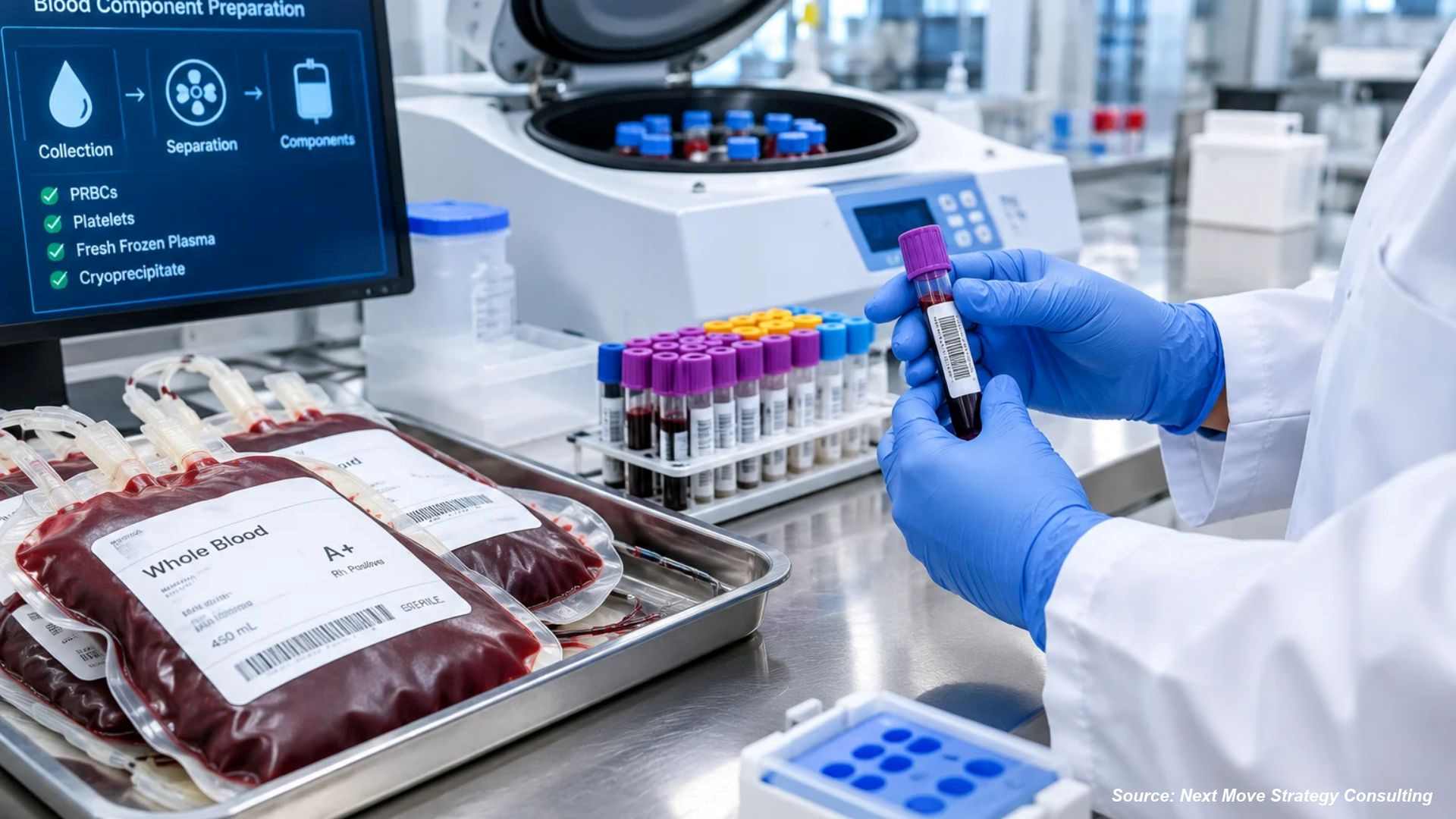
The global blood preparation market is at a critical inflection point — simultaneously confronting acute supply shortfalls and accelerating technological transformation. According to Next Move Strategy Consulting's Blood Preparation Market report, the global blood preparation market is projected to reach USD 72.94 billion by 2030, growing at a CAGR of 5.69% from 2023 to 2030. This trajectory is being shaped not by generic demand growth, but by a convergence of structural forces: a worsening donor supply crisis in high-income nations, regulatory intervention at the federal level, a WHO-documented equity gap in blood access across low- and middle-income countries, and the rapid industrialization of plasma fractionation as a pharmaceutical manufacturing discipline.
For C-level executives, institutional investors, and healthcare procurement leaders, the blood preparation market now demands strategic attention that goes well beyond transfusion logistics. The market's growth is being driven by the expanding therapeutic role of plasma-derived medicines — including Intravenous Immunoglobulin (IVIg) for immune deficiency disorders and clotting factor concentrates for hemophilia — alongside the deployment of automated blood processing systems that are restructuring the economics of blood banking globally.
For More Information: Download FREE Sample on Blood Preparation Market Report
A Market Under Pressure: The 2026 Blood Supply Crisis and Its Commercial Implications
The Red Cross Emergency and What It Signals for the Blood Preparation Industry
On July 27, 2026, the American Red Cross declared only the second national blood supply crisis in its history, after blood donations fell to a four-year summer low. The organization — which supplies approximately 40% of the nation's blood — reported less than a one-day national supply of type O positive blood, the most commonly transfused blood type, and began limiting distributions to individual hospitals.
Chris Hrouda, President of Red Cross Biomedical Services, stated: "This summer, blood donations simply are not keeping pace with hospital demand, and inventories — especially type O blood — remain under significant strain."
The structural context behind this crisis is stark. According to America's Blood Centers (ABC), approximately 62% of the U.S. population — roughly 212 million people — is eligible to donate blood, yet only 3% do so each year. In 2023, U.S. hospitals transfused red blood cells to 3.65 million patients, with an average of 2.8 units per recipient, totaling more than 10 million red blood cell transfusions nationwide. Each day, hospitals also transfuse over 6,000 units of platelets and nearly 5,200 units of plasma.
The commercial implication is direct: when voluntary donation volumes are structurally insufficient to meet hospital demand, the pressure on blood preparation infrastructure — collection systems, component separation technology, cold-chain logistics, and pathogen reduction platforms — intensifies. This is precisely the environment in which capital investment in automated blood processing and plasma fractionation capacity becomes commercially defensible.
FDA Intervenes: The September 2026 Supply Chain Roundtable
Recognizing that the Red Cross crisis was symptomatic of a broader systemic vulnerability, the U.S. Food and Drug Administration's Center for Biologics Evaluation and Research (CBER), Office of Blood Research and Review, convened a formal roundtable on September 29, 2026, titled "Strengthening the Supply Chain for Blood Manufacturing."
The roundtable brought together representatives from the blood collection industry, supply chain manufacturers — including Terumo BCT, Fresenius Kabi, Haemonetics Corporation, Macopharma, Roche Diagnostics, and Grifols Diagnostic Solutions — alongside federal agencies including BARDA and the Administration for Strategic Preparedness and Response (ASPR). The three-session agenda focused on identifying root causes of supply chain disruptions, manufacturers' perspectives on solutions, and the role of federal agencies in building supply chain resilience for whole blood, blood components, and source plasma.
This level of federal engagement — convening the FDA, BARDA, and ASPR simultaneously around blood manufacturing supply chains — signals that blood preparation infrastructure is now being treated as a national security asset, not merely a healthcare logistics function. For market participants, this translates into a regulatory environment that is likely to favor suppliers of resilient, domestically manufactured blood processing equipment and consumables.
NMSC Strategic Perspective: Supply Scarcity as a Market Catalyst
NextMSC primary research and analysis identifies the 2026 blood supply crisis as a structural demand accelerator rather than a transient disruption. The crisis has exposed three specific gaps that are commercially addressable:
1. Donor recruitment technology: The persistent gap between eligible donors (62% of the U.S. population) and active donors (3%) represents a recruitment and retention failure that digital health platforms and AI-driven donor engagement tools are beginning to address.
2. Component processing efficiency: The Red Cross's decision to limit type O blood distributions reflects an allocation problem as much as a volume problem — automated whole blood processing systems that can separate components faster and with less wastage directly expand the effective supply from existing donations.
3. Plasma-derived medicine self-sufficiency: The FDA roundtable's explicit inclusion of source plasma in its supply chain resilience agenda reflects growing recognition that plasma fractionation capacity — not just whole blood collection — is a strategic national asset.
Section Summary:
The 2026 blood supply crisis and the FDA's September roundtable have fundamentally repositioned blood preparation from a healthcare utility to a strategic infrastructure priority. The commercial consequences are measurable: demand for automated processing systems, pathogen reduction technologies, and plasma fractionation capacity is accelerating precisely because voluntary donation volumes cannot keep pace with hospital demand.
Key Takeaways:
-
The American Red Cross declared its second-ever national blood supply crisis in July 2026, with type O positive blood falling below a one-day national supply.
-
Only 3% of eligible U.S. donors give blood annually, against a daily hospital demand of over 10 million annual red blood cell transfusions.
-
The FDA convened a formal supply chain roundtable in September 2026, involving major blood processing equipment manufacturers and federal preparedness agencies.
-
NextMSC analysis identifies automated processing, donor engagement technology, and plasma fractionation capacity as the three commercially addressable gaps created by the crisis.
Industry Impact Analysis
Global Blood Safety: WHO's 2026 Assessment Reveals a Two-Speed Market
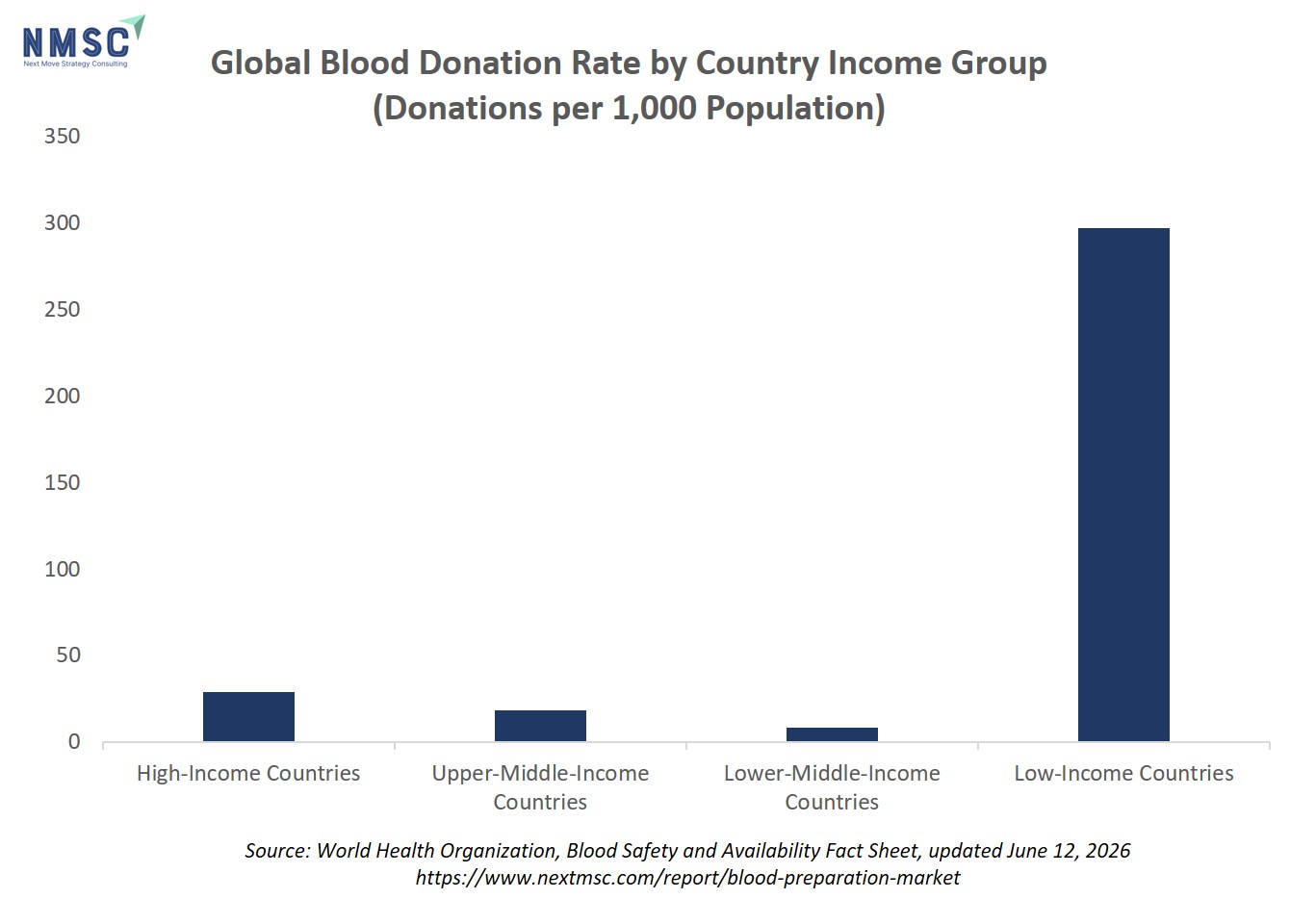
A World Health Organization report released on June 12, 2026, ahead of World Blood Donor Day, provided the most comprehensive assessment of blood systems worldwide to date, drawing on data from 168 countries representing 97% of the global population. The report confirmed that more than 85% of blood donations worldwide now come from voluntary unpaid donors — a significant milestone — but identified inadequate governance and unsustainable financing as the primary obstacles facing national blood services in low- and middle-income countries.
Deusdedit Mubangizi, Director for Medicines and Health Products Policies and Standards at WHO, wrote in the report's preface: "Despite notable progress over the past decade, universal access to safe blood and blood products remains elusive for many countries."
The WHO report also specifically noted ongoing efforts to diversify plasma collection and strengthen global supply chains for plasma-derived medicinal products, which remain inaccessible or unaffordable in many settings. This finding has direct market implications: the plasma-derived medicines segment — encompassing albumin, IVIg, and clotting factor concentrates — is the highest-value component of the blood preparation market, and its geographic expansion into underserved markets represents a long-duration growth opportunity.
Plasma Fractionation: From Industrial Process to Strategic Asset
Plasma fractionation — the industrial separation of plasma into its constituent therapeutic proteins — has undergone significant technological evolution. Research published in Annals of Blood by Curling (2025) reviewed current and future technologies for the separation of plasma proteins, noting that plasma fractionators have consistently evaluated new methods of fractionation, including chromatographic techniques that improve yield and purity over traditional Cohn ethanol precipitation.
The geographic expansion of fractionation capacity is accelerating. Indonesia's national pharmaceutical regulator issued a new GMP guideline in 2025 specifically to support the country's first domestic plasma fractionation facility, targeting operational readiness by 2026. This development is emblematic of a broader trend in which emerging economies are investing in domestic plasma fractionation infrastructure to reduce dependence on imported plasma-derived medicines — a trend that directly expands the addressable market for fractionation equipment, consumables, and process technology.
In the United States, policy changes at the state level are also reshaping plasma supply geography. According to the Immune Deficiency Foundation, Vermont and New Hampshire still lack updated regulations and have zero plasma donation centers as of 2026, even as national demand for plasma-derived therapies continues to grow.
Hemophilia and Immune Deficiency: The Therapeutic Demand Engine
The blood derivatives segment — particularly clotting factor concentrates and IVIg — is the primary value driver within the blood preparation market. Advances in hemophilia treatment, including extended half-life factor products, non-factor therapies such as emicizumab, and the emerging durability of gene therapy approaches, are reshaping the treatment landscape for the approximately 1.1 million people living with hemophilia globally, according to the World Federation of Hemophilia. Research published in Expert Review of Hematology (Mahlangu, 2026) examined current and emerging therapies for hemophilia patients with inhibitors, including bypassing agents and novel bispecific antibodies.
The growing therapeutic indications for IVIg — extending beyond primary immunodeficiency to neurological conditions including chronic inflammatory demyelinating polyneuropathy (CIDP) and multifocal motor neuropathy — are expanding the plasma-derived medicines market beyond its traditional patient base, placing sustained upward pressure on source plasma collection volumes.
Section Summary:
The WHO's 2026 global blood safety assessment, the industrialization of plasma fractionation in emerging markets, and the expanding therapeutic indications for plasma-derived medicines collectively define a market that is growing in both volume and complexity. The equity gap documented by WHO simultaneously represents a humanitarian challenge and a long-duration commercial opportunity for suppliers of blood preparation technology and plasma-derived therapeutics.
Key Takeaways:
-
WHO's 2026 report, covering 168 countries, confirmed that 85%+ of global donations come from voluntary donors but identified governance and financing gaps as critical barriers in low-income markets.
-
Indonesia's first domestic plasma fractionation facility, supported by a 2025 GMP guideline, exemplifies the emerging-market infrastructure buildout that is expanding the global addressable market.
-
Expanding IVIg indications — from immunodeficiency to neurological conditions — are driving sustained demand for source plasma beyond traditional patient populations.
-
Gene therapy and non-factor hemophilia treatments are reshaping the clotting factor segment, requiring blood preparation market participants to monitor therapeutic substitution risk alongside volume growth.
U.S. Blood Supply — Operational Statistics
|
Indicator |
Data Point |
|
U.S. population eligible to donate blood |
~212 million (62% of population) |
|
Share of eligible population that donates annually |
3% |
|
Patients receiving red blood cell transfusions (2023) |
3.65 million |
|
Total annual red blood cell transfusions (2023) |
>10 million units |
|
Daily platelet transfusions (U.S. hospitals) |
>6,000 units |
|
Daily plasma transfusions (U.S. hospitals) |
~5,200 units |
|
Share of blood supply used in cancer care |
>25% |
|
Red blood cell shelf life |
21–42 days |
|
Platelet shelf life |
5–7 days |
|
Red Cross share of U.S. blood supply |
~40% |
|
Type O positive blood: share of Red Cross distributions |
~60% |
|
Countries covered in WHO 2026 blood safety report |
168 (97% of global population) |
|
Share of global donations from voluntary unpaid donors |
>85% |
Future Outlook & Forecast
NMSC Forecast: USD 72.94 Billion by 2030
NextMSC primary research and analysis projects the global blood preparation market to grow from USD 46.88 billion in 2022 to USD 72.94 billion by 2030, at a CAGR of 5.69%. This growth trajectory is underpinned by three durable structural forces that NMSC's model identifies as the primary value drivers over the forecast period.
1. Plasma-Derived Medicine Demand as the Primary Value Driver
The growing usage of plasma as a life-saving therapeutic for chronic and acute life-threatening diseases — including Hereditary Angioedema, Hemophilia, and primary immunodeficiency disorders — is the single most important demand driver within the blood derivatives segment. The expansion of IVIg indications into neurological conditions is extending this demand curve beyond its traditional immunology base. As plasma fractionation technology matures — with chromatographic separation methods improving protein yield and purity over legacy Cohn ethanol precipitation — the economics of plasma-derived medicine production are improving, supporting both volume growth and margin expansion for integrated fractionators.
2. Automated Blood Processing: Restructuring the Economics of Blood Banking
The deployment of automated whole blood processing systems — which can separate whole blood into red cells, platelets, and plasma in a single closed-system cycle — is restructuring the cost and throughput economics of blood banking. Research published in Transfusion (Cid et al., 2023) demonstrated that automation of whole blood processing resulted in continued improvements in productivity and component quality compared to semi-automated methods. The FDA's September 2026 roundtable, which included representatives from Terumo BCT, Haemonetics, and Fresenius Kabi, signals that federal procurement and resilience frameworks will increasingly favor suppliers of automated, domestically manufactured blood processing equipment.
3. Asia-Pacific: Demographic Demand and Infrastructure Buildout
Asia-Pacific is positioned as the fastest-growing regional market over the NMSC forecast period, driven by a rapidly aging population with elevated incidence of chronic conditions requiring blood transfusion. According to the National Library of Medicine, the proportion of individuals aged 60 years and above in China is projected to rise from 12.4% (168 million) to 28% (402 million) by 2040, with approximately 80% of deaths among people aged 60 and above attributed to chronic non-communicable diseases. This demographic trajectory, combined with the buildout of domestic plasma fractionation infrastructure — exemplified by Indonesia's first fractionation facility — positions Asia-Pacific as the region with the highest incremental demand growth over the forecast horizon.
Section Summary:
NMSC's forecast of USD 72.94 billion by 2030 is supported by three structurally durable demand drivers: the expanding therapeutic role of plasma-derived medicines, the productivity gains from automated blood processing, and Asia-Pacific's demographic-driven demand growth. The 2026 supply crisis and FDA regulatory intervention are accelerating capital allocation toward supply chain resilience, which will benefit equipment manufacturers and integrated fractionators disproportionately.
Key Takeaways:
-
NMSC projects the blood preparation market to reach USD 72.94 billion by 2030 at a 5.69% CAGR, with blood derivatives — particularly plasma-based products — as the leading value segment.
-
Automated blood processing systems are improving throughput and component quality, with federal procurement frameworks increasingly favoring domestically manufactured, resilient supply chains.
-
Asia-Pacific's aging population — with China's 60+ cohort projected to reach 402 million by 2040 — represents the largest incremental demand pool in the forecast period.
-
The FDA's formal engagement with blood manufacturing supply chains in September 2026 signals a regulatory environment that will reward investment in supply chain resilience and domestic manufacturing capacity.
Next Steps for Stakeholders
For Blood Processing Equipment Manufacturers (Terumo BCT, Haemonetics, Fresenius Kabi, Macopharma):
The FDA's September 2026 roundtable has created a direct channel for equipment manufacturers to shape federal supply chain resilience policy. Manufacturers should engage proactively with BARDA and ASPR's Office of Supply Chain Resilience to position their platforms within federal procurement frameworks. Investment in closed-system, automated whole blood processing that reduces per-unit processing time and minimizes contamination risk will be the primary differentiator in both domestic and emerging-market procurement cycles.
For Plasma Fractionators and Integrated Biopharmaceutical Companies:
The WHO's 2026 documentation of plasma-derived medicine inaccessibility in low- and middle-income countries, combined with Indonesia's GMP-supported fractionation facility buildout, signals a multi-decade market expansion opportunity in emerging markets. Companies with transferable fractionation technology and GMP compliance expertise should evaluate technology licensing and joint venture structures in Southeast Asia, Latin America, and Sub-Saharan Africa, where domestic fractionation capacity is nascent.
For Institutional Investors:
The blood preparation market's 5.69% CAGR through 2030, as projected by NMSC, is supported by non-cyclical demand drivers — chronic disease prevalence, surgical volume, and plasma-derived medicine consumption — that are structurally insulated from macroeconomic volatility. The 2026 supply crisis and FDA regulatory intervention have created a policy tailwind for capital investment in blood manufacturing infrastructure. Investors should evaluate positions in automated blood processing equipment, pathogen reduction technology, and plasma fractionation capacity — segments where supply-demand imbalance is most acute and regulatory support is most explicit.
For Hospital Systems and Blood Bank Administrators:
The Red Cross's July 2026 crisis — which reduced type O positive blood to less than a one-day national supply — underscores the operational risk of relying on a single-source blood supply model. Hospital systems should accelerate the implementation of blood management programs that reduce per-patient transfusion volumes through patient blood management (PBM) protocols, while simultaneously diversifying blood product sourcing relationships across multiple collection organizations.
Conclusion
The global blood preparation market is not growing because of abstract demographic trends — it is growing because the infrastructure that underpins modern medicine is under documented, measurable strain. The American Red Cross's second-ever national blood supply crisis in July 2026, the FDA's formal supply chain roundtable in September 2026, and the WHO's comprehensive 2026 global blood safety assessment collectively define a market in which supply-side constraints are as commercially significant as demand-side growth. NextMSC primary research and analysis projects the market to reach USD 72.94 billion by 2030 at a 5.69% CAGR, with plasma-derived medicines, automated blood processing, and Asia-Pacific infrastructure investment as the three primary value drivers. For decision-makers across the blood preparation value chain — from equipment manufacturers and fractionators to hospital systems and institutional investors — the strategic imperative is clear: the organizations that invest in supply chain resilience, processing automation, and emerging-market fractionation capacity today will define the competitive landscape of this market through the end of the decade.
About the Author
 Sanyukta Deb
— Sanyukta Deb is Digital Marketing Team Lead at Next Move Strategy Consulting, where she has led content strategy and technical SEO for the firm's B2B market research publications for over 2 years. Her editorial process translates NextMSC's primary and secondary research — spanning technology, industrial, and consumer sectors — into commercial narratives, backed by search-intent, keyword, and competitive analysis. She brings 5 years of overall experience in digital marketing and content strategy.
Sanyukta Deb
— Sanyukta Deb is Digital Marketing Team Lead at Next Move Strategy Consulting, where she has led content strategy and technical SEO for the firm's B2B market research publications for over 2 years. Her editorial process translates NextMSC's primary and secondary research — spanning technology, industrial, and consumer sectors — into commercial narratives, backed by search-intent, keyword, and competitive analysis. She brings 5 years of overall experience in digital marketing and content strategy.
About the Reviewer
 Debashree Dey
— Debashree Dey is Assistant Manager at Next Move Strategy Consulting, where she supports cross-vertical market content and communications across diverse industries for 6 years. Her professional background includes senior content writing, communications, and published manuscript authorship, with experience developing audience-focused business narratives and maintaining clear, consistent messaging. Her role supports research-led content development and editorial quality across NextMSC publications.
Debashree Dey
— Debashree Dey is Assistant Manager at Next Move Strategy Consulting, where she supports cross-vertical market content and communications across diverse industries for 6 years. Her professional background includes senior content writing, communications, and published manuscript authorship, with experience developing audience-focused business narratives and maintaining clear, consistent messaging. Her role supports research-led content development and editorial quality across NextMSC publications.

















Add Comment