How Are Breakthrough Innovations Reshaping the Microneedles Market Today?
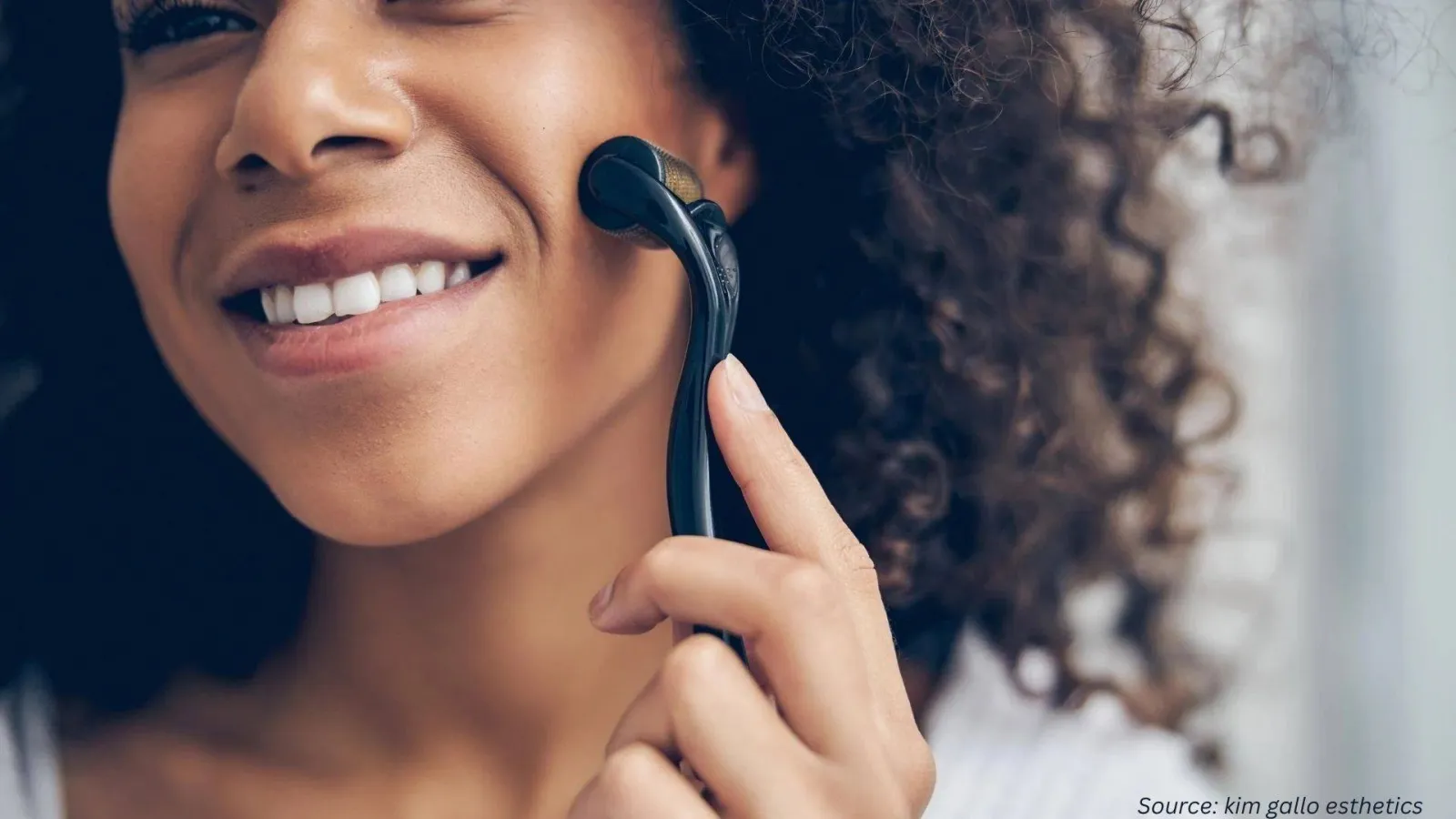
The microneedles market is undergoing a transformative shift as research institutions and pharmaceutical innovators develop next-generation delivery platforms targeting chronic diseases, hard-to-heal wounds, and more efficient therapeutic administration. Unlike traditional invasive delivery methods, microneedles are emerging as a minimally invasive, highly precise, and increasingly sophisticated option for improving treatment outcomes.
From diabetic wound healing to obesity management and advanced photonic innovations, recent developments highlight how fast the landscape is evolving. This blog explores what is driving the momentum in the microneedles market today based solely on insights from three key research advancements.
What is Powering the New Wave of Microneedles for Chronic Wound Care?
One of the most compelling drivers in the microneedles market is the move toward smarter, biologically responsive wound therapies, especially for diabetes-related injuries. Chronic diabetic wounds often face a combination of oxidative stress, bacterial infection, and poor immune cell migration. Traditional treatments fail to address these multiple challenges simultaneously, leading to slow healing and high medical costs.
Researchers from the National University of Singapore (NUS) have developed a new microneedle patch designed to target all these barriers at once. The patch is formulated to reduce oxidative stress, fights bacteria, and supports macrophage-mediated tissue repair. This multi-action profile represents an important shift in the market: moving from simple drug-delivery microneedles to holistic therapeutic systems that intelligently respond to complex biological environments.
What makes the NUS project especially significant is its focus on practical application. The team demonstrated the patch’s efficacy in diabetic mouse wound models, showing accelerated healing while reducing inflammation and infection risk. In markets where chronic wound prevalence continues to rise, especially among aging populations, such innovation underscores how microneedles are becoming integral to next-gen wound therapies.
|
Microneedle Platform |
Primary Function |
Key Outcome |
|
SUC-MN (Sucralfate microneedles) |
Deliver IL-4 to stimulate growth-factor production |
2× faster wound healing vs. traditional treatments |
|
HPMN (Heparin-coated porous microneedles) |
Extract pro-inflammatory chemokines |
50% reduction in inflammation |
|
Semaglutide microneedle patch |
Systemic delivery of GLP-1 analog |
>80% bioavailability; once-weekly dosing |
|
EU-MN light-converting patch |
Deliver targeted phototherapy with dual-responsive release |
Enhanced psoriasis therapy |
How are Microneedles Influencing the Future of Obesity and Diabetes Management?
Another major driver in the microneedles market is the biopharmaceutical push toward non-invasive delivery of blockbuster therapies. Daewoong Pharmaceutical recently introduced a transdermal microneedle patch delivering GLP-1 agonists, including semaglutide a therapy widely used in diabetes and obesity treatment.
Traditional semaglutide delivery requires injections, which many patients find uncomfortable or inconvenient. Daewoong’s microneedle patch aims to solve this by allowing painless, controlled transdermal release. The company is planning clinical trials and has positioned the patch as a key growth engine in its portfolio for 2025 and beyond.
What sets this innovation apart is the ability to potentially improve patient adherence a critical consideration in metabolic disease management. By simplifying how therapies are administered, microneedles could help expand access and improve long-term outcomes for conditions that require sustained treatment.
Are Lighting Technologies the Next Frontier in Microneedles?
A particularly unique development comes from researchers at Nanchang University, who introduced a microneedle patch capable of converting natural sunlight into healing-promoting red light. Red-light therapy has long been studied for tissue regeneration, anti-inflammatory benefits, and improved wound healing. However, conventional red-light devices often require an external power source or large equipment.
The Nanchang University solution embeds a luminescent microstructure inside microneedles, enabling the patch to harvest ambient sunlight and convert it into therapeutic illumination directly on the skin. This marks an important technological shift within the market—where microneedles are evolving into multifunctional platforms that integrate optics, biomaterials, and advanced engineering.
The ability to pair drug delivery with light therapy opens new possibilities for non-invasive treatment strategies. It also aligns with global trends favoring portable, self-administered, and energy-efficient medical solutions.
|
Microneedle Type |
Key Functionality |
Measured Benefit |
|
SUC-MN |
Boost IL-4 levels to promote tissue regeneration |
2× faster wound healing vs. traditional approaches |
|
HPMN |
Extract chemokines + monocytes to reduce inflammation |
50% reduction in inflammation and 90% reduction in wound size by Day 14 |
What do These Innovations Mean for the Global Microneedles Market?
Across all three developments, a few clear trends emerge. Microneedles are becoming more sophisticated: biologically responsive in wound care, patient-friendly for chronic disease management, and technologically advanced through light-converting features. These advancements signal a larger market movement toward precision delivery, improved compliance, and integrated therapeutic functions.
A shift from simple drug carriers to smart therapeutic platforms is evident. Manufacturers and research institutions are not just tweaking existing designs they’re redefining what microneedles can do. As applications expand from glucose management to dermatology and regenerative medicine, the market is likely to see broader clinical adoption and increased investment.
How are Leading Companies Shaping the Microneedles Market?
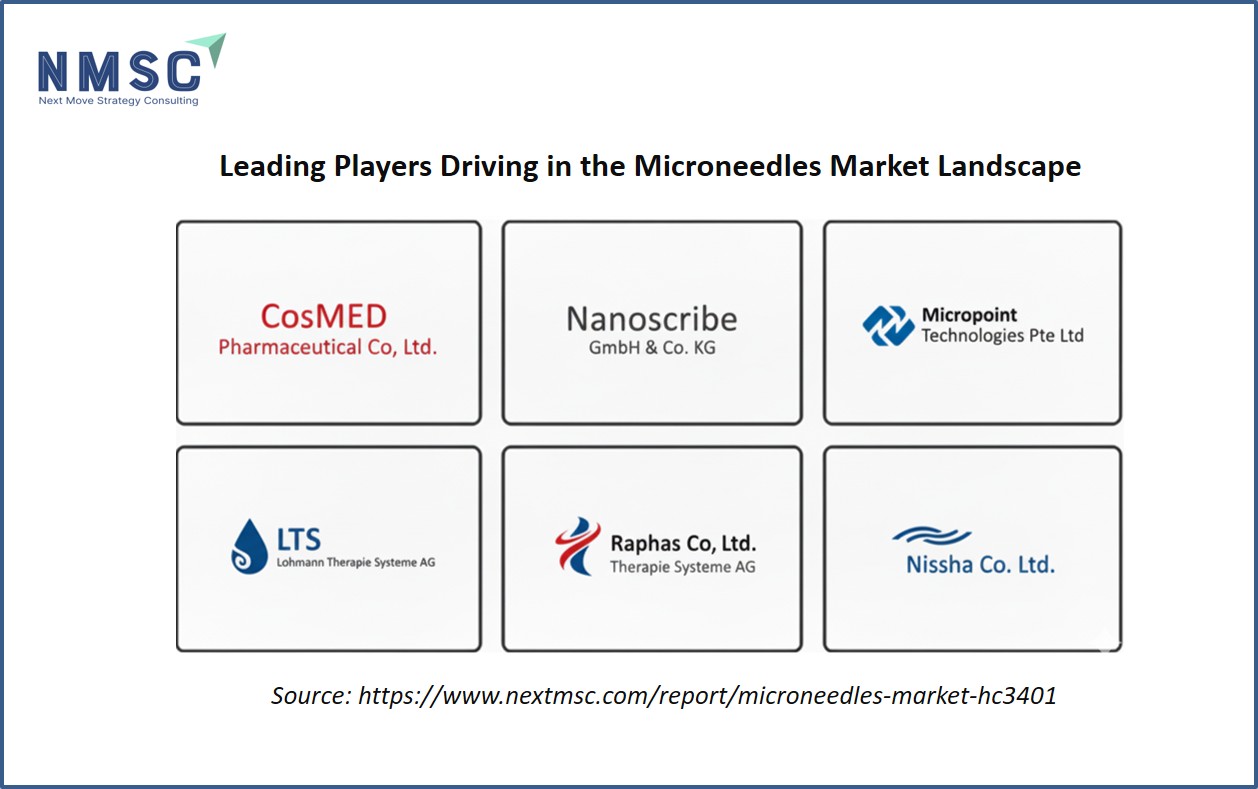
Key players in the microneedles industry are actively strengthening their market positions through strategic partnerships, advanced technology integration, and product diversification to meet evolving healthcare and cosmetic demands. CosMED is expanding its global footprint by enhancing its ODM cosmetics business through collaborations with international brands across China, Southeast Asia, the UAE, the US, the EU, Israel, and Russia. In May 2024, Vaxxas marked a significant manufacturing milestone by producing its 100th batch of needle-free high-density microarray patches (HD-MAP) at the Translational Research Institute in Australia, ahead of transitioning operations to its new 5,500 m² biomedical facility in Brisbane to scale commercial production. Similarly, LTS Lohmann Therapie-Systeme AG, a leading microneedle technology provider, inaugurated a semi-automated production line in May 2024 to ramp up manufacturing of its Sorrel wearable drug-delivery platform, supporting broader market rollout. Meanwhile, Nissha showcased lavender-scented dissolving microneedle patches at Cosme Tech Tokyo 2025, reinforcing adoption in premium cosmetic and skincare applications. Collectively, these initiatives highlight how leading companies are leveraging innovation and strategic expansion to capture a growing share of the global microneedles market.
Next Move Strategy Consulting’s Viewpoint
The Microneedles Market is entering a phase of meaningful growth, driven by innovations that combine clinical efficacy, patient convenience, and technological sophistication. Therapeutic wound-healing patches, such as those developed by NUS, highlight the increasing demand for minimally invasive solutions in high-burden medical areas, while Daewoong’s GLP-1 microneedle patch demonstrates the potential for pharmaceutical-grade transdermal delivery of chronic therapies. At the same time, multifunctional platforms like Nanchang University’s light-converting microneedles illustrate the market’s move toward integrated, technology-driven solutions that extend beyond traditional drug delivery. Collectively, these developments suggest that the market is evolving toward broader adoption across hospitals, homecare, and pharmaceutical pipelines, with early clinical validation and regulatory engagement likely to shape the pace of commercialization.
Next Steps: Action Plan for Market Stakeholders
-
R&D teams should explore hybrid microneedle designs that combine drug delivery with secondary therapeutic mechanisms.
-
Pharmaceutical companies can evaluate partnerships for transdermal delivery of existing injectables to improve adherence.
-
Medical device manufacturers should prioritize scalable fabrication methods to support commercialization.
-
Clinicians and hospitals can begin pilot testing microneedle solutions for chronic wound care.
-
Investors should track early regulatory progress and clinical trial outcomes for next-generation patches.
Conclusion:
The microneedles market is rapidly evolving, driven by innovations in wound healing, chronic disease management, and multifunctional therapeutic platforms. From smart, biologically responsive patches to transdermal delivery of GLP 1 analogues and light-converting phototherapy microneedles, research is expanding the possibilities of minimally invasive treatments. While many of these technologies are still in preclinical or early human stages, they signal a future where microneedles could transform patient care, improve treatment adherence, and integrate advanced therapies in a single, convenient platform. Continued research, clinical validation, and regulatory progress will determine how quickly these promising innovations reach broader clinical and commercial use.
About the Author
 Sanyukta Deb
— Sanyukta Deb is Digital Marketing Team Lead at Next Move Strategy Consulting, where she has led content strategy and technical SEO for the firm's B2B market research publications for over 2 years. Her editorial process translates NextMSC's primary and secondary research — spanning technology, industrial, and consumer sectors — into commercial narratives, backed by search-intent, keyword, and competitive analysis. She brings 5 years of overall experience in digital marketing and content strategy.
Sanyukta Deb
— Sanyukta Deb is Digital Marketing Team Lead at Next Move Strategy Consulting, where she has led content strategy and technical SEO for the firm's B2B market research publications for over 2 years. Her editorial process translates NextMSC's primary and secondary research — spanning technology, industrial, and consumer sectors — into commercial narratives, backed by search-intent, keyword, and competitive analysis. She brings 5 years of overall experience in digital marketing and content strategy.
About the Reviewer
 Debashree Dey
— Debashree Dey is Assistant Manager at Next Move Strategy Consulting, where she supports cross-vertical market content and communications across diverse industries for 6 years. Her professional background includes senior content writing, communications, and published manuscript authorship, with experience developing audience-focused business narratives and maintaining clear, consistent messaging. Her role supports research-led content development and editorial quality across NextMSC publications.
Debashree Dey
— Debashree Dey is Assistant Manager at Next Move Strategy Consulting, where she supports cross-vertical market content and communications across diverse industries for 6 years. Her professional background includes senior content writing, communications, and published manuscript authorship, with experience developing audience-focused business narratives and maintaining clear, consistent messaging. Her role supports research-led content development and editorial quality across NextMSC publications.
















Add Comment