How Are Wearable Brain Devices Transforming Human Health?
Wearable technology is evolving beyond physical activity tracking and entering the realm of cognitive monitoring. Wearable brain devices are designed to measure brain activity in real time, offering insights into mental states such as focus, fatigue, and stress. These innovations represent a significant shift from traditional healthcare models, where such data was only accessible in controlled clinical environments. Today, companies like Samsung are developing solutions that bring brain monitoring into everyday life, making it more accessible and continuous.
In summary, wearable brain devices are redefining how individuals understand and manage their cognitive health. They are moving brain monitoring out of laboratories and into real-world settings while improving accessibility and usability.
What Is Driving Innovation in Wearable Brain Devices?
A key driver of innovation in this space is the development of compact and non-invasive EEG systems. Samsung’s Ear-EEG wearable is an example of this transformation, designed to monitor brain activity through electrodes placed around the ear rather than across the scalp. This approach significantly reduces the complexity and discomfort associated with traditional EEG systems.
The device has been developed in collaboration with the Department of Biomedical Engineering at Hanyang University, reflecting a strong integration of academic expertise and industrial research. Its design allows for continuous monitoring in everyday environments, which is a major advancement compared to conventional systems that are limited to hospitals or laboratories. Despite being in the prototype stage, the device is undergoing continuous refinement to improve signal accuracy and usability.
In conclusion, innovation in wearable brain devices is centered on making EEG technology more practical, comfortable, and suitable for long-term use in real-world conditions.
Technological Evolution of EEG Systems
|
Feature |
Traditional Scalp-Based EEG |
Samsung Ear-EEG Prototype |
|
Electrode Placement |
Distributed across theentire scalp |
Strategically placed around the ear |
|
User Form Factor |
Bulky headsets/caps with wires |
Sleek, ergonomic, and wearable |
|
Application Setting |
Controlled laboratory or hospital |
Real-world, everyday environments |
|
Ease of Use |
Requires professional assistance |
Designed for non-invasive, long-term wear |
|
Signal Quality |
Clinical-grade high fidelity |
Comparable to scalp-based systems |
Evolution of Wearable Brain Monitoring
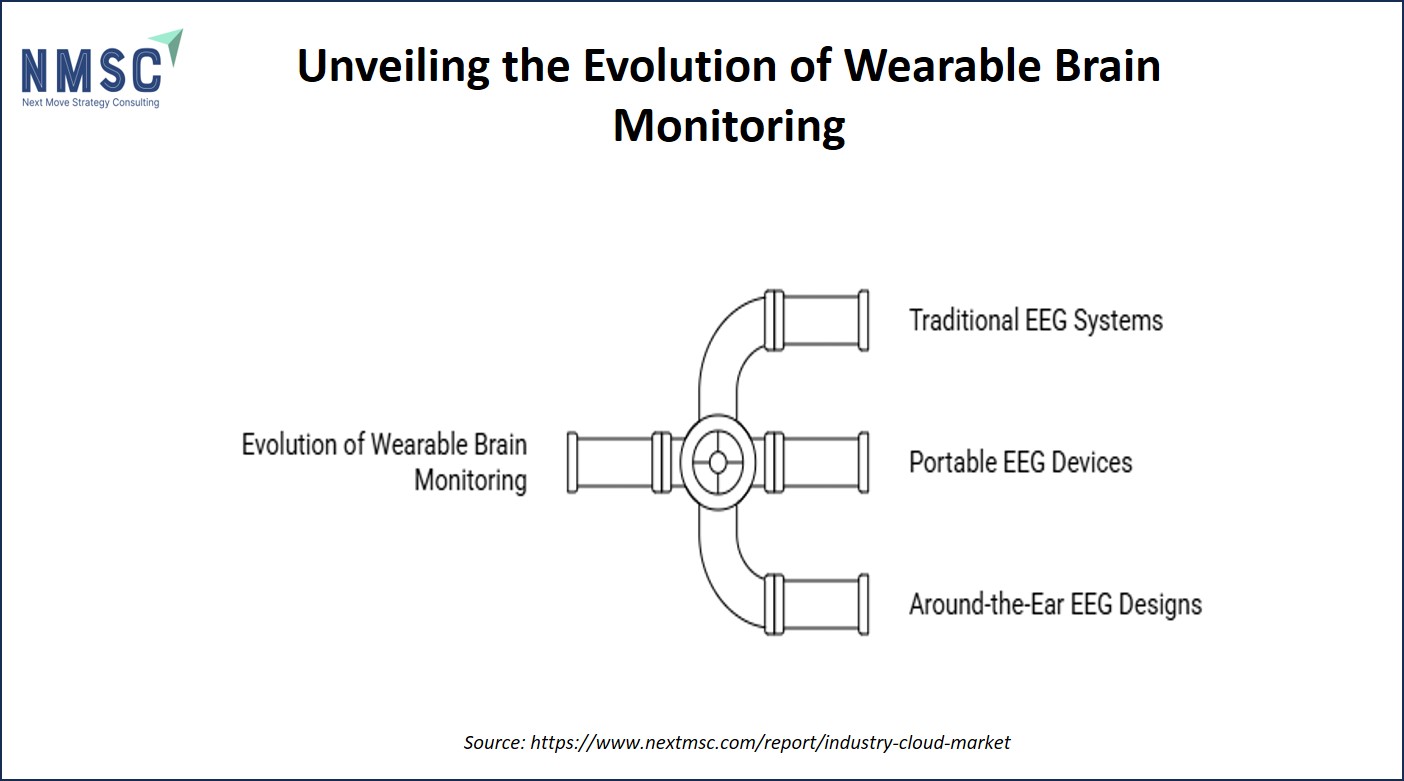
Wearable brain monitoring has progressed from traditional electroencephalogram systems that relied on bulky, multi-electrode scalp setups to more compact and portable solutions. Early systems were confined to hospitals and research laboratories due to their complexity and lack of mobility, limiting their use to controlled environments and short observation periods.
The introduction of portable EEG devices marked a transition toward flexibility, but true transformation is now being driven by innovations such as around-the-ear EEG designs. Devices like Samsung’s Ear-EEG demonstrate how brain monitoring can become non-invasive, comfortable, and suitable for continuous use in everyday settings, while still maintaining data quality comparable to traditional systems.
How Is Real-Time Brain Monitoring Changing Healthcare?
Real-time brain monitoring is enabling a more proactive approach to healthcare by allowing continuous observation of cognitive states. Samsung’s Ear-EEG device has demonstrated the ability to detect the onset of drowsiness by analyzing brainwave patterns. This capability is particularly relevant in safety-critical scenarios such as driving or operating heavy machinery, where early detection of fatigue can help prevent accidents.
Beyond drowsiness detection, the technology can also track variations in brain activity over time, providing insights into mental fatigue and potential neurological conditions. This continuous data stream allows for better understanding of long-term cognitive trends, which could support both preventive care and clinical research.
Major Trends Shaping the Present
One of the most significant trends is the transition toward non-invasive brain monitoring solutions. Traditional EEG systems require multiple electrodes placed on the scalp, making them impractical for everyday use. In contrast, ear-based EEG devices provide comparable data quality while being less intrusive, thereby improving user comfort and adoption potential.
Another important trend is the integration of artificial intelligence with brain-computer interfaces. Samsung has indicated that combining EEG data with artificial intelligence can enhance interpretation accuracy. For instance, the system can determine whether a user is enjoying video content with an accuracy of 92.86%, demonstrating its potential in areas such as entertainment and user experience analysis.
Additionally, the application scope of wearable brain devices is expanding beyond healthcare into fields such as education and marketing. These devices can help analyze learning behavior and measure engagement, thereby offering valuable insights across industries.
From Clinical EEG to Everyday Wearables
The journey of brain-monitoring technology reflects a clear transition from complex clinical systems to user-friendly wearable devices. Traditional electroencephalogram setups were designed for hospital use, requiring multiple electrodes placed across the scalp and limiting mobility. These systems were highly accurate but impractical for continuous or real-world monitoring. As a result, their application remained confined to diagnostics and controlled research environments.
With technological advancements, portable EEG systems emerged, offering some degree of flexibility. However, they still required structured setups and were not fully optimized for everyday use. The latest innovation, represented by Samsung’s Ear-EEG, introduces an around-the-ear design that eliminates the need for bulky equipment. This shift allows users to monitor brain activity seamlessly during daily routines, marking a significant milestone in wearable healthcare evolution.
In essence, the progression from clinical to wearable EEG demonstrates how innovation is making brain monitoring more accessible, continuous, and integrated into daily life.

Key Functional Capabilities
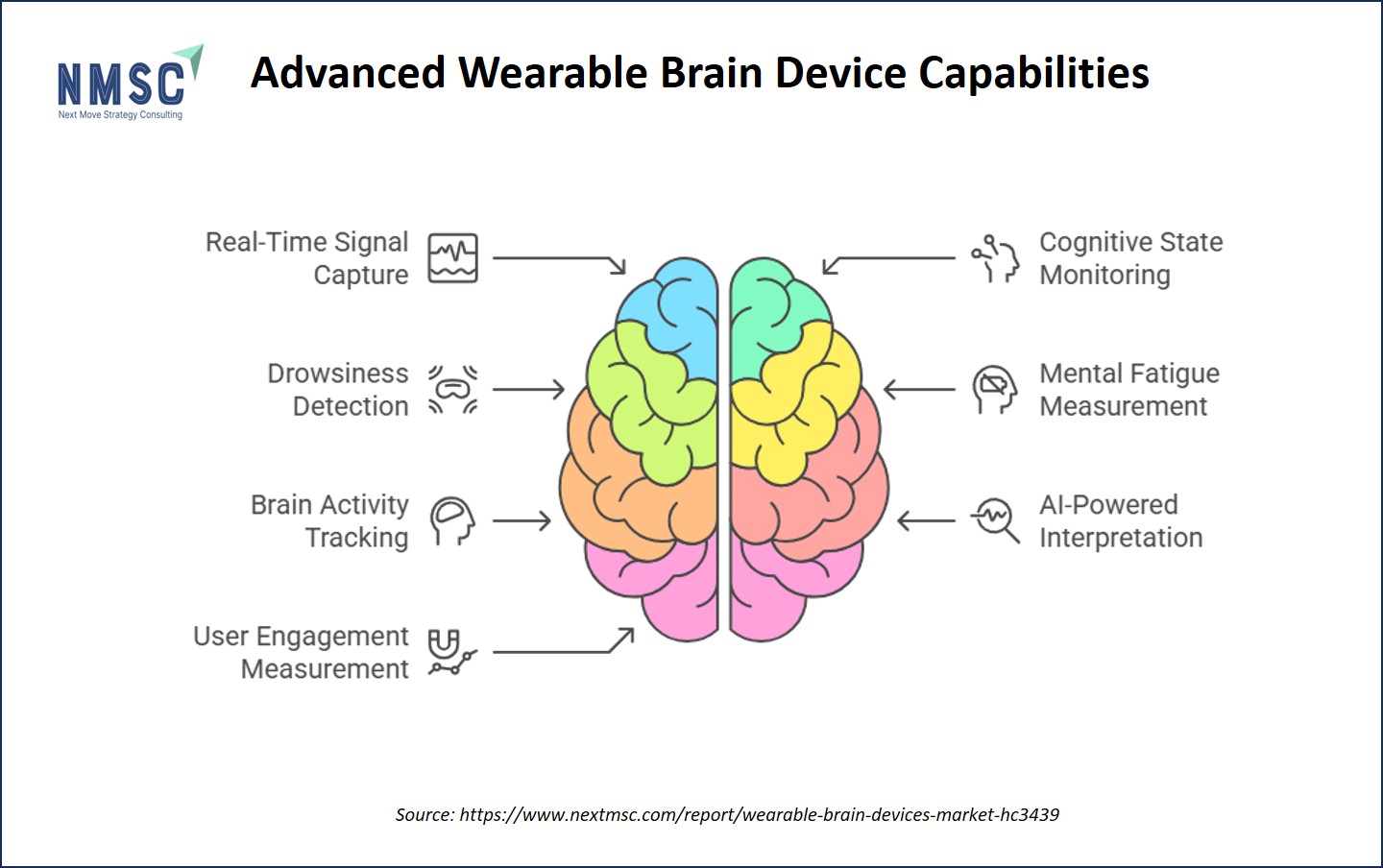
Modern wearable brain devices are designed to capture and analyze brainwave signals in real time, enabling continuous monitoring of cognitive states. These devices can detect early signs of drowsiness, measure mental fatigue, and track variations in brain activity over time, offering valuable insights for both personal health and safety-critical environments.
Additionally, when combined with artificial intelligence, these systems can interpret complex brain signals with high accuracy. For example, Samsung’s Ear-EEG prototype has demonstrated the ability to determine user engagement with content at an accuracy of 92.86%, highlighting its potential beyond healthcare into areas such as education and entertainment.
What Are the Key Challenges?
Despite the promising advancements, wearable brain devices face several technical and market-related challenges. One of the primary technical concerns is maintaining signal accuracy in real-world environments, where noise and interference can affect data quality. Achieving reliable performance outside controlled settings remains a critical area of development.
From a market perspective, the technology is still in the prototype stage, and there is no confirmed timeline for commercial availability. Regulatory approvals and standardization also present significant hurdles, as these devices must meet strict healthcare and safety requirements before reaching consumers. Samsung has acknowledged that ongoing efforts are focused on refining accuracy, signal processing, and overall usability.
How Are Wearable Brain Devices Being Used Today?
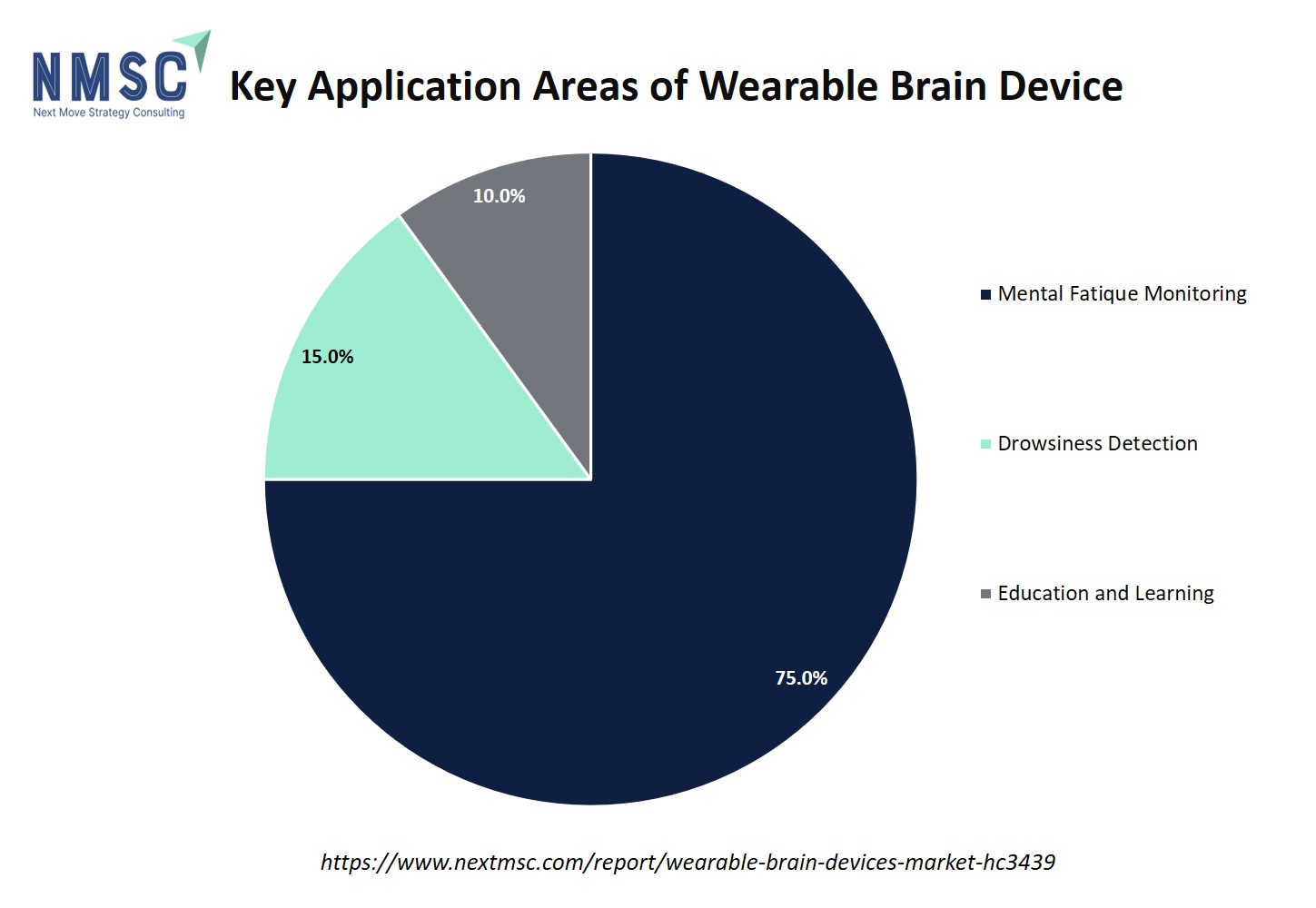
The pie chart highlights the primary application areas of wearable brain devices based on current developments, particularly those demonstrated by Samsung. Each segment represents a key use case where EEG-based wearables are expected to deliver value in real-world scenarios. Since exact numerical distribution is not specified in the source data, the chart presents an equal representation to reflect the breadth of applications rather than dominance.
Drowsiness detection forms a critical segment, emphasizing the role of these devices in safety-sensitive environments such as driving and heavy machinery operations. Mental fatigue monitoring is another equally important area, focusing on continuous cognitive assessment to understand long-term brain activity patterns and potential neurological concerns.
The chart also illustrates expanding applications beyond healthcare. Education and learning represent how brain-computer interfaces can help analyze attention levels and improve learning outcomes. Similarly, entertainment and engagement highlight the ability of these devices, especially when integrated with artificial intelligence, to interpret user responses to content with measurable accuracy.
Overall, the pie chart demonstrates that wearable brain devices are not limited to a single domain. Instead, they are evolving into multi-functional tools that bridge healthcare, safety, education, and user experience, reflecting a broad and emerging application landscape.
Key Companies Driving Innovation in Wearable Brain Devices
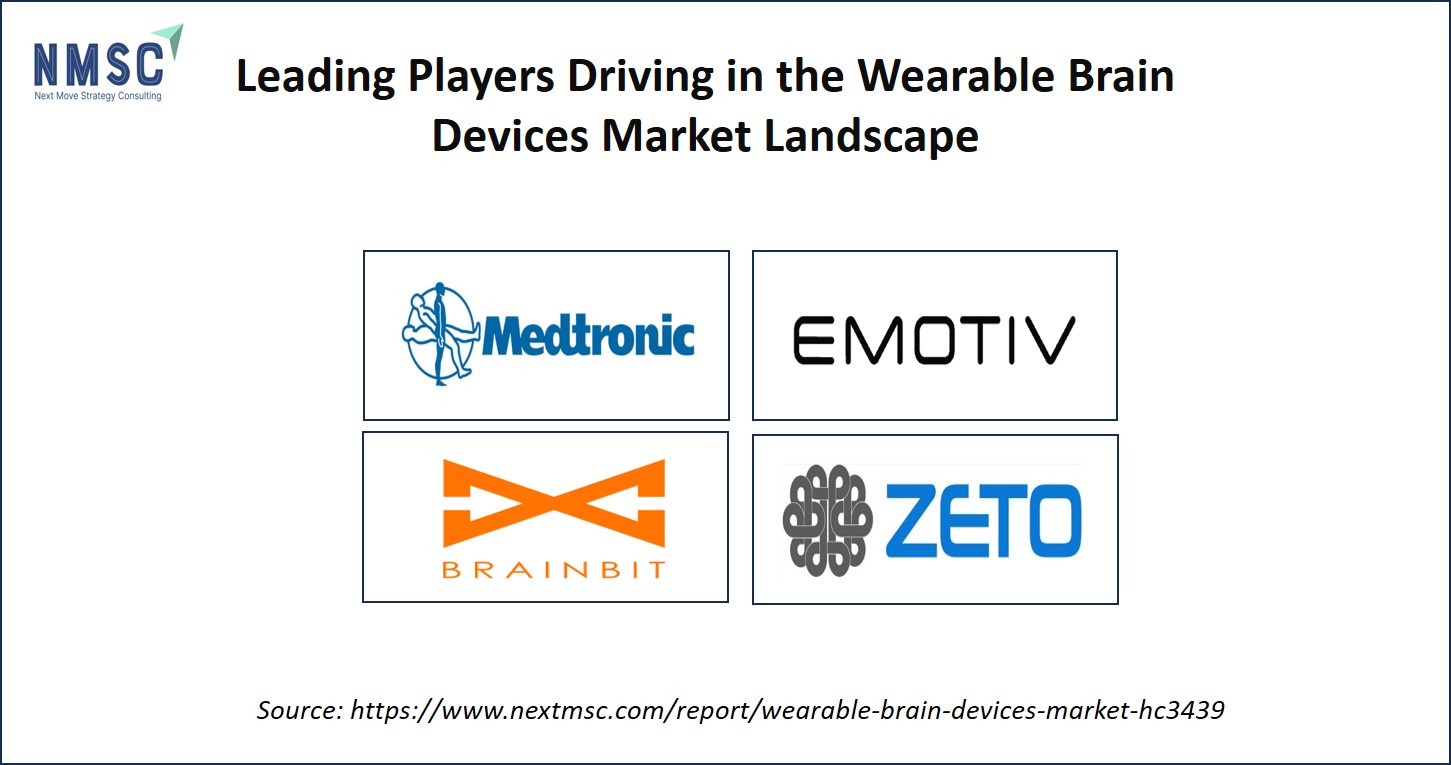
The wearable brain devices landscape is shaped by a diverse group of technology developers, medical device manufacturers, and neuroscience-focused innovators. Prominent players include Medtronic, EMOTIV, and NeuroPace, Inc., alongside emerging and specialized firms such as BrainBit and Pankhtech India Private Limited. The market also features innovators like AAVAA Inc., Cogwear, Inc., and Kernel, as well as consumer-focused solutions such as Muse. Additionally, companies including Zeto Inc., BIOPAC Systems Inc., Cadwell Industries Inc., Neuroelectrics, ANT Neuro, and Brain Products GmbH contribute to advancing EEG technologies, brain-computer interfaces, and cognitive monitoring solutions, collectively driving innovation and expansion in this evolving market.
What Lies Ahead for Wearable Brain Devices?
The future of Wearable Brain Devices Market lies in their ability to provide continuous cognitive insights that were previously only available in clinical settings. As the technology matures, it has the potential to become an integral part of daily health monitoring, similar to how smartwatches track physical activity and heart rate.
Experts suggest that these devices could enable deeper understanding of mental health, cognitive workload, and neurological conditions by providing long-term data. Although Samsung’s Ear-EEG remains in the experimental stage, its development signals a broader shift toward integrating advanced health monitoring technologies into wearable formats.
Next Steps
Organizations and stakeholders should focus on advancing research and improving the accuracy of wearable EEG systems to ensure reliable performance in real-world conditions. Collaboration with academic and research institutions will be essential for validating these technologies and expanding their applications. At the same time, keeping track of evolving regulatory frameworks will help companies navigate approval processes more effectively. Early adoption through pilot programs in industries such as transportation and education can also accelerate real-world validation and use case development.
Overall, the next phase of growth will depend on balancing innovation with validation, ensuring that wearable brain devices are both effective and trustworthy for widespread use.
-
Invest in advancing signal accuracy and real-world performance of wearable EEG devices
-
Strengthen collaborations with academic and research institutions for validation
-
Monitor evolving regulatory frameworks to ensure compliance and faster approvals
-
Pilot early adoption in sectors such as transportation, education, and workplace safety
-
Integrate artificial intelligence to enhance data interpretation and predictive insights
Final Takeaway
Wearable brain devices represent a transformative step in digital health, shifting the focus from physical metrics to cognitive insights. With advancements such as Samsung’s Ear-EEG, the ability to monitor brain activity in real time is becoming more practical and accessible. As the technology continues to evolve, it has the potential to reshape how individuals and industries approach mental health, safety, and performance.
About the Author
 Sanyukta Deb
— Sanyukta Deb is Digital Marketing Team Lead at Next Move Strategy Consulting, where she has led content strategy and technical SEO for the firm's B2B market research publications for over 2 years. Her editorial process translates NextMSC's primary and secondary research — spanning technology, industrial, and consumer sectors — into commercial narratives, backed by search-intent, keyword, and competitive analysis. She brings 5 years of overall experience in digital marketing and content strategy.
Sanyukta Deb
— Sanyukta Deb is Digital Marketing Team Lead at Next Move Strategy Consulting, where she has led content strategy and technical SEO for the firm's B2B market research publications for over 2 years. Her editorial process translates NextMSC's primary and secondary research — spanning technology, industrial, and consumer sectors — into commercial narratives, backed by search-intent, keyword, and competitive analysis. She brings 5 years of overall experience in digital marketing and content strategy.
About the Reviewer
 Debashree Dey
— Debashree Dey is Assistant Manager at Next Move Strategy Consulting, where she supports cross-vertical market content and communications across diverse industries for 6 years. Her professional background includes senior content writing, communications, and published manuscript authorship, with experience developing audience-focused business narratives and maintaining clear, consistent messaging. Her role supports research-led content development and editorial quality across NextMSC publications.
Debashree Dey
— Debashree Dey is Assistant Manager at Next Move Strategy Consulting, where she supports cross-vertical market content and communications across diverse industries for 6 years. Her professional background includes senior content writing, communications, and published manuscript authorship, with experience developing audience-focused business narratives and maintaining clear, consistent messaging. Her role supports research-led content development and editorial quality across NextMSC publications.


















Add Comment