How Clinical Innovation and Digital Dermatology Are Redefining the Future of the Professional Acne Medication Market

Based on Next Move Strategy Consulting analysis, the Professional Acne Medication Market size was valued at USD 3.94 billion in 2025 and is expected to reach USD 4.63 billion by 2026. Looking ahead, the industry is projected to expand significantly, reaching USD 9.01 billion by 2035, registering a CAGR of 7.67% from 2026 to 2035. Based on our ongoing clinical-market assessment and engagement with dermatology practitioners, we found that the professional acne medication market continues to show strong therapeutic relevance and sustained stability within routine care settings.
Prescription therapies remain the preferred approach for moderate-to-severe acne management, reflecting consistent clinician trust in their validated efficacy, safety profiles, and evidence-supported outcomes. Moreover, acne affects a wide demographic spectrum, with rising adult consultations for persistent or recurrent presentations reinforcing steady treatment demand. This durable need underpins market resilience, while iterative formulation advancements from established pharmaceutical manufacturers and emerging specialty brands are enhancing tolerability, supporting adherence, and strengthening long-term treatment continuity.
Curious about the Professional Acne Medication Market? Download Your FREE Sample Report Now
From our observations, the growing adoption of tele-dermatology and digital consultation platforms is directly improving access to professional acne care and strengthening patient follow-through. Additionally, dermatology clinics are increasingly implementing integrated care models that combine prescription medications with in-clinic procedures, personalised skincare regimens, and structured adherence support. These approaches are delivering more reliable real-world outcomes and reducing relapse cycles, reinforcing professional trust in clinician-led acne management. Overall, the market is shaped by expert-driven treatment pathways, technology-enabled care delivery, and a clear shift toward individualised, professionally guided solutions over over-the-counter alternatives.
Precision Personalisation Becoming the New Backbone of Professional Acne Care
Based on our analysis, we have consistently observed a clear and steady shift toward treatment personalisation within the professional acne medication market. Dermatologists and leading brands increasingly recognise that acne presents and progresses differently across patient segments, influenced by age, skin type, hormonal variability, lifestyle factors, and disease severity. As a result, standardised treatment pathways are being progressively replaced by more nuanced, patient-specific approaches that reflect real-world clinical complexity.
From our assessments, we further noticed that professional acne care is becoming decisively diagnostic-led. Dermatologists are tailoring prescription regimens to individual patient profiles, enabling more precise therapeutic targeting while minimising irritation, non-compliance, and treatment fatigue, key challenges historically associated with long-term acne management. We also observed that this evolution is not incremental but structural, as clinicians increasingly prioritise outcome consistency and patient satisfaction. Our research also indicates that personalisation is transitioning from a value proposition to a clinical differentiator. Furthermore, the integration of biomarker-informed formulations, AI-enabled skin assessments, and data-driven follow-up protocols is materially improving treatment accuracy and long-term results. These advancements are strengthening patient trust, increasing adherence, and driving repeat consultations, ultimately reinforcing the commercial and clinical sustainability of professional acne care. Collectively, these trends underscore a market increasingly defined by expertise-led innovation, measurable outcomes, and enduring patient engagement.
From Prescriptions to Platforms: Where Professional Acne Therapy is Evolving?
From our engagements with clinical service providers, we observed that the scope of professional acne management is progressively expanding beyond conventional topical prescriptions toward integrated, technology-enabled treatment ecosystems. As clinical outcomes and monitoring precision become higher priorities, digital diagnostics and practitioner-operated procedural tools are increasingly incorporated alongside pharmacological interventions. Care delivery models are therefore evolving to support precision-guided therapy and longitudinal patient management:
-
Digital Imaging and Skin Analytics: Clinics are deploying advanced imaging and analysis platforms to detect micro-level dermatological changes and inform treatment adjustments.
-
Technology-Enabled Therapeutic Expansion: Software-supported diagnostics and monitoring tools are enhancing clinicians’ ability to evaluate treatment response and personalize protocols.
-
Device-Based Procedural Integration: Light-based therapies, radiofrequency systems, and clinical laser technologies are becoming embedded within structured acne care pathways.
-
Pharma–Device Convergence: Combining pharmaceutical treatments with medical-grade devices is improving clinician control over persistent or recurrent cases.
-
Protocol Standardization and Monitoring: Data-backed evaluation methods are supporting more systematic follow-up and outcome consistency across treatment cycles.
Based on our observations, we found that these developments indicate a convergence between pharmacological and procedural dermatology approaches, strengthening evidence-informed care delivery and reinforcing the evolution of professional acne therapy toward platform-driven clinical ecosystems.
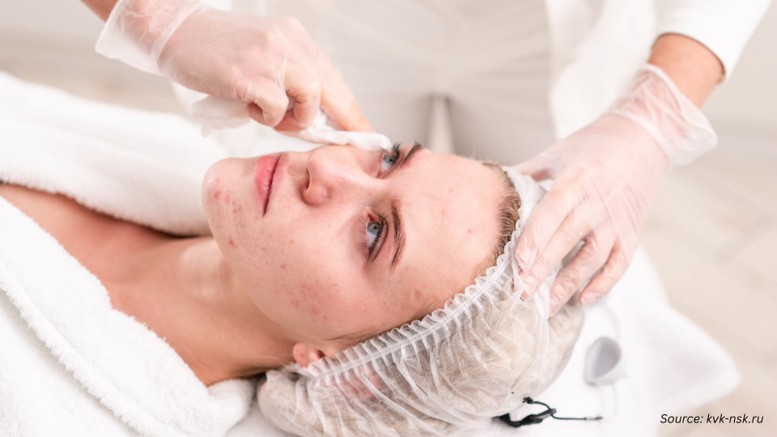
Combination Therapies Emerging as the Cornerstone of Modern Acne Management
Combination therapies are increasingly positioned at the center of contemporary acne management, reflecting the multifactorial nature of the condition and the limited effectiveness of single-ingredient approaches. Through our ongoing market analysis, we observed that growing clinical reliance on fixed-dose combinations and layered regimens designed to simultaneously address excess sebum production, inflammation, bacterial colonization, and abnormal follicular keratinization. By targeting these pathways in parallel, clinicians are able to deliver more predictable and durable outcomes. Additionally, integrated treatment formats reduce regimen complexity, simplifying application routines and improving patient adherence, which is widely recognized as a critical determinant of therapeutic success.
At the same time, evolving prescribing practices indicate that combination strategies are playing a strategic role in risk mitigation and long-term disease control. Heightened awareness of antibiotic resistance has encouraged clinicians to pair antimicrobial agents with non-antibiotic actives, helping preserve efficacy while limiting prolonged exposure. Our assessment further suggests that optimized combinations can reduce relapse frequency, shorten treatment cycles, and support maintenance protocols tailored to patient profiles. As formulation innovation continues, combination therapies are expected to advance beyond symptom management toward precision-guided dermatological care, reinforcing their role as a foundational pillar in modern acne treatment frameworks.
From Temporary Fix to Growth Engine: Where Is Tele-Dermatology Heading?
From our discussions with tele-health service providers, we observed that tele-dermatology is evolving beyond a short-term, necessity-driven solution into a scalable and durable access channel within professional acne care delivery. As patient convenience and accessibility become stronger determinants of treatment engagement, remote consultation tools and digital care coordination platforms are increasingly integrated alongside in-clinic services. Care delivery models are therefore advancing toward hybrid frameworks that balance reach expansion with clinical oversight:
-
Virtual Consultation Enablement: Video-based dermatology appointments are expanding supervised treatment access, particularly for younger demographics and patients in geographically underserved locations.
-
Digital Prescription Continuity: Online prescription renewals and electronic documentation are supporting uninterrupted therapy cycles and reducing administrative friction.
-
Structured Remote Follow-Up: Platform-based monitoring and communication tools are reinforcing adherence through routine check-ins and progress tracking.
-
Hybrid Care Model Expansion: Integration of tele-consultations with physical clinic visits allows providers to extend patient reach without compromising treatment supervision.
-
Access-Driven Engagement Growth: Convenience-led care pathways are influencing treatment decisions and encouraging sustained patient participation in managed acne therapies.
From our market observations, we found that these developments signal tele-health’s transition into a strategic infrastructure component within dermatological care ecosystems, strengthening long-term engagement and supporting sustained demand across the professional acne medication market.

What Does the Future Hold for Patient-Centric Professional Acne Care?
Looking ahead, our assessment indicates that the professional acne medication market will be increasingly influenced by deeper personalisation, closer clinical integration, and more connected patient experiences. Treatment strategies are progressively shifting toward approaches informed by individual skin biology, lifestyle factors, and long-term disease management priorities rather than short-term symptom control. As research advances, both novel molecules and optimised legacy actives are expected to enhance therapeutic effectiveness while improving tolerability. In parallel, hybrid care models combining prescription therapies with device-assisted interventions are gaining traction, enabling broader management of persistent or treatment-resistant cases.
Simultaneously, digital health technologies are reshaping patient engagement by transitioning interactions from periodic consultations to continuous, supported care pathways. Remote monitoring, AI-enabled skin evaluation, and structured adherence programs are increasingly embedded in clinical workflows, strengthening outcome consistency through sustained patient–clinician connectivity. Heightened attention to adult acne and diverse skin characteristics is also expanding demand for solutions addressing pigmentation, scarring, and post-inflammatory outcomes alongside active lesions. Taken together, these developments reflect an evolving ecosystem centred on patient-focused innovation, tailored care delivery, and evidence-informed clinical oversight to support durable results and confidence in treatment journeys.
Expert-Led Innovation and Integrated Care Pathways Shaping the Future of the Professional Acne Medication Market
Drawing on our clinical-market assessment, we conclude that the professional acne medication market is entering a structurally resilient and innovation-led phase defined by expertise-driven care pathways and measurable patient outcomes. Prescription-led management continues to anchor treatment credibility, while precision personalisation, combination regimens, and integrated device–pharma protocols are strengthening therapeutic effectiveness and adherence. Concurrently, the expansion of tele-dermatology and hybrid care models is improving access, continuity, and long-term engagement, reinforcing demand across diverse patient populations. Our analysis indicates that market progression is not shaped by isolated product innovation but by ecosystem-level evolution encompassing diagnostics, digital platforms, and clinician-guided protocols. Therefore, these dynamics position professional acne care to sustain relevance through trusted expertise, transparent outcome validation, and patient-centric innovation, supporting durable growth and confidence in long-term treatment pathways.
About the Author
 Tushmi Dutta
— Tushmi Dutta is a focused researcher specializing in detailed analysis and insight-driven research across diverse business landscapes. She supports strategic initiatives through structured data interpretation, thorough validation, and clear communication of findings that aid informed decision-making. With a strong interest in writing, she enjoys presenting research insights in an engaging and accessible manner. Beyond work, she enjoys traveling, reading, painting, and continuously learning new skills that contribute to her creative and professional growth.
Tushmi Dutta
— Tushmi Dutta is a focused researcher specializing in detailed analysis and insight-driven research across diverse business landscapes. She supports strategic initiatives through structured data interpretation, thorough validation, and clear communication of findings that aid informed decision-making. With a strong interest in writing, she enjoys presenting research insights in an engaging and accessible manner. Beyond work, she enjoys traveling, reading, painting, and continuously learning new skills that contribute to her creative and professional growth.
About the Reviewer
 Supradip Baul
— Supradip Baul is an accomplished business consultant and strategist with over a decade of rich experience in market intelligence, strategy, technology, and business transformation. His work has included rigorous qualitative and quantitative analysis across multiple industries, helping clients shape investment decisions and long-term roadmaps. Earlier in his career, he was associated with Gartner, where he contributed to industry-leading reports and market share analyses. He has worked with leading global companies and holds an MBA with a dual specialization in Marketing and Finance.
Supradip Baul
— Supradip Baul is an accomplished business consultant and strategist with over a decade of rich experience in market intelligence, strategy, technology, and business transformation. His work has included rigorous qualitative and quantitative analysis across multiple industries, helping clients shape investment decisions and long-term roadmaps. Earlier in his career, he was associated with Gartner, where he contributed to industry-leading reports and market share analyses. He has worked with leading global companies and holds an MBA with a dual specialization in Marketing and Finance.


















Add Comment