How the Non-Opioid Revolution Is Redefining the Global Analgesics Market in 2026

Introduction
Pain is among the most universal human experiences — and managing it effectively is one of the most consequential challenges facing global healthcare systems today. The analgesics market sits at the intersection of this challenge, serving billions of patients across acute surgical recovery, chronic musculoskeletal conditions, cancer pain, and everyday self-medication needs. Yet the industry is undergoing its most significant structural transformation in decades, driven not by incremental product improvements, but by a fundamental rethinking of how pain should be treated.
On January 30, 2025, the U.S. Food and Drug Administration approved Journavx (suzetrigine) — the first entirely new class of non-opioid analgesic in over 25 years. That single regulatory milestone, combined with the U.S. Drug Enforcement Administration's January 2026 release of reduced aggregate production quotas for opioid controlled substances, signals a decisive inflection point for the global analgesics market. For C-suite executives, institutional investors, and pharmaceutical strategists, understanding the forces reshaping this market is no longer optional — it is a prerequisite for competitive positioning in the decade ahead.
For More Information – Download FREE Sample on Analgesics Market Report
The Non-Opioid Inflection Point: A Market in Structural Transition
The Landmark FDA Approval That Changed the Analgesics Landscape
The approval of Journavx (suzetrigine) by the FDA on January 30, 2025, represents the most consequential regulatory event in the analgesics market in a generation. Journavx is a first-in-class non-opioid analgesic that reduces pain by selectively targeting sodium channels in the peripheral nervous system, blocking pain signals before they reach the brain — a mechanism of action entirely distinct from opioids, NSAIDs, or acetaminophen. The application received Breakthrough Therapy, Fast Track, and Priority Review designations from the FDA, underscoring the agency's institutional commitment to expanding non-opioid pain management options.
"Today's approval is an important public health milestone in acute pain management," said Jacqueline Corrigan-Curay, J.D., M.D., acting director of the FDA's Center for Drug Evaluation and Research. "A new non-opioid analgesic therapeutic class for acute pain offers an opportunity to mitigate certain risks associated with using an opioid for pain and provides patients with another treatment option."
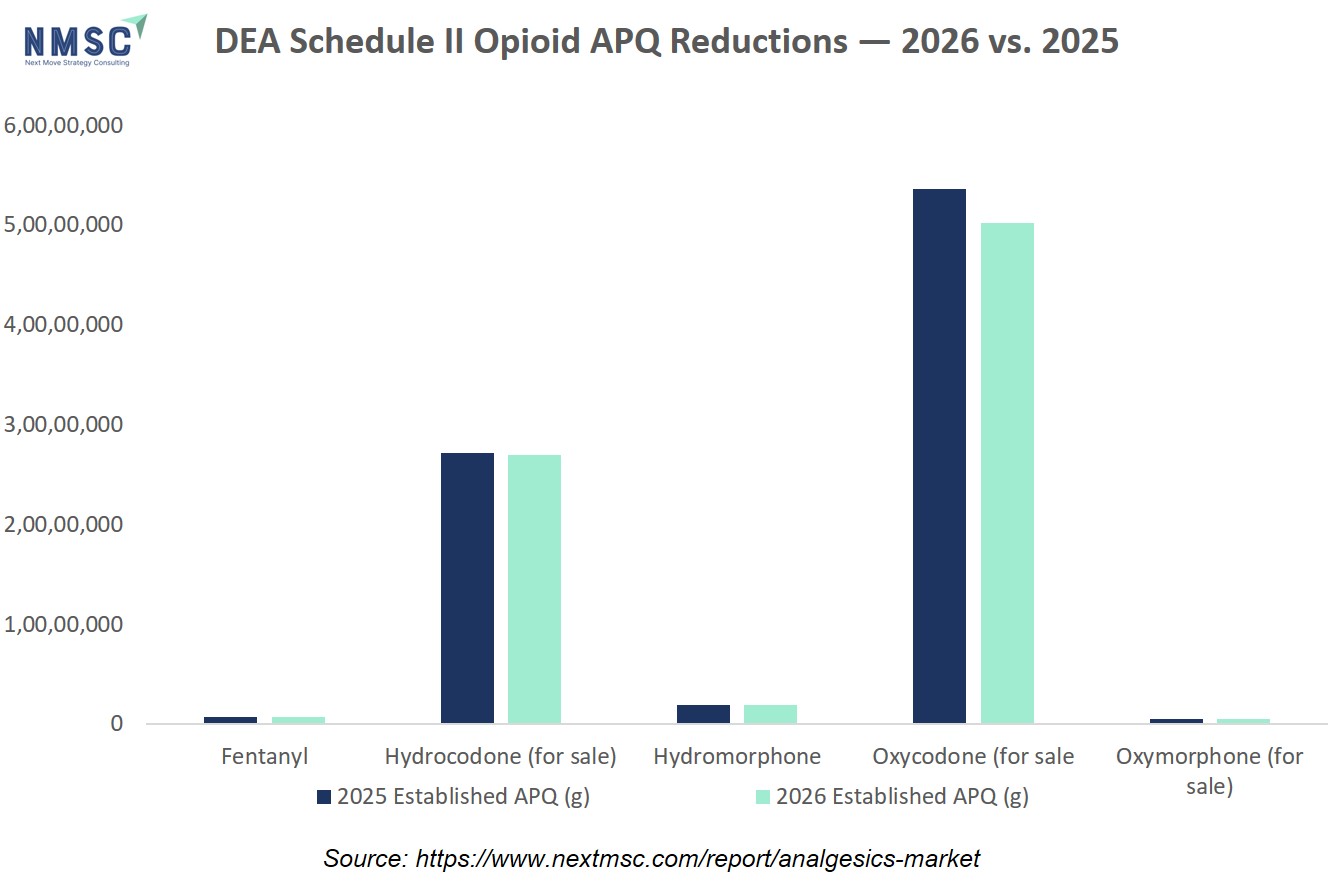
This approval did not occur in isolation. In September 2025, the FDA issued draft guidance specifically aimed at assisting pharmaceutical sponsors in the development of non-opioid analgesics for chronic pain — a regulatory signal that the agency is actively building the framework to accelerate an entire new generation of non-opioid pain therapies. Simultaneously, the DEA's January 2026 aggregate production quotas introduced reduced manufacturing limits for fentanyl, hydrocodone, hydromorphone, oxycodone, and oxymorphone — reflecting a documented average 10.56% decrease in the medical usage of schedule II opioids.
Together, these regulatory actions are not merely policy adjustments — they are structural market forces that are simultaneously contracting the opioid segment and creating durable commercial demand for non-opioid analgesic alternatives across the entire pharmaceutical value chain.
NMSC Strategic Perspective: Interpreting the Non-Opioid Shift
According to Next Move Strategy Consulting's analysis of the global analgesics market, the regulatory-driven migration toward non-opioid multimodal pain management is the single most consequential structural trend reshaping market dynamics through 2035. NMSC's research indicates that health systems across North America and Europe are embedding non-opioid-first policies into surgical and emergency care pathways, combining acetaminophen, NSAIDs, and local anesthetics to reduce opioid exposure. Hospital formulary committees are prioritizing perioperative non-opioid analgesic bundles, directly benefiting manufacturers of IV acetaminophen, ketorolac, and liposomal bupivacaine formulations in the hospital pharmacy channel.
NMSC's assessment further identifies that the emergence of selective, non-addictive pain treatments — exemplified by suzetrigine's NaV1.8 sodium channel inhibition mechanism — is expanding the therapeutic landscape and encouraging healthcare providers to adopt alternatives that reduce opioid exposure while maintaining clinical efficacy. This trend is expected to reshape the competitive dynamics of the analgesics industry, fostering R&D investment in novel mechanisms of action, precision pain management, and advanced pharmaceutical formulations, thereby creating significant long-term growth opportunities for the global analgesics market.
The Global Burden of Pain: Why the Analgesics Market Cannot Slow Down
The structural demand underpinning the analgesics market is not a cyclical phenomenon — it is a demographic and epidemiological reality. The International Association for the Study of Pain (IASP) designated 2025 as its Global Year for "Pain Management, Research, and Education in Low- and Middle-Income Settings," recognizing that pain represents one of the most significant and inequitably distributed public health burdens worldwide. Low- and middle-income countries (LMICs) constitute more than four-fifths of the world's population, yet access to effective pain management therapies in these settings remains critically inadequate.
In the United States alone, the U.S. Centers for Disease Control and Prevention (CDC) estimates that approximately 51.6 million adults live with chronic pain, of whom 17.1 million report high-impact chronic pain that limits daily activities. A 2026 study published in The Lancet found that unadjusted pain prevalence reached 43.21% across all countries and years pooled in its international analysis — a figure that underscores the sheer scale of unmet analgesic demand globally.
Section Summary: The analgesics market is at a structural inflection point defined by the convergence of landmark non-opioid drug approvals, tightening opioid regulatory controls, and an enormous and growing global burden of chronic pain. These forces are simultaneously reshaping the competitive landscape and creating durable demand for next-generation pain management solutions.
Key Takeaways:
-
The FDA's January 2025 approval of Journavx (suzetrigine) introduced the first new non-opioid analgesic class in over 25 years, signaling a new era in pain pharmacology.
-
The DEA's 2026 aggregate production quotas reflect a documented 10.56% average decline in schedule II opioid medical usage, structurally constraining the opioid segment.
-
The FDA issued draft guidance in September 2025 to accelerate non-opioid analgesic development for chronic pain, reinforcing the regulatory direction of the market.
-
An estimated 51.6 million U.S. adults live with chronic pain, and global pain prevalence exceeds 43%, sustaining robust long-term pharmaceutical demand.
Industry Impact Analysis
Regulatory Realignment Is Restructuring the Competitive Hierarchy
The regulatory environment governing the analgesics market has never been more consequential for competitive positioning. The FDA's Opioid Action Plan and the DEA's annual aggregate production quota system have materially reduced opioid prescription volumes in the United States from their 2012 peak levels. The CDC's Clinical Practice Guideline for Prescribing Opioids explicitly recommends that prescribers consider non-opioid therapies as the preferred treatment for chronic pain — a guideline that is actively shifting clinical preference away from opioid analgesics toward NSAIDs, acetaminophen, and multimodal approaches in outpatient settings.
In Europe, the European Medicines Agency (EMA) and national competent authorities have issued multiple warnings regarding increased cardiovascular risk associated with COX-2 selective inhibitors such as celecoxib and etoricoxib, particularly in patients with pre-existing cardiac conditions. These safety signals drive prescriber caution, limit maximum approved doses, and necessitate labeling changes that reduce the therapeutic market positioning of NSAIDs as first-line chronic pain treatments in vulnerable patient populations.
The net effect of this regulatory realignment is a bifurcation of the analgesics market: the opioid segment faces structural volume contraction in regulated markets, while the non-opioid segment — encompassing acetaminophen, NSAIDs, topical agents, and novel mechanisms such as NaV1.8 inhibitors — is experiencing accelerating clinical and commercial investment.
The Online Pharmacy Channel Is Disrupting Traditional Distribution Economics
One of the most commercially significant structural shifts in the analgesics market is the rapid expansion of online pharmacy distribution. Licensed e-pharmacy platforms including Amazon Pharmacy in the United States and equivalent platforms in the United Kingdom, Germany, India, and Australia are compressing retail pharmacy margins and compelling traditional distributors to develop omnichannel strategies. This channel shift is also accelerating private-label generic analgesic growth globally, as price-sensitive consumers increasingly compare OTC analgesic products across digital platforms.
Emerging Markets Are Becoming the Volume Engine of Global Analgesic Growth
The IASP's 2025 Global Year initiative highlighted that LMICs bear a disproportionate burden of pain-related disability, yet access to effective analgesic therapies in these settings remains severely constrained. India's pharmaceutical sector — the world's largest supplier of generic medicines by volume — is positioned to expand affordable analgesic access across Southeast Asia, Africa, and Latin America, serving growing pain management demand in markets where branded analgesic pricing remains inaccessible to large population segments.
Corporate Strategy Is Responding to Market Signals
Industry participants are actively repositioning in response to these structural forces. In May 2026, Haleon and UEFA Medical announced a multi-year partnership to advance evidence-based pain management and recovery practices in sports medicine, supporting innovation in topical pain relief — a move that signals the growing commercial importance of the topical analgesics segment. In August 2025, Bayer launched its Aspirina brand in the United States, expanding its well-established aspirin-based pain relief franchise from Mexico into the U.S. OTC analgesics market.
Section Summary: The analgesics market is experiencing simultaneous disruption across regulatory, distribution, and geographic dimensions. Opioid prescribing restrictions are creating commercial space for non-opioid innovation, online pharmacy channels are restructuring distribution economics, and emerging markets are emerging as the primary volume growth engines for the next decade.
Key Takeaways:
-
FDA and DEA regulatory actions are structurally contracting the opioid segment while creating durable demand for non-opioid alternatives.
-
Online pharmacy is the fastest-growing distribution channel in the analgesics market, compelling traditional retail pharmacy operators to develop omnichannel capabilities.
-
India's generic pharmaceutical sector is positioned as the primary supply engine for affordable analgesic access across Asia-Pacific, Africa, and Latin America.
-
Corporate M&A and brand investment activity — including Haleon's UEFA partnership and Bayer's U.S. Aspirina launch — reflects strategic repositioning in response to evolving market dynamics.
Pros and Cons of Recent Market Developments
|
Development |
Pros |
Cons |
|
FDA Approval of Journavx (Suzetrigine) — First New Non-Opioid Class in 25 Years |
Opens a new therapeutic category with significant commercial potential; reduces opioid dependency risk for patients; attracts R&D investment into novel pain mechanisms |
High initial pricing may limit broad patient access; limited long-term safety data available; requires prescriber education and formulary adoption time |
|
DEA 2026 Opioid Production Quota Reductions |
Reduces overdose and diversion risk; accelerates clinical shift toward non-opioid multimodal protocols; aligns with public health objectives |
May create short-term supply constraints for legitimate chronic pain patients; reduces revenue for opioid-dependent pharmaceutical manufacturers |
|
FDA Draft Guidance on Non-Opioid Analgesics for Chronic Pain (September 2025) |
Provides regulatory clarity for sponsors; accelerates pipeline development; signals long-term institutional support for non-opioid innovation |
Guidance is in draft form; final requirements may impose additional clinical trial burdens on developers |
|
Online Pharmacy Channel Expansion |
Improves OTC analgesic accessibility and price transparency; creates new distribution reach for brands; supports self-medication trends |
Increases counterfeit and unregulated product risk; compresses retail pharmacy margins; creates regulatory compliance complexity across jurisdictions |
|
IASP 2025 Global Year Focus on LMICs |
Elevates global pain management as a policy priority; drives funding for research in underserved markets; creates long-term demand expansion opportunity |
Structural healthcare access barriers in LMICs remain significant; translating advocacy into commercial market access requires sustained investment |
|
Generic Market Penetration in Emerging Economies |
Expands affordable analgesic access to billions of patients; creates high-volume growth opportunity for generic manufacturers |
Intensifies pricing pressure on branded analgesic revenues; compresses margins across the value chain |
Key Data & Statistics
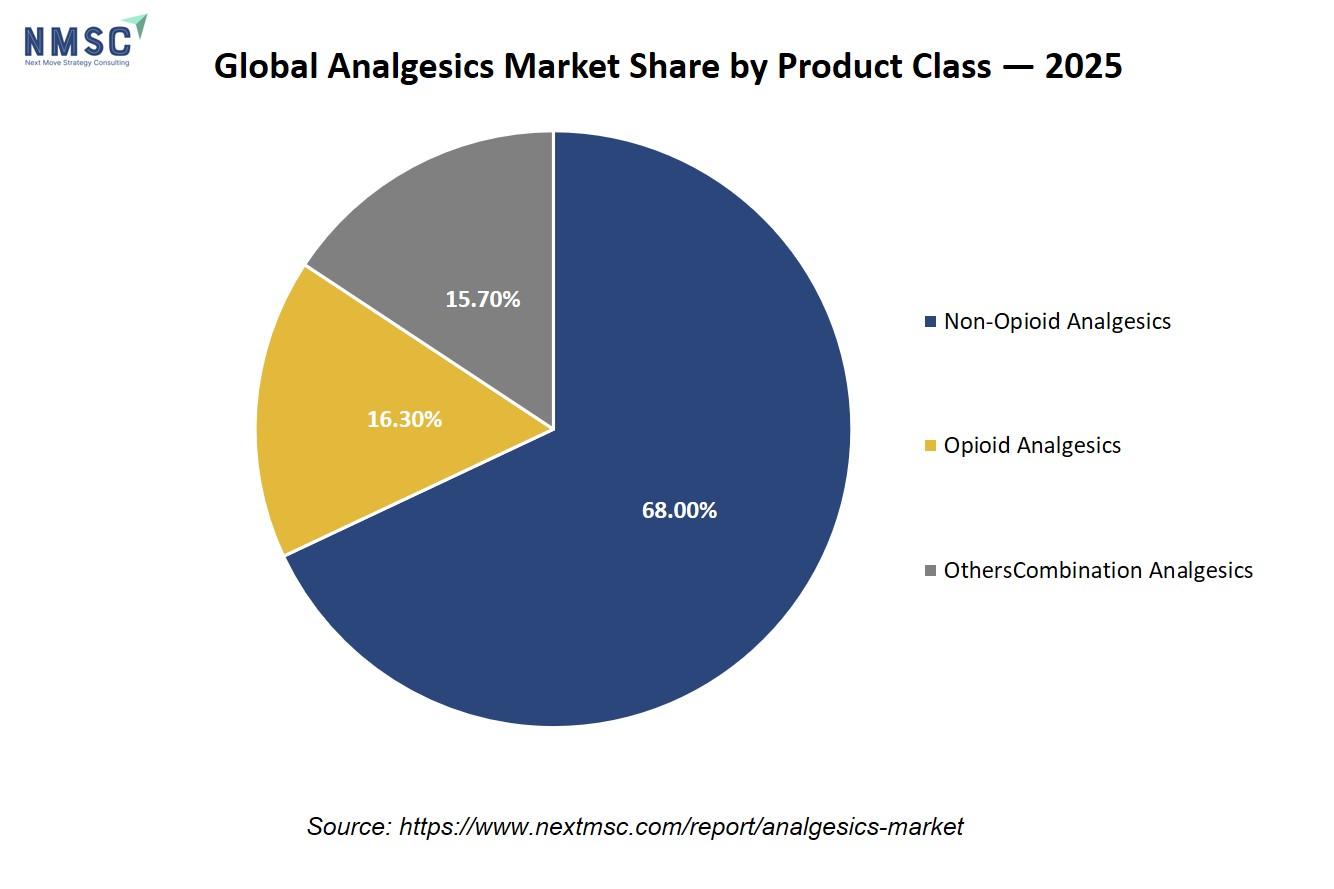
Table 1: Global Analgesics Market — Segmentation by Product Class (2025–2035)
|
Product Class |
2025 Market Size (USD Bn) |
2035 Forecast (USD Bn) |
CAGR (2026–2035) |
|
Non-Opioid Analgesics |
33.0 |
60.8 |
6.3% |
|
Opioid Analgesics |
7.9 |
13.0 |
5.0% |
|
Combination Analgesics |
7.6 |
15.1 |
7.2% |
|
Total Market |
48.5 |
89.0 |
6.2% |
Table 2: Global Analgesics Market — Regional Performance Snapshot (2025–2035)
|
Region |
2025 Market Size (USD Bn) |
2035 Forecast (USD Bn) |
CAGR (2026–2035) |
Primary Growth Driver |
|
North America |
17.3 |
30.4 |
5.7% |
High per-capita healthcare spend; OTC demand; Rx opioid controls |
|
Europe |
13.8 |
24.2 |
5.7% |
Generic substitution; EMA regulation; aging population |
|
Asia-Pacific |
11.3 |
23.1 |
7.5% |
Population growth; generic market maturation; OTC expansion |
|
Middle East & Africa |
3.5 |
6.7 |
6.7% |
Healthcare access improvement; cancer pain programs |
|
Latin America |
2.6 |
4.6 |
5.9% |
Generic market penetration; self-medication trends |
|
Global Total |
48.5 |
89.0 |
6.2% |
Multi-factor structural demand |
Table 3: Global Analgesics Market — Distribution Channel Performance (2025–2035)
|
Distribution Channel |
2025 Market Size (USD Bn) |
2035 Forecast (USD Bn) |
CAGR (2026–2035) |
|
Retail Pharmacy |
22.4 |
40.0 |
5.9% |
|
Hospital Pharmacy |
13.7 |
23.4 |
5.4% |
|
Online Pharmacy |
6.4 |
15.0 |
9.2% |
|
Direct Tender |
3.8 |
6.8 |
6.0% |
|
Other |
2.2 |
3.8 |
5.3% |
Future Outlook & Forecast
The Analgesics Market Is Entering a Decade of Dual-Force Growth
According to Next Move Strategy Consulting's proprietary research, the global analgesics market was valued at USD 48.5 billion in 2025 and is projected to reach USD 51.5 billion in 2026. Sustained demand for pain relief across aging global populations, rising chronic disease prevalence, and expanding access to over-the-counter medications are projected to propel the market to USD 89.0 billion by 2035, advancing at a CAGR of 6.2% from 2026 to 2035.
NMSC's analysis identifies four highest-conviction growth themes for the forecast period:
1. Online Pharmacy Channel (CAGR: 9.2%): The fastest-growing distribution channel in the analgesics market, driven by accelerated consumer adoption of digital health purchasing, competitive OTC analgesic pricing on e-pharmacy platforms, and expanding licensed online pharmacy infrastructure across North America, Europe, India, and Australia.
2. Topical and Transdermal Analgesics (CAGR: 7.7%): The fastest-growing route of administration, reflecting expanding clinical evidence for localized NSAID gels, lidocaine patches, and capsaicin products that minimize systemic exposure and are increasingly preferred in elderly patients and those with cardiovascular or gastrointestinal comorbidities.
3. Migraine and Headache Application Segment (CAGR: 7.6%): The fastest-growing pain indication, propelled by rising migraine prevalence, patient awareness, and availability of new OTC and Rx analgesic options including combination analgesics and triptans.
4. Asia-Pacific Regional Expansion (CAGR: 7.5%): The fastest-growing major region, advancing from USD 11.3 billion in 2025 to USD 23.1 billion by 2035, driven by expanding populations, rising chronic disease burden, growing OTC pharmaceutical market maturation, and the dominant role of Indian and Chinese generic pharmaceutical manufacturers.
The Non-Opioid Pipeline Will Define the Next Competitive Frontier
The FDA's institutional commitment to non-opioid analgesic development — evidenced by the Journavx approval, the September 2025 draft guidance for chronic pain non-opioid development, and the Overdose Prevention Framework — is creating a regulatory environment that will support a new generation of differentiated pain therapies. Venture capital is actively funding early-stage companies developing novel non-opioid pain mechanisms including CGRP-pathway modulators, sodium channel blockers, and neuromodulation drug delivery systems — investment flows that will translate into commercial pipeline assets over the 2027–2035 horizon.
Palliative Care and Cancer Pain Represent a Structurally Underserved Opportunity
The WHO estimates that 80% of cancer patients experience moderate to severe pain requiring pharmacological management, yet access to opioid analgesics in low- and middle-income countries remains critically inadequate. The WHO's Access to Controlled Medicines Programme and the International Association for Hospice and Palliative Care (IAHPC) advocate for improved opioid availability in developing markets — representing a long-term growth driver for strong opioid products and combination analgesics in Asia-Pacific, Sub-Saharan Africa, and Latin America.
Section Summary: The global analgesics market is forecast to grow from USD 51.5 billion in 2026 to USD 89.0 billion by 2035 at a CAGR of 6.2%, driven by non-opioid innovation, online pharmacy channel expansion, topical analgesic adoption, and Asia-Pacific volume growth. The regulatory and clinical environment strongly favors non-opioid investment over the forecast period.
Key Takeaways:
-
The global analgesics market is projected to reach USD 89.0 billion by 2035, growing at a CAGR of 6.2% from 2026 to 2035, per NMSC's proprietary research.
-
Online Pharmacy (9.2% CAGR), Topical/Transdermal (7.7% CAGR), Migraine & Headache (7.6% CAGR), and Asia-Pacific (7.5% CAGR) represent the four highest-conviction growth themes.
-
The FDA's regulatory framework is actively incentivizing non-opioid analgesic pipeline development, creating a durable commercial opportunity for pharmaceutical innovators.
-
Cancer pain and palliative care access programs in LMICs represent a structurally underserved but rapidly growing long-term market opportunity.
Next Steps for Stakeholders
For Pharmaceutical Manufacturers and Branded OTC Companies:
Prioritize OTC analgesic brand reinvestment in Asia-Pacific and Middle East & Africa markets, where self-medication growth rates are highest. Evaluate bolt-on acquisitions of non-opioid pain pipeline assets to build next-generation hospital analgesic portfolios. Invest in digital pharmacy channel capabilities as online analgesic purchasing continues to displace traditional retail channels at a CAGR of 9.2%.
For Generic Pharmaceutical Manufacturers:
Expand API and finished dosage form manufacturing capacity for NSAIDs and acetaminophen targeting emerging market supply chains. Monitor patent expiration timelines for branded analgesics to identify first-to-file generic opportunities. Develop cost-competitive topical analgesic product lines to capture the fastest-growing route of administration segment.
For Hospital Pharmacy Administrators and Healthcare Providers:
Align formulary development with the accelerating clinical shift toward non-opioid multimodal pain management protocols. Evaluate the clinical and economic case for incorporating novel non-opioid agents such as suzetrigine into perioperative pain management pathways. Invest in electronic prescribing and prescription drug monitoring program integration to ensure compliance with evolving opioid prescribing regulations.
For Institutional Investors and Private Equity:
The analgesics market offers a stable, high-volume investment environment with defensive demand characteristics and diversified revenue streams across OTC, Rx, and institutional channels. The highest-conviction investment themes include specialty non-opioid pharmaceutical companies developing hospital analgesic alternatives, online pharmacy platform operators, and topical analgesic innovators. Evaluate ESG exposure carefully — institutional investors are increasingly scrutinizing pharmaceutical companies' opioid stewardship records as a material investment factor.
For Regulatory Authorities and Policymakers:
Accelerate the finalization of the FDA's September 2025 draft guidance on non-opioid analgesics for chronic pain to provide regulatory clarity for sponsors. Expand access to essential analgesics in LMICs through WHO Access to Controlled Medicines Programme frameworks. Develop balanced opioid prescribing policies that address addiction risk without creating access barriers for legitimate chronic pain patients.
Conclusion
The global analgesics market is navigating a structural transformation that will define its competitive landscape for the next decade. The FDA's approval of Journavx (suzetrigine) as the first new non-opioid analgesic class in 25 years, the DEA's 2026 opioid production quota reductions, and the FDA's draft guidance on non-opioid chronic pain development collectively represent a regulatory environment that is actively reshaping clinical practice, investment priorities, and commercial strategy across the pharmaceutical pain management sector.
According to Next Move Strategy Consulting's proprietary analysis, the global analgesics market is projected to grow from USD 51.5 billion in 2026 to USD 89.0 billion by 2035 at a CAGR of 6.2% — a trajectory underpinned by the global burden of chronic pain affecting hundreds of millions of patients, the demographic aging of major economies, and the structural expansion of generic pharmaceutical access across Asia-Pacific, Latin America, and Africa. For stakeholders across the pharmaceutical value chain, the strategic imperative is clear: invest in non-opioid innovation, build digital distribution capabilities, and position for the volume-driven growth of emerging markets. The organizations that act on these signals today will define the competitive hierarchy of the analgesics market in 2035.
About the Author
 Sanyukta Deb
— Sanyukta Deb is Digital Marketing Team Lead at Next Move Strategy Consulting, where she has led content strategy and technical SEO for the firm's B2B market research publications for over 2 years. Her editorial process translates NextMSC's primary and secondary research — spanning technology, industrial, and consumer sectors — into commercial narratives, backed by search-intent, keyword, and competitive analysis. She brings 5 years of overall experience in digital marketing and content strategy.
Sanyukta Deb
— Sanyukta Deb is Digital Marketing Team Lead at Next Move Strategy Consulting, where she has led content strategy and technical SEO for the firm's B2B market research publications for over 2 years. Her editorial process translates NextMSC's primary and secondary research — spanning technology, industrial, and consumer sectors — into commercial narratives, backed by search-intent, keyword, and competitive analysis. She brings 5 years of overall experience in digital marketing and content strategy.
About the Reviewer
 Debashree Dey
— Debashree Dey is Assistant Manager at Next Move Strategy Consulting, where she supports cross-vertical market content and communications across diverse industries for 6 years. Her professional background includes senior content writing, communications, and published manuscript authorship, with experience developing audience-focused business narratives and maintaining clear, consistent messaging. Her role supports research-led content development and editorial quality across NextMSC publications.
Debashree Dey
— Debashree Dey is Assistant Manager at Next Move Strategy Consulting, where she supports cross-vertical market content and communications across diverse industries for 6 years. Her professional background includes senior content writing, communications, and published manuscript authorship, with experience developing audience-focused business narratives and maintaining clear, consistent messaging. Her role supports research-led content development and editorial quality across NextMSC publications.


















Add Comment