How Is AI Reshaping Naval Degaussing Operations?
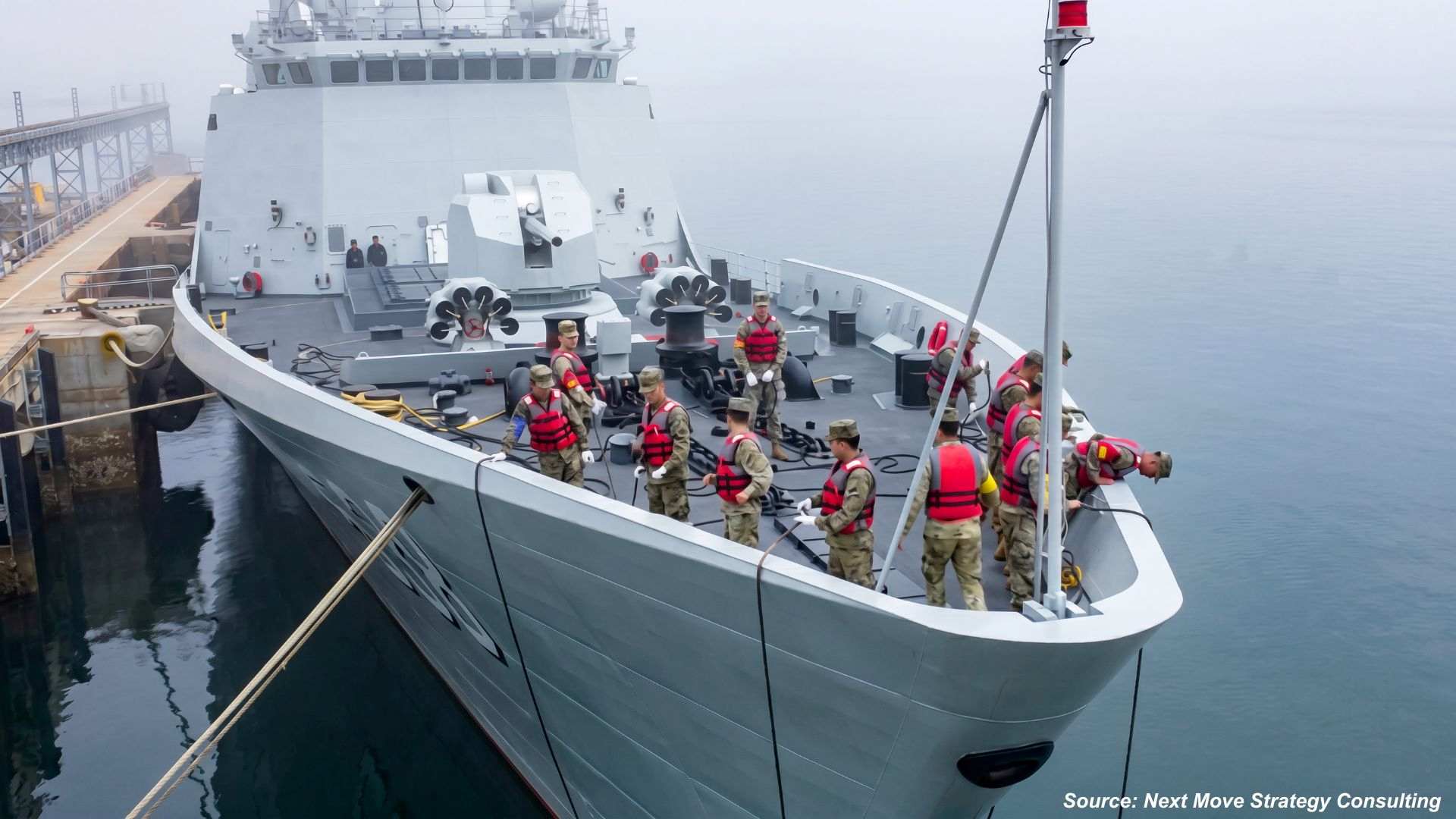
Modern naval warfare increasingly depends on technologies that improve stealth, operational speed, and survivability. Among these technologies, Degaussing System Market have become critically important because they help warships reduce their magnetic signatures and avoid underwater threats such as magnetic naval mines. In 2025, the Chinese People’s Liberation Army (PLA) Navy demonstrated a major advancement in this field by integrating artificial intelligence (AI) into a naval degaussing exercise involving Type 054A frigates.
What Is a Degaussing System and Why Is It Important?
A degaussing system is designed to neutralize or reduce the magnetic field generated by a warship’s metal hull. Over time, naval vessels naturally accumulate magnetic signatures due to the Earth’s magnetic field and the continuous operation of onboard equipment and weapons systems.
If these magnetic signatures are not managed properly, warships become more vulnerable to detection systems and magnetic naval mines. This can significantly reduce operational stealth and increase battlefield risk, particularly during anti-submarine and coastal defense missions.
The PLA Navy exercise highlighted how degaussing remains a foundational part of naval survivability. During the drill, emergency response teams used magnetic field detectors, precision positioning devices, and degaussing cables to restore the stealth profile of a Type 054A frigate.
|
Operational Area |
Impact of Degaussing |
|
Stealth capability |
Reduces magnetic detectability |
|
Mine protection |
Helps avoid magnetic mine activation |
|
Fleet readiness |
Supports faster redeployment |
|
Maritime security |
Improves operational survivability |
How Is AI Improving Degaussing Efficiency?
The most important advancement demonstrated during the 2025 exercise was the integration of an AI-based decision-support system. Traditionally, degaussing operations rely heavily on manual calculations and operator judgment to determine the appropriate electrical current needed to neutralize magnetic fields.
The AI system introduced by the PLA Navy changed this process significantly. According to CCTV coverage referenced by Army Recognition and SCMP, the system analyzed the vessel’s magnetic profile in real time and automatically optimized current intensity and operation duration.
|
AI Capability |
Operational Advantage |
|
Real-time magnetic analysis |
Faster calculations |
|
Automated current adjustment |
Improved precision |
|
Benchmark comparison |
Faster validation |
|
Reduced manual estimation |
Lower human error |
The system also shortened the post-operation verification process because AI tools immediately compared magnetic readings against predefined operational benchmarks. This reduced delays and allowed technical teams to complete the procedure more efficiently.
The development illustrates how naval forces are increasingly adopting AI not only for combat systems, but also for technical support and maintenance operations.

Why Are Type 054A Frigates Central to This Development?
The naval exercise focused on the Type 054A frigate, one of the most widely deployed warship classes in the PLA Navy. These frigates are commonly used for anti-submarine warfare, coastal patrol missions, and air defense operations.
Because these vessels frequently operate in contested maritime regions, maintaining low magnetic visibility is strategically important. The emergency scenario simulated during the drill involved a combat-damaged vessel that required rapid degaussing before returning to operational status.
The exercise demonstrated how AI-assisted support systems can help reduce maintenance time while preserving fleet readiness during high-pressure situations.
This shift suggests that intelligent support technologies may soon become standard components of modern naval infrastructure.
How Is Naval Training Evolving Alongside Automation?
The exercise also highlighted changes in military training practices. According to Army Recognition, twelve sailors under the age of 23 participated directly in the emergency support operation as part of a new accelerated operational training model.
Instead of relying on extended classroom preparation, recruits were exposed immediately to complex combat-style scenarios designed to simulate real battlefield conditions. Commander Sun Hui reportedly explained that this approach aims to strengthen operational efficiency and accelerate skill development.
One sailor, Liu Yunhe, stated during the CCTV report that the activation of the degaussing current made him realize the seriousness of frontline operational responsibility.
The integration of AI systems alongside immersive field training reflects a growing emphasis on human-machine coordination within modern naval operations.
In essence, naval modernization is now combining technological automation with more practical and experience-driven personnel training.

Competitive Landscape of the Degaussing System Industry
The degaussing system industry includes major companies such as Larsen & Toubro, Polyamp, ECA Group, Ultra Electronics, IFEN S.p.A., Dayatech Merin, AMSC, STL System AG, Surma LTD, and American Superconductor Corporation.
These companies are actively strengthening their market position through strategic agreements, defense partnerships, and large-scale contract acquisitions aimed at expanding their presence in the global degaussing system industry.

Major Trends Shaping the Present
The PLA Navy’s AI-assisted degaussing exercise reflects several broader trends shaping modern naval operations. One major trend is the increasing use of AI-driven support systems across maintenance and logistics functions. Military organizations are gradually moving beyond combat-focused AI applications and integrating intelligent systems into operational infrastructure.
Another important trend is the push for faster combat readiness. Rapid restoration of stealth capabilities allows vessels to return to deployment more quickly after missions or combat exposure.
The exercise also demonstrated how embedded automation systems can reduce operational uncertainty while improving technical precision. As these technologies mature, they may expand into additional areas such as predictive maintenance, electronic warfare, and automated fleet coordination.
These developments indicate that future naval competitiveness may depend as much on intelligent support systems as on traditional weapons platforms.
Analysis of AI-Enhanced Naval Degaussing Benefits
The pie chart highlights the major operational advantages associated with AI-enhanced naval degaussing systems. Stealth enhancement holds the largest share at 35%, demonstrating the growing importance of reducing a warship’s magnetic signature to improve survivability and avoid enemy detection systems. Operational efficiency accounts for 30%, reflecting how artificial intelligence improves calculation accuracy, reduces manual intervention, and accelerates degaussing procedures. Mine protection represents 20% of the chart, emphasizing the role of degaussing systems in lowering the risk posed by magnetic naval mines. Combat readiness contributes the remaining 15%, showing how faster maintenance and stealth restoration support quicker redeployment of naval vessels during critical operations.

What Comes Next for Naval Degaussing Technology?
The PLA Navy’s latest exercise demonstrates how AI is gradually transforming naval maintenance and stealth management systems. By reducing calculation time, minimizing operational errors, and improving precision, AI-assisted degaussing could become an important standard for future naval fleets.
The exercise also reflects a broader military modernization strategy focused on automation, adaptability, and rapid operational response. As naval competition continues to intensify globally, intelligent support technologies will likely play a growing role in improving fleet survivability and mission efficiency.
Next Steps
Organizations and defense analysts monitoring naval modernization should focus on several emerging developments:
-
Expansion of AI into broader naval maintenance systems
-
Adoption of automated stealth technologies by other navies
-
Integration of predictive maintenance capabilities
-
Growth of simulation-driven military training programs
In conclusion, AI-assisted degaussing represents more than a technical upgrade. It reflects a strategic transition toward smarter, faster, and more adaptive naval operations.
About the Author
 Sanyukta Deb
— Sanyukta Deb is Digital Marketing Team Lead at Next Move Strategy Consulting, where she has led content strategy and technical SEO for the firm's B2B market research publications for over 2 years. Her editorial process translates NextMSC's primary and secondary research — spanning technology, industrial, and consumer sectors — into commercial narratives, backed by search-intent, keyword, and competitive analysis. She brings 5 years of overall experience in digital marketing and content strategy.
Sanyukta Deb
— Sanyukta Deb is Digital Marketing Team Lead at Next Move Strategy Consulting, where she has led content strategy and technical SEO for the firm's B2B market research publications for over 2 years. Her editorial process translates NextMSC's primary and secondary research — spanning technology, industrial, and consumer sectors — into commercial narratives, backed by search-intent, keyword, and competitive analysis. She brings 5 years of overall experience in digital marketing and content strategy.
About the Reviewer
 Debashree Dey
— Debashree Dey is Assistant Manager at Next Move Strategy Consulting, where she supports cross-vertical market content and communications across diverse industries for 6 years. Her professional background includes senior content writing, communications, and published manuscript authorship, with experience developing audience-focused business narratives and maintaining clear, consistent messaging. Her role supports research-led content development and editorial quality across NextMSC publications.
Debashree Dey
— Debashree Dey is Assistant Manager at Next Move Strategy Consulting, where she supports cross-vertical market content and communications across diverse industries for 6 years. Her professional background includes senior content writing, communications, and published manuscript authorship, with experience developing audience-focused business narratives and maintaining clear, consistent messaging. Her role supports research-led content development and editorial quality across NextMSC publications.















Add Comment