How Is Electrocardiograph (ECG) Transforming Cardiac Diagnosis?
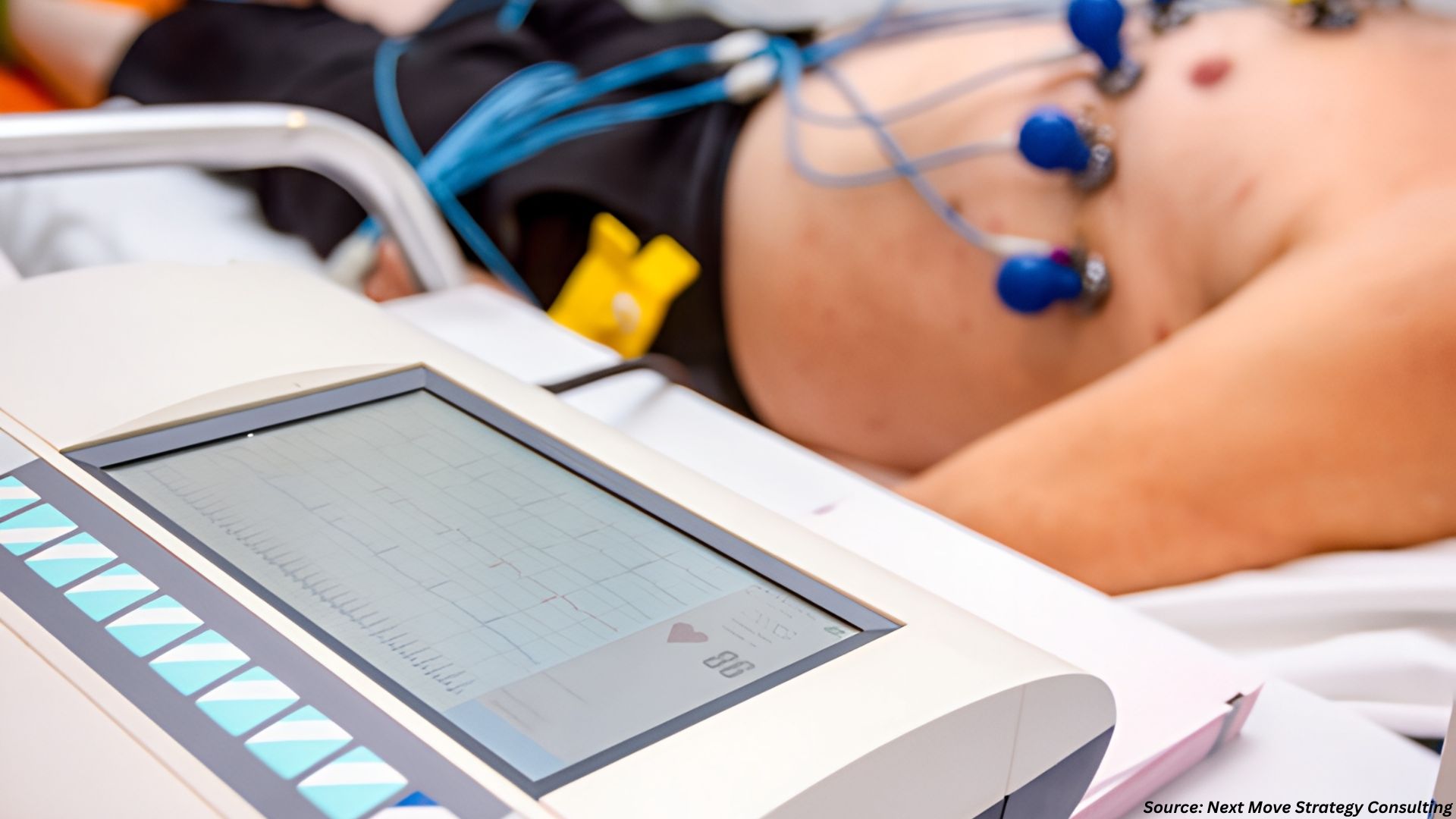
Electrocardiograph (ECG) Market technology has been a cornerstone of cardiac care for decades. Today, it is undergoing a significant transformation driven by artificial intelligence (AI), connected healthcare systems, and remote monitoring capabilities. The shift is not merely technological; it reflects a broader move toward faster diagnosis, earlier intervention, and more efficient care delivery.
What Makes Electrocardiograph (ECG) Essential in Modern Healthcare?
An electrocardiograph records the electrical activity of the heart and helps detect irregularities such as arrhythmias or early signs of heart failure. It is widely used in both clinical and non-clinical environments due to its reliability and non-invasive nature.
What makes ECG especially relevant today is its adaptability. It is no longer limited to static readings in hospitals but is increasingly integrated into digital systems that enhance interpretation and accessibility.
-
ECG continues to be central to cardiac diagnostics
-
Its applications now extend beyond hospitals
-
Integration with digital technologies is redefining its role
How Is AI Enhancing Electrocardiograph (ECG) Capabilities?
Artificial intelligence is redefining how ECG data is interpreted and used in clinical settings. In July 2025, Philips introduced an ECG AI Marketplace designed to simplify access to advanced diagnostic tools within a single platform.
This marketplace allows healthcare providers to integrate multiple AI solutions directly into their existing ECG systems. As a result, clinicians can analyze ECG data more efficiently without switching between different tools or platforms.
A key feature of this innovation is the inclusion of Anumana’s FDA-cleared ECG-AI™ algorithm. This algorithm analyzes standard 12-lead ECG data to detect low ejection fraction, which is an early indicator of heart failure. According to the official announcement, the technology has been evaluated using data from more than 150,000 patients and is supported by nearly 100 peer-reviewed publications.
Beyond accuracy, the platform also improves operational efficiency. By managing multiple AI vendor integrations within a unified system, it reduces the burden on hospital IT infrastructure and accelerates clinical workflows.

How Is Electrocardiograph (ECG) Enabling Earlier Detection of Heart Conditions?
Early detection is one of the most critical factors in improving cardiovascular outcomes, and ECG innovations are increasingly focused on this objective.
The AI tools available through the Philips ecosystem are embedded directly into routine ECG workflows. This means that clinicians can access advanced diagnostic insights during standard ECG analysis without requiring additional procedures or delays. The ability to identify reduced ejection fraction at an early stage allows for timely intervention, which can significantly improve patient outcomes.
Furthermore, these tools are integrated across systems such as IntelliSpace ECG and cardiographs, ensuring that advanced diagnostics are available at the point of care.

How Is Remote Monitoring Expanding the Role of Electrocardiograph (ECG)?
The role of ECG is expanding beyond traditional healthcare facilities into homes and remote environments. This shift is being driven by connected devices and AI-powered platforms that enable continuous monitoring.
In December 2025, Omron Healthcare announced a global strategy to expand its ECG capabilities as part of its broader cardiovascular care mission. The initiative focuses on connecting home-based monitoring with clinical diagnostics to create a seamless care pathway.
A key element of this strategy is the integration of ECG-enabled blood pressure monitors with AI-driven platforms such as Tricog’s InstaECG. This allows patient data collected at home to be analyzed in real time, supporting early intervention for individuals at risk of heart failure.
Additionally, Omron is expanding its remote monitoring service, which uses ECG and blood pressure data to provide continuous insights into patient health. Another important development is the Heartnote® wearable ECG patch, which enables up to seven days of continuous monitoring. This design improves patient comfort compared to traditional Holter devices and enhances the detection of irregular heart rhythms.
What Trends Are Shaping Electrocardiograph (ECG) Today?
The current evolution of ECG technology is shaped by a convergence of digital and clinical innovations. AI integration is enabling more accurate and faster diagnostics, while remote monitoring is making cardiac care more accessible. At the same time, the development of connected ecosystems is ensuring that data flows seamlessly between patients and healthcare providers.
Another notable trend is the shift toward preventive care. Instead of focusing solely on treatment, ECG systems are now designed to identify risks early and support proactive healthcare decisions. This approach aligns with broader global efforts to reduce the burden of cardiovascular diseases.
Electrocardiograph (ECG) Technology Trends Distribution
This pie chart illustrates how key innovation areas are shaping the evolution of electrocardiograph (ECG) technology based on the latest industry developments.
The largest share, AI-enabled diagnostics (30%), highlights the growing reliance on intelligent algorithms to enhance ECG interpretation. Platforms introduced by Philips demonstrate how AI is being embedded directly into clinical workflows, enabling faster and more accurate diagnosis.
Remote monitoring (25%) represents the shift toward home-based cardiac care. Initiatives by Omron Healthcare show how ECG devices are increasingly connected to digital platforms, allowing continuous patient monitoring outside traditional hospital settings.
Another 25% is attributed to early detection, emphasizing the importance of identifying heart conditions at an early stage. AI-powered ECG tools are helping clinicians detect risks such as heart failure sooner, improving patient outcomes through timely intervention.
Finally, connected care systems (20%) reflect the integration of ECG data into broader healthcare ecosystems. This ensures seamless communication between devices, patients, and healthcare providers, supporting more coordinated and efficient care delivery.

How Will Electrocardiograph (ECG) Shape the Future of Cardiac Care?
Looking ahead, ECG technology is expected to play a central role in shaping data-driven and patient-centric healthcare systems. The combination of AI, wearable devices, and integrated platforms will enable continuous monitoring, real-time analysis, and faster clinical decision-making.
Both Philips and Omron are actively investing in technologies that connect home-based data with clinical workflows. This integrated approach ensures that patients receive timely care while reducing the burden on healthcare facilities.
The long-term vision is clear: ECG will not only detect heart conditions but also help prevent them through early identification and continuous monitoring.
Competitive Landscape of the Electrocardiograph (ECG) Industry
A detailed competitive analysis of the electrocardiograph (ECG) industry highlights key players such as OSI Systems, Fukuda Denshi Co., Ltd., Opto Circuits Limited, Philips Healthcare, Schiller AG, General Electric Company, Johnson & Johnson, Mortara Instrument, Inc., Medtronic Plc, and Mindray Medical International Limited. The report provides in-depth company profiles, covering their product portfolios, strategic initiatives, and market positioning within the ECG sector.

Next Steps: What Should Stakeholders Focus On?
Organizations and healthcare providers should prioritize adopting AI-enabled ECG systems to improve diagnostic efficiency. At the same time, investing in remote monitoring solutions can help extend care beyond hospitals and improve patient engagement. Integrating ECG data into broader healthcare systems will also be critical for achieving seamless workflows.
Finally, a stronger focus on early detection strategies will help reduce long-term healthcare costs while improving patient outcomes.
-
Adopt AI-enabled ECG platforms to enhance diagnostic accuracy and reduce interpretation time
-
Integrate ECG systems with existing clinical workflows for seamless data utilization
-
Invest in remote monitoring solutions to enable continuous patient tracking outside hospitals
-
Strengthen early detection strategies to improve outcomes and reduce long-term treatment costs
-
Collaborate with technology providers to scale connected and data-driven cardiac care systems
Final Thoughts
Electrocardiograph (ECG) technology is entering a new phase of innovation. With advancements in AI and remote monitoring, it is evolving into a comprehensive tool that supports early diagnosis, continuous care, and improved clinical outcomes.
The latest developments from industry leaders demonstrate that the future of cardiac care will be more connected, proactive, and data-driven. ECG is no longer just a diagnostic device; it is becoming a vital component of modern healthcare transformation.
About the Author
 Tania Dey
— Tania Dey is a content writer specializing in transformation-led, insight-driven storytelling. She develops research-backed, high-impact content aligned with evolving business priorities, digital behavior, and audience expectations. Her work helps organizations sharpen value propositions, strengthen visibility, and communicate strategic intent with clarity and precision. Grounded in data-informed storytelling, she brings a strong focus on relevance, consistency, and measurable digital impact across platforms.
Tania Dey
— Tania Dey is a content writer specializing in transformation-led, insight-driven storytelling. She develops research-backed, high-impact content aligned with evolving business priorities, digital behavior, and audience expectations. Her work helps organizations sharpen value propositions, strengthen visibility, and communicate strategic intent with clarity and precision. Grounded in data-informed storytelling, she brings a strong focus on relevance, consistency, and measurable digital impact across platforms.
About the Reviewer
 Sanyukta Deb
— Sanyukta Deb is Digital Marketing Team Lead at Next Move Strategy Consulting, where she has led content strategy and technical SEO for the firm's B2B market research publications for over 2 years. Her editorial process translates NextMSC's primary and secondary research — spanning technology, industrial, and consumer sectors — into commercial narratives, backed by search-intent, keyword, and competitive analysis. She brings 5 years of overall experience in digital marketing and content strategy.
Sanyukta Deb
— Sanyukta Deb is Digital Marketing Team Lead at Next Move Strategy Consulting, where she has led content strategy and technical SEO for the firm's B2B market research publications for over 2 years. Her editorial process translates NextMSC's primary and secondary research — spanning technology, industrial, and consumer sectors — into commercial narratives, backed by search-intent, keyword, and competitive analysis. She brings 5 years of overall experience in digital marketing and content strategy.

















Add Comment