How Is Industry Cloud Powering AI-Driven Enterprise Transformation?
Industry Cloud Market is steadily redefining how enterprises approach digital transformation. Instead of relying on generalized cloud solutions, organizations are increasingly adopting industry-specific cloud ecosystems that combine artificial intelligence, infrastructure, and domain expertise.
Recent announcements from NTT DATA and Samsung’s collaboration with OpenAI demonstrate how this shift is no longer theoretical. It is now actively shaping enterprise strategies across the globe.
Industry cloud is emerging as a strategic enabler of enterprise transformation rather than just an extension of traditional cloud computing. Industry cloud is aligning artificial intelligence with sector-specific needs, enabling scalable transformation while improving operational efficiency.
How Are Strategic Partnerships Strengthening Industry Cloud Ecosystems?
The growth of industry cloud is closely tied to the rise of strategic collaborations. Enterprises are no longer building isolated solutions; they are forming ecosystems that integrate cloud platforms, artificial intelligence, and infrastructure capabilities.
NTT DATA recently launched a global business unit dedicated to Microsoft Cloud, aimed at accelerating enterprise transformation through secure and scalable cloud solutions. This initiative brings together expertise in artificial intelligence, cybersecurity, and cloud-native development to address complex business challenges.
At the same time, Samsung has entered a strategic partnership with OpenAI to advance global AI infrastructure. This collaboration integrates capabilities across semiconductors, data centers, and cloud services, reflecting a broader industry shift toward unified ecosystems. Strategic partnerships are transforming industry cloud into interconnected platforms that accelerate innovation and reduce implementation complexity. Collaborations are enabling enterprises to deploy integrated solutions faster while leveraging combined technological expertise.
Global Reach and Enterprise Impact
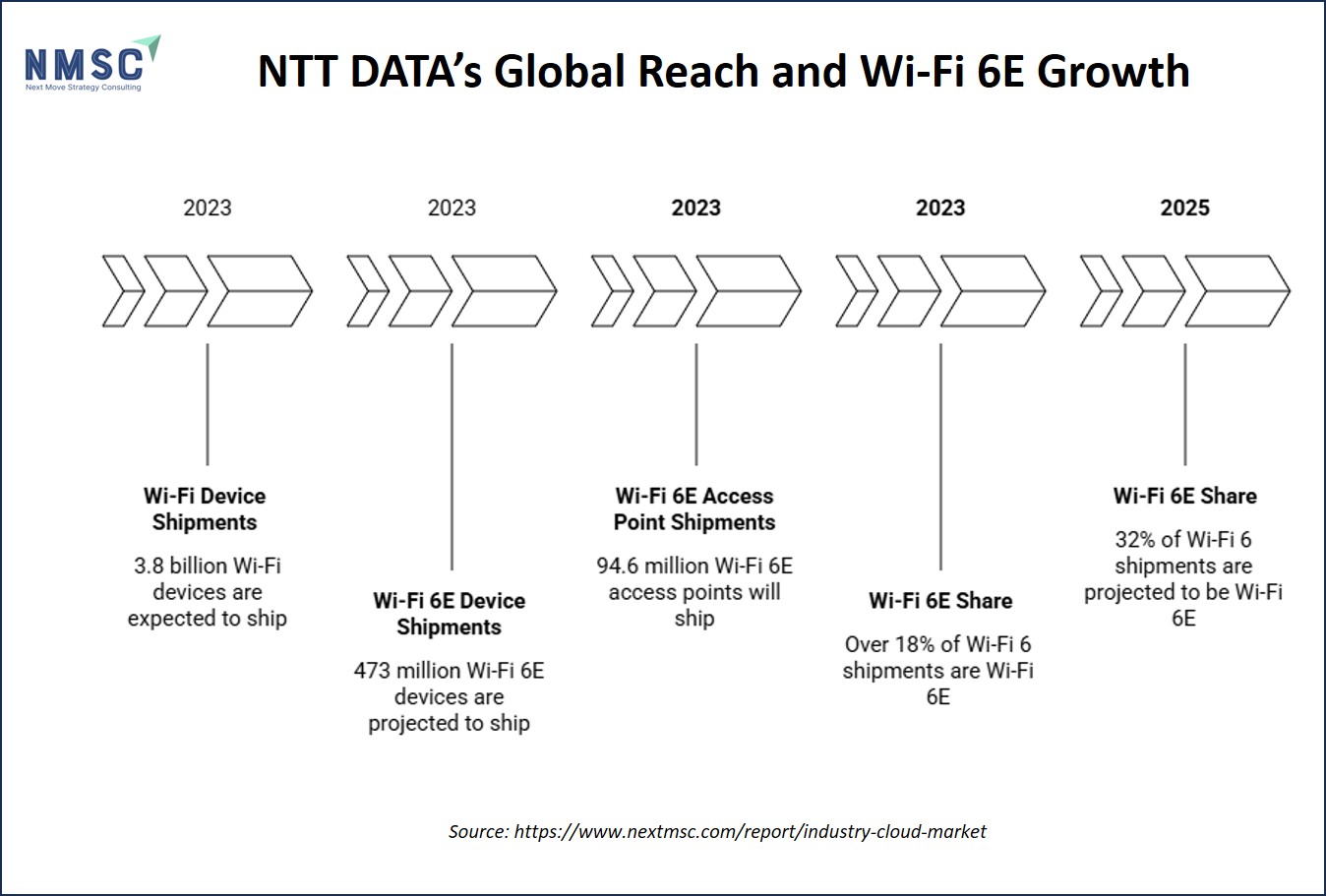
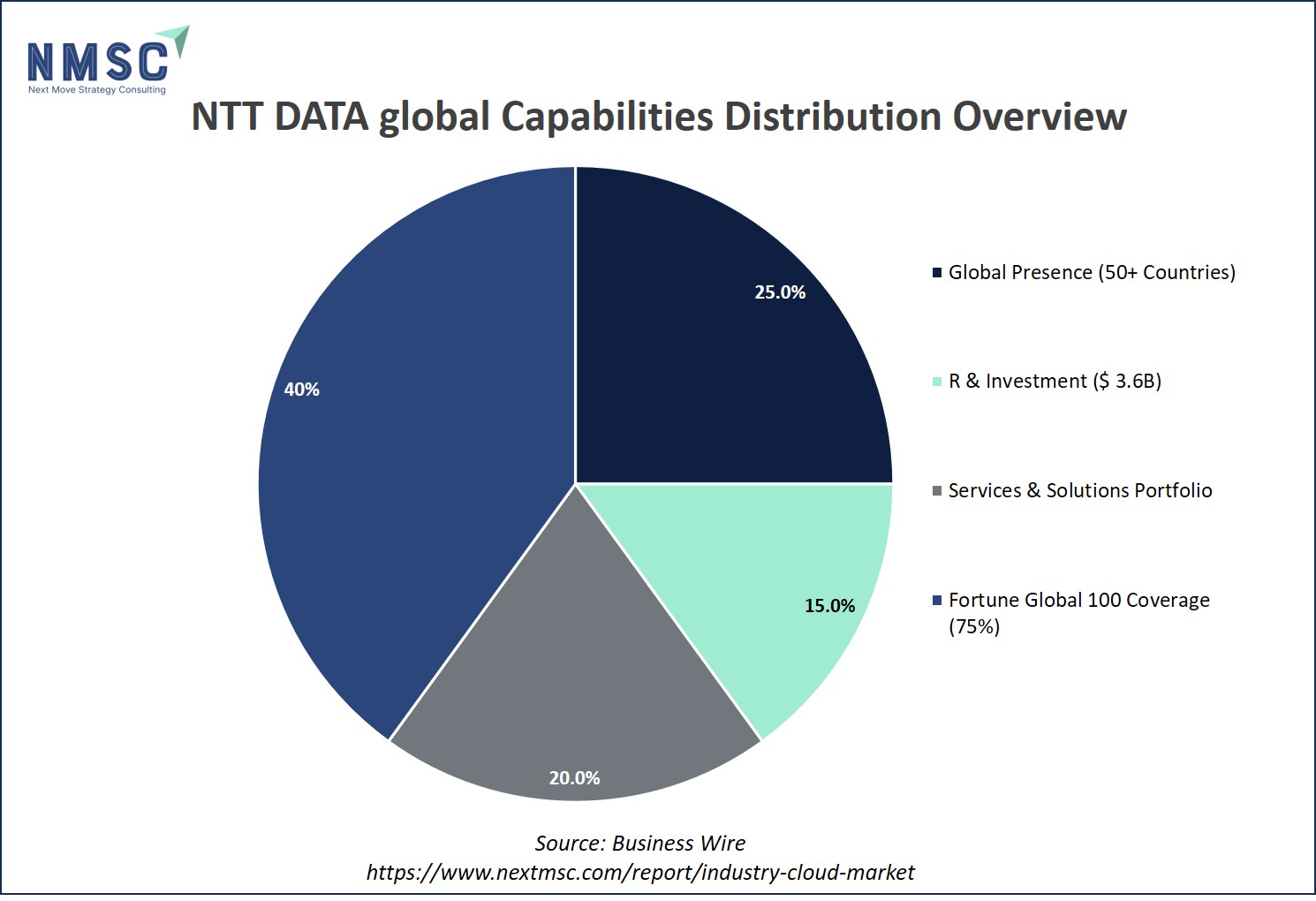
NTT DATA’s global footprint reflects its strong position in the enterprise technology landscape. Serving 75% of the Fortune Global 100 and operating in more than 50 countries, the company demonstrates both scale and trust across industries. Its widespread presence enables organizations to access localized expertise while benefiting from global innovation capabilities.
Core Components of Industry Cloud Architecture
|
Component Layer |
Key Technologies / Elements |
Role in Industry Cloud |
|
AI & Intelligence |
AI models, Agentic AI, automation tools |
Drives intelligent decision-making and automation |
|
Cloud Platform |
Microsoft Azure, enterprise cloud services |
Provides scalable and flexible computing environment |
|
Infrastructure |
Data centers, semiconductors, DRAM solutions |
Supports high-performance computing and storage |
|
Development Framework |
Microservices, APIs, industry accelerators |
Enables rapid application development and deployment |
|
Security & Compliance |
Cybersecurity, sovereign cloud solutions |
Ensures data protection and regulatory compliance |
What Role Does Industry Cloud Play in Scaling Artificial Intelligence Adoption?
Industry cloud is playing a critical role in transitioning artificial intelligence from experimental use cases to enterprise-scale deployment. Organizations are increasingly seeking solutions that integrate seamlessly into their operations while delivering measurable outcomes.
NTT DATA’s Agentic AI services, built on Microsoft Azure, have already generated nearly 100 enterprise client opportunities within just 90 days. This rapid adoption reflects the growing demand for intelligent automation and real-time decision-making capabilities.
Similarly, Samsung SDS is collaborating with OpenAI to develop AI data centers and provide enterprise AI services. This enables businesses to integrate advanced AI models into their internal systems, further accelerating adoption. Artificial intelligence adoption is accelerating as industry cloud provides scalable, integrated, and production-ready solutions.
Core Service Ecosystem
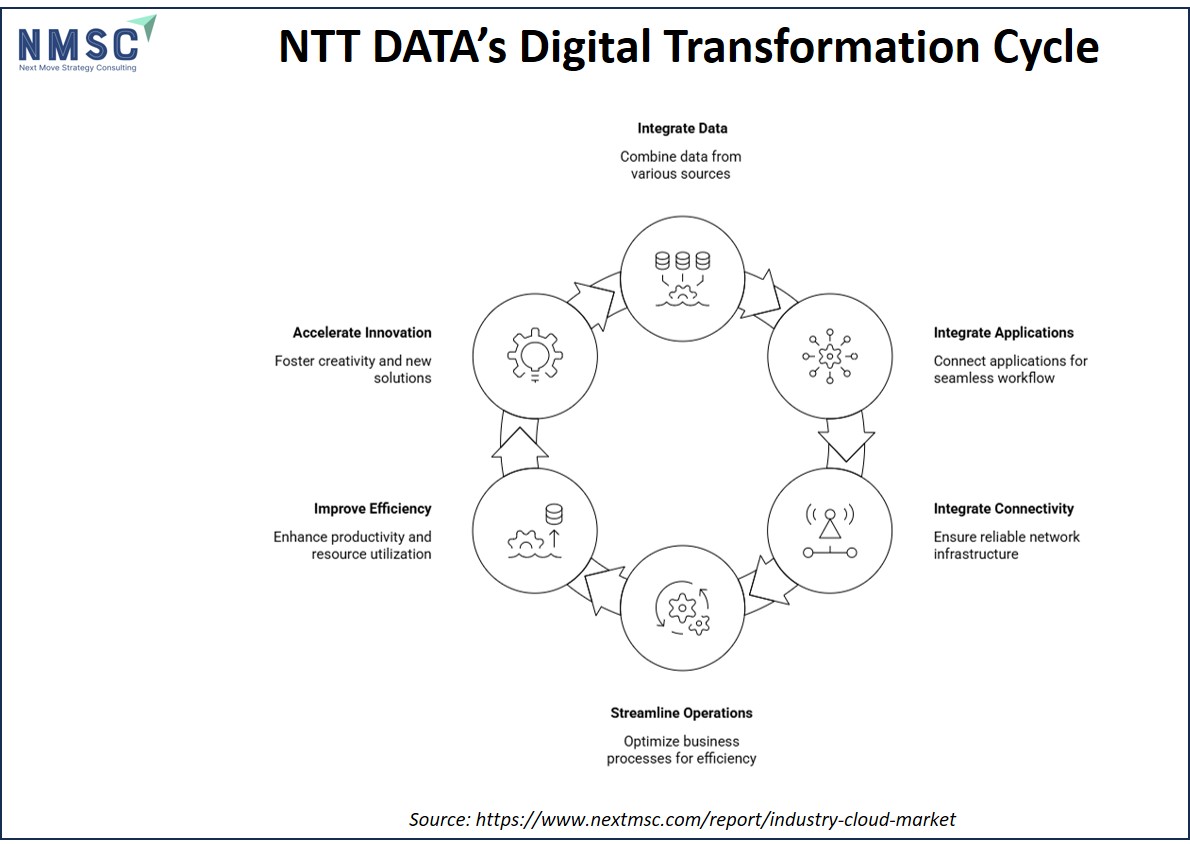
The company delivers a comprehensive portfolio that spans business consulting, artificial intelligence, and infrastructure management. By integrating data, applications, and connectivity solutions, NTT DATA ensures seamless digital transformation. This end-to-end service approach allows enterprises to streamline operations, improve efficiency, and accelerate innovation in a unified environment.
How Is Industry Cloud Transforming Modern Infrastructure?
Infrastructure is becoming a defining element of industry cloud, particularly as artificial intelligence workloads demand higher performance and scalability. The integration of advanced hardware, cloud platforms, and innovative deployment models is reshaping the foundation of enterprise technology.
Samsung’s collaboration with OpenAI includes the development of next-generation AI data centers, along with exploration into floating data centers. These floating systems offer advantages such as reduced land dependency, lower cooling costs, and improved energy efficiency, although they remain technically complex. In addition, Samsung is expected to support OpenAI’s infrastructure requirements with up to 900,000 DRAM wafers per month, highlighting the scale of global demand for AI computing resources. NTT DATA complements this infrastructure evolution through its expertise in cloud-native development, cybersecurity, and sovereign cloud solutions, ensuring that enterprises can scale securely while meeting regulatory requirements.
Industry Cloud Infrastructure Overview
|
Layer |
Description |
|
AI Capabilities |
Intelligent agents, automation, analytics |
|
Cloud Platforms |
Scalable enterprise cloud environments |
|
Infrastructure |
Data centers, semiconductors, advanced deployment models |
|
Industry Solutions |
Sector-specific applications and services |
How Does Industry Cloud Improve Enterprise Productivity and Experience?
Beyond infrastructure and artificial intelligence, industry cloud is significantly enhancing how organizations operate and interact with customers. It enables more connected workplaces, faster development cycles, and improved customer engagement.
NTT DATA is supporting enterprises through solutions such as Microsoft 365 for collaboration and Dynamics 365 for customer engagement. Additionally, its platform includes more than 500 industry accelerators, which help developers build cloud-native applications more efficiently. Samsung SDS is also contributing by offering consulting, deployment, and management services that allow enterprises to integrate OpenAI technologies into their workflows. This includes enabling access to ChatGPT Enterprise solutions for businesses.
What Are the Major Trends Shaping the Present of Industry Cloud?
Industry cloud is evolving rapidly, driven by the convergence of artificial intelligence, infrastructure innovation, and ecosystem collaboration. One of the most prominent trends is the rise of Agentic AI, which enables autonomous decision-making and workflow orchestration. At the same time, organizations are increasingly prioritizing sovereign cloud solutions to address compliance and data governance requirements.
Another important development is the shift toward cloud-native architectures, supported by microservices and pre-built accelerators. This allows enterprises to innovate faster while maintaining flexibility. Additionally, the expansion of AI infrastructure, including advanced semiconductors and data center models, is supporting the growing computational demands of artificial intelligence.
NTT DATA: A Global Leader in Digital and Technology Innovation
NTT DATA is a globally recognized provider of business and technology services, generating over $30 billion in revenue. The company supports 75% of the Fortune Global 100, helping organizations innovate, optimize operations, and achieve long-term growth.
Recognized as a Global Top Employer, NTT DATA operates in more than 50 countries with a diverse workforce and a strong ecosystem of partners, including both established enterprises and emerging startups. Its service portfolio spans business and technology consulting, data and artificial intelligence, industry-specific solutions, and end-to-end management of applications, infrastructure, and connectivity.
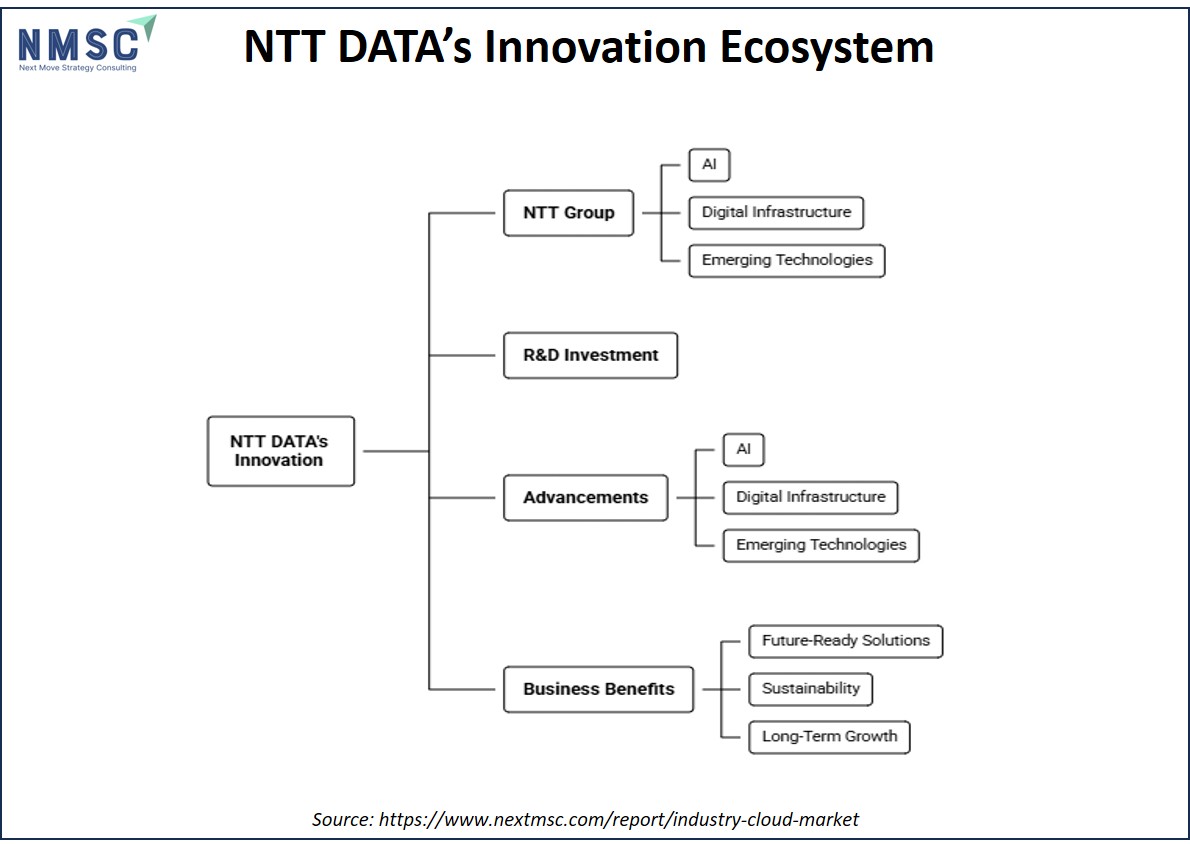
The company is also a key player in delivering advanced digital and AI infrastructure worldwide. As part of the NTT Group, it benefits from an annual research and development investment exceeding $3.6 billion, enabling organizations to transition confidently and sustainably into the digital future.
Leading Players Driving Growth in the Industry Cloud Landscape
The industry cloud sector is shaped by the presence of major technology providers such as IBM Corporation, VMware Inc., Microsoft Azure, Google Cloud Platform, Alibaba Cloud, Amazon Web Services, Oracle Cloud, Cisco Systems Inc., Rackspace Technology Inc., and Hewlett Packard Enterprise. These companies are actively strengthening their market position through strategic initiatives, including new product introductions and collaborative partnerships, enabling them to sustain competitiveness and expand their global influence.
Next Steps: What Should Enterprises Do Now?
Organizations looking to leverage industry cloud must adopt a strategic and structured approach. This includes investing in cloud platforms that are designed for artificial intelligence workloads, as well as building partnerships that provide access to integrated ecosystems.
Equally important is the modernization of infrastructure to support advanced computing needs, along with a focus on industry-specific solutions that deliver faster returns on investment. Ensuring compliance and data security through sovereign cloud strategies should also remain a priority.
-
Adopt AI-ready industry cloud platforms to enable scalable and secure transformation
-
Build strategic partnerships to access integrated cloud, AI, and infrastructure ecosystems
-
Modernize existing IT infrastructure to support high-performance AI workloads
-
Focus on industry-specific solutions to accelerate implementation and improve ROI
-
Strengthen data governance and compliance through sovereign cloud strategies
Final Conclusion: Why Does Industry Cloud Matter Today?
Industry cloud is becoming a cornerstone of enterprise transformation by combining artificial intelligence, cloud platforms, and infrastructure into a unified and scalable ecosystem.
The initiatives led by NTT DATA and Samsung’s collaboration with OpenAI clearly illustrate how organizations are moving toward integrated, AI-driven solutions that deliver tangible business outcomes.
About the Author
 Sanyukta Deb
— Sanyukta Deb is Digital Marketing Team Lead at Next Move Strategy Consulting, where she has led content strategy and technical SEO for the firm's B2B market research publications for over 2 years. Her editorial process translates NextMSC's primary and secondary research — spanning technology, industrial, and consumer sectors — into commercial narratives, backed by search-intent, keyword, and competitive analysis. She brings 5 years of overall experience in digital marketing and content strategy.
Sanyukta Deb
— Sanyukta Deb is Digital Marketing Team Lead at Next Move Strategy Consulting, where she has led content strategy and technical SEO for the firm's B2B market research publications for over 2 years. Her editorial process translates NextMSC's primary and secondary research — spanning technology, industrial, and consumer sectors — into commercial narratives, backed by search-intent, keyword, and competitive analysis. She brings 5 years of overall experience in digital marketing and content strategy.
About the Reviewer
 Debashree Dey
— Debashree Dey is Assistant Manager at Next Move Strategy Consulting, where she supports cross-vertical market content and communications across diverse industries for 6 years. Her professional background includes senior content writing, communications, and published manuscript authorship, with experience developing audience-focused business narratives and maintaining clear, consistent messaging. Her role supports research-led content development and editorial quality across NextMSC publications.
Debashree Dey
— Debashree Dey is Assistant Manager at Next Move Strategy Consulting, where she supports cross-vertical market content and communications across diverse industries for 6 years. Her professional background includes senior content writing, communications, and published manuscript authorship, with experience developing audience-focused business narratives and maintaining clear, consistent messaging. Her role supports research-led content development and editorial quality across NextMSC publications.


















Add Comment