How the 2025 Sports Nutrition Market Is Being Shaped by Innovation, Clean-Label Products, and Consumer Trends
Introduction
The global sports nutrition industry is undergoing a structural transformation — one driven not merely by gym memberships or protein powder sales, but by the convergence of precision biology, regulatory modernization, and a broadening consumer base that now extends well beyond elite athletes. According to Next Move Strategy Consulting's Sports Nutrition Market report, the global sports nutrition market was valued at USD 46.19 billion in 2024 and is projected to reach USD 71.74 billion by 2030, growing at a CAGR of 7.69% from 2025 to 2030. The market is estimated to reach USD 49.75 billion by the end of 2025, reflecting sustained momentum across protein supplements, ready-to-drink (RTD) beverages, and performance formulas.
This growth trajectory is being shaped by a set of highly specific, concurrent forces: a landmark shift in U.S. dietary guidance toward plant-based proteins, the FDA's first formal public consultation on the scope of dietary supplement ingredients in decades, and a wave of product innovation from leading brands that is redefining what "sports nutrition" means for the everyday consumer. For institutional investors and C-suite decision-makers, the question is no longer whether this market will grow — it is which segments, geographies, and business models will capture the most durable share of that growth.
For More Information: Download FREE Sample on Sports Nutrition Market report
From Pre-Workout to Precision Fuel: The Forces Reshaping Sports Nutrition
C4 AlphaBomb Sport and the RTD Protein Revolution
On August 24, 2026, Nutrabolt — the Austin, Texas-based performance nutrition company behind the C4 brand — announced the commercial launch of C4 AlphaBomb Sport™, a pre-workout product engineered for smooth energy delivery, mental focus, and physical performance. The launch followed Nutrabolt's earlier 2026 introduction of C4 Sparkling Protein — a carbonated, ready-to-drink beverage delivering 20 grams of protein with zero sugar and no caffeine — a format specifically designed to capture consumers who want functional protein outside the traditional gym-supplement context.
These two launches are strategically significant because they illustrate a deliberate pivot by one of the market's fastest-growing brands: away from a single-format, gym-centric identity and toward a multi-occasion, multi-consumer positioning. The RTD protein segment, in particular, is attracting investment because it removes the preparation barrier that has historically limited protein supplement adoption among non-athletes and time-constrained professionals.
The American Heart Association's Plant-Based Protein Directive
On March 31, 2026, Reuters reported that the American Heart Association (AHA) released updated nutrition guidance explicitly prioritizing plant-based proteins — including legumes, nuts, and seeds — over animal-derived sources, and recommending the replacement of full-fat dairy with low-fat or non-fat alternatives. The AHA, which releases dietary guidance approximately every five years, carries significant influence over both consumer behavior and institutional procurement decisions in healthcare, sports, and corporate wellness settings.
This guidance arrives at a moment when plant-based proteins — pea, hemp, and algae — are already gaining commercial traction in sports nutrition. As FoodNavigator reported in December 2025, major ingredient suppliers including ADM, Cargill, and ABF Ingredients have made plant-based innovation a central R&D priority, with brands such as Vega and Myprotein launching pea and hemp protein powders that deliver complete amino acid profiles comparable to whey. The AHA's endorsement of plant-based proteins as a cardiovascular health measure — rather than merely an ethical or environmental choice — materially expands the addressable consumer base for plant-based sports nutrition products into clinical and preventive health channels.
FDA's Regulatory Modernization: A Structural Inflection Point
On March 3, 2026, the U.S. Food and Drug Administration announced a public meeting held on March 27, 2026, entitled "Exploring the Scope of Dietary Supplement Ingredients," convened to clarify the meaning of dietary ingredient categories under the Dietary Supplement Health and Education Act (DSHEA) of 1994. The meeting specifically addressed proteins, enzymes, microbials, and new manufacturing methodologies for existing dietary ingredients — categories that sit at the core of the sports nutrition product portfolio.
This regulatory consultation is the most consequential FDA action on dietary supplement scope in years. For sports nutrition manufacturers, the outcome will determine whether novel protein formats — including precision-fermented proteins and bioengineered amino acid complexes — can be marketed as dietary supplements or must navigate the more demanding drug-approval pathway. The Alston & Bird legal analysis published in April 2026 noted that the FDA's engagement signals a willingness to modernize the regulatory framework to accommodate ingredient innovation, which could accelerate the commercialization of next-generation sports nutrition ingredients.
Glanbia's FY 2025 Performance: Institutional Validation of Market Strength
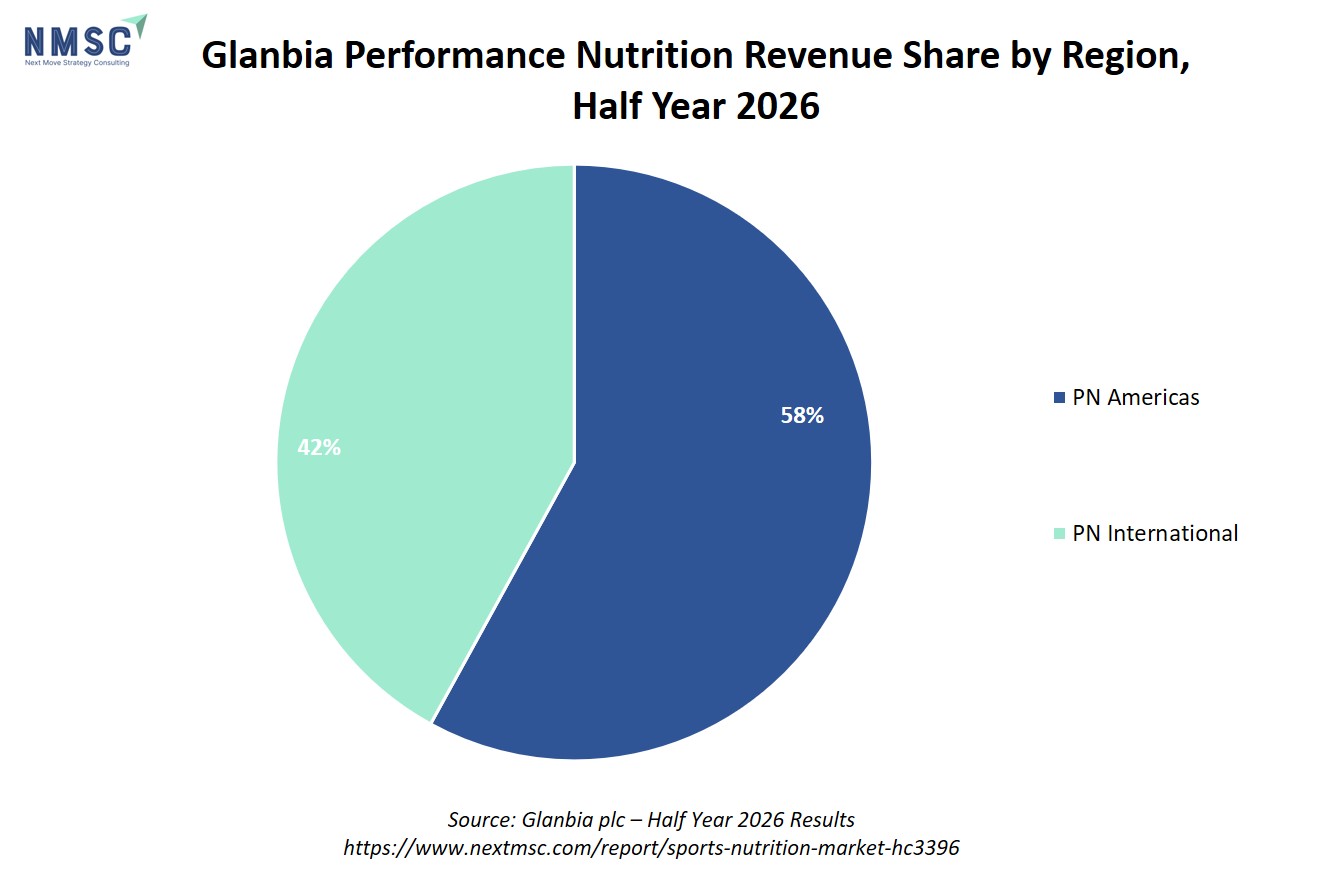
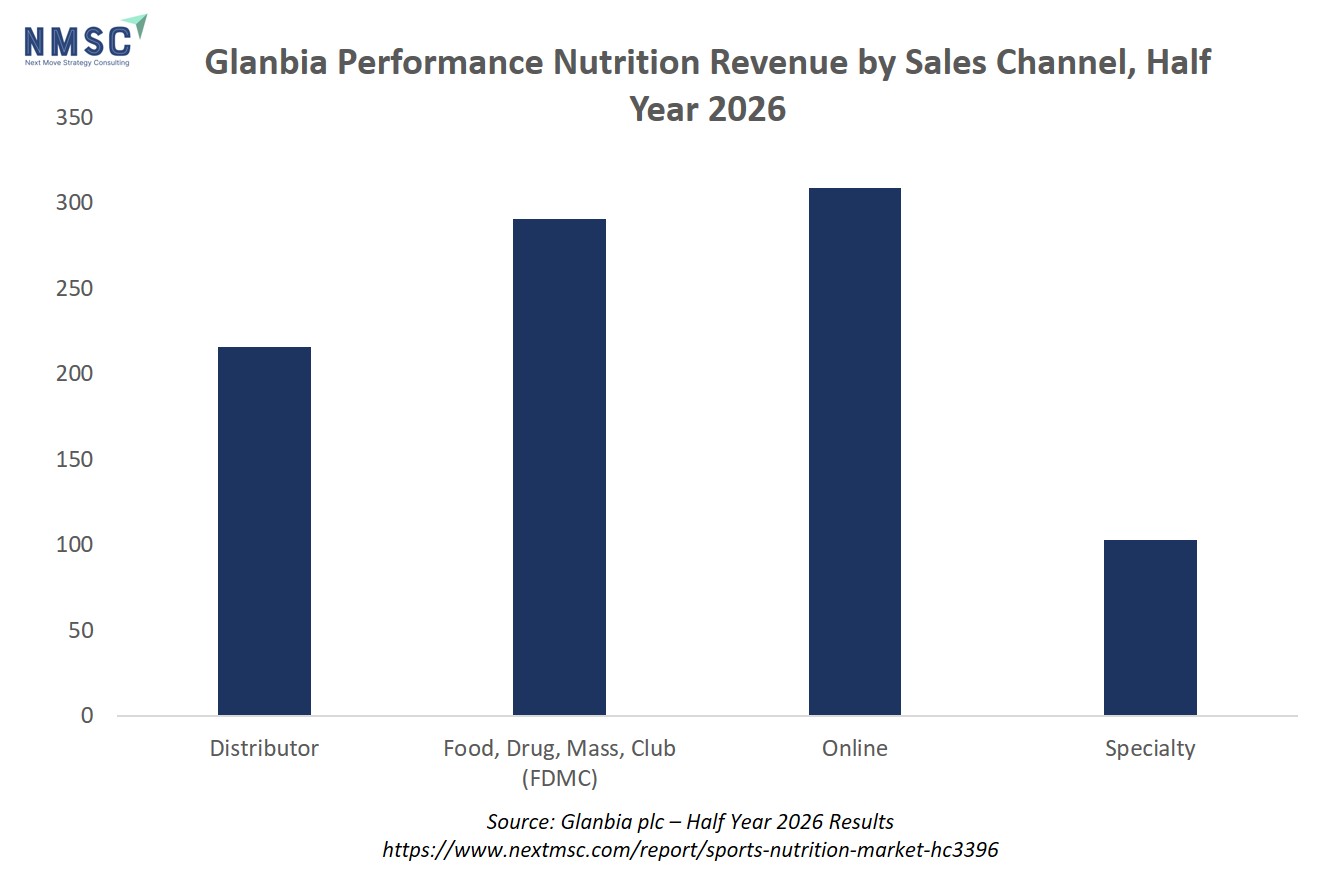
In its Full Year 2025 Results presentation delivered on February 25, 2026, Glanbia PLC — parent company of Optimum Nutrition, the world's #1 sports nutrition brand — reported that its Performance Nutrition segment achieved pro-forma like-for-like revenue growth of 4.5%, with Optimum Nutrition specifically delivering 6.4% LFL revenue growth and double-digit volume growth in the second half of 2025. The company's Health & Nutrition segment — which supplies ingredient solutions to third-party food and beverage manufacturers — posted 11.5% revenue growth and 7.4% volume growth, driven by demand across premix and flavour solutions in Europe and Asia. Glanbia also completed the acquisitions of Sweetmix in Brazil and Scicore in India, extending its ingredient manufacturing footprint into two of the highest-growth emerging markets for sports nutrition.
Glanbia's FY 2026 guidance projects Performance Nutrition organic revenue growth of 12–14%, consistent with NMSC's proprietary forecast trajectory for the broader market.
NMSC Strategic Perspective: Convergence of Biology, Technology, and Regulation
NextMSC primary research and analysis identifies three structural forces that distinguish the current growth phase from prior cycles in the sports nutrition market:
First, the consumer base has permanently broadened. The WHO reported in 2024 that 1 in 7 people globally — approximately 1.1 billion individuals — are living with obesity. In the United States, CDC data published in September 2024 found that in 23 states, more than one in three adults (35%) has obesity. This public health reality is converting a previously discretionary product category into a functional health intervention, with protein supplements, meal replacements, and hydration products increasingly recommended by dietitians and physicians as part of weight management and metabolic health protocols.
Second, the personalization infrastructure has reached commercial viability. As documented in a 2025 NIH-published review in PMC, wearable sensors, AI-driven applications, and continuous glucose monitors (CGMs) now enable real-time, individualized nutrition recommendations based on biometric data — a capability that was theoretical five years ago and is now embedded in consumer products from companies such as Supersapiens, Lumen, and Whoop. This infrastructure is creating a new revenue model for sports nutrition brands: subscription-based, data-driven formulation services that generate recurring revenue and measurably higher customer lifetime value than one-time supplement purchases.
Third, regulatory clarity is becoming a competitive differentiator. The FDA's March 2026 public consultation on dietary ingredient scope, combined with the introduction of the Dietary Supplement Regulatory Uniformity Act in February 2026, signals a regulatory environment that is moving toward greater transparency and standardization. Brands that invest in clinical substantiation and regulatory compliance now will be positioned to capture shelf space and institutional contracts as enforcement tightens around unsubstantiated claims and counterfeit products.
Section Summary:
The sports nutrition market's current growth phase is defined by product format diversification (RTD protein, sparkling formats), clinical endorsement of plant-based proteins, and a regulatory environment in active modernization. These are not cyclical tailwinds — they represent structural changes to the market's demand base, distribution logic, and competitive barriers.
-
Nutrabolt's C4 AlphaBomb Sport and Sparkling Protein launches in 2026 demonstrate that leading brands are deliberately expanding beyond gym-centric formats to capture multi-occasion, mainstream consumers.
-
The AHA's March 2026 plant-based protein guidance extends the clinical legitimacy of plant-based sports nutrition into cardiovascular health channels.
-
The FDA's March 2026 public meeting on dietary supplement ingredient scope is the most significant regulatory development for the industry in years, with direct implications for novel protein and bioactive ingredient commercialization.
-
Glanbia's FY 2025 results — including 6.4% LFL revenue growth for Optimum Nutrition and double-digit H2 volume growth — provide institutional-grade validation of the market's underlying demand strength.
Industry Impact Analysis
Obesity and Preventive Health: Expanding the Addressable Market
The WHO's 2024 finding that 1.1 billion people globally are living with obesity is reshaping how governments, healthcare systems, and employers think about nutrition intervention. Sports nutrition products — historically positioned as performance enhancers for athletes — are increasingly being integrated into clinical weight management protocols, corporate wellness programs, and pharmacy-led health initiatives. This channel expansion is particularly significant in North America, where the CDC's 23-state obesity prevalence data is driving state-level public health procurement of protein supplements and meal replacement products.
In Europe, rising household purchasing power is reinforcing this trend. According to a 2025 EU statistical report, household gross disposable income rose by 0.9% in the euro area and by 1.3% across the EU during the fourth quarter of 2024, driven primarily by increased employee compensation. This incremental spending capacity is being directed toward premium health and wellness products, including sports nutrition, in markets where gym participation and fitness culture are well-established.
Asia-Pacific: Professional Sports Infrastructure as a Demand Catalyst
The Asia-Pacific region's sports nutrition demand is being structurally supported by the institutionalization of professional sports leagues. According to a 2024 IBEF report, the establishment of the Indian Premier League (IPL) in cricket, the Indian Super League (ISL) in football, and the Pro Kabaddi League (PKL) have materially expanded India's professional sports ecosystem, creating a growing cohort of professional and semi-professional athletes who require structured nutritional support for training, recovery, and performance. Glanbia's acquisition of Scicore in India — completed in 2026 — reflects a direct strategic response to this demand signal, positioning the company to supply ingredient solutions to the Indian sports nutrition manufacturing base.
The Counterfeit Product Problem: A Quantifiable Drag on Market Efficiency
The proliferation of counterfeit sports nutrition products remains a material constraint on market growth, particularly in emerging markets where regulatory enforcement capacity is limited. Counterfeit supplements — which frequently contain undisclosed stimulants, heavy metals, or subtherapeutic doses of active ingredients — erode consumer trust in legitimate brands and suppress repeat purchase rates. The American College of Physicians, in a statement published in July 2026, called for more rigorous regulation of dietary supplements to protect public health, citing the risks posed by products that enter the market without adequate safety verification. For established brands, the counterfeit problem creates an indirect cost: increased investment in authentication technology, third-party testing, and consumer education to differentiate genuine products from fraudulent alternatives.
The GLP-1 Adjacency: Threat and Opportunity
The rapid adoption of GLP-1 receptor agonists (such as semaglutide) for weight management is creating a nuanced dynamic for sports nutrition. As Healio reported in January 2026, GLP-1 drugs are projected to be among the top health trends of the year, with expanded use across chronic disease management. For sports nutrition brands, this creates both a risk — GLP-1 users consume fewer calories overall, potentially reducing supplement intake — and an opportunity, as GLP-1-induced muscle loss creates a clinically validated need for high-quality protein supplementation and amino acid products to preserve lean body mass during weight loss.
Section Summary:
The industry impact of current market forces is bifurcated: established brands with clinical credibility, regulatory compliance infrastructure, and emerging-market distribution are positioned to capture disproportionate growth, while undercapitalized players face margin compression from rising whey input costs and counterfeit competition.
-
The WHO's 1.1 billion obesity figure is converting sports nutrition from a discretionary category into a preventive health intervention, opening clinical and pharmacy distribution channels.
-
Asia-Pacific's professional sports league infrastructure — particularly in India — is generating structured, recurring demand for performance nutrition products that did not exist at scale five years ago.
-
The GLP-1 adjacency creates a net-positive demand signal for high-quality protein and amino acid products, as muscle preservation becomes a clinical priority for the growing population of GLP-1 users.
-
The ACP's July 2026 call for stricter supplement regulation, combined with the FDA's March 2026 public consultation, signals a tightening compliance environment that will reward brands with robust quality assurance systems.
Key Industry Developments and Institutional Data Points (2025–2026)
|
Event / Data Point |
Detail |
Source |
Date |
|
WHO Global Obesity Prevalence |
1 in 7 people (1.1 billion) globally living with obesity |
World Health Organization |
2024 |
|
U.S. State-Level Obesity Rate |
35%+ adult obesity in 23 U.S. states |
U.S. Centers for Disease Control and Prevention |
September 2024 |
|
EU Household Disposable Income Growth |
+0.9% (euro area), +1.3% (EU) in Q4 2024 |
European Union Statistical Report |
2025 |
|
Glanbia Optimum Nutrition LFL Revenue Growth |
+6.4% FY 2025; double-digit volume growth in H2 |
Glanbia PLC Full Year 2025 Results Presentation |
February 25, 2026 |
|
Glanbia Performance Nutrition Revenue |
USD 1,801.1 million (FY 2025) |
Glanbia PLC Full Year 2025 Results Presentation |
February 25, 2026 |
|
Glanbia FY 2026 PN Revenue Growth Guidance |
12–14% organic revenue growth |
Glanbia PLC Full Year 2025 Results Presentation |
February 25, 2026 |
|
AHA Plant-Based Protein Guidance |
New dietary guidance prioritizing plant-based proteins over animal sources |
American Heart Association / Reuters |
March 31, 2026 |
|
FDA Dietary Supplement Public Meeting |
"Exploring the Scope of Dietary Supplement Ingredients" — proteins, enzymes, microbials |
U.S. Food and Drug Administration |
March 27, 2026 |
|
Nutrabolt C4 AlphaBomb Sport Launch |
New pre-workout product targeting smooth energy, focus, and performance |
Nutrabolt Official Press Release |
August 24, 2026 |
|
Nutrabolt C4 Sparkling Protein Launch |
RTD protein: 20g protein, zero sugar, no caffeine |
Nutrabolt Official Announcement |
2026 |
Future Outlook & Forecast
NMSC Forecast: USD 71.74 Billion by 2030
NextMSC primary research and analysis projects the global sports nutrition market to reach USD 71.74 billion by 2030, growing at a CAGR of 7.69% from 2025. This trajectory is underpinned by four demand vectors that NMSC's model weights as structurally durable rather than cyclical: the broadening of the consumer base into preventive health and clinical weight management; the commercialization of AI-driven personalized nutrition platforms; the geographic expansion of professional sports infrastructure in Asia-Pacific and the Middle East; and the ongoing premiumization of the RTD and functional food segments.
Hyper-Personalization: The Next Revenue Architecture
The convergence of DNA testing, microbiome analysis, and wearable biometric monitoring is enabling a fundamentally different commercial model for sports nutrition. As documented in a 2025 NIH-published review, novel digital health technologies — including wearable sensors, AI applications, and continuous glucose monitors — now improve real-time, personalized nutrition recommendations based on individual activity data, metabolic markers, and recovery status. Companies such as DNAfit and Nutrigenomix are already commercializing genetic profiling for macronutrient ratio recommendations, while platforms such as Lumen and Whoop integrate wearable data with meal timing guidance. For sports nutrition brands, the strategic implication is clear: the highest-margin growth opportunity over the next five years lies in subscription-based, data-driven formulation services — not in commodity protein powder volume.
Plant-Based Protein: From Niche to Mainstream
The AHA's March 2026 guidance, combined with a 2026 NIH-published review in PMC evaluating alternative protein sources — including plant-based, insect, and algae proteins — for sports nutrition applications, signals that plant-based protein is transitioning from a niche ethical preference to a mainstream clinical recommendation. Brands that have invested in pea, hemp, and algae protein formulations with complete amino acid profiles are positioned to capture both the growing vegan athlete segment and the much larger health-conscious mainstream consumer who is now receiving clinical guidance to reduce animal protein intake.
Emerging Markets: Brazil, India, and the Gulf
Glanbia's acquisitions of Sweetmix in Brazil and Scicore in India reflect a broader industry recognition that the next phase of volume growth will be concentrated in markets where urbanization, rising disposable incomes, and expanding gym infrastructure are simultaneously increasing demand for sports nutrition products. In the Gulf region, the combination of urban population growth and government-led sports and fitness initiatives — including Saudi Arabia's Vision 2030 sports investment program — is creating new distribution opportunities for protein powders, hydration products, and RTD beverages.
Regulatory Clarity as a Competitive Moat
The FDA's March 2026 public consultation on dietary supplement ingredient scope, and the concurrent introduction of the Dietary Supplement Listing Act of 2026 — which advocates have pushed to require mandatory product listing with the FDA — will, over the medium term, raise the compliance floor for the entire industry. Brands that have already invested in third-party testing, clinical substantiation, and transparent labeling will benefit from a regulatory environment that progressively disadvantages undercapitalized and non-compliant competitors.
Section Summary:
NMSC's forecast of USD 71.74 billion by 2030 at a 7.69% CAGR reflects a market that is simultaneously broadening its consumer base, deepening its product sophistication, and expanding its geographic footprint. The highest-conviction growth opportunities are in personalized nutrition platforms, plant-based protein formulations, and emerging-market distribution.
-
AI-driven, subscription-based personalized nutrition represents the highest-margin growth vector for established brands over the 2025–2030 forecast period.
-
The AHA's plant-based protein guidance and NIH research on alternative protein sources are accelerating the mainstreaming of plant-based sports nutrition beyond the vegan consumer segment.
-
Glanbia's Brazil and India acquisitions, and the Gulf region's government-led sports investment, identify the three emerging-market geographies with the most structurally supported demand growth.
-
The FDA's regulatory modernization agenda will raise compliance costs in the short term but create durable competitive advantages for brands with robust quality assurance infrastructure.
Next Steps for Stakeholders
For Brand Manufacturers and Product Developers:
Prioritize investment in RTD protein and functional beverage formats, which are demonstrating the strongest volume growth and the broadest consumer reach. The C4 Sparkling Protein launch is a template: zero sugar, no caffeine, 20g protein, carbonated format — a product that competes in the functional beverage aisle, not just the supplement section. Simultaneously, accelerate plant-based protein R&D to position ahead of the clinical demand signal created by the AHA's March 2026 guidance.
For Institutional Investors and Private Equity:
The Glanbia FY 2025 results — particularly the 6.4% LFL revenue growth for Optimum Nutrition and the 11.5% revenue growth in Health & Nutrition — confirm that the market's largest players are generating durable organic growth, not merely acquisition-driven revenue. The company's FY 2026 guidance of 12–14% Performance Nutrition organic revenue growth, combined with a $70 million annual cost savings target by 2027, provides a credible earnings improvement pathway. Emerging-market ingredient manufacturers in Brazil and India represent the highest-risk, highest-return segment of the value chain.
For Regulatory and Compliance Teams:
Monitor the FDA's follow-up actions from the March 27, 2026 public meeting on dietary supplement ingredient scope. The agency's conclusions on proteins, enzymes, and microbials will determine the regulatory classification of next-generation sports nutrition ingredients. Engage proactively with the Dietary Supplement Listing Act advocacy process through the Council for Responsible Nutrition to shape the compliance framework before it is finalized.
For Distribution and Retail Partners:
The shift toward online D2C and subscription-based models — driven by personalized nutrition platforms — requires retail partners to develop complementary value propositions: in-store testing, dietitian consultation services, and loyalty programs that integrate with digital nutrition platforms. Pharmacy chains and health food retailers that can position themselves as trusted intermediaries between clinical guidance (AHA, FDA) and consumer product selection will capture the highest-value customer segments.
Conclusion
The global sports nutrition market is not simply growing — it is being restructured. The convergence of clinical endorsement (AHA's plant-based protein guidance), regulatory modernization (FDA's dietary supplement ingredient review), product format innovation (Nutrabolt's RTD protein and pre-workout launches), and institutional market expansion (Glanbia's emerging-market acquisitions) is creating a market that is simultaneously broader in its consumer base, more sophisticated in its product architecture, and more demanding in its compliance requirements.
NextMSC primary research and analysis projects this market to reach USD 71.74 billion by 2030 at a CAGR of 7.69%, with the highest-conviction growth concentrated in personalized nutrition platforms, plant-based protein formulations, and Asia-Pacific and Gulf region distribution. For C-suite executives and institutional investors, the strategic imperative is clear: the brands and business models that will define this market in 2030 are being built today — and the window to establish durable competitive positions in personalization, plant-based protein, and emerging-market distribution is narrowing.
About the Author
 Sanyukta Deb
— Sanyukta Deb is Digital Marketing Team Lead at Next Move Strategy Consulting, where she has led content strategy and technical SEO for the firm's B2B market research publications for over 2 years. Her editorial process translates NextMSC's primary and secondary research — spanning technology, industrial, and consumer sectors — into commercial narratives, backed by search-intent, keyword, and competitive analysis. She brings 5 years of overall experience in digital marketing and content strategy.
About the Reviewer
 Debashree Dey
— Debashree Dey is Assistant Manager at Next Move Strategy Consulting, where she supports cross-vertical market content and communications across diverse industries for 6 years. Her professional background includes senior content writing, communications, and published manuscript authorship, with experience developing audience-focused business narratives and maintaining clear, consistent messaging. Her role supports research-led content development and editorial quality across NextMSC publications.
















Add Comment