How UAE Shoppers Use Coupons, Cashback and Buy Now, Pay Later
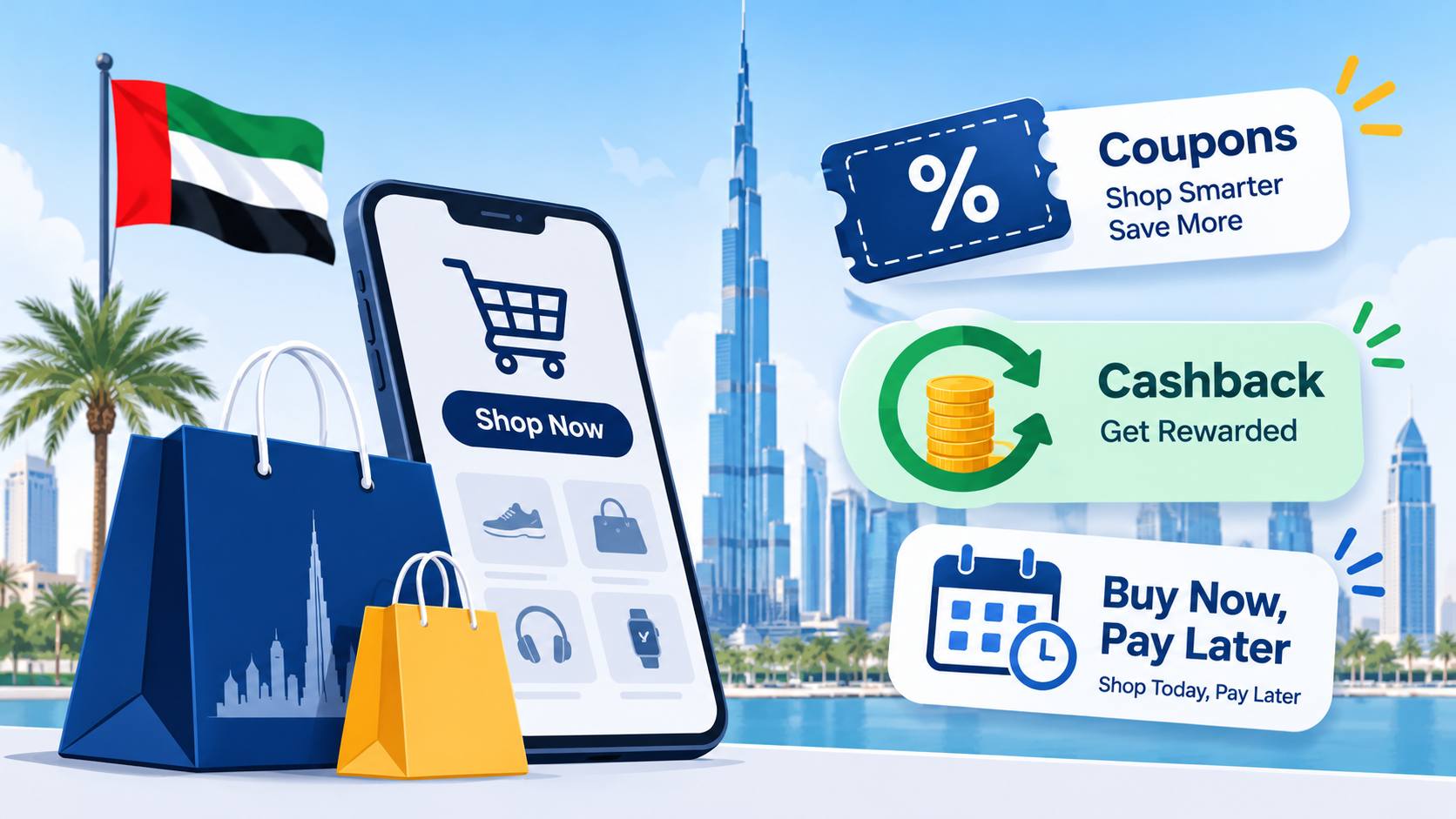
Online shoppers in the UAE have become careful about how they pay and how they save. Before checking out, many compare a promo code with a cashback offer, look at their loyalty points and decide whether to split the payment into instalments.
These habits are shaping what people buy, when they buy it and which stores they return to.
This article examines the data behind these shopping habits and what they reveal about UAE consumers.
UAE E-commerce Growth and Digital Adoption
The sixth annual e-commerce report from EZDubai Logistics Hub and Euromonitor International valued the UAE market at AED 42.2 billion in 2025. That's more than double the AED 17.6 billion recorded in 2020.
Online sales made up about 15.7% of retail spending in 2025, and the report expects the market to reach around AED 67.2 billion by 2030. The report also names digital wallets and buy now pay later among the main reasons for growth.
Almost everyone in the country is already connected, with DataReportal putting internet penetration at 99%. So the interesting part of the story isn't how many people shop online. It's how they decide where to spend and how to pay.
How Shoppers Combine Coupons and Loyalty Points
A Flowwow and Admitad study examining more than 4.5 million orders during the November sales in 2023 and 2024, reported by Khaleej Times in 2025, found that 14% of shoppers used coupons and 21% used cashback or loyalty offers. These figures come from orders placed through the companies' own platforms, so they show a direction rather than the whole market.
Coupons and rewards save money in different ways. A coupon lowers the price straight away, which is often the first thing people check before a bigger purchase. Loyalty points add value to the next order, which suits stores people buy from every week, such as for groceries or household items.
Many shoppers use both. A typical routine is to look up a current code on a coupon site such as Rezeem, which lists verified promo codes for UAE stores, apply it at checkout and still collect loyalty points on the same order. Cashback works differently. Card cashback from a bank usually applies alongside a code, but some cashback apps cancel their reward if you use a code from another site, so check their terms first.
The study also put the average UAE order at around AED 380, nearly three times the MENA average of about AED 140. On baskets that size, pairing a code with loyalty points can make a clear difference to the final price.
Loyalty Points Have Become Part of Everyday Spending
Loyalty schemes in the UAE reach well beyond a single store. Majid Al Futtaim's SHARE programme offers benefits across more than 5,000 stores, brands and experiences, from Carrefour to VOX Cinemas, and members can pay with a card, points, Tabby or a mix of all three. noon and Amazon both offer paid memberships built around free delivery.
Once someone is collecting points or paying for free delivery with one group, they have a good reason to keep buying there. NextMSC's earlier article on how e-commerce is reshaping global retail looks at the bigger shifts behind this. In the UAE, they show up in the way many households settle into two or three loyalty programmes.
How Buy Now, Pay Later Fits In
Paying in instalments is now a standard choice at checkout. Tabby, one of the most widely used providers, reported 25 million registered users and about 70,000 merchants when it raised funding at a valuation of about AED 24 billion in September 2026. Tamara, its main competitor, offers Sharia-compliant plans.
Most people use these plans to spread the cost of a larger purchase, such as a phone or a laptop, over a few weeks. On most plans there's no interest as long as each payment is made on time, although late fees can apply. Instalments are especially common in the big sale periods.
How the Sales Calendar Shapes Buying
The online sales calendar has become predictable. The 11.11 shopping event takes place around 11 November, followed by White Friday on Amazon.ae and Yellow Friday on noon, which both ran from 20 to 30 November in 2025. The Dubai Shopping Festival brings mall promotions from December into January.
Plenty of people now hold off on bigger purchases until one of these windows opens. That squeezes much of the year's spending on electronics and fashion into a few weeks.
What These Habits Suggest
UAE consumers are well informed and comfortable combining several ways to save on a single order. They pay attention to price, but they also want codes that work, rewards they'll use and the option to pay over time.
For anyone tracking this market, three signals are worth watching. The first is how often a code, points and instalments appear on the same order. The second is how far loyalty schemes stretch into new categories. The third is how late fees shape the way people use pay-later plans. Looking at coupons, cashback, points and instalments together gives the clearest picture of how people in the UAE shop.
About the Author
 Sanyukta Deb
— Sanyukta Deb is Digital Marketing Team Lead at Next Move Strategy Consulting, where she has led content strategy and technical SEO for the firm's B2B market research publications for over 2 years. Her editorial process translates NextMSC's primary and secondary research — spanning technology, industrial, and consumer sectors — into commercial narratives, backed by search-intent, keyword, and competitive analysis. She brings 5 years of overall experience in digital marketing and content strategy.
About the Reviewer
 Debashree Dey
— Debashree Dey is Assistant Manager at Next Move Strategy Consulting, where she supports cross-vertical market content and communications across diverse industries for 6 years. Her professional background includes senior content writing, communications, and published manuscript authorship, with experience developing audience-focused business narratives and maintaining clear, consistent messaging. Her role supports research-led content development and editorial quality across NextMSC publications.


















Add Comment