Industry Cloud Is Redefining Sector-Specific Digital Transformation

What Is Driving the Rise of Industry Cloud Platforms?
Industry Cloud refers to cloud solutions tailored for specific sectors such as media, public sector, healthcare, and manufacturing. Unlike general-purpose cloud platforms, these solutions integrate industry-specific workflows, compliance standards, and data models.
Recent developments highlight a strong shift toward verticalized cloud strategies. For instance, Amagi introduced agentic capabilities across its industry cloud platform to enable autonomous media operations, demonstrating how sector-focused clouds are evolving beyond infrastructure into intelligent systems.
Similarly, Microsoft has been recognized as a leader in industry cloud solutions for the public sector, reflecting growing enterprise and government adoption of tailored cloud ecosystems.
Key Drivers
-
Increasing demand for sector-specific compliance and governance
-
Integration of artificial intelligence-driven automation
-
Need for faster deployment of industry-ready solutions
-
Growing importance of data sovereignty and security
|
Driver |
Impact on Industry Cloud Adoption |
|
Compliance Requirements |
Accelerates demand in regulated sectors |
|
AI Integration |
Enhances automation and intelligence |
|
Industry-Specific Needs |
Drives customization and adoption |
|
Data Security Concerns |
Promotes localized cloud solutions |
Insights from Next Move Strategy Consulting concludes that industry cloud adoption is accelerating because organizations are shifting from generic infrastructure to purpose-built platforms that directly address operational complexities. This transition is reducing deployment timelines and improving business alignment.
How Agentic AI Is Enhancing Industry Cloud Capabilities
A major innovation trend is the integration of agentic artificial intelligence, which enables systems to act autonomously.
Amagi’s latest platform update introduces agentic capabilities that allow media workflows to operate with minimal human intervention. This includes automation across content management and distribution processes, marking a shift toward self-operating cloud ecosystems.
Impact of Agentic AI
-
Automates repetitive workflows
-
Enhances operational efficiency
-
Enables real-time decision-making
-
Reduces dependency on manual oversight
|
Capability |
Traditional Cloud |
AI-Driven Industry Cloud |
|
Workflow Execution |
Manual or semi-automated |
Fully autonomous |
|
Decision-Making |
Human-driven |
AI-assisted |
|
Operational Speed |
Moderate |
High |
|
Resource Utilization |
Static |
Dynamic and optimized |
Analysis from Next Move Strategy Consulting indicates Agentic artificial intelligence is expected to redefine industry cloud platforms by transforming them into proactive systems rather than passive tools. This will significantly improve productivity across sectors such as media, logistics, and finance.
Industry Cloud in the Public Sector: A Strategic Shift
Public sector organizations are increasingly adopting industry cloud solutions to modernize services and improve citizen engagement.
Microsoft’s recognition in the Forrester Wave highlights its leadership in delivering cloud solutions tailored for government operations, including compliance, security, and scalability.
Benefits for Governments
-
Improved data governance and compliance
-
Enhanced digital service delivery
-
Stronger cybersecurity frameworks
-
Scalable infrastructure for national programs
|
Feature |
General Cloud |
Industry Cloud (Public Sector) |
|
Compliance |
Generic |
Built-in regulatory frameworks |
|
Data Handling |
Standardized |
Sovereign and localized |
|
Use Cases |
Broad |
Government-specific |
|
Security |
Configurable |
Pre-integrated |
Our observations at Next Move Strategy Consulting indicates that the public sector is prioritizing industry cloud solutions to meet rising expectations for digital governance. Tailored cloud environments are enabling faster modernization while maintaining strict compliance standards.
Core Benefits of Industry Cloud Adoption
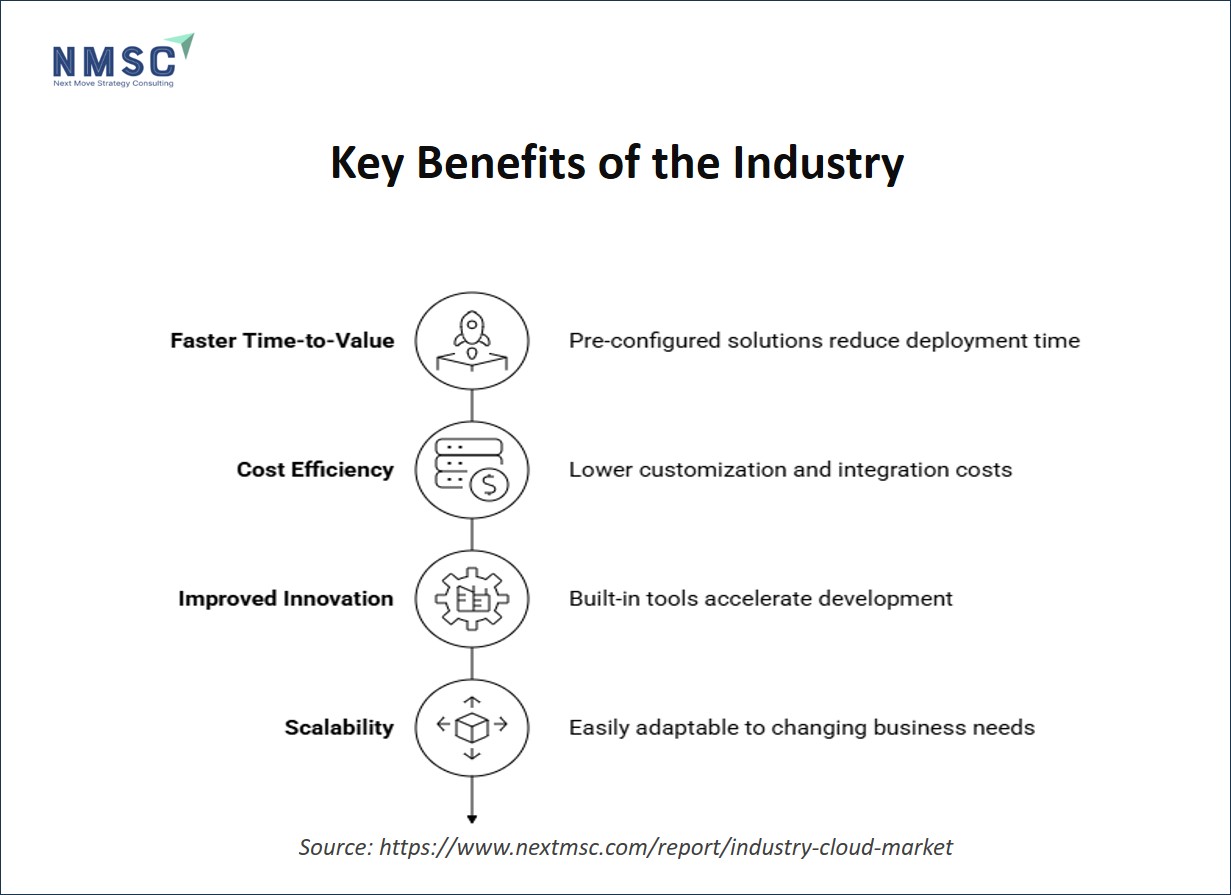
Industry cloud platforms are gaining traction due to their ability to deliver immediate business value.
Key Advantages
-
Faster Time-to-Value: Pre-configured solutions reduce deployment time
-
Cost Efficiency: Lower customization and integration costs
-
Improved Innovation: Built-in tools accelerate development
-
Scalability: Easily adaptable to changing business needs
We have observed that organizations adopting industry cloud platforms are witnessing improved operational agility. The ability to deploy industry-specific functionalities without extensive customization is a major competitive advantage.
Key Players
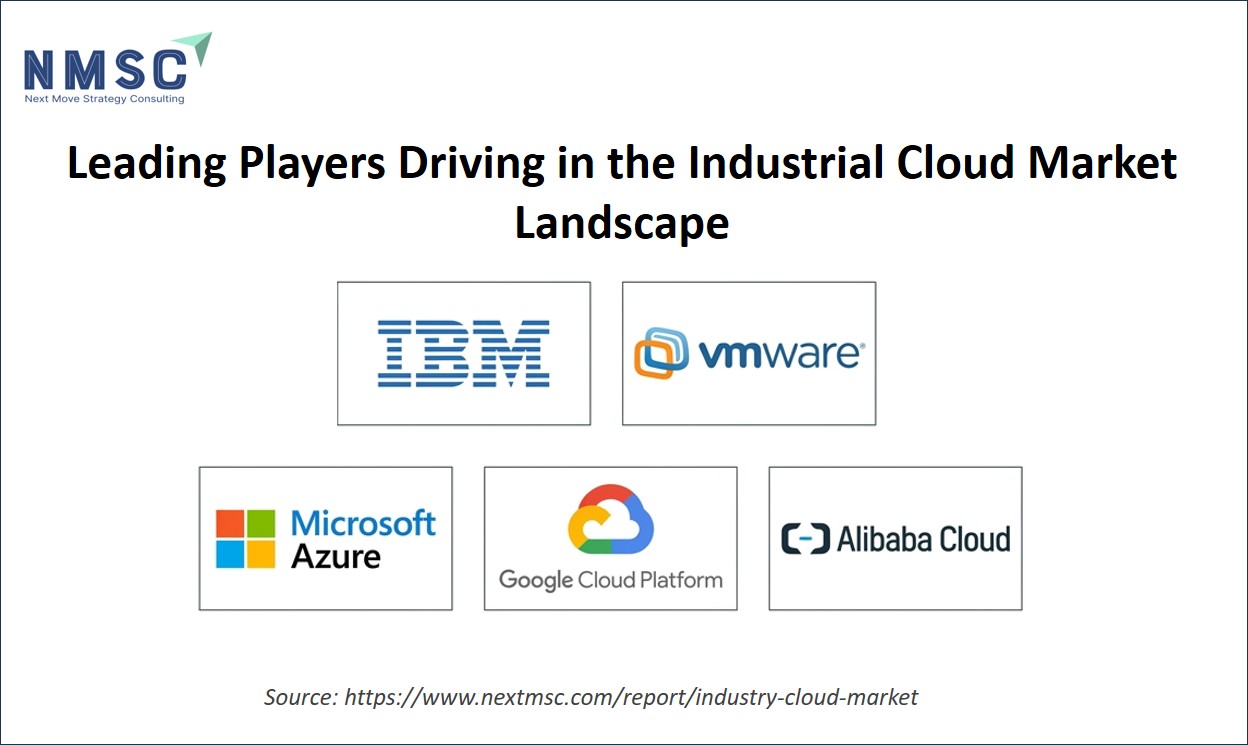
Various key players operating in the industry cloud industry include IBM Corporation, VMware Inc., Microsoft Azure, Google Cloud Platform, Alibaba Cloud, Amazon Web Services, Oracle Cloud, Cisco Systems Inc, Rackspace Technology Inc., Hewlett Packard Enterprise, and others. These market players are adopting strategies such as product launches and collaboration to maintain their dominance in the market.
For instance, in April 2024, Microsoft launches new industrial AI innovation leveraging advanced AI capabilities from the Microsoft cloud to the factory floor. This innovation was aimed at improving operational efficiency, reduce downtime, and enhanced product quality, leveraging cloud-based AI solutions.
Furthermore, in December 2021, IBM launched new center focused on accelerating the adoption of hybrid cloud computing. The IBM and Cloud Modernization Center enable customers to modernize their applications and infrastructure by leveraging IBM's mainframe technology and cloud services.
According to Next Move Strategy Consulting: Industry Impact
The recent developments by Amagi and Microsoft indicate a broader transformation in the cloud ecosystem.
-
Industry cloud platforms are evolving into intelligent, autonomous systems
-
Artificial intelligence integration is becoming a standard feature
-
Sector-specific solutions are replacing one-size-fits-all cloud models
-
Public and private sectors are aligning around vertical cloud strategies
Analysis from Next Move Strategy Consulting suggests the convergence of artificial intelligence and industry cloud is expected to create a new generation of digital infrastructure. These platforms will serve as the backbone for sector-specific innovation and long-term growth.
Future Outlook: What Lies Ahead for Industry Cloud
The industry cloud market is expected to witness rapid expansion as organizations prioritize digital transformation.
Emerging Trends
-
Rise of autonomous cloud ecosystems
-
Expansion of multi-industry integrations
-
Increasing adoption of AI-powered analytics
-
Growth in regulatory-focused cloud solutions
Our observations at Next Move Strategy Consulting indicates that future growth will be driven by platforms that combine intelligence, scalability, and sector-specific capabilities. Companies that invest early in industry cloud strategies will gain a significant competitive edge.
Conclusion
Industry cloud is no longer a niche concept. It is becoming a foundational pillar of digital transformation across sectors. With advancements in artificial intelligence and increasing demand for tailored solutions, industry cloud platforms are set to redefine how organizations operate, innovate, and scale.
As demonstrated by Amagi’s autonomous media capabilities and Microsoft’s leadership in public sector cloud solutions, the future of cloud computing lies in specialization, intelligence, and industry alignment.
Next Steps: Actionable Takeaways
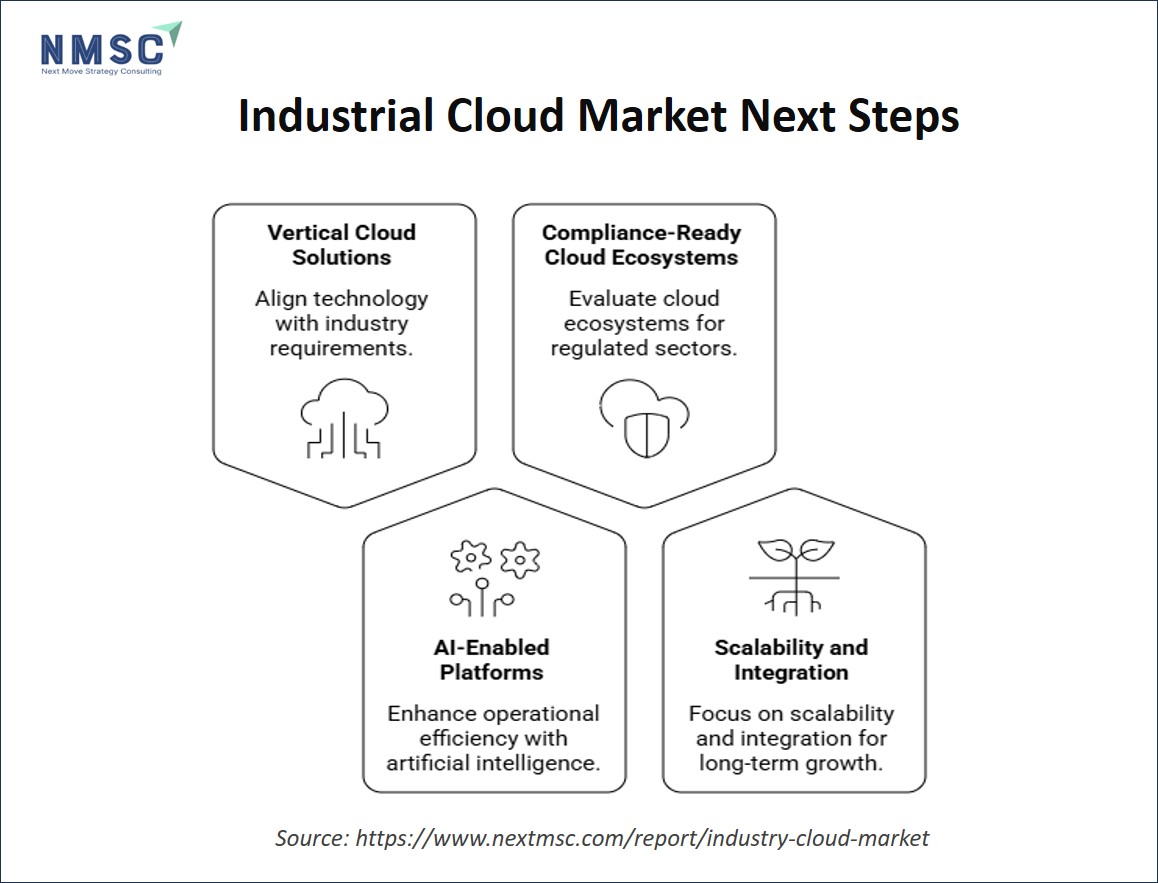
-
Adopt vertical cloud solutions to align technology with industry requirements
-
Invest in AI-enabled platforms to enhance operational efficiency
-
Evaluate compliance-ready cloud ecosystems for regulated sectors
-
Focus on scalability and integration for long-term growth
About the Author
 Sanyukta Deb
— Sanyukta Deb is Digital Marketing Team Lead at Next Move Strategy Consulting, where she has led content strategy and technical SEO for the firm's B2B market research publications for over 2 years. Her editorial process translates NextMSC's primary and secondary research — spanning technology, industrial, and consumer sectors — into commercial narratives, backed by search-intent, keyword, and competitive analysis. She brings 5 years of overall experience in digital marketing and content strategy.
Sanyukta Deb
— Sanyukta Deb is Digital Marketing Team Lead at Next Move Strategy Consulting, where she has led content strategy and technical SEO for the firm's B2B market research publications for over 2 years. Her editorial process translates NextMSC's primary and secondary research — spanning technology, industrial, and consumer sectors — into commercial narratives, backed by search-intent, keyword, and competitive analysis. She brings 5 years of overall experience in digital marketing and content strategy.
About the Reviewer
 Debashree Dey
— Debashree Dey is Assistant Manager at Next Move Strategy Consulting, where she supports cross-vertical market content and communications across diverse industries for 6 years. Her professional background includes senior content writing, communications, and published manuscript authorship, with experience developing audience-focused business narratives and maintaining clear, consistent messaging. Her role supports research-led content development and editorial quality across NextMSC publications.
Debashree Dey
— Debashree Dey is Assistant Manager at Next Move Strategy Consulting, where she supports cross-vertical market content and communications across diverse industries for 6 years. Her professional background includes senior content writing, communications, and published manuscript authorship, with experience developing audience-focused business narratives and maintaining clear, consistent messaging. Her role supports research-led content development and editorial quality across NextMSC publications.


















Add Comment