Is Palm Vein Biometrics Gaining Momentum in 2025?

Have you ever wondered why some biometric technologies stand out for their reliability in challenging environments? Palm vein biometrics, which scans the unique vein patterns beneath the skin of the hand, offers a contactless and highly secure option.
In 2025, this technology is seeing notable progress through standardization efforts and practical implementations. According to a recent market study by Next Move Strategy Consulting, the global Palm Vein Biometrics Market size is expected to reach USD 1.70 billion by 2025. Looking ahead, the industry is projected to expand significantly, reaching USD 4.2 billion by 2030, registering a CAGR of 19.8% from 2025 to 2030.
What Makes Palm Vein Biometrics Unique?
Palm vein biometrics uses near-infrared light to map the deoxyhemoglobin in veins, creating a unique pattern that is difficult to forge. This modality is contactless, hygienic, and resistant to external factors like dirt or superficial injuries.
Key advantages include:
-
Extremely low false acceptance rate of 0.00001% and false rejection rate of 0.01%, as reported by leading solution providers.
-
Immunity to moisture, dirt, and minor hand injuries.
-
No health risks associated with repeated use.
These features make it particularly suitable for industrial and financial applications.
Is Standardization Driving Palm Vein Biometrics Adoption?
In November 2025, the Korea Internet & Security Agency (KISA) added palm vein biometrics, specifically dorsal hand vein recognition, to its national performance testing and certification program. This is the sixth modality in the program, joining fingerprint, finger vein, iris, facial recognition, and anti-spoofing technologies.
Certification requires devices to meet equal error rate (EER) thresholds of 1% for fixed deployments and 1.5% for dynamic deployments. KISA highlighted the growing demand for contactless and multi-modal biometrics, especially in financial services.
How does this Impact the Palm Vein Biometrics Market?
From a market research perspective at Next Move Strategy Consulting, national-level certification enhances credibility and facilitates broader adoption. It assures businesses of performance standards, potentially accelerating deployments in regulated sectors like banking and government. This move reflects maturing market confidence and could encourage similar standards globally, fostering innovation and competition among providers.
Are Real-World Deployments Proving Palm Vein Biometrics Value?
In 2024-2025, Transnet Engineering, a South African state-owned entity managing rail and port assets, deployed palm vein biometric kiosks to secure access to SAP Enterprise Asset Management software across its factories and depots. The kiosks, designed by Linx-AS and powered by Fujitsu PalmSecure technology combined with realtime North America's bioLock software, allow multiple users to access shared terminals securely without passwords.
Benefits realized include:
-
Prevention of credential sharing and associated fraud risks.
-
Increased accountability by linking transactions to individual identities.
-
Enhanced efficiency in industrial environments through quick, contactless login.
-
Robust performance in dirty or moist conditions common on shop floors.
What does this Implementation Signal for the Palm Vein Biometrics Market?
At Next Move Strategy Consulting, we view such enterprise-scale adoptions as indicators of market expansion into industrial sectors. By addressing pain points like corruption risks and operational inefficiencies in large workforces, this deployment demonstrates measurable operational ROI. It highlights palm vein technology's edge in high-throughput, harsh environments, likely inspiring similar solutions in manufacturing, logistics, and asset-heavy industries worldwide. This contributes to growing evidence that palm vein biometrics is transitioning from niche to mainstream applications.
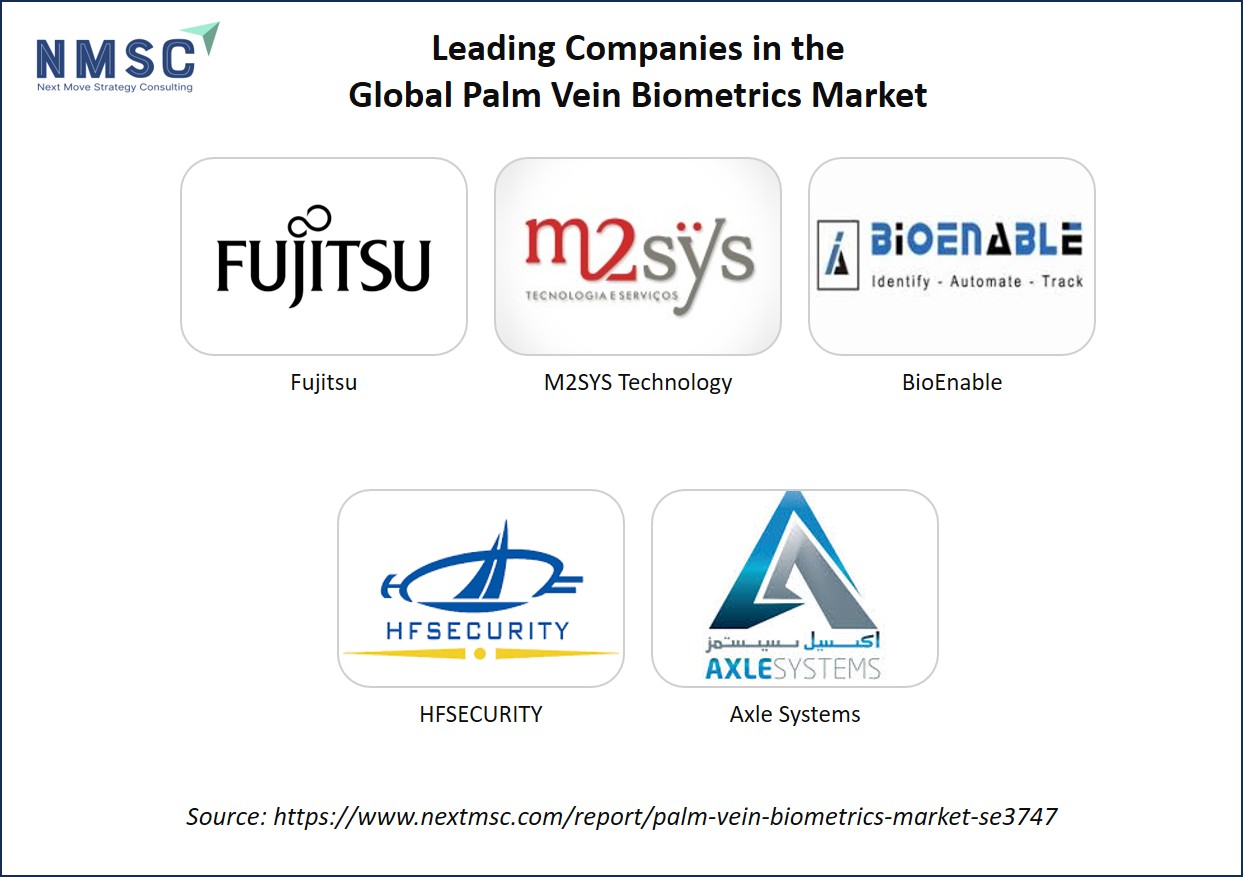
Which Companies Dominate the Palm Vein Biometrics Market and How Do They Compete?
The market mixes long-established giants like:
-
M2SYS Technology
-
BioEnable
-
Mantra Softech Pvt. Ltd.
-
HFSECURITY
-
ZKTECO CO., LTD.
-
Maxvision Technology Corp.
-
GLOBAL ID S.A.
-
Axle Systems
-
Identytech Solutions America, Inc.
-
mofiria Corporation
-
GRGBanking
-
Recogtech B.V.
-
PalmVeinTech Ltd.
Why Should Businesses Watch the Palm Vein Biometrics Market Now?
Recent developments in 2025, from certification programs to field-proven kiosks, underscore increasing maturation. These steps enhance technology trustworthiness and showcase tangible benefits in security and efficiency.
For organizations prioritizing hygienic, forgery-resistant authentication, palm vein biometrics presents a compelling option amid rising contactless preferences.
Next Steps: Actionable Takeaways for Your Organization
To capitalize on emerging trends in palm vein biometrics:
-
Assess current authentication systems for vulnerabilities in shared or industrial access points—consider pilot testing palm vein solutions for high-security needs.
-
Monitor regulatory developments, such as certification standards, to ensure compliance in targeted markets like Asia-Pacific.
-
Evaluate vendors offering proven technologies, focusing on integration with existing enterprise software like SAP.
-
Conduct a risk-benefit analysis incorporating metrics like false acceptance rates to justify investments.
By taking these steps, businesses can position themselves ahead in secure authentication evolution.
About the Author
 Sanyukta Deb
— Sanyukta Deb is Digital Marketing Team Lead at Next Move Strategy Consulting, where she has led content strategy and technical SEO for the firm's B2B market research publications for over 2 years. Her editorial process translates NextMSC's primary and secondary research — spanning technology, industrial, and consumer sectors — into commercial narratives, backed by search-intent, keyword, and competitive analysis. She brings 5 years of overall experience in digital marketing and content strategy.
About the Reviewer
 Debashree Dey
— Debashree Dey is Assistant Manager at Next Move Strategy Consulting, where she supports cross-vertical market content and communications across diverse industries for 6 years. Her professional background includes senior content writing, communications, and published manuscript authorship, with experience developing audience-focused business narratives and maintaining clear, consistent messaging. Her role supports research-led content development and editorial quality across NextMSC publications.

















Add Comment