Palm Vein Biometrics Market by Component (Hardware, Software, and Services), by Authentication Type (Single-Factor and Multi-Factor), by Function (Identification and Verification), by Technology (Near-Infrared Imaging, Contactless Sensor Technology, and Others), by Application (Access Control, Time and Attendance Management, and Others), by End-User (Banking and Financial Institutions, Healthcare Providers, Government and Defense, and Others) – Global Analysis & Forecast, 2025–2030
Industry: Semiconductor & Electronics | Publishing Date: November 29, 2025 | Last Updated: September 30, 2026 | No of Pages: N/A | No. of Tables: N/A | No. of Figures: N/A | Format: PDF | Report Code: SE3747
Industry Outlook
The global Palm Vein Biometrics Market size was valued at USD 1.42 billion in 2024 and is expected to reach USD 1.70 billion by 2025. Looking ahead, the industry is projected to expand significantly, reaching USD 4.2 billion by 2030, registering a CAGR of 19.8% from 2025 to 2030.
The palm vein biometrics market has emerged as a highly secure and reliable segment within the broader biometric identification industry. Leveraging near-infrared imaging to capture unique vein patterns beneath the skin, this technology offers exceptional accuracy and resistance to forgery compared to fingerprints or facial recognition. Its contactless nature has driven adoption across sectors that demand hygiene and precision, such as banking, healthcare, government, and enterprise access control. As organizations continue to seek frictionless yet secure authentication methods, palm vein systems are increasingly being integrated into digital identity frameworks and multi-factor authentication platforms worldwide.
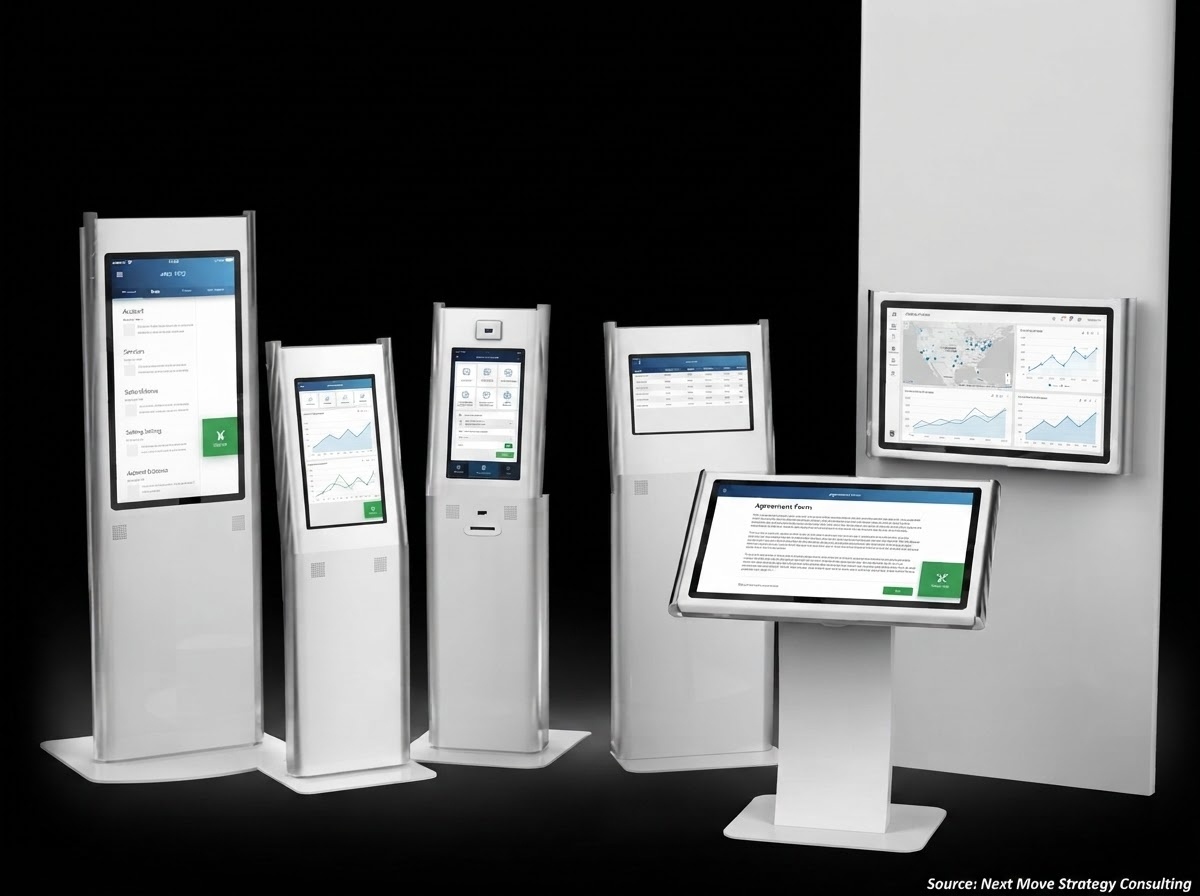
Looking ahead, the industry is poised for sustained expansion driven by rising security requirements, advancements in AI-based matching algorithms, and integration with IoT and smart infrastructure. The growing preference for touchless authentication in public and high-traffic environments, like airports, hospitals, and workplaces, underscores its scalability potential. Additionally, innovations such as embedded palm vein sensors in mobile devices, ATMs, and smart kiosks are widening application possibilities. As awareness of privacy and data protection strengthens, the market is expected to evolve toward decentralized identity systems, ensuring secure, ethical, and user-centric authentication solutions in the coming years.
Also, the rise of IoT-connected devices is driving the growth of the palm vein biometrics market demand by enabling seamless, contactless, and secure authentication across smart environments. As IoT adoption expands in sectors like healthcare, banking, and smart buildings, the demand for reliable identity verification increases. palm vein systems, with their high accuracy and hygiene benefits, integrate easily into connected ecosystems, supporting secure access control, personalized user experiences, and data protection. This convergence of IoT and biometric technologies is creating new opportunities for embedded and remote authentication applications, fueling the market’s expansion.

What are the Key Trends in the Palm Vein Biometrics Industry?
How will Palm Vein Biometrics Change When Powerful Models and Matching Move to the Edge?
Edge AI and on-device matching are reshaping biometric risk and latency. Academic reviews show AI models are now light enough for secure edge inference, letting devices do feature extraction and matching without sending raw templates to the cloud. Research and vendor move indicate on-device matching lowers round-trip delays and reduces the attack surface by keeping sensitive templates inside secure hardware. That matters for palm-vein systems because the vascular pattern is inherently sensitive; performing matching on a secure element or enclave both speeds verification and simplifies regulatory compliance by limiting data flows. For vendors, the practical takeaway is to combine optimized NIR capture modules with compact neural networks and secure enclaves, then certify that flow for privacy auditors; for integrators, require SDKs that support local-first modes to avoid costly cloud architecture changes. Early product bundles and academic reviews already document feasibility and improved privacy posture.
Could Palm Vein Biometrics Become the Anchor for Continuous and Multi-modal Identity?
Palm vein’s high liveness assurance and internal-body uniqueness make it a strong comparator in multi-modal stacks; recent literature emphasizes combining physiological signals with behavioural or device signals to achieve continuous identity confidence. Instead of a single check, systems are being designed to fuse passive signals with occasional palm-vein re-samples to raise or lower trust scores dynamically. That reduces lockouts from a single false rejection and helps risk-based workflows, for example, silent continuous validation for logged-in healthcare terminals. Analysis of AI-driven biometric reviews shows such fusion improves both security and UX when implemented with transparent fallbacks. Practically, product teams expose fusion APIs and trust-scoring outputs so integrators implement risk-based policies rather than binary allow/deny rules; this increases the value of biometric subscriptions while lowering operational friction.
Will an Open Developer Ecosystem and Standardized SDKs Accelerate Palm Vein Biometrics Deployments?
There’s growing momentum for developer-friendly bundles and certified SDKs. Vendors are packaging palm-vein sensors with developer toolkits and bio-servers to speed integrations, and third-party integrators now promote palm-vein modules as pluggable identity elements. This shift matters because past friction came from bespoke hardware drivers, proprietary template formats, and complex integration with existing identity stacks. When sensors ship with robust SDKs, sample code, and secure template abstractions, pilot projects move to production faster and TCO drops. Companies therefore prioritize documented APIs, standard template formats, and modular licensing so channel partners and system integrators could sell complete solutions. That strategy shortens sales cycles and creates recurring revenue opportunities from software updates and certification services.
Are National Certification Programs and Regulator Attention Turning Palm Vein Biometrics into a Trusted, Certified Modality?
Regulatory bodies and national testing authorities are increasingly formalizing biometric evaluation programs, and palm-vein has begun appearing in those scopes; recent announcements show testing authorities adding palm-vein to domestic certification tracks. Certification matters commercially, where governments and regulated industries prefer modalities covered by domestic test suites because procurement risk and audit questions are smaller. For vendors, this means investing in formal evaluation artifacts and engaging with national labs to show performance under local demographic conditions. If a vendor presents a certified stack, it gains easier entry into public tenders and regulated verticals, so prioritizing validated certification roadmaps is a direct commercial lever.
What are the Key Market Drivers, Breakthroughs, and Investment Opportunities that will Shape the Palm Vein Biometrics Market in the Next Decade?
Palm-vein biometrics uses near-infrared (NIR) light to image the vascular pattern beneath the skin; because veins are internal and unique, the method delivers strong liveness assurance and low false-acceptance rates. Recent advances in compact NIR sensors, contactless capture, and embedded matching have reduced device size and cost, making palm-vein systems practical for banking, healthcare, and enterprise access, verticals that prize hygiene and fraud resistance.
At the same time, privacy regulation and public concern about biometric data create compliance burdens, where organisations design secure template storage, obtain lawful, and perform data protection impact assessments. These governance needs shape procurement timelines and integration efforts even as vendors push smaller sensors and turnkey integrations.
Growth Drivers:
Can Demand for Hygienic, Contactless Authentication Accelerate Palm Vein Biometrics Market Adoption?
Palm-vein readers are naturally contactless and provide robust liveness detection, so they meet both hygiene and anti-spoofing requirements in hospitals, transit hubs, and workplaces. Vendor technical reviews and academic surveys highlight palm-vein’s high accuracy and lower false-acceptance/rejection rates compared with many touch-based methods, which reduces fraud and practical friction in day-to-day use. The COVID-19 era acted as a catalyst for procurement pilots of contactless modalities; as organisations weigh hygiene and security together, palm-vein systems become more attractive. Advances in compact NIR sensors and slimmer reader modules lower unit costs and enable integration into kiosks, ATMs, and door readers. Converting interest into durable market growth requires vendors to provide open APIs, interoperability testing, and demonstrable total-cost-of-ownership benefits versus fingerprint and facial systems.
Can Deeper Integration with Healthcare and Financial Systems Drive the Palm Vein Biometrics Market Expansion?
Palm-vein biometrics addresses concrete pain points in healthcare and banking. Published use cases and academic chapters document successful pilots where palm-vein improved identification accuracy and operational speed compared with manual checks. To scale across hospitals and bank branches, vendors deliver standardized connectors, HIPAA-aware workflows, and encrypted template management that satisfies auditors. When vendors supply SDKs, integration toolkits, and proven interoperability layers, enterprises embed palm-vein modules into existing EHRs or core banking platforms, unlocking hardware sales plus recurring services like software licensing, updates, maintenance and expanding the addressable market.
Growth Inhibitors:
Could Privacy Rules and Public Concern about Biometric Data Inhibit Adoption?
Biometric templates are treated as sensitive data in many legal regimes. UK ICO guidance and GDPR Article 9 require organisations to identify a lawful basis, often rely on explicit consent, and perform data protection impact assessments for biometric processing. Regulators have recently pursued enforcement actions for large-scale facial biometric misuse, illustrating legal and reputational risk if biometric identifiers are mishandled. Compliance measures, strong template encryption, limited retention, transparent consent flows, and independent audits, add cost and complexity and may slow procurement cycles, especially for cross-border deployments. While privacy-preserving templates and careful governance mitigate risk, regulatory uncertainty and heightened public scrutiny remain material inhibitors to unconstrained, rapid adoption.
Is Investing in Miniaturized Nir Sensors, On-device Matching, and Identity-as-a-service an Attractive Opportunity?
Technical progress that reduces sensor size, power consumption, and per-unit cost enables palm-vein readers to be embedded into more endpoints and simplifies large deployments. On-device matching and edge AI reduce the need to transmit sensitive biometric data, improving privacy and lowering backend load. Vendors that pair compact optics with SDKs, secure enclave storage, and subscription identity platforms capture hardware margins plus recurring service revenue like software licenses, cloud management, and maintenance. Fujitsu and others have published work on smaller palm-vein modules, confirming the engineering trend. Investors who back component suppliers, embedded-software specialists, and compliant identity-platform providers capture value across device sales, integration services, and ongoing identity subscriptions, especially in regulated verticals that favour privacy-certified solutions.
How Palm Vein Biometrics Market Segmented in this Report, and What are the Key Insights from the Segmentation Analysis?
By Component Insights
Is the Component Split Driving Palm-vein Biometrics Market Dynamics in 2025?
Based on component, the palm vein biometrics market is segmented into hardware, software, and services.
Hardware currently drives initial adoption, sensors unlock use cases, but software and services capture the richer, recurring value. Enterprises buy sensors, yet they renew for software updates, matcher licenses, and managed enrollment services; meanwhile regulatory and usability demands push buyers toward vendors that combine certified hardware, ISO-compatible software and strong services. In short, hardware opens doors, software locks in customers, and services scale deployments, vendors that productize this stack dominate procurement in regulated verticals.
By Authentication Type Insights
Is Multi-Factor Authentication Emerging as the Preferred Mode in the Palm Vein Biometrics Market?
On the basis of authentication type, the palm vein biometrics market is segmented into single-factor authentication and multi-factor authentication.
While single-factor authentication continues to dominate in cost-sensitive and hygiene-critical applications, multi-factor authentication is rapidly gaining traction as organizations respond to stricter data protection and cybersecurity norms. Regulatory initiatives encouraging multi-modal verification, coupled with technological integration of palm-vein sensors into access and identity platforms, are shifting buyer preference toward MFA solutions. Vendors offering interoperable SDKs and secure templates compatible with MFA frameworks are better positioned to capture enterprise and government contracts, signalling that multi-factor authentication is the growth engine in the next phase of the palm-vein biometrics market.
By Function Insights
Is Verification Taking the Lead Over Identification in the Palm Vein Biometrics Market?
On the basis of function, the palm vein biometrics market is segmented into identification and verification.
Verification currently dominates the palm vein biometrics market, driven by its efficiency, low latency, and suitability for controlled environments like corporate access, healthcare verification, and ATM authentication. Identification, though powerful, is primarily confined to national ID or border security systems due to its higher infrastructure demands. As data protection rules tighten globally, enterprises favour verification systems for localized authentication over large shared databases. Consequently, vendors developing secure, fast, and privacy-compliant verification modules are best positioned to lead adoption across the commercial, healthcare, and financial sectors in 2025 and beyond.
By Technology Insights
Is Technological Innovation Defining the Next Growth Wave in the Palm Vein Biometrics Market Trends?
On the basis of technology, the palm vein biometrics market is segmented into near-infrared imaging, contactless sensor technology, embedded palm vein modules, hybrid biometric systems.
Technology innovation is the backbone of palm vein biometrics market growth, with near-infrared imaging and contactless sensing forming the core, while embedded modules and hybrid systems drive next-generation evolution. NIR imaging ensures precision; contactless systems enhance hygiene; embedded modules support decentralization; and hybrid systems reinforce trust. Among these, embedded and hybrid solutions are witnessing the fastest uptake, aligned with global trends in edge AI and multi-factor identity verification. Vendors investing in compact hardware, edge-enabled processing, and interoperability will lead as the market transitions toward secure, scalable, and user-centric authentication ecosystems.

By Application Insights
Is Expanding Application Diversity Powering the Palm Vein Biometrics Market in 2025?
On the basis of application, the palm vein biometrics market share is segmented into access control, time and attendance management, patient identification and monitoring, financial transactions and banking security, border control and government id programs, educational examination and student authentication, consumer electronics and smart devices.
Among all applications, access control and banking security dominate the palm vein biometrics market, driven by the need for high-assurance and contactless authentication. Healthcare and government ID programs follow closely, reflecting institutional shifts toward fraud reduction and citizen safety. Emerging segments like consumer electronics and education show strong growth potential as device integration and digital learning expand. Overall, the market is moving toward multi-environment usability, combining convenience, hygiene, and accuracy, positioning palm vein technology as a cornerstone in secure, user-friendly identity management across sectors.
By End-User Insights
Is Growing End-User Diversification Reshaping the Palm Vein Biometrics Market Landscape?
On the basis of end-user, the palm vein biometrics market is segmented into banking and financial institutions, healthcare providers, government and defence, corporate enterprises, educational institutions, transportation and logistics, retail and commercial establishments.
Across end-user segments, banking and financial institutions, government and defence, and healthcare providers dominate due to their stringent security and identity verification needs. Meanwhile, the corporate and retail sectors are rapidly adopting palm vein systems for digital access and customer engagement. Education and logistics are emerging as promising growth areas as institutions and operators pursue digital transformation. Collectively, these end-user trends underline a clear shift toward contactless, privacy-driven, and interoperable authentication ecosystems, positioning palm vein biometrics as a strategic enabler of next-generation security and operational efficiency.
Regional Outlook
The palm vein biometrics market is geographically studied across North America, Europe, Asia Pacific, Middle East & Africa, and Latin America and each region is further studied across countries.
The technological readiness strongly shapes the regional outlook of the palm vein biometrics market by determining the speed and scale of adoption across different geographies. Countries such as China, Japan, and South Korea lead the market due to their advanced digital infrastructure, high cybersecurity awareness, and early integration of biometric systems in financial and governmental applications.

Palm Vein Biometrics Market in North America
North America is the most mature regional market for palm-vein biometrics, driven by strong demand from banking, healthcare, and enterprise access control, where security and hygiene are priorities. Large vendors and integrators have deployed palm-vein solutions for high-security facilities and patient identification, and government procurement cycles favour tried-and-tested vascular modalities. Market reports identify North America as the largest regional market and estimate sizeable enterprise biometrics spending. The U.S. accounts for a dominant share of regional revenue, because of high R&D investment, broad systems integrator networks, and regulatory compliance needs that reward secure authentication. These structural advantages accelerate deployments in hospitals, financial institutions, and corporate campuses, raising baseline adoption and encouraging local partners to integrate palm-vein into multi-factor authentication stacks.
Palm Vein Biometrics Market in the United States
In the United States, the palm vein biometrics market is particularly dynamic, with early adopters in healthcare, finance and government leading the way. Major drivers centre on the need to combat medical identity theft, bolster hospital patient verification, secure branch banking and maintain compliance with privacy and access standards. U.S. institutions benefit from high spending on IT security, large budgets for biometric pilots, and a vendor ecosystem that supports end‐to‐end deployment. Additionally, integrations with AI and cloud-based matching technologies are pushing palm-vein biometrics into more mainstream usage beyond niche applications. The expansion of secure credentialing for the workforce, finance and remote access further fuels the U.S. market’s growth trajectory.
Palm Vein Biometrics Market in Canada
In Canada, the palm vein biometrics market is less extensive than in the U.S. but follows many of the same patterns of adoption, albeit at a slower pace. Canadian hospitals, public institutions and select financial organizations are exploring or deploying palm-vein solutions to improve authentication while respecting stringent privacy and data-protection laws. The availability of advanced healthcare infrastructure and a security-conscious culture underpin interest in contactless biometric modalities. Local integrators that provide certified hardware and compliant data-handling frameworks are gaining traction. The Canadian market’s cautious but steady growth means it often serves as a proving ground for controlled roll-outs before scaling across North America. As cost of hardware declines and vendors offer support tailored to Canadian privacy frameworks, wider commercial use beyond public institutions appears increasingly feasible.
Palm Vein Biometrics Market in Europe
Europe shows steady adoption tied to public-sector identity programs, border security upgrades, and secure workplace access. Western European countries prioritize privacy and data protection, which favours palm-vein because templates are non-reusable biometrics stored as encrypted templates rather than raw images; Germany, the U.K., and the Nordics also invest heavily in secure health IT and airport modernization programs that pilot touchless modalities. Southern European markets such as Italy and Spain follow with more targeted commercial rollouts in banking and healthcare. Regulatory emphasis on GDPR-compliant implementations and procurement cycles for government and transport infrastructure produce steady demand, while local systems integrators and distributors translate vendor offerings into privacy-aligned deployments across the continent.
Palm Vein Biometrics Market in the United Kingdom
In the United Kingdom, the palm vein biometrics market is gradually expanding, especially in sectors such as healthcare trusts, airport and railway access control, and secure enterprise campuses. UK organisations are drawn to palm-vein authentication because its internal-vein pattern is harder to spoof than fingerprints or facial recognition, helping them satisfy both security and privacy requirements. Procurement in the UK tends to emphasise vendor certification, data encryption and compliance with UK-specific data protection standards. While large-scale roll-outs remain limited compared to North America, several notable pilots are underway, and the trend toward hygiene-driven, touchless authentication is accelerating post-COVID. As integrators simplify deployments and costs fall, the UK is likely to transition from pilot-rich to more operational deployments across midsize enterprises.
Palm Vein Biometrics Market in Germany
Germany’s palm vein biometrics market reflects the country’s reputation for precision, strong data-protection laws and high-security expectations. Adoption is concentrated in critical infrastructure, healthcare networks and large industrial campuses, where internal biometric modalities like palm-vein are preferred due to anti-spoofing robustness and high accuracy. German vendors and integrators often insist on on-premises matching, encrypted templates and full audit capability, aligning with local privacy and compliance regimes. Although Germany’s commercial roll-out pace is moderate relative to some countries, the high value of each deployment, often large corporate or healthcare facilities, means each contract has significant scale. The result is a steady, high-quality adoption pattern which supports long-term growth and sets a benchmark for other European markets.
Palm Vein Biometrics Market in France
In France, palm-vein biometrics adoption is growing steadily in healthcare, secure transit hubs and enterprise buildings, supported by national interest in secure identity systems and digital health platforms. French healthcare providers are piloting palm-vein for patient identity verification, while major banks and transport authorities examine its potential for non-contact access and transaction authentication. The French regulatory environment emphasises template encryption, consent and secure storage, making palm-vein a compelling alternative to more exposed modalities. While upfront cost and integration complexity remain entry barriers, falling hardware prices and vendor partnerships are enabling broader trials. Over time, France is likely to move from selective deployments toward more widespread enterprise and public-sector use.
Palm Vein Biometrics Market in Italy
Italy’s palm-vein biometrics landscape is characterised by targeted commercial roll-outs across banking branches, hospital networks and corporate campuses. Italian banks are exploring palm-vein readers at branch counters and ATMs to reduce fraud and streamline customer authentication, and regional hospital groups are trialling palm-vein for patient check-in and access control. Local integrators often adapt international hardware solutions to Italian compliance and language requirements. While Italy’s overall adoption pace is slower compared with Northern European nations, the pattern of focusing on high-value verticals, banking, healthcare and enterprise, allows Italy to build credible use-cases and gradually expand. As Italian organisations recognise the hygiene and anti-spoofing benefits of palm-vein systems, wider use in on-demand business and institutional settings is becoming more plausible.
Palm Vein Biometrics Market in Spain
Spain is experiencing growing interest in palm-vein biometrics, particularly within airports, rail transit systems and large hospital groups where improving throughput, hygiene and access security are key. Spanish transport authorities are examining palm-vein authentication for passenger flow while healthcare systems pilot it for patient verification and secure access to records. The Spanish procurement environment tends to favour solutions that minimise physical contact and offer robust privacy controls, positioning palm-vein as a favourable modality. Although the commercial enterprise segment remains nascent, falling sensor cost and vendor support are enabling broader trials. Over time, Spanish organisations are likely to move from limited pilots toward deployment across mid-sized campuses and facilities.
Palm Vein Biometrics Market in the Nordics
In the Nordic countries, the palm-vein biometrics market benefits from high trust in public institutions, advanced healthcare systems and strong interest in smart-city infrastructure. palm-vein authentication is attractive in these markets due to its hygienic, contactless nature, strong anti-spoofing characteristics and compatibility with template-based biometrics that many Nordic organisations prefer for privacy reasons. Public-sector pilots in smart buildings, hospitals and transport systems often serve as early adopters; these create credible references for private sector roll-out. Moreover, the relatively compact markets and high per-capita expenditure mean that successful early deployments deliver visibility and foster vendor-integrator ecosystems. As cost efficiencies improve, the Nordics are positioned to adopt palm-vein more broadly across enterprise, healthcare and smart-infrastructure settings.
Palm Vein Biometrics Market in the Asia-Pacific
Asia-Pacific is the fastest-growing regional market with very diverse adoption patterns. China and Japan lead on product manufacturing, large-scale deployments, and integration into ATMs and public kiosks, while India and Indonesia show rapid interest driven by national ID initiatives, financial inclusion projects, and contactless attendance systems. China’s domestic vendors and deep manufacturing base lower unit costs and accelerate rollouts, and Japan’s early vendor innovation supports healthcare and enterprise pilots. India’s large institutional buyers are testing palm-vein for banking and welfare disbursement, and South Korea, Taiwan, and Australia emphasize secure enterprise and transport uses. Reports point to Asia-Pacific as the fastest growing market, underpinned by urbanization, government digitization, and cost declines that expand use case.
Palm Vein Biometrics Market in China
In China, palm-vein biometrics have found strong traction through large-scale deployments in smart city projects, banking ATMs, transit systems and public-sector identity programmes. Chinese domestic hardware manufacturing is highly advanced and cost-competitive, enabling wide deployment of palm-vein sensors in places where cost and scale matter. The combination of government investment in digital infrastructure, urban surveillance, transit security and public welfare identification means China offers one of the largest addressable markets and is increasingly setting standards for roll-out speed, scale and integration. As global vendors adapt to Chinese requirements, China essentially functions as both a user-market and supply-chain hub, benefitting pricing, innovation and internationalisation of palm-vein solutions.
Palm Vein Biometrics Market in Japan
Japan has long been a front-runner in palm-vein biometrics, particularly in banking and enterprise access control where vendors like domestic firms embed palm-vein sensors in ATMs, branch counters and corporate entry systems. Japanese organisations emphasise reliability, high throughput, and low-maintenance systems, which have promoted palm-vein adoption in enterprise and public sectors. The strong local vendor ecosystem and high per-capita security investment support advanced use-cases such as touchless entry and multi-factor systems. Additionally, Japan’s ageing population and high healthcare-technology requirements motivate use of palm-vein for patient verification and facility access. As hardware costs decrease and vendor models shift to service-based offerings, Japan is positioned to extend palm-vein into smaller institutions and commercial segments.
Palm Vein Biometrics Market in India
India represents a high-potential growth market for palm-vein biometrics, driven by financial inclusion programmes, attendance systems, identity verification in banking, and multi-factor authentication in enterprises. Cost sensitivity remains a key factor, and local distributors and vendors dominate by offering competitive hardware and services tailored to Indian regulatory and operational conditions. The large population, expanding mobile/branch banking footprint and government drive toward digital identity all contribute to accelerated interest in palm-vein modalities. Pilot projects in welfare distribution and secure attendance are increasingly leveraging palm-vein sensors given their anti-spoofing and hygiene advantages. As vendor ecosystems mature and operational cost declines, India is set to shift from pilots to large-scale commercial roll-outs, particularly in banking, healthcare and public-sector identity.
Palm Vein Biometrics Market in South Korea
In South Korea, the palm-vein biometrics market is characterised by sophisticated, high-precision deployments in enterprise campuses, smart buildings and public infrastructure. South Korean organisations demand fast, accurate, low-false-fail devices, and palm-vein sensors meet those expectations thanks to internal-pattern recognition and template-based matching. The country’s thriving electronics manufacturing sector supports integration of palm-vein modules into broader systems. Government encouragement of secure authentication for transport, banking and border access contributes to market momentum. Although full-scale consumer roll-out is still evolving, South Korea’s high standards and early adoption mean it often acts as a launch market for next-generation palm-vein hardware and solutions.
Palm Vein Biometrics Market in Taiwan
Taiwan’s palm-vein biometrics ecosystem is growing steadily, driven by its strong electronics manufacturing base, demand for high-precision access-control solutions in enterprise campuses, and local integrator networks adapting global vendors. Palm-vein modules are often embedded into corporate security platforms, visitor management systems, and healthcare facilities. Because Taiwan is relatively small as a national market, many deployments are regional or enterprise-level; however, these act as proof points for export and scaling. The country’s vendor presence, circuit-board manufacturing strength and integration capabilities mean Taiwan plays role both as adopter and component-supplier in the global palm-vein ecosystem.
Palm Vein Biometrics Market in Indonesia
In Indonesia, palm-vein biometrics adoption is in the early-to-mid stage but shows strong potential, especially in public-sector identity programs, branch banking security and attendance/time-management systems. Large population, expanding branch banking networks, growing digital economy and rising fraud concerns make palm-vein an attractive option because of its anti-spoofing integrity and low-contact requirement. Local cost sensitivity means hardware must be competitively priced and supported by local integrators. As vendors adapt to Indonesian conditions and build local support ecosystems, palm-vein solutions are likely to move quickly from pilot to repeatable commercial deployments across banks, clinics and corporate offices.
Palm Vein Biometrics Market in Australia
Australia’s palm-vein biometrics market is characterized by cautious but strategic uptake, typically via pilots in healthcare, border control, government offices and large enterprises. The Australian federal government and some state agencies are open to investing in contactless biometric modalities for hygiene-sensitive and high-security applications, though full commercial rollout remains somewhat conservative. Key drivers include regulatory focus on data protection, high per-capita IT spending and the desire for interoperable systems across states. As vendor hardware becomes cheaper and experience with palm-vein grows abroad, Australia is positioned to move from pilot projects to broader deployment, particularly in mid-sized campuses and regional healthcare networks.
Palm Vein Biometrics Market in Latin America
Latin America exhibits growing but uneven uptake. Financial institutions and some governments in larger economies pilot palm-vein for branch security and customer authentication, yet broader adoption is constrained by budget cycles and legacy IT. Where adoption occurs, projects are driven by fraud reduction in banking and by airports modernizing passenger flows; local integrators combine imported sensors with regional access control platforms. Market entry is opportunistic, where vendors that provide cost-effective hardware, localized support, and clear data-privacy guarantees tend to secure pilot projects that can scale. These patterns mean Latin America will likely follow global trends but at a slower cadence, with pockets of faster growth tied to public procurement or high-value private sector initiatives.
Palm Vein Biometrics Market in the Middle East & Africa
Middle East & Africa shows selective but strategic deployments, where Gulf Cooperation Council countries invest in secure biometrics for border control, VIP facilities, and smart-city projects, while several African countries evaluate palm vein recognition technology for healthcare identity and financial inclusion pilots where traditional ID systems are weak. Sovereign investment in smart infrastructure funds pilots in the Middle East, and international donors sometimes underwrite biometric identity pilots in Africa for welfare and health projects. The result is a dual landscape where high-budget states adopt premium vendor solutions, and lower-budget regions favour vendor partnerships and donor-backed pilots; both segments increase overall visibility for the modality, even if commercial scale varies.
Competitive Landscape
Which Companies Dominate the Palm Vein Biometrics Market and How Do They Compete?
The market mixes long-established giants like Fujitsu with regional specialists such as M2SYS, BioEnable, Mantra, ZKTeco, GRGBanking, Maxvision and niche innovators, PalmVeinTech, Recogtech. Fujitsu’s PalmSecure remains a benchmark for accuracy and enterprise adoption; smaller vendors differentiate on price, turnkey SDKs, regional compliance and vertical focus like banking, healthcare, retail. Partnerships and developer bundles, for example, Fujitsu sensor packs via ecosystem partners let incumbents protect OEM channels while specialist vendors win pilots through fast integration and localized support. Competition is therefore a balance of proven performance, platform openness, and channel reach, vendors who combine certified sensors, developer tooling and vertical-tailored workflows tend to win larger deployments.
Market Dominated by Palm Vein Biometrics Giants and Specialists
Competition varies by geography and niche, where in Asia large hardware-integrator firms and banking-equipment players like GRGBanking, ZKTeco, Maxvision, Mantra pushes integrated terminals and ATM/Kiosk bundles, while in Europe/Japan vendors emphasize certified privacy controls and healthcare integrations. Niche specialists capture edge cases, payment pilots, access control, and identity platforms, by offering modular SDKs and compliance toolkits. This split produces a two-tiered market, where giants win large institutional contracts and distribution, specialists win rapid pilots and vertical customization.
Innovation and Adaptability Drive Market Success
Market leaders are pushing three practical levers, where edge-first matching, developer-friendly bundles, and multi-modal fusion. Fujitsu’s PalmSecure continues to be licensed into partner bundles, while suppliers such as Maxvision and ZKTeco showcased integrated palm-vein terminals at 2024 events, signalling productization for large-scale access and events. Vendors also emphasize secure enclaves and local-first matching to reduce data flows and ease compliance for healthcare and finance. These moves shorten integration cycles and improve procurement fit for regulated buyers, making adaptability, not only raw accuracy, the decisive competitive edge.
Market Players to Opt for Merger & Acquisition Strategies to Expand Their Presence
M&A and strategic deals are already reshaping identity stacks, where large access-management firms and platform vendors pursue carve-outs and partnerships to bundle biometrics into broader identity/security suites. A concrete recent example is SailPoint’s acquisition of Imprivata’s IGA business and strategic partnership with Imprivata, illustrating how identity-platform consolidation changes vendor go-to-market routes for biometric authentication in healthcare and enterprise. GRGBanking has also taken equity stakes to deepen its product and channel reach. Such moves suggest palm-vein specialists could be attractive targets for platform vendors seeking certified biometric modules or for banking-equipment firms aiming to internalize contactless authentication IP.
List of Key Palm Vein Biometrics Companies
-
M2SYS Technology
-
BioEnable
-
Mantra Softech Pvt. Ltd.
-
HFSECURITY
-
ZKTECO CO., LTD.
-
Maxvision Technology Corp.
-
GLOBAL ID S.A.
-
Axle Systems
-
Identytech Solutions America, Inc.
-
mofiria Corporation
-
GRGBanking
-
Recogtech B.V.
-
PalmVeinTech Ltd.
What are the Latest Key Industry Developments?
-
February 2025- ZKTeco places third globally in FVC 2025 and notes multi-modal roadmap, ZKTeco’s R&D institute achieved a high ranking at the Fingerprint Verification Competition, while noting its roadmap includes facial with palm vein and palm with finger vein modalities, underscoring the strategic pivot toward hybrid biometrics incorporating palm-vein.
-
December 2024- Himax Technologies, Inc. announces WiseEye PalmVein suite at CES 2025. They revealed a low-power, bimodal palm vein with face authentication module to be used in smart door locks and IoT endpoints, highlighting miniaturisation and embedded applications for palm vein biometrics.
-
September 2024- During its Global Digital Ecosystem Summit, Tencent Cloud unveiled a palm-verification system using infrared cameras capturing palm vein & print patterns, for contactless payments and access across China. This signals large-scale consumer deployment of palm vein biometrics in financial services and transit.
-
August 2024- ZKTeco announced a solution combining palm vein and palm print via dual-modal deep-learning architecture with NIR camera for high-throughput access control, reinforcing its edge in enterprise/government physical security applications.
What are the Key Factors Influencing Investment Analysis & Opportunities in the Palm Vein Biometrics Market?
Investment in the palm vein biometrics market is increasingly shaped by the convergence of security innovation, digital identity transformation, and the global shift toward touchless authentication technologies. Investors are drawn to the market’s low saturation and high growth potential compared to more mature biometric modalities like fingerprint or facial recognition. Funding trends indicate strong interest from venture capital and corporate investors targeting startups developing AI-enhanced contactless biometric solutions, edge-device integration, and secure biometric payment solutions.
Valuations across the sector are influenced by scalability, interoperability with enterprise security platforms, and intellectual property portfolios focused on biometric encryption. Emerging investment hotspots include Asia-Pacific, where manufacturing and deployment synergies attract early-stage funding, and North America, where enterprise security demands drive M&A activity. As regulatory clarity around biometric data usage improves globally, the market presents growing opportunities for investors seeking exposure to high-precision, privacy-first authentication technologies poised for long-term adoption.
Key Benefits for Stakeholders:
Next Move Strategy Consulting (NMSC) presents a comprehensive analysis of the Palm Vein Biometrics Market, covering historical trends from 2020 through 2024 and offering detailed forecasts through 2030. Our study examines the market at regional and country levels, providing quantitative projections and insights into key growth drivers, market challenges, and investment opportunities across all major palm vein biometrics segments.
The palm vein biometrics market offers distinct advantages for all stakeholders involved. Investors benefit from an expanding market driven by global digitization, growing security concerns, and a clear shift toward touchless and privacy-compliant authentication technologies, factors that enhance return potential and long-term value creation. Customers, including enterprises, governments, and healthcare providers, gain from highly accurate, hygienic, and non-intrusive identification systems that reduce fraud, streamline operations, and build user trust. At the same time, end-users enjoy faster, contactless authentication experiences with stronger data protection. Collectively, these advantages create a reinforcing ecosystem where innovation, compliance, and user confidence drive sustained market growth and stakeholder alignment.
Report Scope
|
Parameters |
Details |
|
Market Size in 2025 |
USD 1.70 Billion |
|
Revenue Forecast in 2030 |
USD 4.2 Billion |
|
Growth Rate |
CAGR of 19.8% from 2025 to 2030 |
|
Analysis Period |
2024–2030 |
|
Base Year Considered |
2024 |
|
Forecast Period |
2025–2030 |
|
Market Size Estimation |
Billion (USD) |
|
Growth Factors |
|
|
Companies Profiled |
15 |
|
Countries Covered |
33 |
|
Market Share |
Available for 10 companies |
|
Customization Scope |
Free customization (equivalent to up to 80 analyst-working hours) after purchase. Addition or alteration to country, regional & segment scope. |
|
Pricing and Purchase Options |
Avail customized purchase options to meet your exact research needs. |
|
Approach |
In-depth primary and secondary research; proprietary databases; rigorous quality control and validation measures. |
|
Analytical Tools |
Porter's Five Forces, SWOT, value chain, and Harvey ball analysis to assess competitive intensity, stakeholder roles, and relative impact of key factors. |
Key Market Segments
By Component
-
Hardware
-
Palm vein scanners
-
Sensors and imaging modules
-
Infrared cameras
-
Authentication terminals
-
Integration kits and embedded modules
-
-
Software
-
Biometric identification and verification software
-
Database management and analytics tools
-
SDKs and APIs for developers
-
-
Services
-
Installation and integration
-
Maintenance and support
-
Managed biometric authentication services
-
By Authentication Type
-
Single-factor authentication
-
Multi-factor authentication
By Function
-
Identification
-
Verification
By Technology
-
Near-infrared imaging
-
Contactless sensor technology
-
Embedded palm vein modules
-
Hybrid biometric systems
By Application
-
Access control
-
Time and attendance management
-
Patient identification and monitoring
-
Financial transactions and banking security
-
Border control and government ID programs
-
Educational examination and student authentication
-
Consumer electronics and smart devices
By End-User
-
Banking and Financial Institutions
-
Healthcare Providers
-
Government and Defence
-
Corporate Enterprises
-
Educational Institutions
-
Transportation and Logistics
-
Retail and Commercial Establishments
Geographical Breakdown
-
North America: U.S., Canada, and Mexico.
-
Europe: U.K., Germany, France, Italy, Spain, Sweden, Denmark, Finland, Netherlands, and rest of Europe.
-
Asia Pacific: China, India, Japan, South Korea, Taiwan, Indonesia, Vietnam, Australia, Philippines, Malaysia and rest of APAC.
-
Middle East & Africa (MEA): Saudi Arabia, UAE, Egypt, Israel, Turkey, Nigeria, South Africa, and rest of MEA.
-
Latin America: Brazil, Argentina, Chile, Colombia, and rest of LATAM.
Conclusion & Recommendations
Our report equips stakeholders, industry participants, investors, and consultants with actionable intelligence to capitalize on palm vein biometrics’s transformative potential. By combining robust data-driven analysis with strategic frameworks, NMSC’s Palm Vein Biometrics Market Report serves as an indispensable resource for navigating the evolving landscape.
The palm vein biometrics market stands at a pivotal juncture where technological maturity, heightened security demands, and the global transition to touchless authentication converge to create sustained growth potential. As AI-driven matching algorithms advance and integration with IoT, healthcare, and financial systems deepens, the technology is evolving from niche applications to mainstream digital identity infrastructure. The industry’s future will be defined by scalable deployment models, regulatory alignment, and partnerships that bridge hardware innovation with secure software ecosystems. Emerging markets in Asia-Pacific and steady institutional demand in North America and Europe further reinforce a balanced global growth trajectory.
For executives and investors, the key strategic takeaway is to act early by aligning with innovation leaders and ecosystem enablers, whether through direct investment, partnerships, or pilot integrations. Organizations should prioritize collaborations that enhance interoperability, privacy compliance, and user experience, ensuring they capture value as biometric authentication systems transitions from a specialized solution to a foundational element of secure digital transformation.


About the Author
 Mayurima Roy
— Mayurima Roy is Research Analyst at Next Move Strategy Consulting, where she has spent 4 years working across the firm's full industry coverage rather than a single fixed vertical. Her work centers on structured research, ongoing trend tracking, competitive assessment, and insight-led content development, translating complex market data into clear, decision-ready narratives that support informed client decision-making across diverse global industries, market sectors, and world regions every day.
Mayurima Roy
— Mayurima Roy is Research Analyst at Next Move Strategy Consulting, where she has spent 4 years working across the firm's full industry coverage rather than a single fixed vertical. Her work centers on structured research, ongoing trend tracking, competitive assessment, and insight-led content development, translating complex market data into clear, decision-ready narratives that support informed client decision-making across diverse global industries, market sectors, and world regions every day.
About the Reviewer
 Supradip Baul
— Supradip Baul is an accomplished business consultant and strategist with over a decade of rich experience in market intelligence, strategy, technology, and business transformation. His work has included rigorous qualitative and quantitative analysis across multiple industries, helping clients shape investment decisions and long-term roadmaps. Earlier in his career, he was associated with Gartner, where he contributed to industry-leading reports and market share analyses. He has worked with leading global companies and holds an MBA with a dual specialization in Marketing and Finance.
Supradip Baul
— Supradip Baul is an accomplished business consultant and strategist with over a decade of rich experience in market intelligence, strategy, technology, and business transformation. His work has included rigorous qualitative and quantitative analysis across multiple industries, helping clients shape investment decisions and long-term roadmaps. Earlier in his career, he was associated with Gartner, where he contributed to industry-leading reports and market share analyses. He has worked with leading global companies and holds an MBA with a dual specialization in Marketing and Finance.
At Next Move Strategy Consulting, we understand that insightful market research is the cornerstone of successful business decisions. That's why we employ a robust and multifaceted approach, combining various methodologies to deliver the most accurate and actionable data for our clients.

Research Landscape
We navigate the world of research with two primary approaches:
Qualitative Approach
Our qualitative research methodologies involve immersive techniques such as in-depth interviews, focus groups, and observational studies. By engaging directly with individuals and stakeholders, we uncover valuable insights that quantitative data alone may overlook.

Quantitative Research
In tandem with qualitative methodologies, NMSC leverages the power of Quantitative Research to provide a robust foundation of numerical insights. Through systematic data collection and analysis, we quantify patterns, preferences, and market trends, offering a comprehensive view of the business landscape.
Our quantitative research approach employs diverse tools, including surveys, experiments, and statistical modelling. These methodologies enable us to gather data from a large and representative sample, ensuring the statistical significance of our findings. By employing structured questionnaires and standardized data collection methods, we guarantee the reliability and validity of the information we present to our clients.
Quantitative research is particularly effective in measuring the prevalence of trends, assessing market size, and gauging the impact of various factors on consumer behavior. The numerical precision attained through this approach equips our clients with actionable insights, facilitating data-driven decision-making and strategy formulation.


Our Specialized Toolbox for Industry-Specific Market Research
We deploy a specialized arsenal of techniques tailored to meet your unique requirements. Here's a glimpse into our comprehensive toolbox:

Information Procurement
The stage entails acquiring market data or relevant information through various sources and methodologies.


Market Research Approach
We utilize both top-down and bottom-up approaches in market research analysis to achieve a comprehensive understanding of the market dynamics, leveraging the broad perspective of industry trends and macroeconomic factors alongside detailed insights from specific segments and individual companies.

Porters Five Forces Analysis
We conduct Porter's Five Forces analysis to evaluate the competitive landscape of an industry, providing us with insights into factors that affect profitability and strategic positioning.

SWOT Analysis

Forecasting
We utilize a forecasting model to predict future consumption by considering parameters like population, economics, regulations, market competition, drivers, constraints, technology, and pricing. We also employ statistical techniques such as multilinear regression, exponential smoothing, moving average, ARIMA, and Monte Carlo simulations for accurate predictions. In econometric forecasting, we analyzed short-term and long-term event impacts, attributing values based on regulatory frameworks, economic factors, and market events.





 Speak to Our Analyst