Is the Electric All-Terrain Vehicle Industry Accelerating Through Innovation and Defence Expansion?
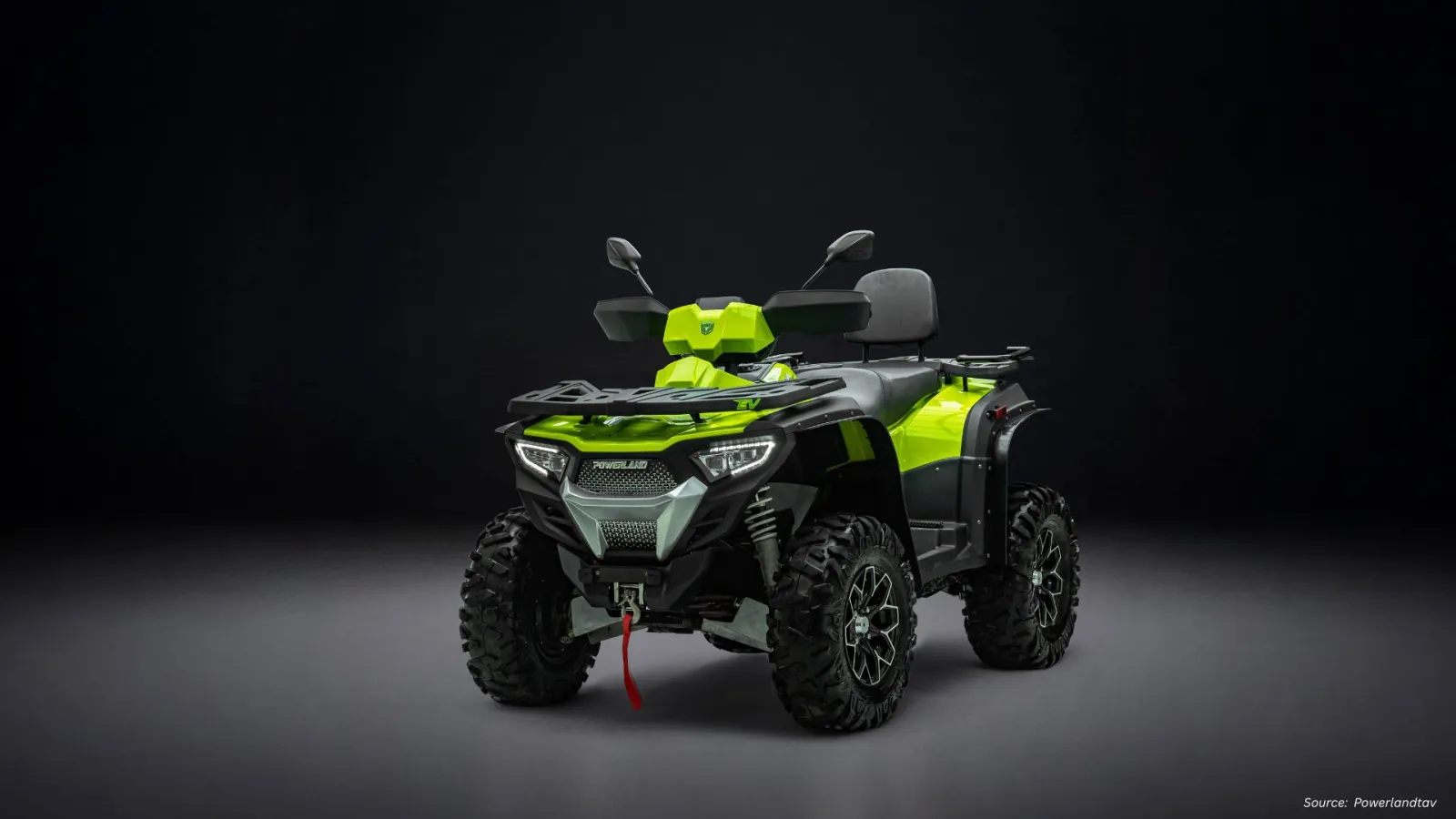
The electric all-terrain vehicle industry is entering a decisive growth phase. What began as a niche alternative to traditional petrol-powered vehicles is now expanding into eco-tourism, agriculture, government fleets, and defence applications. Two major developments in 2025 highlight this shift: global expansion by DRR USA and a strategic defence-focused joint venture between JSW Defence and Tomcar USA.
How Is DRR USA Driving Electric All-Terrain Vehicle Innovation Globally?
DRR USA, based in Brunswick, Ohio, has evolved from a youth racing ATV manufacturer into a serious electric vehicle innovator. According to Ideastream Public Media, electric models now account for 60% of DRR’s overall sales, compared to just 20% in earlier years. This shift indicates a structural transition toward electrification within the company.
The company recently sold 28 Safari electric ATVs to Mystic Mountain adventure park in Jamaica, reinforcing its presence in eco-tourism markets.
The Safari electric model is priced at $14,999. Custom versions supplied to Jamaica offer:
-
Larger battery capacity
-
Power steering
-
65-mile range per charge
-
Speed limited to 25 mph for tourist safety
Why Are Buyers Choosing Electric?
According to the Ideastream report, customers value electric all-terrain vehicles for:
-
Quiet operation
-
Low maintenance
-
Zero carbon emissions
Electric models can cost several thousand dollars more than petrol versions but have fewer moving parts and lower maintenance requirements. DRR also reported 500 pre-orders as of late May 2025 and currently assembles up to 18 vehicles per week.
Can Defence Manufacturing Accelerate Industry Expansion in India?
A separate 2025 development suggests that defence demand could significantly expand the industry footprint. According to Carandbike, JSW Defence Pvt Ltd, part of the JSW Group, has entered into a joint venture with Tomcar USA through its subsidiary JSW Sarbloh Motors. Local production of Tomcar’s TX range will begin in India in early 2026. The partnership primarily targets India’s defence sector, with product trials expected after local rollout in 2026.
Tomcar’s TX platform features:
-
Modular design adaptable for civilian, military, and law enforcement use
-
Petrol engine: 1.5-litre turbocharged, 161 bhp, 250 Nm
-
Electric powertrain: 118 bhp, 237 Nm
-
Electric range: up to 161 km
-
Shift-on-the-fly four-wheel drive
-
Up to 14 inches of suspension travel
The availability of both petrol and electric variants shows that electrification is expanding even in tactical and defence-grade vehicles.
What Challenges Are Shaping the 2025–2026 Outlook?
Despite strong growth momentum, structural pressures are shaping the 2025–2026 trajectory of the electric all-terrain vehicle segment. According to 2025 reporting by Ideastream, DRR USA has faced significant difficulty sourcing small batches of lithium-ion batteries from overseas suppliers, as manufacturers often prioritize large-volume buyers. In addition, company leadership indicated that tariffs could raise costs by approximately 30%, creating pricing pressure that smaller firms are less equipped to absorb. The same report highlights rising commercial real estate prices as another constraint, limiting expansion despite increasing demand. On the defence manufacturing side, the joint venture between JSW Defence Pvt Ltd and Tomcar USA underscores that local production initiatives beginning in 2026 must first pass regulatory approvals and armed forces trials before full-scale deployment can proceed. Collectively, these factors indicate that cost escalation, supply chain dependency, and regulatory validation cycles remain critical barriers, particularly for smaller manufacturers navigating global expansion.
Key 2025 Developments in the Electric All-Terrain Vehicle Industry
|
Company |
Development |
Key Data Points |
|
DRR USA |
Global expansion into eco-tourism |
28 units sold to Jamaica; 65-mile range |
|
DRR USA |
Sales transition toward electric |
Electric accounts for 60% of total sales |
|
DRR US |
Order visibility |
500 pre-orders; 18 units/week production |
|
JSW Defence & Tomcar USA |
India defence manufacturing JV |
Production begins 2026 |
|
Tomcar TX Electric |
Performance specifications |
118 bhp; 237 Nm |
What Structural Trends Are Emerging?
-
Export-Led Growth: DRR leveraged export accelerator programs to expand internationally. International eco-tourism clients demonstrate cross-border scalability.
-
Institutional Validation: Defence partnerships such as the JSW–Tomcar joint venture introduce industrial-scale credibility.
-
Operational Efficiency: Electric vehicles reduce maintenance complexity due to fewer mechanical components.
Key Companies Operating in the Electric All-Terrain Vehicle (ATV) Market
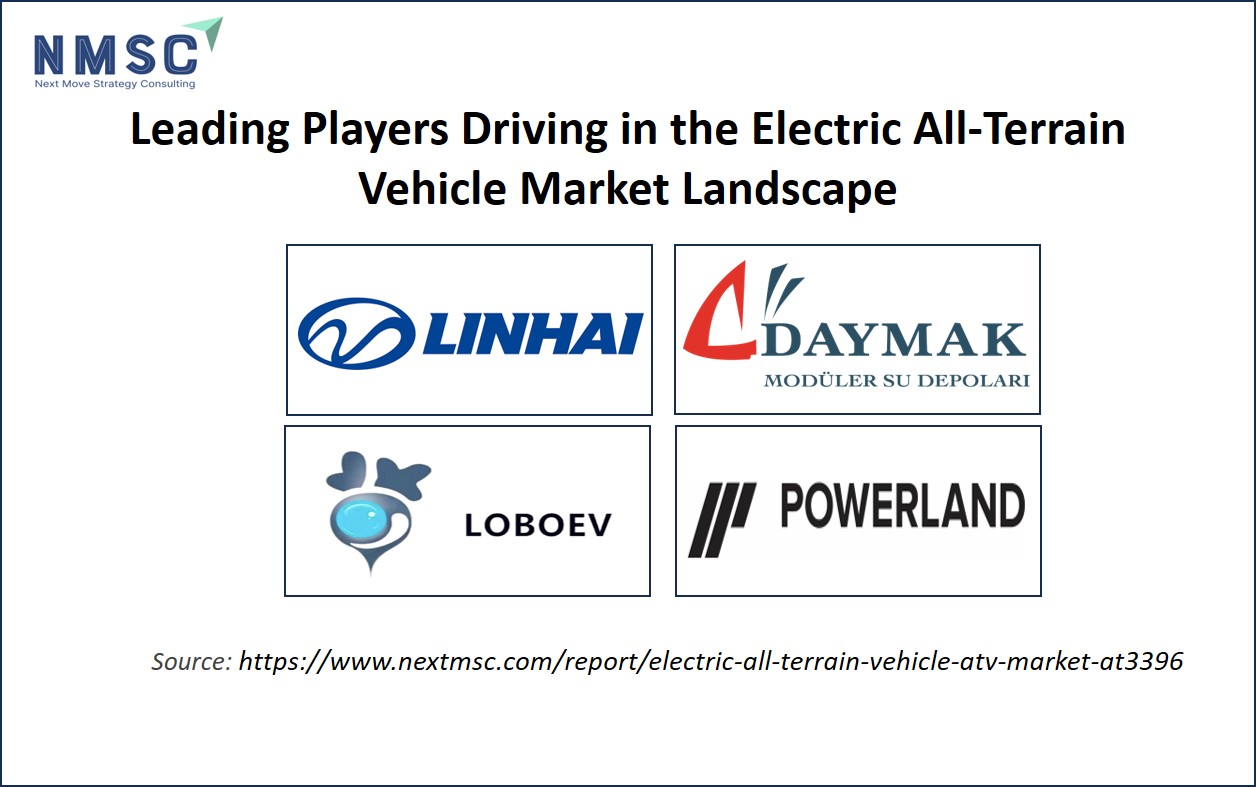
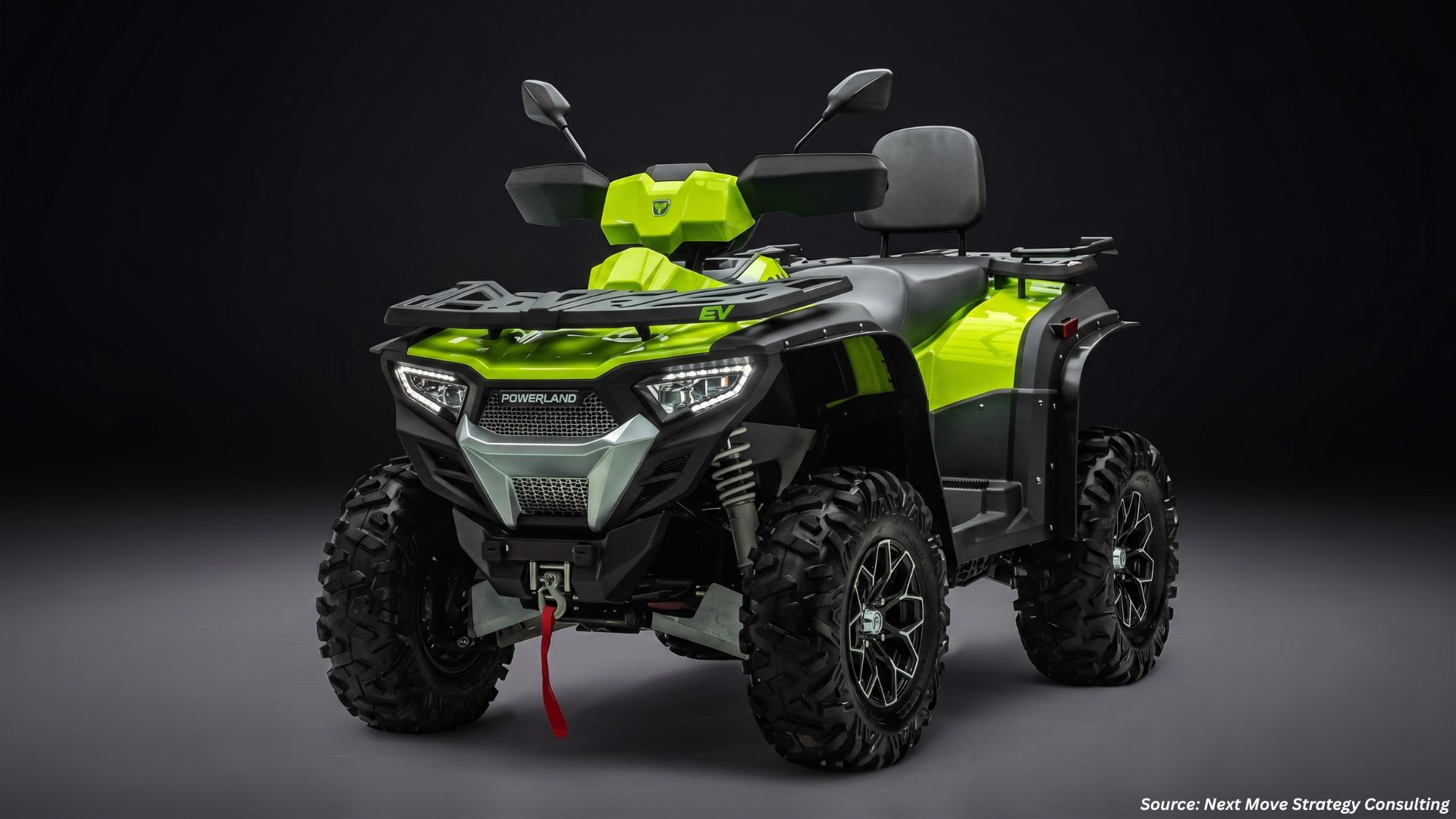
The competitive landscape of the Electric All-Terrain Vehicle (ATV) Market features a mix of emerging electric mobility specialists and established off-road vehicle manufacturers. Notable participants include Startec Motors, Powerland, CFMoto, LOBO EV Technologies, Apollino, DRR USA, BSTABO Power Technology, E-QUAD, Tesla, Theron, Rohnel Motors, Daymak, Linhai, Massimo Motor, and LIVAQ. These companies collectively represent diverse capabilities across electric powertrain innovation, utility and recreational off-road vehicle production, and expanding global distribution networks, contributing to the evolving structure of the electric off-road mobility ecosystem.
Next Steps: What Should Industry Stakeholders Consider?
-
Monitor defence procurement timelines in India beginning 2026.
-
Evaluate export-driven business models similar to DRR’s accelerator approach.
-
Assess electric performance specifications for use-case alignment (range, torque, payload).
-
Prepare for cost volatility linked to tariffs and supply chains as highlighted by DRR leadership.
Next Move Strategy Consulting View on the Electric All-Terrain Vehicle (ATV) Market
From Next Move Strategy Consulting’s perspective, the Electric All-Terrain Vehicle (ATV) Market is moving from experimental adoption toward structured, application-driven growth. The 2025 performance of DRR USA, where electric models account for 60% of total sales with 500 pre-orders, indicates a measurable demand shift rather than a short-term trend. Simultaneously, the 2026 local manufacturing plans announced by JSW Defence Pvt Ltd in partnership with Tomcar USA suggest that defence validation may accelerate institutional adoption. However, supply chain dependency on overseas lithium-ion batteries and potential tariff-driven cost increases of approximately 30% remain structural risks for smaller manufacturers. Strategically, the near-term outlook will likely be shaped by:
-
Defence-backed localization improving credibility and procurement visibility
-
Export-led expansion in eco-tourism and specialized commercial segments
-
Cost pressures linked to battery sourcing and tariffs
-
Competitive intensity rising as larger players enter electrification
Overall, the segment shows steady, fundamentals-based growth, but scalability and cost resilience will determine long-term leadership positioning.
Final Takeaway
The electric all-terrain vehicle industry is transitioning from niche innovation to strategic mobility infrastructure. With 60% of DRR’s sales now electric and defence manufacturing scheduled to begin in India in 2026, the sector is moving beyond experimentation toward structured expansion. If current developments continue, electrification in off-road mobility will increasingly be defined by export readiness, defence integration, and application-specific customization rather than consumer novelty alone
About the Author
 Sanyukta Deb
— Sanyukta Deb is Digital Marketing Team Lead at Next Move Strategy Consulting, where she has led content strategy and technical SEO for the firm's B2B market research publications for over 2 years. Her editorial process translates NextMSC's primary and secondary research — spanning technology, industrial, and consumer sectors — into commercial narratives, backed by search-intent, keyword, and competitive analysis. She brings 5 years of overall experience in digital marketing and content strategy.
Sanyukta Deb
— Sanyukta Deb is Digital Marketing Team Lead at Next Move Strategy Consulting, where she has led content strategy and technical SEO for the firm's B2B market research publications for over 2 years. Her editorial process translates NextMSC's primary and secondary research — spanning technology, industrial, and consumer sectors — into commercial narratives, backed by search-intent, keyword, and competitive analysis. She brings 5 years of overall experience in digital marketing and content strategy.
About the Reviewer
 Debashree Dey
— Debashree Dey is Assistant Manager at Next Move Strategy Consulting, where she supports cross-vertical market content and communications across diverse industries for 6 years. Her professional background includes senior content writing, communications, and published manuscript authorship, with experience developing audience-focused business narratives and maintaining clear, consistent messaging. Her role supports research-led content development and editorial quality across NextMSC publications.
Debashree Dey
— Debashree Dey is Assistant Manager at Next Move Strategy Consulting, where she supports cross-vertical market content and communications across diverse industries for 6 years. Her professional background includes senior content writing, communications, and published manuscript authorship, with experience developing audience-focused business narratives and maintaining clear, consistent messaging. Her role supports research-led content development and editorial quality across NextMSC publications.















Add Comment