Luxury Jewelry Market Statistics, Trends & Forecasts for 2026
Introduction
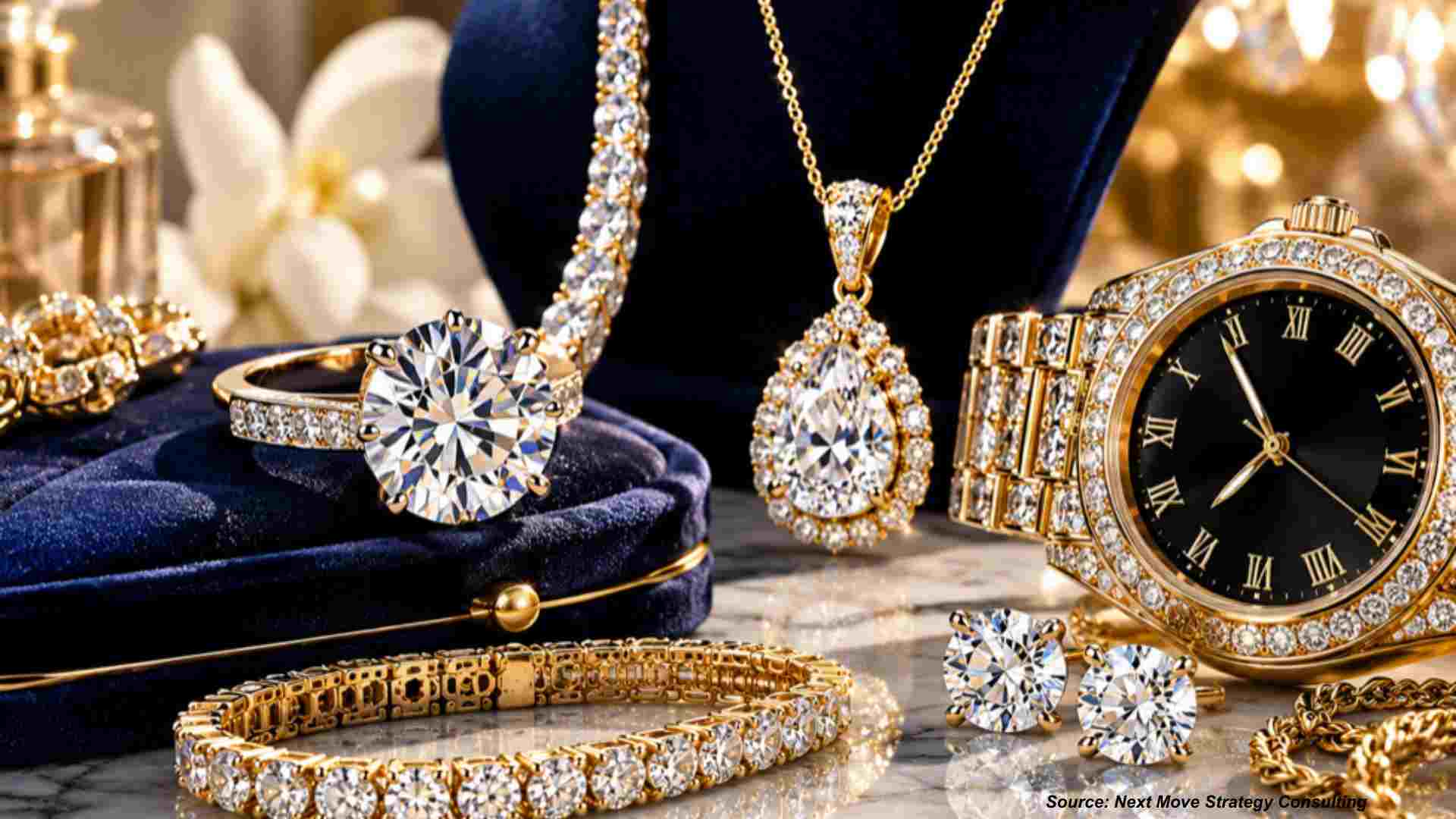
The global luxury jewelry market is navigating one of the most consequential periods in its modern history. At a time when heritage maisons are reporting consecutive quarters of record growth, the very definition of what constitutes a luxury gemstone is being contested at the highest institutional levels. From De Beers' largest marketing campaign in over a decade to a landmark industry ruling that redefines how lab-grown stones must be labeled, the structural forces reshaping the luxury jewelry market in 2026 are as commercially significant as they are culturally charged.
According to Next Move Strategy Consulting (NMSC), the global Luxury Jewelry Market is projected to reach USD 75.79 billion in 2026, expanding further to USD 150.25 billion by 2035 at a CAGR of 7.9% from 2026 to 2035. This trajectory is being shaped by a convergence of forces that demand strategic attention from C-level executives and institutional investors alike: record-high gold prices compressing and redirecting material strategies, the natural versus synthetic diamond debate reaching a regulatory inflection point, AI-driven consumer discovery transforming the purchase journey, and a resurgent secondhand luxury market that is redefining value perception across the category.
For decision-makers operating in or investing in the luxury jewelry sector, the question is no longer whether the market will grow — the data confirms it will. The question is which strategic positions, material categories, and distribution models will capture a disproportionate share of that growth.
For More Information: Download FREE Sample on Luxury Jewelry Market Report
The Natural Diamond Reckoning: Industry Events Redefining the Luxury Jewelry Market
AGTA's Landmark "Synthetic" Ruling: A Watershed Moment for Gemstone Labeling
On August 26, 2026 — just one day before this publication — the American Gem Trade Association (AGTA) issued one of the most consequential labeling mandates in the luxury jewelry industry's recent history. Under a policy approved by the AGTA board of directors in June 2026, all AGTA members are now required to use the word "synthetic" when describing any manufactured material that has "essentially the same chemical composition, crystal structure, and physical and optical properties as its natural counterpart." The term "lab-grown" may no longer be used alone to describe any man-made gemstone. Retail jewelers must describe these materials as either "synthetic" or "man-made," together with the name of the gemstone.
"Clear and consistent language is essential to consumer confidence," said AGTA President Bruce Bridges. "This policy gives AGTA members a straightforward standard for describing synthetic gemstones while reinforcing the association's commitment to natural-colored gemstones." This ruling follows AGTA's 2024 decision to ban lab-grown diamonds and gemstones from being sold on the show floor at its trade shows — a policy that has now been reinforced with mandatory terminology standards across its entire membership.
The AGTA ruling arrives at a moment of acute tension in the diamond supply chain. According to data cited in De Beers' October 2025 campaign launch, lab-grown diamonds have captured approximately 20% market share in the diamond jewelry market, with retail prices that are often a fraction of comparable natural stones. More significantly, according to The Knot, 52% of center stones in engagement rings were lab-grown in 2024, up from just 12% in 2019 — a penetration rate that has fundamentally disrupted the bridal segment that has historically anchored luxury diamond demand.
De Beers' Desert Diamonds: The Industry's Most Ambitious Counter-Offensive
The AGTA ruling did not emerge in isolation. It is the latest institutional expression of a coordinated industry response to the lab-grown challenge that was formally launched by De Beers in October 2025 with the unveiling of the "Desert Diamonds: Unlike Anything" campaign — the company's largest industry-wide diamond marketing initiative in over a decade.
The campaign promotes naturally colored diamonds — stones featuring desert-hued tones that cannot be replicated by laboratory processes — as a "marker of authenticity" and a direct counter-positioning to the commoditization of colorless, white diamonds by lab-grown alternatives. De Beers' own research found that 90% of consumers expressed interest in purchasing a Desert Diamond as a way to create a distinct look and reflect a more direct connection with nature.
The campaign's commercial impact has been measurable and rapid. According to De Beers Group's announcement at the JCK Las Vegas Show on May 29, 2026, natural diamond sales at U.S. independent jewelers increased 4% in Q4 2025 and 9% in Q1 2026 following the campaign's launch. Diamonds in the K to Z color range — the Desert Diamond palette — recorded even stronger growth, up 15% in Q4 2025 and 19% in Q1 2026.
At JCK Las Vegas, De Beers announced the next phase of the initiative: Desert Diamonds Icons, a campaign targeting four iconic jewelry design classics — stud earrings, the eternity band, the tennis bracelet, and the halo pendant — which together comprise 70% of all diamond jewelry acquisitions. The 2026 campaign is backed by the diamond industry's largest natural diamond marketing budget in 15 years.
NMSC Strategic Perspective: The Authenticity Premium as a Durable Competitive Moat
From NMSC's analytical standpoint, the convergence of the AGTA's "synthetic" labeling mandate and De Beers' Desert Diamonds campaign represents a structural realignment of the luxury jewelry market's value hierarchy — one with significant implications for brand strategy, pricing architecture, and investor positioning.
The core strategic insight is this: the lab-grown diamond's price advantage, which has driven its rapid penetration of the mass and accessible segments, is simultaneously its greatest commercial vulnerability in the luxury context. As lab-grown stones become more commoditized and their prices continue to fall, the rarity, provenance, and irreproducibility of natural diamonds — particularly naturally colored stones — become more, not less, valuable as luxury differentiators. NMSC's assessment is that brands and retailers that invest now in natural diamond provenance storytelling, blockchain-enabled traceability (as demonstrated by De Beers' Tracr platform and GIA's equity stake in it), and curated Desert Diamond collections are building a durable authenticity premium that lab-grown alternatives structurally cannot replicate. The AGTA ruling further institutionalizes this differentiation by mandating terminology that reinforces the categorical distinction between natural and synthetic gemstones at the point of sale.
Section Summary: The luxury jewelry market is at a defining regulatory and commercial inflection point, shaped by the AGTA's landmark August 2026 ruling mandating "synthetic" labeling for lab-grown gems, and De Beers' Desert Diamonds campaign — the industry's largest natural diamond marketing initiative in 15 years — which has already driven 9% growth in natural diamond sales at U.S. independents in Q1 2026.
Key Takeaways:
-
AGTA's June 2026 board-approved policy now requires all members to use the term "synthetic" for lab-grown gemstones; "lab-grown" alone is no longer permissible.
-
Lab-grown diamonds held approximately 20% market share in diamond jewelry and 52% of engagement ring center stones in 2024, up from 12% in 2019.
-
De Beers' Desert Diamonds campaign drove 9% growth in natural diamond sales at U.S. independents in Q1 2026, with naturally colored diamonds in the K-Z range up 19%.
-
The Desert Diamonds Icons campaign (launching September 2026) targets four design classics comprising 70% of all diamond jewelry acquisitions, backed by the industry's largest marketing budget in 15 years.
Industry Impact Analysis
Jewelry Leads the Luxury Market: Bain-Altagamma's Definitive 2025-2026 Assessment
The luxury jewelry market's outperformance relative to the broader personal luxury goods sector is not a transient phenomenon — it reflects a structural shift in how affluent consumers allocate discretionary spending. According to the Bain-Altagamma Luxury Goods Worldwide Market Study (December 2025), jewelry was the standout category across all regions in 2025, with sales growing by an estimated 4% to 6% at current exchange rates to reach approximately €32 billion. This growth occurred against a backdrop in which the broader personal luxury goods market contracted by 2% to €358 billion, with leather goods declining 5-7% and footwear down a similar magnitude.
Bain's spring 2026 update, released in July 2026, confirmed that jewelry continues to lead the market's recovery. Richemont — the parent company of Cartier, Van Cleef & Arpels, Vhernier, and Buccellati — saw its jewelry sales soar for the seventh consecutive quarter in Q1 2026. Kering's jewelry brands, including Boucheron and Pomellato, posted double-digit growth in Q1 2026. U.S. luxury brands overall saw Q1 2026 sales increase approximately 10% to 15% year-over-year at constant exchange rates, with hard luxury — jewelry and watches — among the primary growth drivers.
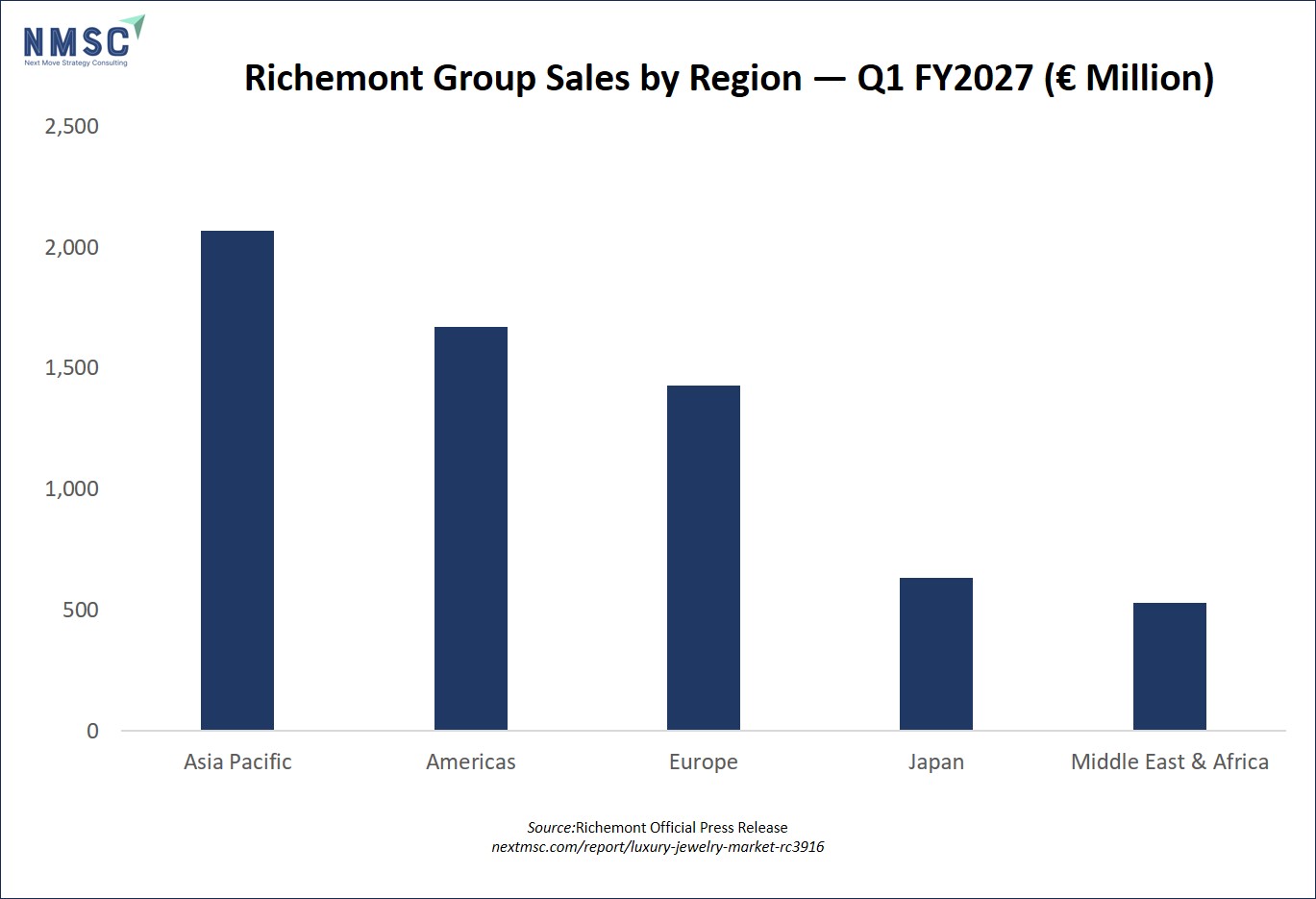
The Business of Fashion's State of Fashion 2026 report projects that jewelry will record annual unit growth of 4.1% between 2025 and 2028 — four times the rate of clothing — underscoring the category's structural growth advantage within the broader fashion and luxury ecosystem.
Gold Price Volatility: A Double-Edged Structural Force
Record-high gold prices represent one of the most consequential macroeconomic forces currently reshaping the luxury jewelry market's competitive dynamics. Gold reached $3,423 per troy ounce in April 2025, setting a new all-time high at the Chicago Mercantile Exchange. By January 2026, gold briefly touched an intraday record above $5,589 per ounce, before settling into a range of approximately $4,300–$4,500 per ounce. J.P. Morgan Global Research analysts expect gold prices to remain elevated through 2026 and 2027.
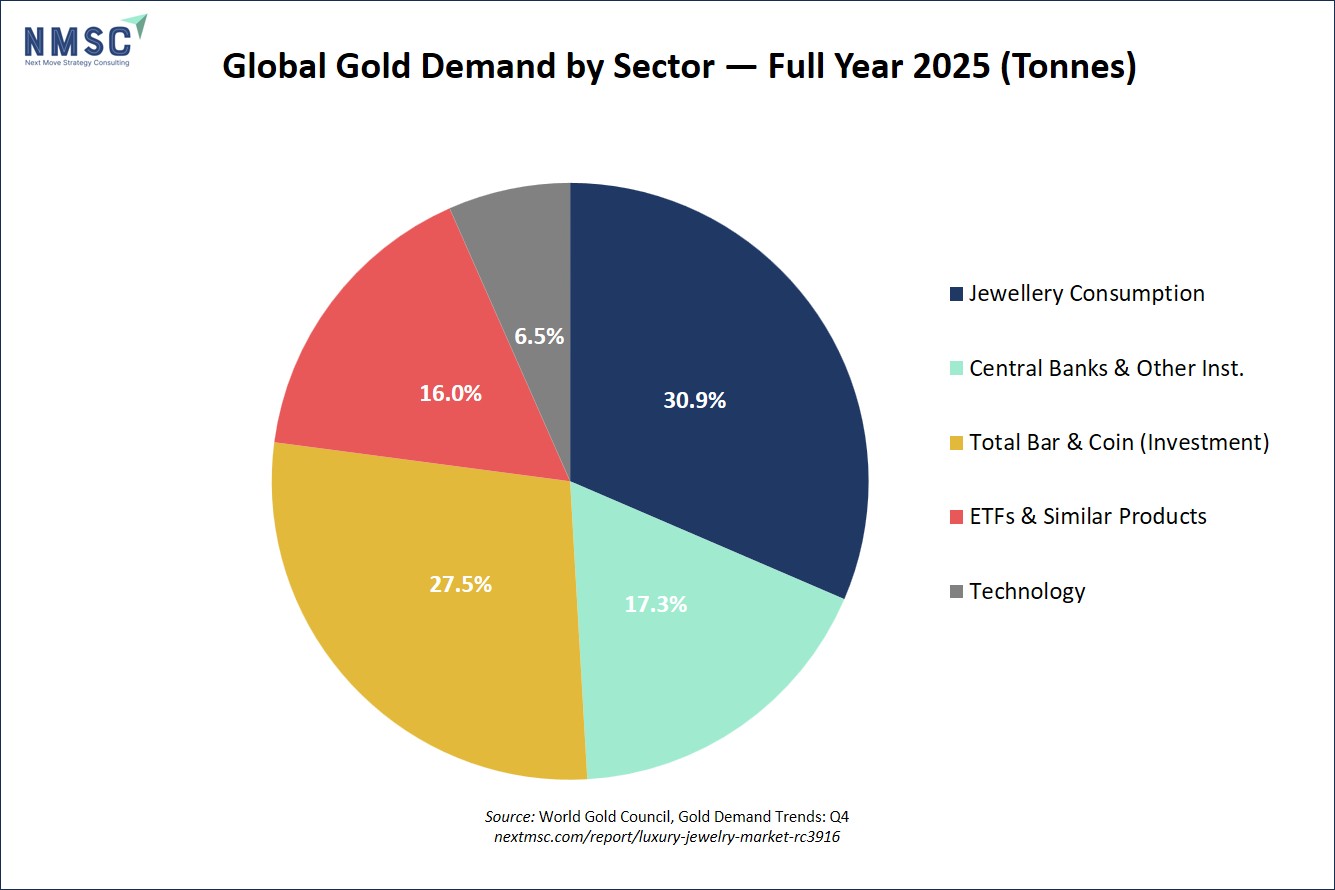
For luxury jewelry brands, elevated gold prices create a dual dynamic. On the demand side, gold jewelry's investment appeal is reinforced — high-net-worth consumers increasingly view gold pieces as tangible stores of value, particularly in markets such as India and China where gold carries deep cultural significance. On the supply side, margin compression is intensifying, prompting brands to adopt strategic hedging, long-term supplier contracts, and material diversification strategies. Notably, the NMSC report highlights that platinum is experiencing renewed strength as a luxury jewelry material, with the World Platinum Investment Council reporting that global platinum jewelry demand rose 8% in 2024 to approximately 1,993 thousand troy ounces, driven in part by consumers seeking a premium alternative to gold at a relatively more accessible price point.
AI-Driven Consumer Discovery: Redefining the Luxury Purchase Journey
The Bain-Altagamma spring 2026 study identified artificial intelligence as a transformative force in luxury consumer behavior. Half of all luxury consumers already use AI in their shopping journey, with nearly all planning to continue doing so. Nearly one-quarter of luxury shoppers use AI for brand and product discovery, while two out of three use it to compare products. Bain's analysis concluded that luxury brands not building "AI-native relevance" risk being systematically deprioritized in consumer discovery and consideration sets.
For the luxury jewelry market specifically, this has accelerated investment in virtual try-on technologies, AI-powered gemstone identification tools, and personalized digital boutique experiences. The NMSC report notes that digital B2B e-commerce platforms are also reshaping wholesale procurement, enabling luxury jewelry manufacturers and retailers to access certified gemstones, metals, and finished collections through transparent online catalogues and real-time inventory systems.
The Secondhand Luxury Surge: Implications for Primary Market Positioning
The secondhand luxury goods market grew 4% to 6% to an estimated €50 billion in 2025, with hard luxury — watches and jewelry — representing approximately 83% of total secondhand sales. Approximately half of all luxury shoppers now check the secondhand market before buying something new. This behavioral shift has significant implications for primary market luxury jewelry brands: pieces with strong provenance documentation, iconic design heritage, and traceable gemstone sourcing command superior resale values, creating a virtuous cycle that reinforces the investment appeal of high-quality natural jewelry.
Key Takeaways:
-
Jewelry grew 4-6% in 2025 to ~€32 billion, the only major personal luxury goods category to record consistent positive growth since 2023.
-
Richemont's jewelry brands recorded seven consecutive quarters of sales growth through Q1 2026; Kering's jewelry brands posted double-digit growth in Q1 2026.
-
Gold prices reached a record above $5,589/oz intraday in January 2026, driving both investment demand and margin pressure across the sector.
-
The secondhand luxury market reached €50 billion in 2025, with hard luxury (jewelry and watches) comprising 83% of total secondhand sales — reinforcing the investment case for provenance-documented, natural gemstone jewelry.
Future Outlook & Forecast
NMSC Market Forecast: Doubling in a Decade
According to NMSC's proprietary analysis, the global luxury jewelry market is on a trajectory to more than double in value over the next decade, expanding from USD 70.24 billion in 2025 to USD 150.25 billion by 2035 at a CAGR of 7.9% from 2026 to 2035. This growth is underpinned by four structural pillars: rising global wealth and disposable incomes, accelerating digitalization and B2B e-commerce expansion, growing cultural affinity for jewelry as both personal expression and investment asset, and the expanding urban population in emerging markets that increases exposure to premium brands and upscale retail environments.
The Bain-Altagamma study corroborates the long-term growth thesis, projecting that the overall personal luxury goods market will reach €525 billion to €640 billion by 2035, with solid structural fundamentals supporting annual growth of 4% to 6% through the decade. Jewelry, as the category's consistent outperformer, is positioned to capture a growing share of this expansion.
Regional Growth Frontiers
Asia-Pacific remains the fastest-growing and most strategically significant regional market for luxury jewelry. China — despite a 6-8% decline in the broader personal luxury goods market in 2025 — is showing signs of stabilization, with the second half of 2025 demonstrating improved consumer confidence. India's luxury jewelry market is structurally supported by deep cultural affinity for gold and gemstone jewelry, a rapidly expanding affluent class, and growing exposure to international luxury brands. The NMSC report highlights that De Beers plans to open 100 Forevermark stores in India by 2030, combining company-owned and franchise outlets — a commitment that signals institutional confidence in the subcontinent's long-term luxury jewelry demand.
The Middle East continues to be driven by strong cultural traditions around gold and diamond jewelry for weddings and festivals, with Dubai and Abu Dhabi remaining solid markets supported by diverse tourism and local high-net-worth demand. Saudi Arabia is identified by Bain as a market of "exceptional potential" within the region.
The Americas demonstrated the strongest near-term momentum, with U.S. luxury brands recording 10-15% Q1 2026 sales growth. Bain's analysis notes that upper-middle-class households in the U.S. are growing their luxury spending at roughly twice the rate of wealthier cohorts, suggesting that the luxury jewelry market is successfully broadening its consumer base beyond the ultra-high-net-worth segment.
Three Innovation Trajectories Defining the Next Decade
First, blockchain-enabled provenance and traceability will become a non-negotiable competitive requirement. De Beers' Tracr platform — now supported by GIA's equity stake — is establishing the infrastructure for industry-wide diamond provenance tracking. Brands that invest in traceable, certified supply chains will command premium pricing and preferential access to institutional and ESG-conscious buyers.
Second, the collectible and investment jewelry segment is emerging as a high-conviction growth category. Bain's data confirms that top customers — those spending more than €20,000 per year on luxury goods — now account for 46% of total luxury goods spending, up from 30% in 2019. This concentration of spending among ultra-high-net-worth buyers creates a structural demand base for rare, investment-grade pieces with documented provenance and exceptional craftsmanship.
Third, AI-native brand architecture will define the next generation of luxury jewelry market leaders. With 50% of luxury consumers already using AI in their shopping journey, brands that build AI-powered discovery, personalization, and authentication capabilities will gain a structural advantage in consumer acquisition and retention.
Section Summary: The global luxury jewelry market is projected to reach USD 150.25 billion by 2035 at a CAGR of 7.9%, driven by rising global wealth, digital transformation, and the growing perception of high-quality jewelry as both an emotional asset and a long-term store of value. Asia-Pacific, the Americas, and the Middle East represent the most compelling regional growth frontiers, while blockchain provenance, investment-grade collectibles, and AI-native brand architecture define the three primary innovation trajectories.
Key Takeaways:
-
NMSC projects the global luxury jewelry market will reach USD 150.25 billion by 2035, more than doubling from its 2025 base of USD 70.24 billion.
-
Bain-Altagamma projects the personal luxury goods market will reach €525–640 billion by 2035, with jewelry as the consistent category outperformer.
-
Top luxury customers (spending >€20,000/year) now account for 46% of total luxury goods spending, up from 30% in 2019 — creating a structural demand base for investment-grade jewelry.
-
De Beers' planned 100 Forevermark stores in India by 2030 signals institutional confidence in Asia-Pacific's long-term luxury jewelry demand trajectory.
Next Steps for Stakeholders
For C-Level Executives:
-
Build AI-Native Brand Infrastructure Immediately: With half of luxury consumers already using AI in their shopping journey, the window for establishing AI-native relevance is narrowing. Prioritize investment in AI-powered virtual try-on, personalized digital boutique experiences, and AI-enhanced gemstone authentication tools. Brands that are not discoverable and compelling within AI-driven consumer journeys risk systematic exclusion from consideration sets.
-
Develop a Proactive Natural Gemstone Provenance Strategy: The AGTA's "synthetic" labeling mandate and De Beers' Desert Diamonds campaign have collectively elevated provenance documentation from a marketing asset to a competitive necessity. Invest in blockchain-enabled traceability platforms — such as De Beers' Tracr — and pursue third-party certification for natural gemstone supply chains. This investment directly supports premium pricing, institutional procurement eligibility, and resale value protection.
-
Diversify Material Portfolios to Hedge Gold Price Volatility: With gold prices remaining elevated at $4,300–$4,500/oz and J.P. Morgan forecasting continued strength through 2027, brands reliant on gold as their primary material face sustained margin pressure. Evaluate strategic expansion into platinum — where demand grew 8% in 2024 — and ethically sourced colored gemstones, which offer both margin resilience and alignment with sustainability-driven consumer preferences.
-
Prioritize Asia-Pacific and Middle East Expansion with Culturally Adapted Collections: India, China, South Korea, and the Gulf region represent the most compelling long-term growth frontiers. Market entry and expansion strategies should prioritize culturally resonant design — gold motifs for Indian and Chinese markets, bold statement pieces for Gulf consumers — alongside local partnerships and digital-first engagement models tailored to each market's consumer behavior profile.
-
Engage Strategically with the Secondhand Market: With half of luxury shoppers checking the secondhand market before buying new, brands that actively manage their resale ecosystem — through certified pre-owned programs, trade-in initiatives, and digital product passports — will strengthen consumer trust, protect brand integrity, and capture incremental revenue from the circular luxury economy.
For Institutional Investors:
-
Concentrate Capital on Heritage Maisons with Jewelry-Led Revenue Profiles: Richemont's seven consecutive quarters of jewelry sales growth and Kering's jewelry brands' double-digit Q1 2026 performance confirm that jewelry-focused luxury conglomerates are the highest-conviction investment opportunities in the current market environment. Evaluate portfolio exposure to companies with dominant positions in the natural diamond, platinum, and high jewelry segments.
-
Monitor the Natural vs. Synthetic Diamond Resolution: The AGTA's "synthetic" labeling mandate and the Desert Diamonds campaign's commercial success are early indicators of a potential structural reversal in lab-grown diamond market share growth. Investors should track quarterly natural diamond sales data from De Beers and Signet Jewelers as leading indicators of this trend's durability.
-
Assess Emerging Market Entry Strategies: Companies with credible, funded plans for India, Southeast Asia, and the Gulf region — such as De Beers' 100-store Forevermark India expansion — represent the most compelling long-term growth investment theses in the luxury jewelry sector.
Conclusion
The global luxury jewelry market is entering a decade of structural expansion, underpinned by NMSC's forecast of USD 150.25 billion by 2035 and validated by the category's consistent outperformance within the broader personal luxury goods landscape. The events of the past twelve months — from De Beers' Desert Diamonds campaign driving 9% natural diamond sales growth to the AGTA's landmark "synthetic" labeling mandate — have collectively clarified the competitive terrain: authenticity, provenance, and irreproducibility are the defining value drivers of the luxury jewelry market's next phase of growth.
The market's structural tailwinds are compelling: rising global wealth concentrating among top-tier luxury consumers, AI-driven discovery expanding brand reach beyond physical flagships, platinum and colored gemstones emerging as credible premium alternatives amid gold price volatility, and a secondhand luxury market that is reinforcing rather than undermining the investment case for high-quality natural jewelry. For executives and investors, the strategic imperative is to position ahead of these trends — in provenance infrastructure, AI-native brand architecture, and emerging market expansion — before the competitive window narrows.
The luxury jewelry market has always rewarded those who understand that its true currency is not metal or stone, but meaning, rarity, and trust. In 2026 and beyond, those qualities have never been more commercially valuable.
About the Author
 Sanyukta Deb
— Sanyukta Deb is Digital Marketing Team Lead at Next Move Strategy Consulting, where she has led content strategy and technical SEO for the firm's B2B market research publications for over 2 years. Her editorial process translates NextMSC's primary and secondary research — spanning technology, industrial, and consumer sectors — into commercial narratives, backed by search-intent, keyword, and competitive analysis. She brings 5 years of overall experience in digital marketing and content strategy.
Sanyukta Deb
— Sanyukta Deb is Digital Marketing Team Lead at Next Move Strategy Consulting, where she has led content strategy and technical SEO for the firm's B2B market research publications for over 2 years. Her editorial process translates NextMSC's primary and secondary research — spanning technology, industrial, and consumer sectors — into commercial narratives, backed by search-intent, keyword, and competitive analysis. She brings 5 years of overall experience in digital marketing and content strategy.
About the Reviewer
 Debashree Dey
— Debashree Dey is Assistant Manager at Next Move Strategy Consulting, where she supports cross-vertical market content and communications across diverse industries for 6 years. Her professional background includes senior content writing, communications, and published manuscript authorship, with experience developing audience-focused business narratives and maintaining clear, consistent messaging. Her role supports research-led content development and editorial quality across NextMSC publications.
Debashree Dey
— Debashree Dey is Assistant Manager at Next Move Strategy Consulting, where she supports cross-vertical market content and communications across diverse industries for 6 years. Her professional background includes senior content writing, communications, and published manuscript authorship, with experience developing audience-focused business narratives and maintaining clear, consistent messaging. Her role supports research-led content development and editorial quality across NextMSC publications.
















Add Comment