Text-to-Speech in 2026: A New Era of Voice Intelligence

Text-to-Speech (TTS) technology is undergoing a rapid transformation in 2026, driven by breakthroughs in artificial intelligence that significantly improve voice quality, speed, and realism. From enterprise automation to digital assistants and content creation, the latest developments are reshaping how machines communicate with humans.
Two recent innovations—Mistral AI’s new model and Smallest AI’s Lightning V3—highlight a competitive shift in the TTS landscape, where performance benchmarks and real-time capabilities are becoming critical differentiators.
Breakthrough in Voice Quality and Performance
Recent advancements in TTS models emphasize natural-sounding speech, reduced latency, and improved multilingual capabilities.
Key Developments
-
Mistral AI introduced a new text-to-speech model claiming superior performance over leading competitors in voice quality and responsiveness.
-
The model is designed for real-time applications, making it suitable for conversational AI, assistants, and enterprise automation.
-
Smallest AI launched Lightning V3, a compact yet high-performance model optimized for voice clarity and efficiency.
-
Lightning V3 reportedly outperforms models from OpenAI, Cartesia, and ElevenLabs on key voice quality benchmarks, demonstrating strong competitive positioning.
Visual Snapshot of TTS Evolution
Insights from Next Move Strategy Consulting reflects, the emergence of high-performance yet efficient TTS models reflect a broader industry shift toward balancing quality with scalability. Organizations are increasingly prioritizing real-time responsiveness alongside human-like voice output, indicating that TTS is evolving from a support tool to a core interface technology.
Speed, Latency, and Real-Time Applications
Latency has become a defining factor in TTS adoption, especially for applications requiring immediate interaction.
Why Low Latency Matters
-
Real-time voice assistants require instant response generation
-
Customer service bots depend on seamless conversational flow
-
Gaming and immersive environments demand synchronized audio output
Both Mistral AI and Lightning V3 models focus heavily on minimizing delay, ensuring smoother interactions across use cases.
Performance Comparison Snapshot
|
Feature |
Mistral AI Model |
Lightning V3 |
|
Real-time capability |
Yes |
Yes |
|
Voice quality focus |
High realism |
Benchmark-leading clarity |
|
Model size |
Optimized |
Compact |
|
Enterprise readiness |
Strong |
High efficiency |
Analysis from Next Move Strategy Consulting suggests the competitive focus on latency reduction suggests that TTS is increasingly being deployed in mission-critical environments. The ability to deliver near-instantaneous voice output is expected to drive adoption across sectors such as customer support, healthcare, and virtual collaboration platforms.
Competitive Landscape: Rising Innovation Pressure
The TTS market is becoming highly competitive, with new entrants challenging established players through performance-driven innovation.
Competitive Highlights
-
New models are directly benchmarking against industry leaders
-
Startups are focusing on lightweight architectures with high output quality
-
Innovation is shifting toward efficiency without compromising realism
Lightning V3’s ability to outperform established models on voice quality benchmarks signals a growing disruption in the market.
Our observations at Next Move Strategy Consulting indicates, the competitive intensity in TTS is accelerating innovation cycles. Companies are increasingly adopting a benchmark-first approach, where measurable improvements in voice quality and efficiency determine market success. This trend is likely to lower entry barriers while intensifying differentiation strategies.
Expanding Use Cases Across Industries
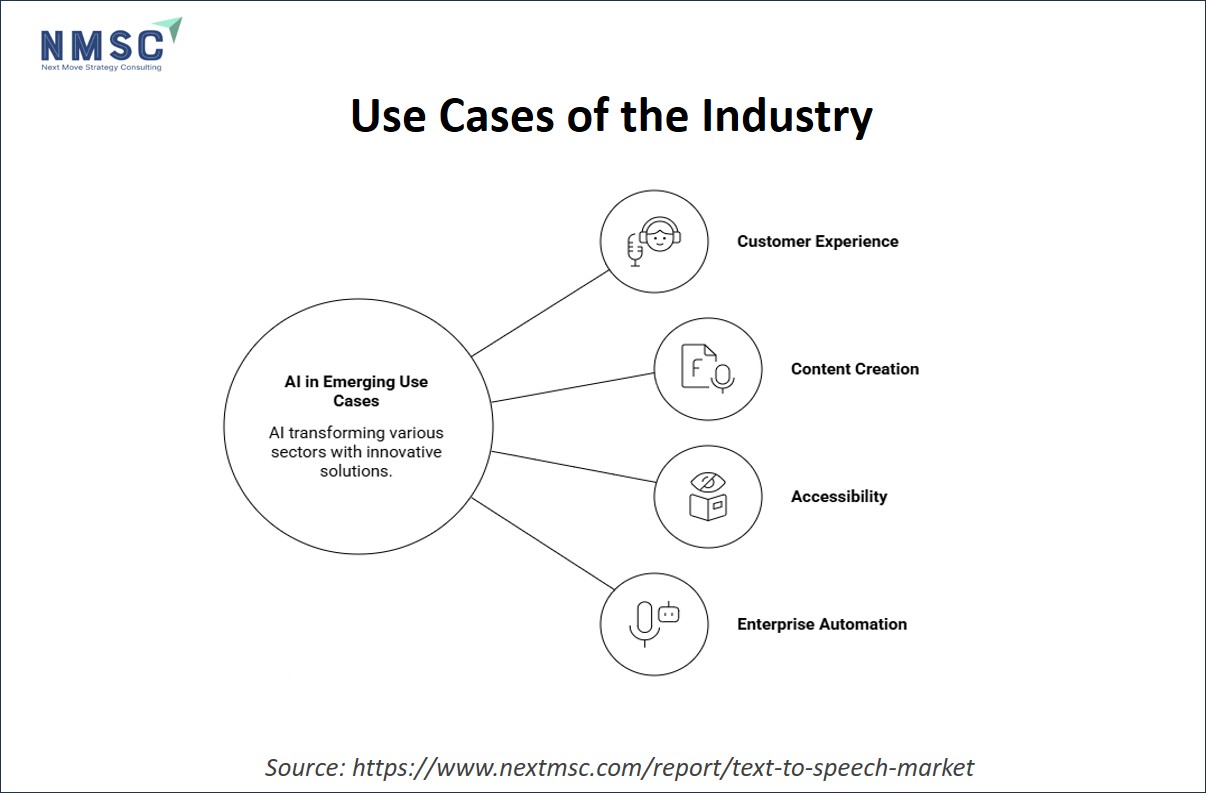
The improved capabilities of modern TTS models are unlocking new applications beyond traditional domains.
Emerging Use Cases
-
Customer Experience: AI-powered voice agents delivering human-like interactions
-
Content Creation: Automated narration for videos, podcasts, and audiobooks
-
Accessibility: Enhanced tools for visually impaired users
-
Enterprise Automation: Voice-enabled workflows and reporting systems
Application Ecosystem
Insights from Next Move Strategy Consulting indicates the diversification of use cases demonstrates that TTS is transitioning into a foundational AI capability. As voice becomes a primary interface, enterprises are expected to integrate TTS deeply into customer engagement and operational processes.
Key Players
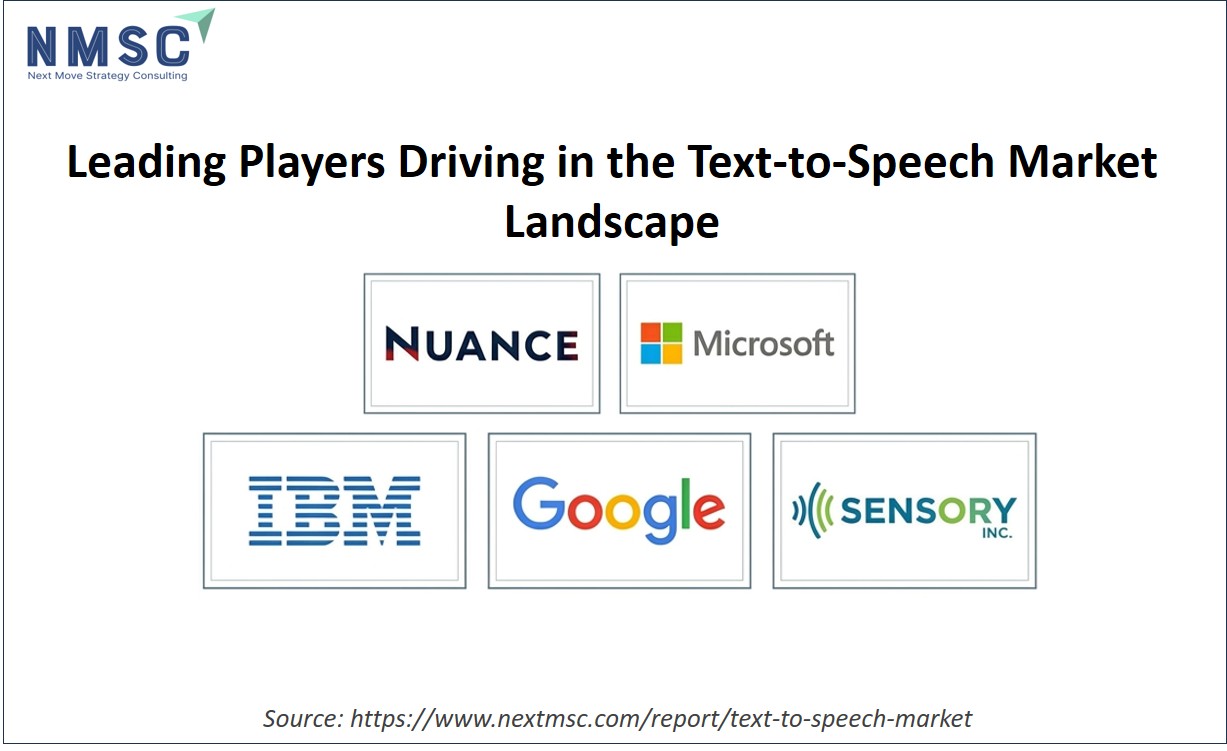
The text-to-speech (TTS) industry comprises various market key players such as Nuance Communication, Microsoft Corporation, IBM Corporation, Google, Inc., Sensory Inc., Amazon.Com, Readspeaker, LumenVox LLC, Acapela Group, CereProc, and others. These market players are adopting various strategies such as product launches to maintain their dominance in the global market.
Also, in January 2023, Microsoft launched the VALL-E, a novel text-to-speech model which replicate voice after just 3 seconds of audio. This technology leverages neural networks and end-to-end modeling to achieve high-quality personalized speech synthesis without additional engineering or fine-tuning.
Moreover, in January 2023, Amazon Polly, a text-to-speech service launched two new neural Text-to-Speech (NTTS) voices for US English namely Ruth, a female voice, and Stephen, a male voice. These new additions expand Amazon Polly's US English voice portfolio to 6 female and 4 male voices, providing customers with a wider range of voice options.
According to Next Move Strategy Consulting
The recent advancements in text-to-speech technology are expected to:
-
Accelerate adoption of voice-first interfaces across industries
-
Drive demand for low-latency AI infrastructure
-
Increase investment in speech AI innovation and startups
-
Strengthen competition between established players and emerging disruptors
These developments position TTS as a critical enabler in the broader artificial intelligence ecosystem.
Conclusion
Text-to-speech technology in 2025 is no longer limited to basic voice output. With innovations from companies like Mistral AI and Smallest AI, the focus has shifted toward realism, speed, and efficiency. As competition intensifies, the technology is set to become a cornerstone of digital interaction, enabling more natural and seamless communication between humans and machines.
Analysis from Next Move Strategy Consulting states, the trajectory of Text-to-Speech innovation indicates a convergence of performance, accessibility, and scalability. Organizations that strategically adopt advanced TTS solutions will gain a competitive edge in delivering personalized and efficient user experiences.
Next Steps for Businesses and Developers
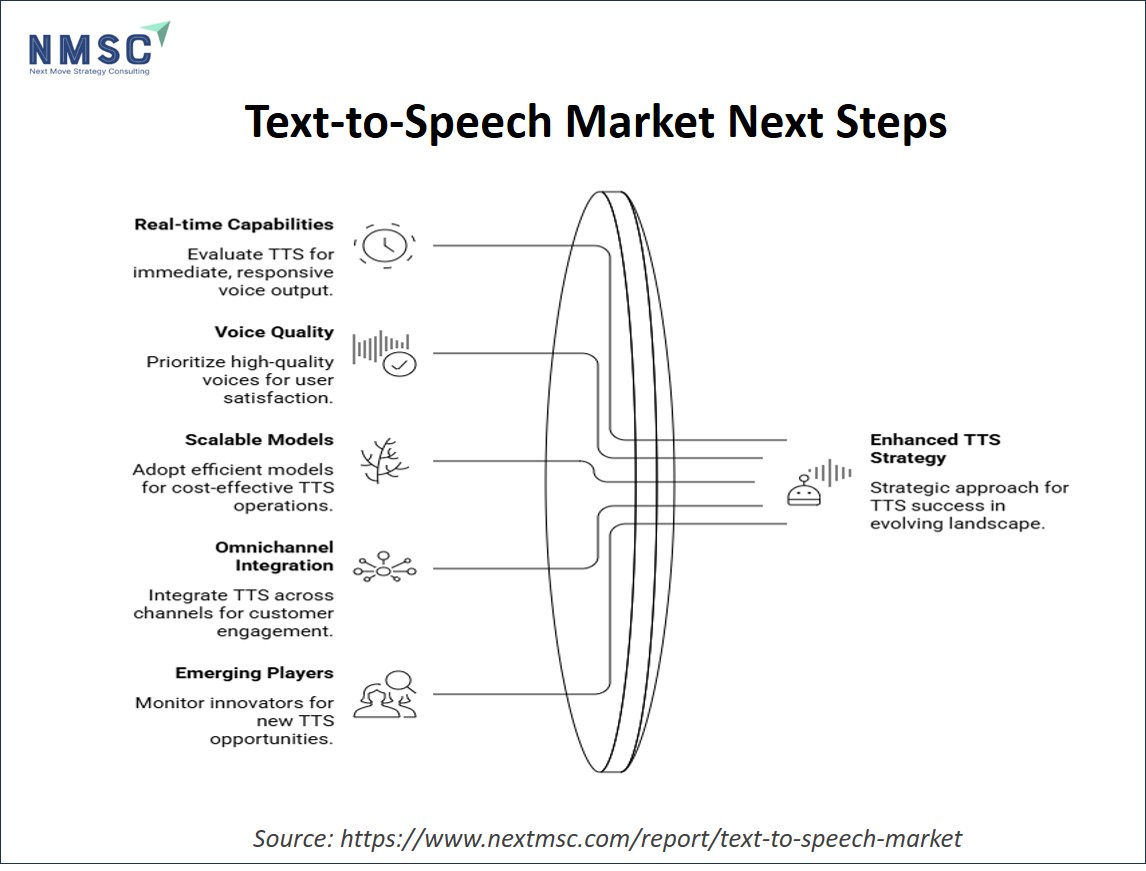
To stay ahead in the evolving TTS landscape, organizations should:
1. Evaluate real-time capabilities when selecting TTS solutions
2. Prioritize voice quality benchmarks for user-facing applications
3. Adopt scalable and efficient models to reduce operational costs
4. Integrate TTS into omnichannel strategies for better customer engagement
5. Monitor emerging players for innovation opportunities
About the Author
 Sanyukta Deb
— Sanyukta Deb is Digital Marketing Team Lead at Next Move Strategy Consulting, where she has led content strategy and technical SEO for the firm's B2B market research publications for over 2 years. Her editorial process translates NextMSC's primary and secondary research — spanning technology, industrial, and consumer sectors — into commercial narratives, backed by search-intent, keyword, and competitive analysis. She brings 5 years of overall experience in digital marketing and content strategy.
Sanyukta Deb
— Sanyukta Deb is Digital Marketing Team Lead at Next Move Strategy Consulting, where she has led content strategy and technical SEO for the firm's B2B market research publications for over 2 years. Her editorial process translates NextMSC's primary and secondary research — spanning technology, industrial, and consumer sectors — into commercial narratives, backed by search-intent, keyword, and competitive analysis. She brings 5 years of overall experience in digital marketing and content strategy.
About the Reviewer
 Debashree Dey
— Debashree Dey is Assistant Manager at Next Move Strategy Consulting, where she supports cross-vertical market content and communications across diverse industries for 6 years. Her professional background includes senior content writing, communications, and published manuscript authorship, with experience developing audience-focused business narratives and maintaining clear, consistent messaging. Her role supports research-led content development and editorial quality across NextMSC publications.
Debashree Dey
— Debashree Dey is Assistant Manager at Next Move Strategy Consulting, where she supports cross-vertical market content and communications across diverse industries for 6 years. Her professional background includes senior content writing, communications, and published manuscript authorship, with experience developing audience-focused business narratives and maintaining clear, consistent messaging. Her role supports research-led content development and editorial quality across NextMSC publications.


















Add Comment