The Digital Diamond: India’s Strategic Leap in the Semiconductor Market
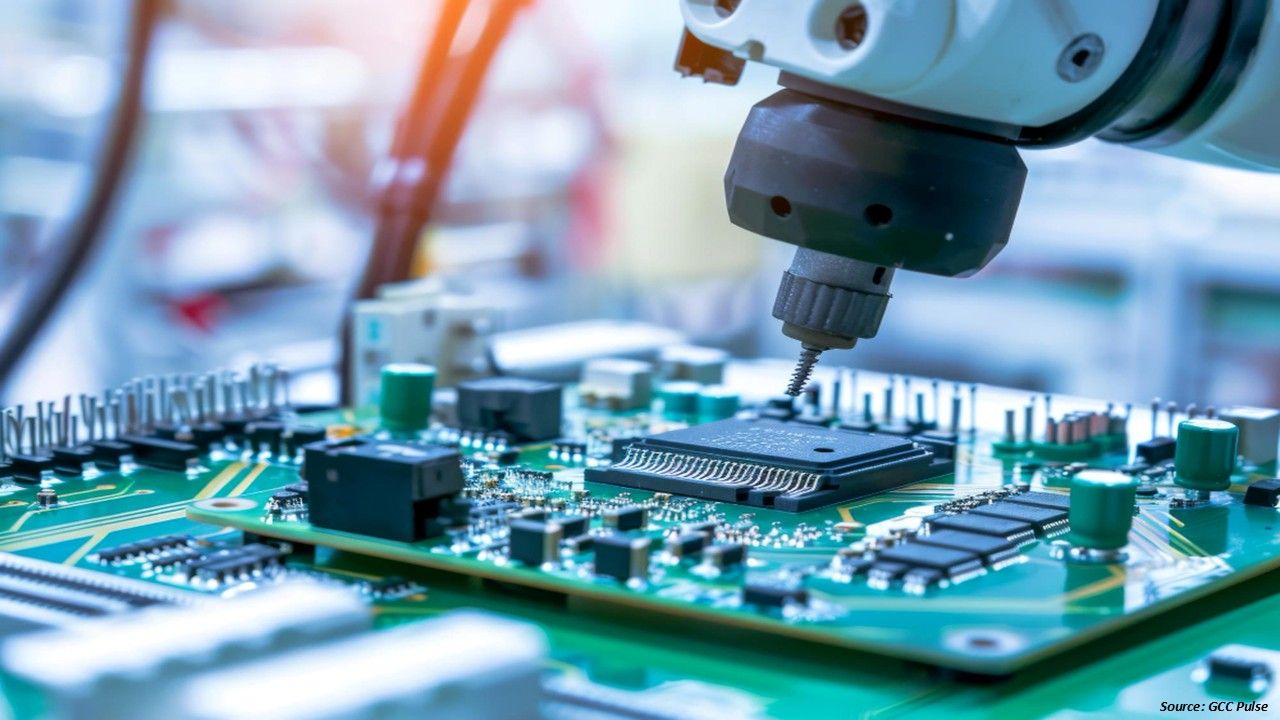
The global technology landscape is undergoing a massive shift, and India has positioned itself at the very center of this transformation. Often referred to as the "digital diamonds" of the 21st century, semiconductors have replaced oil as the primary driver of global progress. As we move through 2026, the Semiconductor Market is no longer just about supply chains; it is about national sovereignty and cutting-edge innovation.
India’s Milestone in the Global Semiconductor Market
In a historic achievement for the "Aatmanirbhar Bharat" (Self-Reliant India) initiative, India has officially become the seventh nation in the world to master Gallium Nitride (GaN) chip technology. This breakthrough, led by the Defence Research and Development Organisation (DRDO), marks a pivotal moment for the domestic Semiconductor Market.
Previously, access to this high-end technology was often restricted by export controls and strategic denials under international defense contracts. By developing these chips indigenously, India has eliminated its reliance on foreign technology transfers for its most critical defense and communication systems.
Transforming India into a Global Innovation Hub
The momentum in the Semiconductor Market is further bolstered by strong political leadership and global interest. During the SEMICON India 2025 summit, Prime Minister Narendra Modi engaged with top executives from global giants like ASML, Applied Materials, and Infineon. The consensus among these leaders is clear: India is rapidly emerging as a premier Innovation Hub for semiconductor design and manufacturing.
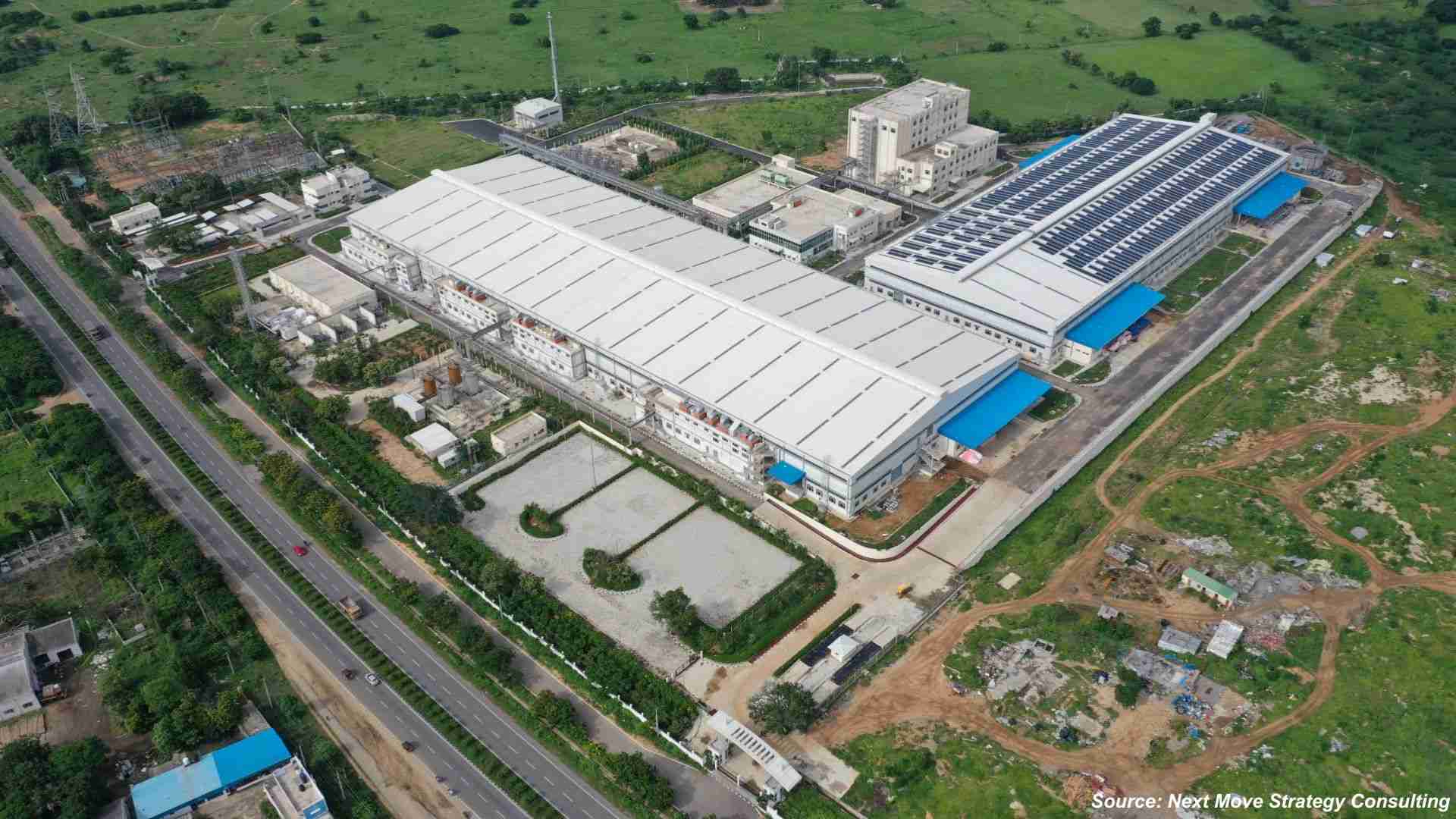
To support this growth, the Indian government has streamlined its processes to enable a "file to factory" transition. By using the National Single Window System, the government has reduced paperwork and provided plug-and-play infrastructure, including dedicated semiconductor parks. Currently, there are ten strategic projects underway with a total investment exceeding $18 billion (₹1.5 lakh crore).
Why Gallium Nitride is the Future of Power
In this analytical assessment, it is necessary to examine why Gallium Nitride (GaN) represents a generational leap over traditional silicon. Gallium Nitride is a compound semiconductor that combines gallium and nitrogen. This material possesses a "wide bandgap," which allows electronic devices to operate at significantly higher voltages and frequencies than their silicon-based counterparts.
The efficiency of GaN technology is particularly evident in high-stress environments. These chips can withstand temperatures up to 1,000 degrees Celsius, making them ideal for the rigorous demands of aerospace and electric vehicles (EVs). Furthermore, the ability to handle high-power density means that GaN-based systems are smaller, lighter, and more energy-efficient. As the global Semiconductor Market is projected to exceed $1 trillion in the coming years, GaN technology will be the cornerstone of 5G infrastructure and next-generation power electronics.
Comparison: Traditional Silicon vs. Gallium Nitride (GaN)
|
Feature |
Traditional Silicon |
Gallium Nitride (GaN) |
|
Bandgap Energy |
Low (1.1 eV) |
Wide (3.4 eV) |
|
Temperature Limit |
Lower tolerance |
Up to 1,000°C |
|
Efficiency |
Standard |
High (Lower energy loss) |
|
Common Uses |
General Computing |
5G, Radars, EVs, Space |
|
Size |
Standard |
Significantly more compact |
Leading Players of the Industry
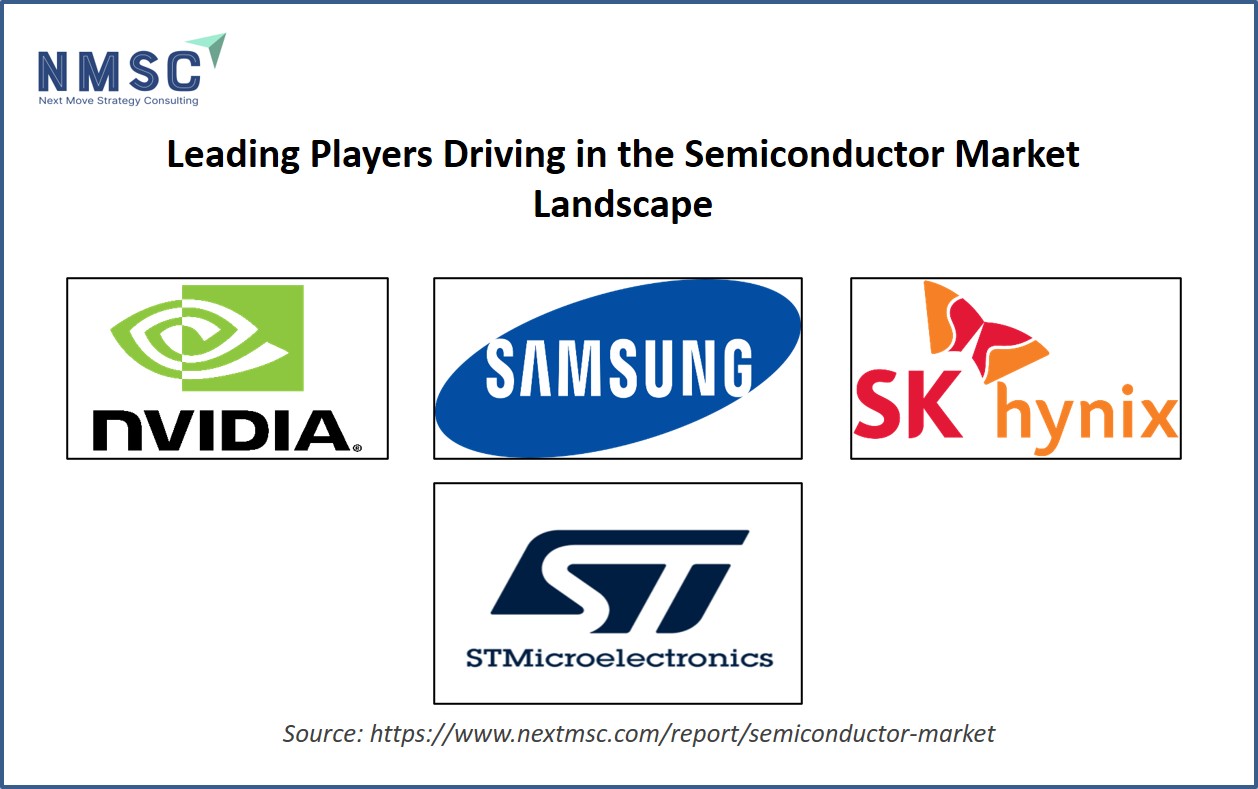
The semiconductor market trends comprise various key players such as NVIDIA Corporation, Taiwan Semiconductor Manufacturing Company, Intel Corporation, Samsung Electronics Co., Ltd., Broadcom Inc., Qualcomm Incorporated, Advanced Micro Devices, Inc., SK Hynix Inc., Texas Instruments Incorporated, Infineon Technologies AG, STMicroelectronics N.V., Micron Technology, Inc., MediaTek Inc., NXP Semiconductors N.V., and Renesas Electronics Corporation. These companies continue to drive market growth through innovation in AI chips, advanced manufacturing processes, automotive electronics, and memory technologies, strengthening global supply chains and technological capabilities.
For instance, in February 2024, Taiwan Semiconductor Manufacturing Company held the opening ceremony for its new Japanese foundry in Kumamoto, supporting 12 nm, 16 nm, 22 nm, and 28 nm processes, with volume production scheduled for Q4 2024. Moreover, in March 2025, NVIDIA announced the upcoming Blackwell Ultra AI processor expected to launch in H2 2025, along with the next-generation Vera Rubin architecture planned for H2 2026, with the ultra-Rubin variant projected for release in 2027.
NMSC Viewpoint: Is the Ecosystem Approach the Future?
At Next Move Strategy Consulting (NMSC), we observe that the Semiconductor Market is undergoing a fundamental structural shift from a service-oriented model to an indigenous manufacturing powerhouse. The mastery of Gallium Nitride technology represents more than a scientific achievement; it serves as a strategic "moat" that protects national security interests while creating a high-value export vertical.
The $18 billion investment currently flowing into ten distinct projects signifies a global "vote of confidence" in India's regulatory stability and technical talent. We conclude that the convergence of indigenous research (DRDO) and global capital (SEMICON India) is creating a "Full-Stack Ecosystem." This approach ensures that India does not just participate in the global supply chain but actively defines the standards for next-generation power electronics and communication infrastructure.
Next Steps for Stakeholders
As India cements its position in the global Semiconductor Market, businesses and investors should consider the following actions:
-
Collaborate with Research Institutions: Partner with indigenous labs like the DRDO's Solid State Physics Laboratory to leverage domestic GaN breakthroughs.
-
Invest in Skilling: Align corporate training programs with the government’s focus on semiconductor design and fabrication to secure a future-ready workforce.
-
Leverage Plug-and-Play Infrastructure: Utilize the National Single Window System to explore investment opportunities in the newly established semiconductor parks.
-
Monitor Aatmanirbhar Incentives: Stay updated on Production Linked Incentive (PLI) schemes and Design Linked Grants that provide financial support for domestic manufacturing.
India is no longer just a participant in the tech race; it is setting the pace. By mastering the "digital diamonds" of tomorrow, the nation is ensuring its place as a global leader in the 21st-century economy.
About the Author
 Sanyukta Deb
— Sanyukta Deb is Digital Marketing Team Lead at Next Move Strategy Consulting, where she has led content strategy and technical SEO for the firm's B2B market research publications for over 2 years. Her editorial process translates NextMSC's primary and secondary research — spanning technology, industrial, and consumer sectors — into commercial narratives, backed by search-intent, keyword, and competitive analysis. She brings 5 years of overall experience in digital marketing and content strategy.
Sanyukta Deb
— Sanyukta Deb is Digital Marketing Team Lead at Next Move Strategy Consulting, where she has led content strategy and technical SEO for the firm's B2B market research publications for over 2 years. Her editorial process translates NextMSC's primary and secondary research — spanning technology, industrial, and consumer sectors — into commercial narratives, backed by search-intent, keyword, and competitive analysis. She brings 5 years of overall experience in digital marketing and content strategy.
About the Reviewer
 Debashree Dey
— Debashree Dey is Assistant Manager at Next Move Strategy Consulting, where she supports cross-vertical market content and communications across diverse industries for 6 years. Her professional background includes senior content writing, communications, and published manuscript authorship, with experience developing audience-focused business narratives and maintaining clear, consistent messaging. Her role supports research-led content development and editorial quality across NextMSC publications.
Debashree Dey
— Debashree Dey is Assistant Manager at Next Move Strategy Consulting, where she supports cross-vertical market content and communications across diverse industries for 6 years. Her professional background includes senior content writing, communications, and published manuscript authorship, with experience developing audience-focused business narratives and maintaining clear, consistent messaging. Her role supports research-led content development and editorial quality across NextMSC publications.

















Add Comment