What Is Infrared Detector Technology and Why It Matters in 2026?
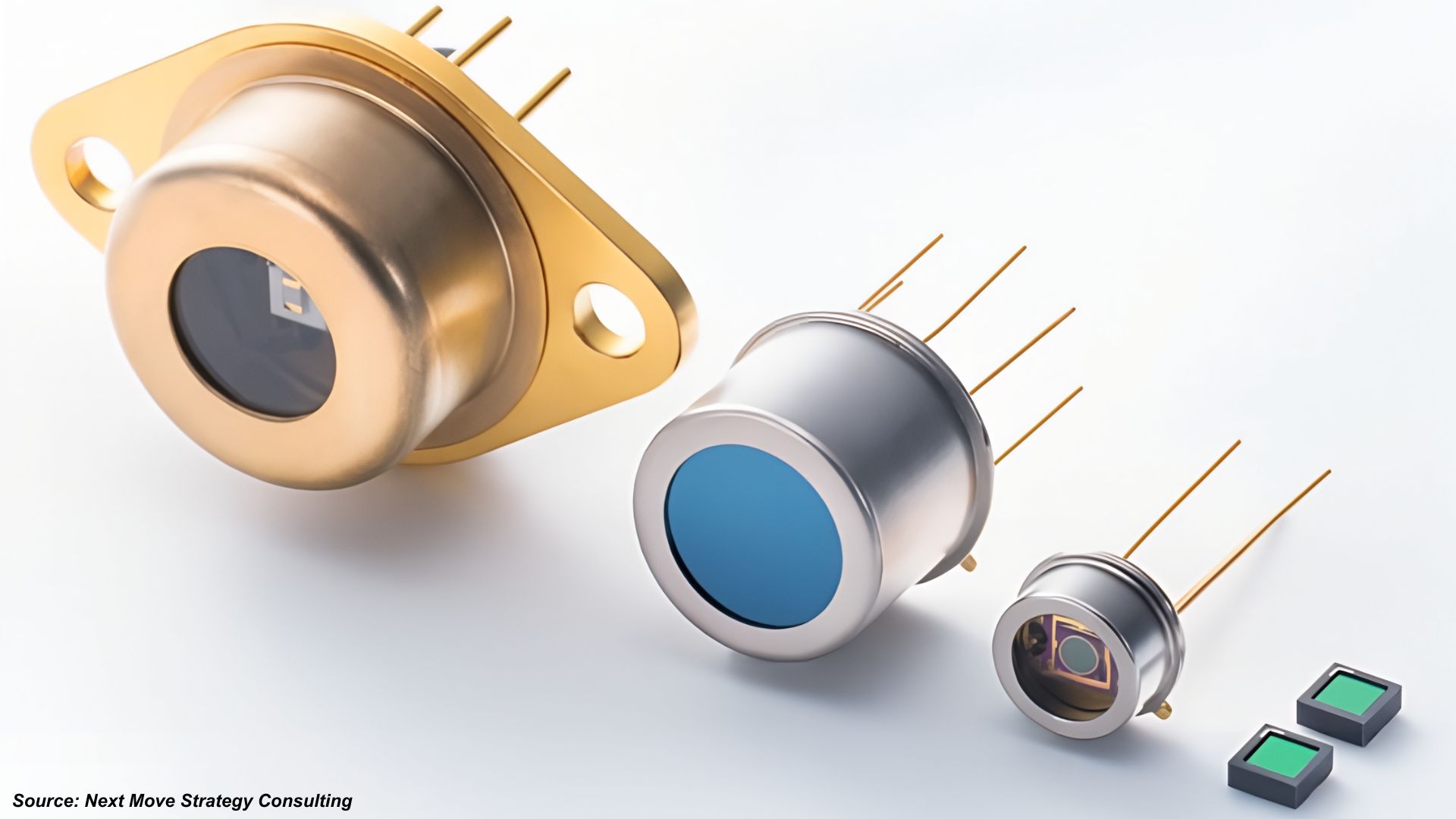
An infrared detector is a sensing device that identifies and measures infrared radiation — typically emitted as heat — from objects, environments, or targets. These detectors operate across mid-wave infrared (MWIR) and long-wave infrared (LWIR) spectral bands and are available in cooled configurations, such as liquid nitrogen (LN₂)-cooled variants, and uncooled formats suited to different operational environments.
The Infrared Detector Market is rapidly gaining strategic importance across defense, photonics, and aerospace industries — driven by the growing demand for advanced thermal and passive sensing capabilities.
Recent developments involving VIGO Photonics and discussions surrounding infrared detection in modern warfare have shifted industry attention toward how these systems can influence operational efficiency, aerospace defense, and high-performance sensing applications. What was once considered a niche sensing technology is now increasingly viewed as a critical infrastructure component for military and industrial systems.
For investors, procurement leaders, and corporate strategists, infrared detector adoption is no longer only about thermal imaging performance. It is also about supply chain localization, manufacturing resilience, and technological competitiveness in a rapidly changing global environment.
Infrared detector technologies are reshaping key industries in 2026:
-
Defense surveillance systems — enabling passive heat-signature detection independent of traditional radar infrastructure
-
Aerospace sensing infrastructure — supporting thermal monitoring of aircraft and missile guidance systems
-
Semiconductor-based photonics manufacturing — driving demand for cooled and uncooled detector components at scale
-
Industrial monitoring applications — including environmental sensing, medical diagnostics, and process control
How Is Infrared Detector Technology Reshaping Defense and Photonics?
One of the most significant industry developments in 2026 is the USD 8.4 million acquisition of InfraRed Associates by VIGO Photonics S.A., a Polish semiconductor materials manufacturer, announced on March 27, 2026. According to AZoM, this acquisition strengthens VIGO’s manufacturing footprint in the United States while improving its ability to serve defense and advanced photonics sectors.
InfraRed Associates, headquartered in Stuart, Florida, has operated in the semiconductor and infrared detector industry since the 1970s and is known for its LN2-cooled detector technologies. The acquisition provides VIGO with local manufacturing capabilities in a region recognized as a major photonics and defense hub, while expanding its service reach to customers across defense, industrial, medical, and scientific markets — supported in part by the Foreign Expansion Fund managed by PFR TFI S.A., part of the Polish Development Fund Group.
This development reflects a broader industry transition in which infrared detector companies are prioritizing regional production capabilities to improve operational responsiveness and align with government and industrial procurement requirements. Local manufacturing also helps companies reduce supply chain vulnerabilities while improving customer support capabilities in North America.
According to VIGO Photonics CEO Adam Piotrowski, the integration of both organizations' engineering, production, and research capabilities is expected to strengthen "resilience and sustainability" and deliver "flexibility and stability amid evolving global challenges" — reflecting a broader strategy of combining manufacturing expansion with research integration to remain competitive in high-tech sensing markets. This approach highlights how companies are increasingly combining manufacturing expansion with research integration to remain competitive in high-tech sensing markets.
Precision Infrared Spectroscopy and Optical Interferometry System
This image illustrates a precision infrared (IR) sensing system based on a Michelson interferometer. A broadband IR source is split into two light paths by a beamsplitter and reflected by fixed and movable mirrors. The recombined light passes through a sample and reaches an IR detector, which captures the interference signal. By analyzing this signal, the system can accurately identify chemical compositions and material properties. Such optical sensing technology is widely used in spectroscopy, environmental monitoring, medical diagnostics, and industrial analysis.

How Is Infrared Detection Influencing Modern Warfare?
Infrared detection technology gained significant attention after Global Times, a state-affiliated Chinese media outlet, reported that Iran may have used infrared-based detection systems during a claimed engagement involving an F-35 Lightning II stealth fighter. It is important to note that the United States government has not confirmed this incident, and several Western defense analysts have suggested that available evidence may be more consistent with an F-15 aircraft rather than a fifth-generation stealth platform.
Although the incident remains unconfirmed by US authorities and is disputed by Western defense analysts, the report highlighted how infrared sensing systems could become increasingly relevant in environments where traditional radar infrastructure faces operational limitations. Wang Yanan, editor-in-chief of Beijing-based Aerospace Knowledge magazine, explained that stealth aircraft are primarily designed to minimize radar visibility, but their infrared heat signatures cannot be fully eliminated.
The analysis suggested that infrared detection systems may provide tactical advantages in situations where large radar systems are vulnerable to suppression or mobility limitations. Unlike traditional radar infrastructure, infrared-guided systems can operate with smaller, mobile deployment structures that are more difficult to locate and target.
The report also emphasized that infrared-guided defense systems are particularly effective at lower altitudes and close operational ranges. According to the analysis, aircraft operating at reduced altitude for tactical strike efficiency may become more exposed to infrared-guided missile systems.
This development is important because it suggests that future defense strategies may rely increasingly on combined sensing architectures rather than radar-only systems. It also introduces additional operational pressure on stealth aircraft deployment strategies.
Strategic Impact Areas of Infrared Detector Technology (2026)
The pie chart shows that defense and surveillance applications dominate the infrared detector industry with a 40% share, driven by growing demand for advanced sensing and stealth detection systems. Photonics and semiconductor applications account for 25%, reflecting increasing investment in detector innovation and manufacturing expansion. Aerospace applications contribute 20% due to rising demand for thermal sensing and aircraft monitoring technologies, while manufacturing and supply chain activities represent 15%, highlighting the importance of localized production and operational resilience.

Competitive Landscape of the Infrared Detector Industry
The infrared detector industry is led by companies including FLIR Systems (a leader in uncooled thermal imaging for defense and commercial markets), Raytheon (a primary supplier of cooled infrared focal plane arrays for US military platforms), Hamamatsu Photonics (specializing in high-sensitivity InGaAs and MCT detectors for scientific and industrial applications), Excelitas Technologies (serving aerospace and medical sensing sectors), and Sofradir (a European manufacturer of cooled infrared detectors for defense and space systems), among others including Texas Instruments, Honeywell International, Omron Corporation, Murata Manufacturing, and Nippon Avionics. These organizations are differentiating through cooled versus uncooled detector architectures, regional manufacturing investment, defense procurement partnerships, and the integration of advanced focal plane array (FPA) technologies to strengthen their competitive positioning in a rapidly evolving market. Ongoing industry developments and strategic initiatives are expected to further support the growth of the infrared detector market in the coming years.

Future Outlook
The infrared detector industry is positioned for sustained strategic growth, with the global infrared detector market projected to expand significantly through 2030, driven by increased defense modernization budgets, growing adoption of cooled MWIR and LWIR detector systems, and accelerating investment in semiconductor photonics manufacturing across North America, Europe, and the Indo-Pacific region. The growing emphasis on supply chain resilience, localized semiconductor production, and defense modernization is likely to strengthen long-term industry relevance.
The increasing discussion around potential infrared-based counters to stealth aircraft — while still debated among defense analysts — suggests that infrared detection technologies, including passive infrared search and track (IRST) systems and infrared-guided missile seekers, may receive greater research and procurement attention in the coming years. Companies capable of combining advanced detector engineering with scalable manufacturing infrastructure could become more influential within the global sensing ecosystem.
At the same time, operational challenges such as environmental sensitivity, evolving stealth technologies, and integration complexity will continue shaping product development priorities.
Next Steps
Organizations evaluating infrared detector opportunities should closely monitor defense procurement trends, semiconductor integration capabilities, and regional manufacturing expansion strategies. Decision-makers may also benefit from assessing partnerships that strengthen localized production and advanced sensing development.
-
Monitor defense procurement trends involving infrared surveillance technologies
-
Evaluate suppliers with localized manufacturing and semiconductor integration capabilities
-
Strengthen partnerships in photonics and advanced sensing technologies
-
Assess the impact of geopolitical developments on infrared detector demand
-
Prioritize operational resilience when selecting sensing technology providers
Conclusion
As the events of 2026 demonstrate — from VIGO Photonics' strategic acquisition of InfraRed Associates to intensifying global debate over infrared-based stealth countermeasures — infrared detector technology has moved decisively from niche sensing instrument to front-line strategic asset in defense, aerospace, and photonics infrastructure. Developments involving VIGO Photonics and growing attention toward infrared-based surveillance systems demonstrate how the industry is moving beyond traditional thermal imaging applications.
As governments and industrial organizations seek more resilient sensing capabilities, infrared detector innovation is expected to remain central to future surveillance, semiconductor, and aerospace strategies. Companies that combine advanced engineering with scalable manufacturing and regional operational capabilities may be better positioned to compete in this increasingly strategic market.
About the Author
 Sanyukta Deb
— Sanyukta Deb is Digital Marketing Team Lead at Next Move Strategy Consulting, where she has led content strategy and technical SEO for the firm's B2B market research publications for over 2 years. Her editorial process translates NextMSC's primary and secondary research — spanning technology, industrial, and consumer sectors — into commercial narratives, backed by search-intent, keyword, and competitive analysis. She brings 5 years of overall experience in digital marketing and content strategy.
Sanyukta Deb
— Sanyukta Deb is Digital Marketing Team Lead at Next Move Strategy Consulting, where she has led content strategy and technical SEO for the firm's B2B market research publications for over 2 years. Her editorial process translates NextMSC's primary and secondary research — spanning technology, industrial, and consumer sectors — into commercial narratives, backed by search-intent, keyword, and competitive analysis. She brings 5 years of overall experience in digital marketing and content strategy.
About the Reviewer
 Debashree Dey
— Debashree Dey is Assistant Manager at Next Move Strategy Consulting, where she supports cross-vertical market content and communications across diverse industries for 6 years. Her professional background includes senior content writing, communications, and published manuscript authorship, with experience developing audience-focused business narratives and maintaining clear, consistent messaging. Her role supports research-led content development and editorial quality across NextMSC publications.
Debashree Dey
— Debashree Dey is Assistant Manager at Next Move Strategy Consulting, where she supports cross-vertical market content and communications across diverse industries for 6 years. Her professional background includes senior content writing, communications, and published manuscript authorship, with experience developing audience-focused business narratives and maintaining clear, consistent messaging. Her role supports research-led content development and editorial quality across NextMSC publications.















Add Comment