How Is Silicon Photonics Reshaping High-Speed Computing?
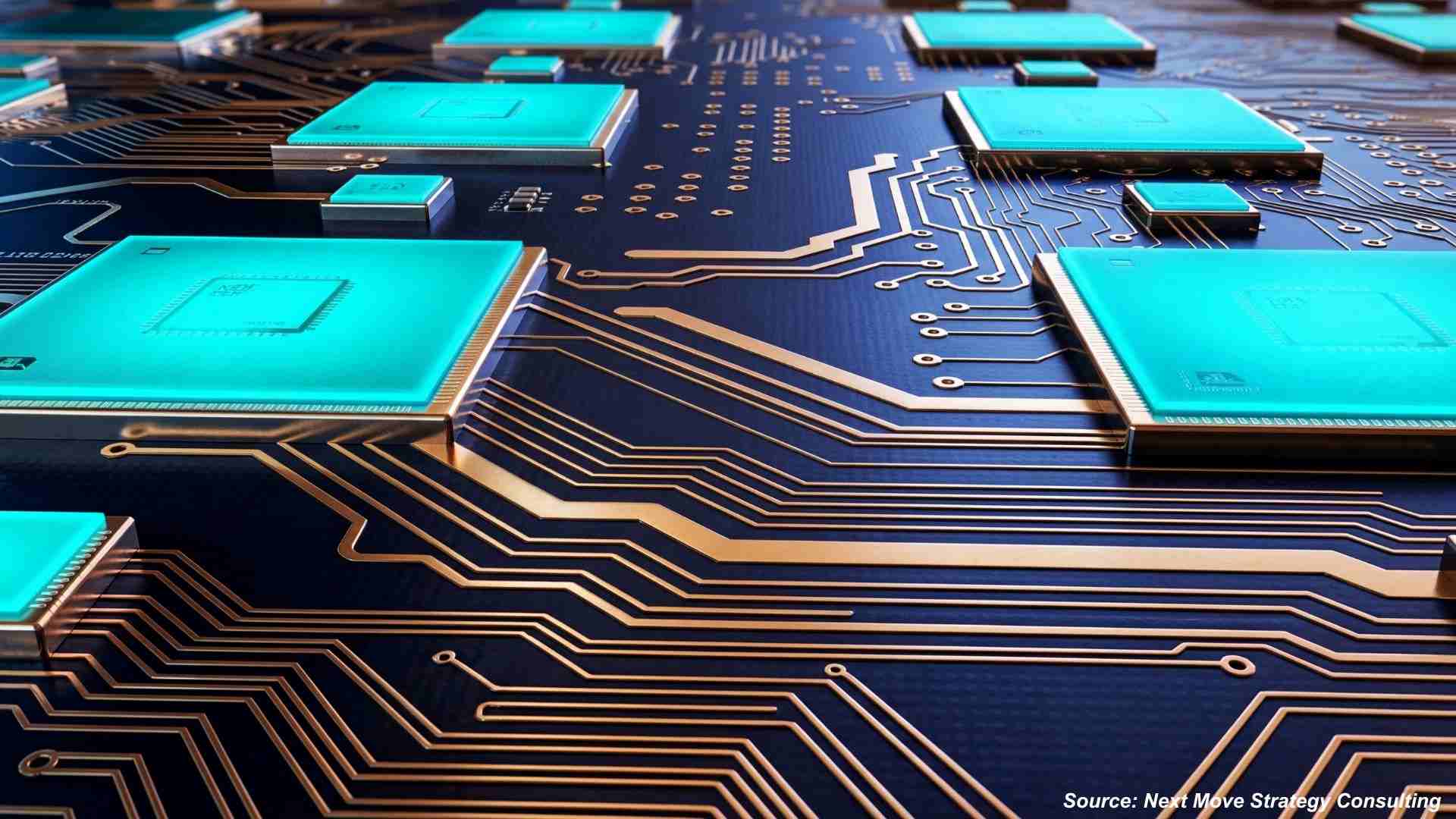
Artificial intelligence infrastructure is evolving at an unprecedented pace, and conventional semiconductor communication systems are beginning to face performance limitations. As AI models become larger and data center workloads intensify, the Silicon Photonics Market is gaining significant attention as the industry increasingly turns toward silicon photonics to improve bandwidth, speed, and energy efficiency.
Silicon photonics combines optical communication with semiconductor manufacturing, allowing data to move through light rather than traditional electrical signals. This transition is becoming increasingly important for AI data centers that require faster chip-to-chip communication and reduced power consumption.
Recent developments from OpenLight and GlobalFoundries highlight how the technology is moving beyond research-focused innovation toward large-scale commercial adoption.
Major Trends Shaping the Present
Why Is Silicon Photonics Becoming Important for AI Infrastructure?
AI data centers process enormous amounts of information simultaneously. Traditional copper interconnects are now encountering bandwidth and efficiency limitations, especially beyond 200G per lane. Optical connectivity offers a more scalable alternative because light-based communication can transmit larger volumes of data with lower energy consumption.
This growing demand for optical networking is encouraging semiconductor companies to invest heavily in photonics platforms, integrated optical chips, and advanced manufacturing ecosystems.
According to the 2026 update involving GlobalFoundries, the company is positioning silicon photonics as a critical component for AI-oriented optical interconnects. The collaboration with Flexcompute focuses on connecting photonic simulation tools directly with manufacturing workflows in order to reduce development complexity and improve scalability.
The integration between simulation and fabrication could significantly shorten design cycles for cloud and networking companies building AI infrastructure. This is particularly relevant because modern AI clusters require extremely fast communication between processors, memory systems, and networking hardware.

Silicon Photonics Architecture
This 3D architectural diagram illustrates a Silicon Photonics Integrated Circuit (PIC), a technology central to the 2026 push by companies like OpenLight and GlobalFoundries to revolutionize AI data centers. The chip functions by integrating both optical and electrical components on a single substrate: light enters or exits through Edge and Grating Couplers, travels along precisely etched SiN and Silicon Waveguides, and is manipulated by Metal-based Heaters and Germanium (Ge) detectors. By layering electrical Bond Pads and connectors directly over the optical path, this architecture allows for the high-speed, low-latency data transmission required for modern AI clusters, effectively replacing traditional copper wiring with energy-efficient light signals.

How Is OpenLight Accelerating Photonics Innovation?
In April 2026, OpenLight announced that it secured $50 million in Series A-1 funding, increasing the company’s total funding to $84 million. The investment reflects growing commercial interest in integrated photonics technologies across AI infrastructure, sensing, telecommunications, and quantum computing applications.
The company stated that the funding will support the expansion of its photonics process design kit (PDK), which combines indium phosphide and silicon photonics technologies into a single integrated platform. This approach enables customers to build production-ready Photonic Application-Specific Integrated Circuits (PASICs) with integrated lasers, modulators, amplifiers, and detectors.
OpenLight also revealed that more than 25 companies are currently using its PDK for photonic chip development. The company plans to accelerate the development of advanced technologies such as 400G modulators and standards-based photonic integrated circuits operating at 1.6T and 3.2T speeds.
The growing adoption of these integrated optical systems demonstrates how semiconductor and networking companies are preparing for future AI connectivity demands. By integrating multiple optical functions onto a single chip, companies can potentially improve efficiency while reducing overall design complexity.

What Challenges Could Influence Future Growth?
Although silicon photonics is attracting strong commercial interest, the industry still faces several technical and operational challenges. Manufacturing optical and electronic components on a single platform requires advanced fabrication expertise and significant long-term investment.
Competition is also intensifying as companies such as TSMC, Intel, and Samsung Electronics continue expanding their own photonics ecosystems.
Another important factor is the pace of AI infrastructure deployment. If optical networking demand grows more slowly than expected, large investments in photonics manufacturing could create financial pressure for semiconductor companies expanding capacity.
Despite these concerns, industry developments suggest that optical communication technologies are becoming increasingly important for next-generation computing systems.
Inside a Silicon Photonics Transceiver: Data at the Speed of Light
This infographic illustrates the functional workflow of a Silicon Photonics Engine, the core technology driving the massive investments seen in 2026 by players like OpenLight and GlobalFoundries. The process begins with an on-chip Laser providing a constant light source, which is then encoded with information by a Modulator that converts electrical data into optical pulses (E-to-O conversion). These signals pass through Filters for multiplexing (combining multiple wavelengths) before exiting the chip via a Fiber Coupler into external fiber optic networks. Conversely, incoming optical data is captured and sent to a Detector, which performs O-to-E conversion to return the signal to electrical bits. By integrating these complex optical functions onto a single silicon CMOS chip, manufacturers can achieve the extreme bandwidth and energy efficiency required to power the next generation of AI-driven data centers.

Leading Companies Advancing Silicon Photonics Innovation
The silicon photonics industry is supported by several major technology and semiconductor companies that are actively contributing to optical communication advancements, high-speed networking solutions, and AI-driven infrastructure development. Key participants in the sector include Intel Corporation, Cisco Systems, GlobalFoundries, MACOM Technology Solutions, NeoPhotonics, Coherent Corp., IBM Corporation, InPhi Corporation, Rockley Photonics, STMicroelectronics, Juniper Networks, Broadcom Inc., Molex LLC, Marvell Technology, and Acacia Communications. These organizations continue to focus on optical interconnect technologies, integrated photonic circuits, and high-bandwidth communication.

What Could Come Next for Silicon Photonics?
The rapid expansion of AI computing is reshaping priorities across the semiconductor industry. Silicon photonics is increasingly viewed as a foundational technology capable of improving speed, efficiency, and scalability in modern data centers.
The developments announced by OpenLight and GlobalFoundries indicate that the industry is moving toward broader commercial deployment of optical interconnect technologies. As companies continue investing in integrated photonics platforms, the role of light-based communication within computing infrastructure is expected to expand significantly.
Organizations involved in AI networking, semiconductor manufacturing, and cloud infrastructure may increasingly focus on optical integration strategies to support future performance requirements.
Next Steps
Companies exploring AI infrastructure development should closely monitor advancements in photonic integrated circuits and optical interconnect technologies. Semiconductor manufacturers may also benefit from strengthening partnerships between simulation software and fabrication ecosystems to reduce development timelines and improve scalability.
-
Evaluate silicon photonics integration for AI data centers and high-performance networking systems
-
Invest in optical interconnect technologies to improve bandwidth and energy efficiency
-
Strengthen partnerships between semiconductor manufacturers and photonic simulation platforms
-
Monitor advancements in photonic integrated circuits operating at 1.6T and 3.2T speeds
-
Track industry developments from companies such as OpenLight and GlobalFoundries to understand future commercialization trends
Final Summary
Silicon photonics is becoming an important part of the future semiconductor ecosystem, particularly in AI-driven environments where speed, bandwidth, and energy efficiency are critical. Recent investments and collaborations suggest that the technology is entering a more commercially mature phase with growing relevance across high-performance computing applications.
About the Author
 Tania Dey
— Tania Dey is a content writer specializing in transformation-led, insight-driven storytelling. She develops research-backed, high-impact content aligned with evolving business priorities, digital behavior, and audience expectations. Her work helps organizations sharpen value propositions, strengthen visibility, and communicate strategic intent with clarity and precision. Grounded in data-informed storytelling, she brings a strong focus on relevance, consistency, and measurable digital impact across platforms.
Tania Dey
— Tania Dey is a content writer specializing in transformation-led, insight-driven storytelling. She develops research-backed, high-impact content aligned with evolving business priorities, digital behavior, and audience expectations. Her work helps organizations sharpen value propositions, strengthen visibility, and communicate strategic intent with clarity and precision. Grounded in data-informed storytelling, she brings a strong focus on relevance, consistency, and measurable digital impact across platforms.
About the Reviewer
 Debashree Dey
— Debashree Dey is Assistant Manager at Next Move Strategy Consulting, where she supports cross-vertical market content and communications across diverse industries for 6 years. Her professional background includes senior content writing, communications, and published manuscript authorship, with experience developing audience-focused business narratives and maintaining clear, consistent messaging. Her role supports research-led content development and editorial quality across NextMSC publications.
Debashree Dey
— Debashree Dey is Assistant Manager at Next Move Strategy Consulting, where she supports cross-vertical market content and communications across diverse industries for 6 years. Her professional background includes senior content writing, communications, and published manuscript authorship, with experience developing audience-focused business narratives and maintaining clear, consistent messaging. Her role supports research-led content development and editorial quality across NextMSC publications.















Add Comment