What’s Driving the Animal Health Market? Top Manufacturers in 2024-2025
Introduction
The global animal health market stands at a strategic inflection point — shaped by converging pressures from zoonotic disease escalation, antimicrobial resistance, record-breaking industry consolidation, and a growing institutional recognition that animal health is inseparable from human health and food security. According to Next Move Strategy Consulting's Animal Health Market report, the global animal health market is projected to reach USD 80.12 billion by 2030, growing at a CAGR of 7.0% from 2024 to 2030.
This trajectory is not driven by abstract demand curves. It is being shaped by a specific and urgent set of forces: more than 2,000 avian influenza outbreaks recorded across 64 countries between 2025 and early 2026, a USD 3.5 billion veterinary distribution merger that is redrawing the competitive map, new FDA drug approvals expanding the therapeutic pipeline, and a landmark WOAH report that frames underinvestment in animal health as a systemic global risk. For C-level executives, institutional investors, and strategic decision-makers, understanding these forces is not optional — it is the foundation of any credible market position in this sector.
For More Information: Download FREE Sample on Animal Health Market Report
Disease Pressure, Consolidation, and the New Architecture of Animal Health
The WOAH 2026 Report: A Systemic Risk Alarm That Reframes the Market
In May 2026, the World Organisation for Animal Health (WOAH) published the second edition of The State of the World's Animal Health, and its findings constitute the most consequential institutional signal the sector has received in years. The report documents that more than 20% of global animal production is lost to preventable disease every year, and that 75% of emerging human infectious diseases originate in animals — a figure that directly links veterinary investment to pandemic preparedness.
The report's most striking finding is the investment gap: bringing Veterinary Services worldwide up to international standards would cost approximately USD 2.3 billion per year — less than 0.05% of what COVID-19 cost the global economy in a single year. Yet less than USD 1 billion in development aid currently reaches Veterinary Services and zoonotic disease prevention annually, representing less than 2.5% of an already shrinking global health aid budget.
The disease data underpinning this alarm is concrete. Between January 2025 and March 2026, WOAH's World Animal Health Information System (WAHIS) recorded:
-
2,121 avian influenza outbreaks across 64 countries and territories, resulting in 140 million animals lost (dead or culled)
-
19,034 foot and mouth disease (FMD) outbreaks across 64 countries, with FMD Serotype SAT 1 appearing for the first time in Azerbaijan, Cyprus, Egypt, Greece, Iraq, Israel, Kuwait, and Palestinian Autonomous Territories
-
15,759 African swine fever outbreaks across 64 countries, with significant long-distance disease jumps recorded in Chinese Taipei (628 km), Spain (599 km), and Mongolia (428 km)
-
Lumpy skin disease reaching Western Europe — specifically France, Italy, and Spain — for the first time in recorded history
-
New World screwworm continuing its northward progression across Central America, with new sterile-fly production facilities established in Mexico to counter the spread
Each of these disease events directly expands the addressable market for vaccines, diagnostics, pharmaceuticals, and biosecurity products. When avian influenza forces the culling of 140 million animals across 64 countries, it simultaneously creates demand for replacement stock vaccination, diagnostic testing, and surveillance infrastructure — demand that flows directly into the commercial animal health market.
The USD 3.5 Billion Covetrus–MWI Merger: Distribution Consolidation at Scale
The most structurally significant commercial event in the animal health market in 2026 is the announced merger between Covetrus and MWI Animal Health, a subsidiary of Cencora. Announced in February 2026, the USD 3.5 billion transaction will create one of the largest veterinary distribution and technology platforms in the world, with approximately 30,000 employees and operations spanning multiple continents.
The strategic logic of this merger is specific: by combining Covetrus's veterinary practice management software and pharmacy platform with MWI's distribution network and manufacturer relationships, the combined entity aims to reduce procurement costs for independent veterinary practices while creating a single integrated channel through which pharmaceutical manufacturers can reach the point of care. This consolidation compresses the distribution layer, which has direct implications for pricing power, manufacturer margins, and the speed at which new products reach veterinary clinics.
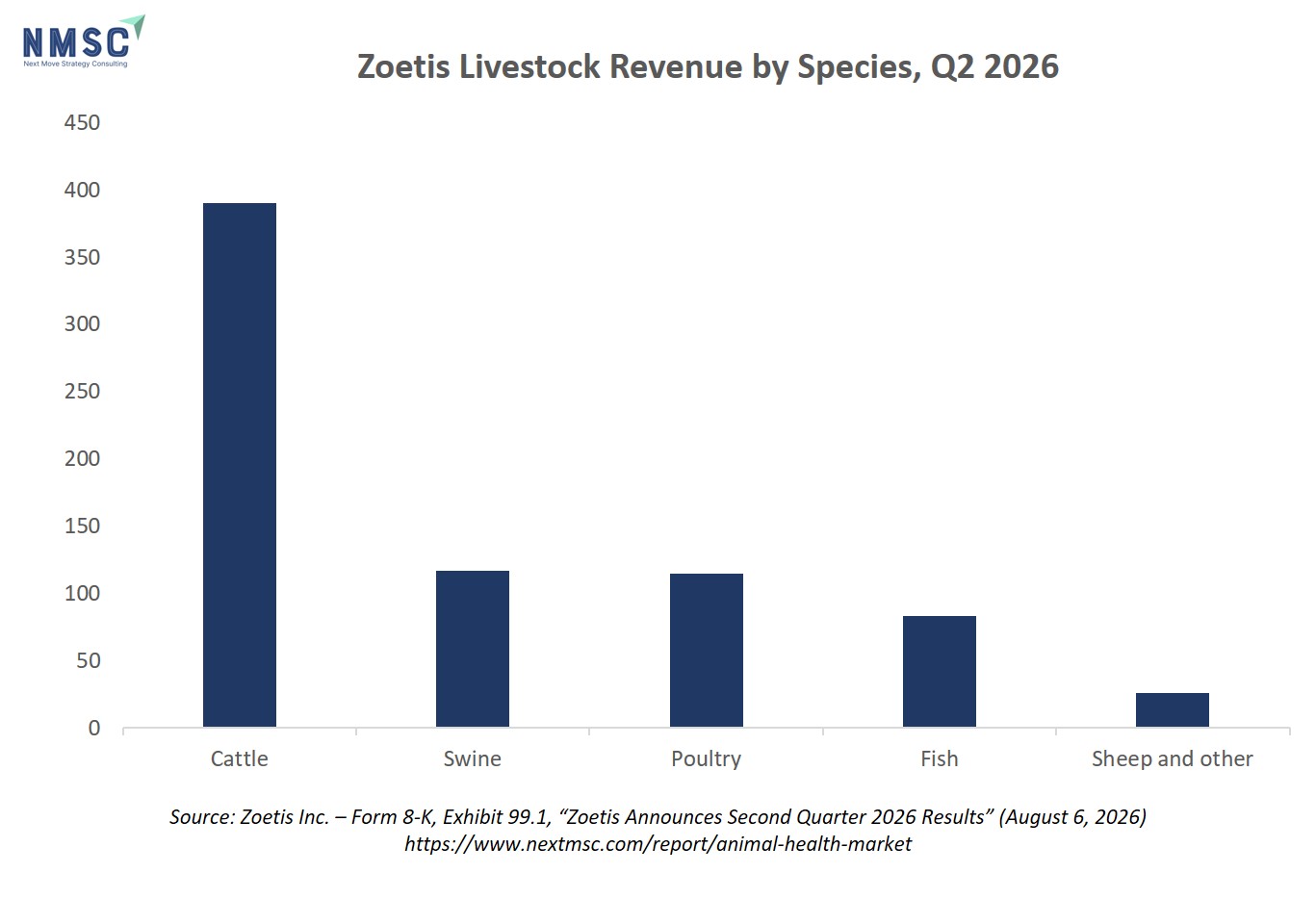
For manufacturers such as Zoetis, Boehringer Ingelheim, and Elanco, a more consolidated distribution landscape means negotiating with fewer but more powerful intermediaries — a dynamic that will reshape commercial terms across the sector. Boehringer Ingelheim Animal Health posted approximately USD 5.5 billion in 2025 sales, led in part by its parasiticide business, while Zoetis reported second-quarter 2026 revenue of USD 2.5 billion.
FDA Regulatory Activity: Expanding the Therapeutic Pipeline
The U.S. Food and Drug Administration's Center for Veterinary Medicine (CVM) has maintained an active approval cadence in 2026, with several developments that directly expand the commercial opportunity for animal health manufacturers. In April 2026, the FDA approved Atinvicitinib (Numelvi), a new veterinary drug now available for clinical use — representing a meaningful addition to the companion animal therapeutics pipeline.
In January 2026, the FDA approved the first generic Florfenicol and Flunixin Meglumine Injection for Bovine Respiratory Disease, a move that expands access to treatment for one of the most economically damaging conditions in cattle production. Additionally, the FDA launched a pilot program to incentivize domestic manufacturing of animal drug products, explicitly designed to reduce supply chain disruption risk by prioritizing reviews of products manufactured within the United States.
NMSC Strategic Perspective: What These Converging Forces Mean for Market Trajectory
NextMSC primary research and analysis identifies three structural mechanisms that will sustain the animal health market's 7.0% CAGR through 2030, each grounded in the events described above.
First, disease-driven demand is becoming structurally embedded. The WOAH 2026 report documents that avian influenza has now spread to Antarctica, infected bovines (recognized as an emerging disease requiring mandatory WAHIS reporting), and recorded over 2,000 outbreaks in a single reporting period. This is not cyclical demand — it is a permanent elevation of the baseline disease burden that requires sustained investment in vaccines, diagnostics, and surveillance infrastructure.
Second, the One Health framework is converting political commitment into procurement. The UN High-Level Political Declaration on AMR, adopted in September 2024, commits all countries to defining and implementing animal vaccination strategies by 2030. The European Partnership on Animal Health and Welfare, launched in 2024, commits €360 million over seven years across 90 entities in 24 countries. These are not aspirational frameworks — they are funded procurement mandates that will flow into the commercial market.
Third, antimicrobial resistance is creating a substitution market for vaccines. WOAH's ANIMUSE database recorded a 4% increase in antimicrobial use in animals between 2022 and 2024, with 19% of Members still using antimicrobials as growth promoters. Norway's salmon industry reduced antibiotic use by 99% following sustained investment in vaccination — a proof of concept that is now being replicated across species and geographies, directly expanding the addressable market for veterinary biologics.
Section Summary:
The animal health market's growth is being driven by a specific and measurable set of forces: record disease outbreak volumes, a landmark USD 3.5 billion distribution merger, active FDA regulatory expansion, and institutional frameworks that are converting One Health commitments into funded procurement. These are not generic market tailwinds — they are sector-specific mechanisms with traceable commercial implications.
Key Takeaways:
-
WOAH recorded 2,121 avian influenza outbreaks and 19,034 FMD outbreaks between January 2025 and March 2026, each creating direct demand for vaccines, diagnostics, and biosecurity products
-
The Covetrus–MWI USD 3.5 billion merger will consolidate veterinary distribution, reshaping manufacturer-to-clinic commercial dynamics
-
FDA's April 2026 approval of Atinvicitinib and January 2026 generic Florfenicol approval expand the therapeutic pipeline for companion and livestock segments respectively
-
The EU's €360 million European Partnership on Animal Health and Welfare and the UN's 2030 AMR vaccination mandate represent funded institutional demand that will sustain market growth through the forecast period
Industry Impact Analysis
The AMR–Vaccine Substitution Dynamic: A Structural Market Expansion Mechanism
Antimicrobial resistance represents the most consequential long-term demand driver in the animal health market, and its mechanism is specific: as antibiotic efficacy declines and regulatory pressure on antibiotic use in animals intensifies, the market for preventive veterinary vaccines expands to fill the treatment gap. The WOAH 2026 report quantifies the stakes — without action, AMR could cause over 39 million human deaths by 2050 and USD 953 billion in animal production losses. Yet animal vaccines receive just 7 cents of every USD 10 spent on AMR-related research.
The commercial implication is direct: the chronic underfunding of animal vaccine R&D relative to the scale of the AMR problem creates a structural supply gap that manufacturers who invest now will be positioned to fill. Brazil's tilapia aquaculture sector illustrates the scale of this substitution: vaccine doses sold rose from 2.2 million in 2015 to approximately 289 million in 2024 — a 13,000% increase — as producers shifted from antibiotic-dependent practices to vaccination-based disease management.
The One Health Investment Gap: Public Sector Demand Creation
The WOAH 2026 report, drawing on World Bank analysis, estimates that the livestock sector was valued at USD 1.37 trillion in 2024 and contributes approximately 40% of global agricultural GDP, supporting the livelihoods of more than 1.3 billion people. Yet animal health receives less than 0.6% of global health spending — a disparity that governments and development institutions are now actively working to correct.
The World Bank's AgriConnect initiative, which aims to help 300 million farmers increase their income by 2030, explicitly prioritizes access to veterinary services and AgTech innovations as core delivery mechanisms. India's National Animal Disease Control Programme, supported by government funding, targets nationwide vaccination against FMD and brucellosis, protecting over 500 million cattle and buffalo. These government-funded programmes represent direct, traceable demand for vaccines, diagnostics, and veterinary services that flows into the commercial market.
Companion Animal Segment: Humanization Driving Premium Product Demand
The companion animal segment continues to outpace livestock in growth rate, driven by the deepening humanization of pets in North America, Europe, and increasingly in Asia-Pacific. North America holds the dominant share of the global animal health market, according to NextMSC primary research and analysis, attributable to high per-capita pet ownership rates, elevated disposable incomes, and a veterinary pharmaceutical industry characterized by rapid technological advancement and sustained R&D investment.
The FDA's approval of Atinvicitinib (Numelvi) in April 2026 exemplifies the premium therapeutic pipeline being built for companion animals — a segment where pet owners demonstrate willingness to pay for advanced treatments that mirror human pharmaceutical standards. Boehringer Ingelheim's January 2026 approval of Vetmedin® Solution further illustrates the pace of companion animal product launches.
Asia-Pacific: Livestock Population Growth and Zoonotic Risk Convergence
Asia-Pacific is positioned for accelerated growth within the animal health market, driven by the convergence of two forces: rapid expansion of livestock populations to meet rising protein demand, and an elevated zoonotic disease burden that requires sustained veterinary intervention. The OECD–FAO Agricultural Outlook 2025–2034, published in July 2025, projects global per-capita consumption of meat, dairy, and other animal products to grow by approximately 6% by 2034, with global production of meat, dairy, and eggs forecast to increase by roughly 17% over the same period.
Asia-Pacific accounts for the highest antimicrobial use in animals globally — 169 mg/kg of animal biomass in 2024, up from 150 mg/kg in 2022 — creating both a regulatory compliance imperative and a substitution opportunity for vaccine manufacturers. Key players including Ceva Animal Health, Elanco, and Boehringer Ingelheim have established or are expanding their presence in the region, according to NextMSC primary research and analysis.
Section Summary:
The animal health market's industry impact is being shaped by three reinforcing dynamics: AMR-driven vaccine substitution creating a structural demand expansion, government-funded One Health programmes converting institutional commitments into commercial procurement, and companion animal humanization sustaining premium product demand in developed markets.
Key Takeaways:
-
Brazil's tilapia vaccine market grew 13,000% between 2015 and 2024 as producers substituted vaccination for antibiotic-dependent disease management — a pattern now replicating across species globally
-
The World Bank's AgriConnect initiative and India's NADCP programme represent government-funded demand for veterinary products that directly supports the market's 7.0% CAGR
-
Asia-Pacific's antimicrobial use reached 169 mg/kg in 2024, the highest globally, creating both regulatory pressure and a substitution market for vaccines
-
North America retains dominant market share, supported by high companion animal ownership rates and an active FDA approval pipeline
WOAH Global Animal Disease Burden — January 2025 to March 2026
|
Disease |
Countries/Territories Affected |
Outbreaks Reported |
Animal Losses |
|
Avian Influenza (Poultry) |
64 |
2,121 |
140 million |
|
Foot and Mouth Disease |
64 |
19,034 |
109,740 |
|
African Swine Fever |
64 |
15,759 |
584,310 |
|
Lumpy Skin Disease |
45 |
3,184 |
7,522 |
|
Rabies |
99 |
6,567 |
10,395 |
|
Peste des Petits Ruminants |
43 |
1,402 |
24,622 |
|
New World Screwworm |
18 |
37,389 |
166 |
Future Outlook & Forecast
Market Trajectory: USD 80.12 Billion by 2030
According to NextMSC primary research and analysis, the global animal health market is projected to reach USD 80.12 billion by 2030, growing at a CAGR of 7.0% from 2024 to 2030. This trajectory is supported by five converging structural forces that NextMSC's proprietary model identifies as the primary growth mechanisms for the forecast period.
Vaccines as the Dominant Growth Segment: The biologics segment — encompassing live attenuated, DNA, recombinant, and inactivated vaccines — is positioned to capture an increasing share of market revenue as the AMR-driven substitution dynamic accelerates. The WOAH 2026 report documents that animal vaccines receive just 7 cents of every USD 10 spent on AMR-related research, a chronic underfunding that creates a significant commercial opportunity for manufacturers who invest in this segment now. The UN's commitment to animal vaccination strategies by 2030 provides a policy anchor for this demand.
Diagnostics: Digital Surveillance as a Market Catalyst: The interconnection of the EU's Animal Disease Information System (ADIS) with WOAH's WAHIS between 2024 and 2025, and the February 2026 launch of a new electronic veterinary certification platform by the Inter-American Institute for Cooperation on Agriculture, signal a structural shift toward digital disease surveillance. This digitization expands the addressable market for diagnostic instruments and consumables — a segment that NextMSC primary research and analysis identifies as a key growth driver within the broader animal health market.
E-commerce Distribution: Structural Channel Shift: The e-commerce distribution channel is gaining share as veterinary practices and livestock producers increasingly source products through digital platforms. This channel shift is being accelerated by the Covetrus–MWI merger, which combines Covetrus's digital pharmacy platform with MWI's distribution network, creating an integrated digital-physical channel that will set new standards for product accessibility and ordering efficiency.
Asia-Pacific: The Decade's Fastest-Growing Regional Market: NextMSC primary research and analysis projects Asia-Pacific to record the fastest regional growth rate within the animal health market through 2030, driven by the combination of expanding livestock populations, rising protein consumption, and an elevated zoonotic disease burden that requires sustained veterinary intervention. The OECD–FAO Agricultural Outlook 2025–2034 projects global meat, dairy, and egg production to increase by approximately 17% by 2034, with Asia-Pacific accounting for a disproportionate share of this expansion.
Public–Private Partnership Models: Scaling Vaccine Access: Tanzania's establishment of the Tanzania Animal Health Organization (TAHO) in July 2024, which in its first year facilitated the vaccination of 17 million small ruminants against PPR, 19 million cattle against CBPP, and 40 million indigenous chickens against Newcastle disease, demonstrates the commercial scale achievable through structured public–private partnership models. As similar models are replicated across Africa, Asia, and Latin America, they will generate sustained commercial demand for vaccines and veterinary services.
Section Summary:
The animal health market's path to USD 80.12 billion by 2030 is supported by a specific set of structural mechanisms: AMR-driven vaccine substitution, digital surveillance infrastructure expansion, e-commerce channel growth, Asia-Pacific livestock sector expansion, and the scaling of public–private partnership models that convert government commitments into commercial procurement.
Key Takeaways:
-
The vaccine segment is structurally underfunded relative to the AMR problem it is positioned to solve, creating a significant commercial opportunity for biologics manufacturers
-
Digital disease surveillance infrastructure — including ADIS–WAHIS interconnection and electronic veterinary certification — is expanding the addressable market for diagnostic instruments and consumables
-
Asia-Pacific's antimicrobial use trajectory and protein demand growth make it the most consequential regional market for the forecast period
-
Tanzania's TAHO model — vaccinating 76 million animals in its first year of operation — demonstrates the commercial scale achievable through structured public–private partnerships
Next Steps for Stakeholders
For Pharmaceutical Manufacturers and Biologics Companies:
The AMR-driven substitution dynamic and the UN's 2030 animal vaccination mandate create a defined window for investment in veterinary vaccine R&D. Manufacturers should prioritize pipeline development for avian influenza, FMD, ASF, and lumpy skin disease — the four diseases with the highest outbreak volumes in the current WOAH reporting period. The FDA's domestic manufacturing pilot program provides a regulatory incentive for U.S.-based production investment that should be evaluated against existing offshore supply chain structures.
For Distributors and Technology Platforms:
The Covetrus–MWI merger sets a new competitive baseline for integrated distribution-technology platforms. Independent distributors and regional players should assess their positioning relative to this consolidated entity and evaluate whether partnership, specialization in underserved segments (e.g., aquaculture, exotic species), or geographic focus in Asia-Pacific or Africa offers a defensible competitive position.
For Institutional Investors:
The animal health market's 7.0% CAGR through 2030, as projected by NextMSC primary research and analysis, is supported by structural demand drivers — disease burden, AMR policy, and food security imperatives — that are not cyclically sensitive. The sector's M&A activity, which has rebounded in 2026 following a softening in 2023–2024, suggests that consolidation-driven value creation remains an active investment thesis. Investors should evaluate exposure across the value chain — manufacturers, distributors, diagnostics companies, and veterinary service providers — to capture the full breadth of market growth.
For Governments and Development Finance Institutions:
The WOAH 2026 report's finding that USD 2.3 billion per year would bring global Veterinary Services to international standards — at a return on investment of up to 86% per year — represents one of the most compelling investment cases in development finance. Governments should integrate animal health into national health security, food security, and AMR action plans, and align development finance with the Quadripartite's One Health Joint Plan of Action.
For Veterinary Service Providers and Clinic Networks:
The companion animal segment's premium therapeutic pipeline — exemplified by the FDA's April 2026 approval of Atinvicitinib — and the structural shift toward e-commerce distribution create both opportunity and competitive pressure for veterinary service providers. Clinic networks should evaluate their digital pharmacy capabilities and their positioning relative to the integrated platform being built by the merged Covetrus–MWI entity.
Conclusion
The global animal health market is not growing because of generic demand trends. It is growing because a specific and measurable set of forces — 2,121 avian influenza outbreaks, a USD 3.5 billion distribution merger, a UN AMR vaccination mandate, and a WOAH report that frames veterinary underinvestment as a systemic global risk — are simultaneously expanding the addressable market, accelerating institutional procurement, and reshaping the competitive landscape. According to NextMSC primary research and analysis, the market will reach USD 80.12 billion by 2030 at a CAGR of 7.0%, with vaccines, diagnostics, and Asia-Pacific representing the highest-conviction growth vectors. For executives and investors who understand the specific mechanisms driving this market, the strategic implications are clear: the cost of underinvestment in animal health is already being paid — in disease losses, trade disruptions, and pandemic risk. The cost of strategic positioning in this market, by contrast, is measurable and the returns are documented.
About the Author
 Sanyukta Deb
— Sanyukta Deb is Digital Marketing Team Lead at Next Move Strategy Consulting, where she has led content strategy and technical SEO for the firm's B2B market research publications for over 2 years. Her editorial process translates NextMSC's primary and secondary research — spanning technology, industrial, and consumer sectors — into commercial narratives, backed by search-intent, keyword, and competitive analysis. She brings 5 years of overall experience in digital marketing and content strategy.
About the Reviewer
 Debashree Dey
— Debashree Dey is Assistant Manager at Next Move Strategy Consulting, where she supports cross-vertical market content and communications across diverse industries for 6 years. Her professional background includes senior content writing, communications, and published manuscript authorship, with experience developing audience-focused business narratives and maintaining clear, consistent messaging. Her role supports research-led content development and editorial quality across NextMSC publications.













Add Comment