Why Is Data Migration Becoming the Core of Enterprise Reinvention in 2026?

The Data Migration Market has traditionally been associated with technical processes focused on transferring information from one system to another. However, in 2026, the market is evolving into a strategic business enabler closely linked to enterprise modernization, operational resilience, and artificial intelligence adoption.
Recent announcements from SAP and Palantir Technologies demonstrate how organizations are integrating AI into migration workflows to simplify complex cloud transformation initiatives. At the same time, the NOVA platform’s restructuring initiative highlights how digital asset ecosystems are leveraging secure migration architectures to strengthen transparency, improve trust, and support long-term ecosystem stability.
For investors, enterprise leaders, and procurement strategists, these developments signal a broader transformation within the Data Migration Market. Migration strategies are no longer limited to infrastructure replacement alone. They are increasingly becoming essential for enabling intelligent automation, scalable operations, secure digital ecosystems, and future-ready enterprise growth.
How Is AI Redefining Modern Data Migration?
One of the most important developments in 2026 is the expanded partnership between SAP and Palantir, announced during SAP Sapphire 2026. The collaboration focuses on delivering AI-supported migration capabilities designed to accelerate enterprise cloud ERP modernization.
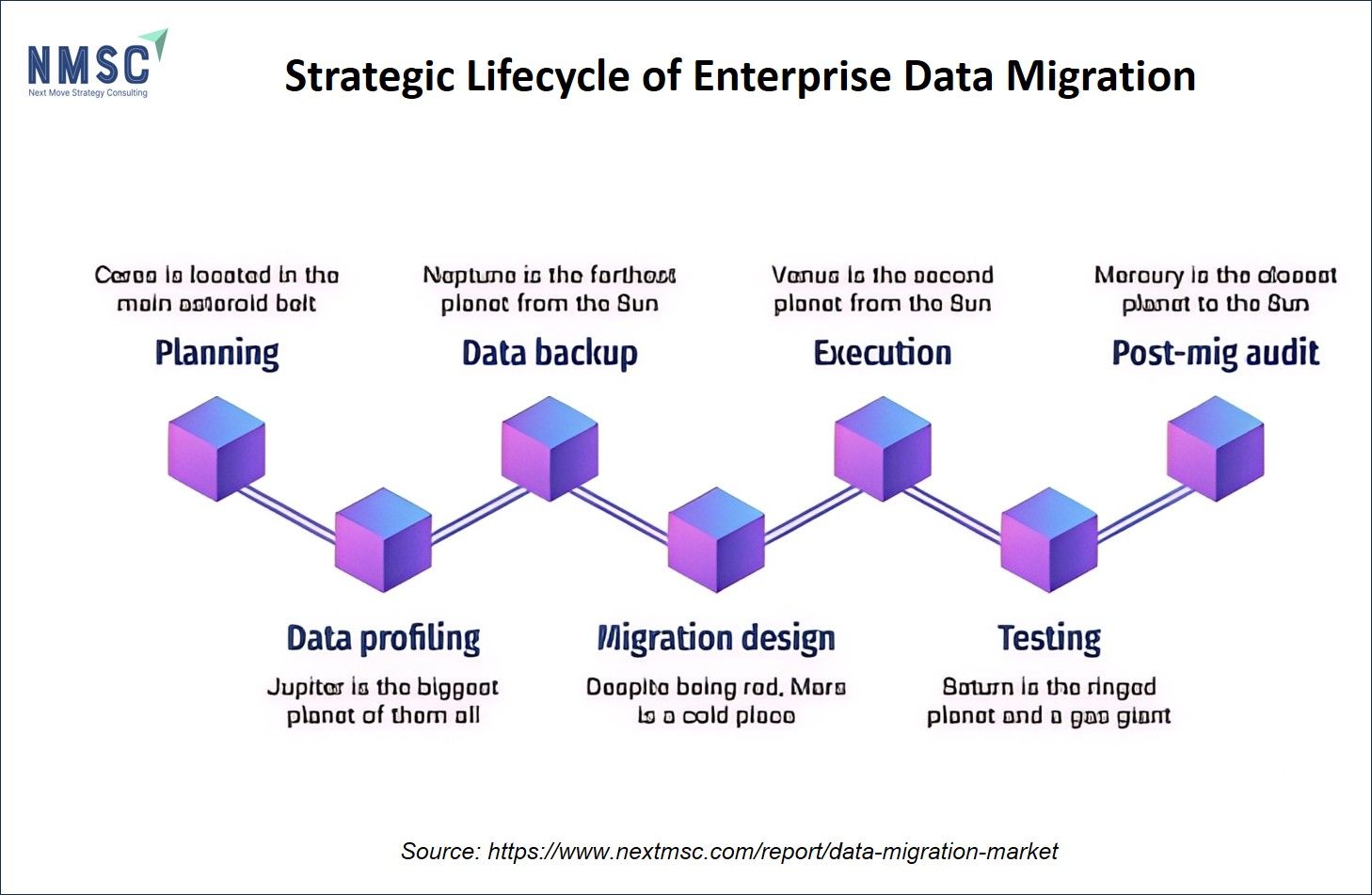
The initiative combines SAP Business AI with Palantir’s Artificial Intelligence Platform (AIP), creating a migration framework that supports automation across the entire migration lifecycle. Instead of relying heavily on manual analysis and repetitive testing processes, organizations can now use AI-driven tools to assist with planning, remediation, validation, and operational impact assessment.
This shift is significant because enterprise migration projects have historically been expensive, time-consuming, and operationally disruptive. Large organizations often manage fragmented systems across multiple departments and regions, making cloud migration particularly difficult.
According to SAP, embedding AI into migration workflows can help organizations focus on measurable business outcomes rather than simply managing timelines. The partnership also reflects a broader industry transition toward autonomous enterprise models where intelligent systems continuously optimize operations.
Accenture’s role as a strategic services partner further strengthens the initiative by connecting these technologies to enterprise-scale implementation programs.
Why Are Security and Transparency Shaping Migration Strategies?
Security has become one of the defining priorities in modern migration planning, particularly within digital asset ecosystems.
The NOVA platform’s global restart initiative demonstrates how organizations are redesigning migration frameworks to improve trust, auditability, and operational stability. According to the announcement, TreasureNFT completed a nine-month restructuring process in which historical services and user assets were fully migrated to the NOVA platform.
The migration process incorporated multi-signature cold storage, on-chain snapshots, and third-party audits to ensure that historical assets remained traceable and verifiable. This approach reflects growing industry pressure to maintain transparent migration environments capable of supporting institutional participation and long-term ecosystem stability.
The announcement also stated that institutional adoption rates within the global digital asset market reached 75% during the market recovery phase in late 2025. This rise in institutional engagement is increasing demand for enterprise-grade security infrastructure and compliance-oriented migration frameworks.
However, the migration model also introduced operational conditions such as account activation fees and phased asset release structures. While these mechanisms were designed to strengthen platform security and long-term sustainability, they may also create onboarding friction for some users.
How Is Data Migration Influencing Enterprise Strategy?
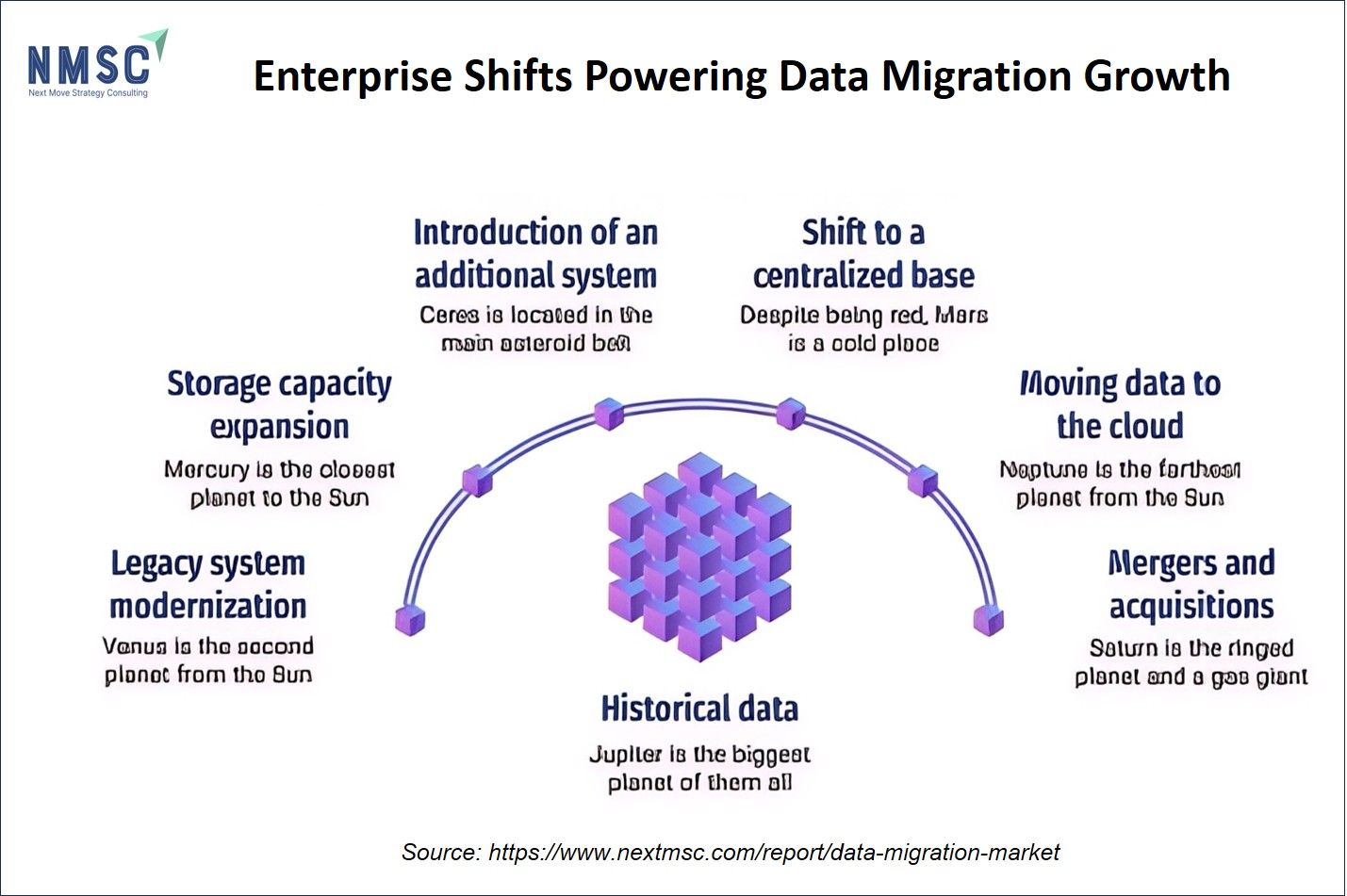
The latest developments suggest that data migration is evolving into a long-term strategic capability rather than a one-time infrastructure project.
For enterprise technology providers, migration has become closely linked to AI adoption and cloud ERP transformation. Organizations are no longer modernizing systems solely for operational efficiency. They are restructuring digital foundations to support automation, real-time intelligence, and scalable decision-making.
In the consulting and services sector, partnerships involving SAP, Palantir, and Accenture indicate rising demand for integrated migration ecosystems capable of managing increasingly complex enterprise environments.
Meanwhile, digital asset platforms are using migration initiatives to rebuild ecosystem credibility, improve transparency, and attract institutional participation. Secure migration architectures are becoming essential for organizations attempting to scale globally while meeting evolving compliance expectations.
This transition is reshaping how executives evaluate modernization investments. Migration projects are increasingly viewed through the lens of strategic business continuity and competitive positioning.
Data Migration Market Pie Chart Analysis
The pie chart highlights the four major strategic pillars shaping the Data Migration Market in 2026, with each segment contributing an equal 25% share to overall market transformation. AI-supported migration represents the increasing adoption of artificial intelligence to automate migration analysis, testing, remediation, and operational assessments, helping enterprises accelerate complex cloud transformation initiatives. Cloud ERP modernization reflects the growing demand for migrating legacy enterprise systems into scalable cloud-based environments that improve operational agility and real-time decision-making. Security and compliance form another significant segment, emphasizing the rising importance of auditability, governance, and secure migration architectures as organizations manage sensitive enterprise and digital asset data. Meanwhile, digital asset transformation demonstrates how blockchain ecosystems and institutional participation are driving demand for transparent and resilient migration infrastructure. Overall, the chart illustrates that the Data Migration Market has evolved beyond traditional system transfers and is now closely tied to enterprise modernization, AI adoption, cybersecurity, and long-term operational resilience.

Competitive Landscape of the Data Migration Market
The data migration market is characterized by the presence of several major technology providers, including Amazon Web Services, Microsoft Corporation, IBM, Oracle Corporation, SAP, Google, MuleSoft, Snowflake, Informatica, Cloudera, Qlik, Boomi, Fivetran, Hevo Data, and Airbyte.
These companies are increasingly focusing on strategic partnerships, joint ventures, and regional business expansion initiatives to strengthen their competitive positioning and enhance their presence within the rapidly evolving data migration market.

Future Outlook
Data migration is expected to become increasingly intelligent, automated, and security-focused over the next several years.
Enterprise technology providers are moving toward migration frameworks that integrate AI-driven analysis, autonomous remediation capabilities, and continuous operational optimization. This trend aligns closely with the broader push toward autonomous enterprise environments.
At the same time, digital infrastructure platforms are emphasizing verifiable and auditable migration systems to improve stakeholder trust and support global scalability.
The organizations most likely to benefit from these developments will be those that treat migration as part of a broader transformation strategy rather than a standalone technical upgrade. Businesses capable of aligning migration initiatives with automation, compliance, and operational resilience goals may strengthen their long-term market positioning.
Next Steps
Organizations evaluating modernization initiatives should begin by assessing whether their current infrastructure can support AI-enabled migration frameworks. Security and governance requirements should also be incorporated early into migration planning rather than treated as secondary concerns.
Enterprise leaders may also benefit from evaluating strategic technology partnerships that combine migration expertise, cloud capabilities, and AI integration services within a unified ecosystem.
-
Build phased migration roadmaps aligned with long-term business objectives
-
Identify opportunities to automate migration analysis, testing, and remediation using AI tools
-
Monitor operational risks and business continuity throughout the migration lifecycle
-
Strengthen governance frameworks for sensitive enterprise and digital asset data
-
Continuously measure migration outcomes based on operational efficiency and scalability gains
Conclusion
Data migration is rapidly emerging as one of the most strategically important pillars of enterprise transformation in 2026. The recent initiatives involving SAP, Palantir, Accenture, and the NOVA platform illustrate how migration strategies are evolving beyond traditional infrastructure upgrades.
AI-supported automation, enterprise cloud modernization, and secure digital ecosystems are redefining how organizations approach migration planning. As operational complexity continues to increase across industries, businesses that build resilient, intelligent, and transparent migration frameworks may be better positioned to adapt to future market demands.
About the Author
 Sanyukta Deb
— Sanyukta Deb is Digital Marketing Team Lead at Next Move Strategy Consulting, where she has led content strategy and technical SEO for the firm's B2B market research publications for over 2 years. Her editorial process translates NextMSC's primary and secondary research — spanning technology, industrial, and consumer sectors — into commercial narratives, backed by search-intent, keyword, and competitive analysis. She brings 5 years of overall experience in digital marketing and content strategy.
Sanyukta Deb
— Sanyukta Deb is Digital Marketing Team Lead at Next Move Strategy Consulting, where she has led content strategy and technical SEO for the firm's B2B market research publications for over 2 years. Her editorial process translates NextMSC's primary and secondary research — spanning technology, industrial, and consumer sectors — into commercial narratives, backed by search-intent, keyword, and competitive analysis. She brings 5 years of overall experience in digital marketing and content strategy.
About the Reviewer
 Debashree Dey
— Debashree Dey is Assistant Manager at Next Move Strategy Consulting, where she supports cross-vertical market content and communications across diverse industries for 6 years. Her professional background includes senior content writing, communications, and published manuscript authorship, with experience developing audience-focused business narratives and maintaining clear, consistent messaging. Her role supports research-led content development and editorial quality across NextMSC publications.
Debashree Dey
— Debashree Dey is Assistant Manager at Next Move Strategy Consulting, where she supports cross-vertical market content and communications across diverse industries for 6 years. Her professional background includes senior content writing, communications, and published manuscript authorship, with experience developing audience-focused business narratives and maintaining clear, consistent messaging. Her role supports research-led content development and editorial quality across NextMSC publications.


















Add Comment