AC Drives Market: Data Centres Fuel New Growth Era
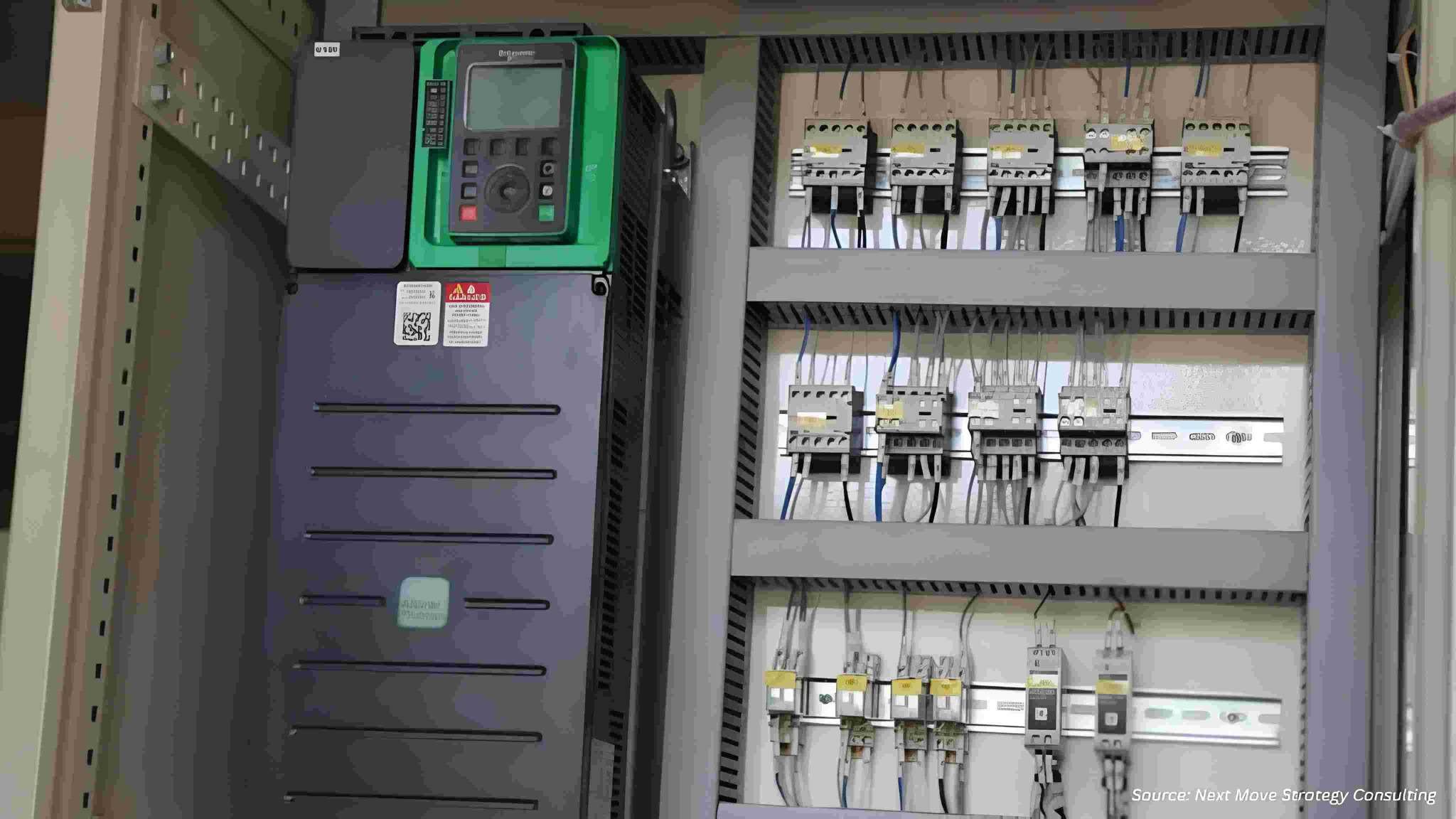
Data Centre Expansion and AI Infrastructure Demand Propel Global AC Drives Market Into a New Growth Cycle as Industry Leaders Launch Next-Generation Drive Systems
The global low-voltage AC drives sector received a significant upward revision to its growth outlook in May 2026, when Interact Analysis published research confirming that surging data centre construction — driven by artificial intelligence, cloud computing, and cryptocurrency processing — is accelerating demand for variable-speed drive systems beyond previously projected levels. According to the research firm, the global market for low-voltage AC drives will expand from $14.4 billion in 2025 to $17 billion by 2030, representing an average annual growth rate of 3.4% — a figure that constitutes an upward revision from earlier forecasts.
The development underscores a structural shift in the demand profile of the global AC Drives Market, which according to Next Move Strategy Consulting was valued at USD 16.45 billion in 2024 and is projected to reach USD 22.03 billion by 2030. The market's expansion is being driven by a convergence of industrial automation imperatives, energy efficiency mandates, and the accelerating digitalization of global infrastructure.
For More Information: Download FREE Sample on AC Drives Market Report
Data Centres Emerge as a High-Growth Application Vertical
The data centre sector has emerged as one of the most consequential new demand drivers for low-voltage AC drives. According to Interact Analysis, revenues from low-voltage AC drives sold to the data centre sector exceeded $200 million in 2025, representing year-on-year growth of 12.5%. The firm projects the segment will expand at a compound annual growth rate of 8.3% between 2025 and 2030.
The demand is being driven by dual requirements: power quality and energy efficiency. Data centres widely deploy switch-mode power supplies and drives that inject significant harmonic currents into power systems, leading to voltage distortion, equipment overheating, and additional losses. In environments where power supply continuity is critical — such as hyperscale computing facilities — these issues are magnified and can directly compromise system stability. Low-harmonic drives, which reduce total harmonic distortion of input current (THDi) to 5% or below, are increasingly being specified as a prerequisite for system design in high-standard applications.
A 2025 report by the US Federal Reserve revealed data centre plans worth $1 trillion, with the Americas currently outpacing other regions in capital investment and data centre development. Interact Analysis projects the Americas will achieve the fastest regional growth rate of any geography over the forecast period to 2030, at an average annual growth rate of 4.5%.
The Energy Efficiency Imperative: A Structural Market Driver
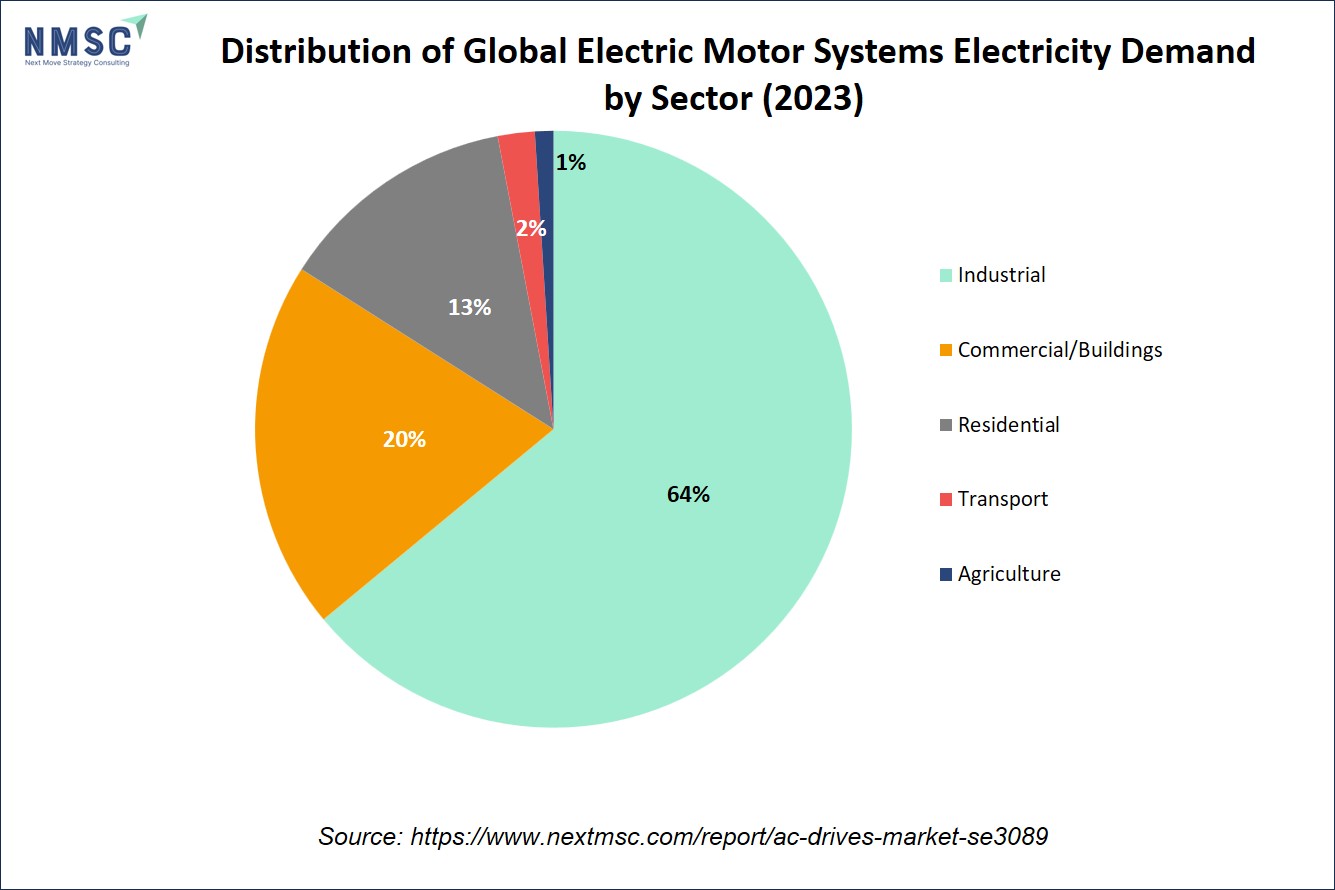
The structural case for AC drives is anchored in the scale of energy consumed by electric motor systems globally. According to a December 2025 policy brief published by the IEA's Electric Motor Systems Annex (EMSA) — a Technology Collaboration Programme under the International Energy Agency — electric motor systems were responsible for 53% of global electricity consumption in 2023. Their share varies significantly across sectors: 72% in industry, 87% in agriculture, 86% in transportation, and 36% in buildings.
The IEA has identified upgrading motor systems — including the promotion of variable-speed drives through regulations and targeted incentives — as a key policy lever for accelerating industrial energy efficiency. The IEA's Energy Efficiency 2025 report notes that industry accounts for nearly 40% of total final energy consumption globally, and that electricity use in industry grew by nearly 4% in 2024.
The IEA further estimates that approximately 25% of electric motor system electricity use could be saved cost-effectively through optimisation measures — a reduction that would lower total global electricity demand by approximately 10%. This savings potential represents the core commercial proposition of AC drives: by enabling precise motor speed control matched to actual load requirements, variable-speed drives eliminate the energy waste inherent in fixed-speed motor operation.
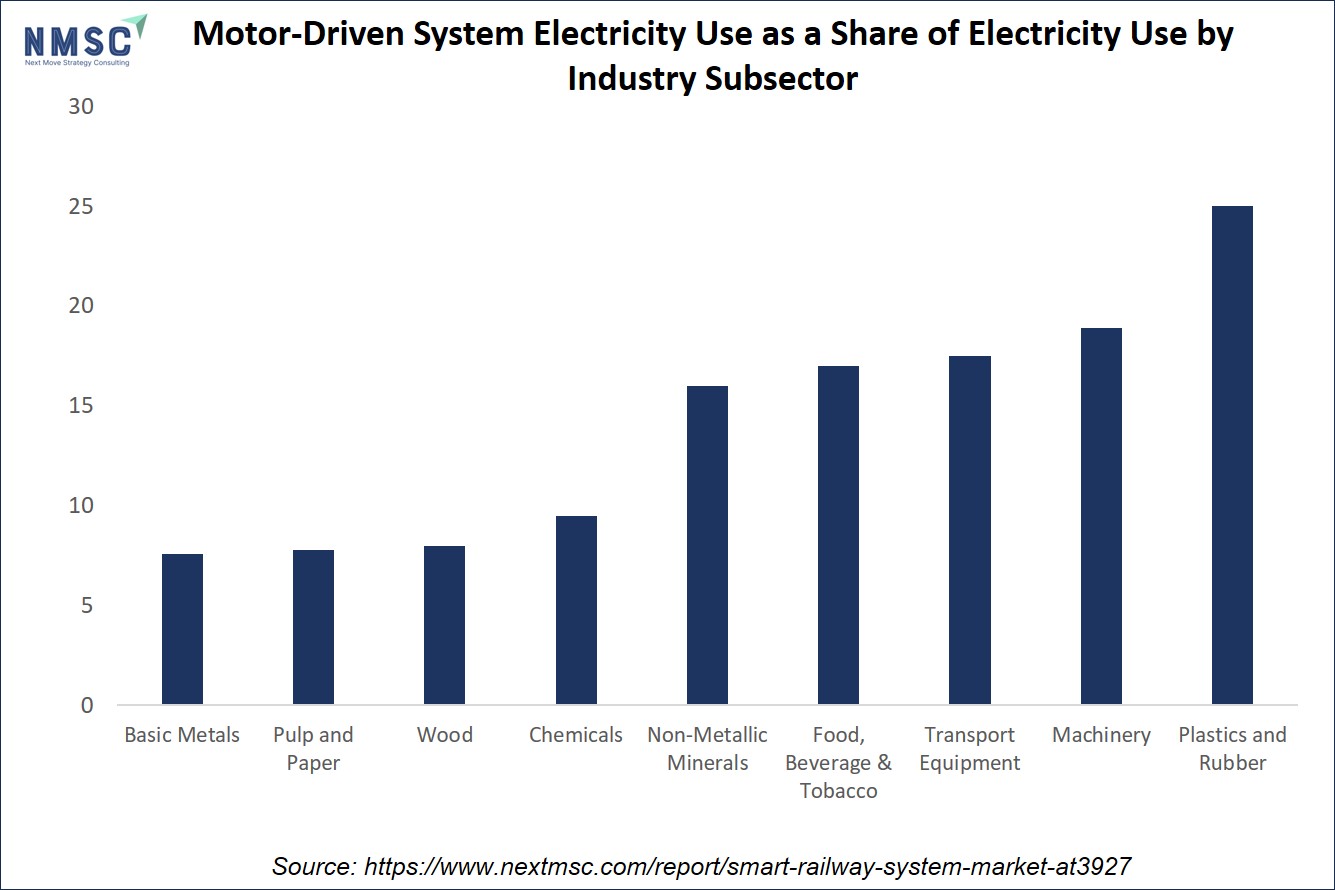
Motor-Driven Systems Across Industrial Subsectors
The IEA's data on motor-driven system electricity use across industrial subsectors reveals the breadth of the AC drives market's addressable opportunity. Plastics and rubber manufacturing leads with motor-driven systems accounting for 25% of the subsector's electricity consumption, followed by machinery (18.9%), transport equipment (17.5%), food, beverage, and tobacco (17%), and non-metallic minerals (16%). Chemicals, wood, pulp and paper, and basic metals round out the industrial demand base.
Regional Market Dynamics
The Asia-Pacific region (excluding Japan) remains the largest single market for low-voltage AC drives globally, accounting for 38.5% of global sales in 2025, with revenues exceeding $5.5 billion. The region's performance is underpinned by the recovery of the Chinese market, robust growth in India and Southeast Asia, and the appreciation of the Japanese yen against the US dollar.
The EMEA region — comprising Europe, the Middle East, and Africa — represented 29.8% of the global AC drives market in 2025, at just under $4.3 billion. Despite weaker organic growth in Europe, the appreciation of the euro against the US dollar has boosted the region's market value when measured in dollar terms. EMEA recorded the fastest expansion rate of any region in 2025, at 4.7%, supported in part by the phased implementation of the EU Energy Efficiency Directive.
The Americas accounted for 25.6% of the global market in 2025, with revenues of nearly $3.7 billion. The region's growth trajectory is being reinforced by large-scale data centre investment and the ongoing reshoring of manufacturing capacity across North America.
Global Low-Voltage AC Drives Market Revenue by Region (2025)
|
Region |
Market Revenue (USD Billion) |
Share of Global Market (%) |
Projected CAGR (2025–2030) |
|
Asia-Pacific (excl. Japan) |
5.5 |
38.5% |
— |
|
EMEA |
4.3 |
29.8% |
— |
|
Americas |
3.7 |
25.6% |
4.5% |
|
Global Total |
14.4 |
100.0% |
3.4% |
Notes: EMEA = Europe, Middle East and Africa. APAC figure excludes Japan. Americas CAGR is the only regional CAGR explicitly stated in the source. Global total includes Japan and other markets not individually itemised. Figures may not sum precisely due to rounding.
Regulatory Tailwinds: EU Energy Efficiency Directive and Global Motor Standards
The European Union's Energy Efficiency Directive (EED 2023/1791) is introducing phased, binding compliance obligations for companies from 2026 onward, including mandatory energy management systems for large industrial energy consumers. The directive's implementation is expected to accelerate the adoption of variable-speed drives across European industrial facilities, as operators seek to demonstrate measurable reductions in energy consumption and comply with enhanced audit requirements.
The IEA's State of Energy Policy 2026 report identifies the Eurasian Economic Union's regulatory changes for industrial motors in 2025 as the most impactful regulatory development for the sector in that year, further illustrating the global momentum behind motor efficiency standards. Collectively, tightening standards — including IEEE 519 limits on harmonic currents and voltage distortion — are making harmonic mitigation a prerequisite for system design in an expanding range of applications.
Industry Leaders Accelerate Product Innovation
The first half of 2026 has seen a wave of product launches from the sector's leading manufacturers, reflecting intensifying competition and the growing technical demands of end-users across industrial, infrastructure, and digital economy applications.
In March 2026, ABB expanded its all-compatible drive portfolio with the introduction of a new wall-mounted frame, extending the ACS580-01, ACQ580-01, and ACH580-01 drive ranges with new 315 kW and 355 kW power ratings. The new frame delivers up to 355 kW in a compact wall-mounted format, positioning ABB among the most compact solutions in its power class. The drives are engineered for harsh operating conditions, supporting ambient temperatures of up to 55°C and meeting C3 (IP21) and C4 (IP55) environmental classifications for long-term reliability.
Also in March 2026, Schneider Electric announced its new Altivar HVAC Drive family, including the ATH200 and ATH600 models. Engineered to deliver over 30% energy savings, the range supports environments from commercial buildings to mission-critical facilities such as hospitals, airports, and data centres. The drives feature IEC 62443-4-2 Security Level 1 cybersecurity certification, A2L certification, and A3 refrigerant readiness, supporting next-generation low-global-warming-potential refrigerants used in modern chillers and heat pump systems.
In January 2026, Siemens launched the Sinamics S220, a high-performance drive system building on the success of the Sinamics S120. The system features the new CU320-3 control unit, capable of operating up to 12 axes on a single control unit, with a rated current range from 3 A (1.1 kW) to 1,518 A (900 kW), expandable to 6,984 kW through parallel connection. The system is SIL 3 certified for all operating states and was developed in accordance with IEC 62443-4-1 cybersecurity standards, independently certified by TÜV SÜD.
Key AC Drives Product Launches by Major Manufacturers (H1 2026)
|
Company |
Product |
Announcement Date |
Key Specifications |
Primary Target Applications |
|
ABB |
ACS580-01 / ACQ580-01 / ACH580-01 (R9e Frame) |
March 4, 2026 |
315–355 kW; IP21/IP55; up to 55°C ambient; C3/C4 environmental classification |
Cooling & refrigeration, water/wastewater, heat pump systems, general industrial |
|
Schneider Electric |
Altivar HVAC ATH200 / ATH600 |
March 10, 2026 |
>30% energy savings; IEC 62443-4-2 SL1 cybersecurity; A2L/A3 refrigerant ready; −10°C to 60°C operating range |
HVAC, data centres, hospitals, airports, commercial buildings |
|
Siemens |
Sinamics S220 |
January 2026 |
1.1–900 kW (expandable to 6,984 kW via parallel connection); SIL 3 certified; IEC 62443-4-1 compliant; up to 12 axes per CU320-3 |
Multi-axis industrial automation, Industry 4.0, predictive maintenance |
Notes: SIL = Safety Integrity Level. HVAC = Heating, Ventilation, and Air Conditioning. Specifications reflect manufacturer-stated figures at time of announcement.
Competitive Landscape and Technology Trajectories
Beyond the three major European-headquartered manufacturers, the competitive landscape encompasses Danfoss — whose VLT Low Harmonic Drive series represents a leading product on the active front end (AFE) technology path — as well as Rockwell Automation, SEW-Eurodrive, and Chinese manufacturers including Inovance Technology and INVT. The global penetration rate of low-harmonic drives was approximately 5.6% in 2025 and is expected to increase to 7.5% by 2030, with the Americas market showing the highest penetration at approximately 11.0% in 2025.
The technology competition is increasingly centred on system architecture capabilities rather than standalone hardware performance. Vendors are investing in active front end (AFE) rectification, multi-pulse rectification (such as 18-pulse configurations), and external filtering solutions, each offering different levels of harmonic distortion control. The integration of IoT connectivity, AI-enhanced control systems, and digital twin capabilities — as demonstrated by Siemens' Sinamics S220 with its DriveSim Designer virtual commissioning tool — is redefining the value proposition of AC drives from a purely mechanical component to a data-generating asset within broader Industry 4.0 architectures.
According to Next Move Strategy Consulting's analysis, the AC drives market's segmentation by voltage type reveals the continued dominance of low-voltage applications, which accounted for 64% of the more than 52 million AC drive units installed globally in 2024. The medium-voltage segment, while smaller in unit terms, is witnessing faster growth driven by increasing deployment in heavy industries, mining, oil and gas, and large-scale water infrastructure projects.
Market Outlook
The convergence of data centre expansion, industrial automation, energy efficiency regulation, and next-generation product launches positions the AC drives market for sustained growth through the end of the decade. The IEA's recommendation to promote variable-speed drives through regulations and targeted incentives — embedded in its Energy Efficiency 2025 report — provides a policy foundation that is increasingly being translated into binding national and regional requirements.
The data centre megatrend, in particular, represents a demand driver that was not fully incorporated into earlier market forecasts, and its upward revision by Interact Analysis in May 2026 signals that the AC drives market's growth trajectory may continue to be revised upward as AI infrastructure investment accelerates globally.
Bottom Line
The global AC drives market is entering a structurally reinforced growth phase, underpinned by three converging forces: the explosive expansion of AI-driven data centre infrastructure, tightening energy efficiency regulations across major economies, and a wave of next-generation product launches from the sector's leading manufacturers. The upward revision of the low-voltage AC drives market forecast by Interact Analysis in May 2026 — driven by data centre demand that exceeded $200 million in revenues in 2025 alone — signals that the market's addressable opportunity is broader than previously modelled. For investors and industrial operators, the near-term opportunity lies in low-harmonic drive systems, HVAC-optimised drives, and high-power compact formats suited to space-constrained installations. Key risks include supply chain disruptions affecting semiconductor components, currency volatility affecting regional revenue comparisons, and the pace of regulatory implementation across emerging markets. Strategically, manufacturers with deep system architecture capabilities, cybersecurity-certified products, and established positions in the data centre and HVAC verticals are best positioned to capture disproportionate share of the market's growth through 2030.
About Next Move Strategy Consulting
Next Move Strategy Consulting is a premier market research and management consulting firm that has been committed to provide strategically analysed well documented latest research reports to its clients. The research industry is flooded with many firms to choose from, what makes NMSC different from the rest is its top-quality research and the obsession of turning data into knowledge by dissecting every bit of it and providing fact-based research recommendation that is supported by information collected from over 500 million websites, paid databases, industry journals and one on one consultations with industry experts across a diverse range of industry sectors. The high-quality customized research reports with actionable insights and excellent end-to-end customer service help our clients to take critical business decisions that enables them to move beyond time and have competitive edge in the industry.
We have been servicing over 1000 customers globally that includes 90% of the Fortune 500 companies over a decade. Our analysts are constantly tracking various high growth markets and identifying hidden opportunities in each sector or the industry. We provide one of the industry's best quality syndicate as well as custom research reports across 10 different industry verticals. We are committed to deliver high quality research solutions in accordance to your business needs. Our industry standard delivery solutions that ranges from the pre consultation to after-sales services, provide an excellent client experience and ensure right strategic decision making for businesses.
For more information, please contact:
Next Move Strategy Consulting
5th Floor 867
Boylston St, STE 500,
Boston, MA 02116, U.S.
E-Mail: [email protected]
Direct: +1-217-650-7991
Website: www.nextmsc.com
About the Author
 Sanyukta Deb
— Sanyukta Deb is Digital Marketing Team Lead at Next Move Strategy Consulting, where she has led content strategy and technical SEO for the firm's B2B market research publications for over 2 years. Her editorial process translates NextMSC's primary and secondary research — spanning technology, industrial, and consumer sectors — into commercial narratives, backed by search-intent, keyword, and competitive analysis. She brings 5 years of overall experience in digital marketing and content strategy.
Sanyukta Deb
— Sanyukta Deb is Digital Marketing Team Lead at Next Move Strategy Consulting, where she has led content strategy and technical SEO for the firm's B2B market research publications for over 2 years. Her editorial process translates NextMSC's primary and secondary research — spanning technology, industrial, and consumer sectors — into commercial narratives, backed by search-intent, keyword, and competitive analysis. She brings 5 years of overall experience in digital marketing and content strategy.
About the Reviewer
 Debashree Dey
— Debashree Dey is Assistant Manager at Next Move Strategy Consulting, where she supports cross-vertical market content and communications across diverse industries for 6 years. Her professional background includes senior content writing, communications, and published manuscript authorship, with experience developing audience-focused business narratives and maintaining clear, consistent messaging. Her role supports research-led content development and editorial quality across NextMSC publications.
Debashree Dey
— Debashree Dey is Assistant Manager at Next Move Strategy Consulting, where she supports cross-vertical market content and communications across diverse industries for 6 years. Her professional background includes senior content writing, communications, and published manuscript authorship, with experience developing audience-focused business narratives and maintaining clear, consistent messaging. Her role supports research-led content development and editorial quality across NextMSC publications.















Add Comment