Africa DCS Market to Reach USD 1.87 Billion by 2030
Strategic Investment in Digital Public Infrastructure Driving the Distributed Control System Adoption in Africa
According to the Next Move Strategy Consulting, the Africa Distributed Control System (DCS) Market was valued at USD 1.18 billion in 2024 and is expected to reach USD 1.31 billion by 2025. Looking ahead, the industry is projected to expand significantly, reaching USD 1.87 billion by 2030, registering a CAGR of 7.35% from 2025 to 2030.
In the distributed control system (DCS) market in Africa, the continent’s strategic investment in Digital Public Infrastructure (DPI) is playing a crucial role in enabling widespread digital transformation and industrial modernization. The African Union’s Digital Transformation Strategy for Africa (2020–2030) emphasizes the importance of DPI in fostering inclusive economic growth, enhancing connectivity, and facilitating seamless digital integration across various industries.
By establishing foundational systems such as digital identification, secure data exchange, and digital payment platforms, African nations are creating an environment conducive to the deployment and adoption of advanced technologies, including DCS. These developments enhance real-time process control, optimized energy distribution, and greater automation capabilities, significantly improving operational efficiency and productivity across sectors such as energy, manufacturing, and water management.
As digital transformation initiatives continue to expand across the continent, the demand for sophisticated DCS solutions is expected to grow, positioning the market as a vital enabler of Africa’s industrial advancement, technological evolution, and sustainable energy transition. However, in the Africa DCS market expansion, the high initial capital investment and ongoing operational costs associated with implementing these advanced automation solutions continue to pose a considerable challenge.
Many industries across the continent face significant financial constraints that limit their ability to invest in sophisticated technologies like DCS. These constraints are often exacerbated by limited access to affordable financing, economic volatility, and competing investment priorities, making it difficult for companies to commit to large-scale automation projects.
As a result, organizations may delay or forgo the adoption of DCS solutions, instead relying on less costly and often less efficient alternatives, which can compromise operational efficiency, productivity, and competitiveness. This financial barrier not only slows the overall pace of industrial modernization but also impacts the broader Africa DCS market growth and penetration, creating a critical need for supportive financing mechanisms, government incentives, and public-private partnerships to facilitate wider adoption of advanced control technologies.
On the other hand, the continent’s expanding investment in water and wastewater infrastructure offers the market a significant growth opportunity. According to the African Development Bank (AfDB), numerous projects are being implemented across Africa to modernize water treatment plants and enhance water distribution networks. These initiatives necessitate advanced automation and real-time monitoring solutions to optimize operational efficiency, ensure regulatory compliance, and promote sustainable resource management.
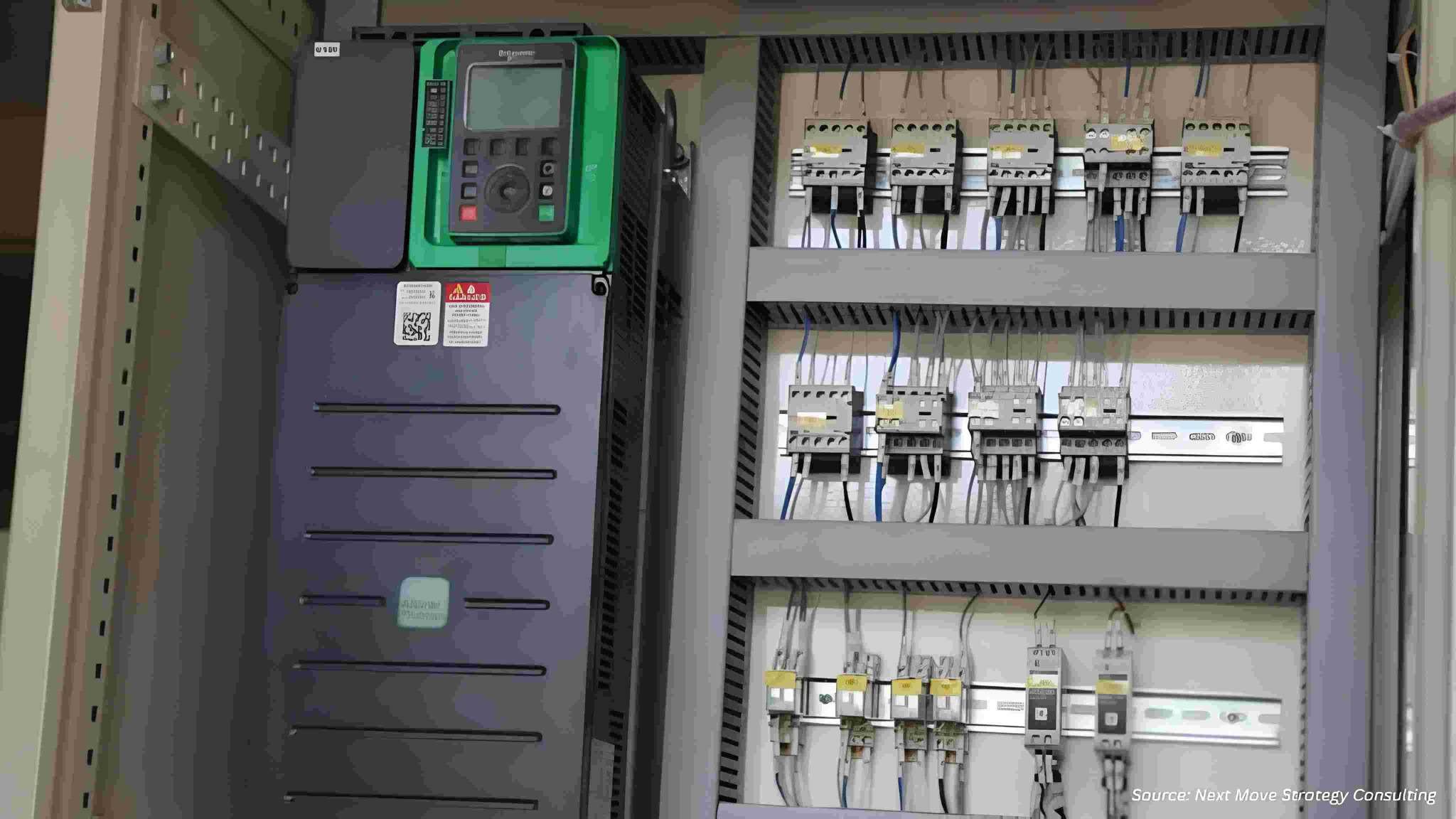
DCS integration is pivotal in automating treatment processes, tracking system performance, and minimizing operational risks, positioning it as essential technologies to support the continent’s evolving water and sanitation infrastructure while driving the broader Africa DCS market trends.
Curious about the Africa DCS Market? Download FREE Sample Now!
According to the report, the top players operating in the Africa DCS industry include Schneider Electric, ABB Ltd and others. These companies are adopting strategies, including partnerships, and product launches across various countries and regions to maintain their dominance in the market.
In recent years, the market has undergone a significant transformation, marked by a strong focus on automation, digitalization, and sustainable industrial development. Rather than serving solely as a tool for process control, leading industry players are positioning DCS solutions as essential enablers of smarter, more efficient, and resilient operations across Africa’s energy, manufacturing, and water sectors.
This evolution is being driven by increasing investments in industrial modernization, infrastructure development, and renewable energy integration, alongside a growing demand for real-time monitoring, optimized resource management, and scalable solutions that support the continent’s modernization and sustainable development goals.
A prime example of strategic advancement in the Africa DCS market share is Schneider Electric’s establishment of its first Innovation Hub in Midrand, Johannesburg. The hub provides a collaborative environment where engineers, system integrators, consultants, and entrepreneurs can develop DCS solutions specifically designed to meet the continent’s industrial and energy sector requirements.
As part of Schneider Electric’s global network of innovation centers, this initiative drives the accelerated adoption of advanced automation technologies, supports digitalization, and encourages innovation and collaboration, reinforcing the company’s pivotal role in driving growth and shaping the market future.
Meanwhile, ABB strengthened its position in the market by extending its partnership with South African paper producer Neopak to upgrade Paper Machine 3 (PM3) at the mill. The project implemented the ABB Ability™ System® 800xA DCS, integrating advanced technologies such as Quality Control Systems (QCS) and variable speed drives.
This enhancement improved real-time monitoring, predictive maintenance, and overall process control, showcasing how DCS solutions are driving operational efficiency, fostering digitalization, and supporting technological advancement across Africa’s industrial and manufacturing landscape, thereby contributing to the broader growth and adoption of the DCS sector on the continent.
Key Insights from the Africa Distributed Control System (DCS) Market Report:
-
The information related to key drivers, restraints, and opportunities and their impact on the Africa DCS market is provided in the report.
-
The value chain analysis in the market study provides a clear picture of the roles of each stakeholder.
-
The market share of the key players in the industry, along with their competitive analysis are provided in the report.
About the Author
 Bidhudhyoti Nag
— Bidhudhyoti Nag is a skilled market researcher known for delivering structured insights that support strategic decision-making. With strong analytical capabilities and a keen understanding of evolving market dynamics, he contributes to opportunity assessment, trend tracking, and insight-driven content development. He is passionate about translating research into clear narratives that inform business thinking and thought leadership. Outside of work, he enjoys sports, traveling, and exploring diverse cultures that broaden his global perspective.
Bidhudhyoti Nag
— Bidhudhyoti Nag is a skilled market researcher known for delivering structured insights that support strategic decision-making. With strong analytical capabilities and a keen understanding of evolving market dynamics, he contributes to opportunity assessment, trend tracking, and insight-driven content development. He is passionate about translating research into clear narratives that inform business thinking and thought leadership. Outside of work, he enjoys sports, traveling, and exploring diverse cultures that broaden his global perspective.
About the Reviewer
 Supradip Baul
— Supradip Baul is an accomplished business consultant and strategist with over a decade of rich experience in market intelligence, strategy, technology, and business transformation. His work has included rigorous qualitative and quantitative analysis across multiple industries, helping clients shape investment decisions and long-term roadmaps. Earlier in his career, he was associated with Gartner, where he contributed to industry-leading reports and market share analyses. He has worked with leading global companies and holds an MBA with a dual specialization in Marketing and Finance.
Supradip Baul
— Supradip Baul is an accomplished business consultant and strategist with over a decade of rich experience in market intelligence, strategy, technology, and business transformation. His work has included rigorous qualitative and quantitative analysis across multiple industries, helping clients shape investment decisions and long-term roadmaps. Earlier in his career, he was associated with Gartner, where he contributed to industry-leading reports and market share analyses. He has worked with leading global companies and holds an MBA with a dual specialization in Marketing and Finance.
















Add Comment