Africa Adds 466K Tons to Aquafeed Market Amid Farm Boom
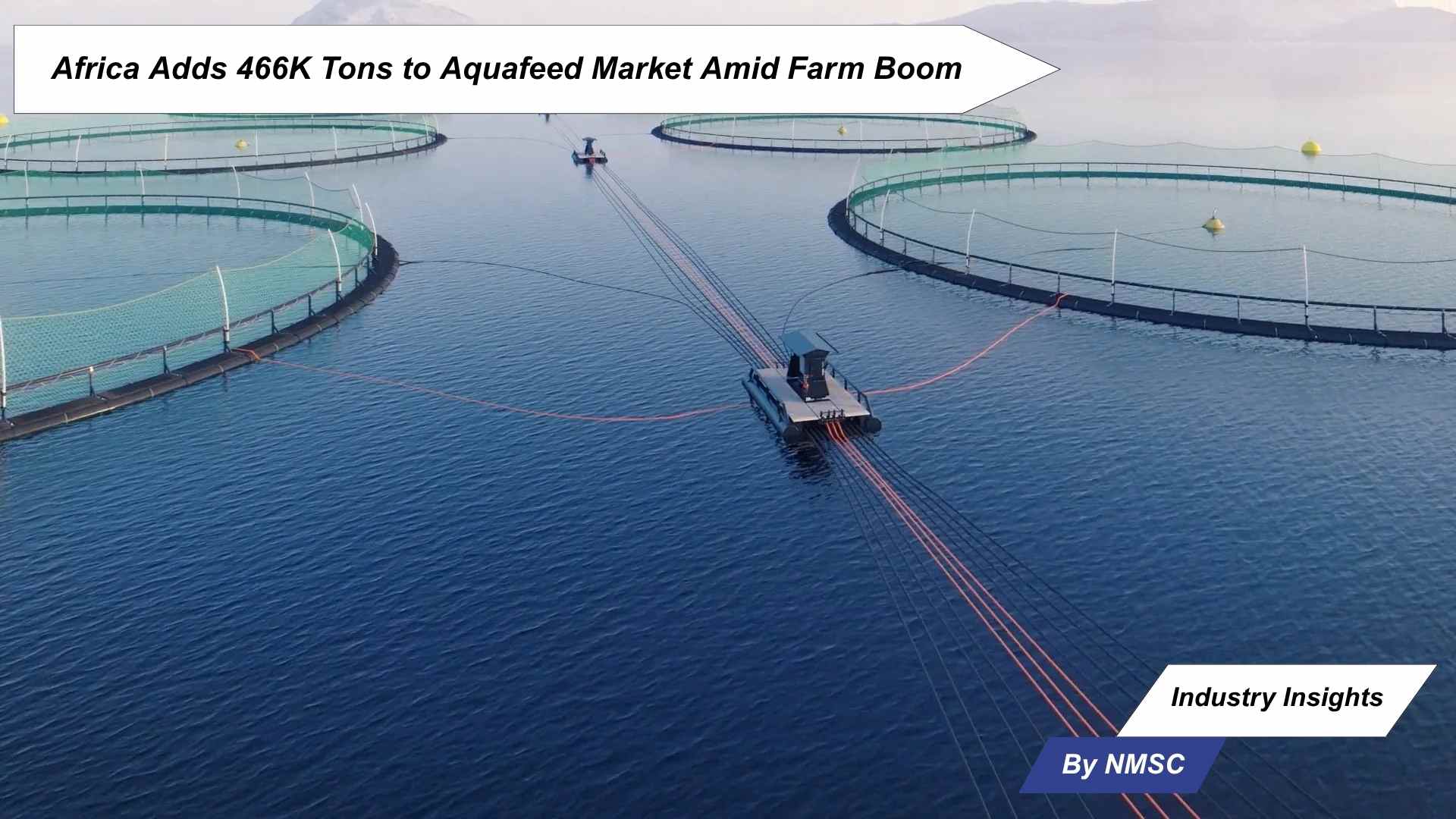
Africa’s Booming Aquaculture Sector Triggers 27.5% Surge in Aquafeed Market Size; Continental Shifts Underway
NAIROBI, Kenya — June 19, 2026 — Driven by a historic expansion across regional aquaculture infrastructure, Africa’s aquafeed consumption achieved double-digit growth in 2025. Emerging as one of the fastest-growing commercial fish farming sectors globally, the continent added 466,000 metric tons (MT) to its aquafeed market space, breaking years of stagnant supply dynamics.
Structural Shift Beyond Legacy Silos
Data from the newly published "2026 Alltech Agri-Food Outlook" highlights that global aquaculture feed volumes expanded by 4.7 percent year-over-year, hitting a total of 55.5 million MT. However, Africa vastly outperformed the global baseline with a massive 27.5 percent surge. Regional growth was heavily accelerated by Egypt, where domestic aquafeed consumption spiked by 36 percent.
This rapid industrialization reflects a long-term trajectory. Figures from the World Economic Forum indicate that African aquaculture production has expanded by 500 percent over a two-decade window, climbing to an output of 2.5 million MT.
"The structural shift inside the African aquaculture ecosystem is fundamentally redirecting global agricultural supply chains," notes Sanyukta Deb, Lead Digital Strategist at Next Move Strategy Consulting. "Our market indicators reveal an aggressive pivot toward scaling infrastructure and localizing supply lines as enterprises move to safeguard raw material access."
Key Industrial Milestones:
-
Infrastructure Capital Influx: Highlighting regional commercialization, Dutch animal nutrition firm De Heus completed a USD 25 million investment to launch East Africa's largest fish feed mill in Uganda. Running an annual capacity of 100,000 MT, the facility commenced active operations in late 2025.
-
Alternative Ingredient Innovation: To insulate supply lines from climate-induced disruptions—such as ongoing fishing suspensions affecting South American anchoveta reserves—producers are pivoting toward alternative inputs. Egypt is actively trailing corn fermented protein (CFP) and distiller's dried solubles (DDGS) to replace volatile imports.
-
Low-Cost Formulations: Driven by the Technologies for African Agricultural Transformation (TAAT) program, funded by the African Development Bank, fresh initiatives are standardizing localized pelleting procedures to shield small and medium enterprises (SMEs) from macroeconomic shocks.
Defining the New Frontier of Aquaculture Production
While Africa represented roughly 3 percent of total global aquaculture outputs in 2025, commercial analysts view the region as the most significant expansion opportunity in modern agribusiness. Favorable natural topologies combined with soaring domestic protein demand are turning the continent into a primary focus for international enterprise capital.
"The rapid adoption of modern feeding tech and localized milling infrastructure confirms that African Aquaculture Market is moving out of its nascent stage," according to NMSC market analysts. "Unlocking regional efficiency through multi-million-dollar supply investments will dictate the pace of the global seafood market over the next decade."
Source: Seafood source
Prepared By: Prakhyat Chowdhury
About the Author
 Sanyukta Deb
— Sanyukta Deb is Digital Marketing Team Lead at Next Move Strategy Consulting, where she has led content strategy and technical SEO for the firm's B2B market research publications for over 2 years. Her editorial process translates NextMSC's primary and secondary research — spanning technology, industrial, and consumer sectors — into commercial narratives, backed by search-intent, keyword, and competitive analysis. She brings 5 years of overall experience in digital marketing and content strategy.
Sanyukta Deb
— Sanyukta Deb is Digital Marketing Team Lead at Next Move Strategy Consulting, where she has led content strategy and technical SEO for the firm's B2B market research publications for over 2 years. Her editorial process translates NextMSC's primary and secondary research — spanning technology, industrial, and consumer sectors — into commercial narratives, backed by search-intent, keyword, and competitive analysis. She brings 5 years of overall experience in digital marketing and content strategy.
About the Reviewer
 Debashree Dey
— Debashree Dey is Assistant Manager at Next Move Strategy Consulting, where she supports cross-vertical market content and communications across diverse industries for 6 years. Her professional background includes senior content writing, communications, and published manuscript authorship, with experience developing audience-focused business narratives and maintaining clear, consistent messaging. Her role supports research-led content development and editorial quality across NextMSC publications.
Debashree Dey
— Debashree Dey is Assistant Manager at Next Move Strategy Consulting, where she supports cross-vertical market content and communications across diverse industries for 6 years. Her professional background includes senior content writing, communications, and published manuscript authorship, with experience developing audience-focused business narratives and maintaining clear, consistent messaging. Her role supports research-led content development and editorial quality across NextMSC publications.

















Add Comment