Global Cooking Oil Market: Price Surge and Supply Shifts

FAO Vegetable Oil Price Index Reaches Four-Year High as Indonesia's B50 Mandate and India's Record Import Surge Reshape Global Cooking Oil Dynamics
The global vegetable oil market is navigating one of its most consequential structural realignments since the commodity price crisis of 2022. On August 7, 2026, the United Nations Food and Agriculture Organization (FAO) confirmed that its Vegetable Oil Price Index averaged 195.7 points in July 2026 — a 2.0 percent month-on-month increase and the highest reading recorded since June 2022. The milestone was driven by a simultaneous convergence of three globally significant developments: Indonesia's landmark B50 biodiesel mandate, a 34 percent surge in India's edible oil imports, and tightening global vegetable oil stocks — all of which are exerting compounding pressure on the global Cooking Oil Market.
The FAO's benchmark Food Price Index (FFPI) — which tracks monthly changes in international prices of the most globally traded food commodities — averaged 131.1 points in July 2026, up 0.6 percent from June, with the vegetable oil sub-index registering the sharpest upward movement among all commodity groups. Higher quotations for palm and soybean oil were the primary drivers, more than offsetting lower sunflower and rapeseed oil prices, which declined on expectations of larger supplies in the 2026/27 season — though renewed tensions in the Black Sea region limited further price declines for those grades.
For More Information: Download FREE Sample on Cooking Oil Market Report
Indonesia's B50 Mandate: A Structural Demand Catalyst
The most consequential policy development reshaping global cooking oil supply chains in 2026 is Indonesia's transition to its B50 biodiesel mandate, formally launched on July 1, 2026. The mandate requires all diesel fuel to contain 50 percent palm oil-based biodiesel — an increase from the previous 40 percent (B40) blend — making Indonesia's biofuel program one of the most ambitious in the world.
According to a USDA Foreign Agricultural Service (FAS) report — Indonesia: Oilseeds and Products Update, published August 5, 2026 — Indonesia's B50 transition is projected to raise domestic palm oil consumption by 11 percent to 25.3 million tonnes. Industrial palm oil use is expected to increase by 16 percent to 17.4 million tonnes, up from a revised figure of 15 million tonnes in 2025/26, driven entirely by the biodiesel sector. Domestic palm oil consumption in the food sector — encompassing cooking oil and food processing industries — is forecast at 7.6 million tonnes, an increase of 100,000 tonnes compared to 2025/26.
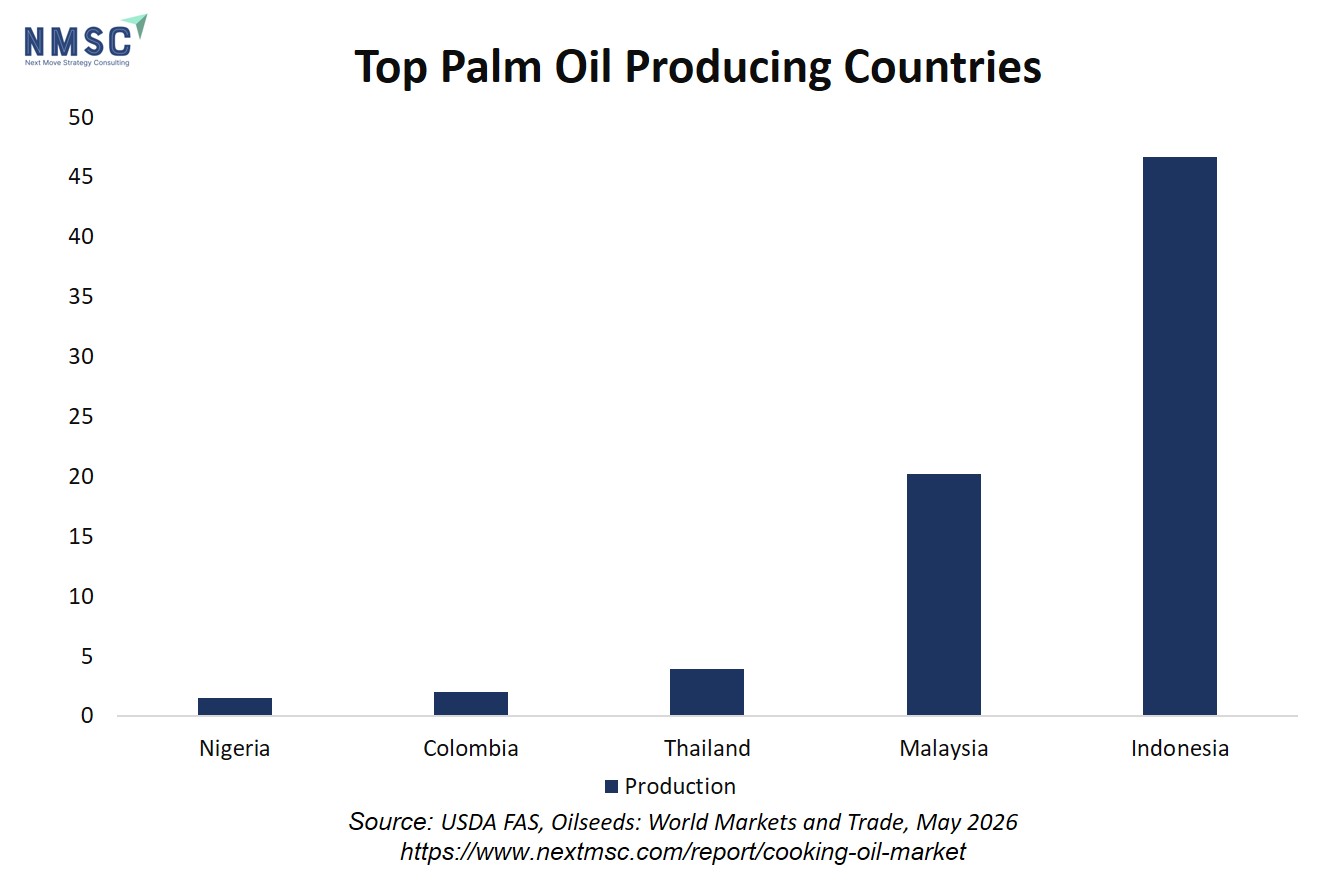
The mandate's implementation carries direct and material consequences for global palm oil supply availability. Compounded by an El Niño period — confirmed by Indonesia's Meteorology, Climatology, and Geophysics Agency (BMKG) in June 2026 and expected to persist until 2027 — the USDA revised Indonesia's 2026/27 palm oil production forecast downward from 48 million tonnes to 47.2 million tonnes, reflecting a projected 2 percent decline in production potential from prolonged drought conditions. Exportable palm oil shipments are forecast to decline to 23.1 million tonnes in 2026/27, down from a prior USDA estimate of 25 million tonnes.
Palm oil stocks in Indonesia are expected to fall by 28 percent to 3.1 million tonnes in 2026/27, down from 4.3 million tonnes the previous year — a development that will reverberate across global cooking oil supply chains.
"International palm oil prices rose for the second consecutive month, largely underpinned by firm demand from Indonesia's biodiesel sector and higher crude oil prices, which outweighed downward pressure from seasonally higher production in Southeast Asia," the FAO stated in its August 2026 Food Price Index release.
India's Import Surge: Demand Pressure from the World's Largest Importer
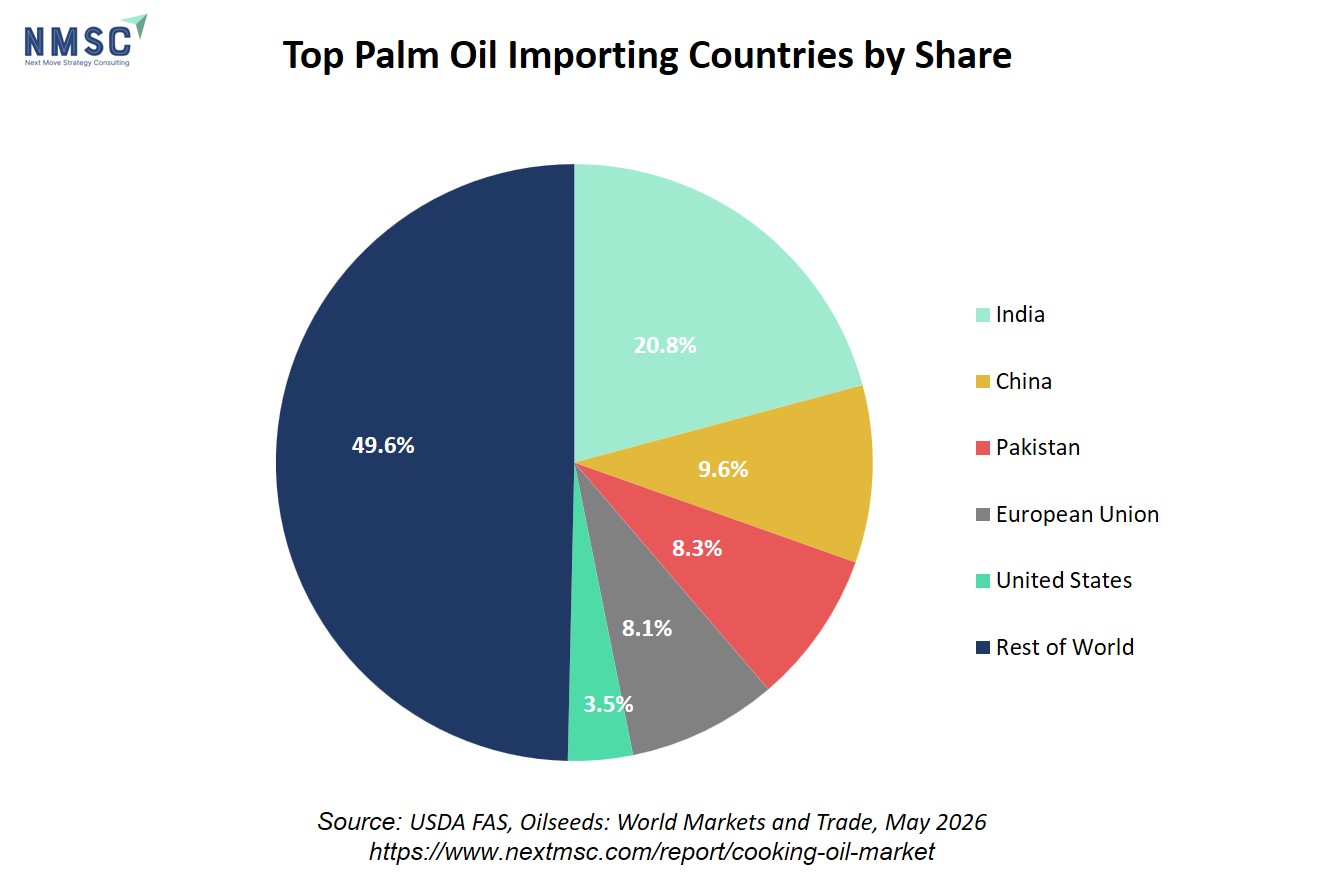
Simultaneously, India — the world's second-largest consumer and leading importer of vegetable oil — recorded a dramatic acceleration in edible oil imports in July 2026. Edible oil shipments to India increased by 34 percent month-on-month in July 2026, reaching a 10-month high of 1.49 million tonnes, according to industry estimates reported by the Knowledge and News Network (KNN) and cited by Oils & Fats International on August 10, 2026.
The composition of India's July 2026 import surge reflects broad-based demand across all major oil categories:
-
Palm oil imports jumped 50 percent from June to 733,000 tonnes — a five-month high
-
Soybean oil imports increased 32 percent to 501,000 tonnes — the highest level in seven months
-
Sunflower oil shipments rose 4 percent to 253,000 tonnes
The surge was driven by refiners replenishing inventories ahead of India's festival season, when edible oil consumption typically accelerates. Lower domestic rapeseed and soybean crushing further amplified import demand. Industry analysts projected that soybean oil imports could exceed 500,000 tonnes in August and September 2026, supported by competitive international prices.
India primarily imports palm oil from Indonesia and Malaysia, while soybean and sunflower oil are sourced mainly from Argentina, Brazil, Russia, and Ukraine. The USDA's April 2025 Oil Crops Outlook had already flagged India's soybean oil imports reaching a record-high 4.6 million metric tons for MY 2024/25, underscoring the structural depth of India's import dependency.
Supply Constraints and Global Price Dynamics
The USDA's April 2025 Oil Crops Outlook had already identified tightening global vegetable oil supply conditions well before the B50 mandate's implementation. Global palm oil production for MY 2024/25 was forecast at 78.2 million metric tons — reduced by 1.3 million metric tons from prior estimates — due to lower production in Malaysia, Indonesia, and Thailand. Malaysia's palm oil production was forecast at 18.7 million metric tons, down 1.0 million metric tons from the previous year, following widespread flooding in key producing regions of Sabah and Sarawak.
Global vegetable oil stocks for MY 2024/25 were projected to decline to 29.0 million metric tons — the lowest level since MY 2020/21 — reflecting the combined pressure of constrained supply and robust demand across food and biofuel applications. Global palm oil consumption was forecast at 77.0 million metric tons, with India, China, and the United States collectively accounting for 92 percent of the decline in palm oil consumption as buyers substituted toward soybean oil.
The OECD-FAO Agricultural Outlook 2025-2034, published in July 2025, provides the structural context for these developments. The report projects that vegetable oil prices will remain relatively stronger over the next decade due to sustained demand growth and slower production growth for palm oil and other oilseeds. Per capita food consumption of vegetable oil is projected to increase at 0.5 percent per annum globally, driven by rising disposable incomes and population growth in middle- and low-income countries.
World soybean oil prices also increased in July 2026, underpinned by persistently robust feedstock demand in the United States and stronger global import demand amid greater price competitiveness, the FAO reported. Global soybean oil production for MY 2024/25 was forecast at 68.7 million metric tons, with global soybean oil trade reaching a record high of 13.9 million metric tons.
Regional Market Dynamics
Asia-Pacific remains the dominant region in the global cooking oil market, a position reinforced by the structural developments of 2026. Indonesia and Malaysia collectively account for more than 80 percent of global palm oil production and approximately 53 percent of total global vegetable oil exports, according to the OECD-FAO Agricultural Outlook 2025-2034. However, the region's export capacity is under increasing pressure. Indonesia's B50 mandate is redirecting palm oil volumes from export markets to domestic biofuel production. The USDA noted that Indonesia's palm oil exports from October 2025 to May 2026 increased by 5.3 percent to 14.9 million tonnes compared to the previous year, but growth was concentrated in China (up 43.7 percent) and Egypt (up 42.7 percent), while exports to India and Pakistan declined by 18.4 percent and 3.6 percent respectively — indicating a reallocation of supply rather than broad-based demand growth.
The OECD-FAO Outlook projects that India will sustain per capita food consumption growth of 2.5 percent per annum for vegetable oil, reaching 13 kg per person by 2034 — driven by population growth, urbanization, and rising disposable incomes. India's imports of mainly palm oil from Indonesia and Malaysia are expected to decline over the medium term as the Indian government implements programs to increase domestic oilseed production, though near-term import dependency remains structurally high.
North America continues to benefit from the U.S. Food and Drug Administration's regulatory framework encouraging cholesterol-free and low-calorie cooking oils, supporting demand for healthier oil variants. The USDA reported that U.S. soybean oil exports for MY 2024/25 were forecast at a record-high 2.3 billion pounds — the highest since MY 2019/20 — driven by strong global import demand and competitive pricing. The growing Hydrotreated Vegetable Oil (HVO) or Renewable Diesel sector in the United States is also expected to sustain domestic vegetable oil demand, particularly in states such as California with strong biofuel production incentives.
Europe faces a distinct set of structural pressures. The European Union's deforestation regulation (Regulation (EU) 2023/1115) — which includes palm oil and soybeans as relevant products alongside cattle, cocoa, coffee, rubber, and wood — is expected to influence trade flows and sourcing decisions for European food manufacturers and biofuel producers. The OECD-FAO Outlook projects that the EU's use of vegetable oil as feedstock for biomass-based diesel will shrink by 2.6 percent per annum, driven by policy reforms, reduced overall diesel use, and the emergence of second-generation biofuel technologies.
FAO Vegetable Oil Price Index — Selected Monthly Readings, 2025–2026
|
Month / Period |
FAO Vegetable Oil Price Index (Points) |
Change |
Key Driver |
|
October 2025 |
169.4 |
+0.9% month-on-month |
Seasonal demand recovery; palm and soy price support |
|
January 2026 |
N/A |
+10.2% year-on-year |
Higher palm, soy, and sunflower oil prices |
|
February 2026 |
N/A |
+3.3% month-on-month |
Highest level since June 2022 (at the time of reporting) |
|
July 2026 |
195.7 |
+2.0% month-on-month |
Indonesia B50 mandate; robust U.S. and India soybean oil demand |
Key Company Developments
The competitive landscape of the global cooking oil market is being shaped by the same structural forces driving price and supply dynamics. Bunge Limited — one of the world's largest agribusiness companies and a key player in the cooking oil market — reported strong second-quarter 2026 results, driven by good performances from its soybean and softseed processing and refining segments, supported by improving market conditions, according to Oils & Fats International (August 12, 2026).
Cargill, Archer Daniels Midland Company, and Louis Dreyfus Company — all identified as key players in the NMSC Cooking Oil Market report — continue to navigate the dual pressures of tightening palm oil supply and rising biofuel demand. The Indonesian government's plan to centralize palm oil exports through a designated state-owned company — Danantara Sumberdaya Indonesia (DSI) — has created uncertainty within the industry, with implementation details remaining unclear ahead of a January 2027 deadline, the USDA FAS noted.
Sime Darby Plantation, one of the world's largest palm oil producers, faces the dual challenge of El Niño-related yield pressures and increasing sustainability scrutiny from major importing markets. The OECD-FAO Outlook notes that increasingly stringent environmental policies from major palm oil importers and sustainable agriculture norms are expected to slow the expansion of oil palm area in Indonesia and Malaysia, implying that production growth must increasingly come from productivity improvements and replanting programs rather than area expansion.
The health and wellness trend continues to reshape product mix within the cooking oil market. Rising incidences of cardiovascular disease globally have prompted consumers to shift toward healthier cooking oil variants, including olive oil, avocado oil, and low-cholesterol vegetable oils. Companies such as Marico Limited are responding with health-positioned product lines — including Saffola Active, marketed as a lower fat-absorption cooking oil — while Nutiva's organic and plant-based offerings reflect the broader premiumization trend in the sector, as noted in the NMSC Cooking Oil Market report.
Key Global Vegetable Oil Market Indicators, Marketing Year 2024/25
|
Indicator |
Volume |
Unit |
Status / Change vs. Prior Year |
|
Global Palm Oil Production |
78.2 |
Million Metric Tons |
Reduced; lower output in Malaysia, Indonesia, Thailand |
|
Global Palm Oil Consumption |
77.0 |
Million Metric Tons |
Reduced; lower India, China, U.S. demand |
|
Global Soybean Oil Production |
68.7 |
Million Metric Tons |
Increased; higher crush in Argentina, Brazil, U.S. |
|
Global Vegetable Oil Stocks |
29.0 |
Million Metric Tons |
Lowest level since MY 2020/21 |
|
Global Vegetable Oil Trade |
86.4 |
Million Metric Tons |
Slightly higher year-on-year |
|
India Soybean Oil Imports |
4.6 |
Million Metric Tons |
Record high for MY 2024/25 |
|
Global Soybean Crush Volume |
354.8 |
Million Metric Tons |
Increased; higher Argentina, Brazil, U.S., Ukraine crush |
|
Global Soybean Meal Exports |
79.9 |
Million Metric Tons |
Record high |
Market Outlook and Strategic Implications
According to the NMSC Cooking Oil Market report, the global cooking oil market was valued at USD 172.50 billion in 2021 and is projected to reach USD 263.05 billion by 2030, representing a CAGR of 4.8 percent over the forecast period 2022–2030. Asia-Pacific is expected to maintain the highest market share throughout the forecast period, driven by the dominant production of palm oil in Malaysia and Indonesia, rising adoption of rapeseed oil for snack foods, and the growing aquaculture industry across Vietnam, China, India, and Indonesia.
The biofuel nexus represents both an opportunity and a structural risk for the cooking oil market. The OECD-FAO Outlook estimates that approximately 18 percent of global vegetable oil supplies currently go to biomass-based diesel production — a share that is projected to grow, particularly in Indonesia, Brazil, and the United States. Indonesia's B50 mandate, combined with the United States' expanding HVO sector and Brazil's biofuel program, is expected to sustain demand pressure on vegetable oil supplies, keeping prices elevated relative to historical norms.
Global soybean production in 2024/25 is anticipated to expand by approximately 7 percent from the previous season, resulting in the first season with soybean production in excess of 400 million metric tons, mainly due to forecast output increases from South America. Brazil is projected to account for 53 percent of total global soybean exports by 2034, reinforcing its position as the world's dominant oilseed supplier.
The online sales channel and direct-to-consumer distribution models are gaining traction within the cooking oil market, particularly for premium and specialty oil segments. The NMSC report identifies online sales channels as a key distribution segment alongside supermarkets, independent retail stores, and business-to-business channels — a segmentation that reflects the accelerating digitalization of food retail globally.
Bottom Line
The global cooking oil market is entering a period of sustained structural tightening, driven by the convergence of policy-driven biofuel demand, constrained palm oil supply, and robust food consumption growth across emerging markets. Indonesia's B50 biodiesel mandate — the most consequential policy development of 2026 — is redirecting significant volumes of palm oil from export markets to domestic use, compressing global supply availability at a time when the FAO Vegetable Oil Price Index has reached its highest level since June 2022. India's 34 percent import surge in July 2026 underscores the depth of demand pressure from the world's largest vegetable oil importer, with festival-season restocking and lower domestic crushing amplifying near-term import volumes. For investors and industry participants, the near-term outlook favors producers with diversified oil portfolios and exposure to premium health-oriented segments. Supply-side risks — including El Niño-related yield disruptions in Southeast Asia, EU deforestation regulations, geopolitical tensions affecting Black Sea sunflower oil flows, and Indonesia's evolving export centralization policy — warrant close monitoring. The NMSC Cooking Oil Market report projects the market to reach USD 263.05 billion by 2030, reflecting a CAGR of 4.8 percent, with Asia-Pacific maintaining its dominant position. Strategic opportunities lie in health-positioned product innovation, biofuel feedstock supply chain integration, and digital distribution channel expansion across high-growth emerging markets.
About Next Move Strategy Consulting
Next Move Strategy Consulting is a premier market research and management consulting firm that has been committed to provide strategically analysed well documented latest research reports to its clients. The research industry is flooded with many firms to choose from, what makes NMSC different from the rest is its top-quality research and the obsession of turning data into knowledge by dissecting every bit of it and providing fact-based research recommendation that is supported by information collected from over 500 million websites, paid databases, industry journals and one on one consultations with industry experts across a diverse range of industry sectors. The high-quality customized research reports with actionable insights and excellent end-to-end customer service help our clients to take critical business decisions that enables them to move beyond time and have competitive edge in the industry.
We have been servicing over 1000 customers globally that includes 90% of the Fortune 500 companies over a decade. Our analysts are constantly tracking various high growth markets and identifying hidden opportunities in each sector or the industry. We provide one of the industry's best quality syndicate as well as custom research reports across 10 different industry verticals. We are committed to deliver high quality research solutions in accordance to your business needs. Our industry standard delivery solutions that ranges from the pre consultation to after-sales services, provide an excellent client experience and ensure right strategic decision making for businesses.
For more information, please contact:
Next Move Strategy Consulting
5th Floor 867 Boylston St, STE 500,
Boston, MA 02116, U.S.
E-Mail: [email protected]
Direct: +1-217-650-7991
Website: www.nextmsc.com
About the Author
 Sanyukta Deb
— Sanyukta Deb is Digital Marketing Team Lead at Next Move Strategy Consulting, where she has led content strategy and technical SEO for the firm's B2B market research publications for over 2 years. Her editorial process translates NextMSC's primary and secondary research — spanning technology, industrial, and consumer sectors — into commercial narratives, backed by search-intent, keyword, and competitive analysis. She brings 5 years of overall experience in digital marketing and content strategy.
Sanyukta Deb
— Sanyukta Deb is Digital Marketing Team Lead at Next Move Strategy Consulting, where she has led content strategy and technical SEO for the firm's B2B market research publications for over 2 years. Her editorial process translates NextMSC's primary and secondary research — spanning technology, industrial, and consumer sectors — into commercial narratives, backed by search-intent, keyword, and competitive analysis. She brings 5 years of overall experience in digital marketing and content strategy.
About the Reviewer
 Debashree Dey
— Debashree Dey is Assistant Manager at Next Move Strategy Consulting, where she supports cross-vertical market content and communications across diverse industries for 6 years. Her professional background includes senior content writing, communications, and published manuscript authorship, with experience developing audience-focused business narratives and maintaining clear, consistent messaging. Her role supports research-led content development and editorial quality across NextMSC publications.
Debashree Dey
— Debashree Dey is Assistant Manager at Next Move Strategy Consulting, where she supports cross-vertical market content and communications across diverse industries for 6 years. Her professional background includes senior content writing, communications, and published manuscript authorship, with experience developing audience-focused business narratives and maintaining clear, consistent messaging. Her role supports research-led content development and editorial quality across NextMSC publications.


















Add Comment