AI-Enabled Railway: AI Drives Smart Rail Asset Management
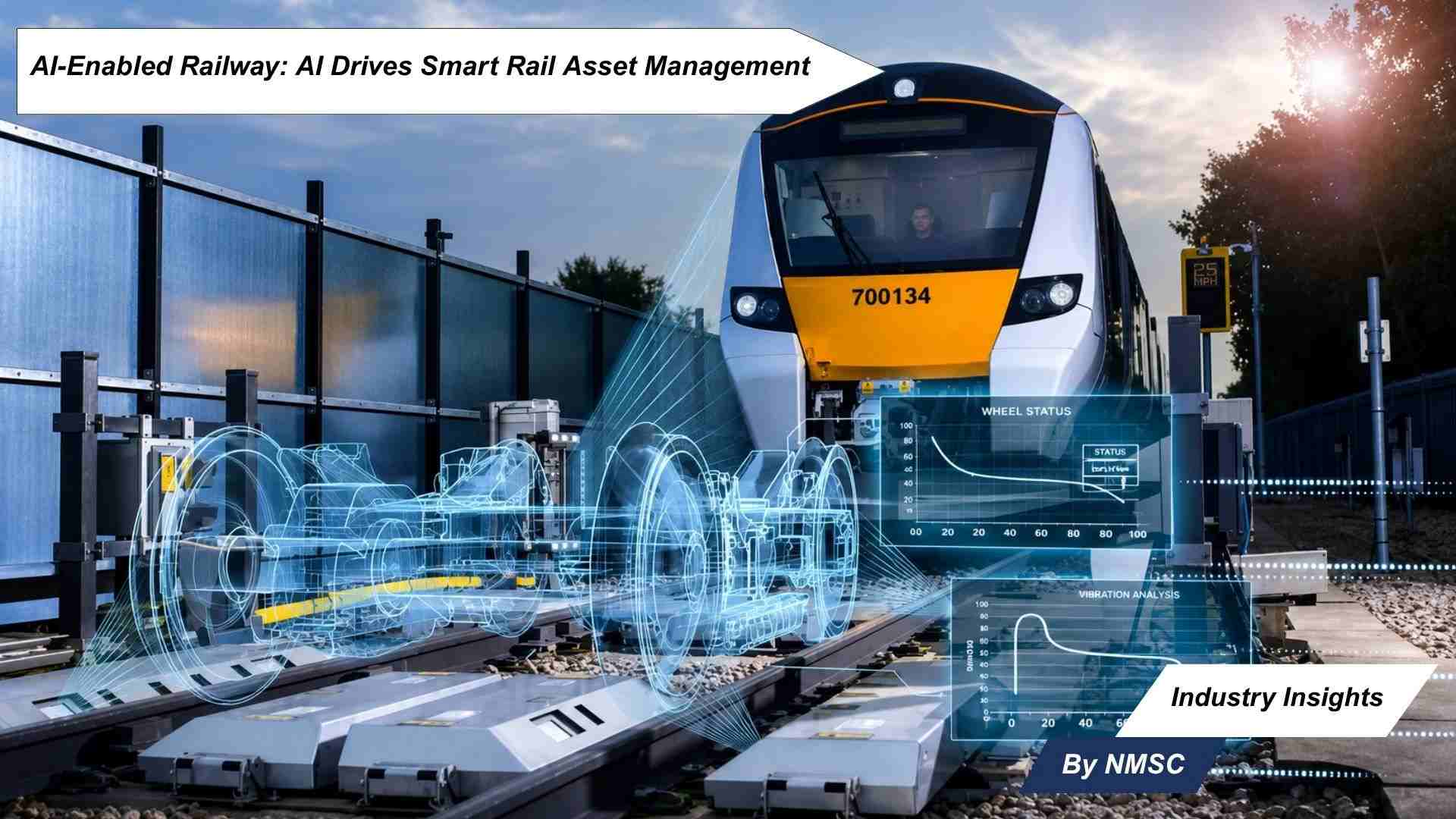
Arup Calls for AI-Driven System-Level Thinking to Reshape Global Rail Asset Management
LONDON, United Kingdom — July 24, 2026 — Infrastructure engineering firm Arup has called on railway operators and infrastructure managers worldwide to adopt artificial intelligence and system-level thinking as foundational tools for managing rail assets, warning that traditional, siloed approaches are no longer adequate in an era of tighter funding, climate risk, and rising passenger expectations.
Sharon Rose, Director of Assets & Operations at Arup, outlined the case for a strategic shift in how the AI-Enabled Railway industry approaches infrastructure investment — moving away from individual asset assessments toward network-wide, AI-powered decision-making frameworks.
Main Development
Speaking in an analysis published by Global Railway Review on July 23, 2026, Rose emphasized that the UK rail sector's current Control Period 7 (CP7) — a £44 billion five-year funding and planning cycle for Network Rail across Great Britain — demands a more intelligent and adaptive approach to infrastructure management.
"It has to be flipped on its head and managed at a system level," Rose stated, underscoring the need to evaluate how assets interact across entire rail corridors rather than in isolation.
Rose identified artificial intelligence and predictive analytics as critical enablers of this transformation. Arup is already deploying its Loupe 360 platform, which applies machine learning techniques to tunnel inspection datasets to identify defects, deterioration patterns, and maintenance requirements at scale — automating analysis that would otherwise require extensive manual engineering review.
Beyond individual asset monitoring, Rose highlighted the growing role of digital twins and integrated network modelling in helping infrastructure managers understand how localized failures can cascade across entire rail systems. A bridge strike, for instance, can generate disruption hundreds of miles away due to the interconnected nature of train operations.
However, Rose cautioned against technology-led implementation. "AI shouldn't be leading. You have to understand the core problem you're trying to solve first," she said, stressing that digital tools must serve clearly defined strategic objectives rather than drive them.
Climate resilience also featured prominently in her analysis. As extreme weather events accelerate asset deterioration and increase service disruption risk, Rose argued that AI-enabled monitoring and predictive modelling are essential for identifying where infrastructure investment will deliver the greatest operational benefit under evolving environmental conditions.
Key Highlights:
-
Arup's Sharon Rose advocates for AI and system-level thinking as essential tools for modern rail asset management under the UK's £44bn CP7 funding cycle
-
Arup's Loupe 360 platform uses machine learning to automate tunnel inspection analysis, identifying defects and deterioration patterns at scale
-
Digital twins and network modelling are enabling infrastructure managers to visualize cascading risk propagation across interconnected rail systems
Analyst Insight:
According to analysts at Next Move Strategy Consulting, the AI-enabled railway market is experiencing strong growth, primarily driven by government-funded infrastructure projects aimed at modernizing transportation systems. Increasing investments to enhance public safety and operational efficiency are encouraging the deployment of AI technologies in train control, traffic management, and predictive maintenance. The rise of AI-powered autonomous train systems presents a major opportunity, offering enhanced reliability, energy efficiency, and the potential for scalable adoption across global rail networks. NMSC analysts note that regulatory and integration challenges remain key restraints, requiring harmonized frameworks and compatible solutions to enable broader market expansion.
Industry Outlook:
The convergence of AI, machine learning, and digital twin technologies is accelerating the transformation of global railway infrastructure management. As governments across North America, Europe, and Asia-Pacific continue to allocate substantial capital toward rail modernization — including the U.S. Department of Transportation's USD 110 billion infrastructure allocation and India's Ministry of Railways' USD 31.5 billion budget for 2025–26 — demand for intelligent, AI-enabled rail solutions is expected to intensify. Industry stakeholders that embed AI into long-term operating strategies and governance frameworks are positioned to gain a sustained competitive advantage as the technology reshapes how rail networks are planned, operated, and maintained.
Source: Global Railway Review
For More Information – Download FREE Sample on AI-Enabled Railway Market Report
Prepared By: Sanyukta Deb
About the Author
 Sanyukta Deb
— Sanyukta Deb is Digital Marketing Team Lead at Next Move Strategy Consulting, where she has led content strategy and technical SEO for the firm's B2B market research publications for over 2 years. Her editorial process translates NextMSC's primary and secondary research — spanning technology, industrial, and consumer sectors — into commercial narratives, backed by search-intent, keyword, and competitive analysis. She brings 5 years of overall experience in digital marketing and content strategy.
Sanyukta Deb
— Sanyukta Deb is Digital Marketing Team Lead at Next Move Strategy Consulting, where she has led content strategy and technical SEO for the firm's B2B market research publications for over 2 years. Her editorial process translates NextMSC's primary and secondary research — spanning technology, industrial, and consumer sectors — into commercial narratives, backed by search-intent, keyword, and competitive analysis. She brings 5 years of overall experience in digital marketing and content strategy.
About the Reviewer
 Debashree Dey
— Debashree Dey is Assistant Manager at Next Move Strategy Consulting, where she supports cross-vertical market content and communications across diverse industries for 6 years. Her professional background includes senior content writing, communications, and published manuscript authorship, with experience developing audience-focused business narratives and maintaining clear, consistent messaging. Her role supports research-led content development and editorial quality across NextMSC publications.
Debashree Dey
— Debashree Dey is Assistant Manager at Next Move Strategy Consulting, where she supports cross-vertical market content and communications across diverse industries for 6 years. Her professional background includes senior content writing, communications, and published manuscript authorship, with experience developing audience-focused business narratives and maintaining clear, consistent messaging. Her role supports research-led content development and editorial quality across NextMSC publications.

















Add Comment