Air Taxi Market Size is Rising with Port SA Expansion
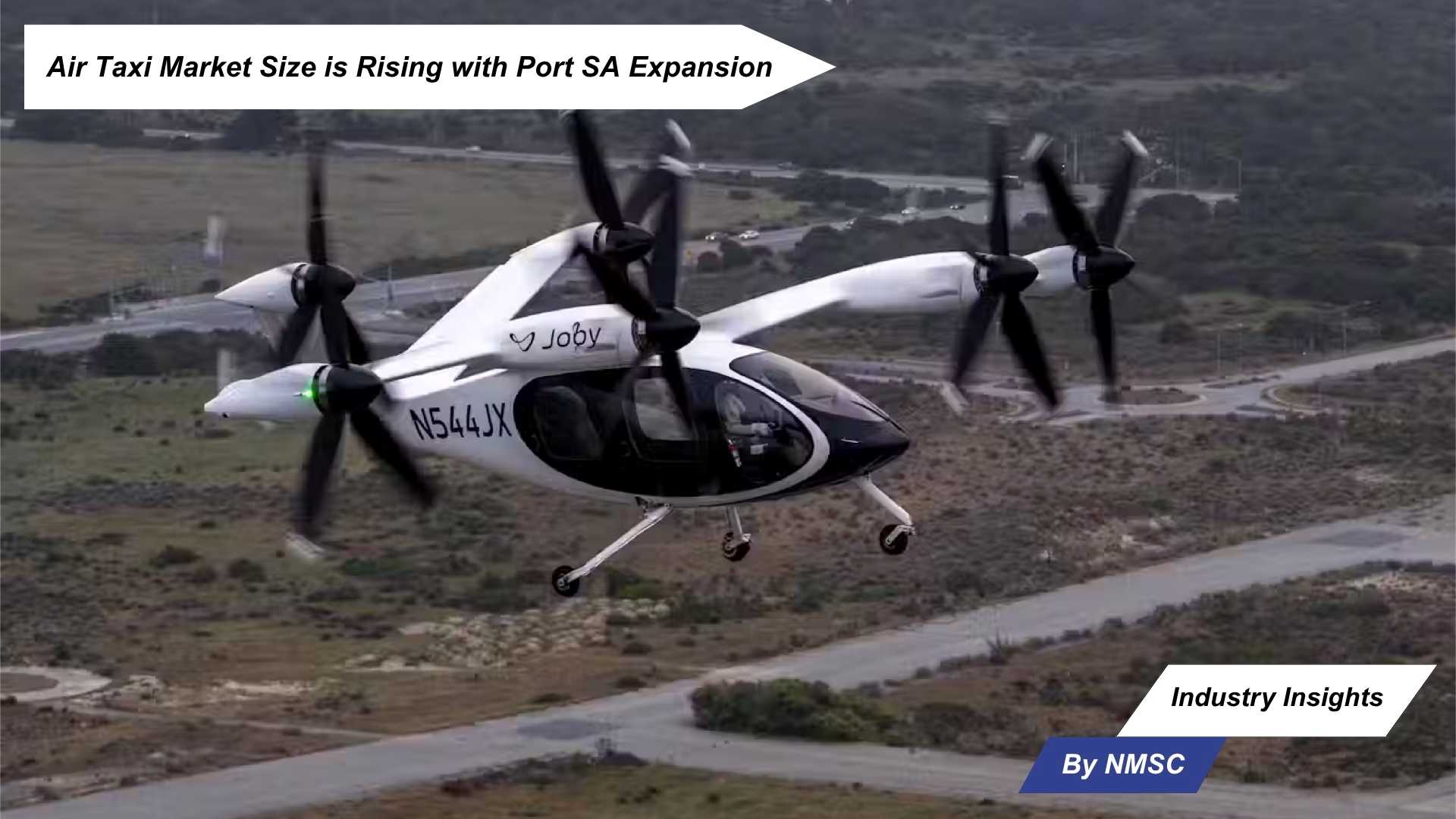
Port SA Accelerates Air Taxi Projects, Signals New Phase in Air Mobility Market
SAN ANTONIO, United States — May 5, 2026 — A major push by Port San Antonio into advanced air mobility (AAM) is accelerating the development of urban air taxis and flying buses, marking a pivotal moment for the global air taxi market.
The initiative, which supports next-generation aircraft testing and infrastructure development, reflects a broader shift toward integrating aerial mobility into urban transportation ecosystems. Industry observers view this as a concrete step toward commercializing electric vertical takeoff and landing (eVTOL) aircraft.
A Strategic Leap Beyond Traditional Transport
Urban congestion and sustainability pressures have long challenged city planners. Port San Antonio’s latest move positions it as a critical testing ground for AAM solutions, including autonomous air taxis and multi-passenger flying vehicles.
Unlike earlier experimental programs, this initiative focuses on real-world deployment readiness—combining aerospace engineering, airspace management, and regulatory collaboration under one ecosystem.
“Advanced air mobility is transitioning from concept to commercialization,” notes an analyst at Next Move Strategy Consulting. “Infrastructure-backed initiatives like this are essential to unlocking scalable market growth.”
Key Developments Driving Momentum
The Port’s AAM support framework includes:
-
Flight Testing Infrastructure: Dedicated zones for eVTOL aircraft trials and validation
-
Public-Private Collaboration: Partnerships with aerospace innovators and defense stakeholders
-
Urban Integration Planning: Focus on aligning air mobility with city transport networks
-
Workforce Development: Training programs for next-gen aviation technologies
These developments are expected to reduce time-to-market for AAM companies while improving investor confidence.
Industry Response and Market Implications
The announcement has drawn attention from global aviation firms and mobility startups seeking operational bases in the U.S. With regulatory pathways gradually becoming clearer, infrastructure-led ecosystems like Port SA could define early winners in the air taxi market.
According to NMSC analysts, the air taxi market is entering a high-growth phase, driven by:
-
Increasing urbanization and traffic congestion
-
Advances in battery and autonomous flight technologies
-
Rising investments in sustainable aviation solutions
“Market expansion will hinge on infrastructure readiness as much as technological innovation,” a Next Move analyst adds.
Redefining Urban Mobility Economics
As cities look to reduce carbon emissions and improve transit efficiency, Air Taxis and flying buses are emerging as viable alternatives. Port San Antonio’s initiative signals a shift from isolated pilot projects to integrated mobility systems.
With strong institutional backing and growing industry participation, advanced air mobility is poised to reshape transportation economics—turning science fiction into scalable urban reality.
Source: San Antonio Report
Prepared By: Prakhyat Chowdhury
About the Author
 Sanyukta Deb
— Sanyukta Deb is Digital Marketing Team Lead at Next Move Strategy Consulting, where she has led content strategy and technical SEO for the firm's B2B market research publications for over 2 years. Her editorial process translates NextMSC's primary and secondary research — spanning technology, industrial, and consumer sectors — into commercial narratives, backed by search-intent, keyword, and competitive analysis. She brings 5 years of overall experience in digital marketing and content strategy.
Sanyukta Deb
— Sanyukta Deb is Digital Marketing Team Lead at Next Move Strategy Consulting, where she has led content strategy and technical SEO for the firm's B2B market research publications for over 2 years. Her editorial process translates NextMSC's primary and secondary research — spanning technology, industrial, and consumer sectors — into commercial narratives, backed by search-intent, keyword, and competitive analysis. She brings 5 years of overall experience in digital marketing and content strategy.
About the Reviewer
 Debashree Dey
— Debashree Dey is Assistant Manager at Next Move Strategy Consulting, where she supports cross-vertical market content and communications across diverse industries for 6 years. Her professional background includes senior content writing, communications, and published manuscript authorship, with experience developing audience-focused business narratives and maintaining clear, consistent messaging. Her role supports research-led content development and editorial quality across NextMSC publications.
Debashree Dey
— Debashree Dey is Assistant Manager at Next Move Strategy Consulting, where she supports cross-vertical market content and communications across diverse industries for 6 years. Her professional background includes senior content writing, communications, and published manuscript authorship, with experience developing audience-focused business narratives and maintaining clear, consistent messaging. Her role supports research-led content development and editorial quality across NextMSC publications.















Add Comment